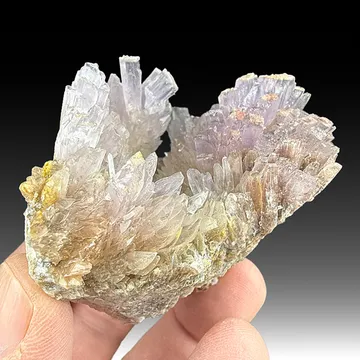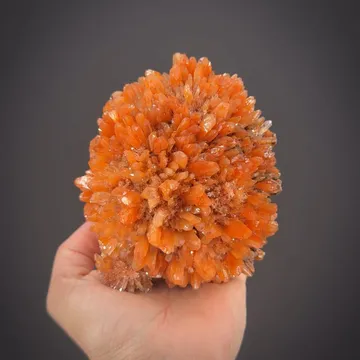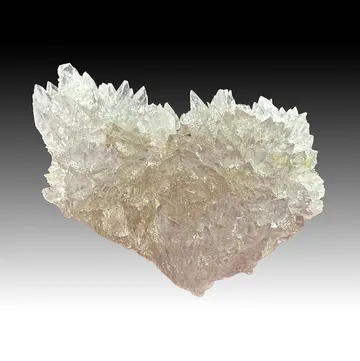
Creedite: delicate calcium aluminum sulfate fluoride forming radiating sprays and orange spheres on contrasting matrix; prized for fragility and Santa Eulalia.
Key facts
Creedite is a delicate calcium aluminum sulfate fluoride that forms spectacular radiating sprays and hedgehog-like spheres of acicular crystals. Typically colorless to white and highly lustrous, it also occurs in vibrant pumpkin-orange from Mexico—one of the few sulfate species to command strong aesthetic prices on color alone. Crystals are slender and glassy, with needle-like terminations that catch light and sparkle. The best specimens sit on contrasting matrix (most famously purple fluorite), creating dramatic color and texture pairings. Because creedite is fragile and often pocket-damaged, undamaged spheres and intact sprays—especially on attractive matrix—are prized. Fine creedite is a classic of Mexican and Chinese mineralogy, with modern finds elevating it from a specialist’s sulfate to a mainstream show-stopper.
Long appreciated by specialists, creedite surged in broader popularity after two benchmark events: the classic Santa Eulalia sprays on fluorite that defined the species’ aesthetics for decades, and the mid-2000s–2010s discoveries at Mina Navidad (Durango, Mexico) that produced intensely colored orange clusters. Later, elegant white/lavender-tinted sprays on purple fluorite from Qinglong Mine in Guizhou, China, brought high-contrast matrix specimens into the market. Today, creedite appeals to collectors at all levels: thumbnails with tidy sprays are affordable, while large, undamaged orange “porcupine” spheres or sculptural matrix pieces can command premium prices. Because truly pristine balls and balanced, unrepaired matrix specimens are scarce, top examples are fiercely competed for at shows and auctions.
While creedite occurs in several oxidized fluorite- and polymetallic-ore systems worldwide, a few localities set the standards for form, color, and aesthetics.
Santa Eulalia (Chihuahua) is the classic creedite source, famed for elegant colorless-to-white radiating sprays and spherical clusters, many perched on richly purple fluorite or calcite. These pieces established the “textbook” look of the species: glassy needles in dense radial growths, often with several spheres or sprays arranged across a contrasting matrix. The finest exhibit brilliant luster, sharp, unbruised tips, and balanced compositions where fluorite, creedite, and occasional calcite interplay. Production has been sporadic, and truly fine, undamaged, unrepaired matrix examples remain scarce and highly collectible.
Mina Navidad (Durango) revolutionized creedite collecting with vivid pumpkin-orange spherical aggregates from small thumbnails to large cabinet “hedgehogs.” The color, unusual for creedite, is attributed to iron-oxide phases within or on the needles, and is typically stable. Aesthetics hinge on saturation, symmetry of the sphere, and the density and length of the acicular crystals. Matrix pieces exist but many are loose clusters; intact, undamaged large spheres with even color are showpieces. These modern classics cemented creedite’s reputation as a front-row display species rather than a specialist’s curiosity.
The Qinglong Mine (Guizhou) is known for pristine white to faintly lavender-tinted creedite sprays and spheres dramatically set on purple fluorite. The contrast is superb, and many specimens show “snowball” clusters with gemmy needle terminations, providing a bright, sparkling look. Good pockets were intermittent, and truly balanced matrix pieces with multiple clusters and minimal damage are scarce. Collectors value Qinglong specimens for display perfection: clean, satiny-to-glassy luster on creedite, vivid fluorite color, and graceful spacing across the matrix.
Color and Contrast:
Crystal Form and Symmetry:
Luster and Transparency:
Matrix and Composition:
Size and Impact:
Condition (Critical for Creedite):
Repairs and Reattachments:
Surface Cleaning and Alteration:
Assembled Matrices:
Creedite is delicate despite its sparkling toughness at first glance. Proper care preserves its luster and fragile needle tips.
Handling:
Cleaning:
Light and Environment:
Storage:
By focusing on undamaged needle tips, symmetry and density of spheres, vivid yet natural color, and great matrix contrast—especially on fluorite—you’ll recognize and secure top-tier creedite specimens that anchor any display of secondary minerals.