Virginia, USA — a collector-focused locality guide highlighting Lynch Station turquoise, prehnite/apophyllite pockets, and spessartine from Amelia County.
Key facts
Virginia is not a single mineral locality so much as a cross-section of eastern North American geology, and that is exactly why collectors keep returning to it. Few states compress so many specimen environments into such a readable transect: Coastal Plain sediments with fossil-related vivianite and calcite-lined shells; Piedmont rare-element pegmatites carrying amazonite, spessartine, tantalite-columbite, beryl, topaz, phosphates, and mica; Triassic rift-basin diabase quarries west of Washington, D.C., with prehnite, apophyllite, zeolites, calcite, and rare zirconium silicates; Blue Ridge and Piedmont iron, manganese, copper, gold, and pyrite belts; and Valley and Ridge carbonate-hosted lead-zinc and strontium mineralization. For collectors, Virginia’s identity rests on several highly distinctive specimen styles: electric blue microcrystalline turquoise from Lynch Station, sea-green prehnite and apophyllite combinations from northern Virginia traprock quarries, orange spessartine from Amelia County pegmatites, bladed blue-black vivianite from Richmond, and calcite-strontianite-celestine suites from southwestern limestone quarries.
Historically, Virginia has mattered in at least three different mineralogical worlds. In economic geology, Austinville and Ivanhoe were among the important early American lead-zinc districts; Amelia County supplied mica, feldspar, amazonite, beryl, topaz, and tantalum-bearing minerals; and kyanite, crushed stone, limestone, coal, titanium minerals, and industrial minerals remain part of the state’s resource story. In systematic mineralogy, Virginia has produced type-locality and classic-study material, including goosecreekite and loudounite from the New Goose Creek Quarry, rockbridgeite from Rockbridge County, and the celebrated crystallized turquoise that Schaller described from Campbell County. In the specimen trade, the state is remembered for pockets and short-lived exposures: a quartz-cemented turquoise occurrence that yielded some of the finest crystallized turquoise known, quarry cavities that briefly exposed prehnite tubes and apophyllite plates, and pegmatite workings where small but fiery spessartines became famous among gem collectors.
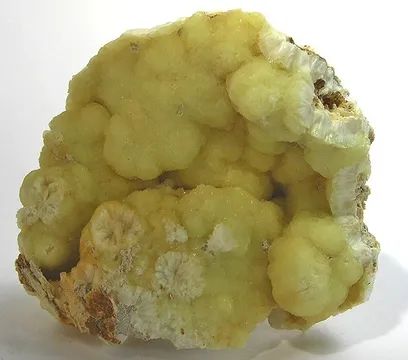
The best Virginia specimens tend to be intimate rather than enormous. The turquoise is normally a micro-specimen mineral: brilliant blue to blue-green crystals and drusy botryoidal crusts on white quartz, prized less for size than for crystal definition and color saturation. Northern Virginia prehnite is often sculptural—rounded, stalactitic, or mammillary pale green masses, sometimes carrying clear to gray apophyllite, calcite, laumontite casts, or fibrous amphibole. Richmond vivianite is fragile, dark, bladed, and sometimes fossil-related, a mineralogical conversation between groundwater chemistry and phosphate-rich organic remains. Amelia County pegmatite material, by contrast, is heavy and granitic: orange-red garnet, black tantalite-columbite, blue-green amazonite, pale cleavelandite, quartz, mica, and an extensive rare-phosphate suite.
Regional View
Country View
Virginia’s collecting appeal also lies in the way its best specimens sit at the boundary between professional literature and field-collecting lore. A small turquoise crust brought to the U.S. Geological Survey became a crystallographic benchmark. A roadcut or excavation in Richmond became a source of vivianite remarkable enough to enter both museum collections and collector memory. A quarry wall near Centreville collapsed into specimen history when a prehnite-lined tube was worked in a marathon dig. Even when modern access is poor, the labels “Lynch Station,” “Fairfax Quarry,” “Chantilly Quarry,” “New Goose Creek Quarry,” “Rutherford,” “Morefield,” “Austinville,” and “East Stone Gap” still carry real locality weight.
Search for specimens: View all specimens from Virginia, USA
Virginia’s mineral deposits fall naturally into the state’s five broad physiographic provinces: Appalachian Plateau, Valley and Ridge, Blue Ridge, Piedmont, and Coastal Plain. For collectors, the strongest specimen-producing environments are the Piedmont pegmatites of Amelia and neighboring counties, the Mesozoic diabase quarries of the Culpeper Basin in northern Virginia, the carbonate-hosted lead-zinc and strontium occurrences of the Valley and Ridge, the manganese-iron-copper prospects of the Piedmont and Blue Ridge belts, and the younger marine sediments of the Coastal Plain.
The Amelia County pegmatite district is one of Virginia’s central collector provinces. Around Amelia Court House, the Morefield, Rutherford, Champion, and related pegmatites cut metamorphic rocks and supplied mica, feldspar, amazonite, beryl, spessartine, tantalite-columbite, microlite, topaz, monazite, cleavelandite, muscovite, quartz, and rare phosphates. The Morefield pegmatite is described as a long, mineralized dike that was worked by open cuts, shafts, trenches, drill holes, and underground workings. It became famous for blue-green amazonite and for a highly varied mineral suite, while Rutherford is especially prized for orange to red-orange spessartine and rare-element minerals. Tantalum in these pegmatites occurs principally in minerals of the columbite-tantalite series and associated rare Nb-Ta oxides; specimens are usually black, heavy, submetallic to resinous, and embedded in feldspar-quartz pegmatite rather than perched as showy freestanding crystals.
Northern Virginia’s traprock quarries form a second classic specimen province. Quarrying in Triassic-Jurassic diabase and related rocks of the Culpeper Basin exposed cavities, fractures, and altered zones carrying prehnite, apophyllite, calcite, laumontite, stilbite, chabazite, datolite, thaumasite, byssolite, okenite, and rarer species. The Fairfax/Centreville, Chantilly/Virginia Crushed Stone, Bull Run, Manassas, New Goose Creek, and Old Goose Creek names recur throughout collector labels. The finest material came from short-lived quarry exposures, often when blasting opened large tubes or vugs; once the bench was advanced, the pocket was gone. These quarries also produced the type-locality minerals goosecreekite and loudounite at New Goose Creek Quarry, cementing the northern Virginia traprock suite as more than just a regional collecting curiosity.
The Lynch Station turquoise occurrence in Campbell County is one of Virginia’s most famous single-mineral localities. The Bishop mine or Bishop copper prospect, near Lynch Station, was historically explored in a district better known for iron, manganese, and small copper prospects. The turquoise occurs as blue to blue-green crystals and crusts on quartz and in schist, associated with supergene alteration of copper-bearing material. Schaller’s early study emphasized the rarity of well-crystallized turquoise and described a quartz matrix cemented by thin layers of turquoise crystals, with botryoidal drusy surfaces and minute individual crystals. The locality is closed to collecting, so nearly all specimens reaching the market are old-time pieces, micromounts, or small cabinet specimens from older collections.
The southwestern Valley and Ridge province contributes a different mineral character. Around Austinville and Ivanhoe in Wythe County, lead-zinc mineralization occurs in Cambrian Shady Dolomite as galena, sphalerite, pyrite, and associated dolomite, calcite, barite, fluorite, quartz, smithsonite, hemimorphite, cerussite, marcasite, gypsum, and anhydrite. These deposits are generally described as Mississippi Valley-type mineralization, formed by warm metal-bearing brines moving through carbonate host rocks, fractures, and breccia zones. Farther west and southwest, limestone quarries near East Stone Gap and along the North Fork Holston River have yielded calcite, celestine, and calcian strontianite, including material valued by collectors for fluorescence and strontium-rich carbonate associations.
The Coastal Plain adds specimens that look nothing like the pegmatites or traprock quarries. Richmond is known for vivianite, including dark blue to blue-black bladed crystals in radial clusters and fossil-related material in which vivianite formed around or replaced phosphate-rich organic matter. Virginia Beach and adjacent coastal areas are known to collectors for “clam geodes”—fossil shells with calcite crystals grown in their cavities. These are modest in size but highly distinctive: a fossil shell exterior enclosing pale, sparkling calcite, often with dogtooth or drusy habits.
Access today is uneven and should be treated conservatively. Many of the famous old specimen sources are closed, obliterated, reclaimed, built over, underground, or active industrial quarries where casual collecting is not allowed. Lynch Station turquoise is not a casual collecting locality. The northern Virginia traprock quarries that produced the great prehnite-apophyllite pieces are generally closed to public collecting, though clubs have historically arranged limited visits to some active quarries when operators permitted it. Morefield’s public collecting history is part of Virginia mineral lore, but collectors should not assume it is open without current permission from the owners or operators. Virginia state parks and natural areas restrict removal of rocks and minerals without appropriate permits, and abandoned mine workings should not be entered. The safest current collecting opportunities are usually organized club trips, fee sites that clearly advertise current access, legal roadside or stream settings where collecting is permitted, and private property with explicit landowner permission.
Virginia turquoise is defined by the Bishop mine near Lynch Station in Campbell County, where the species occurs as brilliant blue to blue-green microcrystals, drusy botryoidal crusts, and thin seams on white quartz and locally in schist. Schaller’s classic material consisted of quartz fragments cemented by turquoise, with botryoidal surfaces made of tiny crystal-bristling spheres only a few millimeters across and individual crystals commonly well under a millimeter; later work confirmed the Bishop material as unusually pure, well-crystallized turquoise in a mineral group where many pale blue “turquoise” occurrences prove to be planerite-rich or compositionally mixed. Good Virginia turquoise is judged by saturated blue color, obvious crystalline sparkle under magnification, attractive contrast against quartz, and undamaged crusts; ordinary pieces are pale, thin, chalky, iron-stained, or so sparse that the turquoise reads as color rather than crystals.
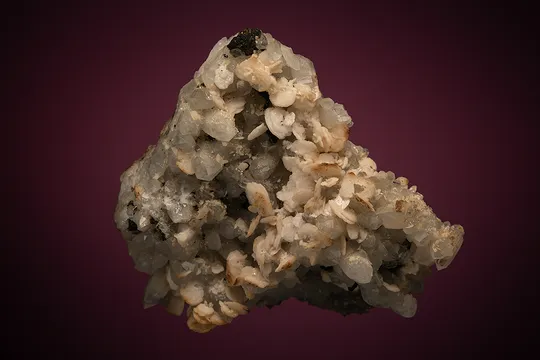
Virginia calcite is a collector’s mineral of many environments rather than one signature pocket: pale dogtooth crystals in Coastal Plain clam geodes near Virginia Beach, scalenohedrons and rhombs with celestine and calcian strontianite in Wise and Washington County limestone quarries, gangue calcite in the Austinville-Ivanhoe lead-zinc district, and yellow to clear crystals with prehnite and apophyllite in northern Virginia traprock quarries. The most desirable pieces are locality-distinctive—calcite visibly lining a fossil shell, honey to golden calcite perched on green prehnite, or clean calcite associated with strontium minerals from southwestern quarries—whereas generic white vein calcite, damaged cleavage fragments, and unlocalized carbonate pieces have little Virginia-specific specimen value.
Virginia strontianite is best known from southwestern carbonate quarries, especially the East Stone Gap area in Wise County and the Holston River/North Fork Holston River occurrences, where calcian strontianite is associated with celestine and strontium-rich calcite in limestone. Specimens tend to be white, cream, yellowish, or oxidized brown aggregates rather than large isolated gem crystals, with collector interest focused on dense radial or fibrous masses, sharp contrast with calcite or celestine, fluorescence, and secure quarry provenance. The best Virginia examples are not merely “white carbonate” but clearly strontium-suite specimens, preferably with celestine or calcite association and a label to East Stone Gap, Belton Quarry, Holston River Quarry, or a closely documented southwestern Virginia locality.
Virginia prehnite is a northern traprock classic, chiefly from the Fairfax/Centreville, Chantilly/Virginia Crushed Stone, Bull Run, Manassas, and related Culpeper Basin diabase quarries, where low-temperature hydrothermal alteration lined cavities and tubes with pale apple-green to sea-green prehnite, often accompanied by hydroxyapophyllite-(K), calcite, laumontite, stilbite, byssolite, thaumasite, datolite, and other secondary silicates. Habits range from mammillary and botryoidal crusts to stalactitic forms and prehnite after laumontite casts; large old pieces from Fairfax have been described in museum displays and collections, while the finest collector specimens carry sharp apophyllite or calcite on fresh green prehnite. Superior pieces show lively color, sculptural form, clean crystal surfaces, and classic quarry attribution; common pieces are massive, bruised, gray-green, asphalt-stained, or lack the associations that make northern Virginia prehnite recognizable.
Virginia vivianite is centered on Richmond and nearby Coastal Plain sediment exposures, where dark blue to blue-black, thin bladed crystals occur in radial clusters and nodules, in some cases tied to phosphate supplied by fossil bone or other organic material. The classic Richmond material is fragile, cleavage-prone, and color-sensitive, with good specimens showing intact bladed sprays, deep but still translucent blue-green to blue-black color on fresh edges, and minimal powdering or separation along cleavage planes. The most interesting pieces retain evidence of their sedimentary or fossil-related origin, including nodular forms and bone-replacement textures; ordinary or compromised pieces are blackened, crumbled, dehydrated, or lacking a reliable Richmond label.
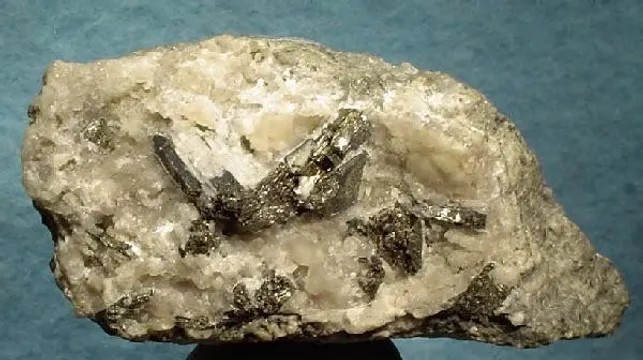
Virginia tantalite belongs to the rare-element pegmatite suite of Amelia, Powhatan, Prince Edward, Bedford, and related Piedmont occurrences, with Morefield, Rutherford, Champion, and other Amelia County pegmatites especially important on collector labels. In hand specimens, tantalite-columbite usually appears as black to brownish black, heavy, submetallic, blocky to platy crystals or crystal fragments in quartz, feldspar, cleavelandite, mica, and amazonite-bearing pegmatite; analyses from Virginia pegmatites show variable niobium-tantalum chemistry, so many old labels sensibly read “columbite-tantalite” unless a specimen has been analyzed. Good Virginia pieces combine a well-formed, lustrous, heavy crystal with contrasting feldspar or quartz matrix and exact mine attribution, while nondescript black grains without locality or analytical support are much weaker specimens.
Virginia quartz is widespread, but collector-grade material is best understood by context: smoky, milky, rose, and clear quartz in Amelia County pegmatites; quartz matrix carrying Lynch Station turquoise; quartz crystals and scepter forms reported from western Virginia quarry and vein localities; amethyst from several Piedmont and Blue Ridge sites; and vein quartz associated with the Virginia gold-pyrite belt. The most desirable Virginia quartz specimens are those with a second story—turquoise crusts on white quartz from Bishop, smoky quartz with pegmatite minerals from Amelia, well-formed crystals from named western localities, or amethyst with credible county-level attribution. Massive milky quartz is abundant throughout the state and has little specimen value unless it shows crystals, inclusions, color, gold-belt association, or an unusually well-documented historic locality.
Virginia hematite ranges from widespread earthy iron oxide to collectible specular hematite, with especially noted material from the Burnley area in Albemarle County and from historic iron districts where hematite, magnetite, martite, and limonite occur in the Piedmont and Blue Ridge iron belts. Collector-quality hematite from Virginia is typically lustrous black specularite or dense iron-rich material with a clean metallic sheen, sometimes cut as cabochons; it is appreciated as a regional iron-ore specimen rather than a source of large showy “iron roses.” The best examples have bright specular surfaces, compact form, and precise mine or district labeling, while rusty, earthy, massive ironstone is common and usually of interest only when tied to a documented historic mine.
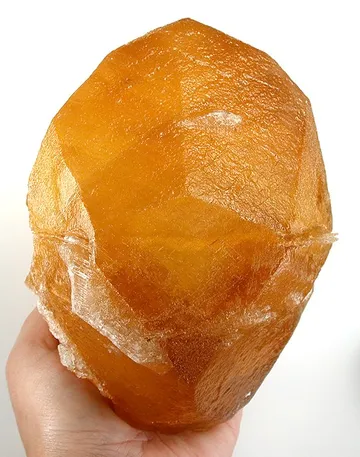
Virginia spessartine is one of the great American pegmatite garnet stories, centered on the Rutherford and Morefield mines near Amelia Court House, where etched crystal masses and fragments range from yellow-orange and red-orange to red and brownish red. The Rutherford No. 2 pegmatite is especially celebrated for gem-quality orange material, including large etched crystals and fragments that entered both mineral collections and the gem-cutting world; documented pieces range from small crystals only a few millimeters across to large masses measured in centimeters and, in rare cases, thousands of carats. The finest Virginia spessartine has saturated orange to red-orange color, translucency or gemminess, etched sculptural surfaces, and an Amelia/Rutherford label; more ordinary pieces are brownish, opaque, heavily fractured, or simply garnetiferous pegmatite without the color and provenance that made the locality famous.
Beyond these highlighted species, Virginia has an unusually broad mineral list for an eastern U.S. state. Type-locality and classic rarity names include goosecreekite and loudounite from the New Goose Creek Quarry in Loudoun County, and rockbridgeite from the Midvale mine area of Rockbridge County. The Morefield and Rutherford pegmatites add amazonite, cleavelandite, microlite, monazite, beryl, topaz, muscovite, strengite, bermanite, prosopite, pyromorphite, triplite, and many other rare phosphates and oxides. Northern Virginia traprock quarries add hydroxyapophyllite-(K), laumontite, stilbite, chabazite, datolite, thaumasite, byssolite, okenite, wittichenite, cuprobismutite, and related cavity minerals. The Austinville-Ivanhoe district contributes galena, sphalerite, pyrite, fluorite, barite, dolomite, smithsonite, hemimorphite, cerussite, marcasite, gypsum, and anhydrite. Virginia is also known outside the strict specimen-mineral world for kyanite, staurolite “fairy stones,” unakite, gold, diamond, rutile, ilmenite, zircon, monazite, and fossil-associated mineral specimens.
Virginia labels need careful reading. “Virginia turquoise” should usually mean Lynch Station or Bishop mine material, and the strongest specimens show obvious blue crystalline crusts on quartz under magnification. Old labels reading “Lynch, Virginia” may be shorthand or historical confusion for Lynch Station, not the city of Lynchburg. Because turquoise is widely faked, dyed, stabilized, or misrepresented in the broader market, Virginia turquoise should be treated as a specimen mineral, not as generic lapidary turquoise; the key tests are locality, matrix, crystal habit, and provenance. Dense blue cabochons sold simply as “Virginia turquoise” deserve skepticism unless they can be tied to old Bishop material and show the expected quartz-rich character.
Prehnite from northern Virginia is commonly confused with prehnite from New Jersey, India, or other traprock localities when old labels are lost. Fairfax/Centreville and Chantilly pieces often have a distinctive association with apophyllite, calcite, laumontite casts, byssolite, and pale green mammillary prehnite, but visual attribution alone is not enough for high-value pieces. Condition is important: prehnite bruises and dulls at edges, apophyllite cleaves easily, laumontite-related casts can be friable, and quarry pieces may carry old glue, saw marks, asphalt, or iron staining. Do not overclean these combinations; acid treatments can damage calcite associations and may alter surfaces on delicate secondary minerals.
Vivianite from Richmond requires special storage. It is soft, has excellent cleavage, can dehydrate or separate along cleavage planes, and tends to darken with prolonged light exposure as Fe2+ oxidizes. Keep good pieces in closed boxes or drawers, away from heat, direct sun, and strong display lighting. Handling should be minimal and by the matrix, not the crystal blades. Broken vivianite pieces can look deceptively like black mica, coal, or degraded organic material, so intact radial bladed structure and a credible Richmond provenance matter.
Tantalite-columbite from Virginia is chemically variable, and many specimens require analytical work to separate tantalite-(Fe), tantalite-(Mn), columbite-(Fe), columbite-(Mn), or intermediate “columbite-tantalite.” A black, heavy crystal from Amelia County may be a very good specimen, but a precise species name should not be overpromised without analysis. Similar caution applies to rare phosphates and uranium-thorium-bearing pegmatite minerals from Amelia and nearby counties; some are mildly radioactive or contain rare earth elements and should be stored sensibly, labeled accurately, and kept out of children’s handling boxes.
Spessartine from Rutherford and Morefield is genuinely scarce in fine quality. Small orange stones and etched fragments appear on the market only intermittently, and good color drives value. Many pieces are included, fractured, etched, or partial; that is normal for the locality. The best cabinet specimens preserve the natural etched crystal form rather than sacrificing everything to cutting potential. Faceted Rutherford spessartine is desirable but should come with a credible chain of provenance because orange spessartine from later global sources can be visually similar.
Calcite, strontianite, and celestine from southwestern Virginia need careful carbonate identification. Strontianite and calcite can look similar in pale, massive, fibrous, or oxidized forms, and calcian strontianite is not always visually separable from other carbonates. Fluorescence can help screen material from Holston River and East Stone Gap-type suites, but it is not a substitute for testing. Keep fragile acicular or fibrous strontianite away from repeated handling, and avoid soaking mixed carbonate-sulfate specimens in acids.
Market availability is best described as episodic. Common Virginia quartz, calcite, hematite, and unakite are easy to obtain. Fine Lynch Station turquoise, Richmond vivianite, Rutherford spessartine, New Goose Creek rarities, and old Fairfax/Chantilly prehnite-apophyllite pieces are much less available and tend to move through old collections, specialist dealers, club auctions, or estate material. For serious collectors, provenance is often as important as appearance: a modest specimen with an old Penick, Baltzley, Fleischer, Smithsonian-related, Virginia Division, or quarry-specific label may be more valuable than a showier but vague “Virginia” piece.
The Lynch Station turquoise story begins like many important mineral discoveries: with a small bright specimen that refused easy identification. A sample from near Lynch Station in Campbell County was brought to the U.S. Geological Survey by J. H. Watkins. Preliminary tests did not immediately match it to a known species, so Waldemar T. Schaller undertook a full study. The result was not a new mineral, but something nearly as surprising—turquoise in measurable crystals. Schaller described quartz fragments cemented by thin layers of turquoise, with a drusy botryoidal surface whose rounded forms averaged only 2 or 3 millimeters across. The individual crystals were rarely as much as one-third of a millimeter long, yet they were good enough to establish crystallographic data for a mineral long known mainly as compact, cryptocrystalline gem material. The specimen went into the United States National Museum under catalog number 86990, a tiny blue crust with outsized importance.
For years, the Bishop occurrence near Lynch Station stood apart. Collectors had known turquoise as nodules, seams, and lapidary material from the Southwest and abroad; here was turquoise as actual crystals. The material was too small and brittle to be conventional gemstone rough, but it could be dazzling as a specimen: blue-green crystals on white quartz, sometimes with the surfaces sparkling under magnification like frost. Later writers emphasized that the Bishop mine material was one of the finest examples of high-purity, well-crystallized turquoise, and that many other pale blue turquoise-group specimens from the world are chemically mixed or planerite-rich. That is why even thumbnail or micromount specimens from Lynch Station still excite collectors who might otherwise ignore turquoise as a cabinet mineral.
The Morefield mine story has a wonderfully Virginia beginning: a storekeeper, a suspicion, a blast, and two weeks of chance. According to the Virginia Energy account, the mine’s discoverer knew the older Rutherford and Champion pegmatites and suspected that an outcrop near Amelia Court House might also be pegmatite. He drilled it, loaded the hole with dynamite, and shot it, exposing large masses of mica and weathered amazonite. He then did something any collector can picture perfectly—he placed some of the specimens in front of his store and gas station in Amelia Court House. Within two weeks, travelers from the National Bureau of Standards stopped, noticed the flashy material, asked where it came from, and later told colleagues at the U.S. Geological Survey. A local pegmatite had entered the geological world.
Morefield’s later history reads like a condensed history of American pegmatite mining. It was worked by open cuts in 1929–1931, leased to the Seaboard Feldspar Company for amazonite, beryl, mica, and tantalite, and reactivated during World War II when mica, beryl, and tantalum minerals had strategic value. After 1949 the mine lay quiet for decades. Deck Boyles of Amelia County bought the property and used the shaft as a water source for swimming-pool customers. In 1985 Warren “Bill” Baltzley bought it and developed it as a recreational and commercial mine, sinking the 45-foot Baltzley Shaft and connecting workings. Sam and Sharon Dunaway acquired it in 1996 and expanded the underground levels. The result was one of the few places where generations of families, field collectors, and mineralogists all attached memories to the same pegmatite.
The Rutherford spessartines brought a different kind of drama: the sudden appearance of orange gem garnets large enough to be named and remembered. Virginia Minerals reported that some of the world’s finest gem-quality spessartines came from the Rutherford No. 2 pegmatite north of Amelia. On September 1, 1991, Richard Seaver found a gem-quality crystal weighing 2,829 carats. Other notable stones included a 6,720-carat stone found by Sean Sweeney of Rockville, Maryland, and a 1,675-carat crystal found by John Nygaard of Cumberland, Virginia. William D. Baltzley also reported a flawless 30-carat crystal found during the 1960s. These were not merely “garnets in pegmatite”; they were orange American spessartines of a kind that became reference points for gem collectors long before later overseas orange-spessartine rushes reshaped the market.
Northern Virginia traprock collecting produced its own quarry-wall legends. The Fairfax/Centreville quarry is especially remembered for prehnite and apophyllite, including large tubelike cavities uncovered in 1953 and again in 1967. One EarthWonders specimen record preserves a field detail too good to lose: an apophyllite on prehnite specimen collected in July 1967 during a 27-hour dig in a long prehnite tube in a collapsed quarry wall with Dave Siegert. That single phrase—“27-hour dig”—captures the urgency of quarry collecting. A pocket is opened by blasting or collapse, collectors work while the opportunity exists, and then the quarry advances. What remains decades later are the specimens and labels: pale green prehnite, apophyllite plates, calcite, byssolite, and the memory of a tube that existed only briefly.
Richmond vivianite carries an almost uncanny story because it belongs to both mineralogy and paleontology. Specimens from the Richmond locality include vivianite associated with fossil bone, including pieces described as replacement or encrustation around whale bone. The chemistry is elegantly simple: phosphate from bone, iron-bearing groundwater, and reducing sedimentary conditions combine to produce hydrated iron phosphate. The result can be dark, bladed vivianite where an animal remain once lay. Collectors compare the nodular, fossil-related Richmond material to other famous organic vivianite occurrences, but the Virginia pieces have their own identity: urban Coastal Plain specimens, fragile and dark, born from an interaction between Miocene sediments, groundwater, and buried life.
Virginia’s mineral history even includes one of America’s great diamond anecdotes. The Dewey Diamond was found in 1855 at Manchester, now part of Richmond, and was long celebrated as a major North American diamond. Contemporary accounts said it was placed in a Richmond iron furnace at red heat for two hours and twenty minutes, then removed “uninjured and brighter than ever.” It was valued in Richmond at $4,000, passed to Samuel W. Dewey, and was named “Oninor,” the “Sun of Light,” though the Dewey name endured. Reported at 23¾ carats, it was cited in Virginia mineral locality literature as the largest diamond found in the United States until 1884. Whether or not a collector ever sees a Virginia diamond, the story belongs in the same cabinet of lore as the turquoise, vivianite, spessartine, and traprock pockets: a state mineral history built from small discoveries that became surprisingly large.