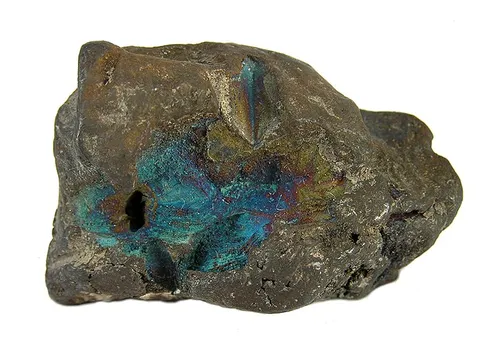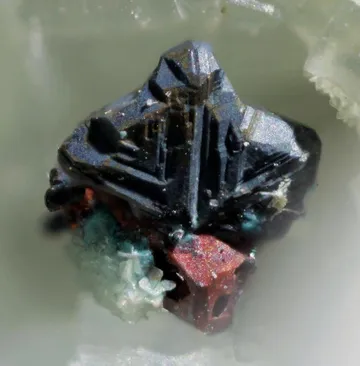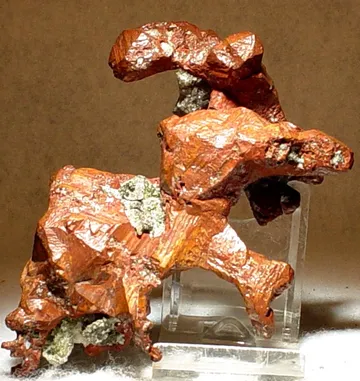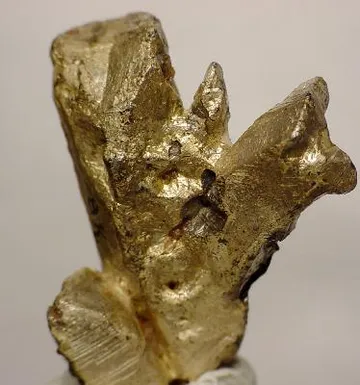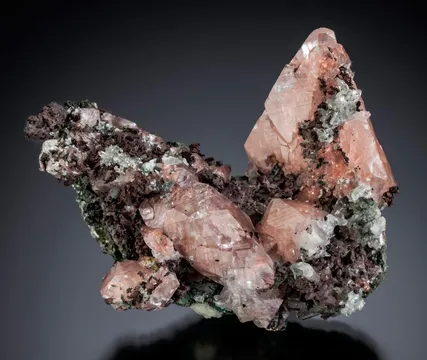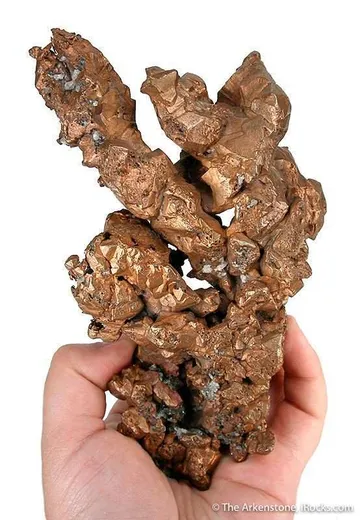
Seneca Mine, USA, a Keweenaw copper locality near Mohawk, Michigan, notable for native copper, amygdaloidal copper, and minerals prized by collectors.
Key facts
Seneca Mine is a Keweenaw native-copper locality in the old Seneca mining location north of Mohawk, in Allouez Township, Keweenaw County, Michigan. For collectors it sits in a particularly interesting position: just north of the great Mohawk–Ahmeek part of the Kearsarge amygdaloid system, where copper mineralization remained strong enough to draw repeated corporate attention but variable enough that the mine never acquired the fame of its southern neighbors. That circumstance is part of its charm. Seneca specimens are not merely “another Keweenaw copper”; they represent the northern, more erratic expression of one of Michigan’s most important amygdaloidal copper lodes, with a specimen suite that ranges from dense native-copper ore to small crystallized copper in amygdules, arsenian copper, native silver, zeolites, epidote, prehnite, datolite, and copper arsenides.
The Seneca name is complicated because it covers several related workings. The modern collector usually means the Seneca Mine group around Seneca Location, including the Seneca No. 1 Shaft, Seneca No. 2 shaft, better known historically as the Gratiot Mine, Seneca No. 3 Shaft, and the older Seneca No. 4 or “Old Seneca” fissure working along US 41. That older working exploited a small fissure vein in the 1850s, while the better-known twentieth-century operation pursued the Kearsarge lode: the copper-bearing amygdaloidal top of a basaltic lava flow in the Portage Lake Volcanics of the Midcontinent Rift. In practical specimen terms, this means copper in and around vesicles rather than the great open fissure-cavity crystal groups that made some earlier Keweenaw mines legendary.
Regional View
Country View
The best Seneca copper specimens have the compact, sculptural quality collectors expect from Keweenaw material, but they are typically judged by refinement rather than by sheer size: sharp microcrystals in amygdules, well-shaped native-copper masses with natural patina, delicate copper-silver associations, and, rarely, larger crystallized forms such as the documented 21 cm spinel-law twin from the 2800-foot level. The better pieces show clear crystal habit, clean exposure from the basalt, pleasing contrast against calcite, quartz, epidote, or prehnite, and enough patina to prove age without obscuring the copper’s metallic surface.
Search for specimens: View all specimens from Seneca Mine, USA
Seneca Mine belongs to Michigan’s Lake Superior native-copper district, a region whose ore deposits formed in the 1.1-billion-year-old Midcontinent Rift volcanic pile. The particular host at Seneca is the Kearsarge amygdaloid, a copper-bearing flow-top lode developed in basalt historically described as porphyritic melaphyre. The lode is not a narrow vein in the usual hydrothermal sense; it is an amygdaloidal volcanic horizon in which open vesicles and porous flow-top textures were later filled or replaced by low-temperature hydrothermal minerals. Classic Kearsarge-lode amygdules contain calcite, quartz, red feldspar, epidote, prehnite, pumpellyite, and related alteration minerals, with copper occurring both as cavity filling and as irregular replacement in the basaltic groundmass.
The mine’s position north of the most productive Kearsarge ground is important. Geological work on the district shows that the Kearsarge flows become more variable north of Gratiot, and the Seneca area records that transition in detail. At the Gratiot workings the basal Kearsarge flow was measured at about 198 to 202 feet total thickness, with the amygdaloid ranging from 9 to 29 feet in the observations reported. At Seneca No. 1, diamond-drill holes and crosscuts showed a more broken picture: multiple Kearsarge flows, several amygdaloids, and a basal trap that could thin dramatically, including a reported 24-foot basal trap in a drill hole 950 feet north of No. 1 shaft. That variability explains why the mine produced collectable material and serious exploration data, yet never matched the great sustained output of some neighboring Kearsarge properties.
Historically, the earliest Seneca work was not the later four-shaft mine group but the Old Seneca fissure occurrence, also called the Seneca No. 4 Shaft or original Seneca mine. It was a small copper fissure vein exploited in the 1850s near US 41, northeast of the Allouez Township Hall. The later corporate history begins with the Seneca Mining Company, established in 1860. Around 1880, Ahmeek operations began as an exploration wing of Seneca Mining Company, and the broader corporate geography of the area became increasingly entangled with Calumet & Hecla, Mohawk, Ahmeek, and Gratiot interests.
The Gratiot Mine, which collectors encounter in mineral labels as Seneca No. 2 shaft, was opened by Seneca Mining Company in 1910 to work the Kearsarge lode. It was sufficiently important that many historical and mineralogical references treat “Gratiot” almost as a mine in its own right, even though it is part of the Seneca mine group in modern locality usage. Seneca Copper Corporation was incorporated in New York on December 26, 1916, to take over Calumet & Hecla’s controlling interest in Seneca Mining Company. In 1917 the company began preparatory work for a new shaft to develop the Kearsarge lode: surface buildings were erected, a railroad spur to the Keweenaw Central was completed, and the No. 1 shaft site was selected in the southeastern part of the property adjoining Ahmeek and Mohawk.
By 1923, Seneca had become one of the district’s major development projects rather than a mature producing mine. Contemporary mining press described Seneca No. 1 and Gratiot No. 2 as the two producing shafts, with Seneca rock averaging about 30 pounds of copper per ton and a planned hoisting capacity of 4,000 tons daily. A mid-1923 stockholder report stated that development to the end of 1922 included 2,540 feet of shaft, 484 feet of crosscuts, 236 feet of raises, and 11,752 feet of drifts at Seneca No. 1, totaling 15,012 feet of work, while development rock from Seneca No. 1 had yielded more than 1.2 million pounds of copper from 43,785 tons stamped. Those figures help explain why Seneca attracts collectors who appreciate the mine as more than a small dump locality: it was a serious late-stage attempt to extend the Kearsarge lode northward.
The later life of the mine centered especially on the Gratiot/Seneca No. 2 workings. Calumet & Hecla purchased the Gratiot Mine in 1945 and operated it until 1966, making it one of the late survivors of the Keweenaw copper-mining era. By the mid-1960s the regional industry was contracting rapidly. The Seneca No. 2 shaft was permanently closed in 1965, and by the end of the decade most of the old Portage Lake and Keweenaw native-copper mining infrastructure was either idle, dismantled, or reduced to reclamation and poor-rock handling.
For today’s collector, access must be treated conservatively. Most old Keweenaw mine sites are private property, and old shafts, collapsible poor-rock piles, exposed metal, and hidden voids are real hazards. Public tourism guidance for the Keweenaw states that regular legal collecting is limited to certain sites, while Seneca Mine is among the piles opened only during organized Keweenaw Mineral Days events when permission has been arranged and rock piles have been prepared. At those events, Seneca is specifically promoted for native copper, with datolite, greenstone, and native silver also findable in the broader prepared Kearsarge-lode material. The small Old Seneca rock pile has also been described as a place where copper and prehnite can be found, but any visit requires current landowner permission and site-specific safety awareness.
Notable specimen finds from Seneca include fine native-copper microcrystals in amygdules, arsenian copper, copper associated with epidote and prehnite, and native silver reported in part as coatings on epidote crystals. The documented Heritage Auctions specimen from the 2800-foot level—a 21.0 x 9.4 x 2.8 cm native-copper spinel-law twin—shows that Seneca occasionally produced copper crystals of exceptional size and sculptural presence, even though the mine is better known among collectors for smaller and less frequently available material.
Native copper from Seneca is most characteristic as copper in amygdaloidal basalt: blebs, irregular replacement masses, small crystal groups, and fine microcrystals lining or occupying amygdules, commonly with calcite, quartz, epidote, prehnite, analcime, chlorite-group minerals, and local native silver. The old mineralogical literature specifically notes fine copper microcrystals in amygdules and arsenian copper from Seneca, while specimen-market records show that larger crystallized pieces do occur, including a 21 cm spinel-law twin from the 2800-foot level. Good Seneca copper is separated from ordinary dump copper by crystal definition, clean natural exposure, identifiable amygdule setting, attractive brown-to-reddish patina with flashes of metallic copper, and tight locality confidence—especially distinguishing Seneca No. 1, Seneca No. 2/Gratiot, Seneca No. 3, and Old Seneca labels.
Other minerals documented from the Seneca mine group include native silver, calcite, quartz, prehnite, epidote, datolite, analcime, barite, chalcocite, natrolite, microcline, pumpellyite-(Mg), chlorite-group minerals, malachite, algodonite, domeykite, nickelskutterudite, and a questioned record of nickeline. The arsenide suite is particularly important for the Mohawk–Seneca part of the Kearsarge trend, where arsenian copper and copper arsenides give certain specimens a more specialized mineralogical interest than common native-copper ore. Seneca is not celebrated as a formal type-locality mine in the way that some Keweenaw names are attached to classic species or discredited species names, but its documented arsenides, silver-on-epidote occurrences, and Kearsarge-lode zeolite/prehnite associations make it a rewarding locality for collectors who value a precise mine label over generic “Keweenaw copper.”
The most common collecting problem with Seneca material is not artificial faking so much as locality drift. Seneca, Gratiot, Mohawk, Ahmeek, Iroquois, and Old Seneca are close enough geographically and historically that old labels may be vague, incomplete, or internally inconsistent. “Seneca Mine” may refer to the broader mine group; “Gratiot” often means Seneca No. 2 shaft; “Old Seneca” or “Seneca No. 4” refers to the earlier fissure working; and “Seneca No. 3” is a separate shaft now widely recognized by its bat-compatible shaft cap. Serious buyers should preserve every old label, note whether a specimen is from No. 1, No. 2/Gratiot, No. 3, or Old Seneca when known, and be cautious of pieces sold simply as “Mohawk area” being upgraded to Seneca without documentation.
Condition is highly variable. Massive copper from the poor-rock piles may be bruised, sawed, acid cleaned, tumbled, or mechanically brightened. Crystallized copper is softer and more easily bent than many collectors expect; projecting spinel-law twins, wires, and thin plates can be kinked or broken, and amygdule-hosted microcrystals can be lost during aggressive trimming or cleaning. Natural patina is desirable when it is stable and even, but thick black oxidation or clay-filled amygdules can obscure the form. The best approach is conservative cleaning: remove loose dirt mechanically or with water only when safe for associated minerals, and avoid bright acid-stripped surfaces unless the specimen is clearly being sold as cleaned ore rather than a high-grade collector piece.
Associated minerals deserve care. Prehnite, epidote, quartz, datolite, analcime, and natrolite can provide important locality and paragenetic context, but they may also be brittle, cleaved, or partly altered. Native silver, where present, can tarnish or appear as subtle pale metallic films rather than obvious wires. Arsenide-bearing specimens—especially those labeled algodonite, domeykite, arsenian copper, nickelskutterudite, or nickeline—should be handled with the same common-sense precautions used for arsenic minerals: do not grind or saw them dry, wash hands after handling, and keep powdery material away from food, children, and pets.
Market availability is modest. Seneca copper appears far less often than material from better-known Keweenaw names such as Calumet & Hecla, Quincy, Central, Cliff, Mohawk, Wolverine, or Copper Falls. Small massive copper and amygdaloidal pieces from organized collecting events are attainable; well-crystallized copper with exact Seneca provenance is much less common; large, aesthetic, sharply crystallized examples are genuinely scarce. A specimen with a reliable old mine label, a documented level, or a recognizable shaft association deserves a premium over an otherwise similar piece carrying only a broad Keweenaw attribution.
Seneca’s most evocative story is a story of names layered on names. The “Old Seneca” was already a copper locality in the 1850s, a small fissure vein worked close to the old road long before the big twentieth-century corporate push. Decades later, the Seneca name reappeared in a very different form: not as a little fissure mine, but as a calculated attempt to extend the Kearsarge amygdaloid northward from the great producing ground around Mohawk and Ahmeek. The same name therefore bridges two eras of Keweenaw mining—the early fissure-searching years, when men chased visible native copper in cracks, and the industrial amygdaloid era, when companies sank shafts, drove thousands of feet of drifts, built rail spurs, and measured ore by pounds of copper per ton of rock.
The 1917 development campaign reads like the opening scene of an ambitious but late Keweenaw drama. Seneca Copper Corporation had only just been organized when it began preparing the property for a new shaft. The tract was large—1,880 acres—and it carried a roll call of famous Copper Country horizons: the Ashbed, Allouez-Pewabic bed, Allouez, Calumet and Kearsarge conglomerates, and the Osceola and Kearsarge amygdaloids. In June, work began toward sinking a shaft on the Kearsarge lode. By December 1, the surface buildings were essentially up, railroad connection to the Keweenaw Central had been completed, and heavy equipment was ready. The chosen shaft design was telling: three compartments, vertical from the surface, then curving at depth to follow the dip of the Kearsarge lode. This was not prospecting with a pick; it was capital, engineering, and geological optimism applied to a difficult northern extension of the lode.
By the end of 1922 the underground numbers had become impressive. Seneca No. 1 had 2,540 feet of shaft, 484 feet of crosscuts, 236 feet of raises, and 11,752 feet of drifts. Development rock alone had sent 43,785 tons to the stamps and returned 1,236,185 pounds of copper, a yield of more than 28 pounds per ton. Late in 1923, mining news carried the company’s ambition in a single hard industrial number: Seneca planned to hoist 4,000 tons daily. The report expected 700 tons of high-grade rock per day from each of two producing shafts, Seneca No. 1 and Gratiot No. 2, with Seneca rock averaging 30 pounds to the ton. For collectors, those figures add weight to a specimen label. A small copper from Seneca is not a souvenir from a forgotten dig; it comes from one of the last serious efforts to make the northern Kearsarge ground into a major producer.
Another modern field note is quieter but memorable: the Seneca No. 3 shaft cap. Visitors north of Mohawk on US 41 can encounter a conspicuous metal cage over the old shaft. It is not merely an industrial relic or a safety barrier. It was designed as a bat-compatible closure, allowing bats to enter and leave while keeping people out of the shaft. Tourism material for the Mohawk area notes that four Michigan bat species hibernate there in winter. It is a striking afterlife for a copper mine: an opening once made to remove native copper from the earth now preserved as cold-season habitat.
The recent collecting story is also a race against disappearance. Tom Rosemeyer’s reports on Keweenaw collecting describe how many modern specimens have been saved because old mine dumps were being crushed for construction aggregate. That process destroys context and material at the same time, but it also exposes fresh rock. Collectors were sometimes allowed in after hours or on weekends, trying to rescue copper, silver, and associated minerals “from the jaws of the crusher.” In a 2019 abstract on recent Keweenaw mineral adventures, the Old Seneca appears not as a grand cabinet specimen but as a sharply observed miniature: a 1.3 cm copper photographed by John A. Jaszczak. That scale is fitting for Seneca’s collector personality. Its treasures are often small, exacting, and tied to the disciplined eye of the field collector rather than the spectacle of giant masses.