






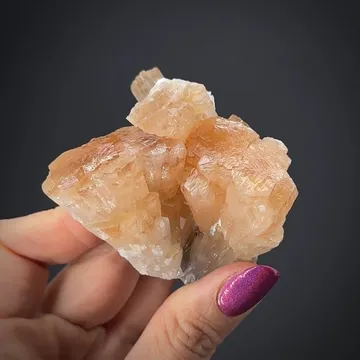
Strontianite - radiating sprays and translucent prisms; a rare connoisseur carbonate with localities Strontian, Oberdorf, Elmwood and strong collecting value.
Key facts
Strontianite (SrCO3) is an orthorhombic strontium carbonate best known to collectors for its elegant radiating sprays, spherulitic balls, and acicular to prismatic crystal clusters. Colors range from snow-white and cream to honey-yellow and pale green; luster is typically silky to vitreous, and many specimens are translucent with a delicate “icy” look. While single, well-formed prisms occur at a few localities, most strontianite in collections is fibrous or radiating. It is closely associated with calcite, fluorite, barite, dolomite, and sulfides in Mississippi Valley–type (MVT) deposits and sedimentary environments.
A classic “connoisseur carbonate,” strontianite is prized both for historical importance (named for Strontian, Scotland, where the element strontium was first recognized) and for striking aesthetics: bright white hedgehog-like balls on purple fluorite from Ohio, sharply lustrous sprays on honey calcite from Elmwood, or the rare, textbook-clear crystals from Oberdorf, Austria. Many specimens show strong fluorescence (often bright white to yellow under shortwave UV), adding to display appeal. Because it is relatively soft (Mohs ~3.5) and often fibrous, top-condition pieces are less common and highly valued.
Strontianite sits in a sweet spot of collectability: unmistakably distinctive yet not ubiquitous, with enough major localities to build a focused suite. Historically minded collectors seek Strontian, Scotland pieces; locality specialists covet Austrian and German classics; and MVT fans chase dramatic combinations from Tennessee and the U.S. Midwest quarries. Fine, undamaged sprays, vivid color contrast on matrix, and rare prismatic crystals ensure sustained demand. Prices remain accessible for modest pieces, while large, pristine sprays or true crystallized clusters from Oberdorf and museum-caliber Elmwood or Ohio quarry pieces bring strong premiums.
While strontianite occurs worldwide, a handful of districts have set the benchmark for quality, rarity, and desirability.
Oberdorf (Styria) is renowned for some of the world’s finest crystallized strontianite. Unusually, it produced transparent to translucent, sharply terminated prismatic crystals and radiating groups—often colorless to honey-yellow—with bright luster. Associations with dolomite, barite, and calcite add appealing contrast. Because true euhedral strontianite is rare globally, Oberdorf crystals are highly coveted and serve as the “textbook” standard for the species in many collections. Exceptional pieces display clean terminations, open, airy arrangements, and minimal matrix damage.
Color and Contrast:
Habit and Form:
Luster, Transparency, and Fluorescence:
Matrix and Associations:
Size vs. Condition:
Locality and Provenance:
Repairs:
Surface Work:
Fakes/Treatments:
Strontianite is soft (Mohs ~3.5) and often exceptionally fragile when fibrous. Gentle handling and careful storage preserve value and beauty.
Handling:
Cleaning:
Light and Heat:
Environment and Mounting:
Periodic Checkups:
By focusing on sharp, undamaged form, strong contrast, and classic provenance, collectors can build an exceptional suite of strontianite—from historically resonant Scottish pieces to the world-class sprays and crystals of Austria, Ohio, Tennessee, and Illinois.