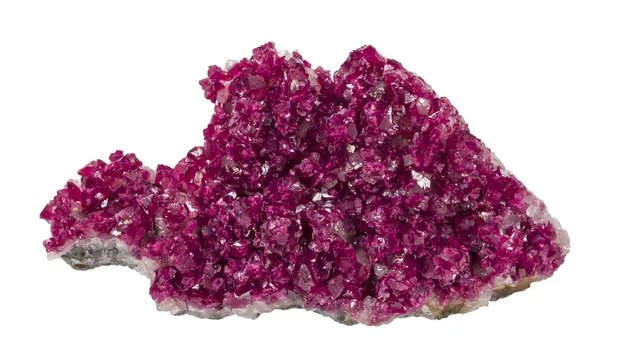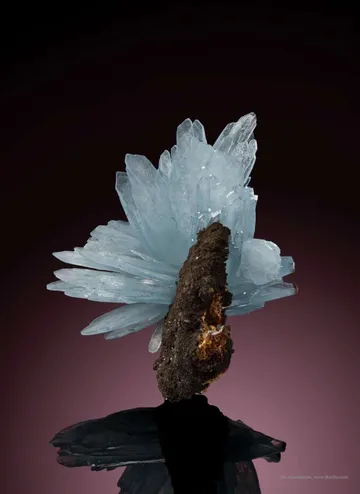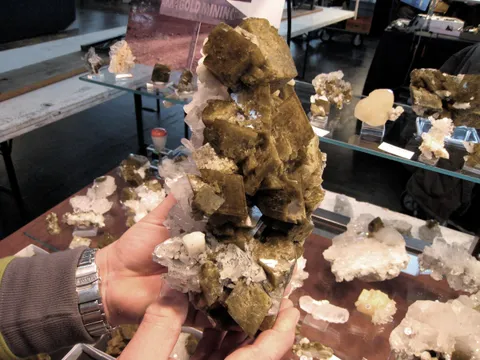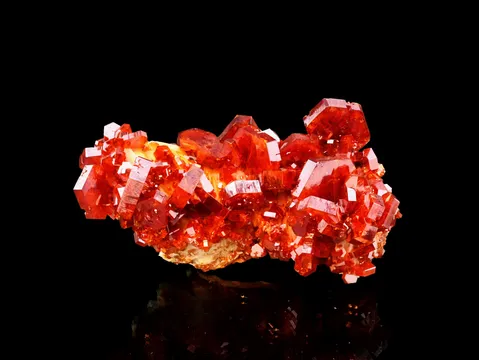
A collector's guide to Sidi Ayed, Morocco: its geology, mining history and notable minerals, illustrated with the 116 specimens documented from this locality on EarthWonders.
Key facts
Sidi Ayed—also spelled Sidi Ayad on many labels—is the northern, more collector-famous part of the Aouli lead district on the High Moulouya massif of central Morocco. To ore geologists it belongs with Aouli: a vein-type Pb system in Paleozoic metamorphic rocks and granite, distinct from the nearby Mibladen carbonate-hosted deposits and the Zeïda red-bed deposit. To collectors, however, Sidi Ayed has its own personality. It is the source behind many of the sharp yellow fluorites long sold simply as “Aouli,” the locality for vivid azurite-malachite pieces from the old dumps and open cuts, and, since 2021, the source of a highly distinctive galena–cerussite–plumbogummite–quartz–wulfenite association from the Georges vein.
The best Sidi Ayed specimens have a strongly layered, oxidized-lead look: heavy equant galena cubes armored by white cerussite microcrystals, pale bluish plumbogummite, sparkling quartz, and tiny transparent yellow wulfenite. In the better combination pieces, the sequence reads almost like a mineralogical cross-section of alteration—lead sulfide core, lead carbonate rind, lead phosphate crust, and molybdate accents—rather than a simple display of one species. Separate from the lead veins, the Mamsa area north of Sidi Ayed has yielded elegant colorless aragonite sprays and cyclic twins from Triassic volcanic rocks, while nearby Bou Hamza is known among agate diggers for bright, polished chalcedony nodules.
Regional View
Country View
Sidi Ayed sits in a landscape that explains much about its collecting history: dry, open country, old mine structures, dumps, and exposed veins, with the Middle Atlas–High Atlas corridor only a short distance from the classic mineral markets around Midelt. The district was not built for collectors; it was built for lead. The specimens that now define it are the afterlife of that mining—oxidation pockets, vein selvages, dumps, and later small-scale artisanal work.
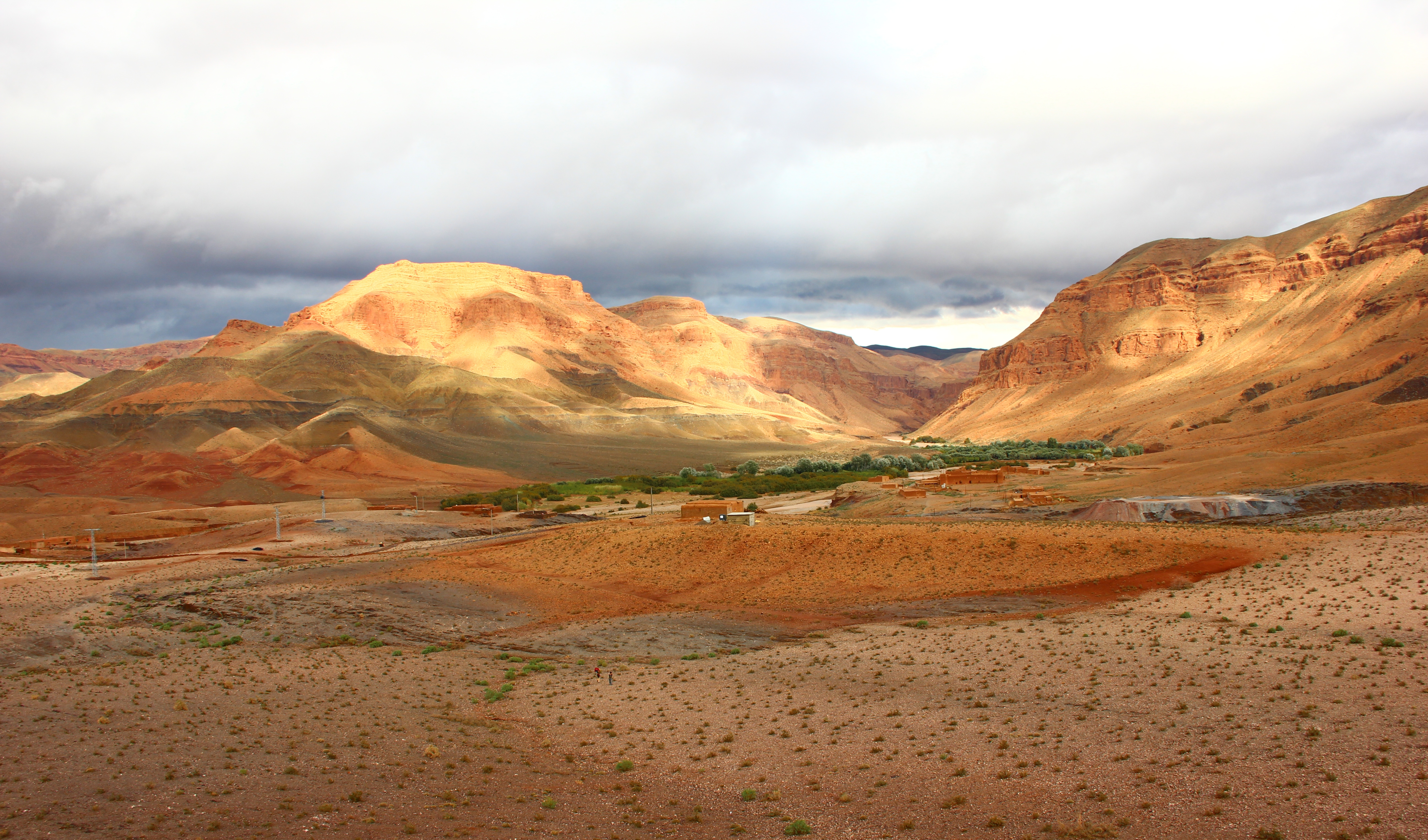
Photo: Dmitry Tonkacheev / Imaggeo
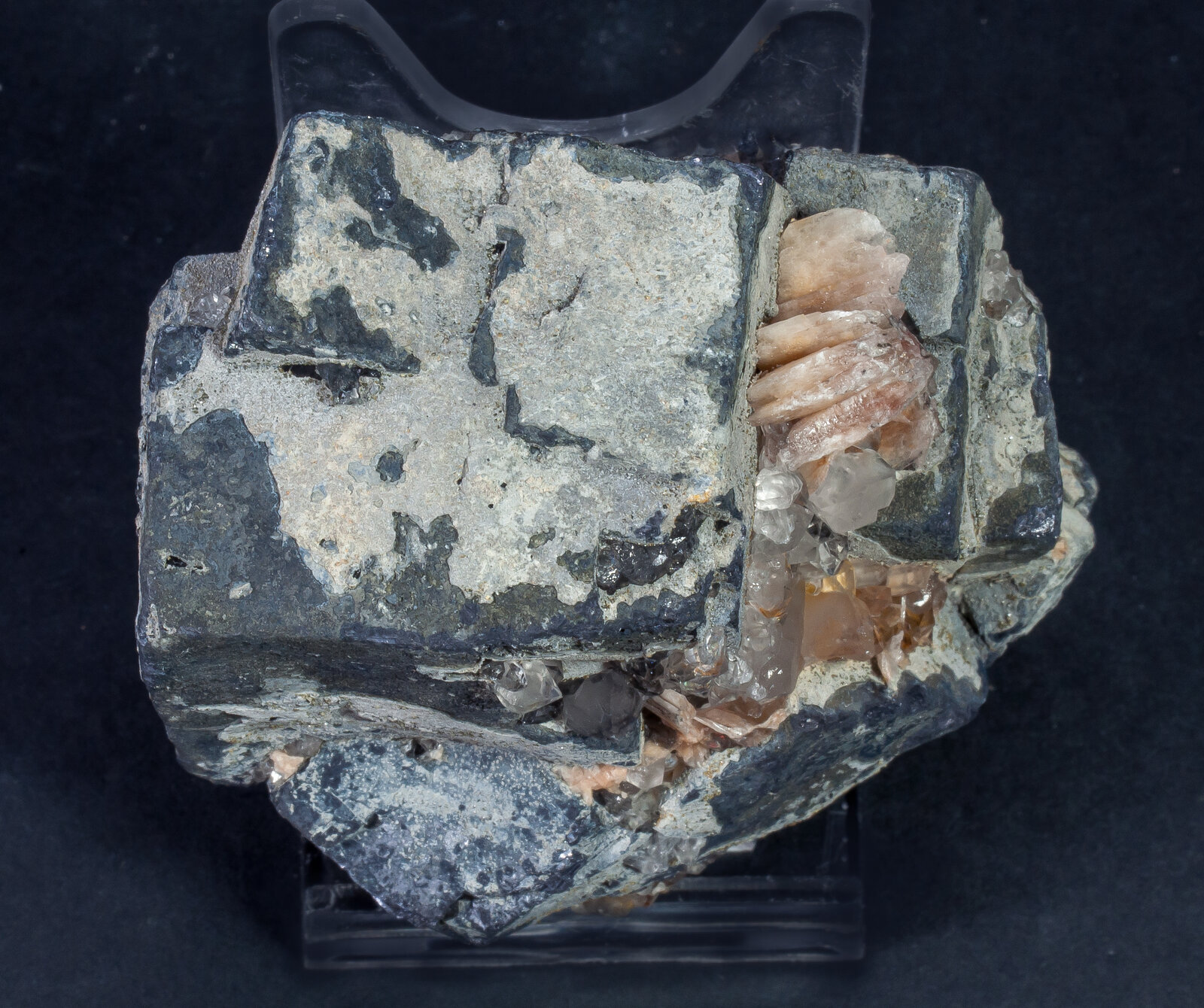
Photo: Fabre Minerals
Search for specimens: View all specimens from Sidi Ayed, Morocco
Sidi Ayed is a lead-vein locality in Boulemane Province, Fès-Meknès Region, Morocco, lying several kilometres northeast of the Aouli district and geologically attached to it. The broader High Moulouya lead district contains three related but contrasting deposit styles: the Aouli–Sidi Ayed vein deposits in Paleozoic metasediments and granite, the Mibladen stratabound MVT-style lead mineralization in Liassic carbonates, and the Zeïda red-bed lead deposit in Triassic sandstones and arkoses. Sidi Ayed is therefore best understood as part of the Aouli vein family, not as a Mibladen-type deposit, even though old labels often blur the distinction.
The Sidi Ayed vein field lies in the northern part of the Aouli system. Published Moroccan geological guide material describes the Aouli deposit as divided into two principal vein fields: the “Henri” field, hosted by granite and Paleozoic metamorphic rocks, and the Sidi Ayed field farther north, including the Marabout and Tissoudine veins, with NE-SW and E-W orientations. These veins are hectometric to kilometric in length, commonly 1 to 8 m thick, and are developed as alternating mineralized and barren columns. The ore was dominantly galena with subordinate pyrite, sphalerite, and chalcopyrite in a quartz gangue, accompanied by pink baryte and scarcer fluorite. In the oxidized zones, cerussite is the dominant lead secondary mineral; malachite and azurite are less abundant but far more visually obvious when they coat cavities and fracture surfaces.
The genetic picture is one of structurally focused hydrothermal lead mineralization in the High Moulouya inlier. Lead-sulfur isotope work on the Upper Moulouya district links the Aouli-type vein deposits and the Zeïda sandstone-hosted deposits to fluid mixing and metal leaching from the Aouli granite massif and deeper basement sources during Triassic extensional tectonics. The locality’s collector minerals follow naturally from that history: galena as the primary lead sulfide, quartz and baryte as the principal vein gangue, fluorite where F-rich fluids were involved, and a supergene suite of cerussite, malachite, azurite, wulfenite, plumbogummite, and iron oxides in the weathered zone.
Industrial mining in the Aouli–Mibladen district began after the 1923 discovery of lead indications between the ksar of Aouli and the Oued Ansegmir by the Compagnie Minière de l’Afrique du Nord, which led to the Société des Mines d’Aouli. Aouli and Mibladen entered exploitation in 1939 after construction of the necessary infrastructure, including washing plants and power facilities. Technical control by Peñarroya from 1946 helped expand the operation, and a geological service established in 1960 improved exploration success. The district became especially active in the 1970s, producing lead concentrate on a large scale, but declining reserves and metal prices brought difficulty from 1967 onward. After a BRPM research program begun in 1973, activity resumed at Mibladen in 1977 and at Aouli in 1979, but the Aouli–Mibladen mines finally closed in 1983.
Specimen collecting today is not a matter of visiting an operating mine with formal collecting access. Sidi Ayed is an abandoned mining area, and the old stopes, shafts, and open cuts are inherently dangerous. Field accounts describe large open stopes and cuts along surface veins, with dumps on both sides of the vein rich in green and blue copper carbonates. Local miners and visiting collectors have recovered material from dumps and old workings, but permission, local guidance, and a realistic sense of hazard are essential. A French field note on the district warns that people have worked in formerly exploited parts of the main vein with simple hammer-and-chisel methods, amid risks from rock fall and open shafts; a reported main shaft depth of about 250 m gives a sober sense of scale.
The most important recent collector find from the lead system was the 2021 Georges vein material: equant galena crystals coated by white cerussite microcrystals, pale bluish plumbogummite, quartz microcrystals, and tiny transparent yellow bipyramidal wulfenite, with salmon-pink lamellar baryte on some pieces. These specimens appeared as a Sainte-Marie Virtual 2021 novelty and were notable because the association was analyzed rather than merely label-identified. A separate 2021 discovery in the Sidi Ayed area, explicitly noted by dealers as not from the Sidi Ayed mine itself, produced stalactitic spheroidal malachite aggregates on limonite with white calcite coatings and small acicular cerussite; the calcite and cerussite in some examples are fluorescent under both longwave and shortwave UV.
The Mamsa aragonite occurrence belongs to a different but locally associated collecting story. It was discovered in March 2016 in a Triassic volcanic sequence of tuffs and melaphyres on semi-desert highland north of Sidi Ayed. Aragonite-bearing rocks are exposed along roughly 500 m, with the best pockets in harder melaphyre layers near the upper part of the hill. Most cavities contain only quartz and/or chalcedony, with quartz crystals to about 2 cm and later calcite coatings; the productive aragonite pockets are flat, discoidal cavities aligned with bedding and can reach about 50 cm long by 30 cm high.
Quartz is the constant thread through Sidi Ayed, present both as the main gangue of the lead veins and as later sparkling druses in oxidized cavities. In the Aouli–Sidi Ayed vein system it is described with galena, baryte, and subordinate fluorite; field notes call it omnipresent, ranging from massive vein quartz to clear geodic blocks with crystals to about 5 cm on edge. In the Georges vein association, quartz appears as microcrystals over galena alteration crusts and as sharper larger crystals above the cerussite–plumbogummite–wulfenite coatings, so the best Sidi Ayed quartz pieces are rarely “quartz specimens” in the alpine sense; they are bright, contrast-rich association pieces where quartz clarifies the paragenesis and frames galena, baryte, fluorite, or aragonite. At Mamsa, quartz and chalcedony line many of the flat volcanic pockets and commonly underlie or accompany the aragonite, including hematoid quartz and botryoidal chalcedony on some collector specimens.
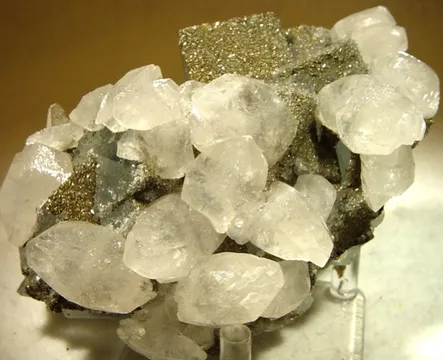
Cerussite at Sidi Ayed is principally a supergene alteration mineral after galena, and the locality’s most characteristic modern cerussite is not the large reticulated or V-twinned style of Mibladen and Touissit but rather white microcrystalline crusts and small acicular crystals in oxidized lead pockets. On the 2021 Georges vein galena pieces, cerussite forms a layer of very small white crystals on equant galena, partly masked by pale bluish plumbogummite and quartz microdruse, with yellow wulfenite perched above; in the associated malachite discovery, cerussite occurs as small needles on limonite with silky spheroidal malachite and white calcite coatings. Good Sidi Ayed cerussite specimens are valued for association, fluorescence, and crisp undamaged coverage rather than individual crystal size, with cabinet-quality examples attractive because the cerussite reads as a clean white alteration stage against metallic galena, green malachite, or dark limonite.
Galena is the ore mineral that made Sidi Ayed and the Aouli district economically important, and the best collector pieces preserve that primary lead-sulfide architecture as equant, blocky, metallic-gray cubes and cuboidal aggregates. The 2021 Georges vein specimens show galena crystals several centimetres across in small-cabinet to cabinet pieces, their faces partly dulled or coated by successive alteration minerals: cerussite, plumbogummite, quartz, wulfenite, and sometimes salmon-pink baryte. Earlier field and specimen records also note crystallized galena plates from the Ti-Sidi-Ouine veins, including pieces with small cerussite. The finest Sidi Ayed galena is not simply the brightest or most mirrorlike; it is the galena that still has strong cubic form while carrying an undisturbed secondary mineral skin, because that combination documents the lead-vein oxidation sequence better than cleaned, isolated cubes would.
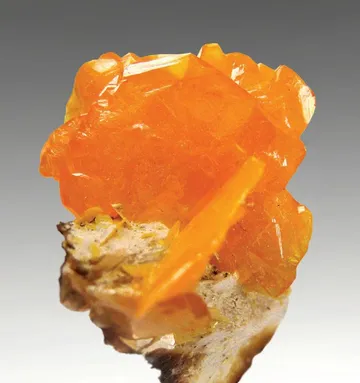
Sidi Ayed wulfenite is small but mineralogically compelling. The classic district note describes lead alteration minerals as generally very rare at Sidi Ayed, but records centimetric thick tablets of wulfenite in some veins hosted by the Moulouya granite; the 2021 Georges vein material is different and more diagnostic, with tiny transparent yellow crystals of bipyramidal habit scattered over quartz and plumbogummite-coated cerussite on galena. Laboratory work on a Fabre specimen confirmed wulfenite by Raman spectrometry, and the microcrystals were described as caramel-brown to yellow, sub-millimetre crystals on a cerussite–plumbogummite crust. The best Sidi Ayed wulfenite specimens are therefore high-magnification association pieces rather than bold display wulfenites: what matters is verified identity, clean visibility against the pale crust, and undamaged placement on the galena alteration surface.
Plumbogummite is one of the minerals that turned the 2021 Sidi Ayed galena find from an attractive Moroccan lead-suite novelty into a serious collector association. On the Georges vein specimens it appears as a slightly bluish, pale gray-blue to powdery coating over very small cerussite crystals on galena, commonly with quartz microcrystals and tiny wulfenite above it. Raman analysis of the alteration crust identified the phosphate band of plumbogummite together with the carbonate band of cerussite, resolving what might otherwise have been dismissed as an anonymous dull alteration film. Fine examples are judged less by crystal size—plumbogummite here is essentially a crustal to microcrystalline phase—than by even coverage, color contrast, association with wulfenite, and analytical confidence.
The Sidi Ayed aragonite on the collector market is chiefly from Mamsa, north of Sidi Ayed, where a March 2016 discovery in Triassic volcanic rocks began producing specimens by April–May of that year and was later followed by notable 2022 material. The aragonite occurs in flat discoidal pockets in melaphyre and related volcanics, commonly with quartz, chalcedony, and calcite. Three habits define the locality: delicate white to colorless sprays of needle-like crystals usually 3–5 cm long and 1–2 mm thick, stubby pseudohexagonal cyclic twins generally 2–3 cm long and up to 4–5 cm, and rare long prismatic cyclic twins, in the best cases exceeding 13 cm. Later marketed specimens include transparent to translucent, lustrous, colorless prismatic crystals, many doubly terminated, with main crystals in the 2–10 cm range; the best pieces are clean, aerial, undamaged groups on contrasting volcanic or calcite matrix, while ordinary pieces are incomplete sprays or etched, broken twins from pockets that were difficult to extract intact.
Agate from the Sidi Ayed area is tied especially to Bou Hamza and the Mamsa highland, where local diggers worked chalcedony and agate before the aragonite find drew wider mineral-collector attention. The material is typically cut and polished rather than collected as delicate crystal specimens: multicolored nodules and seams with red, yellow, blue-gray, and gray banding, sometimes in hemispherical forms or still attached to host rock. Japanese dealer notes on Bou Hamza material describe many specimens as showing small agate layers within country rock, while museum-style catalogue entries emphasize intense red and yellow banding against blue and gray chalcedony. The best Sidi Ayed-area agates are those with sharp fortification banding, strong natural color contrast, depth in the translucent zones, and honest preparation; because much of the market material is polished, surface finish and absence of dye or resin should be assessed as carefully as locality.
Other documented minerals from Sidi Ayed include ankerite, azurite, baryte, bornite, calcite, chalcanthite, chalcocite, chalcopyrite, chrysocolla, covellite, fluorite, hematite, jarosite, limonite, malachite, marcasite, pyrite, smoky quartz, and sphalerite. Fluorite deserves special mention even though it is not one of the gallery species above: yellow to yellow-green cubes from Sidi Ayed are among the best-known “Aouli” fluorites, commonly on quartz and baryte, sometimes fluorescent under both longwave and shortwave UV. Malachite and azurite are also important for field collectors, occurring as vivid fracture coatings, velvety cavity linings, spherical azurite aggregates, and, in some cases, coatings or possible pseudomorphs on baryte. No type-locality mineral is securely tied to Sidi Ayed in the verified sources used here, but the locality has gained modern significance through analyzed plumbogummite–wulfenite micro-associations rather than through a new mineral species.
Sidi Ayed is one of those Moroccan localities where label discipline matters. For decades, many specimens from the northern part of the Aouli district were sold broadly as “Aouli,” and several sources note that the more attractive yellow fluorites labeled Aouli often came from Sidi Ayed veins. Conversely, specimens from Mibladen, Touissit, and other Moroccan lead districts can be superficially similar if described only as “Morocco, lead mine.” A careful label should distinguish Sidi Ayed/Sidi Ayad, Boulemane Province, Fès-Meknès Region; Georges vein where applicable; Ti-Sidi-Ouine veins where applicable; and Mamsa or Bou Hamza for aragonite and agate material.
The 2021 Georges vein galena combinations are especially vulnerable to overconfident visual naming. The wulfenite is tiny, and the plumbogummite can look like a dull pale crust unless examined under magnification. Good dealer material from the original find was analyzed, and that analytical backing is meaningful. Without it, yellow specks on altered galena should not automatically be assumed to be wulfenite, and pale alteration coatings should not automatically be called plumbogummite. A loupe is not enough for the best identification work here; Raman or comparable analytical confirmation is ideal for high-value micro-association pieces.
Condition is a central issue. Galena from Sidi Ayed commonly shows edge wear or small cleavage bruises, and the secondary crusts can be powdery, thin, or easily abraded. Wulfenite microcrystals are too small to tolerate careless cleaning. Cerussite needles and microcrystals can be knocked off by brushing, and malachite coatings on limonite can detach if the matrix is friable. Aragonite from Mamsa is even more condition-sensitive: the host rock is not especially solid, the crystals bridge flat pockets, and early extraction with simple tools damaged many specimens. Complete aragonite sprays and undamaged long cyclic twins are much rarer than broken or incomplete groups.
Fluorescence can add value and diagnostic interest. Sidi Ayed fluorite specimens are reported with longwave and shortwave UV response; some cerussite and calcite from the 2021 malachite–calcite–cerussite find are also reported fluorescent under both longwave and shortwave UV; and some Mamsa aragonite-associated chalcedony shows minor fluorescence. Fluorescence should be treated as a useful attribute, not as a substitute for identification, because several associated carbonates and siliceous phases may respond differently across shortwave and longwave sources.
Handling precautions are straightforward but important. Galena, cerussite, wulfenite, and plumbogummite are lead-bearing minerals, so they should be kept out of reach of children, handled with clean dry hands or gloves, and not cut, ground, soaked, or cleaned with acids in a domestic setting. Cerussite and aragonite are carbonates and can be damaged by acids; aragonite is also relatively soft and brittle. Polished agates from Bou Hamza are more robust, but collectors should still watch for dye, resin filling, overly glossy artificial surfaces, or vague locality labels.
Market availability is uneven. Agate and some Mamsa aragonite appear periodically through Moroccan dealers and general online marketplaces. Good Sidi Ayed fluorite is much less common than the number of old “Aouli” labels might suggest, and top yellow cubes on quartz or baryte are pursued as Moroccan classics. The Georges vein galena–cerussite–plumbogummite–quartz–wulfenite association is a finite modern find; modest small-cabinet examples have traded at accessible prices, but clean, well-balanced, analyzed pieces with strong galena form, visible wulfenite, and attractive baryte or quartz are considerably more desirable.
In November 2012, participants in the second Mindat conference in Morocco went into the Midelt mineral country with the kind of itinerary collectors dream about and bus drivers dread. The trip had already produced its share of rough-road drama elsewhere in Morocco, but the approach to Sidi Ayed had its own character. David Joyce described the road as “very rough,” yet his driver pushed the minibus all the way to the end. There, the road stopped beside a large open stope and open cuts on a vein that came right to surface. On both sides of the vein were dumps loaded with green and blue fragments. Most were only coatings along fractures, but the reward was in breaking the right chunks: cavities lined with velvety malachite or balls of blue azurite crystals.
That same field account makes clear why Sidi Ayed and Aouli labels became tangled. Aouli itself was a large underground operation in a steep river valley, impressive for its mine buildings and history but not especially generous to collectors during that visit. Sidi Ayed, by contrast, offered the color—dumps, oxidized vein material, and copper carbonates. The guides told the group that many specimens labeled Aouli had really come from Sidi Ayed, a remark that matches what dealers and locality specialists have observed for years about the district’s fluorites and secondary copper minerals.
The Mamsa aragonite story is more intimate and more fragile. The occurrence was discovered in March 2016 on a hot, almost unpopulated semi-desert highland north of Sidi Ayed. It took more than a month before miners organized work there. At first there was just one team of three; by May there were three teams, about ten people in all. They stayed at the site for two or three days at a time, sleeping directly on the rocks because of the distance, heat, and lack of fresh water. Most had been agate diggers, not experienced crystal miners, and they worked with simple tools. That matters because the pockets were flat, the aragonite was brittle, and the host rock was not strong. Tomasz Praszkier examined several hundred of the common spray-type aragonites and found only about 30 to 40 undamaged examples.
The pockets themselves were memorable: discoidal cavities aligned parallel to the bedding, some up to 50 cm long and 30 cm high, many filled only with quartz, chalcedony, or calcite. When they did contain aragonite, the crystals could bridge both sides of the vug, making extraction a puzzle of patience and luck. The most common sprays looked spectacular when white or colorless needles fanned over dark calcite, but they broke easily. Stubby cyclic twins reached several centimetres, and the rare long prismatic twins produced a few specimens with crystals more than 13 cm long. The largest calcite pseudomorphs after aragonite were even more startling in size—20 to 30 cm long and 3 to 4 cm thick—but were coarse and unattractive, more geological evidence than display treasure.
The 2021 Georges vein material has a different sort of drama: not a field-camp story, but a laboratory reveal. Jordi Fabre sent an altered galena specimen from Sidi Ayed to César Menor-Salván for study. At first glance the interest lay in a grayish crust over a large galena crystal with quartz and baryte attached. Under the stereomicroscope, the crust resolved into tiny crystals, powdery coatings, and still larger but sub-millimetre caramel-brown crystals scattered across the altered galena. Raman analysis showed that the apparently dull crust was not dull at all: it was wulfenite on a layer of very small cerussite crystals covered by plumbogummite. Menor-Salván’s conclusion is a line every micromount collector understands: “Usually, dull alteration crusts are a boring mixture,” but not this time.