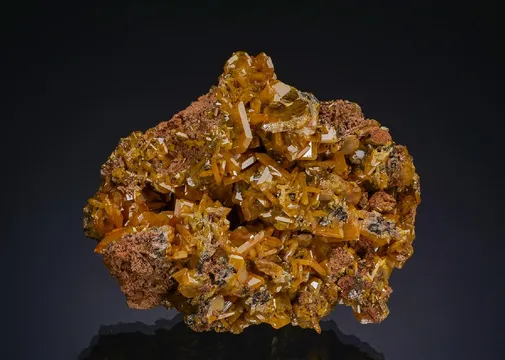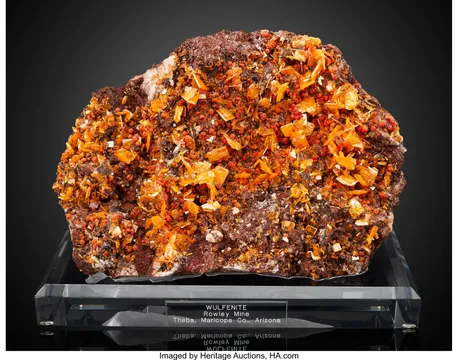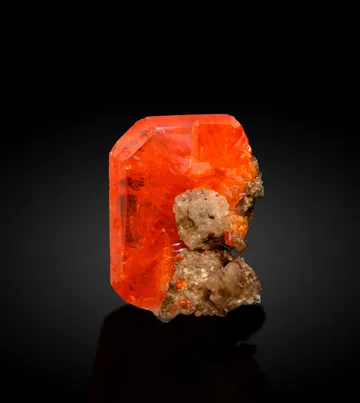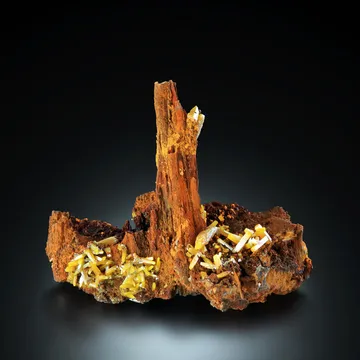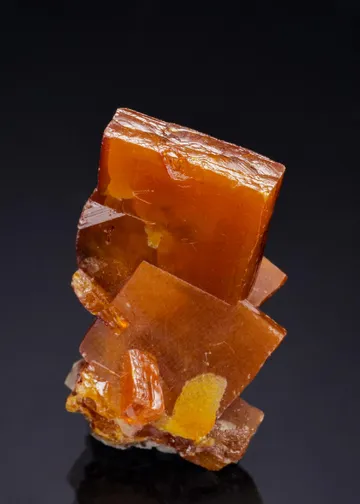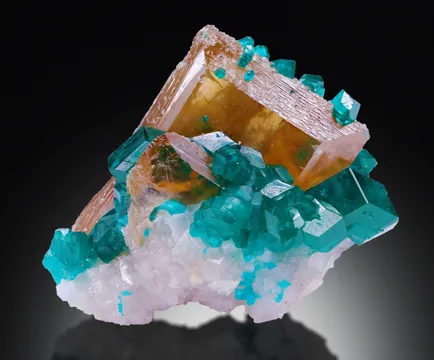
Wulfenite — brilliant warm colors and square crystals; prized for rarity of pristine specimens and famed localities like Red Cloud, Touissit, Ojuela.
Key facts
Wulfenite (PbMoO4) is a lead molybdate best known for its brilliant warm colors and distinctive crystal habit. Most collectors picture thin, square to rectangular “windowpane” tabs in glowing orange, red-orange, or lemon-yellow, often with sharp beveled edges and a bright, glassy to adamantine luster. The species forms in the oxidized zones of lead-rich deposits, commonly on limonite/hematite gossan and in association with mimetite, cerussite, vanadinite, calcite, mottramite, and smithsonite. While thin, perfectly transparent plates are classic, wulfenite also occurs as thicker tabular crystals or less commonly as bipyramids and hoppers at certain localities. Its density is high (due to lead), hardness low (2.5–3), and brittleness significant—factors that make pristine specimens surprisingly rare and highly prized. Fine examples display exceptional color saturation, clarity, square geometry, and elegant composition on contrasting matrix—qualities that elevate the best pieces to show-stopper status in any cabinet.
Few species captivate like wulfenite. It is coveted for its unapologetically vibrant palette—from cherry-red and burnt orange to honey and lemon—and its dramatic, architectural forms. Historic finds have shaped its legend: marble-bright reds from Red Cloud, honey-yellow “windowpanes” from Touissit, classic orange plates from Ojuela, thick beveled crystals from Los Lamentos, and a wide suite of habits and associations from Tsumeb. Because wulfenite is fragile, damage-free, unrepaired crystals are genuinely scarce; when coupled with striking color and composition, prices can escalate quickly. At the same time, the species offers excellent entry points—small, bright plates from Mexico or Arizona remain accessible—making wulfenite both an aspirational showpiece species and a beloved staple for beginning collectors.
The Red Cloud Mine (La Paz County) set the benchmark for red wulfenite. Its finest crystals are intensely saturated red to red-orange, square and glass-clear with beveled edges, typically perched on limonitic gossan or drusy quartz. Pockets exploited in the 1990s produced iconic, perfectly transparent plates up to several centimeters, many with an incandescent “stoplight” glow under modest light. Equally important, Red Cloud crystals often have unusually sharp edges and high luster that amplify their visual punch. Pristine, unrepaired plates with strong color are among the most sought-after wulfenites in the world.
Tsumeb is revered for diversity: wulfenite here ranges from thin transparent honey-yellow plates to thicker orange tabs, sometimes with “sandwich” zoning (amber rims, lighter cores), and superb luster. Fine crystals may rest on dolomite, calcite, cerussite, or mottramite, yielding dramatic color contrasts. Many display textbook geometry and sharp bevels; others show unusual habits reflecting Tsumeb’s complex paragenesis. Combined with the mine’s storied provenance, Tsumeb wulfenites remain a cornerstone for advanced collections.
Ojuela is one of the most prolific wulfenite localities, famed for swarms of thin, gemmy yellow to orange “windowpane” crystals. Pieces often feature elegant radiating plates on limonite, sometimes in association with hemimorphite, mimetite, or fluorite. While larger plates exist, the mine is best known for prolific small to medium crystals with great transparency and classic beveled edges. Because the gossan matrix can be friable, unrepaired, well-composed matrix pieces are especially desirable.
Rowley produced intensely colored pumpkin-orange wulfenite, typically as small, razor-sharp plates that display exquisitely against bright yellow mimetite. These combinations are among the most colorful in the species, with striking complementary hues and fine sparkling luster. Though crystals are often small, the aesthetic impact of a top Rowley wulfenite-on-mimetite piece can be enormous, and pristine examples are immediately recognizable and highly collectible.
Touissit is famous for large, razor-thin, perfectly transparent honey-yellow “windowpanes,” sometimes several centimeters across, often perched delicately on gossan or associated with cerussite. The finest pieces have a glassy brilliance and knife-edge sharpness that define the “textbook” wulfenite look. Because crystals can be ultra-thin, edge wear and chipping are common; truly pristine Touissit plates remain surprisingly rare and valuable.
Los Lamentos produced classic thick, beveled orange to butterscotch crystals—often squarish and blockier than Ojuela or Touissit material—frequently on calcite or gossan. Many show robust “architectural” form and rich, warm tones that display well even without backlight. Historic pockets yielded some of the world’s most recognizable wulfenites of the “thick tabular” habit; top, undamaged crystals on contrasting matrix are now quite scarce.
The Glove Mine is known for bright orange to reddish-orange plates—typically thicker than Rowley and often perched on limonitic matrix or with stark contrasts to quartz or calcite. Crystals can be remarkably lustrous with sharp bevels, and the best pieces capture the “Arizona red-orange” look that complements the deeper reds of Red Cloud. Fine, damage-free Glove specimens remain limited relative to demand.
Color and Saturation:
Transparency and Luster:
Crystal Form and Habit:
Matrix and Associations:
Condition:
Aesthetics:
Repairs/Reattachments:
Coatings and “Enhancements”:
Polishing:
Buy from reputable sources and ask directly about repairs or coatings. Transparent disclosure is standard for high-end wulfenite.
Wulfenite demands gentle handling and sensible display.
Handling and Mounting:
Light and Temperature:
Cleaning:
Environment and Storage:
Following these guidelines preserves the razor-sharp edges, brilliant luster, and unforgettable color that make wulfenite one of the most exciting species in the mineral world.