A collector's guide to Schneeberg, Germany: its geology, mining history and notable minerals, illustrated with the 199 specimens documented from this locality on EarthWonders.
Key facts
Schneeberg is one of the great old names of European mineral collecting: a western Erzgebirge mining district where silver, bismuth, cobalt, nickel and uranium crowd into compact hydrothermal veins, and where the specimen record is inseparable from the mining history of Saxony. The district sits in and around Schneeberg and Neustädtel, west of Aue, in a contact-metamorphic setting related to the Aue granite and the Lößnitz-Zwönitz structural zone. Its classic ores belong to the celebrated five-element family of veins—Ag-Bi-Co-Ni-U—augmented by quartz, carbonates, arsenides, sulfides, sulfosalts, bismuth oxides and a spectacular late oxidation suite.
For collectors, Schneeberg has several distinct faces. There is the old silver district of the 15th and 16th centuries, with native silver, acanthite, ruby silvers and dark argentiferous ore. There is the cobalt district, whose arsenides and erythrite made Schneeberg a benchmark locality for cobalt minerals and fed the cobalt-blue pigment trade for centuries. There is the bismuth district, famous for native bismuth—often massive but sometimes in highly prized metallic crystals with dolomite or siderite. And there is the uraniferous secondary-mineral district, especially the Walpurgis Flacher vein at the Weißer Hirsch Mine, which made Schneeberg a type-locality cluster for vivid and often delicate uranium arsenates.
The best specimens have an unmistakably old-European look: cherry-red proustite in thumbnail crystals, magenta-to-maroon erythrite sprays rising from pale quartz, metallic bismuth plates or “feather ore,” silvery arsenide crystals in tight groups, and silver-black ore whose richness is apparent even before magnification. Many fine pieces are not large by modern pocket standards, but they carry unusual density of history, chemistry and provenance. A small Schneeberg specimen with a 19th-century label can have more collecting weight than a far larger piece from a younger deposit.
Regional View
Country View

Photo: Wikimedia Commons

Photo: Wikimedia Commons
Schneeberg’s importance also lies in how many separate chapters of mineralogy converge there. It is not merely a “silver locality,” nor only a cobalt locality, nor only a uranium locality. The district records multiple mineralizing stages: earlier quartz-tungsten and quartz-sulfide assemblages, pitchblende-bearing quartz-calcite and carbonate stages, the classic arsenide-dominated Bi-Co-Ni stage, and later arsenic-silver sulfide and iron-manganese assemblages. That overprinting is why old Schneeberg specimens so often repay close study: a hand specimen may show a main-stage ore texture, a carbonate replacement, and a late oxidation rind all on the same broken surface.
Search for specimens: View all specimens from Schneeberg, Germany
Schneeberg lies in the western Erzgebirge of Saxony, within the historic mining country around Schneeberg and Neustädtel. In modern locality usage, collectors may see labels ranging from the broad “Schneeberg District, Saxony” to precise mine names such as Daniel, Weißer Hirsch, Wolfgangmaßen, Rappold, Güldener Falk, Pucher Shaft, Adam Heber, Sauschwart, Gesellschaft, Neujahr, Neuhilfe and others. These labels matter. A specimen from “Schneeberg” may be perfectly legitimate as an old cabinet label, but mine-level provenance is especially valuable here because different veins produced very different mineral suites.
Geologically, the district is a polymetallic hydrothermal vein field. The ore-bearing structures cut metasedimentary and metavolcanic rocks of the Lößnitz-Zwönitz sequence near the contact aureole of the Aue granite. Saxon geological work describes the Bi-Co-Ni and Ag-bearing veins as tied to host rocks in the northwestern part of the granite contact zone, with mineralization controlled by vein direction, depth, and the changing character of the country rock. The district’s productive veins are not a single simple lode but a network of steep and flatter structures, some following Erzgebirge trends and others Hercynian trends.
The mineralization is notably polyphase. Earlier mineral stages include quartz-wolframite and quartz-scheelite associations, followed by quartz-sulfide veins. Later uranium-bearing stages include quartz-calcite-pitchblende veins and dolomite-bearing overprints. The Bi-Co-Ni arsenide assemblages followed, bringing native bismuth, nickeline, skutterudite-group minerals, safflorite, rammelsbergite and related arsenides into the collector’s vocabulary. Still later arsenic-silver sulfide mineralization supplied acanthite, proustite, pyrargyrite, xanthoconite and related silver species. Weathering then produced erythrite, annabergite, roselite, köttigite, bismutite, eulytine, pucherite, walpurgite, zeunerite, uranospinite, metazeunerite and many other secondary species.
Mining began as a silver story. Exceptionally rich finds from 1471 onward triggered Schneeberg’s rise as a free mining town, and in 1481 it received town rights. The early silver phase was comparatively short but legendary, symbolized by the famous 1477 native-silver find at the St. Georg Mine. After the decline of the first silver boom, cobalt became Schneeberg’s defining resource. From the 16th to the 19th century the district was regarded as the world’s largest and most important source of cobalt ore, much of it destined for blue pigment used in glass, ceramics and porcelain. Bismuth and nickel were also important, and uranium was worked in the 20th century, especially during the Wismut period after World War II.
The Schneeberg-Neustädtel landscape is now primarily heritage country rather than a modern collecting field. The Bergbaulehrpfad leads through historic mine sites, dumps, water-management features, former dressing works and preserved buildings; the Siebenschlehener Pochwerk operates as a technical museum, and the wider Erzgebirge/Krušnohoří mining landscape is recognized for its mining heritage. Serious collectors should assume that active collecting is restricted by land ownership, heritage protection, safety law and environmental considerations. Fresh finds from casual collecting are not the norm. Most desirable Schneeberg specimens enter the market from old European collections, museum duplicates, dealer inventories, estate material or carefully documented historical holdings.
Specimen-producing “pockets” at Schneeberg were rarely large open Alpine-style cavities. The district’s best minerals more often came from narrow vein openings, vugs, replacement zones and oxidized seams in arsenide-carbonate-quartz ore. High-grade silver ore from Wolfgangmaßen, for example, may show native silver and acanthite concentrated in tiny crystal pockets in dolomite-rich gangue. The Daniel Mine is famous to collectors for old erythrite on quartz. Weißer Hirsch and its Walpurgis Flacher vein are essential names for uranium arsenates and several type-locality species. Pucher Shaft at Wolfgangmaßen is a key locality for pucherite and other bismuth-bearing secondary minerals. Such precision turns a label into geological information.
Schneeberg quartz is less about giant crystals than about context: it is the pale framework on which the district’s cobalt, bismuth and silver mineralogy is displayed. Documented varieties include rock crystal, milky quartz, smoky quartz, chalcedony, agate and amethyst, with quartz reported from many sublocalities including Neujahr, Neuhilfe, Wolfgangmaßen, Daniel and Weißer Hirsch. The finest collector quartz pieces from Schneeberg are those that carry meaningful associations—maroon erythrite sprays on sparkling white quartz from Daniel, quartz-lined pockets with proustite or ruby-silver minerals, quartz with arsenides, or older ferruginous pieces showing iron-oxide staining and phantom-like zoning. Ordinary massive vein quartz is common as matrix; valuable Schneeberg quartz is identified by sharp small crystals, clean contrast, antique provenance, and a paragenesis that anchors it to the district’s silver-cobalt-bismuth story.
Native silver is Schneeberg’s foundational mineral, though top specimens are far scarcer than the district’s fame might suggest. Historically it occurred in rich Ag-bearing veins as massive, hackly, arborescent, wiry and pocket-enriched silver, commonly darkened by acanthite or silver sulfide alteration and associated with dolomite, quartz, chalcopyrite, galena, sphalerite, proustite and pyrargyrite. The old finds included extraordinary masses from the St. Georg workings, while later specimen material tends to be smaller: curls, wires, veinlets and irregular silver-rich pieces in carbonate gangue. For collectors, good Schneeberg silver is not judged only by brightness; an honest blackened patina, old trimming, dense ore character, and a label tying the specimen to a mine such as St. Georg, Wolfgangmaßen, Weißer Hirsch or another Neustädtel working can be more desirable than a polished or overcleaned surface.
Native bismuth from Schneeberg is a classic European rarity, prized most when it is genuinely natural and crystallized rather than a massive or cleaved metallic lump. Typical specimens show silver-white to slightly pinkish or bronze-gray metallic bismuth as masses, plates, lamellar forms, skeletal crystals, feather-like aggregates and small sharp crystals embedded in or perched on carbonate gangue. Associated minerals may include dolomite, siderite, quartz, safflorite, skutterudite-group arsenides, pyrite, erythrite and bismuth oxidation products. Fine pieces are usually miniatures or small-cabinet specimens, and the market strongly rewards visible crystal faces, natural matrix, old labels and convincing paragenesis. At Schneeberg, a modest 1 cm bismuth crystal in a classic dolomite association may be far more important than a larger artificial-looking specimen.
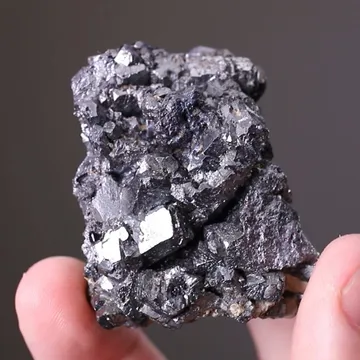
Skutterudite-group minerals are central to Schneeberg’s cobalt-nickel arsenide assemblage, occurring in the Bi-Co-Ni vein stage with native bismuth, safflorite, rammelsbergite, nickeline and silver minerals. Schneeberg material is typically metallic tin-white to steel-gray, often tarnishing darker, and may appear as compact crystalline masses, granular ore, or sharp small crystals rather than large isolated display pieces. Older labels may use names such as smaltite, chloanthite or cobalt-nickel arsenide, and many specimens require modern analytical caution because the skutterudite-nickelskutterudite compositional field is complex. The best collector specimens combine bright metallic crystal form, little oxidation, and a known mine association—especially where erythrite, bismuth or carbonate gangue confirms the classic Schneeberg paragenesis.
Schneeberg proustite is one of the locality’s most coveted aesthetic minerals: deep cherry-red to dark ruby crystals and grains from the silver-sulfosalt stage, found in quartz-lined pockets and silver-rich vein material. Crystals are generally small—many old specimens show millimetric crystals, though exceptional thumbnails are known—and they may be associated with acanthite, native silver, pyrargyrite, xanthoconite, quartz and carbonate gangue. Fresh proustite is gemmy to translucent red, but old pieces often darken from light exposure, so the strongest examples retain red internal color, sharp luster, recognizable crystal faces and minimal bruising. Schneeberg proustite competes in a field dominated by Freiberg, Marienberg, Jáchymov and Chañarcillo, but a well-labeled Schneeberg crystal has the additional appeal of belonging to one of the most historically charged silver districts in Europe.
Erythrite is one of Schneeberg’s signature display species and is especially famous from the Daniel Mine at Neustädtel, where old specimens show radiating sprays and bladed aggregates of intense maroon-red, magenta-red or purplish-red crystals on quartz. The best examples are small but electric: sharply bladed crystals to about a centimeter or more, arranged in radial sheaves with bright luster and strong contrast against pale quartz. Erythrite forms by oxidation of cobalt arsenides, so it is a visual flag for Schneeberg’s cobalt ore chemistry; it may occur with quartz, roselite, köttigite, arsenides and other secondary arsenates. Quality is controlled by color saturation, undamaged terminations, freedom from powdery alteration, and old labels—especially mid-19th-century or earlier European pieces from Daniel, long considered benchmark material for the species.
Calcite at Schneeberg is primarily a gangue and paragenetic marker rather than the district’s headline species, but it is important in the quartz-calcite-pitchblende and later carbonate vein stages. It occurs as white to colorless, grayish or iron-stained crystals and masses, in veins with uranium minerals, silver minerals, sulfides and arsenides, and in some specimens as the pale carbonate contrast beneath darker metallic ore. Collectible calcite is most interesting when it carries or frames another classic Schneeberg mineral—native silver, proustite, acanthite, bismuth, erythrite, uranium arsenates or arsenides—rather than as isolated calcite crystals. Good specimens show clean carbonate crystals, identifiable associations, and a label specific enough to distinguish Schneeberg material from the many other calcite-bearing Saxon vein deposits.
Acanthite is the principal black silver sulfide seen in many Schneeberg silver ores, occurring as massive silver-black material, coatings, veinlets, small crystals and replacement textures with native silver. In polished or microscopic material from Wolfgangmaßen, acanthite is documented with native silver, chalcopyrite and dolomite gangue in high-grade silver ore, and similar associations occur across the silver-bearing parts of the district. Display specimens are usually not large sculptural crystals; instead, the value lies in rich ore texture, association with visible native silver or ruby silver, and a convincing old Schneeberg label. Fine acanthite pieces from here look dark, dense and old, and the best are those where the silver mineralization is visually legible rather than merely a black massive patch.
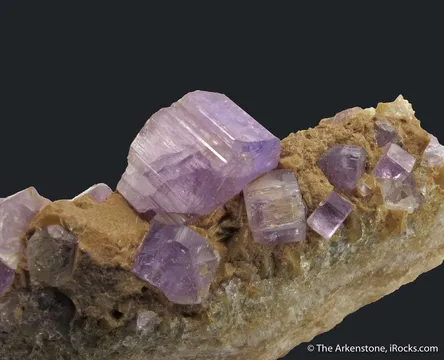
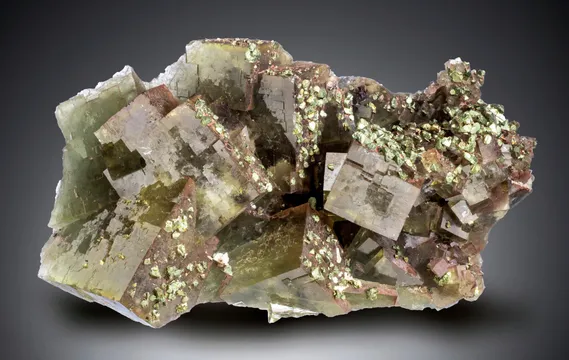
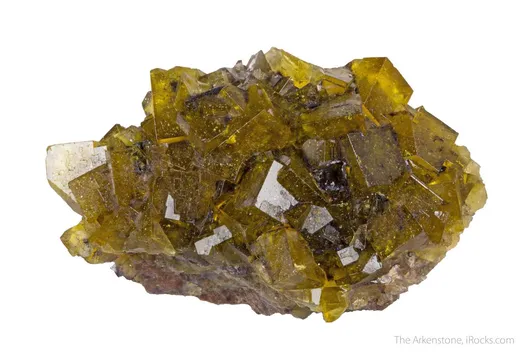
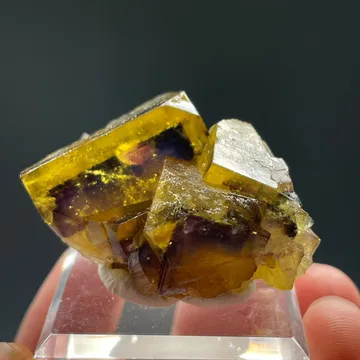
Fluorite is recorded from the Schneeberg district but is not the collector-defining mineral it is at some other Saxon localities. The district’s geology is notable in part because fluorite-baryte veins are not strongly developed in the main Schneeberg Bi-Co-Ni-Ag system, yet fluorite does appear locally in hydrothermal assemblages and in the broader uranium-carbonate-fluorite context of the western Erzgebirge. Schneeberg fluorite specimens are generally valued as locality pieces or associations rather than for large, colorful cubes. Collectors should prize pieces with precise mine provenance, intact small crystals, and associations with quartz, carbonates, sulfides or uranium minerals; vague “Saxony fluorite” labels are especially risky because neighboring Erzgebirge localities can be far more fluorite-rich and visually similar.
Dolomite is one of the key gangue minerals of Schneeberg’s carbonate stages and is especially important as a matrix for native bismuth, native silver, acanthite and related ore minerals. It occurs as fine-grained vuggy aggregates, pale rhombs, cream to white crystals and carbonate vein material, sometimes partially replacing earlier assemblages. The finest dolomite-associated specimens are not collected as dolomite alone but as classic combinations: bismuth crystals on cream rhombs, silver-rich pockets in dolomite gangue, or carbonate-lined cavities carrying metallic arsenides. Good pieces show crisp rhombs, attractive contrast, and minimal bruising to the attached ore minerals; washed-out carbonate with only traces of metallics is ordinary, while dolomite that frames sharp bismuth or silver is a premium Schneeberg association.
Pyrargyrite, the darker antimony-bearing “ruby silver,” is part of Schneeberg’s silver-sulfosalt suite and may occur with proustite, acanthite, native silver, quartz, galena, sphalerite and pyrite in silver-rich vein material. It is usually darker than proustite—gray-black to deep red-black externally, with ruby-red translucency only in thin edges or broken splinters—and fine crystals are scarce. Schneeberg pyrargyrite specimens often appear as dark massive or crystalline patches rather than bright red display crystals, so quality depends on identifiable crystal form, visible red internal color, strong association, and old documentation. Because pyrargyrite and proustite are easily confused on antique labels, the best pieces are those with analytical confidence or with visual features and provenance strong enough to support the identification.
Siderite appears in Schneeberg’s carbonate-rich vein assemblages and is a meaningful associate of native bismuth and other metallic species. It may occur as tan, brownish or pale rhombohedral crystals, massive carbonate, or altered sparry gangue with bismuth, arsenides, pyrite and dolomite. Fine siderite specimens from Schneeberg are usually combination pieces rather than pure siderite displays: the most appealing examples use siderite as an architectural matrix for metallic bismuth crystals or other ore minerals. Collectors should look for crisp rhombs, unetched natural surfaces, attractive contrast with bismuth or arsenides, and labels distinguishing Schneeberg from Schlema-Hartenstein and other nearby Saxon bismuth-bearing localities that are sometimes conflated in trade.
Nickelskutterudite is especially important at Schneeberg because the district is a classic and type-linked source for nickel-rich skutterudite-group material. Documented specimens include silver metallic euhedral to twinned crystals, described as roughly dodecahedral in analyzed museum material, and older pieces may be labeled under obsolete terms such as chloanthite or nickelian skutterudite. It occurs in the nickel-cobalt arsenide assemblage with skutterudite, safflorite, rammelsbergite, nickeline, native bismuth and related ore minerals. The best collector examples show distinct bright crystals rather than merely massive arsenide, and they benefit strongly from analytical confirmation because the skutterudite group is chemically continuous and old labels are often imprecise.
Beyond these headline species, Schneeberg is unusually rich in rare and type-locality minerals. Mindat records the broader Schneeberg mining district with about 178 valid minerals and 25 valid type-locality species, including erythrite, köttigite, roselite, safflorite, spherocobaltite, heterogenite, eulytine, pucherite, schneebergite, nickelschneebergite, brendelite, schlegelite, schumacherite, neustädtelite, cobaltneustädtelite, hydronováčekite, metazeunerite, trögerite, uranosphaerite, uranospinite, walpurgite and zeunerite. Several of these are not display minerals in the usual sense; they are microscopic, crustose, fragile or chemically complex. But for systematic collectors, Schneeberg is one of the European localities where cabinet aesthetics and advanced species collecting genuinely overlap.
Schneeberg specimens demand label literacy. “Schneeberg” can mean the town, the mining district, or an old trade shorthand for a broader Saxon Erzgebirge source. Precise mine names add value and credibility. Daniel Mine labels are especially meaningful for erythrite; Weißer Hirsch and Walpurgis Flacher labels matter for uranium arsenates; Wolfgangmaßen and Pucher Shaft labels matter for bismuth, silver and bismuth secondary minerals; Rappold and Güldener Falk labels are significant for rare arsenates and bismuth-bearing species. A specimen with only “Saxony” or “Erzgebirge” should not be upgraded to Schneeberg without supporting evidence.
The most common mislabelling problem is not deliberate fraud but inherited ambiguity. Old European labels may use obsolete species names: smaltite, chloanthite, cobalt bloom, nickel bloom, ruby silver, bismuth ochre, horn silver and pitchblende all need modern interpretation. Skutterudite versus nickelskutterudite, proustite versus pyrargyrite, and erythrite versus köttigite or roselite are recurring issues. For valuable specimens, especially rare secondary minerals, analytical confirmation is preferable to visual assignment.
Native bismuth requires special caution. Artificial bismuth crystals are common in the modern trade and have a distinctive hopper form and bright iridescent oxide colors. Natural Schneeberg bismuth is typically silver-white to grayish, slightly pinkish or bronze-toned, often tarnished, and embedded in a convincing carbonate-arsenide-bismuth paragenesis. Truly well-crystallized natural bismuth from Schneeberg is scarce and valuable; overbright, rainbow-colored hopper “crystals” should not be accepted as natural Schneeberg material.
Proustite and pyrargyrite are light-sensitive. Proustite in particular can darken, so fine specimens should be stored in the dark and displayed only under low-intensity, short-duration lighting. Do not clean ruby silver specimens aggressively; even gentle handling can damage luster or loosen small crystals. Erythrite is also delicate: bladed sprays chip easily, and powdery oxidation products should not be washed. Many Schneeberg secondaries are arsenates, and uranium minerals from Weißer Hirsch and related workings require standard radioactive-mineral precautions: avoid dust, store in ventilated containers where appropriate, wash hands after handling, and keep specimens away from children, food preparation areas and prolonged close display.
Condition expectations must be realistic. Schneeberg specimens are often old, small, trimmed, and lightly contacted. That is normal. What matters is whether the damage interrupts the main display face or destroys the key mineral feature. A 19th-century erythrite with a few bruised blade tips may still be highly desirable; a cleaned, relabelled, or over-trimmed piece with no provenance may not be. Old labels, collection history, and publication history can be as important as aesthetics.
On the market, fine Schneeberg specimens are unevenly available. Erythrite, massive arsenides, bismuth pieces, silver ore, quartz associations and minor uranium secondaries appear periodically, but top-tier examples are usually old-collection material. Good proustite, crystallized bismuth, mine-specific type-locality rarities and historic silver specimens can be genuinely difficult to acquire. The strongest purchases combine visual merit, old provenance, specific mine attribution and a paragenesis that fits the label.
The story every Schneeberg collector eventually hears is the Silver Table of 1477. In the St. Georg Mine, miners exposed an extraordinary mass of native silver, described in later sources as roughly two meters long and one meter high. Duke Albrecht of Saxony descended into the mine and, according to the long-repeated account, dined underground with his councillors at the silver mass itself. The line attached to the story is too good not to survive: Emperor Frederick might be powerful and rich, but he had no such table. Later accounts vary in how they reckon the yield—400 Zentner of silver in older telling, 80,000 weight marks of fine silver in civic tradition, and modern summaries of the episode often describe around 14 tonnes of silver—but all versions point to the same reality: Schneeberg’s first fame was built on a silver find large enough to become political theater.
Fragments of that story did not remain only in legend. Dresden’s mineral collections preserve historic silver specimens associated with the 1477 find, and old catalogues record relics said to be remnants of the great mass. One catalogue entry describes a specimen weighing 29 marks and 4 loth, identified as a remaining piece of the costly table. Another mentions native silver from the mass broken in 1477 on the Johann Georgen-Stolln. For collectors, those entries are a reminder that “historic specimen” is not a romantic phrase here. Schneeberg silver is tied to named mines, named rulers, early modern inventories and the birth of Saxony’s mining administration.
The second Schneeberg story is quieter but broader: the transformation from silver into cobalt blue. When the early silver boom faded, the district’s cobalt ores became the basis for a new economy. Ore from the mines was crushed and dressed in stamp mills such as the Siebenschlehener Pochwerk, where poor-looking rock containing perhaps only a small percentage of usable ore was upgraded by crushing, sieving and washing. Dry ore was stamped to a few millimeters; second-class ore was ground to slurry; dressing tables separated ore from waste. The product fed the pigment trade that colored glass, tiles and porcelain, including the blue decoration so closely associated with Saxon ceramic culture. The surviving stamp mill is not just a picturesque building—it is the machinery behind thousands of “cobalt bloom” specimens and the reason Schneeberg became a world name outside mineral cabinets.
The uranium chapter is more modern and darker. After World War II, Wismut exploration and mining turned old Saxon silver-cobalt-uranium districts into strategic uranium sources. Schneeberg’s uranium output was modest compared with giants such as Niederschlema-Alberoda, but the district belongs to the same Ore Mountain uranium story: old workings were re-examined, uranium-bearing veins were mined or tested, and specimens from the region entered collections under a mix of old mine names and Wismut-era labels. The mineralogical reward was a superb secondary suite; the human cost was the familiar one of radon, dust, secrecy and industrial urgency. In the cabinet, a zeunerite or walpurgite from Weißer Hirsch can look delicate and jewel-like. In the mine, it belonged to a far harder history.