






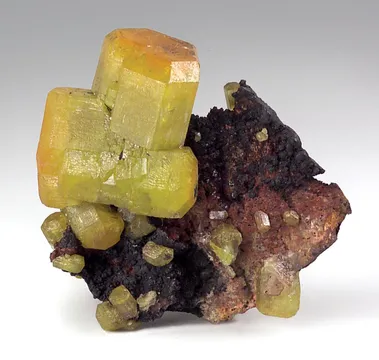
Ehrenfriedersdorf, Germany — historic tin-tungsten greisen locality famed for fluorapatite, cassiterite, fluorite, and rare phosphates; classic, collectible sp…
Key facts
Ehrenfriedersdorf is one of the great old names of the Saxon Erzgebirge: a granite-related tin district where mineral collectors, mining historians, and economic geologists all meet over the same pieces of rock. Its heart is the Sauberg mine and the neighboring Greifensteine granite area, part of the central Ore Mountains tin province. The deposit is classically described as a tin-tungsten greisen, vein, and stockwork system tied to highly evolved, fluorine-, phosphorus-, and lithium-rich Variscan granites. In collector terms, that geology translates into a compact but very distinctive suite: lustrous fluorapatite, dark twinned cassiterite, purple fluorite, quartz, muscovite and zinnwaldite-group mica, topaz, beryl, pyrite, arsenopyrite, wolframite, and a remarkable pegmatitic phosphate association from the Greifensteine.
The locality’s importance is not merely that it produced good specimens. Ehrenfriedersdorf is bound into the history of mineral names. Sauberg is now treated in modern locality literature as the historical type locality for fluorapatite, where fluorine-dominant apatite was recognized in the early nineteenth century, while the Greifensteine yielded type material for several rare phosphate minerals including greifensteinite, lacroixite, and roscherite. The town was also a working tin-mining center for centuries, with ore from the Ore Mountains already documented in medieval trade and hard-rock mining on the Sauberg forming one of Germany’s longest and most culturally visible tin-mining traditions.
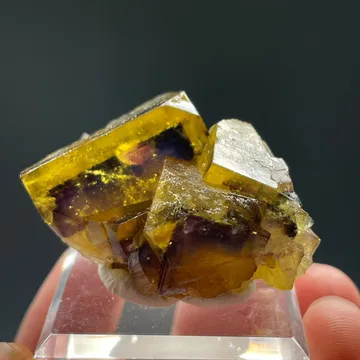
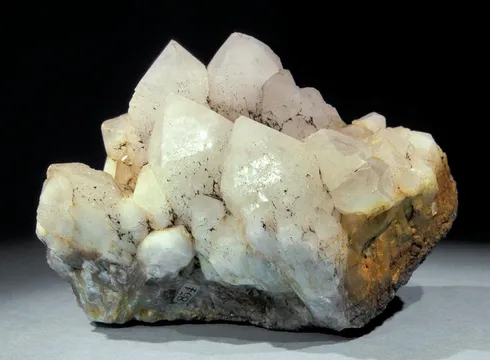
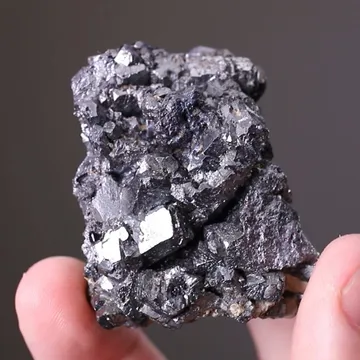
The best Ehrenfriedersdorf specimens look like old European classics: not flamboyant in the modern Chinese or Panasqueira sense, but sharp, balanced, and historically charged. Fluorapatite typically appears as translucent to gemmy hexagonal prisms and tabular crystals in soft violet, smoky gray, pale greenish gray, or colorless tones, often on quartz-rich matrix and sometimes with purple fluorite cubes or black cassiterite. Cassiterite is usually dark brown to black, sharply twinned, and set in quartz or greisen. Fluorite is most prized here when it forms saturated violet cubes with good luster and phantoms, especially in association with apatite. The specimens have the quiet authority of a locality that was famous before most modern specimen-producing districts had entered the market.
Regional View
Country View
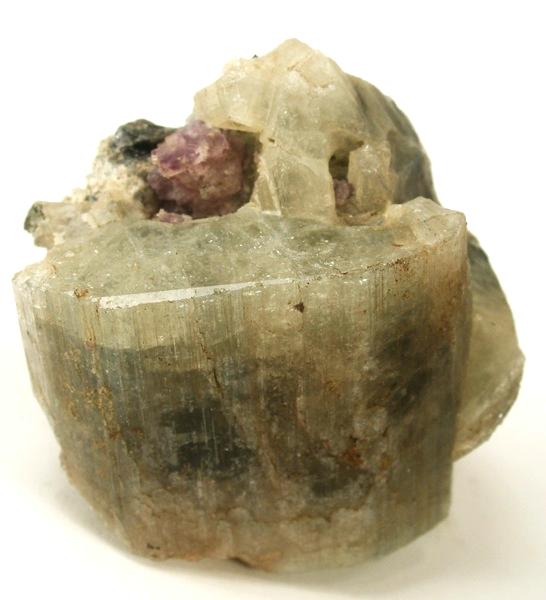
Photo:
This is a locality where the collector should pay attention to labels. “Ehrenfriedersdorf,” “Sauberg,” “Greifenstein,” “Greifensteine,” “Greifenstein adit,” and old German vein or mine-field names can all appear on antique labels, and they are not always used with modern precision. For many specimens the broader town locality is all that survives; for the most valuable historical pieces, however, a credible older label naming Sauberg, Greifenstein, or a specific mine field adds real interpretive value.
Search for specimens: View all specimens from Ehrenfriedersdorf, Germany
Ehrenfriedersdorf lies in Saxony’s Erzgebirgskreis, in the central Erzgebirge tin province. The collector locality is not a single pocket or quarry but a mining district centered on the Sauberg tin mine, with related occurrences at Greifensteine, the Greifenstein adit, Vierung, the Westfeld, the Northwest Field, and smaller surrounding districts. Geologically, the district belongs to the late Variscan granite-related Sn-W systems of the Erzgebirge. The Greifensteine granite is part of a larger Central Erzgebirge granitic body and is notable for its enrichment in fluorine, phosphorus, and lithium—the chemical fingerprint that helps explain the abundance of apatite, fluorite, topaz, Li-mica, beryl, and unusual phosphates.
The ore bodies are varied, and that variety is exactly why the specimen suite is so broad. The classic Sauberg ore is a greisen and vein-type tin-tungsten mineralization, with cassiterite as the essential tin mineral. Mineralized structures occur as quartz-cassiterite veins in the surrounding metamorphic rocks, vein-like zones and greisenized bodies in or near the granite contact, stockwork-style stringer systems, and locally skarn-related assemblages in the wider Ehrenfriedersdorf-Geyer district. The principal gangue and alteration minerals include quartz, muscovite and Li-rich mica, topaz, fluorite, and apatite; the ore and accessory suite includes cassiterite, wolframite, arsenopyrite, löllingite, molybdenite, pyrite, sphalerite, chalcopyrite, stannite-group intergrowths, and bismuth minerals.
The mine fields are historically important as well as mineralogically distinct. Sauberg and Westfeld represent the old central mining area. Vierung is tied to greisen and apatite-bearing assemblages in albite granite. The Northwest Field, opened in the postwar period, was a major modern ore zone, with thick stringer mineralization worked by mechanized methods. The Greifensteine area, by contrast, is best understood by collectors as a granite and pegmatite-phosphate locality, famous for miarolitic cavities and rare phosphates rather than only for ore production.
Tin mining around Ehrenfriedersdorf reaches back to the early thirteenth century, first through tin placers in the Greifenbach valley and then through underground mining at the Sauberg. Ore Mountain tin was important enough to be documented at the Cologne Trade Fair in 1241, and the district became one of the early centers that weakened the old English dominance of European tin supply. By the fourteenth century, water management had already become crucial, and the Röhrgraben was constructed to supply water power to mining operations. In the sixteenth century the district became famous for the Ehrenfriedersdorf waterwheel pump, a major water-lifting innovation later described by Georgius Agricola in De re metallica.
Modern industrial mining reshaped the Sauberg. After periods of interruption and renewed working, production resumed after the Second World War, including exploitation of the newly discovered Northwest Field under the organization that later became SDAG Wismut. Mine locomotives were introduced in 1959 as workings extended farther from the shaft. Sauberg remained an operating tin mine until October 3, 1990, when the “last ore tub” marked the end of production. The closure was economic rather than geological: investigations in 1979 had confirmed large remaining raw-ore reserves, but late-1980s tin prices and high production costs made continued mining uneconomic.
Today the locality is not an open collecting site. The former mine is preserved as the Zinngrube Ehrenfriedersdorf visitor mine and mineralogical museum at Am Sauberg 1. Visitors enter the underground workings on guided tours, and the museum displays a large deposit collection developed from the mine’s operational collection, which began in the 1950s. During the conversion from mine to museum, former employees and volunteers recovered notable mineral specimens from accessible adits before the lower levels were deliberately allowed to flood and shafts were sealed. That rescue work is one reason high-quality Sauberg specimens remain represented in the museum collection even after the end of mining.
For specimen collectors, the most important finds fall into two broad groups. The first consists of classic ore-vein and greisen specimens: cassiterite twins on quartz, apatite with quartz and fluorite, violet fluorite on greisen, pyrite or arsenopyrite associations, and occasional beryl, topaz, wolframite, and sulfide pieces. The second consists of Greifensteine pegmatite-phosphate material: fluorapatite and rare phosphate species from cavities in Li-rich granite. A particularly notable museum feature is a reconstructed geode made from material recovered from the Sauberg’s fourth level in 1993; the original cavity system was reported as a 12-meter-long formation and is now inaccessible.
Fluorapatite is the signature collector mineral of Ehrenfriedersdorf, and the best pieces carry the locality’s historical weight as well as its aesthetics. Crystals are typically hexagonal, lustrous, and translucent to gemmy, ranging from pale smoky gray and greenish gray to attractive violet or purple; many old specimens show tabular to short-prismatic crystals in the millimeter-to-centimeter range, with dealer and museum examples commonly citing individual crystals around 1 cm to 1.2 cm and cabinet plates reaching far larger overall size. The most desirable pieces show sharp, undamaged crystals with clean terminations, visible prism-face striation, and a lively color contrast against quartz, pale mica, or greisen matrix. Association with violet fluorite and black cassiterite is especially characteristic and raises the locality appeal. Sauberg material is central to the modern type-locality discussion for fluorapatite, while Greifensteine material is prized for pegmatitic cavity specimens and older labels.
Cassiterite is the ore mineral that made Ehrenfriedersdorf a mining town, and collector specimens are classic rather than abundant. The usual habit is dark brown to black, lustrous, sharply twinned tetragonal crystals on quartz-rich matrix or greisen, sometimes accompanied by pyrite, fluorite, apatite, or mica. Most display crystals are modest—several millimeters is normal—but well-formed twins around 1 cm to 1.5 cm are especially desirable, and old nineteenth-century or early twentieth-century pieces with strong provenance are far better than loose, massive ore fragments. The Greifenstein adit and Sauberg mine both produced attractive quartz-cassiterite material; good specimens are judged by crystal sharpness, twinning, isolation on matrix, contrast, and the presence of undamaged terminations rather than by sheer size. Research on the deposit has also documented unusual orthorhombic cassiterite microtextures and inclusions, but such material is of scientific interest more than ordinary hand-specimen appeal.
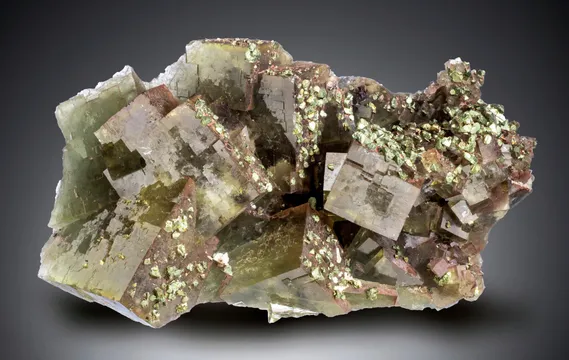
Fluorite from Ehrenfriedersdorf is a supporting actor that can become the visual center of a specimen when color and form are right. It is best known as small to moderate violet or deep purple cubes, sometimes with distinct phantoms, set on quartz, greisen, or apatite-bearing matrix; less saturated or broken fluorite is commoner and less compelling. The finest collector pieces are combination specimens in which sharp purple fluorite cubes sit with pale green-gray or violet fluorapatite, cassiterite, quartz, and mica, giving a compact cross-section of the Sn-W greisen assemblage. Fluorite also appears in the broader hydrothermal sequence of the deposit, and dark-violet fluorite veinlets have been noted in Sauberg material. Because loose fluorite cubes from many localities can look deceptively similar, matrix, association, and old locality labels are especially important for Ehrenfriedersdorf attribution.
Beyond these three collector staples, Ehrenfriedersdorf is a rich locality for both ore minerals and rare phosphates. Quartz, muscovite, zinnwaldite-group mica, topaz, beryl, wolframite, arsenopyrite, löllingite, molybdenite, pyrite, chalcopyrite, sphalerite, bismuthinite, bismutite, scheelite, siderite, and barite are all part of the documented district mineralogy. The Greifensteine phosphate suite is particularly important: lacroixite, roscherite, and greifensteinite are tied to the locality’s type-mineral history, with associated morinite, viitaniemiite, childrenite-eosphorite series minerals, fluorapatite, feldspar, tourmaline, quartz, herderite or hydroxylherderite-related material, and montmorillonite reported from pegmatitic cavities. For the specialist, these rare phosphates are often more significant than showy, but their fragility, small size, and need for analytical confirmation make them a very different collecting challenge from fluorapatite or cassiterite.
Ehrenfriedersdorf specimens are most often encountered as old European classics, estate pieces, museum deaccession duplicates, or material that left the district before or shortly after the 1990 mine closure. Fresh collecting from the mine is not a normal route for private collectors today, and the Greifensteine outcrops are in a protected area, so modern specimens without convincing provenance deserve extra scrutiny. The strongest pieces usually carry old German labels, dealer labels from established European or American sources, or specific locality wording such as Sauberg Mine, Greifenstein adit, Greifensteine, Vierung, or Pinzler/Prinzler Zug-style historic labels.
The principal authenticity issue is mislabelling rather than treatment. “Apatite” on an old label from Ehrenfriedersdorf should generally be read in the historical sense and, where appropriate, modernized to fluorapatite only when the locality and chemistry support it. Greifensteine has often been cited as the fluorapatite type locality, while Sauberg has been argued to have historical priority for fluorine-dominant apatite; collectors should preserve the wording of old labels rather than overwrite that history. Herderite-family material from Ehrenfriedersdorf is another cautionary case: older “herderite” labels may require modern analytical confirmation because hydroxylherderite can be involved, and the exact status of fluorine-dominant zones has been debated in the literature.
Condition is a serious value factor. Fluorapatite crystals from this locality commonly show small bruises on terminations or pinacoid edges, and even attractive old pieces may have minor peripheral damage. Cassiterite is tougher but can lose luster on exposed edges, and isolated twins are often chipped where they protrude from quartz. Fluorite cubes may show corner nicks and internal cleavage, especially on older combination specimens. Rare phosphates such as roscherite- and greifensteinite-group material are commonly small, delicate, and best stored in micromount boxes or covered display cases; avoid repeated handling, brushing, or aggressive cleaning.
Under ultraviolet light, some Ehrenfriedersdorf fluorapatite specimens have been reported to fluoresce brightly under longwave UV, but response should be checked specimen by specimen. Do not assume fluorescence alone proves locality. Likewise, purple fluorite from the district may be attractive under UV or show internal zoning, but its value is still rooted in association and provenance.
Market availability is sporadic. Small fluorapatite or cassiterite specimens appear periodically, often as older miniatures and thumbnails, while fine cabinet specimens with undamaged apatite crystals, strong violet fluorite, or sharp cassiterite twins are much less common. Type-locality fluorapatite with old labels commands a premium, and Greifensteine rare phosphates are specialist material that may require microscopy and analytical documentation. Ordinary massive greisen ore from Ehrenfriedersdorf is not rare; aesthetic crystallized pieces with credible provenance are.
The story that every Ehrenfriedersdorf collector eventually hears is the “Long Shift” of Oswald Barthel. In the historical core of the tale, Barthel was a miner at the Sauberg who was buried in a collapse in the early sixteenth century. Decades later, on September 20, 1568, miners reopening old workings in Brünlers Fundgrube came upon a body in the Sauberg, about seven Lachter below the deep Sauberg adit according to the later mining-book account. Old miners testified that this was the man lost long before, and the record gives the unforgettable duration: 60 years, 9 weeks, and 3 days underground. The body was reported as remarkably preserved, with head, arms, legs, clothing, cap, shoes, grease bag, and mining knife described in later accounts. When the miners attempted to remove him whole, the body reportedly broke in two.
The burial on September 26, 1568 became one of the great public events of the mining town. The funeral sermon by Magister Georg Raute was printed twenty years later, in 1588, and helped turn the event into one of the Erzgebirge’s best-known mining legends. The later romantic version adds Anna, the faithful bride, the wreath in the church, and a reunion that is more legend than document, but the hard historical center remains powerful enough without embellishment: a miner lost in the working ground of Sauberg, found by later miners after a human lifetime, and returned to the daylight of the same town that had remembered the accident.
Ehrenfriedersdorf also has a technological story worthy of the same stage. Around the middle of the sixteenth century, local mine engineers developed a water-lifting device now known as the Ehrenfriedersdorf waterwheel pump. Agricola described and illustrated this kind of mechanism in De re metallica, published in 1556. Its importance lay in the conversion of the rotation of a waterwheel into the straight up-and-down motion needed to drive pump rods and lift water from the mine. In a wet ore district, that was not an academic improvement; it was the difference between abandoned workings and renewed mining.
The modern rediscovery of the pump story came from the mine itself. In 2000, during securing work in the Alexander day shaft, workers uncovered a filled void that proved to be the old wheel chamber. Further clearing in 2001 exposed the shaft below to a depth of 15 meters. Wooden, metal, and leather remains came to light, interpreted as fragments of the sixteenth-century pump installation. Dendrochronology dated the timber to a felling year of 1563. The wheel chamber was measured at up to 4.5 meters in diameter and up to 1.2 meters wide. In 2006 the town council decided to install a reconstruction, and in 2007 a full-size working waterwheel was placed in the historic chamber, turning a Renaissance mining invention back into a visible machine.
The last chapter of the working mine came with the “last ore tub” on October 3, 1990. The date looks inseparable from German reunification, but the mine’s own history is more precise: closure planning had begun earlier that year because the economics had failed. In 1979, geological work had still confirmed about 17 million tonnes of raw ore reserves, enough in theory to keep mining into 2020. By the end of the 1980s, however, the world tin price was around 8,000 DM per tonne while production costs at Ehrenfriedersdorf were around 100,000 DDR-Mark. The final tub was celebrated, but it also meant the loss of work for 615 employees. About 140 of them then began the securing and preservation work that transformed the mine from an industrial workplace into the visitor mine and mineralogical museum that survives today.
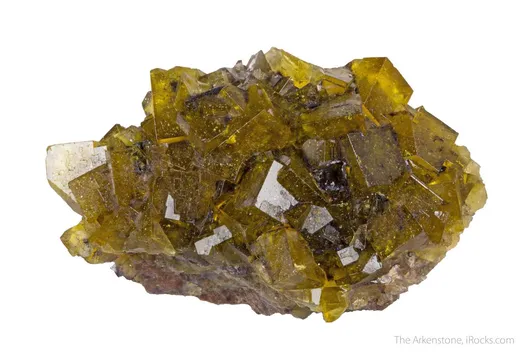
-Fluorite-Cassiterite-243390.jpg)