Pea Ridge Mine, USA - Kiruna-type iron oxide-apatite locality known for smoky calcite, grape-purple fluorite, and rare REE minerals, prized by collectors.
Key facts
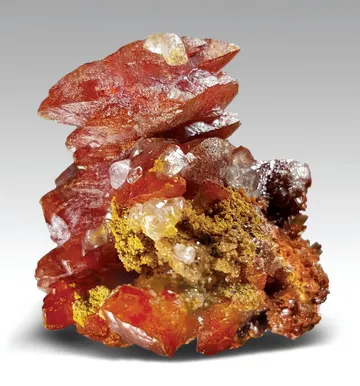
Pea Ridge is one of the great “industrial” American mineral localities: a deep, hard-rock iron mine whose collector specimens were incidental to a deposit of national economic and scientific importance. The mine lies near Sullivan in Washington County, Missouri, on the northwest side of the St. Francois Mountains terrane, where Mesoproterozoic rhyolitic volcanic rocks and associated intrusions host a steep, discordant iron oxide-apatite body. In specimen terms, Pea Ridge is best remembered not for textbook-perfect, large single crystals, but for a distinctive suite of iron-stained, pockety combinations: smoky to reddish calcite, grape-purple to amber fluorite, brassy chalcopyrite, hematite coatings and specular iron oxides, barite, pyrite, quartz, dolomite, and fluorapatite.
Regional View
Country View
Geologically, Pea Ridge belongs with the Kiruna-type iron oxide-apatite deposits rather than with the Mississippi Valley-type lead-zinc mines that dominate most collectors’ mental map of Missouri. Its iron ore is principally magnetite with important hematite, but the deposit is also famous among economic geologists for rare-earth-element mineralization in breccia pipes and veins rich in monazite, xenotime, apatite, barite, quartz, fluorite, and related REE minerals. For collectors, this is why Pea Ridge specimens often feel different from “ordinary Missouri” material: the best pieces have a dark volcanic-mine personality, with hematite dusting or inclusions giving otherwise pale minerals a smoky, red-brown, or blackened look.

Photo: Rob Lavinsky, iRocks.com / Wikimedia Commons
The mine’s history also matters. Pea Ridge was discovered through magnetic exploration, developed as a modern underground iron operation, and mined for decades before closure and flooding in 2001. Much of the collectible material entered the hobby through miners, old Missouri collections, and dealer lots rather than repeated public collecting. As a result, attractive Pea Ridge pieces have the feel of a closed-locality classic: not impossible to obtain, but finite, unevenly distributed, and strongly dependent on old labels.

Search for specimens: View all specimens from Pea Ridge Mine, USA
Pea Ridge Mine is a former underground iron mine near Meramec State Park, about 13.8 km southeast of Sullivan, Washington County, Missouri. The deposit is buried beneath Cambrian and Ordovician sedimentary cover and is hosted in Precambrian volcanic rocks of the St. Francois terrane. The ore body is a steeply dipping, tabular to crescent-shaped magnetite-hematite mass within rhyolitic lava flows and ash-flow tuffs, striking roughly northeast and continuing to depth. Older descriptions place the buried top of the ore body roughly 1,000 to 1,400 feet below surface; mine development reached multiple deep levels, including workings in the 1,395- to 2,505-foot range.
The deposit is usually described as an iron oxide-apatite system, with the main ore dominated by magnetite and hematite and with apatite, quartz, fluorite, barite, calcite, pyrite, actinolite, chlorite, sericite, dolomite, monazite, and related species as important accessory or gangue minerals. Several mineralogical zones are recognized in the mine: massive magnetite ore, specular hematite, quartz-hematite or silicified rock, quartz-amphibole assemblages, heterolithic breccias, and rare-earth-element-rich breccia pipes and veins. These zones are not merely academic distinctions; they explain why collector pieces can range from dense massive magnetite and sparkling specularite to purple fluorite combinations, red-brown calcite, apatite-bearing pieces, and obscure REE-bearing material.
The rare-earth mineralization is one of the deposit’s signature features. Four mapped REE-bearing breccia pipes steeply cut the magnetite-hematite ore body and the altered rhyolite host rock. Published work describes exposed pipe portions up to about 60 m in horizontal length and 15 m in width, with downward continuation not fully determined. Monazite and xenotime are the principal REE minerals in much of the material, accompanied by apatite and smaller amounts of allanite, bastnäsite, britholite, synchisite, tengerite, parisite, thorite, and tellurides in some studied samples. For collectors, most of these species are not cabinet-display minerals from Pea Ridge; they are commonly microscopic, massive, intergrown, or best appreciated in polished sections and analytical mounts. Their presence, however, is part of what elevates Pea Ridge from a closed iron mine to a scientifically significant locality.
Mining history begins with geophysics. A strong magnetic anomaly was recognized in the early 1950s, and drilling confirmed a large magnetite body. St. Joseph Lead Company and Bethlehem Steel formed Meramec Mining Company in 1957 to develop the ore. Shaft sinking and surface construction followed, with a mill and pelletizing plant designed for roughly 2 million tons of iron pellets per year. Production began in 1964, and Pea Ridge became one of Missouri’s major modern iron producers. Ownership and operating structure changed through the later decades: the Meramec Mining joint venture gave way to later St. Joe, Fluor, and successor operations, and the mine shifted from iron pellets into other specialty iron products after losing its last pellet customer in 1990. Mining ended in 2001, and the underground mine was closed and flooded.
Specimen recovery was never the mine’s purpose. Pea Ridge was a deep industrial operation, and collector-quality specimens were recovered opportunistically when vugs, fractures, breccias, or mineralized zones intersected active workings. The best-known collecting-era material includes calcite with hematite inclusions or coatings, fluorite with hematite/goethite coatings, chalcopyrite on calcite, small purple to amber fluorite cubes, fluorapatite crystals, pyrite, barite, and pieces of specular hematite. Old-time collectors also obtained large massive magnetite and specular hematite from the mine, but the more coveted modern cabinet pieces are the sharper and more colorful combinations rather than the ore masses.
Access today should be regarded as closed. The mine is inactive, flooded underground, and on private/industrial property. Contemporary Pea Ridge collecting is therefore a matter of old collections, dealer inventory, deaccessions, and the occasional specimen that surfaces with a miner’s or Missouri collector’s label. The mine tailings and core holdings continue to interest geologists for rare earths and critical minerals, but that scientific attention should not be confused with open collecting access.
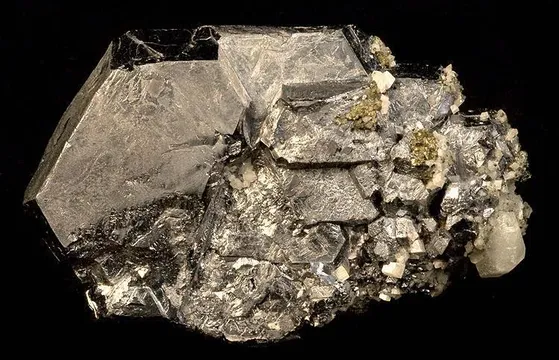
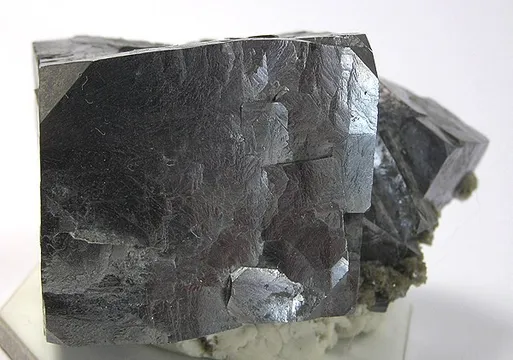
Hematite is the mineral that gives Pea Ridge specimens their unmistakable cast: as specularite in the hematite zone, as red granular hematite, as coatings on calcite and fluorite, and as inclusions that tint otherwise pale calcite crystals smoky, pinkish, or reddish brown. The most collectible hematite specimens are not simply massive iron ore; they are lustrous metallic plates or thick sparkling aggregates with minimal damage, or matrix pieces where hematite provides sharp contrast against calcite, fluorite, quartz, barite, or chalcopyrite. Ordinary Pea Ridge hematite can be heavy, dark, and massive, but good pieces show either bright specular luster or the locality’s classic aesthetic of red-black hematite dusting over well-formed associated crystals.
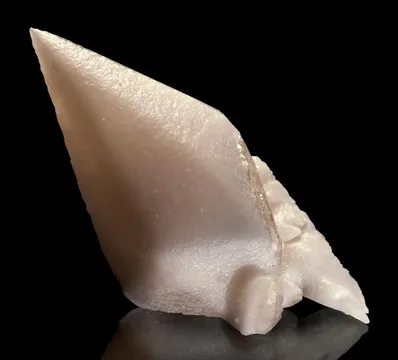
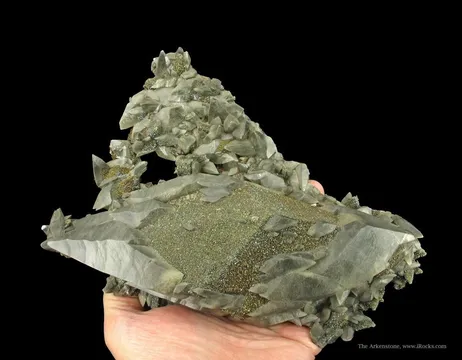
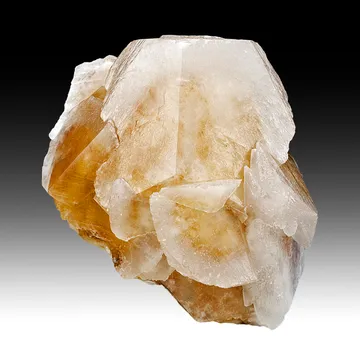
Calcite is one of the most recognizable Pea Ridge display minerals, typically occurring as translucent to milky, smoky, grayish, pinkish, or reddish crystals that are included or coated with hematite and sometimes set with small chalcopyrite, pyrite, fluorite, or barite. Fine examples include sharp crystals to several centimeters, including doubly terminated or near-floater clusters, while much common material is dull white, iron-stained, or bruised from mine recovery. The best Pea Ridge calcites combine good crystal form, glassy faces, red-brown hematite character, and clean association; pieces with brassy chalcopyrite or visible purple fluorite have the strongest locality “signature.”
Smithsonite should be treated with unusual caution on Pea Ridge labels. The standard Pea Ridge literature and locality databases emphasize iron oxides, apatite, fluorite, barite, calcite, sulfides, tellurides, and REE phosphates and carbonates, while smithsonite is not a well-established showpiece species for the mine in the way it is for many carbonate-hosted zinc districts. Reported “Pea Ridge smithsonite” specimens therefore deserve careful scrutiny, especially if they are described as epimorphs after dolomite on quartz or resemble Mississippi Valley-type zinc-mining material rather than the iron oxide-apatite suite of Pea Ridge. A good specimen under this label would require strong old provenance or analytical confirmation; absent that, serious collectors should regard attractive smithsonite pieces attributed to Pea Ridge as potential mislabels rather than assume they represent a documented pocket.
Chalcopyrite from Pea Ridge is prized chiefly as a contrast mineral, occurring as bright brassy crystals on calcite, with fluorite, hematite, barite, and occasionally pyrite or galena. Good specimens show sharp, lustrous, sometimes jagged or twinned-looking crystals standing out against iron-darkened calcite or hematite-coated matrix; individual crystals around the centimeter scale are already respectable for the locality, and examples to about 1.5 cm have appeared in documented dealer material. Common chalcopyrite is sparse or tarnished, but the best Pea Ridge pieces have a vivid brassy flash that cuts through the otherwise red-black iron-mine palette.
Dolomite is documented as an accessory mineral in the Pea Ridge ore assemblage, particularly in the magnetite ore body and associated gangue, but it is less central to the locality’s collector reputation than calcite, fluorite, chalcopyrite, hematite, and fluorapatite. When encountered as a specimen mineral, it should be expected as small rhombohedral carbonate associated with quartz, calcite, hematite, sulfides, or iron-stained matrix rather than as the large, clean saddle-dolomite showpieces familiar from Missouri’s lead districts. Good Pea Ridge dolomite is valuable mostly when it helps complete a well-provenanced combination or paragenetic suite; ordinary isolated carbonate material, especially if it looks more like MVT zinc-district dolomite, needs careful label verification.
Fluorite is one of the most desirable Pea Ridge collector minerals because it is uncommon, visually distinctive, and unlike the fluorite from the classic Illinois-Kentucky district. It occurs as small cubes and modified crystals, commonly purple, grape-purple, amber, yellow-cored, or colorless, and is frequently partly coated by red-brown hematite or goethite with calcite and chalcopyrite in association. Cubes to about 1.5 cm are notable, while reported tetrahexahedral crystals are much smaller, generally below a few millimeters. The finest Pea Ridge fluorites are miniature-scale combinations with visible color zoning, bright chalcopyrite, and just enough hematite coating to announce the locality without burying the fluorite.
Barite is more important at Pea Ridge than its modest market presence suggests. In the thorium- and REE-rich vein, barite is one of the principal gangue minerals with quartz, chlorite, and monazite, and published descriptions note zoned crystals and overgrowths. As a display mineral, barite is typically sought in association with fluorite, calcite, hematite, chalcopyrite, quartz, or REE-rich material rather than as large free-standing golden blades. The best collector pieces are well-provenanced combinations that show barite’s role in the late hydrothermal stages of the deposit; massive or indistinct white barite on iron-stained matrix is much less compelling unless tied to a studied zone or old collection.
Fluorapatite is both a collector mineral and a key to understanding Pea Ridge. Apatite is abundant in the iron oxide-apatite system and can be enriched in rare earth elements; in specimen material it may appear as opaque to translucent crystals or crystal masses, commonly reddish, brick-red, brownish, or darkened by hematite inclusions and iron staining. Documented fine crystals reach several centimeters, including an exceptional 4 x 4 x 3 cm brick-red crystal with well-developed prism, dipyramid, and pinacoid faces on calcite. Ordinary apatite-rich pieces can be massive or unattractive, but sharp, lustrous crystals with clean faces, visible terminations, calcite association, and strong Pea Ridge provenance are among the locality’s most desirable non-fluorite specimens.
Beyond the display minerals, Pea Ridge has an unusually rich technical mineral list. Magnetite is the principal ore mineral, with martitized magnetite and specular hematite in places. Quartz, actinolite, chlorite, sericite/muscovite, feldspar, pyrite, galena, sphalerite, cassiterite, rutile, titanite, topaz, zircon, and molybdenite are documented, along with rare tellurides such as altaite, melonite, hessite, and sylvanite in specialized studies. The rare-earth suite includes monazite, xenotime, allanite, bastnäsite, britholite, synchisite, tengerite, parisite, and thorite. Most of these are not commonly available as aesthetic specimens, but they make Pea Ridge an important locality for systematic collectors, micromounters, and researchers interested in iron oxide-apatite and REE mineral systems.
Pea Ridge specimens are closed-mine material. The underground workings are flooded and not a collecting destination, so legitimate specimens generally come from old collections, miner-saved material, historic dealer stock, or secondary-market dispersals. Labels matter. A good old Missouri label, a collection pedigree, or a dealer record greatly improves confidence, especially for species that are less typical of the locality.
The classic Pea Ridge look is a useful first filter: hematite or goethite coatings, reddish or smoky calcite, purple to amber fluorite, brassy chalcopyrite, pyrite, barite, and iron-rich matrix. Pieces that look like Viburnum Trend dolomite-sulfide material, Tri-State sphalerite-galena ore, or Arkansas zinc-carbonate smithsonite should not be accepted uncritically just because the label says Pea Ridge. Smithsonite, in particular, is a red-flag species under this locality name unless backed by analysis or impeccable provenance.
Documented artificial alteration is rare but worth knowing. A collector publicly described creating a hematite epimorph effect by dissolving damaged calcite from a Pea Ridge fluorite specimen with muriatic acid, leaving the hematite coating behind. That is not evidence of a widespread fake industry, but it proves that acid-altered Pea Ridge combinations can exist. Hollow red-brown “epimorphs” after calcite on fluorite should be examined carefully for unnatural surfaces, etched fluorite, residual acid damage, and story-dependent provenance.
Condition is a real issue. Pea Ridge specimens were recovered from an industrial underground iron mine, not a specimen mine; many pieces are contacted, broken, iron-dusted, or mechanically bruised. Calcite terminations and fluorite cube corners are the first places to check. Hematite coatings can hide bruises but also give the specimens their character, so cleaning should be conservative. Avoid aggressive acid work unless the goal is analytical preparation rather than preservation of an aesthetic specimen.
Fluorescence can add interest: some Pea Ridge calcite and fluorite specimens are reported as fluorescent under longwave and shortwave ultraviolet light. Test gently and record the response, but do not assume fluorescence proves the locality. Conversely, lack of fluorescence does not disqualify a Pea Ridge piece.
REE-rich specimens require common-sense handling. Monazite, xenotime, and thorite-bearing material may contain thorium and uranium in small but measurable amounts, especially in REE-rich vein or breccia material rather than ordinary calcite-fluorite specimens. Keep such pieces labeled, avoid grinding or inhaling dust, wash hands after handling, and store radioactive or suspected radioactive specimens thoughtfully, especially if they are friable.
Market availability is intermittent. Modest calcite-chalcopyrite pieces and iron-stained combinations appear from time to time, while attractive fluorite, sharp fluorapatite, and lustrous hematite specimens are much less common. The strongest Pea Ridge pieces for advanced collectors are those that combine locality character, good crystal form, old provenance, and a species assemblage that actually fits the deposit.
Pea Ridge began as a geophysical whisper under the Ozarks. The ore was not sticking out of a hillside like the old Iron Mountain and Pilot Knob workings; it was buried beneath a thick blanket of younger sedimentary rocks. Airborne magnetic work after World War II revealed the anomaly, and St. Joe’s exploration crews followed it while looking for lead-zinc possibilities. By the mid-1950s, drilling had shown something much bigger and stranger for that part of Missouri: a large concealed magnetite body, steep, deep, and mineable.
The scale of the development that followed is easy to underestimate if one only knows Pea Ridge from thumbnail fluorites and calcites in old flats. St. Joseph Lead Company and Bethlehem Steel formed Meramec Mining Company in December 1957. One shaft was started and the mill site cleared that year; a second shaft followed in 1958. A 28-mile railroad spur was built to connect the property to the Missouri Pacific main line at Cadet, and a 10-inch water line brought mill water from the Meramec River about 4 miles away. By 1961 the service shaft was down to 2,505 feet and the main hoisting shaft to 2,491 feet. This was not a casual Ozark dig; it was a major underground iron operation built under sedimentary cover, aimed at millions of tons of pellets.
When production came on in 1964, the mine quickly became a major Washington County employer and taxpayer. Early accounts describe a plant built to produce roughly 2 million tons of iron concentrate pellets per year, with full operation by 1965 and mining on several levels between about 1,395 and 2,275 feet. The reported pre-startup cost of the joint venture was $52 million, and employment was around 1,000 people split between underground and surface operations. For mineral collectors, those figures explain why so many Pea Ridge specimens have an industrial flavor: the pockets were discovered in the path of production, not by weekend collectors working a dump.
One of the more remarkable chapters came later, when the mine’s “waste” and accessory zones began to look like something else entirely. In the late 1970s and early 1980s, radioactive zones, REE-rich material, tin, tellurides, and gold drew closer attention. A regional uranium evaluation led St. Joe American to examine radioactive zones in the mine. Longhole jackhammer drilling in late 1979 and early 1980 produced 22 holes totaling 1,813 feet, and hundreds of samples were analyzed. Later work moved core into a storage and sampling facility on the 880-foot level so geologists could systematically sample old holes and collect underground rock chips.
The most striking assays came from the eastern footwall and the 2275-foot level. Sampling around the SD1118 stope, described as the original intersection of mine workings with the REE-rich vein, returned a sample with 1.57 oz/ton gold, 0.57 oz/ton silver, 22,500 ppm tin, 2,900 ppm tellurium, 6,400 ppm lead, 65 ppm bismuth, and 210 ppm uranium. Drill core from hole 961-6 produced even more dramatic numbers in one interval: 371.15 ppm gold over a short core length, with high silver, tellurium, lead, and tin reported in the same table. The mineralogical explanation was not simple free gold in a quartz vein; the precious metals were tied to a strange Pea Ridge assemblage of REE minerals and tellurides, including altaite, melonite, hessite, sylvanite, and electrum in studied material.
The REE vein itself reads like something from a research mine rather than a specimen locality. In one exposure it was dark brown, dense, hard, and fine- to medium-grained; below the 2275-foot level, drill-core material was described as orange to pale red, porous, friable, and coarser-grained. Quartz and barite occurred both as matrix and discrete crystals. Monazite could be so abundant that it made up more than half of a drill-core sample. Hematite fragments in the vein were partly replaced by later minerals. To a cabinet collector this material might look unimpressive, but under the microscope it is Pea Ridge at its most distinctive: iron oxide, barite, quartz, REE phosphates and carbonates, thorite, tellurides, and sulfides all packed into a late hydrothermal system.
There is also a smaller, very human collecting story in the old specimen trade. Pea Ridge minerals were never abundant in the way Elmwood calcite or Illinois fluorite were abundant. Collectors who handled the mine’s material remember flats of iron-stained calcite, fluorite, pyrite, apatite, and heavy ore pieces, much of it modest, some of it excellent. The most appealing Pea Ridge specimens tend to look as if the iron mine tried to reclaim every crystal: calcite dusted red, fluorite half-buried in hematite, chalcopyrite flashing from darkened surfaces. That slightly rough, iron-stained identity is exactly what makes a good Pea Ridge specimen recognizable across a room.
Laurence M. Nuelle, “Minerals of the Pea Ridge Mine, Washington County, Missouri,” Rocks & Minerals, vol. 73, no. 2, pp. 90–97, 1998. A collector-focused locality article with photographs and a mineral list; cataloged by the Missouri Department of Natural Resources.
https://dnr.mo.gov/content/minerals-pea-ridge-mine-washington-county-missouri
Laurence M. Nuelle, Warren C. Day, Gary B. Sidder, and Cheryl M. Seeger, “Geology and mineral paragenesis of the Pea Ridge iron ore mine, Washington County, Missouri: Origin of the rare-earth-element- and gold-bearing breccia pipes,” in Strategic and Critical Minerals in the Midcontinent Region, United States, U.S. Geological Survey Bulletin 1989, 1992. A key geologic and paragenetic treatment of the REE and gold-bearing breccia pipes.
https://www.usgs.gov/publications/geology-and-mineral-paragenesis-pea-ridge-iron-ore-mine-washington-county-missouri
C. W. Whitten and R. J. Yancey, “Characterization of the Rare-Earth Mineralogy at the Pea Ridge Deposit, Missouri,” U.S. Bureau of Mines Report of Investigations 9331, 1990. A technical study identifying monazite, xenotime, allanite, apatite, cassiterite, pyrite, magnetite, hematite, feldspar, quartz, and actinolite in the REE-bearing material.
https://stacks.cdc.gov/view/cdc/10350/cdc_10350_DS1.pdf
James R. Husman, “Gold, Rare Earth Element, and Other Potential By-Products of the Pea Ridge Iron Ore Mine, Washington County, Missouri,” Missouri Department of Natural Resources Open-File Report OFR-89-78-MR, 1989. Important for the gold, telluride, thorium, REE, and eastern footwall vein story.
https://share.mo.gov/nr/mgs/MGSData/Open%20File%20Reports/Gold,%20Rare%20Earth%20Element,%20and%20Other%20Potential%20By-Products%20of%20the%20Pea%20Ridge%20Iron%20Ore%20Mine,%20Washington%20County,%20Missouri/OFR-89-78-MR.pdf
Daniel E. Harlov, Corey J. Meighan, Ian D. Kerr, and Iain M. Samson, “Mineralogy, chemistry, and fluid-aided evolution of the Pea Ridge Fe oxide-(Y + REE) deposit, southeast Missouri, USA,” Economic Geology, vol. 111, no. 8, pp. 1963–1984, 2016. A modern study of monazite, xenotime, fluorapatite, iron oxides, and metasomatic reworking in the IOA-REE system.
https://www.usgs.gov/publications/mineralogy-chemistry-and-fluid-aided-evolution-pea-ridge-fe-oxide-y-ree-deposit
Keith R. Long, Bradley S. Van Gosen, Nora K. Foley, and Daniel Cordier, The Principal Rare Earth Elements Deposits of the United States: A Summary of Domestic Deposits and a Global Perspective, U.S. Geological Survey Scientific Investigations Report 2010-5220, 2010. Includes a Pea Ridge section summarizing mine history, resources, REE grades, and the significance of the deposit as a potential heavy-REE source.
https://pubs.usgs.gov/sir/2010/5220/downloads/SIR10-5220.pdf
Cheryl M. Seeger, Laurence M. Nuelle, Warren C. Day, Gary B. Sidder, Mary A. Marikos, and D. C. Smith, Geologic maps and cross sections of mine levels at the Pea Ridge iron mine, Washington County, Missouri, U.S. Geological Survey Miscellaneous Field Studies Map MF-2353, 2001. The principal map publication for mine-level geology and cross sections.
https://ngmdb.usgs.gov/Prodesc/proddesc_55362.htm
Wikimedia Commons, “Category: Pea Ridge Mine.” Openly licensed specimen photographs by Rob Lavinsky showing calcite, hematite, chalcopyrite, and related Pea Ridge combinations.
https://commons.wikimedia.org/wiki/Category:Pea_Ridge_Mine