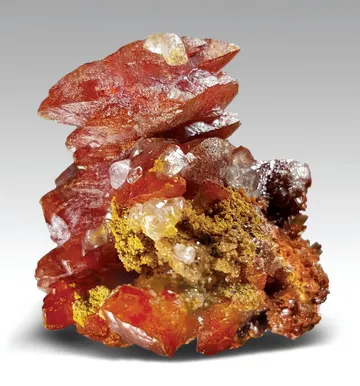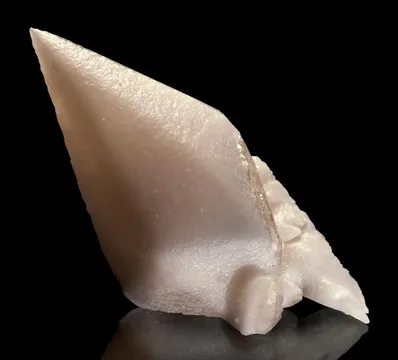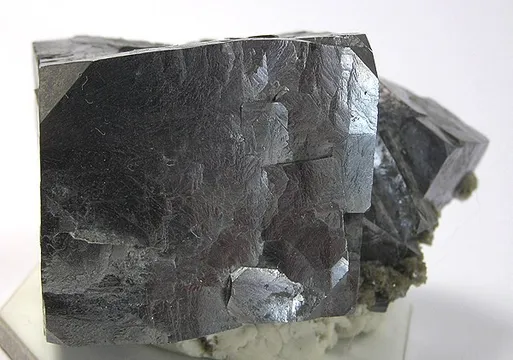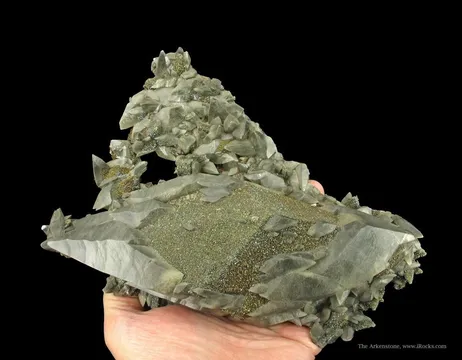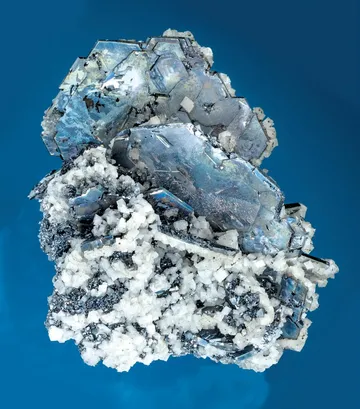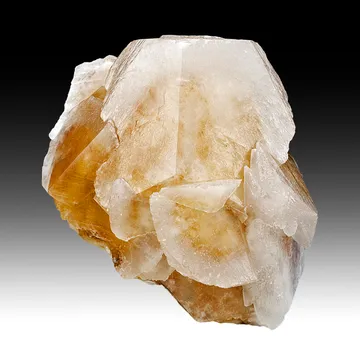
Buick Mine, USA — Missouri locality for sharp galena cubes and rare siegenite, brassy marcasite on dolomite, orange calcite scalenohedrons, and vivid sulfides.
Key facts
Buick Mine is one of the defining specimen localities of Missouri’s Viburnum Trend, the modern “New Lead Belt” that succeeded the old Bonne Terre–Flat River lead camps as the center of American galena production. The mine lies near Bixby in Iron County, in a world-class Mississippi Valley-type lead-zinc-copper system hosted chiefly by the Upper Cambrian Bonneterre Formation. At Buick, the ore was not a simple vein but a set of broad, sinuous, solution-collapse breccia bodies in dolomitized shelf-facies carbonate, with galena, sphalerite, chalcopyrite, pyrite, marcasite, dolomite, calcite, quartz, dickite, kaolinite, and an unusually interesting suite of cobalt-nickel sulfides occupying vugs, breccia matrix, fractures, and replacement zones.
To collectors, Buick means muscular Midwestern sulfide specimens: bright lead-gray galena cubes and cuboctahedrons, sharp spinel-twinned galena, brassy marcasite and pyrite on pale dolomite, orange to yellow calcite scalenohedrons, and the famous silver-gray siegenite crystals that make the locality especially attractive to rare-sulfide specialists. The mine is also historically important beyond the cabinet: discovered in 1960 and brought into production in 1969, Buick rapidly became one of the most important lead-zinc producers in the United States. Its first years of mining revealed how exceptionally rich the ore could be—so rich that early drilling underestimated grade because small amounts of galena were lost by grinding during core drilling.
Regional View
Country View
The finest Buick specimens have a distinctly architectural quality. Good galena is not merely “big and gray”; it is sharp, lustrous, balanced, and alive against its matrix. A single gunmetal cube on brassy chalcopyrite can be as compelling as a plate of intergrown cuboctahedrons. The best calcites rise as amber-orange scalenohedrons from dark sulfide crusts. Pyrite from the celebrated bar-style pockets can look like cast metal, elongated and striated rather than conventionally cubic. In the rare-sulfide realm, well-composed siegenite-on-dolomite pieces from the 1980s and early 1990s remain among the locality’s most coveted products.

Photo: Wikimedia Commons

Photo: Wikimedia Commons

Photo: Wikimedia Commons
Search for specimens: View all specimens from Buick Mine, USA
Buick Mine, also known historically as the Amax Buick Mine or Moloc Mine, is in the Bixby area of the Viburnum Trend, southeast Missouri. The deposit is a Mississippi Valley-type Pb-Zn-Cu orebody formed in Cambrian carbonate strata, principally the Bonneterre Formation. The broader Viburnum Trend is a north-south mineralized belt on the western side of the St. Francois Mountains; in this district, ore fluids moved through carbonate and sandstone aquifers and precipitated sulfides where permeability, brecciation, sulfur availability, and favorable facies converged.
The mine geology is unusually instructive. Most ore occurs in solution-induced collapse breccias in the upper part of the Bonneterre. In the Buick mine area, the Bonneterre includes reef, fore-reef, back-reef, and shelf-related carbonate facies; the productive zones are especially tied to dolomitized shelf-facies calcarenite and collapse-breccia structures. The breccia bodies are sinuous, subparallel, and dominantly north-south in plan. Individual breccia bodies were described as reaching hundreds of feet in width and tens of feet in thickness, with trough-like bases and outward-dipping boundary fractures. Those structures were not merely mechanical curiosities: they controlled where open space remained, where sulfide replaced carbonate, and where collectors’ specimens were later encountered.
The principal ore minerals are galena, sphalerite, and chalcopyrite. Pyrite and marcasite are abundant accessory sulfides, and Buick is especially noted for cobalt-nickel species including siegenite, polydymite, vaesite, bravoite, and related minor phases. Gangue minerals include dolomite, calcite, quartz, dickite, and kaolinite. Mineral zoning across the breccias is pronounced. The west ore body includes zones grading from galena-rich to galena-sphalerite and then into assemblages carrying chalcopyrite, pyrite, and cobalt-nickel minerals. The central ore body is thicker in places, with galena-pyrite assemblages in its upper part and replacement galena and sphalerite lower in the breccia pile. The east ore body could be exceptionally rich, including pillars with more than 30 percent combined Pb-Zn-Cu through a vertical interval of about 65 feet.
Mining began after the Buick orebody was discovered in 1960. A 50-50 AMAX-Homestake joint venture put the mine into production in 1969, with AMAX operating the mine. In its first six years of production, to March 1975, more than 7.5 million tons of ore averaging roughly 9 percent lead and 3.5 percent zinc were mined. In 1973 and 1974, Buick alone accounted for 28 percent of United States lead production and 12 percent of United States zinc production. The mine, mill, and associated smelter complex became a major industrial anchor of the southern Viburnum Trend. Later corporate changes folded Buick into the Doe Run system; current Doe Run SEMO operations in the Viburnum Trend include Buick among the company’s active or historically integrated lead-zinc-copper mine and mill assets.
Specimen production has come from mining, not from a public collecting field. Buick is an underground industrial mine, and access is controlled. Modern collecting should be understood through the secondary market, old miner-saved specimens, former employee collections, museum and university collections, and dealer stock from earlier finds. Doe Run has stated that mine and mill tours are available only on a limited basis, primarily for educational institutions; this is not a locality where visiting collectors can simply enter and collect.
The mine has produced several named or repeatedly cited specimen styles. The “Butterstick Pocket” is associated with elongated pyrite bars from the 1250-foot level, a distinctive find reported from the early 1970s. The “Cominco Window” area, where a barrier pillar separated Buick from the neighboring Magmont Mine, is associated with rare hollow galena stalactites; one documented 1997 pocket reportedly yielded only about 20 to 25 specimens. Other notable Buick material includes spinel-twinned galena from 1990s finds, orange to yellow calcite from zones near the Magmont side of the mine, galena-calcite-chalcopyrite combinations, galena with dolomite and marcasite, and highly prized siegenite crystals on dolomite, marcasite, chalcopyrite, or galena.
Buick Mine galena is the locality’s signature mineral and ranges from isolated lustrous cubes and cuboctahedrons to octahedral crystals, parallel-growth clusters, spinel-twinned plates, and rare hollow stalactitic forms. The best pieces show bright gunmetal-gray faces, crisp modification at corners or edges, and strong contrast against dolomite, marcasite, chalcopyrite, calcite, quartz, or sphalerite; documented cabinet examples include crystals to several centimeters, including a large galena cube about 7 cm across on a Buick galena-calcite-chalcopyrite matrix, while many of the most elegant specimens are small cabinets with 1–3 cm crystals placed cleanly on matrix. The particularly desirable Buick pieces are those that show morphology rather than mass: spinel-twinned plates from 1990s-style finds, isolated cuboctahedrons on pale dolomite, or the rare Cominco Window stalactitic galenas from the 1997 pocket, which are far scarcer than ordinary ore chunks or bruised massive galena.
Buick calcite occurs as pale yellow to rich orange, commonly gemmy-to-translucent scalenohedral crystals, with some specimens showing frosted side faces and glassier pyramidal terminations; good crystals may reach several centimeters, and a well-known large display specimen from the George Feist Collection carries two prominent crystals, the taller about 9 cm high, on sulfide-rich matrix. The most attractive calcites are not generic carbonate filler but late open-space crystals that rise from dark marcasite-, sphalerite-, galena-, chalcopyrite-, or dolomite-bearing matrix, giving the warm calcite color a dramatic metallic base. Collectors should favor pieces with intact tips, clean crystal isolation, and meaningful matrix, because ordinary Buick calcite is often cleaved, crowded, or visually subordinate to sulfides.
Buick pyrite is most famous in specimen circles for elongated “bar” crystals from the Butterstick Pocket, especially material attributed to the 1250-foot level and early 1970s production; these are brassy, lustrous, striated, and markedly unlike the ordinary cubic pyrite a collector might expect. Fine examples are small-cabinet to thumbnail in scale, with reported bars on the order of several centimeters long, and some show tiny holes at the ends that suggest stalactitic growth. Pyrite also occurs more broadly in Buick’s galena-pyrite zones and in association with sphalerite, marcasite, dolomite, quartz, and galena, but the bar habit is the collector prize: sharp, complete, lustrous bars with minimal end contacts and good three-dimensional form are substantially more desirable than granular pyrite crusts or massive sulfide fragments.
Marcasite from Buick appears as bright brassy crystal coatings, sparkly matrix crusts, aggregates with galena and dolomite, and locally stalactitic or plate-like forms; it is one of the key visual partners that gives Buick galena and calcite specimens their lively metallic texture. Good marcasite here is valued less as isolated single crystals and more as an aesthetic field for sharper species: it can coat galena, encrust matrix, accompany calcite scalenohedrons, or host rare siegenite crystals. The best pieces show fresh metallic luster, attractive golden to iridescent surfaces, and stable condition; dull, powdering, acid-smelling, or crumbling marcasite should be avoided because iron-sulfide decay can damage both the specimen and nearby labels or storage materials.
Beyond these four collector mainstays, Buick is an important rare-sulfide locality. Sphalerite and chalcopyrite are major ore minerals, and dolomite and quartz are frequent gangue associates. The mine is especially respected for siegenite, which occurs as sharp metallic silver-gray to golden-silvery crystals, commonly octahedral or dodecahedral in appearance, associated with galena, chalcopyrite, marcasite, and dolomite; good Buick siegenite is among the classic American representations of the species. The broader Buick mineral list also includes cobalt-nickel and copper sulfides such as polydymite, vaesite, bravoite, bornite, chalcocite, covellite, digenite, anilite, millerite, tennantite, arsenopyrite, and locally reported fletcherite, along with dickite and kaolinite as clay minerals in vugs. The locality’s distinction is not as a type-locality mine, but as a specimen source where a major lead producer also exposed an unusually rich suite of rare Co-Ni-Cu sulfide phases.
Buick specimens should be bought with attention to locality precision. Labels may say “Buick,” “Amax Buick,” “Moloc,” “Bixby,” “Viburnum Trend,” or, less precisely, “Reynolds County” even though the formal Mindat-style locality is commonly listed at Bixby, Iron County. The mine sits in a closely interrelated southern Viburnum Trend mining area, and Buick, Magmont, Magmont West, Casteel, and Brushy Creek material can be confused in old collections, especially when a specimen is simply labeled “Bixby” or “Viburnum Trend.” Magmont and Buick are particularly easy to blur in the market because the mines are neighboring operations and some later material came from areas near their boundary. A strong old label, a mine-geologist provenance, or a published specimen record matters.
No widely documented class of artificial Buick fakes dominates the market, but the usual sulfide-specimen issues apply. Galena is soft, heavy, and perfectly cleavable, so bright faces may hide bruised corners, cleaved terminations, repaired contacts, or edge rubs. Study luster continuity across faces: a freshly cleaved or polished-looking spot may not match natural growth texture. Be wary of “improved” pieces in which massive galena has been trimmed into a more specimen-like block, or where a display face is excellent but the underside shows heavy saw marks or glue.
Calcite condition is critical. Buick calcite scalenohedrons commonly have exposed tips, and even small chips are obvious under angled light. Pale yellow to orange calcites can be quite beautiful, but their value depends on intact terminations, transparency, and the way the crystals sit on sulfide matrix. Acid-cleaning is not inherently unusual for carbonate-hosted mine specimens, but harsh cleaning can dull sulfides, etch calcite, or leave unnatural contrast. On calcite-sulfide combinations, look for surfaces that still read as geologically coherent rather than chemically stripped.
Marcasite and pyrite require storage discipline. Fresh Buick marcasite is brilliant and attractive, but unstable marcasite can oxidize in humid air, producing white to pale efflorescence, sulfurous odor, crumbling surfaces, and acidic damage to adjacent specimens. Store marcasite-rich Buick pieces dry, avoid sealed damp display cases, and keep suspect specimens isolated until their stability is known. Pyrite bars from the Butterstick Pocket are more distinctive and collectible than ordinary pyrite coatings, but they often show natural contacts or incomplete terminations; condition should be judged with that habit in mind rather than by expecting a perfect free-standing textbook crystal.
Rare Buick siegenite is increasingly difficult to replace. Many good examples trace to older finds and old collections, and modern availability is sporadic. The finest specimens combine multiple sharp siegenite crystals with clear matrix context—dolomite, marcasite, chalcopyrite, and galena—rather than a single microscopic grain on indistinct sulfide. Because siegenite, polydymite, vaesite, bravoite, and related Co-Ni sulfides can be visually similar in small crystals or polished ore, rare-species claims should be backed by trustworthy provenance or analytical work when the identification is not obvious.
The market still sees Buick material, but quality is uneven. Galena and mixed sulfide specimens appear regularly; exceptional calcite, pyrite bars, galena stalactites, and top siegenite are much less common. For most collectors, the sweet spot is a well-labeled small-cabinet specimen with sharp galena on dolomite or marcasite, or a bright calcite-sulfide combination with no visible damage. For advanced collectors, the targets are named-find material: Butterstick Pocket pyrite bars, Cominco Window galena stalactites, fine 1980s siegenite, and documented spinel-twinned galena from the Buick-Magmont era.
The Buick story begins with a number that still feels startling: 1960. That was the year the orebody was discovered, at a moment when Missouri’s historic Old Lead Belt had already begun its long retreat from dominance. Nine years later, Buick was in production. By March 1975, the new mine had already produced more than 7.5 million tons of ore averaging roughly 9 percent lead and 3.5 percent zinc. In 1973 and 1974, this single mine accounted for 28 percent of all lead and 12 percent of all zinc mined in the United States. For a collector holding a bright Buick galena cube in one hand, those production figures give the specimen a second identity: not just a cabinet mineral, but a small crystallized survivor from one of the great industrial lead orebodies of the twentieth century.
One of the most memorable technical details in the mine literature is also one of the most mineralogical. Early Buick ore grade was underestimated because small amounts of galena were lost by “grinding” during core drilling. The phrase is easy to pass over, but it says a great deal. Galena is heavy, soft, cleavable, and prone to being smeared or mechanically destroyed compared with harder gangue; in Buick’s drill core, enough of it was lost in the drilling process to make the deposit look leaner than it really was. In the specimen world, collectors admire galena’s weight and softness as tactile facts. At Buick, those same physical properties affected reserve estimation.
The mine’s underground geology was dramatic on a scale no hand specimen can fully convey. Tour descriptions from the 1970s describe collapse breccia bodies tens of feet thick, with offset green shale, slump structures, barren porous cores, and sharp contacts where sulfides stopped abruptly. At one stop, visitors could see the base of a high-grade zinc-lead shoot on the west side of the central ore body, a contact interpreted as a scour channel later replaced by sphalerite and galena. Below that contact, sulfides were absent. At another stop in the east ore body, the pillars contained the richest ore in the mine, many averaging more than 30 percent combined lead-zinc-copper through 65 vertical feet. Those are not abstract mining percentages; they are the underground architecture from which Buick’s galena, calcite, pyrite, marcasite, and rare sulfides emerged.
The most repeated Buick collector story is the pyrite-bar find. The Butterstick Pocket at the 1250-foot level produced elongated pyrite crystals so distinctive that “bar” became part of their name. They are not ordinary cubic pyrite, nor simple crusts. Reported examples are lustrous, brassy, striated, and rectangular to elongated, sometimes with small holes at the ends suggesting growth as tiny stalactitic forms. The find is generally described as a one-time event from the early 1970s, which explains why even modest examples retain a locality aura out of proportion to their size. A fine pyrite bar from Buick is a timestamp: a small object from a single unusual moment in an otherwise vast working mine.
Another episode belongs to galena and feels almost improbable because of the mineral’s weight. In the Cominco Window area, where a barrier pillar separated Buick from neighboring Magmont, collectors have documented rare galena stalactites—hollow tubes made of elongate cubes. Pyrite and marcasite stalactites are familiar in the Viburnum Trend, but galena stalactites are much rarer. A 1997 pocket in that area reportedly produced only 20 to 25 specimens. The image is unforgettable: dense lead sulfide growing downward in hollow, tubular form, an object that looks delicate in geometry but feels heavy in the hand.
Buick also enters the larger Viburnum story of platy galena. Galena is isometric; collectors expect cubes and octahedrons. Flat, plate-like crystals seem to violate the mineral’s usual visual grammar. Richard Hagni’s study of Viburnum platy galena documented that such crystals occur only in small amounts and only in some mines, including Buick, Magmont, Fletcher, Brushy Creek, and Sweetwater. The plates are interpreted as spinel-twinned octahedral galena, early in the paragenetic sequence and later coated by quartz and cubic galena. Chemical analyses showed very low trace-element contents—3.1 ppm silver and less than 2 ppm bismuth, antimony, and arsenic—pushing the explanation away from exotic impurities and toward rapid crystallization from oversaturated hydrothermal fluids. For the collector, that makes a Buick platy galena more than an odd habit: it is a frozen mistake in crystal growth, preserved from a short-lived chemical rush in the ore fluid.