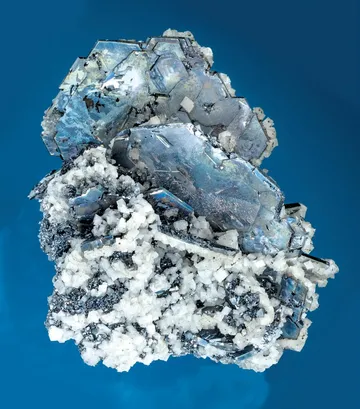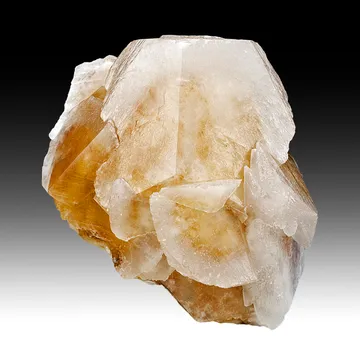
Joplin, USA is a premier Tri-State zinc-lead locality yielding ruby-jack sphalerite, galena, dolomite, and calcite; prized for large, cabinet pieces.
Key facts
Joplin is one of the defining names in American zinc-lead collecting: a city built directly over and beside the Missouri portion of the Tri-State Mining District, the great Mississippi Valley-type ore province spanning southwest Missouri, southeast Kansas, and northeast Oklahoma. For collectors, “Joplin” usually means the Joplin Field of Jasper County, where ore solutions moved through Mississippian carbonate rocks—especially cherty limestone and dolomite of the Boone-related section—leaving sphalerite, galena, dolomite, chalcopyrite, marcasite, pyrite, quartz, calcite, and secondary zinc-lead species in fractures, breccias, cavities, “runs,” “circles,” and sheet-ground ore bodies. It is a district where economic geology and cabinet-mineral aesthetics meet cleanly: the same open spaces that made ore easy to recognize underground also made room for crystals large enough and lustrous enough to become classics.
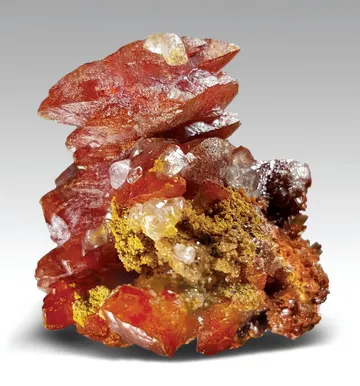
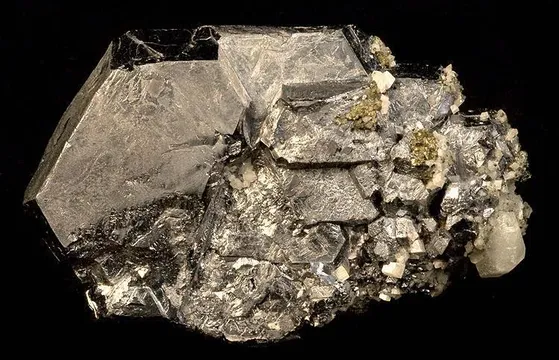
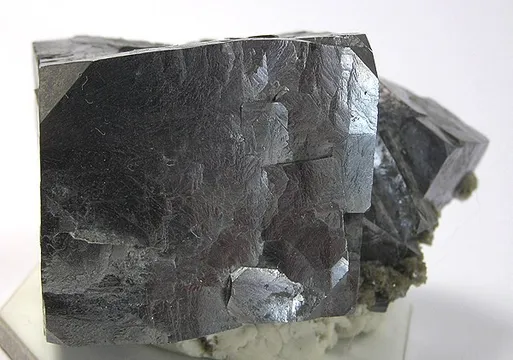
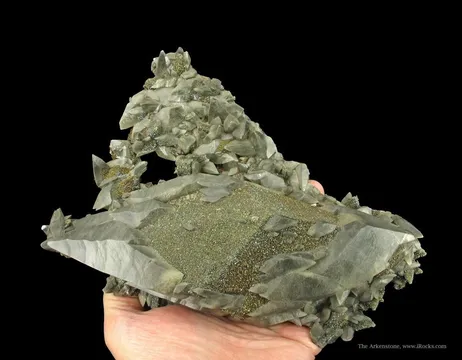
The best Joplin specimens have a look that is hard to confuse once you have handled a few: red-brown to black “ruby jack” sphalerite with resinous flashes; bright cubic or cubo-octahedral galena; pearly cream, white, pinkish, or tan dolomite rhombs; brass-yellow chalcopyrite sprinkles; and scalenohedral or complex rhombohedral calcite, sometimes colorless, sometimes honeyed, sometimes arranged as sharp dogtooth groups. The district’s highest-grade display pieces are often old-time survivors—cabinet plates from 19th- and early-20th-century mining, rather than modern finds—with the balance, luster, and sulfide-carbonate contrast that made Tri-State material a mainstay of American mineral cabinets.
Regional View
Country View
Joplin’s collector importance rests not only on beautiful sulfides and calcites but also on scale. The Missouri part of the Tri-State District ran eastward from the Kansas line through Jasper, Newton, and Lawrence counties, and the Joplin area became one of its great hubs after ore discoveries in 1870. Mining around Joplin, Webb City, Carterville, Oronogo, Duenweg, and nearby camps produced a dense landscape of shafts, pits, mills, smelters, chat piles, and underground workings. That intensity explains why old labels may say “Joplin,” “Joplin Field,” “Webb City,” “Oronogo,” “Carterville,” or simply “Tri-State District,” even when the specimen’s precise mine is now unrecoverable.

Photo: Rob Lavinsky, iRocks.com / Wikimedia Commons
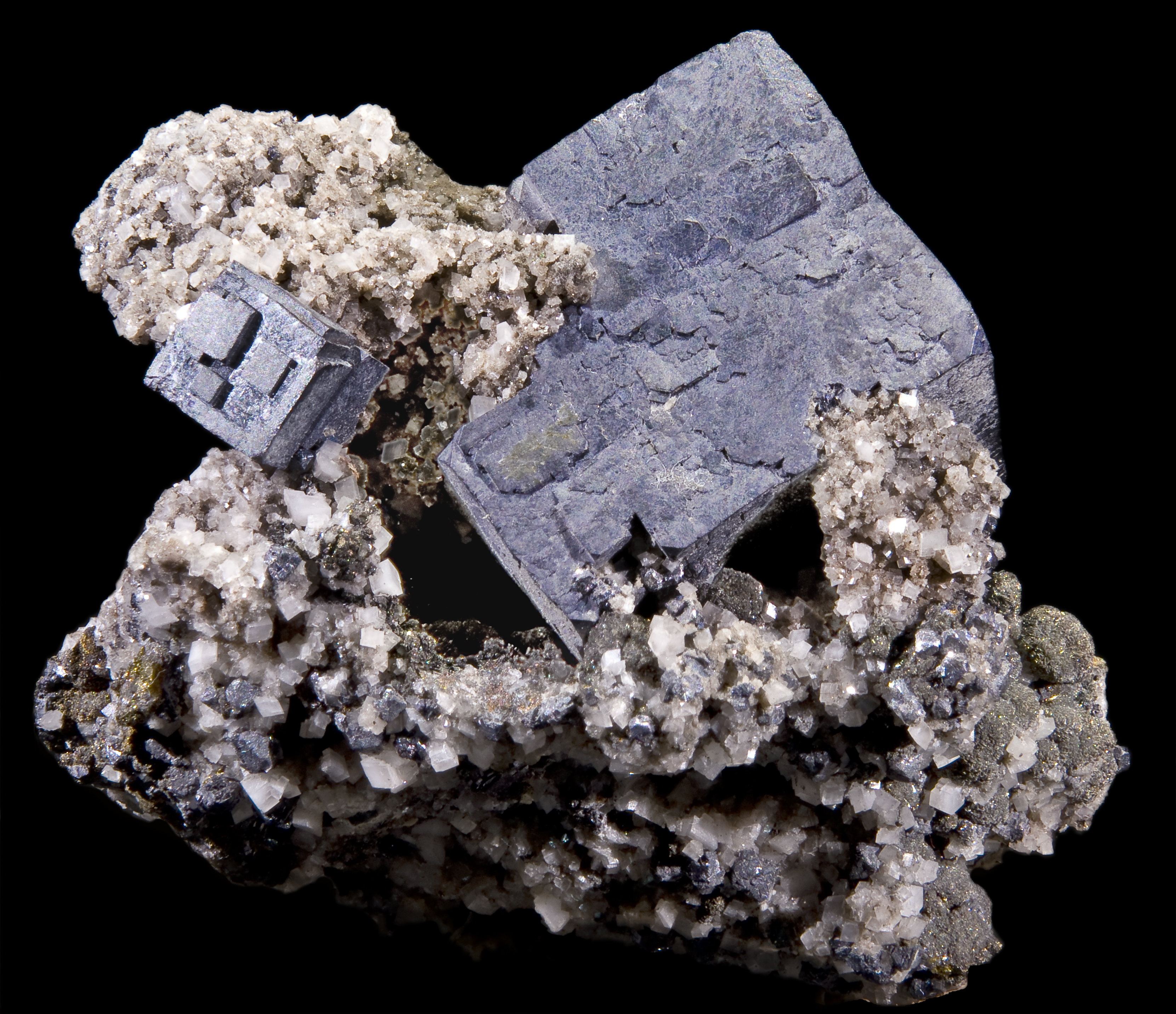
Search for specimens: View all specimens from Joplin, USA
Joplin belongs to the Tri-State zinc-lead district, a classic Mississippi Valley-type system developed in carbonate host rocks on the western flank of the Ozarks. The productive Missouri ores were chiefly in Mississippian Burlington-Keokuk and Warsaw rocks: cherty limestones and dolomitic zones that had been fractured, brecciated, dissolved, silicified, and locally replaced by jasperoid. Ore solutions deposited sphalerite and galena with dolomite, chalcopyrite, pyrite, marcasite, calcite, quartz, chert, and later oxidation products. Unlike vein districts with simple linear fissures, the Joplin Field is a three-dimensional carbonate-replacement and open-space system; its collector pieces came from the same irregular cavities and broken ground that miners followed as ore.
Historic Tri-State terminology is essential for understanding Joplin labels. “Runs” were the great linear ore bodies, following fractures or shear zones and commonly marked by strong brecciation and silica replacement; they could range from tens to hundreds of feet in width, from a few feet to more than 100 feet high, and from a few hundred to several thousand feet long. “Circles” were roughly cone-shaped sinkhole-related deposits, some shallow enough to become large open pits, with Oronogo Circle and Sucker Flats the famous examples in the broader Missouri district. “Sheet ground” described broad, relatively flat ore zones, in places only a dozen or so feet thick but extending over many acres, with thin ore layers interbedded with chert. Those forms matter to collectors because they governed whether crystals formed as linings in open cavities, as crusts on breccia, as disseminated ore, or as replacement masses.
The common paragenetic picture is a repeated sulfide-carbonate story rather than a single neat episode. Early dolomite and silica prepared and cemented the broken carbonate ground; sphalerite and galena entered as major ore minerals, with chalcopyrite, pyrite, and marcasite appearing in several generations; calcite commonly finished many cavities as late, bright, open-space crystals. Old USGS descriptions note that Joplin ore bodies were irregular masses of chert and limestone, often brecciated and cemented or impregnated by dolomite, jasperoid, calcite, sphalerite, galena, and iron sulfides. In the Combination Mine east of Joplin, fine-grained galena and sphalerite formed intricate skeleton intergrowths in stalactitic forms known as “combination ore,” impressive mineralogically but troublesome to mill.
Mining history around Joplin began with lead. The first lead mining in the area is recorded at Leadville, about two miles east of Joplin, in 1848, and a major 1851 discovery helped launch thousands of small mines in southwest Missouri. At first, shallow oxidized ores—cerussite, smithsonite, hemimorphite, and mixed “calamine”—were worked from ground surface to roughly 75 feet deep. Lead was the only recovered metal until 1872, when zinc became economically important; after that, sphalerite, locally called “jack,” became the dominant value. The 1870 discovery of ore at Joplin was the turning point that pushed the district into national prominence, and by the late 19th century Joplin was both a mining city and a mineral name recognized well beyond Missouri.
The early operating system was extraordinarily fragmented. Landowners divided tracts into claims commonly 200 feet square, and sometimes much smaller; miners leased, sank shafts, followed ore as far as they could above the water table, then moved on and sank again. Some shafts were only about 3 by 4 feet. Deeper ore, generally below 150 to 200 feet, required stronger pumping and more organized capital. Small mills and smelters moved with the workings, and the district’s mining geography became a patchwork of pits, shafts, mills, waste piles, and short-lived companies. That is one reason precise mine provenance is uncommon on old specimens: many labels were written for the market, not for later historical reconstruction.
The Joplin-type mill recovered lead well but did not recover sphalerite efficiently; flotation, introduced in the district in 1924, changed the economics of zinc recovery. Rail connections after 1870 made shipment to smelters practical, and zinc works appeared in west Joplin in the early 1880s. The Missouri portion of the Tri-State District reached a record year in 1916, with more than 155,000 tons of zinc and more than 30,000 tons of lead reported from Missouri production. Production declined after World War I, and the Missouri portion closed in 1957, while Kansas-Oklahoma mining continued later, with the broader district effectively ending by 1970.
Collecting access today must be treated as closed unless a current landowner or institution explicitly permits it. The old Joplin mining belt is not an open rockhounding field: it contains private land, reclaimed ground, unstable shafts and pits, flooded workings, contaminated chat and tailings, and active or completed Superfund remediation areas. Much of the district’s collectible supply now comes from old collections, museum deaccessions, estate material, dealer inventories, and specimens collected during the mining era or before modern cleanup. The Joplin History & Mineral Museum and the Spiva Park outdoor mineral display are the appropriate public places to encounter local material in context.
The most legendary Joplin find for calcite collectors was Crystal Cave at the Ino mine, beneath the city near 4th Street and Gray Avenue. Miners broke into it in 1893, revealing an elongated chamber roughly 80 feet below the streets, its floor, walls, and ceiling lined with close-packed calcite crystals. Descriptions call it a giant geode, with scalenohedra and dogtooth calcite reaching more than 2 feet in some accounts, and around 22 inches in others. The cave was preserved for a time as a showpiece rather than simply mined away, but after area mines shut down and pumping ceased, the water table rose and flooded the mine levels and cave.
Other named mines and areas encountered in Joplin literature and labels include the Combination Mine, Empire mines, Audrain mine, Zig Zag mine, Ino mine, and Kohinoor group, along with adjacent or nearby camps such as Webb City, Oronogo, Carterville, and Duenweg. Collectors should read “Joplin” broadly but not carelessly: a specimen labeled “Joplin Field” may be a fully valid Tri-State Missouri piece even without a mine name, while “Joplin District” on an old tag may sometimes have been used loosely for a wider Missouri-Kansas-Oklahoma suite.
Joplin calcite is among the most recognizable carbonate gangue from the Tri-State District, occurring as late open-space crystals on limestone, chert, dolomite, galena, sphalerite, chalcopyrite, and marcasite, with habits ranging from sharp dogtooth scalenohedra to complex rhombs and doubly terminated crystals; fine examples may be colorless, translucent white, pale golden, beige, or honeyed, and ordinary pieces are common as cleaved or etched cavity linings, while superior specimens show isolated, undamaged, lustrous crystals perched on contrasting “ruby jack” sphalerite or metallic galena. The Crystal Cave occurrence at the Ino mine represents the extreme end of Joplin calcite development, with walls, floor, and ceiling lined by large scalenohedra, but cabinet specimens more often come as hand-sized to large-cabinet plates from mined cavities rather than intact cave masses. The best Joplin calcites are judged by clarity, termination sharpness, freedom from bruising on the points, and the strength of the association—especially bright calcite on red-brown sphalerite or calcite rising cleanly from galena and dolomite.
Joplin galena occurs both as ore disseminated through jasperoid and dolomite and as collector-quality crystals in open cavities, most commonly bright lead-gray cubes, modified cubes, cubo-octahedra, and octahedral forms associated with sphalerite, dolomite, calcite, chalcopyrite, marcasite, pyrite, and chert. Good specimens show crisp metallic luster and geometric contrast—silver-gray galena crystals sitting on pearly dolomite or red-brown sphalerite, sometimes with small chalcopyrite accents—while lesser examples are massive, dull, oxidized, or broken from ore. Historical descriptions from the district distinguish multiple galena generations and note corroded or overgrown relationships with chalcopyrite and sphalerite, so well-preserved pieces that show paragenetic layering are especially desirable. Because galena is dense and cleaves readily, Joplin pieces are often edge-bruised; the strongest examples retain sharp cube edges, balanced matrix, and undamaged crystal faces rather than simply high lead weight.
Joplin sphalerite—“jack” to miners, and “ruby jack” when red and translucent in strong light—is the signature ore mineral of the locality, forming resinous red-brown, dark brown, black, and locally lustrous twinned or striated crystals on chert, dolomite, galena, calcite, and chalcopyrite. Specimen crystals commonly range from small sparkling druses to cabinet-scale crystals a few centimeters across, with the best pieces displaying sharp form, high luster, red internal glow on thin edges, and a clean association with pearly dolomite or white-to-golden calcite. Joplin was especially noted for large sphalerite and associated crystals in open cavities, and classic old-time pieces from the 1940s–1960s and earlier remain market favorites. Ordinary sphalerite ore from the district is abundant and massive, but collector-grade Joplin sphalerite is separated by crystal definition, undamaged high points, contrast against matrix, and the classic Tri-State aesthetic of dark resinous crystals punctuated by calcite, dolomite, or chalcopyrite.
Dolomite is both gangue and display mineral at Joplin, appearing as early cavity and breccia cement and as pearly rhombs that provide the pale architectural base for many of the district’s best sulfide specimens. Joplin dolomite may be white, cream, tan, or faintly pinkish, with curved or saddle-like rhombs and crusts on silicified limestone, chert, sphalerite, galena, and chalcopyrite; in fine cabinet pieces it is valued less as a standalone rarity than as the textural foil that makes dark sphalerite and silver galena visually pop. Good dolomite-bearing Joplin specimens show clean, sparkling rhombs that are not mud-stained or crushed, preferably with contrasting sphalerite, galena, or chalcopyrite crystals rising from the carbonate surface. Because dolomite was common in ore bodies and breccias, isolated dolomite-only pieces are usually modest, but dolomite in a well-balanced Tri-State combination specimen is a key part of the locality’s classic look.
Beyond those four market staples, Joplin is documented for chalcopyrite, marcasite, pyrite, quartz, chert, greenockite, hemimorphite, smithsonite, cerussite, anglesite, gypsum, pyromorphite, picropharmacolite, aluminite, and wurtzite, among others. The locality is especially notable for Wurtzite-10H, a zinc sulfide polytype first recorded from the Joplin Field, and for rare wurtzite material described from the Zig Zag mine as small hemimorphic hexagonal crystals on botryoidal zinc sulfide. Greenockite occurs as yellow-green cadmium sulfide coatings associated with sphalerite and was economically noted during World War II. Old labels reading “calamine” should be interpreted historically, since the term was commonly used in southwest Missouri for mixed zinc carbonate, silicate, and hydroxide minerals rather than a single modern mineral species.
The most important authenticity issue with Joplin specimens is not widespread fakery but locality overreach. “Joplin” is a famous and saleable name, and old Tri-State material from Webb City, Oronogo, Carterville, Galena, Baxter Springs, Picher, or Miami can be mislabeled—sometimes innocently—as Joplin. Conversely, a clean old “Joplin Field” label can be perfectly acceptable even without a mine name, because much material entered collections through dealers and miners when precise mine-level documentation was not preserved. Serious buyers should favor specimens with old labels, collection history, or a visual assemblage consistent with Joplin Field material: red-brown to black sphalerite, bright galena, pearly dolomite, chalcopyrite, marcasite, calcite, and cherty carbonate matrix.
Condition matters heavily. Calcite points bruise and cleave; galena cubes chip along edges and corners; sphalerite can be brittle and cleaved; dolomite rhombs abrade easily; and marcasite- or pyrite-rich pieces can oxidize if stored damp. Avoid washing sulfide-rich Joplin specimens aggressively, and never soak marcasite-bearing pieces unless you are prepared for careful drying. Keep them in stable, low-humidity storage, away from acidic paper, wood vapors, or repeated condensation. If a specimen shows powdery yellow-white sulfate bloom, rusty staining that is actively spreading, or a sulfurous odor, isolate it and reduce humidity.
Galena and greenockite associations deserve basic toxic-mineral discipline. Galena is lead sulfide and greenockite is cadmium sulfide; intact display specimens are manageable, but dust is not. Do not grind, trim, lick, or clean with harsh abrasives. Wash hands after handling, keep specimens away from children’s play areas, and store friable pieces in a box or case where small fragments cannot shed into household dust. Calcite may fluoresce in some Missouri and MVT material, and the Joplin museum maintains a “glowing rocks” display, but fluorescence should be treated as a bonus rather than a diagnostic guarantee for Joplin provenance.
Market availability is moderate but quality-sensitive. Massive ore and small average sulfide pieces are not scarce; sharp, aesthetic, undamaged old-time Joplin combinations are much less common. The best specimens tend to be old collection pieces: cabinet sphalerite on dolomite, galena with calcite and chalcopyrite, calcite scalenohedra on ruby jack, or rare wurtzite/greenockite associations with dependable labels. Crystal Cave calcite with convincing provenance is historically important and should be evaluated with extra caution, since “Joplin calcite” and “Crystal Cave calcite” are not interchangeable claims.
In early 1893, the Honorable James Roach was sinking a mine shaft near 4th Street and Gray Avenue when the workings broke into something no miner could confuse with ordinary ore ground. About 80 feet below the streets of Joplin lay an elongated chamber trending northwest-southeast, lined on every side with calcite. The cave was described as a gigantic geode: floor, walls, and ceiling packed with well-formed crystals, some measured at roughly 22 inches and others described as more than 2 feet long. It belonged to the Ino mine and came to be known as Crystal Cave. Miners found plenty of cavities in the Tri-State district, but this one became Joplin’s underground wonder—large enough in later museum telling to be remembered as a six-story room, and spectacular enough that Roach and Mr. Weymann preserved it rather than simply destroying it for ore. The preservation did not last forever. By 1932 the cave had closed, its entrance blocked against vandals. After World War II, when surrounding mines shut down and pumps stopped, groundwater rose through the abandoned workings. The mine levels flooded, and Crystal Cave disappeared beneath the water table.
The human scale of the Joplin mines is equally startling. In the early mining period, a miner working with a large metal shovel was expected to fill 80 buckets a day. Each bucket held 1,200 pounds. The pay was 4 1/2 cents per bucket, with a bonus rate of 6 1/2 cents for buckets over the first 100 if the miner was strong enough, skilled enough, or desperate enough to exceed the day’s requirement. Those numbers give the mineral specimens their proper weight: the galena cubes and sphalerite plates collectors admire today were part of a working landscape measured in tiny shafts, heavy buckets, moving mills, and men paid by the load.
Joplin’s zinc ore had one of the stranger early afterlives before it became valuable. During the Civil War period, sphalerite was still not the prize it would become after zinc smelting and milling improved. The “jack” that later made fortunes could be a nuisance when miners wanted lead. In the Joplin region, unusable sphalerite ore was reportedly pressed into service as building material for a stockade against raiders. Few mineral districts offer a better illustration of changing value: the same dark zinc sulfide that once made a convenient defensive wall later became the economic backbone of southwest Missouri mining.
Even above ground, Joplin kept turning ore into civic memory. In 1966, George A. Spiva gave the city Spiva Park at 4th and Main, the site where the House of Lords had once stood. His eleven-year-old granddaughter, Christy Cragin, unveiled a marble hard-rock lead and zinc miner carved in Carrara, Italy, by Piccini Stefano. The statue weighed 1,000 pounds and showed the miner in overalls and a carbide-lamp cap, with his shovel, pick, and lunch pail at his feet. To surround the statue with real mineral memory, Matt Vickery, then curator of the Tri-State Mineral Museum, donated twenty mineral samples from his collection; the largest was a 700-pound chunk of lead and zinc ore. Decades later, in July 2022, Joplin Historical Society and Joplin History & Mineral Museum volunteers cleaned and updated the park specimens, adding signage so passersby could read the minerals as more than decorative rocks.