Wayne County, USA - a quarry and salt-mine locality with Devonian carbonates, celestine, calcite, fluorite, and evaporites; valued for context and rarity.
Key facts
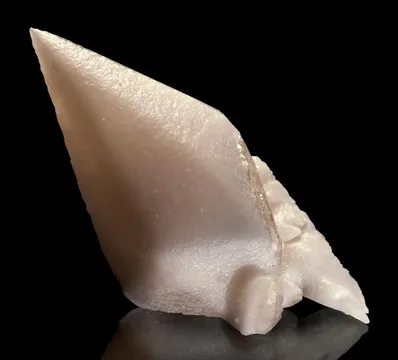
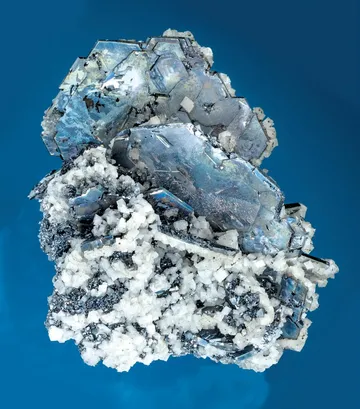
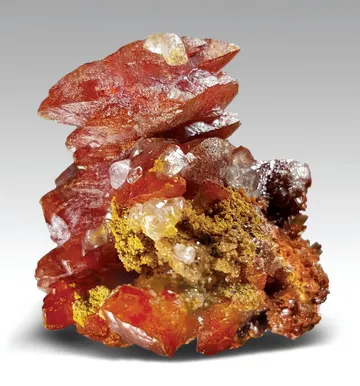
On EarthWonders, “Wayne County, USA” refers to the southeast Michigan county locality: a flat, industrial, deceptively specimen-rich slice of the Michigan Basin where the collector story is written in Devonian carbonate vugs, high-purity Sylvania Sandstone workings, and the great Silurian evaporite pile beneath Detroit. This is not a mountain-mining district of colorful veins and open dumps; it is a quarry-and-salt-mine district, historically important because ordinary industrial operations cut into rocks that rarely show their best faces at the surface. The finest Wayne County pieces are vug specimens: pale yellow to orange calcite, nailhead calcite, blue-to-colorless celestine blades, small fluorite, quartz, rare sulfur, and the salt-mine suite of halite with anhydrite, dolomite, gypsum, carnallite, polyhalite, pyrite, and other evaporite minerals.
The county’s two collector poles are quite different. At the surface, Sibley Quarry at Trenton and the Rockwood/Ottawa Silica occurrence expose Devonian carbonate and sandstone units, with mineralized cavities that produced cabinet-scale celestine and calcite combinations. Underground, the Detroit Salt Company mine cuts the Salina Group salt beds beneath the city, preserving a classic Michigan Basin evaporite assemblage and a century-plus industrial history. Wayne County is therefore a locality for collectors who appreciate context as much as color: specimens are valued not only for their aesthetics, but for the way they document restricted Devonian and Silurian marine basins beneath one of America’s major industrial cities.
Regional View
Country View
The best Wayne County display specimens tend to have a restrained Midwestern palette: gray limestone matrix, pale honey calcite, watery blue celestine, white quartz, and occasional sulfur-yellow accents. The Rockwood celestines are the showpieces, with reported crystals from large vugs reaching exceptional size for the region; the calcite is often most desirable when it is sharp, pale yellow to orange, and aesthetically perched among celestine blades. Sibley Quarry pieces are typically more association-driven, valued for clean vug architecture and for labels tying them to one of the county’s great limestone operations.

Photo: Wikimedia Commons / James St. John
Search for specimens: View all specimens from Wayne County, USA
Wayne County sits on the southeastern flank of the Michigan Basin, where Paleozoic sedimentary rocks dip gently basinward beneath glacial cover and urban development. The collector localities are overwhelmingly artificial exposures: limestone quarries, sandstone quarries, clay pits, wells, and the deep Detroit salt mine. The important specimen environments are solution cavities and vugs in Devonian carbonate and sandstone units at the surface, and bedded Silurian evaporites in the subsurface. The principal industrial commodities recorded from the county are limestone, crushed stone, silica, clay, gypsum-anhydrite, and salt.
Sibley Quarry, between Wyandotte and Trenton, is the best-known Wayne County limestone quarry in the collector literature. It worked compact gray limestone and is recorded as a past producer of crushed stone and limestone. Published descriptions place the workings at roughly 5,000 feet wide and 50 feet deep, and the old geological literature treats Sibley as Wayne County’s important high-calcium limestone exposure. The quarry exposed Dundee Limestone and related carbonate beds; it supplied stone for lime, chemical, construction, road-metal, ballast, and other industrial uses. Today the Sibley property is not an open collecting site: modern state records identify the Detroit Edison / DTE Sibley Quarry site in Trenton as a regulated industrial waste and quarry property, and access should be regarded as private, controlled, and hazardous.
The Rockwood/Ottawa Silica Company Quarry occurrence is the county’s classic celestine-calcite locality. It is tied to the Sylvania Sandstone, a very pure quartz sandstone quarried for glass and industrial sand. In the collector record, vugs in the Sylvania Sandstone and associated carbonate rocks yielded pale yellow calcite, celestine, quartz, fluorite, rare native sulfur, and dolomite. Rockwood specimens matter because the cavities could be large and open enough to grow free-standing crystals: celestine occurred as delicate to thick blue crystals intergrown with calcite, and a documented vug measuring 56 x 38 x 20 cm contained celestine crystals reported at 6 x 13 cm. Other records note Rockwood celestine crystals as long as 30 cm with orange calcite and small quartz crystals. These finds are the reason older Wayne County labels are still taken seriously by regional collectors.
The Detroit Salt Company mine is the county’s great subsurface mineral locality. Rock salt was discovered in the Detroit area in the 1890s, early shaft work began in the first decade of the twentieth century, and production from the completed deep shaft began in 1910. The mine extracts salt by room-and-pillar methods from the Silurian Salina Group, beneath roughly 1,000 feet of overburden; company materials place the mine at about 1,100 to 1,160 feet below Detroit. Mineralogically, this is a bedded halite deposit with anhydrite partings, dolomite, gypsum, carnallite, polyhalite, celestine, pyrite, quartz, hematite, epsomite, calcite, fluorite, and sulfur recorded from the mine. Good halite specimens are usually not vug jewels in the quarry sense, but they are historically desirable as physical pieces of the Detroit evaporite section.
Mining and quarrying history in Wayne County predates modern collecting by a wide margin. Solomon Sibley bought a limestone quarry near Trenton in 1823, and the Sibley name became attached to both place and quarry history. Later industrial operators included the Sibley Quarry Company, Solvay Process Company, Michigan Foundation Company, Detroit Edison, Ottawa Silica Company, International Salt Company, Detroit Salt Company, and associated successor or neighboring aggregate companies. For collectors, the most important production periods were those when quarry faces were actively exposing fresh vuggy horizons and when organized clubs or knowledgeable workers could preserve specimens before blasting, crushing, or filling erased the pockets.
Access today is the central practical issue. The Detroit Salt mine is an active industrial mine and is not a collector locality in the ordinary field-collecting sense. Sibley Quarry is private and tied to modern regulated industrial use. The historic Rockwood/Ottawa Silica locality and the cluster of similarly named Rockwood, South Rockwood, Holloway, Newport, and Sylvania operations straddle a confusing Wayne-Monroe county border collecting tradition; many attractive “Rockwood” celestine-calcite specimens on the market are from adjacent Monroe County quarries rather than Wayne County proper. Serious collectors should therefore value old, specific labels and should preserve every locality detail exactly as received: Rockwood, Ottawa Silica, Sibley, Trenton, Detroit Salt, Holloway, Newport, South Rockwood, and Sylvania are not interchangeable labels.
Wayne County calcite is most collectible from the Rockwood/Ottawa Silica and Sibley Quarry settings, where it occurs in vugs with celestine and, more sparingly, quartz, fluorite, gypsum, epsomite, and rare sulfur depending on the quarry. Rockwood calcite is especially associated with the Sylvania Sandstone vugs: pale yellow crystals are documented there, including nailhead habits, and the best specimens show sharp honey-yellow to orange calcite placed naturally among blue-to-colorless celestine blades rather than as isolated, worn carbonate crystals. Sibley calcite tends to be valued for association and provenance, particularly when clean crystals sit in gray limestone cavities with celestine or fluorite; ordinary pieces are merely pale or bruised vug-fill, while good pieces have undamaged terminations, attractive contrast against matrix, and enough crystallographic definition to make the Wayne County label more than just a historical curiosity.
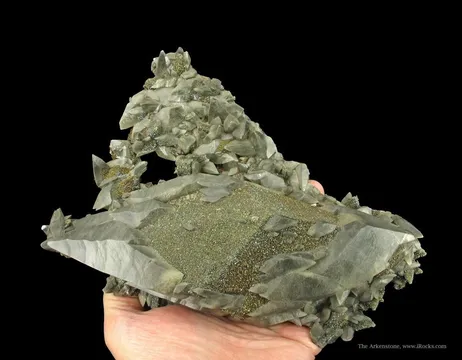
Dolomite from Wayne County is a quieter mineral than calcite, but it is important to understanding the district because it appears both as part of the carbonate host-rock story and as an accessory mineral in the Detroit Salt mine’s bedded evaporite assemblage. The International Salt Company / Detroit Salt Company occurrence is recorded with dolomite in the Salina Group salt beds, comparable to microscopic rhombs and rounded grains in anhydrite-rich layers elsewhere in the basin, while Gibraltar and Rockwood are also documented Wayne County dolomite occurrences. Collectible dolomite from this county is usually not sought as large freestanding crystals; its best role is as crisp tan, white, or gray carbonate matrix supporting calcite-celestine mineralization, or as a well-labeled component of the salt-mine suite. Pieces stand above the ordinary when the dolomite is not just anonymous host rock but is visibly crystalline, cleanly associated, and accurately labeled to a specific Wayne County operation.
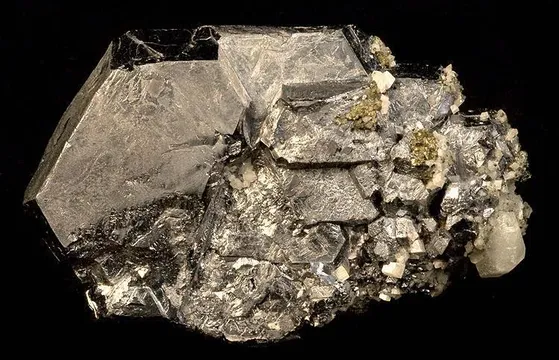
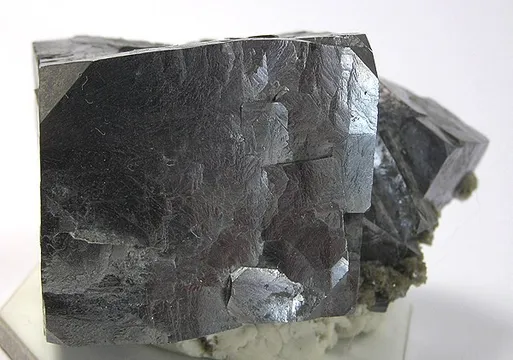
Other minerals documented from Wayne County include celestine, fluorite, quartz, native sulfur, halite, anhydrite, carnallite, gypsum, epsomite, hematite, montmorillonite, polyhalite, pyrite, and corundum. Celestine is the county’s marquee specimen mineral, especially from Rockwood/Ottawa Silica and Sibley; fluorite is a notable accessory in both Rockwood and Sibley associations; native sulfur is rare and far less abundant here than at the famous Monroe County sulfur localities; quartz at Rockwood is recorded as granular to milky subhedral crystals with celestine and calcite; and the Detroit Salt mine adds the distinctive evaporite species that distinguish Wayne County from ordinary limestone-quarry districts.
The most important authenticity issue is locality precision, not laboratory treatment. Southeast Michigan celestine, calcite, fluorite, sulfur, and dolomite specimens are often labeled loosely as Rockwood, Newport, Holloway, South Rockwood, Sylvania, Monroe County, or Wayne County, and these names are frequently confused in older collections and show stock. Rockwood/Ottawa Silica in Wayne County, Sibley Quarry in Trenton, and the neighboring Monroe County quarries belong to the same regional collecting culture but should not be merged casually. A specimen labeled only “Rockwood, Michigan” may be genuine and still require careful interpretation; an old label naming Ottawa Silica, Sibley Quarry, or Detroit Salt Company carries substantially more value than a generic county tag.
No well-documented, locality-specific fake industry is associated with Wayne County calcite or dolomite. The greater danger is upgraded labeling: ordinary carbonate vug material or adjacent Monroe County material being sold as a better-known Rockwood or Wayne County occurrence. Celestine-calcite combinations should be inspected for repairs, because long celestine blades and tabular crystals cleave and snap easily. Repaired crystals are not automatically unacceptable, especially on older Rockwood material, but repairs should be disclosed. Calcite is acid-sensitive and can be dulled by careless cleaning; dolomite is more resistant to weak acid but should still be cleaned conservatively when associated with celestine, fluorite, sulfur, or halite.
Condition standards should be strict. Wayne County vug minerals often formed in hard matrix and were recovered during industrial quarrying, so bruised terminations, sawed backs, drill scars, limestone dust in pockets, and contact points are common. On calcite, look for bright luster, sharp nailhead or rhombohedral form, and undamaged edges. On dolomite-bearing pieces, judge the specimen as an association: crystalline dolomite matrix with well-placed calcite or celestine is far more desirable than massive gray carbonate with a vague label.
The evaporite-suite minerals need special handling. Halite is water-soluble and should never be washed; carnallite and some salt-mine accessories may be moisture-sensitive; epsomite can dehydrate or alter in dry indoor conditions; sulfur can be brittle and should be kept away from heat and prolonged intense light. Celestine is dense and brittle, with good cleavage, so heavy matrix pieces must be supported from beneath rather than lifted by crystals. Fluorescence is not the primary market driver for Wayne County material, but any tested response should be documented on the label because local collectors do note ultraviolet behavior in southeast Michigan celestine-calcite-fluorite associations.
Market availability is uneven. Detroit Salt halite and Wayne County evaporite specimens appear sporadically, usually as historical or educational pieces rather than high-end display minerals. Sibley Quarry pieces are scarcer than their industrial importance would suggest. Attractive Rockwood/Ottawa Silica celestine-calcite specimens are the most desirable Wayne County material, but many comparable “Rockwood” pieces in circulation may actually belong to adjacent Monroe County operations. For serious collectors, the premium belongs to specimens with an old label, a named quarry, strong association, and clean aesthetics.
The most memorable Wayne County quarry story is not a pocket discovery but an explosion. On January 30, 1900, the Sibley Quarry magazine shanty detonated after a delivery of dynamite had left a dangerous quantity of explosives on site. Accounts differ on the precise amount, with figures ranging from 2,000 to 2,450 pounds in the local retellings, but the details are consistent enough to convey the force: the shanty disappeared, a crater about 15 feet across and 10 feet deep was left behind, windows shattered through Trenton and Wyandotte, and the blast was felt across Detroit and as far as Grosse Pointe. Quarry foreman Thomas Fitzpatrick reported a smaller blast just before the main explosion, the kind of sound that might have passed for routine quarry work until the whole magazine went up.
The human detail that still fixes the event in memory is Nelson Burbo. He was the quarry worker killed in the blast, a veteran dynamiter with decades at Sibley. Reports give his age differently, but the story preserves the same hard outline: he left a wife and ten children, and the remains recovered were only fragments, scraps of clothing, and part of a watch. Another watch—or clock, in some accounts—belonging to John Turski was knocked from its place and stopped at 10:33, the minute by which the quarry entered local disaster history.
The Rockwood story is quieter but happier for collectors. In the Sylvania Sandstone vugs of the Ottawa Silica locality, celestine and calcite grew in open cavities large enough to make serious cabinet specimens. One recorded vug measured 56 x 38 x 20 cm and held celestine crystals 6 x 13 cm; other records describe celestine from Rockwood as long as 30 cm, accompanied by orange calcite and small quartz crystals. For a district better known to industry as stone, salt, and silica, those numbers explain why old Rockwood labels still make collectors pause.
The Detroit Salt mine adds a different sort of romance: a mineral locality hidden beneath streets, factories, and neighborhoods. The first efforts to reach the salt were defeated by gas, glacial drift, rock, water, expense, and engineering risk. The successful shaft reached production in 1910, opening a mine that became an underground city of rooms and pillars cut into the Salina Group. After International Salt stopped production in January 1983, public tours briefly let thousands of visitors see the workings; later proposals and ownership changes ended that chapter, and the mine eventually returned to production under the Detroit Salt Company. As a specimen locality, it is difficult, industrial, and mostly inaccessible; as a geological fact, it is unforgettable—a bedded Silurian sea-floor evaporite preserved more than a thousand feet under Detroit.