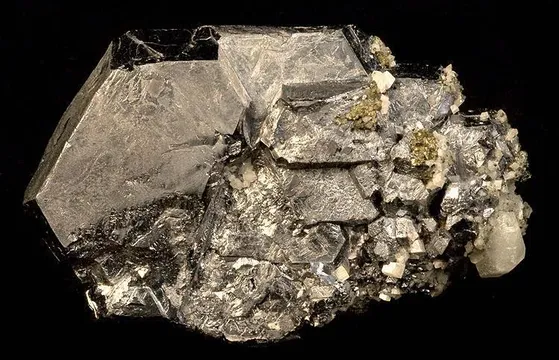
Aurora mine, Chihuahua, Mexico — renowned oxidized lead-vanadium-molybdenum locality famed for cabinet-sized wulfenite and vanadinite, cherished by collectors.
Key facts
The collector locality represented by this guide is the classic Aurora Mine at Cuchillo Parado, Coyame del Sotol Municipality, Chihuahua, Mexico; it is sometimes shortened in commerce simply to “Aurora mine,” a habit that can invite confusion with several unrelated Aurora-named mines in the United States. The importance of this Aurora is not bulk production or a sprawling species list, but a tight, memorable oxidized lead-vanadium-molybdenum assemblage: wulfenite, vanadinite, arsenic-bearing vanadinite, descloizite, mimetite, calcite, and dolomite. The mine sits in the Cuchillo Parado mineralized zone, where Pb-Zn-Cu mineralization is hosted by Mesozoic carbonate and clastic rocks, especially the Las Vigas and Aurora units, with mineralized bodies developed chiefly as mantos and veins.
To collectors, Aurora is an old-time Mexican wulfenite and vanadinite locality of a very particular flavor. It is not Ojuela, not Los Lamentos, and not San Carlos, although it belongs to the same broader northern Mexican collector vocabulary of oxidized lead deposits. The best pieces have an unmistakable cabinet presence: deep orange wulfenite crystals, often elongated, tapering, pseudo-cubic, or bipyramidal rather than merely flat square tablets; brown to golden vanadinite or arsenic-bearing vanadinite; reddish-brown descloizite coatings or replacements; and pale calcite or dolomite matrix that gives the orange and brown vanadates room to show.
Regional View
Country View
Historically, Aurora has a double identity: it was a small but real lead-zinc-vanadium mine, and it later became a connoisseur locality for uncommon Mexican wulfenite and vanadate specimens. Early mining reports from 1910 and 1912 record vanadate of lead and wulfenite near Cuchillo Parado, with concentrates saved for their vanadium and molybdenum content. Later collector attention focused on specimens rather than ore, and by the late 20th and early 21st centuries Aurora pieces were appearing as scarce, distinctive Mexican classics rather than as abundant show material.

Photo: Wikimedia Commons
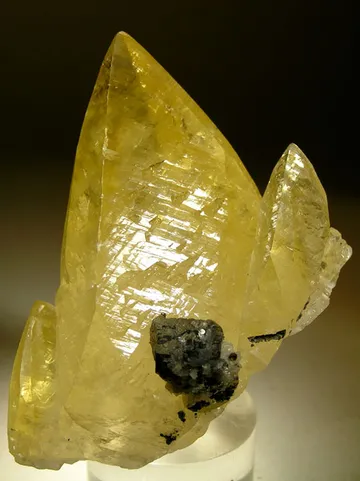
The specimen above shows the locality’s elegant side: a single translucent orange wulfenite crystal on pale calcite and darker limonitic matrix. That restraint is part of Aurora’s appeal. Where some Mexican wulfenite localities overwhelm the eye with acres of crystals, Aurora specimens often reward close inspection: a pyramidal termination, a single clean orange crystal standing proud, a dusting of secondary descloizite, or a calcite-lined pocket surface that preserves the paragenetic story in miniature.
Search for specimens: View all specimens from Aurora mine, USA
Aurora lies in the Cuchillo Parado area of eastern Chihuahua, within Coyame del Sotol Municipality, near the Río Conchos country of northern Mexico. The mine is also recorded as Mina la Aurora. Its name is important beyond specimen labels: the regional Aurora limestone unit was named from the vicinity of the Aurora mine in the Sierra de Cuchillo Parado, where thick-bedded to massive limestones form part of the local Cretaceous succession.
The Cuchillo Parado mineralized zone is a compact but geologically busy district. Government mapping describes a Mesozoic sedimentary sequence including La Casita, Navarrete, Las Vigas, Cuchillo, Aurora, Benevides, Loma de Plata, Washita, Ojinaga, San Carlos, and Sacramento units. For mining purposes the Las Vigas and Aurora units are the key hosts, because Cu and Pb-Zn mineralization is emplaced in them. The principal structure is the elongated Cuchillo Parado anticline, trending roughly north-northwest, about 38 km long and about 13 km wide. Mineralized structures are chiefly mantos and veins, with lengths ranging from a few meters to about 1,000 m and thicknesses from about 0.5 m to 5 m across the broader zone.
Aurora itself is recorded as an inactive Pb-Zn manto in limestone-shale of the Aurora unit, striking about N15°W, dipping steeply northeast, with a reported length of about 120 m and a thickness of roughly 1.5 to 2 m. Modern geological summaries identify La Aurora as one of the more important mines of the Cuchillo Parado zone, formerly producing Pb-Zn and vanadium. The broader mineralized zone is not currently active. That inactive status should not be read as open collecting permission; the workings and dumps are historical mine ground, and any visit would require land and mineral-rights permission, local knowledge, and serious mine-safety precautions.
The ore story is a lead-zinc deposit overprinted by oxidation chemistry rich in vanadium, molybdenum, arsenic, and carbonate gangue. Primary galena-bearing material supplied the lead, while the oxidized zone produced the collector minerals: wulfenite, vanadinite, arsenic-bearing vanadinite, descloizite, mimetite, calcite, and dolomite. Historical mining accounts describe galena with low silver values, vanadinite concentrates running about 18% vanadic acid or V2O5, and wulfenite concentrates running about 30% molybdic acid. Those figures explain why a deposit that collectors now prize for orange crystals was once considered in practical ore terms as a vanadium-molybdenum by-product source in a lead mine.
Specimen production seems never to have been abundant. Dealer and collector records repeatedly describe Aurora material as old-time, limited, and hard to obtain. Some specimens are said to have been collected in the 1960s, while other accounts make clear that small numbers continued to trickle out over a long period. A 2000 Mineralogical Record show report noted that Cuchillo Parado was producing “better and better wulfenite” and illustrated wulfenite crystals to 2.1 cm from La Aurora. Later dealer descriptions still characterize good cabinet pieces as scarce, especially those with strong orange color, intact crystals, and matrix rather than isolated fragments.
The best-known pockets and lots are not documented in the same detailed level-by-level way as Ojuela or certain Tsumeb finds. Instead, Aurora’s specimen record is pieced together from old labels, auction descriptions, Mindat photo data, and the 2016 Mineralogical Record article devoted specifically to the mine. These sources establish several recurring styles: isolated orange wulfenite crystals on calcite; richer cabinet pieces with many small deep-orange wulfenites; elongated tapering bipyramidal crystals; pseudo-cubic non-pyramidal crystals; brown arsenic-bearing vanadinite crystals, sometimes curved or skeletal; and descloizite either as glittering secondary coatings or as pseudomorphous replacement after vanadinite.
Aurora wulfenite is the locality’s signature mineral and is prized precisely because it does not look like routine Mexican material: crystals may be deep orange, translucent, lustrous to greasy, and unusually elongated or tapering, with bipyramidal or pseudo-cubic habits rather than only the flat square tablets familiar from many lead deposits. Documented specimens show crystals from a few millimeters up to about 1 cm commonly in fine pieces, with exceptional crystals reported around 1.4 cm and published/show-reported examples to about 2.1–2.2 cm; most occur on calcite, dolomite, or limonitic gossan, and photo records also show associations with vanadinite, arsenic-bearing vanadinite, and mimetite. Good pieces are separated from ordinary ones by saturated orange color, bright luster, undamaged terminations, and an aesthetic matrix setting; a single sharp crystal on white calcite can be more desirable than a crowded but battered plate.
Aurora vanadinite occurs in the same oxidized lead-rich system as the wulfenite, and much of the most distinctive material is arsenic-bearing vanadinite, historically encountered under the old varietal name endlichite in collector descriptions. The crystals are typically brown, golden-brown, clove-brown, or reddish-brown rather than the bright red-orange habit associated with Moroccan vanadinite; they may be elongated, curved, skeletal, hoppered, or arranged in intergrown sprays and crusts. The strongest examples are those where the vanadinite form remains readable—especially elongated crystals reaching centimeter scale—while descloizite druse, calcite, dolomite, or wulfenite adds contrast without obscuring the crystal architecture. Ordinary pieces can look like brown crusts; fine Aurora vanadinite has sculptural form, visible terminations, and the subtle metallic-glassy sparkle of a good old Chihuahua vanadate.
Calcite at Aurora is important less as a standalone show species than as the stage on which the locality’s vanadates perform. It is the most frequently recorded wulfenite associate in photo data, appearing as pale, white, or colorless matrix beneath orange wulfenite crystals and in combination with dolomite, vanadinite, and descloizite. On the best pieces calcite supplies contrast: white carbonate beneath orange wulfenite, or pale pocket lining around brown vanadinite and descloizite. Collectors should value Aurora calcite specimens when the calcite is integral to the composition and undamaged, not merely as a broken carbonate base; its role is to preserve pocket context and make the orange, brown, and reddish secondary lead minerals visually legible.
Aurora descloizite is one of the locality’s most interesting minerals because it is commonly tied to replacement and overgrowth textures rather than simple isolated crystals. Specimens are documented as reddish-brown, brown, golden, or sparkling drusy coatings associated with arsenic-bearing vanadinite, and auctioned pieces include descloizite pseudomorphs after vanadinite. The best examples preserve the shape of the precursor vanadinite crystals or combine readable vanadinite forms with a fine glittering descloizite skin; these are far more compelling than shapeless brown crusts. Fine Aurora descloizite is therefore judged by texture and paragenesis as much as by color: does the specimen show replacement, does it retain crystal form, and does the descloizite enhance the vanadinite rather than simply conceal it?
Other minerals documented from Aurora include dolomite, mimetite, and arsenic-bearing vanadinite. Dolomite is an important carbonate associate, especially with wulfenite; mimetite is notable because yellow to greenish mimetite has been reported with Aurora wulfenite and can complicate identifications on small specimens; arsenic-bearing vanadinite is central to the mine’s identity and is commonly associated with descloizite. No valid type-locality mineral is documented from this Aurora mine; collectors should not confuse it with the North Aurora mine at Treasure Hill, Nevada, the type locality of aurorite.
Aurora specimens are genuinely scarce in the market compared with Ojuela, Los Lamentos, San Carlos, or the classic Arizona wulfenite localities. Small specimens and old thumbnails appear periodically, but strong cabinet pieces with sharp orange wulfenite, matrix, and good provenance are much harder to replace. When a dealer describes a fine Aurora specimen as an old-time piece, that is plausible; however, “old-time” should ideally be supported by labels, collection history, or a recognizable earlier dealer trail.
The most important locality-specific authenticity issue is documented fake or assembled wulfenite matrix material. A 1999 Mineral News warning, indexed in Mindat’s reference search for Aurora wulfenite, specifically flagged faked wulfenite matrix specimens from the Aurora Mine at Cuchillo Parado. Because Aurora wulfenite commonly occurs as attractive orange crystals on pale calcite or carbonate matrix, collectors should examine contact points carefully. Look for glue halos, unnatural placement of crystals on unrelated calcite, mismatched dirt or iron staining, crystals perched only on high points with no mineralogical continuity, and matrix that seems inconsistent with the known calcite-dolomite-limonite assemblage.
Mislabeling is equally important. “Aurora Mine” can mean several places: the Cuchillo Parado mine in Chihuahua, the La Aurora mine at Charcas in San Luis Potosí, the North Aurora mine in Nevada, the Aurora gold-silver camp in Mineral County, Nevada, and other Aurora-named workings. A label reading only “Aurora Mine” is insufficient for a serious specimen unless the mineral assemblage, old label style, or provenance makes the identity clear. For wulfenite, vanadinite, arsenic-bearing vanadinite, descloizite, calcite, and dolomite in the specific habits described here, Cuchillo Parado, Coyame del Sotol Municipality, Chihuahua, Mexico is the correct locality wording.
Condition is a major value driver. Wulfenite is soft, dense, and brittle; the most exposed tips and edges chip easily. Aurora’s elongated and pyramidal habits make damage especially visible, because a broken apex changes the whole character of the crystal. Vanadinite and descloizite coatings may be more granular and can shed if handled roughly. Calcite and dolomite matrix can bruise, cleave, or show acid-cleaning damage; overly etched carbonate may leave wulfenite crystals looking isolated or suspiciously reset.
For handling, treat all specimens as lead-bearing mineral specimens: avoid inhaling dust, wash hands after handling, keep away from children, and do not attempt aggressive acid cleaning. Calcite matrix will react with acid, and such treatment can destroy the very contrast that makes many Aurora specimens attractive. Fluorescence is not a central collecting feature for this locality; visual quality under normal light—color, luster, habit, association, and condition—is what matters.
In 1910, the Aurora story was not yet a collector story. It was a practical note in a mining journal about a lead mine near Cuchillo Parado on the Conchos River in eastern Chihuahua. The ore contained vanadium as lead vanadate and molybdenum as wulfenite, the lead molybdate. Until then, the report said, no attempt had been made to save those minerals. Then a contract changed the economics: concentrates of both the vanadate and the wulfenite were made and saved, with wulfenite concentrates running about 30% molybdic acid and the vanadium ores about 18% vanadic acid. Small shipments were being made to an American ore agent. What collectors now admire as orange crystals on calcite was, in that moment, a recoverable chemical commodity.
Two years later, the same mine appeared again in print with a sharper ownership and shipping note. The Aurora mine in eastern Chihuahua was described as owned by the Madero family, with wulfenite and vanadinite associated with low-silver galena. Some of the vanadinite concentrate, running 18% V2O5, had been shipped to England. It is a wonderfully early snapshot: burros, lead ore, a politically famous family name in Chihuahua, and mineral species that would later become cabinet specimens traveling first as concentrate rather than as crystals.
The locality’s name also escaped the mine and entered stratigraphy. The Aurora Formation, a major Cretaceous limestone unit of northern Mexico and adjoining regions, takes its name from the vicinity of the Aurora mine in the Sierra de Cuchillo Parado. In geological mapping, the mine is not just a dot on a specimen label but part of the type landscape for a regional carbonate name. For a mineral collector, that adds a satisfying symmetry: the calcite and carbonate matrix under the wulfenite are not incidental scenery, but part of the broader limestone country from which the locality’s geological identity was drawn.
By the modern collector era, Aurora became a quieter sort of classic. In a 2000 show report, the La Aurora mine at Cuchillo Parado was noted as continuing to produce “better and better wulfenite,” with crystals to 2.1 cm illustrated from a Blue Sky Mining specimen photographed by Jeff Scovil. That short show note captures the way the locality entered serious collections—not as a flood of material, but as a repeated surprise at shows and in dealer stocks, where knowledgeable collectors recognized something different from the more familiar Los Lamentos look.
The darker side of that market attention appeared almost immediately. A 1999 Mineral News caution warned of faked wulfenite matrix specimens from the Aurora Mine. The warning is important because Aurora’s visual formula is temptingly easy to imitate: orange wulfenite, pale carbonate, iron-stained matrix. The best real pieces have mineralogical continuity and old-label credibility; the questionable ones ask too much trust of a crystal sitting too neatly on a convenient base.
Jean des Rivières, “The Aurora mine, Cuchillo Parado, Coyame del Sotol, Chihuahua,” The Mineralogical Record, vol. 47, no. 5, 2016, pp. 609-619 — The focused modern article on the Aurora Mine and its collector minerals.
The Mineralogical Record, Mexico-VII, September-October 2016, vol. 47, no. 5 — Issue listing confirming the Aurora article and page range within a Mexico special issue.
William D. Panczner, Minerals of Mexico, Van Nostrand Reinhold, 1987 — Standard Mexican mineral-locality reference cited for Aurora calcite, descloizite, vanadinite, arsenic-bearing vanadinite, and wulfenite.
Les Presmyk and Peter K. M. Megaw, “Wulfenite from Mexico,” Rocks & Minerals, vol. 94, no. 1, 2019, pp. 34-47 — Broad modern treatment of Mexican wulfenite localities, with Aurora included in the reference network for Mexican wulfenite.
Richard Philip Fischer, “Geology and Resources of Base-Metal Vanadate Deposits,” U.S. Geological Survey Professional Paper 926-A, 1975 — Useful background on base-metal vanadate deposits and their association with wulfenite in oxidized lead systems.
Engineering and Mining Journal, October 1, 1910, vol. 90, no. 14 — Early mining notice describing vanadate of lead and wulfenite near Cuchillo Parado, with concentrate grades and shipments.
Engineering and Mining Journal, February 3, 1912, vol. 93, no. 5 — Early note identifying the Aurora mine in eastern Chihuahua, ownership by the Madero family, and vanadinite concentrate shipments.
Consejo de Recursos Minerales, Carta Geológico-Minera Ojinaga H13-8, Chihuahua — Government geological mapping for the Cuchillo Parado mineralized zone, including Aurora’s inactive Pb-Zn manto, host unit, structure, and district-scale geology.
Mindat: Aurora Mine, Cuchillo Parado, Coyame del Sotol Municipality, Chihuahua, Mexico — Core locality page with coordinates, mineral list, alternate name, and references.
Mindat: Wulfenite from Aurora Mine — Species-specific occurrence page showing associated minerals, photo data, and references for Aurora wulfenite.
Mindat: Arsenic-bearing Vanadinite from Aurora Mine — Useful for the arsenic-bearing vanadinite and descloizite association.
Mindat: Cuchillo Parado — Regional page for the Cuchillo Parado mineral assemblage and nearby occurrences.
Wikimedia Commons: Wulfenite-41199.jpg — Open-license photograph of an old Aurora wulfenite on calcite, showing the locality’s elegant single-crystal style.
Crystal Classics: Wulfenite, Aurora mine, Cuchillo Parado, Chihuahua — Dealer archive-style listing with detailed description of a major cabinet wulfenite from Aurora, including size and habit.
Mineral Auctions: Wulfenite, ex John Arnaud Collection — Auction record documenting pseudo-cubic deep-orange wulfenite on calcite and dolomite matrix from Aurora.
Mineral Auctions: Descloizite pseudomorph after vanadinite, ex Dr. Wouter van Tichelen Collection — Market reference for Aurora descloizite pseudomorph material.
Galleries.com: Wulfenite specimen notes — Older online dealer-style reference describing a La Aurora wulfenite with unusual elongated bipyramidal habit.
Servicio Geológico Mexicano / Consejo de Recursos Minerales Ojinaga report — Best accessible geological source for the Cuchillo Parado mineralized zone, host formations, access routes, and inactive mining status.
Mineral News, February 1999, vol. 15, no. 2 — Indexed source for the documented warning about faked wulfenite matrix specimens attributed to Aurora.