Laghman, Afghanistan: famed collector locality for gem spodumene (kunzite) and elbaite tourmaline, plus morganite and quartz from high-grade pegmatites.
Key facts
Laghman is one of the great collector names of the Afghan lithium-pegmatite province: a label that, in older usage, embraces the Nilaw–Kulam–Mawi–Korgal district of the Nuristan region and the gem-bearing LCT pegmatites that made Afghan kunzite, elbaite and morganite famous in Western collections during the 1970s and 1980s. The best-known bodies are not ore mines in the usual sense but strongly zoned granitic pegmatites, emplaced along the margins and roof zones of the Laghman granitic complex into gabbro-diorite, gneiss, schist and related metamorphic rocks. Their collector appeal lies in what the late-stage melt and fluids did inside pockets: transparent spodumene in pink, lilac, yellow, green and blue; elbaite tourmaline in green, blue-green, pink, colorless and tricolored crystals; pink morganite; sharp quartz; bladed albite-cleavelandite; microcline; lepidolite; and the tantalum-niobium accessories that reward careful locality work.
Regional View
Country View
For collectors, “Laghman” also requires a little historical translation. Before Nuristan Province was created in 2001, many of the pegmatites now assigned administratively to Nuristan were widely labelled “Laghman, Nuristan, Afghanistan” or simply “Laghman Province.” The old label is not automatically wrong; it reflects decades of mineral trade usage. The careful modern label, however, should distinguish Laghman Province from the broader Nuristan gem region and, wherever possible, name the mine or field: Mawi, Kulam or Kolum, Nilaw, Korgal, Pashagar, or a related pegmatite.
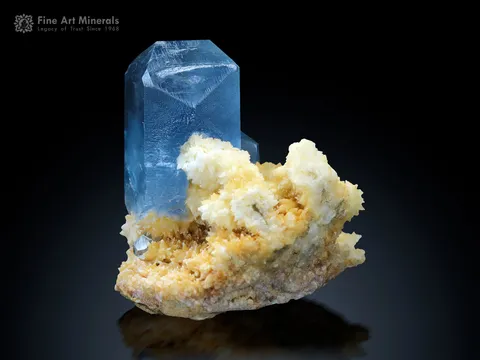
The look of a first-rate Laghman specimen is unmistakable. Kunzite and triphane are commonly flattened, striated, glassy-to-satiny spodumene blades or prisms, sometimes with broad flat faces and sharp edges rather than the rounded, battered look of many older-world spodumene crystals. Mawi is famous for large loose crystals, but true matrix pieces—kunzite anchored on cleavelandite, quartz, microcline, tourmaline or morganite—are the premium survivors because so many crystals were removed for gem rough. The best elbaites are slender “pencils,” tricolored prisms or deeply colored green to blue-green crystals; the best morganites are short, glossy, pink prisms perched on snow-white cleavelandite.

Photo: Pala International

Photo: Pala International

Photo: Pala International
Search for specimens: View all specimens from Laghman, Afghanistan
The collectible deposits are complex rare-element granitic pegmatites of the lithium-cesium-tantalum family. Regionally they belong to the young Himalayan-Hindu Kush pegmatite belt, related to post-collisional granitic magmatism. In the Nilaw–Kulam–Mawi–Korgal field, the pegmatites were injected into a varied crystalline terrane of gneiss, mica schist, quartzite, marble, migmatite, granite, diorite and gabbro. The productive gem pegmatites are typically the better zoned bodies, especially those in gabbro-dioritic host rocks where thick, gently dipping dikes produced stable pocket environments.
The major pegmatite bodies vary from small veins to enormous dikes. Published Soviet and later summaries describe pegmatites ranging from a few metres to roughly 40 metres thick, and individual bodies in the district may be traceable for hundreds of metres to several kilometres. The Mawi pegmatite is the giant of the field: about 1.5 km long and up to 40 metres thick, with zones progressing from marginal quartz-muscovite through microcline-quartz-beryl and quartz-spodumene into albite-muscovite-quartz assemblages with sugary albite, lepidolite, multicolored tourmaline and additional spodumene. Kulam is described as a sub-horizontal body more than 3 km long, with a mineralized section about 1,200 metres long and offshoots that host important gem pockets.
The ore and specimen mineralization is strongly zoned. Common rock-forming and pocket minerals include quartz, albite and cleavelandite, microcline, muscovite, lepidolite and schorl. The collector minerals are the late and pocket-grown products: elbaite, gem spodumene including kunzite and triphane, morganite and aquamarine beryl, pollucite, fluorapatite, spessartine, cassiterite, columbite-group minerals, tantalite-(Mn), stibiotantalite and microlite-group minerals. Nilaw is especially important historically for Be-Li-Ta-Nb mineralization, while Mawi is the great spodumene and morganite name; Korgal is best known for highly transparent green elbaite.
The district entered modern geological literature in the early 1970s. Soviet geologists began serious work on Mawi, Kulam and Nilaw in 1971 while evaluating rare metals such as Li, Cs, Rb, Nb and Ta, but they quickly recognized the exceptional gem pockets as well. Local labor was employed for drilling, blasting and mining, and the Soviet work left its own strange traces: one later-opened kunzite pocket yielded a crystal pierced by a two-inch drill hole. Pierre Bariand of the Sorbonne visited the field in 1976 and obtained a sharp 50 cm kunzite from Mawi, helping bring the locality into the classic literature of specimen mineralogy.
Mining has never resembled an orderly industrial operation for collectors. It has been a mixture of Soviet-era exploration, local artisanal extraction, pocket mining, gem-rough buying and long-distance trading through Afghanistan and Pakistan. The most intense early production came in the 1970s. Published figures for the Kolum district include more than 1,260 kg of gem-quality kunzite between 1973 and 1975. Mawi alone has produced extraordinary individual pockets: one in 1995 yielded about 1,800 kg of spodumene, including around 300 kg of faceting grade; another produced about two tons; a 2009 pocket yielded two tons of kunzite rough; and a March 2010 pocket yielded 18 kg gemmy kunzite crystals along with matrix pieces showing kunzite associated with tourmaline and morganite.
Access remains difficult and should not be treated as a casual field-collecting opportunity. Historic accounts describe multi-day foot travel from the road end, narrow trails along steep rocky gorges, and a crossing of the Koh-e-Sagoli range near 3,000 metres to reach Mawi. Roads have since improved, but the pegmatites themselves still require foot travel from the nearest vehicle access, and the broader region has long been affected by political instability, local control of routes, security hazards and seasonal weather. Mineral rights and mining in Afghanistan are administered through the Ministry of Mines and Petroleum; modern legal extraction, transport and trade require the relevant licenses or contracts. For collectors outside the region, specimens are realistically acquired through established dealers, old collections and documented trade parcels rather than by field access.
The finest finds are pocket finds, not bulk ore. The most collectible pieces came from clay- or alteration-filled cavities in quartz-rich and albitized pegmatite zones, with gem material often found 11 to 20 metres below surface in the Mawi data cited from Soviet drilling. At Kulam, cavities range from centimetres to 50 cm, exceptionally to 2.5 metres, and contain quartz, microcline, cleavelandite, gem spodumene, green and blue elbaite, pink morganite and white to colorless pollucite. Larger leached zones may contain pockets from half a metre to three metres across, and late-stage recrystallization around leached microcline appears to have been especially productive for gem spodumene. The collector should remember that the most visually desirable matrix specimens are a minority of production: many spodumene and beryl crystals were intentionally detached for sale as cutting rough, leaving quartz-feldspar plates on the dumps.
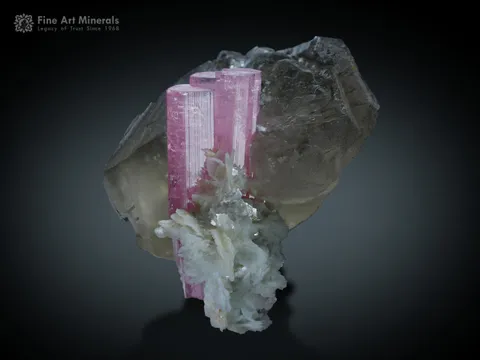
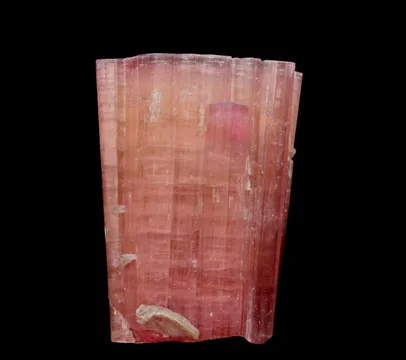
Tourmaline from the Laghman/Nuristan pegmatites is a collector category rather than a single look: Korgal is celebrated for transparent green to emerald-green crystals, more rarely pink, sometimes in sheaves on muscovite, while Mawi is especially associated with small tricolored elbaites with pink bases, green middles and colorless tops, along with achroite and multicolored crystals on pocket plates. Published accounts describe cuttable crystals up to about 15 cm long and 4 cm wide, and large transparent crystals to roughly 2 by 15 cm; old trade observations even mention a huge pink crystal section about 30 cm across. The best Laghman tourmalines are valued for saturation, glassy luster, undamaged terminations, transparency, and undisturbed association with cleavelandite, quartz, lepidolite or muscovite; ordinary pieces are typically small, bruised, cloudy, detached fragments with imprecise locality data.
Elbaite is the main gem tourmaline species of the district, documented from Mawi, Kulam, Nilaw, Korgal and related pegmatites in colors ranging from colorless achroite through pink and green to blue-green and indicolite tones. Korgal material is the classic Laghman elbaite: transparent green crystals prized by gem hunters; Nilaw produced delicate pink and green “pencils,” including a 2008 find of a few dozen crystals, some on quartz; and Mawi produced tricolored and colorless crystals, including small pocket plates that survived gem removal. Fine Laghman elbaite should show sharp pyramidal or low-angle pyramidal terminations, bright luster, true transparency and unambiguous mine provenance, with matrix examples on quartz or cleavelandite commanding a premium because most crystals entered trade loose.
Kunzite is the signature spodumene variety of Mawi and the broader Nilaw–Kulam field, occurring as lilac, pink, purple and sometimes color-zoned flattened prisms and blades, commonly striated and cleavable, and locally large enough to define the locality’s reputation. Mawi pockets have yielded astonishing masses of material, including 420 kg in July 1973, 176 kg in October–November 1973, 1,800 kg in a 1995 pocket, two tons in 2009, and 18 kg gemmy crystals in a March 2010 find; many crystals are loose, but the prize specimens show kunzite still attached to quartz, cleavelandite, microcline, tourmaline or morganite. Top examples have rich stable color, intact terminations, broad clean faces, minimal cleavage bruising and good three-dimensional presence; lesser pieces are pale, etched to dullness, cleaved, heavily fractured, or merely gem rough with an old Laghman label.
Beyond kunzite, Laghman spodumene includes colorless to yellow triphane, green and blue-green material, and opaque white to pink crystals embedded in the pegmatite, with exceptional crystals reported up to a metre long in gem material and frozen spodumene crystals to about 2 metres in the quartz-spodumene zone at Mawi. The classic habit is an elongated, flattened clinoprism with striated faces, broad flat surfaces and comparatively sharp edges; some crystals show twinning on 100, including the re-entrant angles noted in the early literature. Good spodumene specimens from here are not just large—they are well terminated, lustrous, not overly sun-faded or heat-bleached, and, when possible, associated with albite-cleavelandite, quartz, morganite or tourmaline from a credible Mawi, Kulam or Nilaw pocket.
Cleavelandite, the platy albite habit so important in lithium pegmatites, is the visual stage on which many of Laghman’s best gem minerals appear. In the Nilaw–Mawi literature it is described as blue cleavelandite in the central parts of productive veins, as snow-white blades carrying morganite, and as the albite plates left behind when spodumene crystals were detached for gem rough. The finest cleavelandite specimens are not usually collected for feldspar alone; they matter when their crisp, white to pale bluish blades provide undamaged contrast for pink morganite, lilac kunzite, green elbaite, smoky or clear quartz, or reddish-brown tantalite-(Mn), while ordinary cleavelandite is common pocket matrix and may be friable, clay-stained or broken.
Albite occurs throughout the Laghman pegmatites as both cleavelandite and finer sugary or granular albite, forming major zones in Kulam and Mawi and marking the albitized, evolved portions where gem pockets develop. At Kulam, fine- to medium-grained albite with quartz and muscovite underlies more complex zones, and cavities in albitized muscovite-microcline pegmatite contain albite with quartz, microcline, gem spodumene, elbaite, morganite and pollucite. Collector-quality albite from Laghman is judged mainly by its role as matrix: clean, bright, three-dimensional albite blades that hold gem crystals in natural position are much more desirable than massive albite fragments, sugary matrix, or pieces with detached crystal bases.
Quartz is abundant at Laghman, from large crystals in Nilaw cavities and quartz-rich zones at Mawi to clear, white and pale smoky crystals in Kulam pockets. It was once undervalued so dramatically that Mawi quartz specimens were reportedly discarded on the dumps, and one large fireplace was built from them; today, a quartz crystal on a documented Mawi or Kulam matrix can be essential evidence that a kunzite, morganite or tourmaline specimen is a natural pocket association rather than a loose gem crystal. The best quartz here is sharp, undamaged, bright and in balanced association with spodumene, cleavelandite, microcline, elbaite or morganite; very dark smoky quartz on Afghan spodumene specimens deserves caution because irradiation can darken quartz and alter spodumene color.
Morganite from Laghman is best known from Mawi and Kulam, where crystals range from pink and brownish pink to peach, commonly as short prisms with well-developed basal pinacoids and, in the best pieces, glossy transparent prism faces set against white cleavelandite. A particularly admired Mawi example is a 7 cm gemmy short-prismatic crystal standing on edge on cleavelandite, with frosted pyramidal modifying faces and transparent glossy prism faces; Mawi has also produced morganite with quartz, cleavelandite, elbaite and, more rarely, spodumene. Fine specimens are those with saturated pink color, clean luster, natural matrix contact and minimal bruising along prism edges; loose pale beryl crystals labelled broadly “Afghanistan” should be treated as less diagnostic unless backed by older documentation.
Other documented Laghman minerals round out the locality’s rare-element character: microcline, muscovite, lepidolite, schorl, pollucite, petalite, fluorapatite, eosphorite, cookeite, spessartine, topaz, cassiterite, columbite-(Fe), columbite-(Mn), tantalite-(Mn), stibiotantalite and microlite-group minerals. Mawi in particular is noted for sharp spessartine crystals from millimetres to about 1.5 cm, deep purple fluorapatite to 2 cm and rarely 5 cm, flattened stibiotantalite crystals to about 1.5 cm, black to reddish-brown tantalite-(Mn) to several centimetres, and significant columbite-group crystals with cassiterite. No widely accepted mineral species appears to have Laghman Province as its formal type locality in the principal collector references, but the district’s rare accessory suite is still important because it records the same Li-Cs-Ta enrichment that produced the gem pockets.
The first authenticity issue is locality wording. Older labels reading “Laghman, Nuristan, Afghanistan” may predate the 2001 creation of Nuristan Province and can be historically legitimate, but modern buyers should ask whether the piece is actually from Mawi, Kulam/Kolum, Nilaw, Korgal, Pashagar or another pegmatite. Conversely, broad “Nuristan” labels on spodumene and tourmaline may hide a Laghman trade origin. Exact mine names were often lost as material moved through Peshawar, Kabul, Bajaur, Gilgit and Tucson, and some specimens entered commerce with intentionally vague or incorrect country-level labels.
Kunzite and other spodumene need the most caution. Afghan spodumene may show tenebrescence and color instability: green, blue-violet, pink and purple colors can be affected by daylight, ultraviolet exposure, heat and irradiation history. Historic gemological testing showed pink spodumene fragments fading toward colorless in direct sunlight in less than a week, and bleaching under sustained heating. Some pale spodumene from the broader Afghan pegmatite belt has been irradiated to strengthen color, and unnaturally dark smoky quartz associated with pale-to-orange-pink Afghan spodumene is a warning sign of treatment. Store fine kunzite out of sunlight and strong display lighting, and be skeptical of strong green “hiddenite” labels from Laghman; the hiddenite variety was treated as erroneous or unconfirmed in major locality listings.
Condition is a central value factor. Spodumene has excellent cleavage and breaks easily; many Laghman crystals entered the market as loose blades, fragments or gem rough because matrix was thought to reduce cutting value. Clean terminations, complete prism edges, unbruised cleavage faces and natural matrix attachment all add value. Tourmaline is tougher but still often chipped at terminations or repaired where long pencils snapped from pocket walls. Morganite edges can be abraded, and cleavelandite matrix can be friable, clay-stained or reconstructed.
Fluorescence can help characterize spodumene but should not be used alone for proof of locality. Published work on Afghan pink spodumene reported strong orangy-pink fluorescence under long-wave ultraviolet, strong bluish-pink response under short-wave, and red phosphorescence lasting about a minute. Because UV exposure may also affect color, use ultraviolet testing briefly and avoid leaving valuable kunzite in UV-rich environments.
Market availability is uneven. Ordinary loose Afghan spodumene, small elbaite and matrix fragments remain available, but fine documented Mawi or Korgal specimens from old pockets are much harder to buy than the broad locality name suggests. The best pieces—large gem kunzite on matrix, transparent green Korgal elbaite, old Mawi morganite on cleavelandite, and rare accessory-mineral specimens with precise provenance—move through specialist dealers and old collections rather than steady mine supply.
Before the gem rush, the same valleys had a very different prestige. In the forested mountainsides near present-day Mawi and Nilaw, Afghan kings were said to have hunted brown bears and leopards. The king waited lower in the Kolum River valley with his horse while local people formed a human chain high on the slopes and drove bears down toward him. By the time gem dealers and geologists were writing about the district, those forests had become better known for cobras, scorpions, difficult trails and pegmatite workings than for royal hunts.
The Soviet geological work of the early 1970s was the modern turning point. Teams working Mawi, Kulam and Nilaw were officially searching for rare metals—lithium, cesium, rubidium, niobium and tantalum—but the same drilling and blasting opened gem pockets. About 100 local men were employed for the heavy work. Local accounts later given to Faisal Umar Shinwari said that in 1972–1973, during the most intense Soviet period, the workers who helped open the pegmatites were not allowed into the pockets or ore zones they had exposed. Yet they remembered the results: quantities of heavy black tantalum minerals and gem tourmaline. The strangest relic of that period surfaced after the Soviets were gone, when a later pocket yielded a kunzite crystal with a two-inch drill hole through it.
Pierre Bariand’s 1976 visit is one of the classic episodes in Laghman collecting history. To reach the deposits in that period required roughly two days on foot from the end of the jeep road, following narrow trails along steep rocky gorges and crossing a 3,000-metre range to reach Mawi. From that giant pegmatite Bariand obtained a sharp 50 cm kunzite crystal. The later published account by Bariand and Poullen put Laghman into the international mineral literature and helped explain why the best specimens differed from so many other spodumene localities: broad, flat faces, relatively sharp edges, and crystals formed in pockets rather than merely embedded as coarse pegmatitic masses.
Mawi’s pockets could be absurdly rich. Reports describe pockets as large as a bedroom or living room, several metres wide, deep and tall, their contents sold in huge lots of loose crystals, matrix specimens and kilograms of shards. In July 1973, 420 kg of spodumene were extracted; in October–November the same year, another 176 kg came out. In the summer of 1995, a single pocket yielded about 1,800 kg of spodumene, 300 kg of it faceting grade. Quartz specimens were so unwanted at the time that many were thrown onto the dumps, and one fireplace was built from the discarded quartz.
The most painful collector detail is what was broken off and left behind. Bariand and Poullen saw large plates of rock on the dumps at Mawi covered with quartz, microcline and cleavelandite—the very matrix plates from which kunzite crystals had been detached by miners. Beryl suffered the same fate. A modern collector looking for a natural kunzite-on-cleavelandite or morganite-on-quartz specimen is therefore chasing the minority that survived a market built first around gem rough.
Pashagar supplied one of the memorable elbaite transactions of the Afghan-Pakistan trade. The small mine, reached by a footpath on the south side of the Alingar River near a forested mountain infamous for poisonous snakes, produced 72 specimens in 1992: pink, gemmy elbaite crystals on highly lustrous smoky quartz. In July and August that year, Malem Haji brought them to Asmat and Faisal Umar Shinwari in Landi Kotal. The brothers bought the lot for $16,000, sold it for the same price to Tariq Iqbal and Wayne Thompson, and later received $5,000 as an after-sale profit—an example of the partnership-style deals common among Afghan and Pakistani gem dealers. Two smaller pockets during six months of work produced 15 very fine specimens; the best later entered the Mim Museum in Beirut. The mine closed in 1992, and no further finds of that kind were reported in the same account.
Even in 2010, experienced dealers still spoke about the region as half-known. A Pala correspondent writing about the Mawi-area mines recalled a 68 gram tourmaline rough from Gamata—“yes, 68 grams!!”—that his friend sold to a Peshawar dealer, who then sold it to Jeff Graham at Tucson. The correspondent missed seeing it by only a couple of days, around 2000 or 2001, before mobile phones had become common in the region. He also gave the sort of mining proverb that survives because miners know it is only partly comforting: the deeper the pegmatite, the better the material. At Gamata that meant following veins that went vertical, branched, or disappeared 50 metres into the mountain. By contrast, he called out one of Mawi’s blessings: a miner could sometimes walk into a refrigerator-sized pocket containing many kilograms of kunzite only a few metres below the surface.