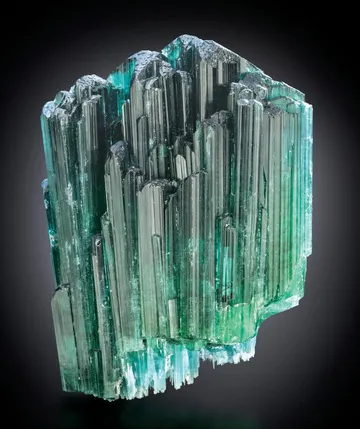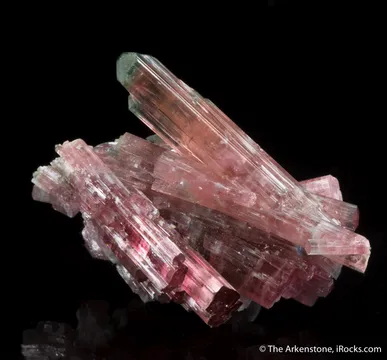
Golconda pegmatite field, Brazil — a top mineral locality producing blue/green elbaite tourmaline, bertrandite, fluorapatite, plus fine specimens.
Key facts
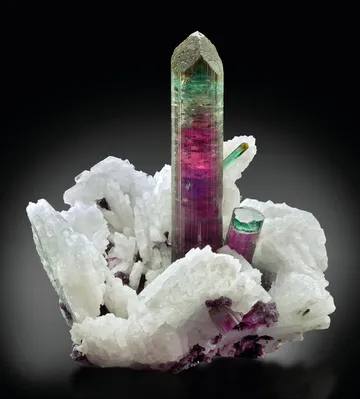
The Golconda pegmatite field is one of the great names of the Governador Valadares gem district of eastern Minas Gerais: a compact group of lithium-bearing granitic pegmatites northwest of the city, famous first as a mica district and later as a source of some of Brazil’s most memorable blue, green, and bicolored elbaite tourmalines. Its classic core is the trio of Golconda I, II, and III, but the field also includes specimen-producing workings such as Faria, Ipê, Zé Pedra, Escondido, Olhos D’Água, Jacó, Machadão, Alto da Golconda, and the Zequinha Menezes/Pedro Espírito claim. For collectors, Golconda matters because its best pieces do not look like generic Minas Gerais pegmatite specimens: they have a recognizable palette of green and blue tourmaline, snowy cleavelandite and albite, pearly white bertrandite fans, purple to blue fluorapatite, muscovite, lepidolite, cookeite, quartz, and subordinate beryl varieties including morganite and aquamarine.
The geological setting is classic Eastern Brazilian Pegmatite Province ground: sheet-like granitic pegmatites intruded into schists and gneisses of the Rio Doce region, with strong internal zoning, kaolinized pocket zones, and accessory minerals concentrated in the more evolved central portions. The original Golconda pegmatite was already important by the early twentieth century as a mica producer; by the 1960s, Golconda III had entered Brazilian gem lore with its huge green-tourmaline pocket, and Golconda II became equally respected for sporadic but superb indicolite and green elbaite. The best mineral specimens range from cabinet-size tourmaline crystals with clean color zoning to miniature and small-cabinet bertrandite sprays that are oversized for the species, plus intensely colored fluorapatite combinations in which tiny blue or purple crystals sparkle over albite, quartz, and bertrandite.
Regional View
Country View
The field’s specimen aesthetic is unusually varied. Some pieces are upright green tourmaline clusters, sometimes with stepped or partially rehealed terminations and small muscovite accents. Others are delicate, almost alpine-looking plates of white albite or cleavelandite carrying bright fluorapatite and minute bertrandite. The finest Golconda bertrandites are not merely “rare species” specimens; they can be sculptural, fan-shaped, pearly, and visually dominant, which is why they have become a serious sub-specialty for collectors of Brazilian pegmatites.

Photo: Wikimedia Commons

Photo: Wikimedia Commons

Photo: Wikimedia Commons
Search for specimens: View all specimens from Golconda pegmatite field, Brazil
Golconda is a pegmatite field in the Governador Valadares municipality of Minas Gerais, commonly placed within the Safira pegmatite district of the Eastern Brazilian Pegmatite Province. The district lies northwest of Governador Valadares; the best-known historical mines, Golconda I, II, and III, occur close to one another, while satellite workings and claims in the broader field account for much of the later specimen production. The regional framework is metamorphic country rock—principally schists and gneisses—cut by numerous granitic pegmatite bodies. At the original Golconda pegmatite described in the classic American Mineralogist study, the body is sheet-like, nearly horizontal, 3 to 11 meters thick, and hosted by mica schist; grain size increases inward and the pegmatite is zoned into upper and lower border zones, a central zone, and a quartz-perthite zone at the thicker western end.
The most collectible minerals came from the more evolved, locally weathered central zones and from irregular cavities within them. The border and central zones are dominated by K-feldspar, quartz, and muscovite, but the accessory suite is what gives Golconda its importance: tourmaline, beryl, morganite, aquamarine, garnet, cassiterite, tantalite, microlite-group minerals, fluorapatite, bertrandite, hydroxylherderite, cookeite, lepidolite, albite, cleavelandite, and quartz. In practical collecting terms, Golconda pockets tend to fall into several specimen styles: gem tourmaline pockets in kaolinized or albite-rich zones; bertrandite-fluorapatite-albite assemblages from evolved pocket linings; schorl and cleavelandite combinations from feldspar-albite pockets; and quartz pockets, including “cathedral habit” quartz at Escondido.
The original Golconda mine—later distinguished as Golconda I and known in specimen circles as the “Golconda of the Tourmalines”—was discovered and worked for muscovite in 1908, making it one of the old mica pegmatites of Brazil. Mining was initially open-pit work, and during the wartime mica period underground work was driven along the hanging wall. Golconda II, the “Golconda of the Micas,” was opened around the Second World War for muscovite and clear quartz, and remained an intermittent producer into the late twentieth century. Golconda III, the small hillside deposit associated with the Zequinha Menezes and Pedro Espírito claims, is the legendary gem pocket locality: in 1961 it yielded an extraordinary mass of clean green tourmaline crystals, followed by later hard-rock pockets and bicolored rose-and-green tourmaline specimens.
Several named workings define the modern collector map of the field. Faria is an important source of tiny but highly colored blue and purple fluorapatite, commonly with micro white bertrandite on albite, quartz, microcline, or muscovite. Ipê is notable for microlite-group minerals, including analyzed fluorcalciomicrolite and oxycalciomicrolite, as honey-yellow to yellow octahedral crystals on albite crusts. Zé Pedra produced large schorl crystals on albite, muscovite, and microcline, including long curved schorls in the 1990s and later purple fluorapatite. Escondido produced large quartz crystals and dark-green elbaite crystals to several centimeters, some growing on or inside the quartz; it also produced clusters of pink fluorapatite around 2000. Olhos D’Água became known for sizeable beige twinned hydroxylherderite clusters in the early 1970s. Jacó is chiefly an industrial albite and microcline working but has yielded beryl, morganite, blue or green elbaite, quartz, albite, and muscovite from central-zone pockets.
The field is not a public collecting locality in the casual sense. It consists of mines, claims, private land, old underground workings, and mechanized open cuts or tunnels with the normal hazards of Brazilian pegmatite mining: unstable kaolinized material, old adits, loose feldspar blocks, and steep waste piles. Serious collecting today is generally by purchase from miners, dealers, or older collections rather than by independent field collecting. Specimens labeled simply “Golconda” may refer to the historical mine, the three Golcondas, or the broader district; whenever possible, labels naming Faria, Ipê, Zé Pedra, Escondido, Jacó, Alto da Golconda, Machadão, or Zequinha Menezes add real scientific and market value.
Tourmaline is the signature mineral of Golconda, and the locality’s reputation rests on both cuttable gem rough and crystallized specimens from Golconda I, II, and especially III. The field produced green, blue-green, blue, rose, and bicolored elbaite, with Golconda III famous for the 1961 kaolin-hosted green-tourmaline pocket and for later hard-rock pockets yielding rose crystals tipped green on cookeite matrix; Golconda II is especially associated with fine blue indicolite and with smaller but repeated finds of green, blue-green, and rose crystals from albite-rich and kaolinized pocket zones. Good Golconda tourmaline shows lively transparency, saturated but not over-dark color, crisp longitudinal striations, complete or naturally rehealed terminations, and balanced association with albite, quartz, cookeite, lepidolite, muscovite, or schorl; ordinary pieces are commonly incomplete mine-run prisms, dark or included sections of gem rough, or isolated crystals lacking termination quality and matrix context.
Albite is both a major pocket mineral and the visual stage on which many Golconda specimens are built, ranging from massive cleaved feldspar to pearly white plates and cleavelandite-style blades in the more evolved pocket zones. In Golconda II and the broader field, softer albite-rich zones were repeatedly linked with gem pockets, while Faria and Machadão specimens commonly show albite carrying blue or purple fluorapatite and microcrystalline bertrandite; Jacó is also an industrial albite producer whose central pockets can yield albite with morganite, elbaite, quartz, and muscovite. Fine albite specimens from Golconda are not judged merely by feldspar abundance but by architecture: clean, lustrous, white to snowy albite forming open bladed surfaces, with undamaged accessory crystals perched rather than buried.
Bertrandite is one of Golconda’s great specialist minerals, occurring as pearly white to colorless bladed crystals, sprays, fans, and polycrystalline clusters on albite, often with fluorapatite, quartz, muscovite, and tourmaline. Faria is known for micro white bertrandite accompanying tiny blue and purple fluorapatite, while the broader Golconda mine field has yielded unusually large crystals for the species, including clusters with blades reaching centimeter scale and rare cabinet specimens dominated by snowy, upright fans. The best pieces are those in which bertrandite is the main visual event—well separated, lustrous, damage-free blades with three-dimensional growth—rather than a dusting of microscopic crystals that merely confirms the beryllium-rich chemistry of the pocket.
Elbaite from Golconda is the gem tourmaline that made the field famous: green and blue crystals from Golconda I and II, the great green Golconda III production, and bicolored rose-to-green crystals from later Golconda III pockets. Habits include slender “pencils,” thicker striated prisms, sharply to rough-pedion-terminated crystals, and unusual polychrome specimens, sometimes with lepidolite sheathing, cookeite, albite, or quartz. Fine elbaite here is separated from ordinary material by a combination of saturated Brazilian color, transparency, intact termination, and pocket aesthetics; Golconda specimens with rose shafts and green caps, or blue indicolite-grade bodies with clean prism faces, carry a locality character that is difficult to mistake.
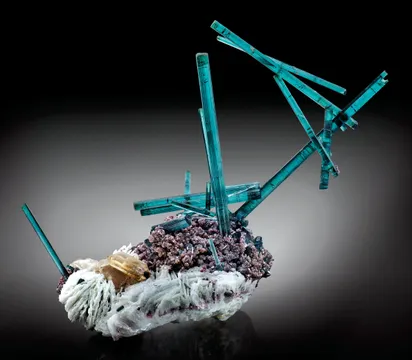
Indicolite is the blue elbaite variety that gives Golconda II a particularly high standing among Brazilian tourmaline localities. The celebrated 1968 find at Golconda II produced roughly 50 kilograms of blue “pencil” crystals, much of it described as exceptionally pure sapphire-blue material, and older Golconda indicolite specimens from the 1960s often appear as very slender, transparent prisms with uniform blue to blue-green color and narrow widths compared with their length. The most desirable examples are bright, transparent, evenly colored crystals with preserved tips or natural rehealing and no misleading over-darkness; lesser examples may be attractive blue fragments but lack the termination, provenance, and color purity that define classic Golconda indicolite.
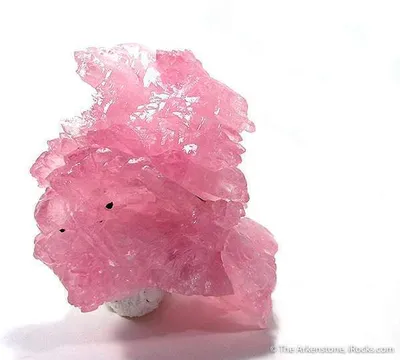
Fluorapatite from Golconda is most prized in the small, vivid, highly crystallized specimens from Faria, Machadão, Escondido, Zé Pedra, and related pocket finds. The crystals are commonly short prismatic, lustrous, blue, purple, pink, or purplish, often only millimeters across at Faria but visually strong because they sit on white albite or quartz and are accented by tiny white bertrandite; some 2013–2014 material showed complex pink fluorapatite crystals with tourmaline and bertrandite, and dealer-documented examples note fluorescence under short-wave ultraviolet, sometimes weaker under long-wave ultraviolet. Fine pieces are judged by sharp crystal form, color intensity, contrast against albite or cleavelandite, and intact doubly terminated crystals; an ordinary piece is merely a scattering of tiny apatites without color or composition.
Quartz is a major structural and pocket mineral throughout Golconda, present in the primary pegmatite zones and in collectible pocket assemblages with albite, muscovite, tourmaline, fluorapatite, bertrandite, schorl, and beryl. Escondido is specifically noted for large quartz crystals with “cathedral habit,” and dark-green elbaite crystals have been found growing on or inside quartz there; Zé Pedra also produced quartz crystals reportedly reaching cabinet scale, associated with albite, microcline, schorl, and muscovite. Good Golconda quartz is valuable when it preserves pocket architecture or mineral association—tourmaline-on-quartz, apatite-quartz-albite plates, or unusual inclusions—whereas ordinary clear or milky quartz without associated species is usually of locality interest only.
Lepidolite at Golconda is a lithium-mica companion to the gem-tourmaline assemblage rather than a bulk collector species in its own right, occurring with elbaite, albite, quartz, muscovite, and pocket minerals in the evolved zones. Classic examples include polychrome elbaite crystals with a yellowish-tan to lilac lepidolite coating or sheath on one side, and the field’s Golconda I assemblage is explicitly associated with quartz, albite, microcline, schorl, muscovite, cookeite, and lepidolite. The best lepidolite-bearing Golconda specimens use the mica as an aesthetic and paragenetic accent—textural contrast, color framing, and evidence of late lithium-rich pocket chemistry—rather than as massive, featureless mica with little specimen value.
Morganite is a documented but less abundant beryl variety at Golconda, recorded from the field and from Alto da Golconda, with Golconda II producing small quantities during the postwar gem period and Jacó pockets yielding flattened morganite crystals with blue or green elbaite, quartz, albite, and muscovite. Golconda morganite specimens tend to be more important for locality and association than for giant freestanding beryl crystals; the best pieces show clear pink to peach color, natural crystal faces or flattened hexagonal form, and placement on albite, cleavelandite, quartz, or feldspar with other pegmatite minerals. Material with weak color, etched surfaces, or embedded massive beryl habits is far less competitive unless tied to a strong old label or a named Golconda claim.
Muscovite is historically central to Golconda: the original mine was worked for mica beginning in 1908, Golconda II was opened during the wartime mica era, and mica occurs in the border and central zones with feldspar and quartz. As a specimen mineral it appears as books, plates, and silvery to pale mica accents with tourmaline, schorl, fluorapatite, albite, quartz, and bertrandite; Faria fluorapatite pieces, for example, may include muscovite in the matrix, and Zé Pedra schorl specimens can sit on muscovite with albite and microcline. Collector-grade Golconda muscovite is usually valued when it frames a more colorful mineral, preserves sharp, reflective books, or documents the mica-mining history; large damaged sheets and massive mica scrap are commoner and less desirable.
Schorl is the black iron-rich tourmaline of the Golconda field and occurs as both a primary pegmatite accessory and a pocket-associated species with albite, cleavelandite, microcline, muscovite, quartz, fluorapatite, and bertrandite. Zé Pedra is especially noted for large schorl crystals on albite, muscovite, and microcline, including crystals reportedly reaching 30 cm and long, thin curved examples from the mid-1990s; Faria and Ipê also record schorl in their assemblages. Fine Golconda schorl pieces have lustrous, well-terminated prisms with clean contrast on white feldspar, and the best specimens avoid the two common problems of schorl from pegmatites: bruised terminations and visually heavy masses that lack definition.
Hemimorphite is not part of the well-established Golconda pegmatite suite documented in the principal locality records and classic descriptions, and labels assigning hemimorphite to Golconda should be treated with special caution. The district is a beryllium-, lithium-, boron-, phosphate-, tantalum-niobium-bearing granitic pegmatite field rather than a zinc oxidation locality, so a credible Golconda hemimorphite specimen would need strong provenance, analytical support, or an explanation such as a mislabeled association from another Golconda-named locality. For collectors, the best “Golconda hemimorphite” is therefore one whose identity and locality have been independently checked; otherwise the safe assumption is misattribution rather than an overlooked major habit from the Brazilian field.
Autunite is a minor and unusual radioactive phosphate recorded from Alto da Golconda, not a common cabinet-mineral product of the main tourmaline pockets. Where authentic, it reflects uranium-bearing late-stage alteration in the pegmatite environment and would be expected as thin yellow-green tabular crystals or crusts rather than large, robust display specimens; such material should be kept dry, boxed, and handled as a delicate hydrated uranium mineral. Good Golconda autunite is mainly of systematic interest—well-formed, localized, and provenance-secure—while unverified bright yellow-green crusts on pegmatite matrix require care because several secondary uranium phosphates can be confused visually.
Beryl is part of the evolved central-zone Golconda assemblage, occurring as aquamarine, morganite, goshenite-like colorless beryl, and coarser embedded crystals in feldspar-rich zones. Faria records beryl as coarse crystals embedded in microcline in the intermediate zone, Ipê has aquamarine of medium to low gem quality, Jacó pockets have yielded blue beryl with some cutting value, and Golconda II produced small quantities of morganite along with tourmaline. The best beryl specimens from the field show distinct crystal form, color, and matrix association; ordinary beryl here is commonly more geological than aesthetic—coarse, partially embedded, pale, or etched—unless accompanied by a precise claim label and associated elbaite, albite, quartz, or muscovite.
“Apatite” labels from Golconda almost always need to be read in context: the well-documented, collectible species in the field is fluorapatite, while generic apatite labels may reflect older nomenclature, group-level use, or unanalysed material. In the specimen market, Golconda apatite is most recognizable as blue, purple, or pink prismatic crystals, commonly small and bright, on albite or cleavelandite with bertrandite, quartz, muscovite, and tourmaline; the Faria and Machadão styles are especially distinctive. Fine examples are sharp, lustrous, colorful, and preferably associated with bertrandite or albite; a conservative label should use fluorapatite only where that identity is supported, and “apatite group” when no analysis or reliable prior determination exists.
Rutile is known from the broader Governador Valadares–Golconda pegmatitic region chiefly as an accessory heavy mineral rather than as a celebrated crystallized Golconda cabinet species. Regional pan-prospecting work around Golconda records rutile among minerals transported from the Onça drainage toward the Doce River, alongside amphiboles, dravite, garnet, ilmenite, magnetite, monazite, muscovite, quartz, tourmaline, and zircon; in pegmatite collecting, such rutile is more likely to appear as small accessory grains or inclusions than as freestanding display crystals. A worthwhile Golconda rutile specimen would need unusually good crystal definition or a convincing association and label; otherwise rutile-bearing labels should be viewed as systematic or alluvial-mineral evidence rather than a major specimen category.
Barite, under the English spelling, is not a characteristic mineral of the documented Golconda pegmatite assemblage, which is dominated instead by feldspars, quartz, mica, tourmaline, beryl, phosphates, and tantalum-niobium oxides. Because “Golconda” is also the name of non-Brazilian mining localities where barite and lead-zinc oxidation minerals do occur, a barite specimen labeled only “Golconda” is particularly vulnerable to geographic confusion. A serious collector should require a full Brazilian locality label—Governador Valadares, Minas Gerais, preferably a named Golconda claim—and, if possible, analytical or collection-history support before accepting barite as genuinely from this pegmatite field.
Cleavelandite, the platy albite variety, is one of the most important aesthetic matrix minerals from Golconda, forming pearly white blades and wedges that host fluorapatite, bertrandite, tourmaline, muscovite, and quartz. It is especially prominent in specimen descriptions of fluorapatite-bertrandite-albite combinations, where the white blades make tiny blue, purple, or pink apatites read with surprising visual strength; schorl specimens from Zé Pedra also occur over albite-cleavelandite matrix. The best cleavelandite pieces are open, fresh, and bladed, with no iron staining or bruising, and they should support the accessory crystals rather than overwhelm them as a massive white feldspar block.
Baryte, the IMA spelling of barite, carries the same locality caution at Golconda: it is not part of the standard published mineral list for the Brazilian pegmatite field and should not be assumed authentic from a brief “Golconda” label. In a beryllium-lithium pegmatite such as this, a credible baryte occurrence would be anomalous and would require documentation beyond visual identification, especially because old collection labels can easily confuse Golconda, Minas Gerais, Brazil with Golconda-named base-metal localities elsewhere. Collectors should value only baryte specimens with full provenance and skepticism-resolving evidence; without that, the safer collecting interpretation is a label error, not a new signature mineral of the field.
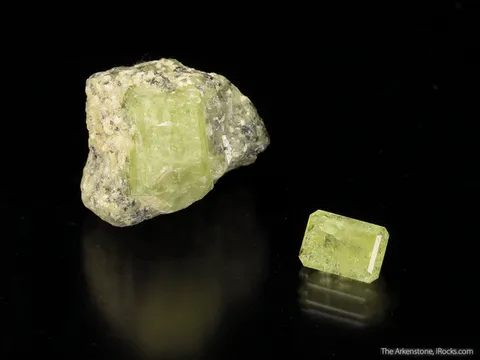
Other minerals documented from the Golconda pegmatite field include cassiterite, columbite-(Fe), tantalite-(Fe), tantalite-(Mn), microlite-group minerals, fluorcalciomicrolite, oxycalciomicrolite, hydroxylherderite, rhodochrosite, todorokite, garnet group minerals including spessartine-rich material, K-feldspar, microcline, quartz, cookeite, lepidolite-series lithium mica, zircon, and manganese oxides. The Ipê mine is especially important for microlite-group material, including fluorcalciomicrolite as tiny transparent honey-yellow octahedra on albite crusts and oxycalciomicrolite reported from analytical work. Hydroxylherderite is another noteworthy beryllium phosphate of the field: older “herderite” identifications from Brazilian pegmatites, including Golconda, were shown to be hydroxyl-rich and are now better treated as hydroxylherderite unless analysis proves otherwise.
The most important authenticity issue at Golconda is locality precision. “Golconda” can mean the original Golconda mine, Golconda I, II, or III, the broader mining district, a named satellite claim, or an entirely different Golconda locality outside Brazil. Older dealer labels may also use “Golconda Mine” loosely for specimens from Faria, Ipê, Machadão, Zequinha Menezes, or other nearby workings. For high-value tourmaline, bertrandite, fluorapatite, microlite-group, or hydroxylherderite specimens, a named sublocality materially improves the piece.
Tourmaline requires the usual scrutiny for repairs, rehealed versus broken terminations, oiling or resin filling of fractures, and old reattachments to matrix. Many Brazilian pegmatite tourmalines were mined for cutting rough, so broken basal ends, trimmed roots, sawn bases, and extraction bruising are common. Golconda crystals with clean terminations, natural contacts, and undisturbed albite or cookeite matrix are substantially scarcer than loose prism sections. Indicolite can look too dark in poor lighting; evaluate blue crystals in daylight as well as transmitted light.
Bertrandite is a different kind of condition challenge. Golconda’s pearly sprays and blades are brittle, cleavable, and easily chipped along edges. A visually “snowy” specimen can still have countless tiny bruises if handled roughly. Examine the fan edges under magnification, and be wary of specimens that have been heavily cleaned or stabilized. Fine, undamaged bertrandite clusters from Golconda are rare enough that they should be considered connoisseur specimens, not minor accessories.
Fluorapatite from Faria, Machadão, and related Golconda finds is often small but brilliant; the issue is not size alone but crystal completeness. The best examples show discrete, lustrous crystals on albite or quartz, ideally with bertrandite confirmed or visible under magnification. Some documented fluorapatites and bertrandites from the field fluoresce under ultraviolet light, especially short-wave UV in certain specimens, but fluorescence should be treated as a supporting observation rather than a locality proof.
Microlite-group labels need modern caution. “Microlite” has historically been used as a specimen-market name, but the group has been revised, and Golconda-area material may require analysis to distinguish fluorcalciomicrolite, oxycalciomicrolite, or other microlite-group species. If a label states a specific microlite-group species, ask whether the determination is analytical or inferred. Ipê material can be very small but excellent, with octahedral yellow to honey-colored crystals on albite.
Autunite-bearing specimens should be stored with normal radioactive-mineral precautions: keep them boxed, avoid inhaling dust, wash hands after handling, do not store against film or sensitive materials, and avoid prolonged display in strong light or fluctuating humidity. Hydrated uranium minerals can dehydrate or change appearance, and thin autunite plates are fragile.
The current market availability of Golconda specimens is uneven. Green tourmaline appears periodically, but fine old Golconda III material, classic indicolite, large pearly bertrandite clusters, and aesthetically strong fluorapatite-bertrandite-albite combinations are not abundant. Much of the best material is old-stock or collection material from the 1960s through early 2000s. Affordable specimens still exist—small fluorapatite on albite, modest schorl, albite combinations, and matrix fragments—but top pieces with color, history, and named-claim provenance are increasingly competitive.
The story that made Golconda III legendary began not with a professional mining company but with a small hill between two farms. In 1961, José Menezes Zequinha began digging short tunnels into a pegmatite outcrop on his side of the hill. He hit white kaolin almost immediately. The kaolin seam widened as he and his family followed it inward, and within a month they broke into the deposit that would become one of the defining tourmaline pockets of Brazil.
For the first ten days, the Zequinha family worked in a kind of mineral fever, harvesting an average of 35 kilograms of virtually flawless green tourmaline crystals per day from soft kaolin. The pocket was not just productive; it was astonishingly consistent. The crystals were clean, of nearly identical color, and ideally shaped for cutting stones in the 6- to 15-carat range. In gem terms, this mattered as much as the total weight: matched bracelets and necklaces could be assembled easily, because the color was so uniform across the pocket.
The secrecy did not last. On the eleventh day, local gem dealers had learned of the discovery, and Zequinha’s neighbor, Pedro Espírito, realized that the pocket might extend under his own land. Espírito and his family began digging from the opposite side of the hill. Within days they hit the other side of the same pocket, and the two families worked toward one another from opposite directions. When the diggings met, disputes broke out over whose ground held which crystals. Garimpeiros were brought in by both families, each side trying to remove as much as possible before the other could claim it. Within two months, the pocket—eventually measured at about 12 meters long and 4 meters wide—was completely cleaned out.
The scale still sounds improbable: about 900 kilograms of top green tourmaline from the original Golconda III pocket, probably yielding more than two million carats of finished gems. The color was repeatedly compared to emerald green, and for decades afterward dealers used that Golconda color and clarity as a standard for judging other Brazilian green tourmaline. The name “Golconda,” borrowed from the diamond city of ancient India, suddenly felt uncannily appropriate in the hills of Minas Gerais.
The bonanza did not end with the kaolin room. In 1963, after two more years of digging, miners found another major hard-rock deposit about 150 feet from the original pocket and roughly 20 meters deeper into the hill. This second major find yielded about 450 kilograms of clean tourmaline “pencils,” similar in size to the first crystals but with some yellow in the color. It took nearly two years to remove the material completely, and a large share of the rough went to Idar-Oberstein, the German cutting center that absorbed so much Brazilian gem rough in the twentieth century.
Then came the 1967 Golconda III find that collectors remember less as gem rough and more as classic specimen material. Rather than a single mass of green cutting crystals, the lower hard-rock pockets produced distinctive rose tourmaline shafts tipped in green, perched on cookeite matrix. These are the pieces that visually announce “Golconda” across a room: pink bodies, green caps, soft lithium-clay matrix, and the unmistakable association of a highly evolved Brazilian pegmatite pocket.
Golconda II had its own quieter drama. It did not produce a single green-tourmaline bonanza on the scale of Golconda III, but its reputation was secured by a 1968 blue-tourmaline find of about 50 kilograms of “sapphire”-blue pencils. In the specimen and gem trade, that was a different kind of prize: not huge matrix pieces, but clean blue elbaite of such purity that Golconda II became one of the classic names attached to Brazilian indicolite. The mine was large, mechanized, and repeatedly worked, with garimpeiros drilling and blasting tunnels while tractors moved overburden and waste. By the early 1980s, the main entrance had become a cavern more than 30 meters wide and 8 meters high, a white feldspar opening cut into the hillside, with galleries driven throughout the body.