






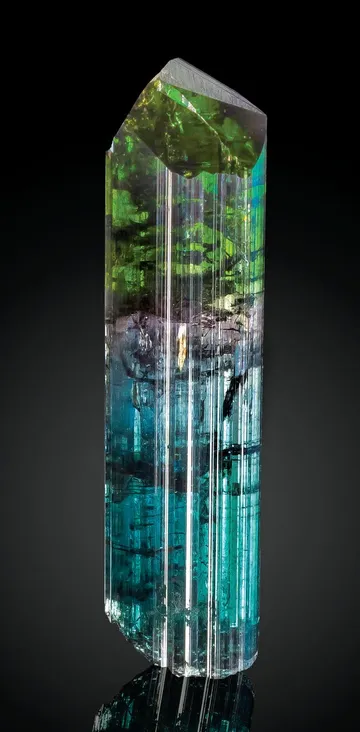
Governador Valadares, Brazil — a classic pegmatite locality yielding mica, beryl, and gem tourmaline; Golconda fields produce crystals prized by collectors.
Key facts
For mineral collectors, “Governador Valadares” is less a single hole in the ground than a classic Brazilian pegmatite address: a city and district in the middle Rio Doce country of eastern Minas Gerais, surrounded by rare-element granitic pegmatites that have supplied mica, gem beryl, and some of Brazil’s most memorable tourmalines for more than a century. The locality name on specimen labels most often points to the Golconda pegmatite field—Golconda I, II, and III, together with claims such as Faria, Ipê, Olho de Gato, Ferreirinha, Boi, Escondido, and Zequinha Menezes—rather than to an urban outcrop inside the city itself.
Geologically, the district belongs to the Eastern Brazilian Pegmatite Province, developed in the Araçuaí orogenic belt and emplaced into metamorphic country rocks—mica schist, quartz-biotite schist, garnet-bearing schist, gneiss, and related units of the Rio Doce region. The best-studied bodies are internally zoned granitic pegmatites with feldspar-quartz-muscovite border zones, quartz-perthite and central zones, and late replacement bodies rich in albite, cleavelandite, mica, Be minerals, phosphates, tourmaline, and Ta-Nb oxides. That zoning is the key to the collecting character of the district: commercial mica in the border zones; beryl, cassiterite, tantalite, microlite-group minerals, cookeite, and gem tourmaline in central or replacement zones; and attractive micro-to-small cabinet combinations from cavities and altered albite-rich pockets.
The collector look is unmistakable. Governador Valadares specimens are often bright rather than massive: blue to violet fluorapatite crystals on pearly cleavelandite; white, pearly bertrandite in sheaves and tiny doubly terminated crystals; green, blue, pink, and bicolored elbaite; black schorl prisms with feldspar or bertrandite; smoky or clear quartz from central-zone cavities; and pale beryl ranging from morganite to aquamarine. The finest pieces balance color with association—purple apatite against white albite, green tourmaline on quartz, or bertrandite poised on dark tourmaline—rather than relying only on brute size.
Regional View
Country View
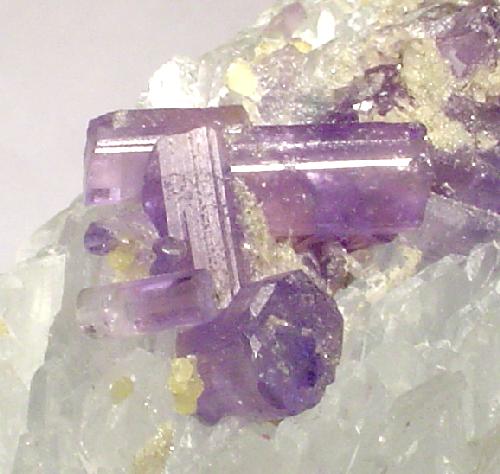
Photo: Wikimedia Commons

Photo: Wikimedia Commons
One reason the district looms so large in mineral collecting is that its history bridges industrial mining and specimen collecting. Golconda I was already a mica mine in the early twentieth century; during the Second World War, Brazilian and U.S. geological work mapped its mica shoot in detail. Later, Golconda II and especially Golconda III entered gem lore for green and blue elbaite. In the modern specimen market, the district is equally associated with fluorapatite-bertrandite-albite combinations from Faria and related claims, classic Golconda tourmalines, and microlite-group specimens from the Ipê mine.
Search for specimens: View all specimens from Governador Valadares, Brazil
Governador Valadares is the commercial and geographic anchor for a cluster of rare-element pegmatite localities in the Vale do Rio Doce of eastern Minas Gerais. The name appears on labels for the municipality, the Golconda pegmatite field, the Golconda mining district, and a set of individual mines and claims. For serious cataloging, the next line on the label matters: “Golconda,” “Golconda Velha,” “Golconda II,” “Golconda III,” “Faria,” “Ipê,” “Olho de Gato,” “Ferreirinha,” “Boi,” “Escondido,” or “Zequinha Menezes” conveys more mineralogical information than the municipal name alone.
The deposit type is rare-element granitic pegmatite, locally enriched in Li, Be, B, P, Sn, Nb, and Ta. These bodies are part of the Eastern Brazilian Pegmatite Province, an 800-km-scale belt of pegmatites extending through eastern Minas Gerais and beyond, and they lie within the broader Araçuaí orogenic setting. Around the Golconda field and nearby claims, the pegmatites are hosted principally by schists and gneisses. Classic descriptions of the old Golconda pegmatite emphasize a sheet-like, gently arched body enclosed in mica schist, with a hanging-wall border zone, a footwall border zone, a quartz-perthite zone, and a central zone. Quartz and feldspar make up almost all of the rock by volume, but the late pockets and replacement bodies carry the collector species.
At Golconda Velha, the commercial ore body was not a metal vein but a mica shoot in the hanging-wall border zone. In the 1940s, the better portion of that shoot averaged only about half a meter thick, but it contained enough “ruby” muscovite to justify open-pit and underground work. The same zoning pattern explains why the ornamental and scientific minerals are so localized. The border zones supplied mica and black tourmaline; the central zone and cavity systems supplied beryl, tourmaline, spessartine, cassiterite, tantalite-(Mn), microlite-group minerals, cookeite, and quartz; late albite-rich replacement bodies supplied cleavelandite, fluorapatite, and bertrandite.
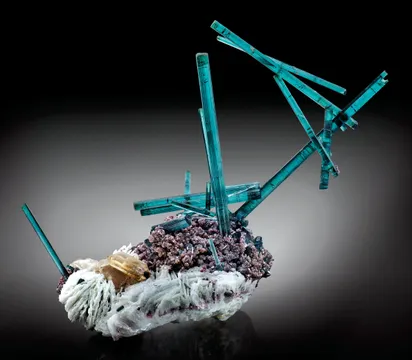
The Golconda field’s three famous mines have distinct collecting reputations. Golconda I, the original “Golconda Velha,” was discovered in 1908 and is one of Brazil’s classic mica-pegmatite localities. Golconda II opened in 1935 and became famous for blue, green, rose, and morganite-bearing gem production, including a 1968 discovery of intensely blue tourmaline “pencils.” Golconda III, also known through the Zequinha Menezes/Pedro Espírito story, produced the most legendary green tourmaline pocket of the district in 1961. Its soft kaolin body yielded extraordinary emerald-green elbaite, followed in later years by additional hard-rock finds of green “pencils” and distinctive rose crystals tipped in green on cookeite.
Faria is the main modern specimen locality for the small, bright fluorapatites that collectors now associate with Governador Valadares. These are typically short prismatic millimetric crystals, blue to violet or purple, on albite, quartz, muscovite, or microcline, commonly accompanied by tiny white bertrandite. Some specimens are true micromounts; others are attractive small-cabinet pieces because the color of the apatite is intense enough to read at arm’s length. The finest examples are not large by worldwide apatite standards, but they have exceptional contrast and association.
The Ipê mine is important for beryl studies and microlite-group specimens. Work on fluid inclusions in Ipê beryl documented a pegmatite of the Marilac field with K-feldspar, quartz, muscovite, and biotite as essential minerals and kaolin, albite, apatite, beryl, niobium-tantalite, garnet, and tourmaline as accessory phases. Collector specimens from Ipê include aquamarine, bertrandite, schorl, quartz, albite, and microlite-group crystals, including material later discussed under modern pyrochlore-supergroup nomenclature.
The Olho de Gato, Ferreirinha, Boi, and Faria pegmatites were examined together in academic work because they sit northwest of Governador Valadares and share broadly similar zoned structures: marginal albite-quartz-muscovite-tourmaline assemblages in most bodies, albite-microcline-quartz-beryl wall zones, quartz and perthitic microcline in intermediate zones, quartz cores, and irregular replacement bodies with more varied mineralogy. Escondido is noted for large “cathedral” quartz crystals, dark-green elbaite needles to several centimeters, and a small early-2000s fluorapatite production.
Mining access today should be treated as private, local, and permission-based. These are not public collecting areas. Many workings are old, kaolinized, steep, collapsed, or intermittently active, and the meaningful collector supply comes through Brazilian miners, local brokers, dealers in Governador Valadares and Teófilo Otoni, and international specimen dealers who acquired pieces from older finds. Labels should be preserved carefully, because even within “Governador Valadares,” the specimen style, value, and historical meaning can shift dramatically from one claim to the next.
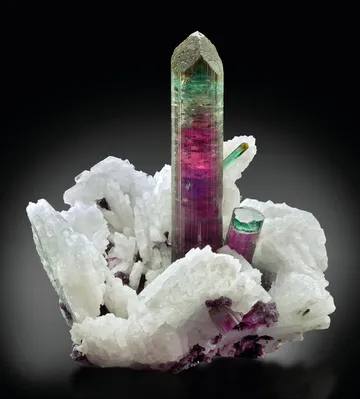
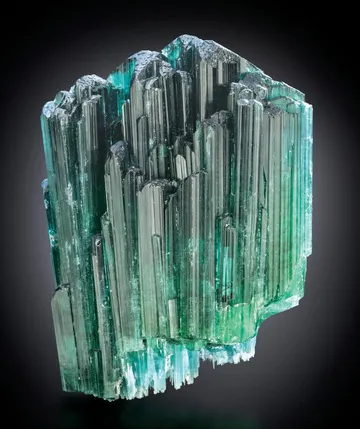
Elbaite is the species behind the district’s most famous gem-tourmaline reputation: green, blue, rose, rubellite, and bicolored crystals from the Golconda mines, especially Golconda II and III, with Golconda III’s 1961 green pocket standing as the legendary event. Crystals occur as slender “pencils,” thicker flat-terminated prisms, bicolored green-pink crystals, rose shafts tipped in green, and dark green crystals associated with quartz, albite, lepidolite, cookeite, muscovite, and feldspar; at Escondido, dark-green elbaite to about 5 cm has been recorded growing on or within cathedral quartz. Top pieces from Governador Valadares are defined by color purity, transparency, complete terminations, and natural matrix association—especially cookeite or albite—while ordinary pieces are more commonly broken, included, dark, or simply labeled “Brazil” without a mine-level provenance.
“Tourmaline” on Governador Valadares labels may refer to elbaite, schorl, or older trade usage where the species was not analytically separated, and this is especially common on classic Golconda specimens. The district produced green and blue gem tourmalines, pink and rose crystals, green-pink bicolors, and black schorl from the outer and border zones; Golconda II is best known for sporadic but exceptional blue and blue-green material, while Golconda III is remembered for green “pencils” and rose crystals tipped in green on cookeite. The most desirable tourmaline specimens from this locality show undamaged terminations, vivid color zoning, transparent interiors, and attachment to albite, quartz, lepidolite, cookeite, or muscovite rather than isolated broken gem rough.
Fluorapatite from Governador Valadares is most characteristic of the Faria claim and related Golconda-field workings, where it forms small but vivid blue, violet, purple, and occasionally pink short prisms on albite var. cleavelandite, quartz, muscovite, and microcline, commonly with white bertrandite. Typical crystals are millimetric, but well-displayed specimens show dense sparkling coverage, double terminations, strong luster, and color saturation that makes them look far larger than they measure; a documented early-2000s Escondido find also produced clusters of centimeter-scale pink fluorapatite. The best pieces are combination specimens: gemmy apatite on clean cleavelandite with visible bertrandite and minimal iron staining or bruising.
Bertrandite is one of the signature collector species of the Golconda field, especially in association with Faria fluorapatite and albite, where it occurs as white to colorless, pearly, bladed, sheaflike, or tiny doubly terminated crystals. Many crystals are only visible properly under a loupe, but larger specimens from the district can show freestanding sprays and bladed crystals up to the centimeter scale, and exceptional pieces have been described with prominent white bertrandite perched on schorl or rising from albite. Quality depends on sharpness, whiteness, pearly luster, freedom from clay, and whether the bertrandite reads as a real crystallized species rather than a powdery white coating.
Quartz is abundant in the Governador Valadares pegmatites but becomes collectible where central-zone cavities produced clear, smoky, parallel-growth, or “cathedral” crystals, particularly in the Golconda and Escondido areas. In the classic Golconda pegmatite, quartz lenses, branching masses intergrown with microcline, and cavities lined with clear to smoky crystals occur through the central zone, with crystals ranging from a few centimeters to roughly half a meter and often showing stepped prism and rhombohedron faces. Collector-grade quartz from the district is valued less as a species rarity than as a matrix host for elbaite, fluorapatite, bertrandite, muscovite, and albite, or as sculptural cathedral quartz carrying dark-green elbaite.
Albite, especially the cleavelandite habit, is the essential stage on which many Governador Valadares specimens perform: pearly white blades carrying fluorapatite, bertrandite, elbaite, schorl, muscovite, quartz, and microcline. In zoned pegmatites such as Faria, Olho de Gato, Ferreirinha, and Boi, albite is part of marginal and replacement assemblages, while at Golconda the softer albite-rich zones and kaolinized pockets were repeatedly linked to gem and specimen production. The best albite specimens are bright, bladed, and undamaged enough to provide contrast without overwhelming the accessory species; mediocre examples are chalky, stained, or merely massive feldspar matrix.
Muscovite was the original economic mineral of the district and remains a common matrix and association mineral on Governador Valadares specimens. At Golconda Velha, brownish “ruby” muscovite occurred in the border zones as commercial books, while white, greenish, and yellowish muscovite appeared in inner zones; the best wartime mica books were rarely more than about 30 cm broad and a few centimeters thick. For collectors, muscovite is most attractive as sharp silvery books or pearly rosettes with fluorapatite and bertrandite from Faria, or as historic mica-book specimens from old Golconda production; heavily cleaved books, bruised edges, and greasy handling marks are common downgrades.
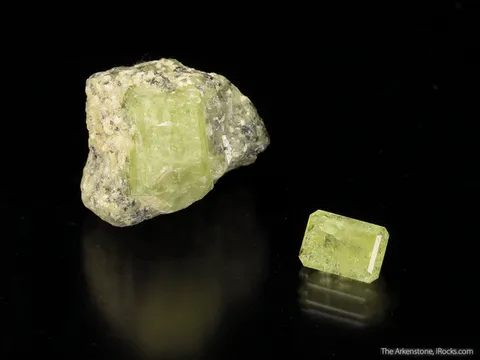
Beryl from Governador Valadares includes morganite and aquamarine from Golconda and aquamarine-bearing material from Ipê, generally occurring in central, wall-zone, or intermediate pegmatite settings with quartz, albite, cookeite, feldspar, and muscovite. At the classic Golconda pegmatite, pale pink morganite was recorded as irregular etched aggregates up to roughly 20 cm across, with individual malformed crystals to about 5 cm, while bluish-green aquamarine occurred more rarely and was partly gem quality. Good collector beryl from this district is usually appreciated for association, etching, color, and provenance rather than perfect hexagonal form; strong color, transparency, and undamaged natural faces separate the scarcer display pieces from pale etched fragments.
“Microlite” from Governador Valadares should be read with modern caution: older labels often use microlite, while current nomenclature places much material in the microlite group and, where analyzed, in species such as fluorcalciomicrolite or oxycalciomicrolite. At the classic Golconda pegmatite, honey-yellow octahedral microlite-group crystals to about 3 mm were recorded with cassiterite and manganotantalite in the complex mineral zone; Ipê is also a well-known source of rich microlite-group specimens, including pieces from 1980s finds. The best specimens show numerous sharp, lustrous octahedra on matrix and have analytical or old collection support; untested “microlite” labels should be handled as group-level identifications unless accompanied by reliable analysis.
Schorl is the black tourmaline of the Governador Valadares pegmatites, common in border-zone and wall-rock settings and locally important as a dramatic matrix mineral for bertrandite and feldspar. At Golconda, black tourmaline was described in the upper part of the hanging-wall border zone and in the footwall border zone with garnet, feldspar, quartz, and muscovite; later specimen production made schorl crystals with albite or bertrandite recognizable collector pieces. Fine examples are complete, lustrous, sharply terminated prisms with clean contrast against white feldspar or pearly bertrandite, whereas ordinary schorl is massive, etched, incomplete, or too intergrown to display well.
Other documented minerals from the Governador Valadares pegmatite localities include microcline, K-feldspar, lepidolite, cookeite, cassiterite, columbite-(Fe), tantalite-(Mn), fluorcalciomicrolite, oxycalciomicrolite, hydroxylherderite, rhodochrosite, todorokite, zircon, autunite, spessartine, spodumene, kaolin, and biotite. The municipality is also tied to an entirely different mineralogical rarity: the Governador Valadares Martian nakhlite meteorite, a 158 g stone found in 1958 and dominated by augite with olivine and mesostasis, carrying phases such as chlorapatite, magnetite, ilmenite, sulphides, siderite, gypsum, anhydrite, and alteration products. No major IMA type-mineral description appears to belong to the terrestrial Governador Valadares pegmatites themselves, but the district is significant for analyzed microlite-group occurrences and for historically important beryl, tourmaline, and phosphate assemblages.
The main authenticity issue is not outright fakery so much as locality looseness. “Governador Valadares,” “Doce Valley,” “Minas Gerais,” “Golconda,” and “Golconda district” have all been used at different levels of precision, and older tourmalines may have passed through the Governador Valadares or Teófilo Otoni trade without necessarily being mined in the municipality. A strong specimen label should ideally preserve the mine or claim: Golconda I, Golconda II, Golconda III, Faria, Ipê, Zequinha Menezes, Escondido, Olho de Gato, Ferreirinha, or Boi. For high-value elbaite and bertrandite, that specificity can materially affect value.
Tourmaline from the district is commonly broken from pockets or recovered from kaolinized pegmatite, so terminations, rehealed surfaces, and matrix attachment deserve close inspection. Many old gem crystals were removed for cutting, trimmed, repaired, or separated from matrix; collector pieces with original attachment and undamaged terminations are much scarcer than loose rough. Bicolored elbaite should be inspected for glued repairs along color boundaries and for resin-filled fractures, especially if a specimen is unusually clean for its size.
Fluorapatite-bertrandite-albite combinations are generally small-crystal specimens, and condition must be evaluated under magnification. The apatites may be only a few millimeters across; tiny bruises, missing terminations, clay in cleavelandite blades, and crushed bertrandite sprays can substantially change quality. Some Faria and Golconda apatites are fluorescent, and bertrandite has been reported with shortwave and minor longwave response on some specimens, but fluorescence should be treated as a useful observation rather than a universal property.
Bertrandite is a special handling case. Its pearly blades and sprays are more delicate than the feldspar matrix suggests, and white bertrandite can be mistaken for weathered feldspar, kaolin, or a sugary coating in poor photographs. Good lighting and a 10x loupe are essential. For top pieces, look for discrete crystal form: bladed clusters, doubly terminated crystals, radial sprays, or visibly perched crystals on schorl or albite.
Microlite-group specimens require nomenclature caution. The old species name “microlite” was widely used on labels, but modern pyrochlore-supergroup classification subdivides the group. Unless the specimen has been analyzed, “microlite group” is the safest current label. This matters because visually similar brown, yellow, or honey-colored octahedra from Ipê or Golconda can fall into different species-level assignments.
Market availability is mixed. Small Faria fluorapatite-bertrandite-albite specimens appear regularly enough to be attainable, though top color and clean association command a premium. Good Golconda tourmaline specimens with honest mine provenance are much scarcer, especially complete green, blue, or bicolored elbaites on matrix. Large, aesthetic bertrandite specimens from Golconda are genuinely uncommon and can be expensive. Historic Golconda mica, beryl, cassiterite, and microlite-group pieces are usually collection-circulation specimens rather than steady mine-run production.
The most famous Governador Valadares story begins in 1961 on a small hill shared by two farms near Golconda III. On one side was José Menezes Zequinha; on the other was Pedro Espírito. Zequinha started small tunnels into a pegmatite outcrop and almost immediately reached soft white kaolin. He and his family kept working the vein in spare time as it widened toward the center of the hill. Within a month, the digging opened into a large kaolin body packed with green gem tourmaline.
For the first ten days, the discovery remained essentially a family harvest. The Zequinha family reportedly removed an average of 35 kg of virtually flawless green tourmaline crystals per day. Then the news escaped into the local gem trade. On the eleventh day, Pedro Espírito realized the pocket likely crossed under his land as well. His family began digging from the opposite side of the hill, and within days they reached the same mineralized body. The two families worked toward one another from opposite sides until their workings broke through into the same underground room.
The pocket soon became both a bonanza and a boundary dispute. Each family claimed the best crystals were on its own side. Garimpeiros were brought in by both parties, and the kaolin chamber was stripped rapidly. The final pocket was about 12 m long and 4 m wide, and within two months it had been cleaned out. The scale was extraordinary: roughly 900 kg—about a ton—of top green tourmaline crystals, many of them ideally shaped for cutting 6 to 15 ct stones. The rough was so consistent in color that matched bracelets and necklaces could be assembled with unusual ease, and the finished yield was estimated at more than two million carats.
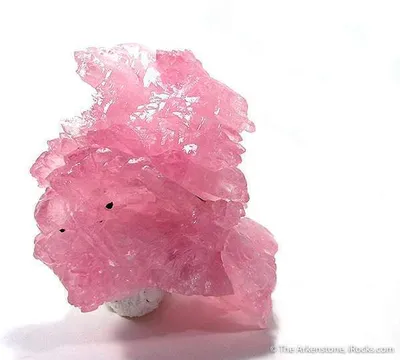
The Golconda III story did not end with the first kaolin pocket. In 1963, about 150 feet from the original discovery and 20 m deeper into the hill, miners reached a hard-rock deposit that produced another 450 kg of clean green “pencils,” this time with some yellow in the crystals. That find took nearly two years to exhaust, and much of the rough reportedly went to Idar-Oberstein. In 1967, another set of small hard-rock pockets lower in the hill produced distinctive collector specimens: rose tourmaline shafts tipped in green, sitting on cookeite matrix. Those pieces became the visual calling card of the district’s bicolored tourmaline style.
Even before the gem drama, Golconda had a wartime industrial story. During 1943–1945, geologists mapped the Golconda mica mine in detail as part of a joint Brazilian and U.S. effort to increase mica production for wartime electronics. The old workings exposed a sheet-like pegmatite, a mica shoot in the hanging wall, and a central zone full of the rarer minerals that later collectors would prize. In 1944 alone, about 400 tons of mine-crude mica were recovered from open-pit operations using heavy mechanical earth-moving equipment. Underground workings followed in 1945. The mica was the economic reason to move rock; the tourmaline, beryl, cassiterite, tantalite, cookeite, and microlite were the mineralogical inheritance.
One small detail from the old Golconda study belongs in every collector’s memory: the rounded brown muscovite masses in the weathered feldspar of the central zone were known locally as “mica de tatu”—armadillo mica—because their curved, bumpy surfaces recalled the armor of an armadillo. It is the sort of field name that captures the mine better than a laboratory table can: pegmatite mineralogy observed by people who had to mine it, sell it, and recognize it by sight.
W. T. Pecora, George Switzer, A. L. M. Barbosa and A. T. Myers, “Structure and Mineralogy of the Golconda Pegmatite, Minas Gerais, Brazil,” American Mineralogist, 35, 889–901, 1950. The foundational technical description of the classic Golconda pegmatite, including its zoning, mica shoot, quartz, beryl, cassiterite, manganotantalite, microlite, cookeite, and associated minerals. PDF
Keith Proctor, “Gem Pegmatites of Minas Gerais, Brazil: The Tourmalines of the Governador Valadares District,” Gems & Gemology, Summer 1985. The classic gemological account of Cruzeiro, Golconda, Santa Rosa, Jonas, and other district mines, with production histories and the Golconda III green-tourmaline story. PDF
Eduardo Gomes do Santos, “Mineralogia e zoneografia do campo pegmatítico da Golconda: município de Governador Valadares - MG,” Anuário do Instituto de Geociências, 16, 71–72, 1993. A short publication specifically on the mineralogy and zoning of the Golconda pegmatite field. DOI page
R. M. da S. Bello, A. L. Gandini, V. R. P. R. O. Marciano, K. Fuzikawa, F. M. S. Carvalho, D. P. Svisero, L. A. C. Souza and M. S. S. Dantas, “Caracterização mineralógica e composição química das inclusões fluidas de berilo do Pegmatito Ipê, município de Governador Valadares, Minas Gerais,” Geonomos, 8(2), 2000. Important for the Ipê pegmatite’s beryl, accessory mineralogy, and fluid-inclusion evolution. Journal page
V. R. P. R. O. Marciano, “Contribuição ao estudo da mineralogia e geoquímica de pegmatitos da região de Governador Valadares, Minas Gerais,” Universidade de São Paulo thesis, 1985. A detailed academic treatment of Olho de Gato, Ferreirinha, Boi, and Faria pegmatites, including zoning and geochemistry. USP thesis record
Wendell E. Wilson, Andrea Bartorelli and Carlos Cornejo, “The Golconda District, Minas Gerais, Brazil,” The Mineralogical Record, 50(5), 519–627, 2019. The major modern collector-mineral treatment of the district, published as the special Golconda issue. Mineralogical Record back issue
The Meteoritical Bulletin Database, “Governador Valadares,” official entry for the 1958 Martian nakhlite meteorite, mass 158 g. Included because it is a mineralogically important occurrence carrying the same locality name but is separate from the pegmatite district. Meteoritical Bulletin search result
D. D. Bogard and L. Husain, “A new 1.3 aeon-young achondrite,” Geophysical Research Letters, 4, 1977. Dating study of the Governador Valadares nakhlite and its relationship to other nakhlites. NASA NTRS record
J. Bridges and coauthors, “Evaporite mineral assemblages in the nakhlite (martian) meteorites,” Earth and Planetary Science Letters, 176, 267–279, 2000. Comparative study of salt and alteration mineral assemblages in Nakhla, Governador Valadares, and Lafayette. ScienceDirect abstract
Mindat — Golconda pegmatite field, Governador Valadares — Core locality page for the Golconda pegmatite field, with mineral list, sublocalities, associations, and references.
Mindat — Golconda mining district, Governador Valadares — Regional page aggregating minerals and sublocalities across the Golconda mining district.
Mindat — Faria claim, Golconda mining district — Useful for the fluorapatite-bertrandite-albite association that defines many modern Governador Valadares specimens.
Mindat — Ipê mine, Golconda mining district — Key page for Ipê beryl, schorl, albite, quartz, and microlite-group minerals.
Mindat — Zequinha Menezes claim / Golconda III — Locality page for the Golconda III green-tourmaline pocket area and its historical names.
Mindat — Escondido claim — Documents cathedral quartz, dark-green elbaite, and early-2000s pink fluorapatite production.
Wikimedia Commons — Apatite-(CaF), Bertrandite, Albite from Golconda — Open-license photograph showing the classic fluorapatite-bertrandite-cleavelandite association.
Wikimedia Commons — Tourmaline from Golconda — Open-license image of a green Golconda tourmaline specimen.
GIA — “Gem Pegmatites of Minas Gerais, Brazil: The Tourmalines of the Governador Valadares District” — Essential reading for the district’s tourmaline history, mining stories, and production figures.
American Mineralogist — “Structure and Mineralogy of the Golconda Pegmatite” — The classic technical description of Golconda’s internal structure and minerals.
Mineralogical Record — Golconda special issue, Vol. 50 No. 5 — The major collector-focused modern publication on the Golconda district.
USP thesis record — Pegmatites of the Governador Valadares region — Academic source for Olho de Gato, Ferreirinha, Boi, and Faria pegmatites.
Geonomos — Beryl fluid inclusions from the Ipê pegmatite — Technical paper on Ipê beryl, accessory minerals, and fluid chemistry.
Mindat — Governador Valadares meteorite — Separate but important mineralogical page for the Martian nakhlite found at Governador Valadares.
Meteoritical Bulletin Database — Governador Valadares — Official meteorite listing for the 1958 Martian nakhlite.
-Bertrandite-Albite-249296.jpg)
