Franklin, USA - world-renowned locality in Franklin Marble producing franklinite, willemite, and zincite; famed fluorescence, specimens, and collector value.
Key facts
Franklin, in Sussex County, New Jersey, is one of the great mineral localities of the world: a compact zinc-iron-manganese orebody enclosed in Precambrian Franklin Marble, folded into a tight plunging structure on Mine Hill, and worked for ore until the middle of the twentieth century. For collectors, its importance is far larger than zinc production. Franklin and its sister locality at Sterling Hill created a mineralogical ecosystem almost without parallel: franklinite, willemite, zincite, calcite, rhodonite, hardystonite, esperite, clinohedrite, hendricksite, hodgkinsonite, margarosanite, nasonite, roeblingite, and a long roster of species that either were first described here or reached their finest known development in this district.
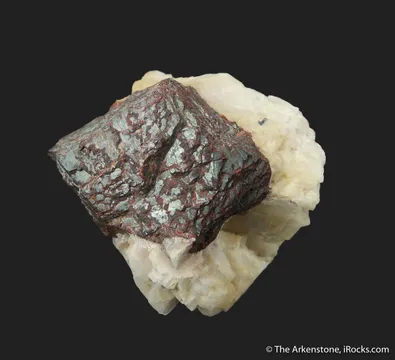
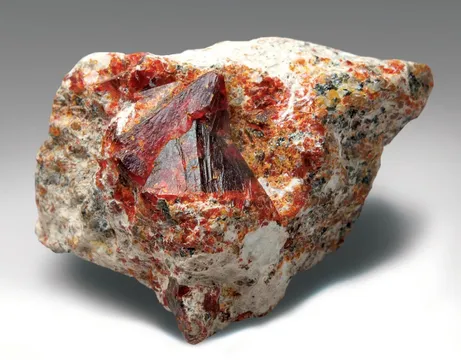
The classic Franklin specimen has a language of color that serious collectors recognize instantly. In daylight, the ore may appear as a heavy granular mosaic: black franklinite, red to orange-red zincite, white to pale pink calcite, and green, tan, brown, or yellowish willemite. Under shortwave ultraviolet light, that same modest-looking rock can become theatrical: calcite flaring orange-red to red, willemite burning green, hardystonite violet-blue, esperite yellow, with franklinite and primary zincite remaining dark and providing the contrast that makes the fluorescent pattern snap into focus. The best cabinet specimens combine mineralogical content, old locality precision, and visual drama—octahedral franklinite in calcite, vivid pink rhodonite crystals, green willemite in clean marble, or richly patterned ore slices from the Buckwheat, Trotter, Parker, Taylor, and related Franklin workings.
Regional View
Country View
Franklin’s fame rests on the intimate connection between industrial mining and specimen preservation. The mine produced ore on a major scale, yet many of the finest mineralogical records survived because miners, local collectors, Franklin-Ogdensburg Mineralogical Society members, museum curators, and professional mineralogists recognized that “waste rock” from an ore mine could contain specimens of world significance. That tradition continues at the Franklin Mineral Museum, where the Buckwheat Dump still gives collectors controlled access to historic mine material and where new finds, re-identifications, and fluorescence studies keep the locality alive long after the mine itself closed.

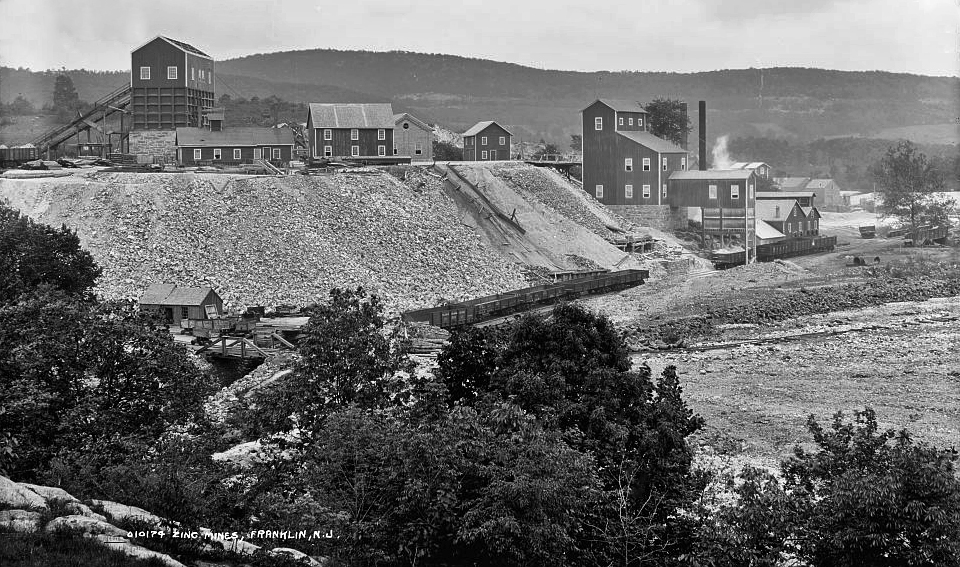
Photo: Wikimedia Commons
Search for specimens: View all specimens from Franklin, USA
The Franklin orebody lies in the New Jersey Highlands, within the Franklin Marble, a Mesoproterozoic carbonate unit metamorphosed during Grenvillian events. The ore is not a normal sulfide zinc deposit. It is a high-grade, marble-hosted zinc-iron-manganese oxide-silicate deposit whose main ore minerals are franklinite, willemite, and zincite, with calcite as the principal gangue. Modern treatments emphasize stratiform metalliferous protoliths later metamorphosed and intensely deformed; older skarn interpretations persist historically, but the mineralogy, structure, and regional setting are now treated with more nuance than a simple contact-metamorphic model allows.
Structurally, Franklin is famous for its folded tabular ore. The orebody occurs as a hook-shaped, plunging synclinal mass in marble, with the western limb historically far more extensive at the surface than the eastern limb. Published geological descriptions record ore thicknesses ranging roughly from ten to one hundred feet, and earlier mine maps and sections show the body followed downward through shafts and crosscuts as the accessible outcrop was exhausted. Within the ore, the major minerals vary in proportion from layer to layer: granular franklinite and willemite may dominate, zincite may appear as disseminated red grains, shotlike particles, splinters, thin seams, or local richer concentrations, and calcite binds the whole into the pale carbonate matrix that gives many Franklin specimens their striking contrast.
Mining history at Franklin began with confusion as much as with certainty. Early explorers mistook red zincite for a copper mineral and black franklinite-rich material for iron ore. Dr. Samuel Fowler, the physician-mineralogist associated with the early nineteenth-century development of the district, recognized that the ores were unusual and sent material for analysis. Zincite was described in 1810, franklinite in 1819, and willemite followed as another key zinc mineral in 1830. The district then entered a long period of competing claims, industrial experiments, consolidations, and litigation before the great consolidation of interests under the New Jersey Zinc Company in 1897.
The named Franklin workings matter to collectors because old labels often preserve mineralogical context. The Buckwheat open cut, begun in the nineteenth century in a farm field of buckwheat, produced ore and waste that later fed the celebrated Buckwheat Dump. The Taylor Mine expanded open-pit work, with the Taylor powerhouse later becoming part of the museum complex. The Trotter Mine, an inclined shaft on the western limb, is important for both ore and associated silicate assemblages. The Parker shaft and mine opened access to deeper and more northerly parts of the orebody and are linked to some of Franklin’s best-known rare-species assemblages, including lead-calcium-zinc silicates. Smaller references such as the Lang Shaft, Hamburg Mine, Parker shaft, Taylor Road dumps, mill site, and Trotter dump can add substantial value when they appear on credible old labels.
The Franklin mine raised its last ore in 1954, when reserves were effectively depleted. By then, Franklin had become not only a mining town but a specimen-producing locality with a culture of its own. The Franklin-Ogdensburg Mineralogical Society was founded in 1959, and the Franklin Mineral Museum opened in the 1960s to preserve the mineral and mining heritage. Today, underground mine collecting at Franklin is not available to ordinary visitors, but controlled collecting continues at the Franklin Mineral Museum’s Buckwheat Dump and adjacent collecting areas, subject to museum rules, season, hours, safety requirements, special dig schedules, and fees. The Buckwheat Dump is especially important because it is not a generic landscaped rock pile: it is historic mine waste from the Franklin operations, continually searched by collectors for fluorescent calcite-willemite combinations, hardystonite, esperite, cuspidine, clinohedrite, secondary zinc minerals, and the occasional specimen good enough to keep the locality’s legend alive.
Notable specimen finds from Franklin include sharp black franklinite octahedra in calcite, vivid rhodonite crystals in white calcite with franklinite and willemite, green and yellow willemite masses and crystals, red zincite-rich ore, fluorescent hardystonite-calcite-willemite combinations, esperite-bearing pieces with intense yellow response, and rare assemblages from Parker and other zones that produced type-locality species. Much of the finest historic material entered collections through miners, mine employees, New Jersey Zinc Company personnel, local families, and early Franklin collectors before systematic specimen recovery was common. That history makes documentation unusually important: a modest specimen with a strong old Franklin label may be more desirable than a visually similar piece with only a vague “New Jersey” attribution.
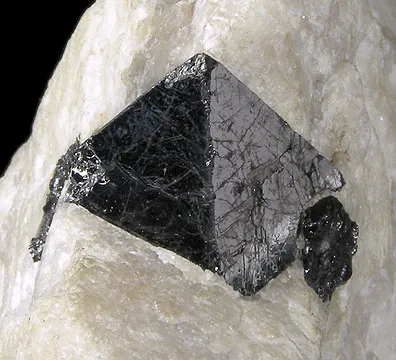
Franklinite is the black backbone of Franklin collecting: abundant as granular ore, locally concentrated in bands, and most prized where it forms sharp, lustrous octahedra standing out against pale calcite or marble. At Franklin, it occurs with willemite, zincite, calcite, rhodonite, tephroite, and many rare Franklin silicates, and it can range from dull granular masses to crisp crystals several centimeters across. Ordinary pieces are heavy black ore with little form; better specimens show bright octahedral faces, clean contrast with calcite, attractive association with red zincite or greenish willemite, or a known sublocality such as Trotter, Parker, Buckwheat, or other Mine Hill workings. Fluorescent collectors value franklinite not because it glows—it usually does not—but because it supplies the dark negative space that makes green willemite and red-orange calcite appear more vivid under shortwave ultraviolet light.
Franklin rhodonite is among the locality’s most elegant daylight minerals, best known as bright to deep pink crystals and bladed aggregates in white or pale calcite with black franklinite and minor willemite. The premier Franklin material consists of euhedral pink crystals, commonly in the 1–7 cm range and reported much larger, set cleanly in calcite; these are the specimens that give Franklin rhodonite its standing beyond the fluorescent-mineral world. It also occurs as massive aggregates in calcium-silicate units with andradite, hendricksite-bearing mica, amphiboles, feldspar, fluorite, microcline, gahnite, sphalerite, and related species, as well as in rarer assemblages with bustamite and marsturite. The collector standard is high: rich color, intact crystal terminations or attractive bladed habit, minimal bruising on cleavage faces, and a sharp contrast between pink rhodonite, white calcite, and black franklinite separate cabinet-worthy pieces from common pink massive material.
Willemite from Franklin is the locality’s great fluorescent performer and one of its major zinc ores, occurring as granular aggregates with franklinite and zincite in calcite, as masses, crystals, needles, vein material, coatings, and local fibrous or radial forms. Daylight colors vary widely, but Franklin is especially associated with green willemite, along with tan, brown, yellow, pinkish, and glassy “gem” material; under shortwave ultraviolet light, most Franklin willemite gives the bright yellowish-green to green response that made the district famous. It appears in gneissic banded ore, in calcite-franklinite-zincite mixtures, and in more refined associations with petedunnite, cyprine vesuvianite, tephroite, bustamite, rhodonite, and rare zinc silicates. Good specimens show strong, even fluorescence, clean daylight color, discernible crystal habit or attractive banding, and an association that tells a Franklin story rather than merely presenting anonymous green-glowing grains.
Zincite is rarer than franklinite and willemite in Franklin ore but is visually indispensable: red, orange-red, yellowish, or reddish brown ZnO occurring as disseminated grains, scales, specks, splinters, thin layers, irregular masses, and local secondary vein or coating material. At Franklin, most zincite is intergrown with franklinite, willemite, and calcite; Palache’s classic description of rounded, shotlike grains and scales across Mine Hill remains recognizable in hand specimens. Zincite-rich pieces are judged by the saturation and abundance of red material, the contrast with black franklinite and white calcite, and the credibility of the label, because natural Franklin/Sterling Hill zincite must be separated from synthetic furnace-grown zincite that entered the mineral market from industrial sources. Well-formed natural crystals are genuinely scarce; most desirable Franklin specimens are richly colored ore pieces rather than isolated transparent crystals.
Calcite is the essential stage on which much of Franklin mineralogy is displayed: white, gray, pale pink, blocky, granular, massive, veinlike, or locally crystalline, and commonly enclosing franklinite, willemite, zincite, rhodonite, sphalerite, and rare silicates. In Franklin fluorescent specimens, manganese-activated calcite is the red to orange-red light source under shortwave ultraviolet, often paired with green willemite and black non-fluorescent franklinite; some calcite also shows longwave response or a brief phosphorescence. Buckwheat Dump and Trotter Dump material commonly yields calcite-willemite-franklinite combinations, while Lang Shaft material is noted for small but interesting calcite-bearing assemblages. Fine collector pieces need more than white carbonate: they should show strong fluorescence, clean contrast, good patterning, included ore minerals or rare associates, and a stable surface free of excessive bruising, chalkiness, or weathered coatings that obscure the response.
Franklin’s supporting cast is extraordinary. The Franklin Mine and its associated sublocalities are type localities for a long list of minerals, including franklinite, zincite, hardystonite, hendricksite, hodgkinsonite, holdenite, johnbaumite, leucophoenicite, margarosanite, nasonite, roeblingite, esperite, clinohedrite, cahnite, franklinfurnaceite, jerrygibbsite, minehillite, nelenite, turneaureite, wawayandaite, yeatmanite, and others recorded from the Franklin Mine, Buckwheat pit, Parker shaft, Trotter Mine, Taylor Mine, Hamburg Mine, and related workings. For collectors, many of these are not large-display minerals but reference specimens: small, label-dependent, and often requiring magnification, ultraviolet testing, and sometimes analytical confirmation. The locality rewards specialization because a palm-sized Franklin specimen may contain an ore mineral, a fluorescent activator story, a type-locality rarity, and a mining-history label all at once.
Franklin material is common in old collections and at shows, but fine Franklin material is not common. The mine closed in 1954, so new underground specimens are no longer entering the market from primary workings. Available material comes from historic collections, estate dispersals, old dealer stocks, museum-approved dump collecting, and limited modern finds from the Buckwheat Dump. Prices vary enormously: a common calcite-willemite-franklinite chunk may remain affordable, while old-label rhodonite crystals, sharp franklinite octahedra, rich zincite ore, and type-locality rarities with documentation can command serious collector prices.
The most important authenticity issue is locality precision. “Franklin,” “Franklin Furnace,” “Franklin Mine,” “Buckwheat,” “Trotter,” “Parker,” and “Sterling Hill” are not interchangeable to a specialist. Franklin Furnace is an older name often seen on labels and does not by itself prove a pre-1913 label. Sterling Hill material is closely related and often visually similar, but many collectors treat Franklin and Sterling Hill as distinct specimen localities. If a specimen is being sold as Franklin rather than Franklin-Sterling Hill district material, look for old labels, known collection numbers, consistent matrix, and mineral associations that fit the claim.
Zincite requires extra caution. Natural Franklin/Sterling Hill zincite is typically red to orange-red in ore, granular, platy, massive, or only rarely crystallized; bright transparent synthetic zincite crystals from industrial furnace environments have been widely sold in the mineral trade and should not be accepted as natural Franklin zincite. A large, gemmy, freestanding, intensely colored “zincite crystal” with no old New Jersey provenance is almost certainly not a Franklin mine specimen. Natural zincite in Franklin matrix, especially with franklinite, willemite, calcite, or old collection labels, is the safer and more collectible form.
Condition issues are locality-specific. Franklinite crystals can be bruised along edges and dulled by abrasion. Rhodonite has cleavage and may show chipped faces, faded or browned surfaces, or coatings that reduce the vivid pink color. Calcite bruises easily and may be etched, chalky, or coated by later alteration. Willemite may look unimpressive in daylight but perform well under UV, so condition must be assessed in both visible and ultraviolet light. Some specimens have been sawn, polished, oiled, lacquered, or mounted for fluorescence display; that is not automatically bad, but it should be disclosed because surface preparation affects both aesthetics and value.
For fluorescence, a proper shortwave ultraviolet lamp is essential. Longwave LED flashlights can reveal some Franklin responses, but they do not substitute for 254 nm shortwave examination. The classic Franklin response is calcite red-orange and willemite green, with franklinite black; hardystonite, esperite, clinohedrite, cuspidine, sphalerite, hydrozincite, and other species can add blue, yellow, violet, orange, or white responses. Always protect eyes and skin from shortwave UV exposure, and do not judge a specimen solely from dealer photographs: exposure time, lamp strength, filters, and camera settings can make a mediocre response appear spectacular.
Franklin’s first chapter reads almost like a mineralogical misunderstanding. Dutch miners and early prospectors saw red material that resembled copper ore and black heavy ore that could be taken for iron. But the red “copper” would not yield copper, and the black “iron” was not ordinary magnetite. When Dr. Samuel Fowler acquired Mine Hill in 1810, he stepped into a puzzle that American mineralogy was only beginning to understand. Samples went to analysts in the United States and Europe, and the district began producing names that would become permanent: zincite in 1810, franklinite in 1819, willemite in 1830. The ore that once frustrated smelters became a treasure chest for mineralogists.
One of the most repeated Franklin stories belongs to the discovery of fluorescence underground. Early mine electrification used direct current and knife switches; when the operator threw the switch, the spark emitted enough ultraviolet light to make the surrounding rock burst into color. Imagine a miner standing in the dark of a zinc mine, expecting only the snap of electricity, and instead seeing walls and broken ore flare into unexpected red and green. That accidental demonstration foreshadowed Franklin’s later title as the fluorescent mineral capital and changed the way collectors looked at seemingly ordinary mine rock.
Specimen preservation at Franklin was not born in a museum case; it came out in pockets, lunch pails, wheelbarrows, and basements. Miners carried home crystals of black franklinite, pink rhodonite, green and brown willemite, calcite, zincite-rich ore, and strange fluorescent pieces that might otherwise have gone to the mill or dump. Later collectors bought and traded specimens from local families and former mine employees. That informal rescue mattered. Many of the minerals later studied by professionals survived because someone at Franklin thought a piece of mine rock was too interesting to throw away.
The end of mining was remembered as an event with a sound. On Thursday, September 30, 1954, the New Jersey Zinc Company closed the Franklin mine after more than a century of work. About 800 people were still connected to the mine payroll; 140 lost their jobs that day, and the rest would follow in the coming months. Local memory fixed on the whistle. Bob Allen of the Franklin Historical Society recalled, “when that whistle blew, it seemed like an hour.” The town had been warned that the mine was near its end, but the final whistle still marked the moment when Franklin ceased to be an operating zinc-mining town and became, gradually, a historic and mineralogical shrine.
The Buckwheat Dump is the locality’s continuing field story. It began as waste rock from the Buckwheat and Taylor operations, material too poor for ore but far too rich for collectors. The dump covers several acres, and visitors descend to it from the museum grounds, often with a shortwave lamp, black plastic bag, hammer, chisel, eye protection, and the optimism that every Franklin collector recognizes. Decades of collecting have removed thousands of tons of rock, yet the dump still produces fluorescent calcite-willemite combinations, hardystonite, esperite, cuspidine, and rare surprises. A visitor can still split a gray-white piece of marble in daylight and, under shortwave UV, find the red and green signature that made the town famous.