A collector's guide to Fletcher Mine, USA: its geology, mining history and notable minerals, illustrated with the 94 specimens documented from this locality on EarthWonders.
Key facts
Fletcher Mine is one of the great collector names of Missouri’s Viburnum Trend, the north–south “New Lead Belt” of southeastern Missouri that made the state a modern giant of lead production. It is an underground Mississippi Valley-type lead-zinc-copper deposit in Reynolds County, developed in Cambrian carbonate rocks of the Bonneterre Formation where they drape over buried Precambrian igneous highs. For collectors, Fletcher matters because the mine has supplied not only abundant metallic galena but several highly distinctive specimen styles: bright cubic to cuboctahedral galena on pale dolomite, flattened spinel-law twinned galena from the Big Bear orebody, sparkling chalcopyrite and pyrite associations, and later calcite pockets with large translucent crystals and iridescent copper sulfides.
Regional View
Country View
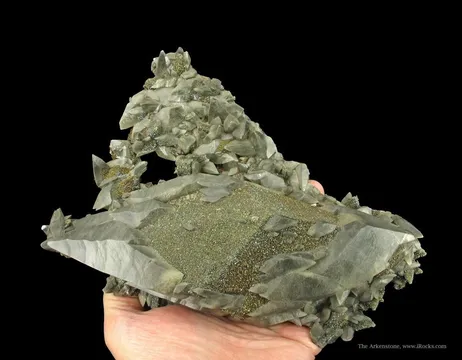
The best Fletcher specimens have the unmistakable look of Viburnum Trend mineralization: dense, lead-gray galena sitting on or within cream-white to gray dolomite, with brassy chalcopyrite and pyrite adding glitter in the open spaces. The mine is especially important in the scientific literature for platy galena—flat, lustrous, penetration-twinned crystals that are spinel-law twins of octahedral galena rather than ordinary cubes. Those twins are uncommon across the district and are documented from only a subset of Viburnum mines, with Fletcher among the named occurrences.

Photo: The Khyber Mineral Company
Fletcher also has a mineralogical distinction beyond cabinet specimens: it is the type locality for fletcherite, CuNi2S4, a rare nickel-copper thiospinel discovered in copper-rich pods in the mine. That makes the locality unusually satisfying for two very different collecting audiences: display collectors seeking sculptural galena and calcite, and systematic collectors interested in the cobalt-nickel-copper sulfide suite hidden in polished sections and micro-associations.
Fletcher Mine is an underground lead-zinc mine near West Fork in Reynolds County, Missouri, in the southern half of the Viburnum Trend. The locality is commonly cited as Fletcher Mine, West Fork, Reynolds County, Missouri, and also appears historically as the Doe Run Fletcher Mine. It lies in the same regional mineral belt as Buick, Brushy Creek, West Fork, Sweetwater, Magmont, and the Viburnum mines, but Fletcher has its own character because of the way its ore follows buried Precambrian topography and because of the specimen-producing pockets in its orebodies.
Geologically, Fletcher is a carbonate-hosted Mississippi Valley-type deposit. The productive mineralization is chiefly in the Bonneterre Formation, a Cambrian carbonate sequence originally deposited as limestone and later dolomitized. Beneath it is the Lamotte Sandstone, which laps onto and pinches out against buried Precambrian igneous knobs. At Fletcher, those knobs form a north–south buried ridge that controlled facies patterns, reef and back-reef development, fracturing, brecciation, porosity, and ultimately the position of the ore. The St. Francois Mountains, lying to the east, supplied the ancient structural high that influenced these Cambrian depositional environments.
The ore zone at Fletcher follows a pronounced north–south trend through the mine area. In the northern part of the deposit the mineralized zone was described as about 1,000 feet wide and averaging roughly 20 feet thick; in the middle of the area it widens to about 2,000 feet where an arc-shaped porphyry knob protrudes into the Bonneterre Formation; farther south the mineralized belt narrows sharply as it passes over the Lamotte Sandstone. The strongest ore is tied to the shape of the buried high, the changing strike of beds draped over it, the Lamotte pinchout, and brecciated horizons extending upward into the Sullivan Siltstone, thin-bedded mudstones, and locally the lower Davis Formation.
The principal sulfide ore minerals are galena, sphalerite, and chalcopyrite, with a strong lead dominance. Published descriptions of the mine give approximate lead-zinc-copper ratios around 40:4:1, and later technical summaries describe average ore values on the order of several percent galena with lesser sphalerite and chalcopyrite. The gangue and specimen minerals most visible to collectors are calcite, dolomite, pyrite, and marcasite. Galena occurs as replacement, open-space filling, fracture filling, and irregular bedding-parallel bands with veinlets cutting across bedding. The same open spaces that made ore emplacement possible also produced the crystal-lined vugs and pockets that became specimens.
The modern mine grew out of the postwar Viburnum Trend exploration boom. After lead was discovered in the Viburnum area, exploration moved southward in 1957, and the first pay hole in the Fletcher area was cut during the summer of 1958. St. Joe Minerals Corporation authorized development of a $14 million, 5,000-ton-per-day facility in June 1963. Shaft sinking began during the week of July 14, 1964, and the main shaft, 1,344 feet deep and 12.5 feet in diameter, bottomed on November 23, 1965. The mill began operation on February 28, 1967. Early accounts emphasized how modern the operation was for its day: a trackless underground mine producing lead, zinc, and copper concentrates, with concentrates loaded into 10-ton containers and trucked north to Buick for rail shipment.
Ownership passed from St. Joe Minerals into the modern Doe Run era, and Fletcher remains part of Doe Run’s Southeast Missouri Mining and Milling Division. The mine is an active industrial operation, not a public collecting locality. Collecting access should be regarded as closed except through legitimate mine-origin material released by miners, company permission, estate collections, museum exchanges, or the specimen trade. Surface collecting around active facilities, tailings, haul roads, portals, and lease lands is not appropriate and may be dangerous as well as trespassing.
The specimen history is inseparable from pocket and stope production. Older Fletcher material includes typical Viburnum galena on dolomite, dolomite-coated octahedra, chalcopyrite-rich pieces, and pyrite-dolomite-galena combinations. Particularly prized are the Big Bear orebody galenas, including the winter 2013 find of flattened, spinel-law twinned galena crystals on dolomite. Big Bear is often described in specimen labels as a satellite orebody associated with Fletcher and lying toward the Fletcher–Sweetwater part of the district. Later Fletcher collecting fame was renewed by calcite pockets, including 2015 pillar-pocket calcites from the main orebody and 2021 material that produced large translucent calcite with striking iridescent chalcopyrite, widely marketed as “Rainbow Pocket” or “Rainbow Calcite” material.
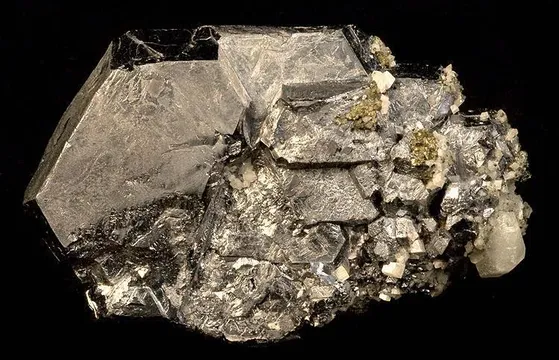
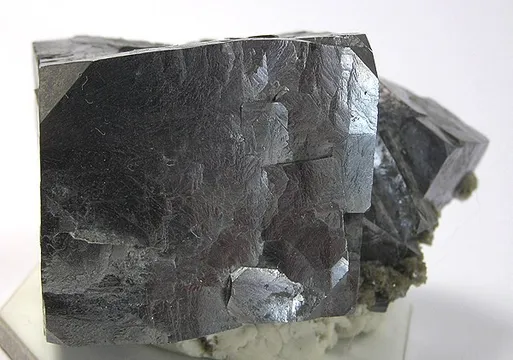
Fletcher galena is the signature species: metallic lead-gray PbS in cubes, cuboctahedra, octahedra, compound aggregates, elongated forms, and rare flattened spinel-law penetration twins. Ordinary Fletcher pieces show cubic or modified cubic crystals on pale dolomite with chalcopyrite and pyrite accents, while better specimens have sharp, lustrous, isolated crystals or richly crystallized plates that display well from more than one angle. The most coveted Fletcher galenas are from the Big Bear orebody, where lustrous platy twins to centimeter scale occur on dolomite; examples documented from the 2013 winter find include thin bladed crystals around 2.5–3.0 cm, and Mindat’s gallery records spinel-twinned crystals up to about 2.2 cm on a 13.8 x 10.5 cm matrix specimen. Fletcher is also notable for leached galena, where dissolution left casts made of chalcopyrite, marcasite, and dolomite rhombs, sometimes with younger galena attached to older leached faces; this gives some pieces a complex, reworked appearance that separates them from simpler blocky Viburnum ore specimens.
At Fletcher, the collector word “spinel” must be read carefully: the celebrated display specimens are not MgAl2O4 spinel crystals, but spinel-law twinned galena, a crystallographic twin style that gives galena its flattened, bladed, plate-like form. These Fletcher twins are lustrous gray, commonly perched on pearly white dolomite, and are known especially from the Big Bear orebody; good examples show clearly bladed penetration twins, bright metallic luster, and enough separation from the matrix that the twin geometry can be read at a glance. The confusion is understandable because Fletcher is also the type locality for fletcherite, a true thiospinel-group sulfide, but the EarthWonders “spinel” appeal of Fletcher cabinet pieces is overwhelmingly the rare spinel-law galena habit—material that looks more like classic Dalnegorsk or Madan twinned galena than like the usual chunky Missouri cubes.
Dolomite at Fletcher is both matrix and sculptor. It occurs as white, cream, gray, and pearly rhombic crystals lining cavities, coating galena, and forming the “snow on roof” texture seen on some Big Bear spinel-law galena specimens, where the tops of the galena blades carry dolomite while the undersides remain cleaner. The mine literature records secondary dolomite casts after dissolved galena, a particularly Fletcher-like feature in which earlier galena was removed and dolomite, with chalcopyrite and marcasite, preserved its former shape. Collector-quality dolomite is usually judged by contrast: crisp white rhombs against metallic galena, a bright sugary lining beneath chalcopyrite and pyrite, or undamaged rhombic coverage that frames calcite or galena without burying the main crystals.
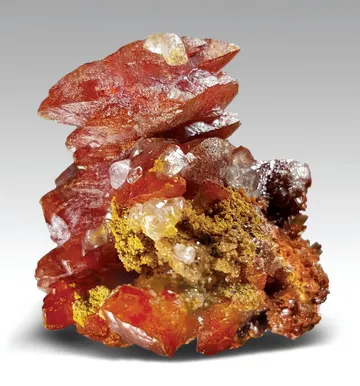
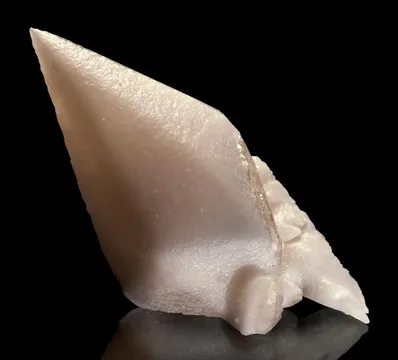
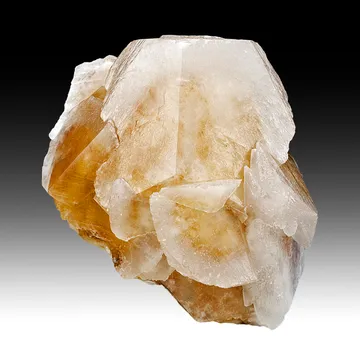
Fletcher calcite ranges from small clear to white crystals in galena-dolomite-chalcopyrite assemblages to dramatic translucent yellowish scalenohedra and stacked crystal groups from later pocket finds. Documented specimens include two generations of stacked scalenohedral calcite, with an earlier generation coated by chalcopyrite and accompanied by small dolomite crystals; other pieces show doubly terminated scalenohedra wrapped around cubic galena, yellow translucent calcite crystals to several centimeters on dolomite-rich matrix, and large partly transparent scalenohedral crystals reported to 11 cm with iridescent chalcopyrite. The best Fletcher calcites are clean, lustrous, translucent, and architectural, ideally with colorful chalcopyrite contrast; ordinary examples are more included, cleaved, or crowded into massive dolomite-sulfide matrix.
Fletcher pyrite is a supporting but important species, most often seen as brassy microcrystals, sparkling druse, or fine granular sulfide associated with galena, dolomite, chalcopyrite, and sometimes calcite. It is part of the gangue suite in published mine descriptions and also participates in the leached-galena story, where pyrite, marcasite, chalcopyrite, and dolomite can occupy or decorate spaces left by dissolved lead sulfide. The best pyrite-bearing Fletcher pieces are not usually bought for large pyrite crystals; they are valued for lively sparkle and color contrast, especially when pyrite druse brightens galena octahedra or cuboctahedra without obscuring the galena’s form.
Chalcopyrite is the copper signature of Fletcher, occurring as thin bands at the base of galena mineralization, disseminations through the ore zone, and euhedral open-space crystals independent of the main lead-zinc bands. In hand specimens it appears as brassy, specular, sparkling crystals scattered over dolomite and galena, and in exceptional recent calcite material it develops strong iridescent purple, blue, green, gold, and violet tarnish. The 2021 Rainbow Pocket style—calcite with naturally iridescent chalcopyrite—has become one of the mine’s modern specimen identities; the best pieces combine large transparent to translucent calcite, dense colorful chalcopyrite coverage, and minimal cleavage or bruising on exposed calcite terminations.
Other documented Fletcher minerals greatly expand the locality beyond the six display species above. Fletcherite, CuNi2S4, is the type-locality mineral and occurs as microscopic euhedral to subhedral inclusions in copper-rich pods with bornite, chalcopyrite, digenite, pyrite, covellite, vaesite, galena, and tetrahedrite-group minerals. Mindat also records chalcocite, brochantite, cattierite, enargite, gersdorffite, linnaeite, malachite, marcasite, polydymite, quartz, serpierite, siegenite, sphalerite, tennantite-subgroup and tetrahedrite-subgroup minerals, vaesite, wurtzite, dickite, kaolinite, and a questionable fluorite occurrence. For systematic collectors, the cobalt-nickel-copper sulfide suite is the locality’s quiet treasure; for display collectors, sphalerite, marcasite, quartz, and the copper sulfides usually matter most as associations that confirm a genuine Viburnum Trend paragenesis.
Fletcher material is available, but not evenly. Commoner specimens are galena-dolomite combinations, small calcites, and mixed sulfide plates from the general Fletcher production stream. Far scarcer are sharp spinel-law twinned galenas from Big Bear, high-end 2021 Rainbow Pocket calcite-chalcopyrite specimens, and any credible fletcherite-bearing material. Since the mine is active and access is restricted, market supply comes in pulses: miner-saved pieces, dealer lots, old collections, auction dispersals, and occasional releases from pocket material. Labels matter.
The most common authenticity issue is not outright fakery but locality imprecision. Fletcher, West Fork, Sweetwater, Brushy Creek, Buick, and generic “Viburnum Trend” labels can be confused in the trade, especially when specimens show the shared district palette of galena, dolomite, calcite, pyrite, and chalcopyrite. Big Bear labels need particular care: good labels may read “Big Bear orebody, Fletcher Mine” or similar, while less precise labels may blur its position between Fletcher and Sweetwater. If a piece is being sold as a Big Bear spinel-law galena, the specimen should show the flattened twin habit clearly; ordinary cubic Fletcher galena should not be promoted as spinel-law simply because it comes from the same mine.
No widespread, well-documented fake industry is associated with Fletcher specimens, but several practical cautions apply. Galena is dense, soft, and cleaves easily, so bruised cube corners, chipped octahedral modifications, and abraded twin edges are common. Calcite is also soft and cleavable; even good Fletcher calcites may show small cleaves or contacted backs, and large translucent crystals should be examined for impact bruising at terminations. Chalcopyrite surfaces may be naturally iridescent, especially in Rainbow Pocket material, but buyers should be alert to over-cleaned or chemically brightened sulfides in the broader market; unnatural uniform peacock coloration should be judged against the specimen’s matrix, pocket style, and provenance.
Handling is straightforward but should be sensible. Galena contains lead, so avoid inhaling dust, do not cut or abrade specimens indoors, wash hands after handling, and keep pieces away from children who may mouth objects. Calcite reacts readily with acids, so acid cleaning can dull or etch important crystal faces and should not be attempted casually. Marcasite and pyrite are present on some pieces; most Viburnum Trend sulfides are reasonably stable when kept dry, but any specimen with marcasite crusts or nodules should be stored in low humidity and monitored for sulfurous odor, white efflorescence, or crumbling.
Fluorescence is a useful bonus but not the main value driver. Some Fletcher dolomite and calcite-bearing pieces have been sold or labeled as fluorescent, and calcite from the broader Viburnum Trend may respond under ultraviolet light, but the collector premium usually rests on crystal form, association, luster, and provenance rather than fluorescence alone. The strongest display value is in three groups: sculptural galena on dolomite, Big Bear spinel-law galena twins, and Rainbow Pocket calcite with iridescent chalcopyrite.
The Fletcher story begins like many great modern orebody stories: with a hole in the ground that told geologists they were not done looking south. After the Viburnum discovery, exploration pushed farther down the Trend in 1957, and in the summer of 1958 the first pay hole in the Fletcher area cut ore-grade mineralization. Five years later St. Joe Minerals committed to a $14 million, 5,000-ton-per-day mine and mill six miles east of Bunker. The main shaft began during the week of July 14, 1964, and the work went downward for 1,344 feet before bottoming on November 23, 1965. On February 28, 1967, the mill started up. Early descriptions called Fletcher one of the most modern trackless mines in the world; only about 70 men were reported underground, producing approximately 60 tons of ore per mine-man shift, while lead, zinc, and copper concentrates rode north to Buick in 10-ton containers.
The old mine-tour notes read like a cross section through a buried Cambrian reef. At Stop 1, in Stope 63W14, visitors stood on a high point of a Precambrian knob where the Bonneterre beds lapped against irregular felsite. There was no basal conglomerate at that clean high contact, but elsewhere in the lower haulage level conglomerates appeared along the same boundary. The beds dipped as much as 25 degrees away from the knob, a steep angle in this otherwise gently layered country, and the tour walked “downhill” not because the drift simply descended but because the rock itself bent away from the ancient buried high. By the time the route passed into the lower part of the 5 zone and the 7 zone algal reef, visitors were moving through the very facies architecture that controlled Fletcher’s ore.
The most memorable field observation for collectors is the mine geologists’ account of galena dissolution. At Fletcher, more than elsewhere in the Viburnum Trend, areas of the mine showed leached galena crystals, with casts composed of chalcopyrite, marcasite, and dolomite rhombs. Younger galena could be attached directly to the leached faces of older galena. In specimen terms, that explains some of the mine’s oddest and most attractive pieces: galena forms partly removed, dolomite rhombs inheriting space, brassy sulfides left behind like a ghost outline, and fresh metallic lead sulfide returning to the same cavity. The geologists interpreted these zones as possibly indicating remobilization adjacent to high-grade enriched lead areas—a technical phrase, but the cabinet result can be wonderfully visual.
The Big Bear orebody gave Fletcher its most conversation-starting galenas. In the winter 2013 find, collectors saw flattened, lustrous, spinel-law twins from a district better known for cubes and octahedra. One documented specimen carried thin bladed galena crystals to 3.0 cm with pearly white dolomite; another showed brilliant twinned galena crystals to 2.5 cm sprinkled with 3 mm white dolomite. Dealer notes from the period called the find small and emphasized how unusual the habit was for the Viburnum Trend. That is exactly why Big Bear specimens still draw attention: at first glance they can look almost foreign—more like Dalnegorsk or Madan twinned galena than Missouri—until the dolomite, luster, and heavy Viburnum matrix give them away.
A second modern chapter came from calcite. Fletcher’s 2015 pillar-pocket material produced lustrous calcites from the main orebody, and the 2021 discoveries introduced a different visual language: translucent calcite with iridescent chalcopyrite. Collectors quickly began calling some of this material the Rainbow Pocket or Rainbow Calcite find. Specimens reached from small cabinet pieces to large plates, with published dealer examples including calcite and iridescent chalcopyrite at 24.3 cm and a sold architectural specimen measuring 29 x 20 x 12 cm and weighing 5.40 kg. The best pieces are unmistakably modern Fletcher: pale to yellowish calcite rising over a metallic base flashed with purple, blue, green, and gold.