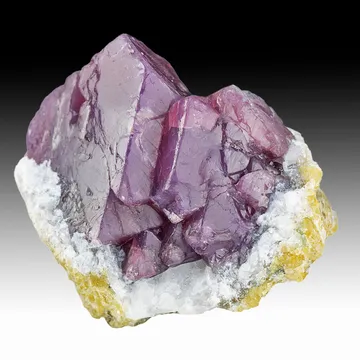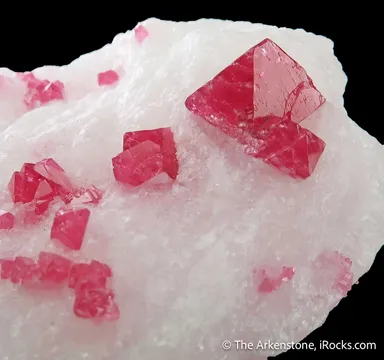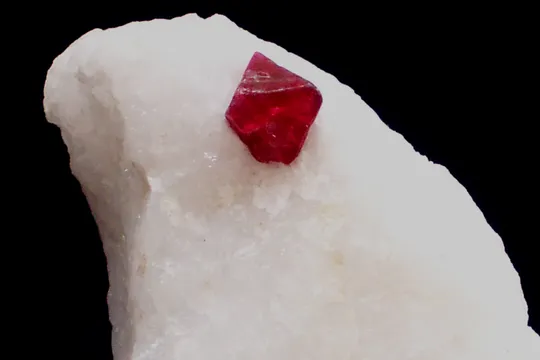
Spinel, color range from ruby red to cobalt blue, sharp octahedral form, hardness 8, rare gemmy crystals on marble, prized by collectors for rarity and luster.
Key facts
Spinel (MgAl2O4) is a classic cubic mineral celebrated for razor-sharp octahedral crystals and a kaleidoscope of gemmy colors. Most pieces form as single, highly lustrous octahedra, sometimes modified by dodecahedral faces, and occasionally forming attractive penetration twins. Color is driven by trace elements: chromium yields the famed scarlet to “ruby red,” cobalt imparts rich blues to violet-blues, iron produces lavender to grayish tones, and mixed chromophores generate vibrant pinks, hot magentas, and peachy oranges. In the best specimens—gem-clear octahedra perched on snowy white marble from metamorphic terrains—the contrast and saturated color create iconic display pieces.
Spinel’s virtues for collectors are many: outstanding hardness (8), no cleavage, bright vitreous luster, and vivid natural colors (often fluorescent) that display strongly under both ambient and case lighting. Historically revered and often confused with ruby (the “Black Prince’s Ruby” is actually a spinel), it remains a top-tier species for both mineral and gem collectors. Well-formed matrix specimens are scarce and command strong premiums. Even single crystals—if truly saturated, gemmy, and sharp—are centerpieces.
Few species combine romance, history, and aesthetics like spinel. The “Balas rubies” of antiquity from Badakhshan adorned emperors for centuries. In modern times, two regions reshaped the market: Myanmar’s Mogok (for classic reds and cobalt blues) and Tanzania’s Mahenge (for unbelievably bright hot pink to red “neon” spinels from mid-2000s discoveries). Vietnam’s Luc Yen further expanded the palette with cobalt-bearing blues and delicate lavender to bubblegum-pink crystals, often on striking white marble.
Collectors chase several ideals:
While smaller, sharp octahedra are broadly obtainable, combinations of size, top color, and matrix are genuinely scarce. Many of the finest crystals are cut into gems, making truly great undamaged specimens even more prized.
Below are key sources known for world-class spinels. Each locality listed has a verified database ID and produces identifiable, highly collectible styles of specimens.
Mogok is the historic heartland of high-end spinel. Crystals range from rich chromium-reds to delicate pinks, with rarer cobalt-blue and violet-blue pieces that have captured modern attention. The most desirable specimens are sharply formed octahedra—often glassy and gemmy—perched on white marble with calcite, sometimes alongside phlogopite or forsterite relics from the skarn/marble environment. Classic “ruby spinels” from Mogok combine superb color saturation, brightness, and the elusive matrix aesthetics that collectors crave. Cobalt-blue crystals here can show an intense royal hue unlike most other sources.
Mahenge shocked the gem world around 2007 with neon-bright pink to hot-red spinels of remarkable purity and glow. While most was cut, select crystals survived as specimens—often single octahedra with vivid “electric” color under simple display lights. Matrix pieces are very rare; most are loose, and the finest are extremely expensive. Collectors prize Mahenge for the unmistakable intensity—stones and crystals can look illuminated from within. Clean, lustrous faces and strong fluorescence are common in the best pieces.
Luc Yen’s marbles produce an elegant spectrum: cobalt-bearing blue spinels, pastel lavender, and lively bubblegum pinks, frequently as sharp octahedra on snow-white marble. The matrix contrast and balance can be superb, making this one of the best sources for “display” spinel clusters. Cobalt blues tend toward smaller crystal sizes but are intensely colored; pinks and lavenders may reach larger sizes with excellent luster. Many collectors consider Luc Yen the most reliable modern locality for attractive matrix pieces at various budgets.
By focusing on saturated color, sharp octahedral form, bright luster, and (when possible) fine marble matrix, collectors can build a spinel suite that rivals the aesthetic punch of any species in the hobby.