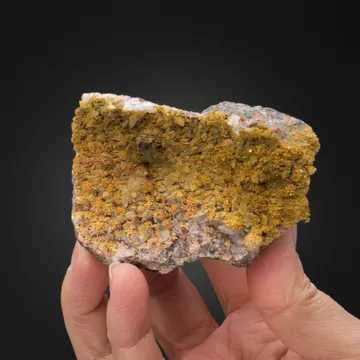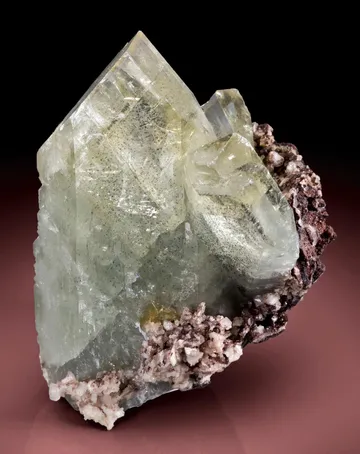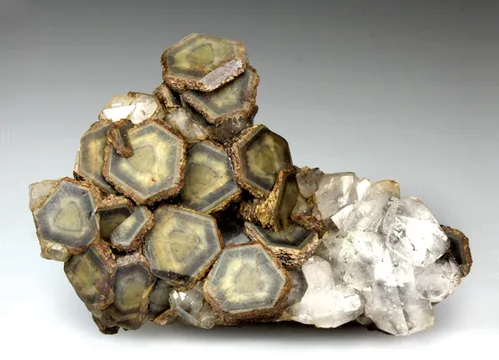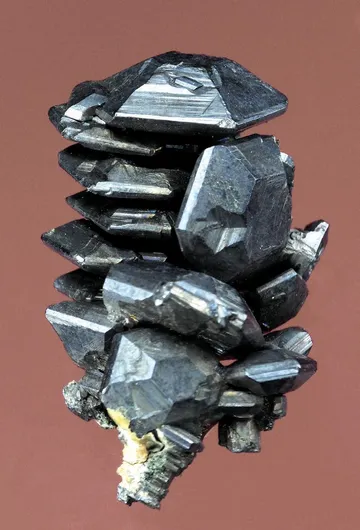
England, UK - a country-scale treasury of classic orefields: Cornwall/Devon copper and tin minerals; Northern Pennines lead-zinc-fluorite-barium veins; Derbysh…
Key facts
England is not a single mineral locality in the usual pocket-by-pocket sense; for collectors it is a compact country-scale treasury of classic orefields, each with its own visual language. The south-west, especially Cornwall and adjoining west Devon, is the old Cornubian province: Variscan granites and their cupolas drove tin, copper, tungsten, arsenic, lead, zinc and silver mineralization through slates, greenstones and granites in lodes, greisens, sheeted veins, replacement bodies and later crosscourses. This is the England of cassiterite, chalcopyrite, chalcocite, cuprite, native copper, malachite, olivenite, liroconite, clinoclase, chenevixite, cornwallite and a roll-call of copper arsenates that made Cornish names central to early mineralogy.
North of the Midlands, England changes character. The Northern Pennine Orefield, including Weardale, Alston Moor, Nenthead and Allendale, is a Carboniferous limestone and sandstone terrain cut by lead-zinc-fluorite-barium veins and wide replacement “flats.” The collector’s eye moves from oxidized Cornish copper color to glassy fluorite, galena cubes, dark to ruby sphalerite, baryte, witherite, alstonite, calcite and quartz. Derbyshire and the Peak District bring another branch of the English lead-fluorite tradition: fluorite, Blue John, galena, calcite, baryte, sphalerite and the rare lead halide matlockite, named from the Matlock district. The Mendips in Somerset add highly unusual lead oxychloride and manganese-associated assemblages, including mendipite, diaboleite and chloroxiphite.
The historical importance is just as large as the mineralogical one. Cornwall and west Devon were transformed during the great copper and tin expansion of the 18th and 19th centuries, and their engine houses, adits, dressing floors, arsenic works, ports, foundries and mining towns became globally influential. The Northern Pennines supplied lead, zinc, barium minerals and fluorspar from veins whose zoning helped shape British economic geology. England’s finest specimens are often old: cuprite on native copper from Cornwall with manuscript labels; blue-green liroconite from Wheal Gorland; fluorite from Weardale that shifts under daylight and ultraviolet; lustrous sphalerite from Nenthead flats; Derbyshire calcite and fluorite combinations; and rare type-locality material that may be small in size but enormous in pedigree.
Regional View
Country View
The look of a high-grade English specimen depends strongly on district. Cornish copper pieces are often intimate, richly textured, and chemically complex: red cuprite microcrystals over hackly copper, silky malachite on gossan quartz, blue-green copper arsenates tucked into iron-stained cavities. Weardale and Alston Moor specimens tend to be architectural: cubes, blades, plates and scalenohedra arranged on limestone, quartz, ankerite, siderite or ironstone. Derbyshire material can be sharply crystalline and old-fashioned in the best sense, with calcite, fluorite and galena associations that belong unmistakably to the Peak District tradition.

Photo: Wikimedia Commons

Photo: Wikimedia Commons
Search for specimens: View all specimens from England, UK
England’s collectable mineral deposits fall into several major families. The Cornubian Orefield of Cornwall and west Devon is the most storied. It is genetically tied to the Cornubian Batholith, a chain of late Variscan to early Permian granitic intrusions extending from the Isles of Scilly and Cornwall eastward to Dartmoor. Around the granite contacts and roof zones, hydrothermal fluids produced tin-copper-tungsten-arsenic lodes, greisen and sheeted-vein systems, polymetallic sulphide lodes, and later lead-zinc-silver crosscourses. The classic lodes are generally steep, persistent fissure fillings, commonly trending east-west to east-north-east, cutting granite, elvan dykes and Devonian country rocks. Primary ore minerals include cassiterite, chalcopyrite, arsenopyrite, wolframite/ferberite, pyrite, sphalerite, galena and bismuth minerals; the specimen fame comes especially from oxidation zones where copper sulphides yielded cuprite, native copper, malachite, azurite, chrysocolla and a highly developed suite of copper arsenates and phosphates.
The Camborne–Redruth–St Day and Gwennap districts sit near the centre of English specimen history. Wheal Gorland, Wheal Unity, United Mines, Consolidated Mines, Carn Brea, Dolcoath, Levant, Botallack, Phoenix United, South Caradon, Gunnislake and many smaller works each have their own collector reputation. Wheal Gorland, near St Day, is especially revered as a type locality and as a source of rare secondary copper arsenates, particularly liroconite, clinoclase, chenevixite, cornwallite and the modern species kernowite. Levant, on the St Just coast, produced classic cuprite and native copper specimens as well as being a landmark of mining heritage. Phoenix United and other Caradon-area mines are known for copper and tin mineralization, with cuprite, malachite and associated secondary copper species in oxidized material.
Mining in Cornwall and west Devon began with stream tin and shallow workings and developed into deep underground mining. By the 18th and 19th centuries the region was a world centre of copper and tin mining technology, exporting engineering, steam pumping, engine-house design and mine labour across the world. Copper output rose dramatically in the 18th and early 19th centuries, while many mines that began as copper producers later followed tin downward as copper lodes weakened or market conditions changed. Arsenic, wolfram, zinc, lead and iron pyrite were also significant at particular mines. Production collapsed in stages through the later 19th and 20th centuries under foreign competition, falling metal prices and deepening costs, but the specimen legacy had already entered museums and private collections.
The Northern Pennine Orefield is geologically different but equally important. Its veins cut Carboniferous limestones, sandstones and shales of the Alston Block and adjoining areas. In competent limestone and sandstone beds, fissures opened widely and produced mineable veins; in reactive limestones, mineralizing fluids also replaced beds laterally to form “flats,” broad ore-rich bodies much prized by collectors when they intersect cavities. Zoning is fundamental here: central fluorite-quartz-rich deposits pass outward into lead-zinc zones and then into barium-rich zones with baryte and witherite. Galena and sphalerite are principal ore minerals; pyrite, marcasite, chalcopyrite, siderite, ankerite, calcite, quartz, fluorite, baryte, witherite, alstonite and barytocalcite are defining gangue and accessory species.
Weardale in County Durham is known worldwide for fluorite, but collectors should not overlook its calcite, quartz, galena, sphalerite and sulphide associations. Alston Moor and Nenthead, now in Cumbria but historically tied to the North Pennine mining world, produced important sphalerite, galena, witherite, barytocalcite, alstonite, calcite, pyrite and rare sulphate or supergene assemblages. Smallcleugh, Nentsberry Haggs, Rampgill, Brownley Hill, Hudgill Burn and adjacent mines are repeatedly encountered on old and modern labels. The great flats in and around Nenthead are particularly important for sphalerite and galena in quartz, ankerite, limestone breccia and carbonate matrix.
Derbyshire and the Peak District represent England’s central lead-fluorite-calcite province. Here, mineral veins in Carboniferous limestone produced galena, fluorite, baryte, calcite and sphalerite, with local oxidized lead species such as cerussite, anglesite, pyromorphite and rare halides. Castleton’s Blue John fluorite is the best-known lapidary material, but specimen collectors also value the district’s calcite, fluorite, galena and rare matlockite from the Matlock area. Mines and quarries around Matlock, Cromford, Bonsall, Ashover, Eyam and Castleton form a dense and historically complex mineral belt.
The Mendip Hills in Somerset are important for a more specialized reason: lead-zinc mineralization in Carboniferous Limestone, overprinted by unusual supergene and manganese-related chemistry. Higher Pitts Mine and Torr Works Quarry/Merehead have yielded rare oxychlorides and associated secondary minerals, including mendipite, diaboleite, chloroxiphite and other lead species. These are usually small, uncommon specimens, but their type-locality significance and chemistry make them disproportionately important.
Collecting access today is not comparable to the 19th-century era of open dumps and working stopes. Many old mines are on private land, scheduled monuments, World Heritage landscapes, nature reserves, active quarries, capped shafts, unstable dumps or Sites of Special Scientific Interest. Several mineralogical sites in Cornwall and the North Pennines have statutory geological protection, and removal of specimens from protected land requires proper permission. Active quarries require operator consent and appropriate safety procedures. Underground access should be limited to organized, insured groups with permission and mine-exploration competence. For most collectors, the safest and most ethical route to important English minerals is through documented old collections, reputable dealers, museum deaccessions where legitimate, club field trips, organized open days and material recovered before modern restrictions.
Notable specimen finds are scattered across two centuries. Cornish oxidized pockets yielded cuprite, native copper, malachite and rare arsenates during the great copper-mining period. Wheal Gorland’s secondary suite became legendary for crystallized liroconite and related species. Levant’s old 13 Level material includes hackly native copper coated with deep red cuprite microcrystals. At Nenthead, collector exploration of old lead-zinc workings exposed sphalerite-rich cavities in flats and brecciated limestone, with some plates reportedly reaching impressive cabinet scale. Modern specimen mining in parts of Weardale has produced fresh fluorite and calcite combinations, while older Weardale, Alston Moor and Derbyshire pieces remain highly sought after when labels and mine attributions are reliable.
Malachite from England is above all a Cornish copper-zone mineral, occurring as bright to dark green coatings, silky tufts, botryoidal crusts, fibrous seams and small sprays in the oxidized parts of chalcopyrite- and chalcocite-bearing lodes. The most collectable examples are tied to old copper mines in the Camborne–Redruth–St Day, Gwennap, St Just and Caradon districts, where malachite appears with cuprite, native copper, chrysocolla, azurite, quartz, goethite, limonite and rare copper arsenates such as olivenite, clinoclase, cornwallite and liroconite. English malachite is usually not about huge polished masses; the better specimens are cabinet or miniature pieces with velvety lustre, saturated colour, and convincing mine provenance, especially when the green malachite visibly contrasts with red cuprite, bronze copper, white quartz or blue-green arsenate minerals. Ordinary pieces are dull green staining on mine waste; good ones preserve form, texture, and the old Cornish chemical story in a small space.
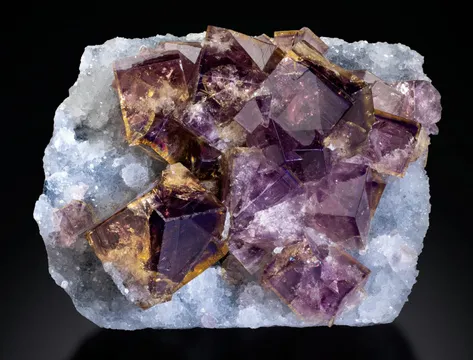
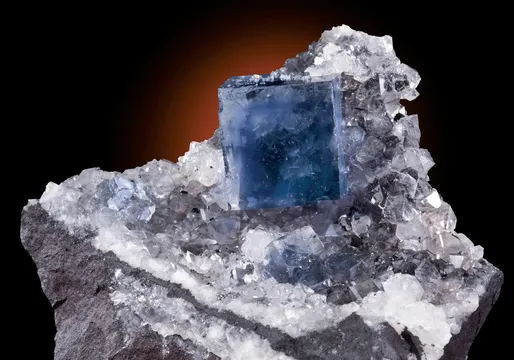
Calcite is widespread in England’s vein systems, but the collector-grade material is most strongly associated with Derbyshire, Weardale and the North Pennines, where it lines cavities, coats fluorite, accompanies galena and sphalerite, or forms late scalenohedral, rhombohedral, tabular and nailhead-style crystals on limestone or ironstone matrix. Weardale pieces may show sharp white, cream, colourless or lightly tinted calcite perched on purple, green or daylight-fluorescent fluorite with quartz, galena and sphalerite; Derbyshire examples range from classic calcite-on-fluorite associations to attractive isolated crystals in old lead-vein material; Alston Moor and Nenthead specimens may include calcite with galena, quartz, ankerite and pyrite. The best English calcites are not merely large: they have clean terminations, bright lustre, balanced association, minimal bruising and a label that fixes them to a recognized mine or quarry rather than the vague “North of England” wording common on older pieces.
Cuprite is one of the signature Cornish display minerals, developed in the oxidized copper lodes as deep red to wine-red octahedra, sparkling microcrystalline crusts, earthy red masses and, locally, fibrous chalcotrichite. Classic localities include Wheal Gorland and Wheal Unity in the Gwennap–St Day district, Wheal Phoenix/Phoenix United near Liskeard, and St Just district mines such as Levant, where old specimens show hackly native copper richly coated by red cuprite microcrystals. Crystal size is commonly small, often millimetric, but sharp octahedral crystals to several millimetres on contrasting copper, quartz or ironstone matrix are highly desirable; larger cabinet specimens usually owe their impact to richness of coverage rather than single-crystal size. The key distinction is crystallinity: dull red oxide smears are common, while lustrous octahedra, fibrous red sprays, and cuprite visibly associated with native copper and malachite define serious English pieces.
English sphalerite is best known from the lead-zinc veins and flats of the Northern Pennines, especially Alston Moor and Nenthead, and from Derbyshire lead-fluorite veins; it also occurs in Cornish polymetallic lodes and crosscourses, though those are less often the source of display-quality sphalerite specimens. At Smallcleugh and related Nenthead workings it forms dark brown, black-brown, honey-brown to locally translucent “ruby” crystals on limestone, quartz, ankerite, dolomite or galena, and collector accounts describe sphalerite-rich cavities and brecciated limestone cemented by crystals in the Hydraulic Shaft area. At Nentsberry Haggs and other Alston Moor mines it occurs with galena, witherite, baryte, barytocalcite and fluorite; in Derbyshire it is typically a darker sulphide accent with fluorite, galena and calcite. Good English sphalerite has sharp lustrous faces, some translucency on edges or small crystals, attractive carbonate or quartz contrast, and an exact mine attribution; massive black zinc ore without crystal faces is much less appealing to specimen collectors.
Native copper from England is overwhelmingly a Cornish classic, found as hackly masses, dendritic sheets, sponge-like growths, seams and irregular metallic plates in oxidized copper lodes and old mine cavities. Noted labels include Levant Mine, Carn Brea, Wheal Unity, Wheal Pendarves, Copper Hill and other Redruth–Camborne–Gwennap localities, commonly with cuprite, malachite, chrysocolla, quartz and iron oxides. The best specimens are sculptural rather than simply heavy: crisp dendrites, open hackly texture, visible coppery metallic lustre beneath old patina, and red cuprite microcrystals or green malachite accents can elevate a small piece into a historic Cornish miniature. Beware cleaned or over-brightened examples; old English copper should often retain a mellow surface, and provenance from a named mine is a major part of its value.
Pyrite is common across England’s metalliferous districts, but collectable examples tend to come from Cornish tin-copper-arsenic lodes, North Pennine lead-zinc veins, Derbyshire lead-fluorite deposits and coal-measure or sedimentary occurrences where crystals are well formed. In Cornwall, pyrite occurs with chalcopyrite, arsenopyrite, sphalerite, quartz, chlorite and cassiterite, and it was locally worked as an industrial sulphur source at mines such as Wheal Peevor during the late 19th century; in the North Pennines it accompanies galena, sphalerite, marcasite, calcite, fluorite and quartz, including pieces recorded from Nenthead and Weardale collections. English pyrite may form brassy cubes, pyritohedra, crystalline crusts and drusy aggregates, but condition is decisive: fresh lustre, stable surfaces, lack of white or yellow alteration salts, and a dry storage history are far more important than size. Ordinary pyrite is abundant; stable, sharply crystallized mine-attributed English pyrite is much scarcer than beginners expect.
England’s wider mineral list is exceptionally rich in type-locality and historically important species. Wheal Gorland is the type locality for chenevixite, clinoclase, cornwallite, kernowite and liroconite, placing a single Cornish mine among the most important secondary copper-mineral localities in Europe. Cornwall also gave its name to cornwallite and cornubite, and produced celebrated olivenite, chalcophyllite, torbernite, metazeunerite, connellite, brochantite, langite, pharmacosiderite and cassiterite specimens. Derbyshire contributes matlockite from the Matlock/Cromford district and world-famous Blue John fluorite from Castleton. The Northern Pennines are essential for alstonite, witherite, barytocalcite, fluorite, galena, pyromorphite and barium-carbonate assemblages, while the Mendips add mendipite, diaboleite, chloroxiphite, hydrocerussite and related rare lead oxychloride or manganese-associated species.
Provenance is the central issue with English minerals. Many old labels say only “Cornwall,” “Cumberland,” “Derbyshire,” “Weardale,” “Alston Moor” or “North of England,” and those broad attributions should not be upgraded to named mines unless an old label, collection history or unmistakable paragenesis supports it. This is especially important for Weardale fluorite-calcite combinations, Nenthead sphalerite, Cornish cuprite-copper pieces and Derbyshire calcite/fluorite specimens, because value can change dramatically with a precise locality.
Mislabelling is common in several predictable ways. Cornish green copper minerals may be called malachite when they are chrysocolla, atacamite-group material, brochantite, cornwallite, conichalcite or mixed copper arsenates. Red Cornish material may be cuprite, hematite, iron-stained quartz or earthy oxide mixtures unless crystal form is visible. “Blue John” should be reserved for the banded fluorite from the Castleton district of Derbyshire, not for any purple English fluorite. Matlockite labels need care because phosgenite, cerussite, anglesite and pale tabular lead minerals can be confused on old Derbyshire material. In the Northern Pennines, dark sphalerite, galena-rich matrix and iron-stained carbonates are sometimes over-described on commercial labels unless individual crystals are clear.
Documented old repairs, trimming and historic cleaning are not unusual, especially on cabinet specimens that passed through 19th- and 20th-century collections. Cornish copper and cuprite specimens may have been mechanically cleaned or chemically brightened; a garish fresh copper colour can be less desirable than a stable old patina. Malachite crusts, chalcotrichite needles and liroconite crystals are fragile and should be protected from abrasion. Many rare Cornish arsenates and phosphates occur as small crystals in gossan cavities, so careless washing, acid treatment or ultrasonic cleaning can destroy the very features that make a specimen valuable.
Condition issues differ by species. Pyrite and marcasite from some English settings can oxidize in damp storage, producing acidic alteration, sulphate salts and disintegration; keep them dry, ventilated and away from sensitive labels or carbonate specimens. Galena, cerussite, anglesite, pyromorphite, mimetite, matlockite and mendipite are lead minerals and should be handled with normal toxic-mineral hygiene: wash hands, avoid dust, do not lick or cut, and keep away from children. Cornish torbernite, metatorbernite, autunite and other uranium minerals require radiation-aware storage, minimal handling, dust control and sensible separation from living spaces.
Fluorescence can add real value. Weardale fluorite is famous for strong daylight and ultraviolet responses, and calcite from English vein systems may fluoresce depending on activators and locality. Test gently with longwave and shortwave UV only when the specimen is stable and clean; do not assume every English fluorite will behave the same way, even from the same district.
Rarity on the market is uneven. Common Cornwall malachite stains, Derbyshire calcite fragments and North Pennine sulphide pieces are readily available. Fine named-mine cuprite on native copper, early Wheal Gorland rare arsenates, stable crystallized English pyrite, sharp mine-attributed sphalerite plates, old Derbyshire matlockite, and credible type-locality Mendip oxychlorides are much scarcer. The best buys are often small but well documented: an old handwritten label, a known collection name, and a precise mine can matter as much as visual size.
On 20 October 1919, Levant Mine turned from a collecting locality and engineering landmark into one of Cornwall’s great mining tragedies. The man engine, installed in 1857 to carry miners up and down the deep workings, failed during the Monday afternoon shift change. Between 130 and 150 men were using it when the link between the reciprocating rod and beam broke and the mechanism collapsed down the shaft. Robert Penluna, one of the miners, later recalled that “the smash gave a terrible shook to us all.” Thirty-one men died, many others were injured, and rescue parties from surrounding mines worked for days to recover the dead and injured. The man engine was never repaired, and Levant’s deepest levels were not worked again. For collectors holding cuprite and native copper from Levant, that context gives the specimens a human gravity beyond their mineralogical beauty.
Wheal Gorland’s story did not end when the mine closed. A specimen collected around 1800 and long thought to be liroconite became the source of a new mineral more than two centuries later. Mike Rumsey and colleagues at the Natural History Museum, London, recognized that some emerald-green crystals on the historic Cornish specimen were not merely greenish liroconite but the iron analogue now named kernowite, after Kernow, the Cornish name for Cornwall. The find was approved as a new species in 2020 and formally described in Mineralogical Magazine. It is the kind of discovery that keeps old collections alive: a 220-year-old rock, removed from a mine whose dumps and stopes had long since changed beyond recognition, still had enough secrets to add a new name to mineralogy.
Nenthead has its own underground collector folklore. In the Smallcleugh area, collectors searching for sphalerite were drawn to Hydraulic Shaft, where pipes led down a passage to a shaft and crystal-lined cavities appeared in the old workings. One account describes sphalerite glittering on the walls, rails laid across a shaft to reach richer ground, and a large cavity in friable limestone that had been dissolved and brecciated, then cemented by sphalerite. Slabs up to 3 feet across were collected, with crystals reported to 2 cm. A second cavity showed sphalerite sheets with ripple marking in the base, a small but vivid record of zinc-rich fluids moving through limestone and leaving ore behind.
Cornwall also gave mineral collectors one of the great early English mining books. William Pryce of Redruth published Mineralogia Cornubiensis in 1778, a folio treatment of minerals, lodes, mining, dressing, assaying, smelting and miners’ vocabulary. Pryce was not writing from a distant armchair: he was connected to the Redruth mining world and held interests in Cornish mines. His work stands at the bridge between practical mining and descriptive mineralogy, preserving the terms and observations of a working landscape at the moment when Cornwall’s copper and tin industries were becoming industrial powers.