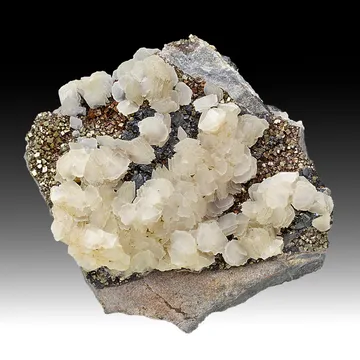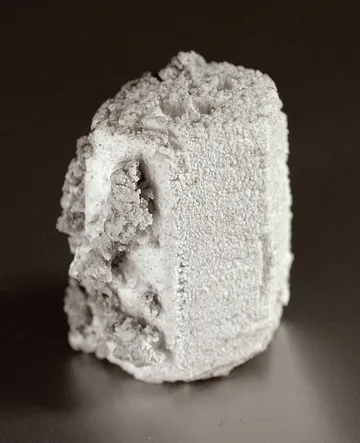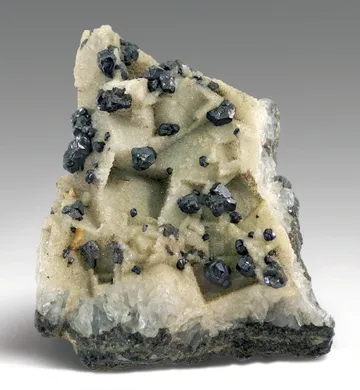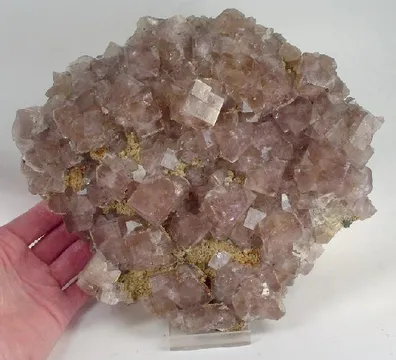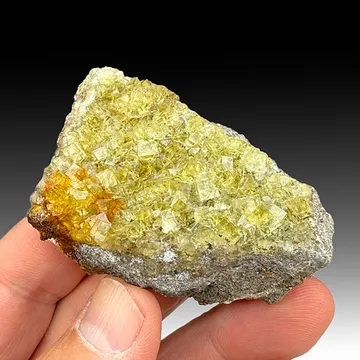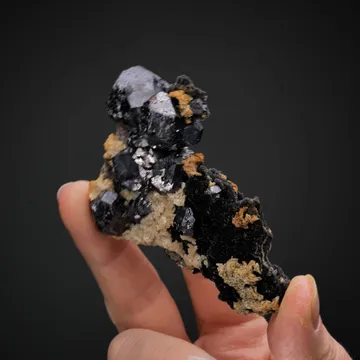
Rotherhope Fell Mine, UK - a notable North Pennines fluorite locality yielding elegant purple cubes on quartz with galena and calcite, prized by collectors.
Key facts
Rotherhope Fell Mine is one of the quieter giants of the Alston Moor mineral field: not as universally recognized as the famous Weardale fluorite mines, yet capable of producing fluorite specimens that experienced North Pennine collectors regard as among the most elegant from the district. The mine lies above Black Burn, south-west of Alston and near Garrigill, on the northern side of Cross Fell. It worked lead-bearing veins and associated “flats” in the Carboniferous limestone succession of the Alston Block, in the central fluorite zone of the Northern Pennine Orefield. The geological setting is the classic North Pennine Pb-Zn-F system—galena-rich veins with fluorite, quartz and calcite gangue—but Rotherhope is especially important because the productive replacement flats in the Tynebottom Limestone were unusually siliceous. Instead of being dominated by the carbonate replacement assemblages common in many Northern Pennine flats, the best Rotherhope specimen ground carried quartz-rich, dark limestone matrix with lustrous fluorite, galena, pyrite and calcite.
The name also appears historically as Rodderup Fell, and collectors should treat the two names as the same locality. Its finest pieces are old-time mine specimens, many apparently saved during the 1930s working of the Tynebottom Limestone flats. They have a distinctive look: translucent to gemmy purple fluorite cubes and penetration twins, commonly perched on sugary white to grey drusy quartz, with black metallic galena, occasional iridescent pyrite on cube faces, and small white calcite crystals. The best fluorites are not merely “Alston Moor purple”; they show a refined combination of twinning, internal colour zoning, daylight response, and contrast against quartz-coated dark matrix. Some are pale lavender with a hidden green layer visible in transmitted light; others are richer wine-purple, sharply cubic, and strongly fluorescent.
Regional View
Country View
Historically, Rotherhope was both a lead mine and a fluorspar producer. Official monument records document Low, Middle and High levels, shafts, water channels, reservoirs, leats, dams, slime pits or buddles, tramways, and the remains of successive ore works. Its twentieth-century Vieille Montagne dressing plant is particularly significant: the scheduled monument description calls it the best-preserved mechanised lead ore dressing plant known nationally, a rare survival of the industrial technology that turned broken vein stone into marketable lead concentrate.

Photo: Wikimedia Commons
The specimen tradition at Rotherhope is therefore inseparable from the mine’s industrial phase. Unlike modern specimen mines where pockets are opened for collectors, Rotherhope specimens are mostly survivals from commercial lead and fluorspar mining. That gives the best pieces much of their appeal: they are not only attractive North Pennine fluorites, but mineralogical artifacts from workings now long closed, flooded in places, protected archaeologically, and largely inaccessible.
Search for specimens: View all specimens from Rotherhope Fell Mine, UK
Rotherhope Fell Mine is in the Black Burn area of Alston Moor, Cumbria, within the Northern Pennine Orefield. The deposit belongs to the broad family of North Pennine hydrothermal Pb-Zn-F vein and replacement deposits, formed in Carboniferous strata of the Alston Block. Regionally, these ores occupy steep mineralized faults and related stratabound replacement bodies in limestone horizons. At Rotherhope the specimen-producing ground was tied especially to the Rotherhope vein and its flats in the Tynebottom Limestone, close to the Whin Sill. British Geological Survey work on the Alston Block emphasizes that stratabound mineralization in the orefield commonly develops beside strong veins, vein intersections, diverging stringers, or “leaders,” with hydrological and lithological controls governing where solutions spread laterally through limestone.
The principal veins on the property were the Rotherhope and Victoria veins, running approximately east-west. The Rotherhope vein was proved for 6,808 ft along strike, with an average throw of about 24 ft, the north cheek up. Contemporary mining accounts describe the vein as generally 10 to 20 ft wide, though with ill-defined walls, and carrying galena with fluorspar and calcite; blende, or sphalerite, was noted only rarely in the working account. At the eastern end the vein was influenced by Sir John’s Vein and became broken and poor; at the western end it was disturbed by a cross-course. The economically and mineralogically important flats lay on either side of the vein in the Tynebottom Limestone, and the south flat was reported about 22 ft lower than the north flat because of the throw of the vein.
The old mine was developed through several levels. Middle Level was driven a reported 3,600 ft and gave access to productive upper workings, particularly in and around the Scar Limestone. Blackburn Level, later known as Low Level, was driven from just above Black Burn; a date of 1837 was recorded on the keystone at the adit mouth in a 1938 account, and the level was reported to run about 4,200 ft, with an impressive 3,000 ft of straight driving before reaching the Victoria vein. High Level, Middle Level and Low Level are all documented in the archaeological record, along with shafts, tramways, reservoirs and water-management structures.
The mine’s mineral rights were owned by Greenwich Hospital in the eighteenth century. In 1764 the engineer John Smeaton was appointed to survey boundaries for mineral leases, and in the late 1770s he laid out long levels intended to reach the veins at depth. By the nineteenth century the workings were an established part of the Alston Moor lead industry. The Rotherhope Lead Mining Company worked the ground before the modern Vieille Montagne phase. Official scheduling records place the Vieille Montagne takeover in 1907 and record the rebuilding of the Low Level processing plant in 1912; other mining summaries note Vieille Montagne activity in the opening years of the twentieth century. The essential point for collectors is that the best-known specimen era belongs to this late commercial phase, when deep and flat workings were active and specimens could be rescued from ore ground.
Production was substantial. Heritage records give output of 60,076 tons of lead concentrates for 1827–1938, followed by 4,720 tons for 1939–1947. Fluorspar was also produced, including 894 tons by hand picking from 1906–1914. Large-scale work ceased in 1930 during a period of low lead prices, the pumps were kept running for a time, and the mine was then unwatered and reopened in October 1935 when metal prices improved. Anglo-Austral Mines later took over, and the mine closed in the late 1940s; Historic England gives closure of the mine in 1947, while many mineral labels and collector references round the closure to 1948.
The collecting significance of Rotherhope rests on flats that are no longer practically available. Mineralogical and collecting records repeatedly point to the Tynebottom Limestone flats—especially material from the early to mid 1930s—as the source of the finest fluorite specimens. These pieces were often plates or cabinet specimens of quartz-coated black limestone with purple fluorite, galena, pyrite and calcite. One documented cabinet specimen measured 17 x 9 x 6 cm and carried lustrous, transparent, twinned wine-purple fluorite crystals to 5 cm on edge, scattered on quartz-coated black limestone with iridescent pyrite patches and a crest of tabular white calcite. Another documented specimen from the North, or Bottom, Flat was labelled circa 1889 and carried fluorite and quartz with largest crystals around 30 mm. More recent market appearances include large old cabinet pieces approaching 20 cm, with fluorite cubes to about 3 cm forming domed crystal beds partly dusted with sugary quartz.
Access today should be treated with caution and restraint. Rotherhope is not a casual collecting locality. The ore works are scheduled, the mine workings are derelict, parts are flooded, and at least one account describes Black Burn Level as normally flooded and associated with a private dwelling water supply. The moorland setting is also managed land. Any surface visit should be made only with appropriate permission, strict respect for protected archaeological remains, and no disturbance of structures, tips, portals or watercourses. The underground workings are not appropriate for mineral collecting: beyond the legal and conservation issues, they involve water, collapses, old shafts, bad ground and confined mine atmospheres.
Rotherhope Fell fluorite is the mineral that gives the mine its collector reputation. It occurs chiefly as cubic and penetration-twinned crystals in pale lavender, rich purple and wine-purple tones, commonly transparent to translucent and set on drusy quartz over dark limestone matrix; galena is frequent, pyrite may patch the cube faces, and small calcite crystals may sit along crests or as later scatterings. Documented specimens show fluorite crystals from about 12 mm to 5 cm on edge, with high-quality cabinet pieces carrying crystals around 3 cm, and the best examples came from the Tynebottom Limestone flats, especially material attributed to the early to mid 1930s. Superior pieces are judged by sharp twinning, glassiness beneath any light frosting, pleasing contrast with white or grey quartz, undamaged cube edges, and the locality’s characteristic fluorescence or daylight activation; ordinary pieces tend to be smaller, more bruised, less transparent, or so heavily coated with quartz that the fluorite loses its sculptural presence.
Quartz at Rotherhope is not merely a background gangue; it is one of the defining visual elements of the best specimens and reflects the unusually siliceous character of the Tynebottom Limestone flats. It occurs as sugary to drusy white, greyish-white or colourless crystals coating black limestone and fluorite, as crystalline wedges beneath fluorite twins, and as fine sparkly surfaces on the backs and undersides of floater-like plates. Individual quartz crystals on photographed specimens are commonly small, often around the millimetre scale, but the quartz can cover large cabinet plates and give the fluorite a clean, bright setting. The most desirable Rotherhope quartz specimens are those where the druse enhances rather than obscures the fluorite or galena—thin sparkling coatings on purple cubes, white crystalline bases under single penetration twins, or bowl-like quartz-lined undersides on old dome-shaped fluorite plates.
Calcite from Rotherhope is best known as a companion species on fluorite-galena-quartz specimens rather than as the mine’s headline mineral. It appears as small white tabular crystals, tiny white 1–2 mm crystals scattered over fluorite, and greyish nailhead calcite on the backs of some plates, with documented crystals to about 4 mm on one large galena-fluorite-quartz specimen. Its role is often aesthetic and paragenetic: late calcite can form a pale crest above wine-purple fluorite or a delicate dusting over straw-coloured fluorite and quartz. Good Rotherhope calcite-bearing pieces are those where the calcite adds texture and contrast without masking the fluorite or galena; calcite-dominated specimens from this mine are less commonly encountered and generally less prized unless they retain strong association with the classic Rotherhope assemblage.
Other documented minerals from Rotherhope Fell include galena, pyrite, sphalerite and erythrite. Galena is historically the ore mineral and can be highly lustrous; one documented large specimen shows iridescent galena crystals to 37 mm on edge with fluorite, calcite and quartz. Pyrite appears as bright or iridescent patches on fluorite and quartz-coated limestone, adding a distinctive metallic accent to some of the best plates. Sphalerite is recorded from the mine but was described in mining accounts as rare in the vein. The notable rarity is erythrite, Co3(AsO4)2 · 8H2O, recorded as small encrustations in the North Side Flats associated with the Rotherhope Fell Vein; these cobalt-arsenate coatings link Rotherhope to the unusual supergene assemblages of the upper South Tyne and Alston Moor district. No verified type-locality mineral is documented for Rotherhope Fell Mine in the sources consulted.
Rotherhope specimens are primarily old-mine pieces, and that should guide both expectations and authentication. Freshly collected, high-quality fluorite plates from the original flats should be viewed skeptically unless the provenance is exceptionally clear, because the productive underground ground is long closed, flooded or otherwise inaccessible, and the surface remains are protected. Most convincing specimens carry old labels, established collection history, or dealer provenance connecting them with Alston Moor, Rotherhope Fell, Rodderup Fell, Black Burn, or Garrigill.
The most common locality issue is not outright fakery but naming and attribution. “Rotherhope Fell” and “Rodderup Fell” are synonyms in collector usage. Labels reading only “Alston Moor,” “Cumberland,” “Cumbria,” or “Garrigill” may be correct but are less precise. Confusion with nearby Tynebottom material is understandable because both localities involve siliceous flats in the Tynebottom Limestone and share purple fluorite, quartz, sulphides and calcite. Confusion with classic Weardale mines such as Boltsburn, Heights, Greenlaws or Rogerley is also possible in the broader market. Rotherhope fluorite is often recognized by old-time purple to lavender cubes or penetration twins on sugary quartz over dark limestone, commonly with galena and small calcite; pieces with that full association and credible old provenance are stronger candidates than isolated loose purple cubes.
Condition matters. Rotherhope fluorite commonly shows minor edge and corner wear, particularly on old cabinet specimens that passed through working mines, ore dressing environments and multiple collections. Slight wear can be acceptable and even expected; fresh-looking bruises, cleaves, glued repairs or heavily abraded cube edges reduce value sharply. Quartz coatings can hide damage or make cleaning difficult, and the small calcites are easily bruised or etched. Galena should be kept dry and handled sensibly; avoid aggressive cleaning, acids, and prolonged wet storage, especially where pyrite or other sulphides are present.
Fluorescence is a positive locality feature. Documented Rotherhope pieces show moderate purple and yellow fluorescence or pleasing blue fluorescence under UV, and some pale purple fluorite is described as strongly activated by UV or daylight. For collectors, UV response can help confirm the aesthetic potential of a piece, but it should not be treated as a stand-alone proof of origin. Rotherhope fluorite is scarce on the market compared with more familiar Weardale localities, and large display-quality specimens are rarely offered. When they do appear, the strongest examples command a premium for the combination of old provenance, twinned purple fluorite, quartz contrast, galena association and historical mine significance.
In the eighteenth century, Rotherhope was not just a hole in the fellside but part of a planned industrial landscape. The mineral rights belonged to Greenwich Hospital, and in 1764 John Smeaton—the same engineer whose name is tied to major civil works of the period—was appointed to survey the mineral lease boundaries. By the late 1770s he was laying out long levels to reach the veins at depth. Black Burn Level, later Low Level, became the main artery of the mine: a long, straight, determined drive from the burn toward the ore. A 1938 account noted a date of 1837 on the adit keystone and marvelled at 3,000 ft of straight driving within a 4,200 ft level, a feat of surveying and persistence with the tools available at the time.
The same 1938 account gives one of the most vivid technical pictures of Rotherhope underground. The mine had two main veins, Rotherhope and Victoria, and the Rotherhope vein had been traced for 6,808 ft. Its average throw was 24 ft, and the flats on either side of the Tynebottom Limestone were not simple cavities but broad, awkward ore sheets with ill-defined walls. The miners followed small strings and leaders because those little seams could suddenly “mineralise the flatt.” In one place, after only 4 ft 6 in. of driving north from a 10-fathom random, a parallel string about 2 in. thick was cut; immediately the ground changed, and an 80 ft stretch of flatt 20 to 24 ft wide was taken out. This is exactly the kind of ground that explains Rotherhope specimens: open spaces and replacement zones where fluorite, quartz, galena, pyrite and calcite could grow well enough to be saved before the ore went to the mill.
Rotherhope also had a touch of sabotage in its modern story. Just before Vieille Montagne took over the property, someone maliciously released water from the reservoir. The result was dramatic and expensive: the air shaft was wrecked from the surface down to Middle Level, forcing the sinking of another shaft and installation of a new pipeline. The replacement work was done from both ends—sinking from the surface and rising from Middle Level—and the two headings met almost exactly. The rebuilt system became part of an impressive hydraulic installation, with water from fellside reservoirs feeding underground machinery, pumps, compressors and drilling equipment.
By the 1930s the mine was a hybrid of old Alston Moor practice and modern mechanisation. Ore from the flats was loaded into 18 cwt wagons, hand-trammed to air hoists, raised to Blackburn Level, and then drawn out to the mill by horse. The mill stood about 800 ft from the adit mouth and could treat 7 tons of mine ore per hour. The ore passed through grizzlies, picking tables, crushers, trommels, jigs, Hardinge mills, Wilfley tables, a James slimer and round slime tables. The concentrates were sorted into 5/15 mm, 3/5 mm, 1/3 mm and slime lead fractions; most of the lead concentrate assayed around 84 to 85 percent Pb, with slime lead around 78 to 79 percent Pb. Even the waste had value: washed limestone chippings and sands from the tables were sold because they were clean, dust-free and attractive.
The mine’s 1930s revival was a close-run thing. Large-scale work stopped in 1930 because lead prices were too low, though pumps were kept going until November 1934. Less than a year later, metal prices improved, and in October 1935 Rotherhope was reopened. The water had to be mastered again. Bad falls blocked parts of the main level west, so a fork level was driven around one collapse; during that diversion, parallel vein strings 6 to 8 ft apart were encountered, some carrying galena. Those strings encouraged management to test for more flats, and the gamble paid off. A forebreast was driven about 40 fathoms from the vein and found good values. Six rock drills then worked double shifts for eighteen months in that section, still in good ore when the 1938 article was written.
There is a final modern glimpse from mine explorers rather than miners. A Cumbria Amenity Trust Mining History Society newsletter recorded a rare one-day opportunity to visit the underground workings when Black Burn Level, normally flooded and then serving as a private dwelling water supply, was drained. That short note captures the present reality of Rotherhope better than any romantic collecting tale: the mine that produced the old fluorite plates is not an open source of specimens but a flooded, fragile, historically important system whose brief openings are exceptional events.
Mindat locality page: Rotherhope Fell Mine (Rodderup Fell Mine), Black Burn Area, Alston Moor, Cumbria — Core mineral list and locality summary, including the Rotherhope/Rodderup synonym, seven listed minerals, and references to Dunham, Smith, and later Russell Society work.
Mindat photo gallery: Rotherhope Fell Mine — Essential visual record for collectors, with specimen photographs documenting purple fluorite, quartz, galena, calcite and pyrite associations, including Tynebottom Limestone flats material.
Fluorite occurrence record, Mindat — Fluorite-specific occurrence entry showing associated minerals based on photo data, especially quartz, galena and calcite.
Quartz occurrence record, Mindat — Quartz-specific occurrence entry showing its strong association with fluorite, galena and calcite at Rotherhope.
Calcite occurrence record, Mindat — Calcite-specific occurrence entry, useful for understanding calcite’s subordinate but repeated role in the specimen assemblage.
Smith, S. 1923. Lead and Zinc Ores of Northumberland and Alston Moor. Special Reports on the Mineral Resources of Great Britain, Vol. 25, Geological Survey of Great Britain. — Early Geological Survey treatment of the Alston Moor lead-zinc district and its mines. BGS Publications Series entry
Dunham, K. C. 1990. Geology of the Northern Pennine Orefield, Volume 1: Tyne to Stainmore. British Geological Survey. — The major modern geological synthesis for the district; cited by Historic England for Rotherhope and by later GCR/BGS work for comparison with Tynebottom-style siliceous flats.
I. J. Naden, D. J. Bouch, B. Young, et al. 2008. Stratabound Pb-Zn-Ba-F mineralisation in the Alston Block of the North Pennine Orefield (England): origins and emplacement. British Geological Survey Research Report RR/08/06. — Places Rotherhope’s Tynebottom Limestone stratabound mineralization in the broader genetic framework of the Alston Block. PDF
Bridges, T. F. and Young, B. 1998. “Supergene minerals of the Northern Pennine Orefield — A review.” Journal of the Russell Society, 7(1), 3–14. — Includes the record of erythrite as small encrustations in the North Side Flats associated with the Rotherhope Fell Vein. PDF
Davidson, W. F. and Thomson, N. 1951. “Some notes on the minerals of Westmorland and Cumberland.” North West Naturalist, 23 for 1948, 136–154. — Classic regional mineralogical paper repeatedly cited in later work on Cumbrian and Alston Moor supergene minerals.
Watson, W. 1993. “Rotherhope Fell Mine and Dressing Plant.” Friends of Killhope Newsletter, 28, 19–25. — Cited by Historic England in the official scheduling record for the mine and ore works.
Historic England: Rotherhopefell lead and fluorspar mines and ore works — Official scheduled monument record, with detailed descriptions of the Low Level and Middle Level ore works, water-power system, processing plant and archaeological significance.
Heritage Gateway: Rotherhopefell Mines — Concise historic environment record with grid reference, levels, operators, output figures and vein names.
Mindat: Rotherhope Fell Mine photo gallery — Best single public gallery for recognizing the locality’s fluorite-quartz-galena-calcite specimen style.
Mindat: Fluorite from Rotherhope Fell Mine — Fluorite occurrence page with associated-mineral data and references.
GeoGuide: Tynebottom Mine, Cumbria — Nearby comparison locality; especially valuable because it explains the siliceous Tynebottom Limestone flats that closely resemble the formerly worked Rotherhope flats.
British Geological Survey Research Report RR/08/06 — Technical report on stratabound Pb-Zn-Ba-F mineralisation in the Alston Block, including Rotherhope as a significant Tynebottom Limestone example.
Cumbria Amenity Trust Mining History Society Newsletter 91, May 2008 — Reprints and discusses the 1938 Mine & Quarry Engineering account of Rotherhope’s underground workings, reopening, machinery and dressing plant.
Wikimedia Commons: Fluorite-Galena-122191 — Reusable photograph of a classic old Rotherhope fluorite and galena specimen.
Wikimedia Commons: Rotherhope Fell Mine High Level — Photograph of the High Level portal and mine shop remains on the fell.
Co-Curate: Rotherhope Fell Mine — Accessible historical summary with mapped resources and links to images of the mine landscape.
Crystal Classics: Fluorite with Quartz, Rotherhope Fell Mine — Dealer archive illustrating the scale, colour zoning, quartz coating and market presentation of a large cabinet-quality Rotherhope fluorite.