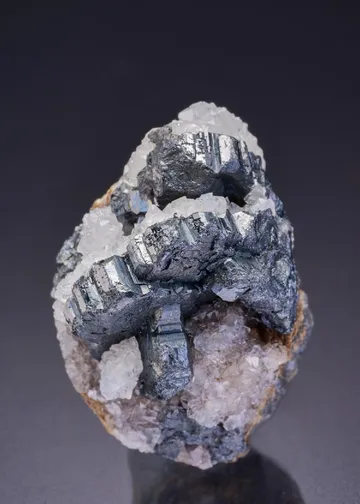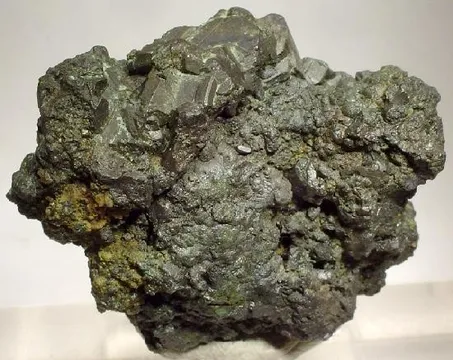
Wheal Maudlin, Cornwall - historic mine near Lostwithiel, famed for zoned siderite on quartz and a diverse suite of minerals, a prized collecting locality.
Key facts
Wheal Maudlin is one of those small Cornish mines whose fame rests less on tonnage than on a single, unforgettable mineral event. The abandoned copper-tin working lies near Lostwithiel in Cornwall, just outside the granite margin, where metamorphosed killas and greenstone were cut by east-west lodes carrying a compact but remarkably varied suite of sulphides, oxides, tungstates, phosphates, carbonates, and silicates. For collectors, its name is inseparable from the extraordinary zoned siderite on quartz discovered around 1819: short, sharp, flat-ended “horse-tooth” chalybite crystals, typically brown to honey-brown, their internal growth banding so cleanly expressed that a broken or well-lit crystal can look almost architectural.
Regional View
Country View
The best Wheal Maudlin specimens are not showy in the modern, saturated-color sense. Their power is form, history, and association: lustrous to sublustrous siderite prisms perched on clear to milky quartz, sometimes with the crystals crowded into plates or lining a geode-like surface, and sometimes preserved with old handwritten labels that carry the aura of nineteenth-century Cornish collecting. The mine is also important for minerals that reward a more scholarly eye: cronstedtite, francolite in the old literature, danalite reported from greenstone-related lode material, and the celebrated wolframite-after-scheelite pseudomorphs once discussed under the old Cornish collecting name “aikinite.”
Search for specimens: View all specimens from Wheal Maudlin, UK
Wheal Maudlin, also recorded as Wheal Mawdlin, Wheal Magdalen, Maudlin Mine, and Maudlin Mines, is an abandoned mine in the Lostwithiel area of Cornwall. Its recorded position is near SX084624, about 50°25'45"N, 4°41'52"W. Older mineralogical references commonly placed it in Lanlivery parish, but modern locality usage places it under Lostwithiel following administrative reorganization. The mine worked three east-west lodes on the valley side north of Sweethouse, in ground associated with Lanhydrock.
Geologically, the locality is a compact expression of the Cornubian metallogenic province. The mine lies just outside the granite margin. The country rock is chiefly killas, with a substantial greenstone intrusion in the northern part of the sett; both the killas and the greenstone are metamorphosed. Several lodes with a general east-west trend were worked, and westward they passed into the greenstone. The greenstone-killas contact was described as passing through Engine Shaft, 300 yards south-east of Maudlin Farm, at about 50 fathoms below surface, and through or near Benson’s or Whim Shaft, about 100 yards south-west of Engine Shaft. That contact relationship is central to understanding the locality’s odd assemblage: ordinary Cornish copper-tin lode minerals are joined here by contact- and greenstone-influenced species, including scheelite, garnet-group material, chlorite, and the reported danalite.
The ore suite was never large in economic terms. Records describe Engine Shaft as sunk to 110 fathoms, but the output was scanty: about 130 tons of copper ore and 2 tons of black tin are recorded for the 1823-1824 and 1853-1869 working periods. A separate copper-statistics table records Wheal Maudlin in 1853 with 84 tons of ore and 5 tons of copper. The Northern Mine Research Society’s bibliography shows that the mine appears in mid-nineteenth-century Duchy of Cornwall accounts, Kelly’s Directory for 1856, Lists of Mines through the 1859-1872 period, Mining Journal notices and share listings, and a 1907 List of Mines. That documentary trail fits a small mine that was intermittently noticed, promoted, and worked, rather than a great producer.
Mineralization included copper and tin ores, with cassiterite, chalcopyrite, chalcocite, covellite, cuprite, tenorite, pyrite, pyrrhotite, arsenopyrite, sphalerite, and galena documented from the locality. The gangue and associated suite includes quartz, siderite, fluorite, chlorite-group minerals, actinolite, tremolite, garnet-group material, fluorapatite and carbonate-rich fluorapatite, cronstedtite, opal, melanterite, scheelite, and wolframite-group material. The classic specimens demonstrate a multiphase history: quartz-lined cavities, siderite overgrowths with crisp zonation, later phosphate alteration and encrustation, and iron sulphides capable of later decay.
The collecting history is dominated by the great siderite pocket of about 1818-1819. Many of the known “horse-tooth” siderites are thought to have come from one large vugh or from a very small related group of cavities. The most famous material shows unusually sharp hexagonal-looking, flat-ended siderite crystals on quartz, with the zoning visible in broken edges and in favorable lighting. Natural History Museum, London specimens have long been central to the story, including a large geode-like piece roughly cabinet scale and a historic specimen associated in the literature of collectors with Baroness Burdett-Coutts. Some museum and private examples are sufficiently complementary in appearance that collectors have speculated they were once parts of the same great cavity lining.
Benson’s Shaft is important for the later scholarly story of danalite. In 1958, Arthur W. G. Kingsbury visited Wheal Maudlin with Sir Arthur Russell and searched the burrows near old shaft material derived largely from greenstone. Kingsbury described breaking chloritic vein-stuff and finding a dark columbine-red mass later identified as danalite, in two portions totaling about 6 cm by 5 cm, associated with pyrite, arsenopyrite, chalcopyrite, sphalerite, quartz, fluorite, and a distinctive dark greenish-bronze chlorite. That report is significant but should be handled with the same caution modern curators apply to Kingsbury localities generally: the material is part of the published record, but later authors have noted provenance problems affecting some Kingsbury specimens and have called for independent corroboration where possible.
Collecting access today should be treated as permission-only. Wheal Maudlin is an abandoned historic mine with overgrown dumps and old shaft ground in a landscape of private and estate land. There is no modern open collecting operation, and any fieldwork should avoid digging, shaft exploration, disturbance of archaeology, or removal of material without explicit landowner consent. For most collectors, the practical route to owning Wheal Maudlin is through old collection specimens, dealer stock, museum deaccession material when it appears, or well-documented secondary-market pieces.
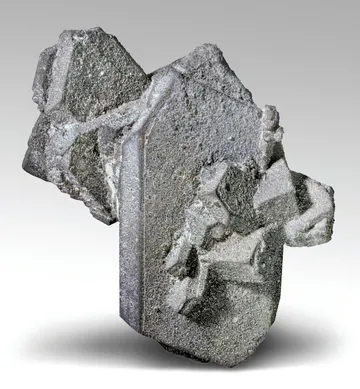
Wheal Maudlin siderite is the locality’s signature mineral and one of the most distinctive Cornish siderites: short prismatic to “horse-tooth” crystals of FeCO3, brown to honey-brown and commonly flat-terminated, set on clear to milky quartz and prized for exceptionally crisp concentric growth zoning. The classic crystals are typically small, often around the centimeter scale, though large cabinet specimens and geode sections exist; documented examples include crystals to about 12-15 mm, a 75 mm quartz crystal coated with larger siderites, and a Natural History Museum specimen about 300 mm long. The finest pieces are those confidently tied to the 1818-1819 pocket, with sharp form, visible zoning, original quartz association, minimal pyrite decay, and old labels or collection history; ordinary pieces tend to be more massive, dull, iron-stained, or poorly individualized.
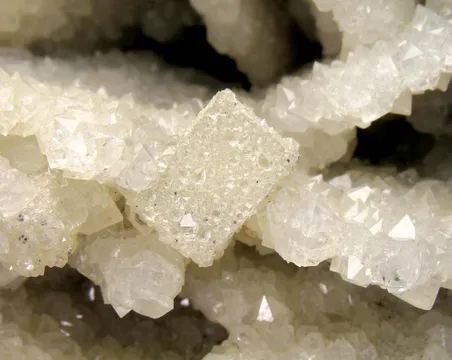
Quartz from Wheal Maudlin matters chiefly as the matrix and visual counterpoint for the famous siderite, occurring as clear, colorless, milky, or locally iron-stained crystals lining cavities in the lode material. On the classic pocket specimens, quartz crystals may be sharp and transparent enough to lift the brown siderite visually, and some old specimens show siderite crystals sitting on or partially coating quartz points rather than being buried in massive vein quartz. Better quartz-bearing pieces preserve a clean cavity texture, undamaged terminations, and a balanced siderite-quartz association; fragments with broken quartz, heavy limonite staining, or indistinct siderite have far less appeal, even when the locality is correct.
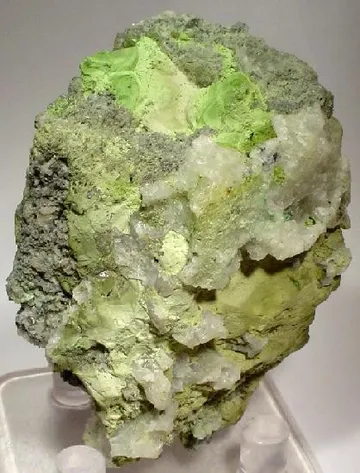
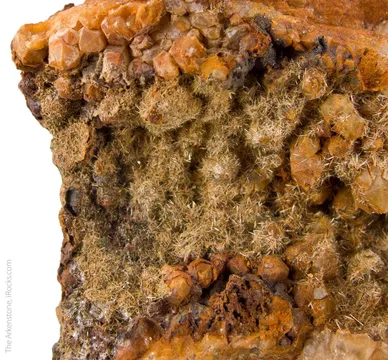
Beyond siderite and quartz, Wheal Maudlin is a locality for the serious Cornish systematics collector. Cronstedtite is documented here, including material important enough for modern structural work on the 2H2 polytype, and old specimens of cronstedtite altered or encrusted by apatite-like phosphate material were discussed in nineteenth-century British pseudomorph literature. Carbonate-rich fluorapatite, historically discussed as francolite, was recorded investing chalybite at the mine. The wolframite-group pseudomorphs after scheelite are among the great Cornish “oddities,” sharp dark pseudomorphs after the original tungstate form and long sought under the old collecting usage “aikinite.” Covellite specimens, where genuine and well preserved, add a rare metallic purple note to the otherwise brown, white, green, and black palette. Danalite remains an intriguing but cautious record: reported from greenstone-related chloritic lode material and associated with sulphides, quartz, and fluorite, but requiring careful provenance and, ideally, analytical confirmation.
The main authenticity issue at Wheal Maudlin is not modern faking so much as historical imprecision. Old labels may read Maudlin, Wheal Maudlin, Wheal Mawdlin, Wheal Magdalen, Lanlivery, Lostwithiel, or St Austell District; these may refer to the same classic locality, but a collector should preserve the original wording and not “improve” labels beyond a separate modern note. Conversely, generic “Cornwall siderite” should not be upgraded to Wheal Maudlin without convincing form, association, and provenance. The classic horse-tooth material is distinctive, but the market value attached to the 1819 pocket makes wishful relabeling a real risk.
Danalite from the locality requires special caution. Kingsbury’s published Wheal Maudlin danalite is mineralogically plausible in its greenstone-related lode setting, and two older Sir Arthur Russell specimens had earlier been labelled as garnet from Wheal Maudlin before being identified as danalite. However, later writers have emphasized broader doubts about some Kingsbury provenances. Any purported Wheal Maudlin danalite should be treated as a specimen needing analytical confirmation and an exceptionally strong chain of custody, especially because red-brown garnet-group material and helvine-group minerals can be confused by eye.
Condition is a major value factor. Siderite has good cleavage and the small, projecting flat-ended crystals chip readily. Quartz points on the classic pieces are also easily bruised, and old repairs or old glue may be present on specimens that passed through nineteenth- and early twentieth-century collections. The most consequential stability issue is associated iron sulphide decay: pyrite decay has been documented in a Wheal Maudlin siderite specimen from the R. W. Barstow Collection, and the mine’s assemblage includes both pyrite and pyrrhotite. Look for powdering, sulphurous odor, white to greenish sulphate efflorescence, cracking matrix, or labels and boxes stained by acidic alteration. Suspect pieces should be isolated in low humidity.
Scheelite-bearing material, including wolframite-after-scheelite pseudomorphs, may be checked with shortwave ultraviolet light, but the collectible pseudomorphs are valued for form and replacement texture rather than fluorescence. Cronstedtite and phosphate-encrusted specimens should be handled gently; acicular cronstedtite and alteration crusts are not forgiving of brushing or ultrasonic cleaning. Avoid acid cleaning. It can attack carbonates, destabilize alteration products, and strip precisely the historical surface features that make these specimens interesting.
Market availability is limited but not impossible. Small siderite-quartz specimens appear periodically from old collections, sometimes with nineteenth- or early twentieth-century labels. A 10.80 x 7.68 x 4.02 cm Heritage Auctions siderite sold in January 2016 for $400, illustrating that non-elite Wheal Maudlin material can still trade within reach, but the finest pocket pieces with sharp zoning, large size, and strong provenance are in a different category and are often locked in museums or long-held private collections. Covellite, cronstedtite, wolframite-after-scheelite pseudomorphs, and analytically credible danalite are all much scarcer on the open market than ordinary siderite-labelled material.
The great story of Wheal Maudlin begins with a cavity that may have been found before 1819 but has lived in collecting memory as the “1819 siderite pocket.” It was not a rich ore shoot in the usual mining sense. It was a collector’s event: a single vugh, or perhaps a tight cluster of related vughs, lined with quartz and those extraordinary flat-ended siderite crystals. The best crystals were not large by international cabinet standards, but their form was so peculiar and their zoning so emphatic that they became instantly recognizable. Two centuries later, collectors still speak of them almost as if they were fragments of one broken object rather than a locality suite.
That idea is more than romance. At the Natural History Museum in London, visitors have seen large Wheal Maudlin siderite geode sections displayed in a way that invites the question: were these once adjoining halves of the same cavity lining? One account described the displayed geode as roughly 50 cm, while another museum visit report noted a half perhaps 35-40 cm wide. The theory repeated among collectors is that all, or nearly all, of the finest horse-tooth siderites in public and private collections may be pieces from one large crystal-lined vugh split during early nineteenth-century collecting. Whether every piece can ever be physically matched is beside the point; the material has the unity of a single discovery.
The historic labels deepen the story. One classic specimen on Mindat is noted as ex John Henry Heuland, the great London mineral dealer and collector active in the first half of the nineteenth century. Another is tied to the Wickett collection before the 1920s. A celebrated example was in the collection of Baroness Burdett-Coutts and later in the British Museum, remembered by collectors under the name “Lavin’s celebrated Siderite geode.” These are not decorative afterthoughts. With Wheal Maudlin, an old label can be part of the specimen’s mineralogical evidence, because the form and date of the material connect directly to one brief episode in Cornish collecting.
A second, quieter story took place in 1958, when Arthur W. G. Kingsbury visited Wheal Maudlin with Sir Arthur Russell. Russell had old specimens labelled as garnet from Wheal Maudlin, including pieces with deep red colors that troubled him because the mine’s garnets were otherwise brown to yellowish. Kingsbury compared them with danalite from other Cornish occurrences and thought the similarity unmistakable. Later that year the two men went to the mine and searched the old burrows, concentrating around Benson’s Shaft where the dump material was mostly greenstone-derived. The surface was weathered and iron-stained, but fresh inside. Kingsbury described breaking many pieces of chloritic vein-stuff before the removal of one corner revealed a dark columbine-red mineral. Further breaking produced, in two portions, a small mass about 6 cm by 5 cm: the Wheal Maudlin danalite.
The setting of that find is vivid because it was not a showy crystal pocket. It was an act of recognition in dirty vein-stuff: dark red mineral hidden in chlorite, pyrite, arsenopyrite, chalcopyrite, sphalerite, quartz, and fluorite. Kingsbury also noticed a dark greenish-bronze chlorite, a peculiar-looking association he had seen on other danalite-bearing material. Modern writers have become more cautious about some Kingsbury localities, but the episode still captures the way Cornish mineralogy often works: not with a hammer blow revealing a glittering cavity, but with an old collector’s doubt about a label, a comparison between specimens, and a fresh fracture in a piece of unpromising dump rock.
There is also a human, non-mineral story from the working mine. In September 1858, a court case recorded evidence about brasses missing from Wheal Maudlin. Benjamin Tyrrell, a miner from Halgavor near Bodmin, remembered three large brasses in the carpenter’s shop on Saturday, September 4; by September 8 one was gone. William Hawken, a miner from Redmoor in Lanlivery, testified that at about 11 o’clock on the morning of September 4 he saw the prisoner on the road opposite the mine gate, walking toward Sweet’s House with a bundle under his arm “about the size of a hat,” while a man with an unloaded donkey went ahead. Josiah Cook, another Wheal Maudlin miner, corroborated the evidence. Francis Goyne, who had worked at Wheal Maudlin, identified the brass by his own chipping work on it, and Captain Tregay, an adventurer as well as agent of the mine, also identified it. The verdict was guilty, with a sentence of nine months hard labor. It is a small courtroom glimpse of a small mine: brasses, a carpenter’s shop, a donkey on the road, and the mine gate near Sweet’s House.