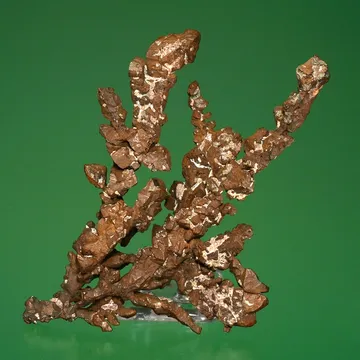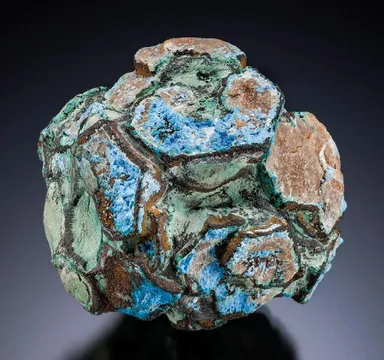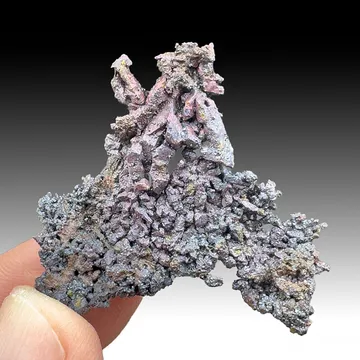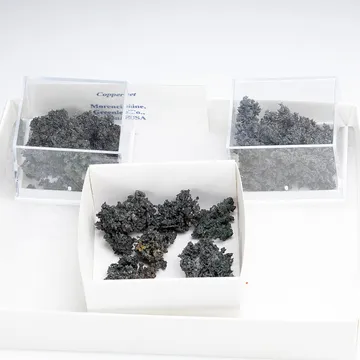
Copper: native copper with spinel-twinned crystals and arborescences; notable from Lake Superior, Itauz, Dongchuan, Corocoro, prized for color and localities.
Key facts
Native copper is a classic collector’s element renowned for its sculptural forms, warm metallic color, and extraordinary variety of crystal habits. It can occur as sharp spinel-twinned crystals, herringbone “arborescences,” delicate wires, leaflike sheets, and robust branching masses. In the right conditions, copper crystallizes on contrasting white calcite or dolomite, or occurs with cuprite, prehnite, datolite, or malachite for striking color combinations. Historic deposits around Lake Superior produced huge masses and “halfbreed” copper-silver pieces, while modern finds from Kazakhstan and China have yielded textbook arborescent and twinned crystals.
Collectors prize copper for both aesthetics and history. It is among the most accessible native elements—affordable small specimens are plentiful—yet select pieces, such as undamaged spinel twins on matrix or large, elegant arborescences, command strong prices. Copper’s malleability also gives it a distinctive “handmade by nature” look; no other metal forms quite the same branching or wire habits.
Copper has been collected for centuries and occupies a special place in North American mineral history, especially the Keweenaw Peninsula’s “Copper Country” of Michigan. Museum shelves are lined with copper masses and crystallized showpieces from Michigan’s 19th–20th century mining era. In recent decades, Kazakhstan (Itauz) and China (Dongchuan) revitalized the market for sharp, freestanding crystal clusters, and Bolivia’s Corocoro remains iconic for unusual copper after aragonite casts.
Its popularity endures because it bridges the gap between natural sculpture and crystallographic beauty. Beginners often start with Michigan float copper or small branching clusters, while advanced collectors pursue pristine, matrix-supported crystals, spinel-twin “herringbone” groups, halfbreeds with silver, or dramatic casts after calcite or aragonite. Prices vary widely: small, attractive branches can be modest; fine matrix pieces with top luster and minimal alteration can reach five figures.
While copper occurs worldwide, a handful of localities define the species for collectors—through either unmatched crystal quality, unique habits, or historical significance.
Michigan’s Keweenaw Peninsula is the world’s most historic source of native copper. Basaltic “amygdaloid” and conglomerate lodes produced enormous masses, intricate branching specimens, copper wires, and the famous copper-silver “halfbreeds.” Calcite and datolite vugs occasionally hosted sharp crystals, and glacial activity spread “float copper” boulders across the region. Classic associations include white calcite, pale green prehnite, and glassy datolite, which set off the warm metallic glow of copper beautifully.
Top Keweenaw pieces display elegant branching or spinel-twinned morphologies, crisp surface detail, and a pleasing, natural patina. Historic provenance (mine tags, period labels) adds collectible appeal. Though many specimens are hefty masses, fine crystallized examples exist and are highly sought after, particularly on matrix and with minimal cleaning or alteration.
The Calumet & Hecla (C&H) conglomerate lodes yielded some of the most famous mass copper on record, and a share of fine crystallized material. Collectors prize branching and herringbone copper, occasional copper on calcite, and halfbreed pieces with native silver. The best C&H specimens show sharp crystallization rather than purely hackly masses, and retain a rich reddish sheen or stable cuprite patina without over-polishing.
Ajo’s New Cornelia Mine is a classic Arizona source of sculptural native copper. While sharp crystals are less common here, the mine produced impressive plates, branching masses, and copper coated by cuprite or malachite. The best pieces are bold and architectural, with naturally varied patina and minimal modern polishing.
Copper is durable but reactive. With thoughtful care, specimens will keep their beauty for decades.
By prioritizing natural character, crisp crystallography, and careful preservation, a copper collection can span the full spectrum—from historic Michigan masses and halfbreeds to striking Kazakh arborescences and Bolivian casts—each piece a compelling testament to native metal artistry underground.