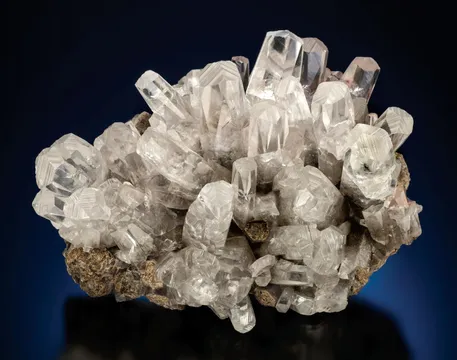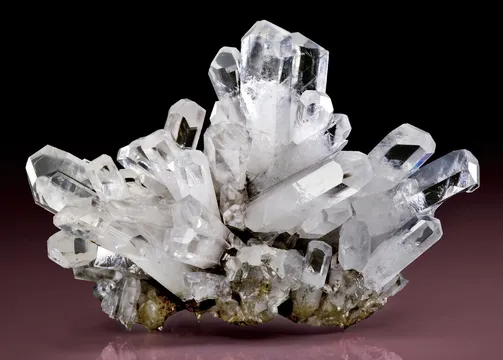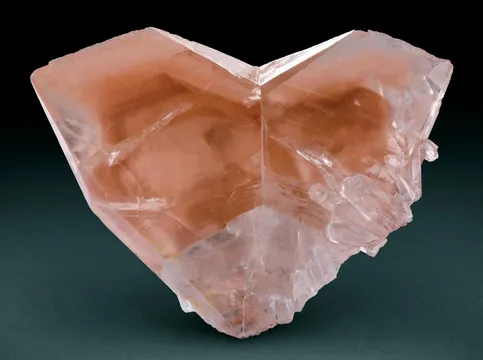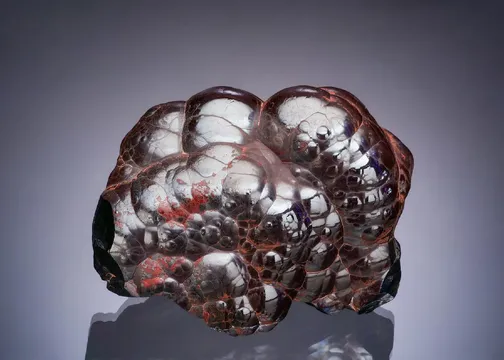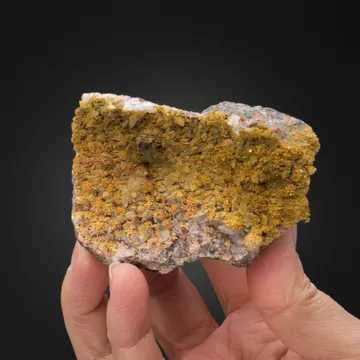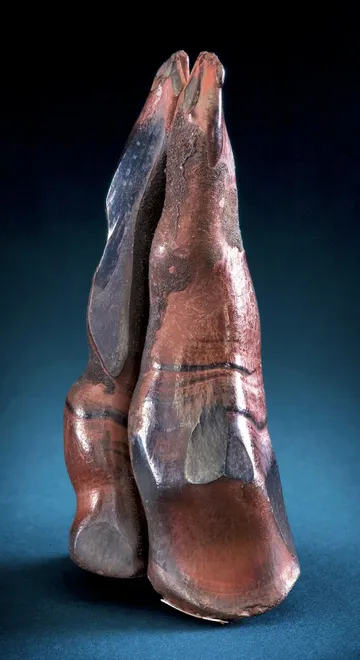
Ullcoats Mine, UK — West Cumbrian locality known for pale blue fluorite on creamy dolomite, iron-oxide hematite, and lough-hole specimens prized by collectors.
Key facts
Ullcoats Mine belongs to the classic West Cumbrian hematite field south-east of Egremont, where immense replacement bodies of Fe2O3 were worked in Lower Carboniferous limestones along the western margin of the Lake District. For collectors it is not merely “another Florence label”: Ullcoats was a distinct mine and shaft complex on the north-eastern side of the Florence–Ullcoats system, close to the limestone and Lower Palaeozoic outcrops, and its specimens carry a particular look — pale blue fluorite on creamy dolomite, iron-red quartz, black specular hematite, and rich botryoidal “kidney ore” hematite from the same great ore environment.
The geological drama is simple and powerful. Warm, saline, iron-bearing fluids moved through faults and permeable cover rocks and replaced limestone wholesale, preserving bedding, mudstone partings, stylolites, and even fossil textures in hematite. Most of the ore was massive, but cavities — the miners’ “lough holes” — and orebody margins provided the collector pieces. These openings could carry specular hematite, bipyramidal quartz, dolomite, calcite, baryte, aragonite, and the fluorite for which Ullcoats is now especially desired. The best Ullcoats specimens are small to cabinet-sized plates and vugs in which the blue of fluorite is cooled by cream dolomite and sharpened by black hematite or iron-red quartz.
Regional View
Country View
Historically, Ullcoats matters because it sits at the hinge between an older independent iron-ore enterprise and the later interconnected Florence–Ullcoats–Beckermet mine system. Ullcoats Nos. 1, 2, and 7 appear repeatedly in early- and mid-20th-century production records, and later underground connections made the locality both more productive and more confusing for specimen labels. That confusion is still with us: many West Cumbrian iron-field specimens have been simplified to “Florence,” even where the correct source is Ullcoats, Beckermet, or a named section within the combined workings. Serious collectors should preserve every old Ullcoats label, especially labels naming Ullcoats No. 1, No. 2, No. 7, or the Ullcoats section of Florence.
Search for specimens: View all specimens from Ullcoats Mine, UK
Ullcoats Mine lies at Egremont in west Cumbria, about 9 km south-south-east of Whitehaven, with the commonly cited mine-grid position around NY 024 105. It worked red hematite in the concealed southern part of the West Cumbrian orefield, where the Lower Carboniferous limestone sequence passes beneath Permo-Triassic cover. In regional terms this is the Egremont sector of the West Cumberland iron field, a narrow but enormously productive belt whose ore supported the Cumbrian iron and steel industry for generations.
The deposit is a limestone-replacement hematite orebody, not a simple vein. The Florence–Ullcoats orebody occupied limestones within a fault-bounded graben, with the Florence faults to the south-west and the Ullcoats Fault to the north-east. Published descriptions place the main ore in lower Dinantian limestone, commonly assigned to the Frizington Limestone Formation or older terminology within the Chief Limestone/Great Scar Limestone succession. Beneath the limestone at Florence and Ullcoats are Lower Palaeozoic rocks of the Skiddaw Group; above, in much of the surrounding concealed field, lie the Brockram breccias and St Bees Sandstone. At the north-eastern Ullcoats end of the complex, the Permo-Triassic cover thins or wedges out, and the orebody lay nearer to the limestone and Lower Palaeozoic subcrop beneath glacial deposits.
The ore itself was overwhelmingly hematite, formed by metasomatic replacement of limestone. The collector minerals were a minor part of the orebody, but they are the reason Ullcoats is treasured in cabinets. Cavities in massive hematite could be lined by specularite and quartz; bands and pockets yielded fibrous mammillated hematite, locally “kidney ore,” which breaks into conical “pencil ore” fragments. Toward vugs, fractures, and orebody margins, dolomite, calcite, aragonite, baryte, quartz, and fluorite were developed. The fluorite is the feature that most sharply marks Ullcoats for present-day collectors: pale blue to sky-blue cubes, commonly on pearly cream dolomite and sometimes with baryte, specularite, or hematite.
Ullcoats was already active in the early 1900s under the Ullcoats Mining Co. Ltd., with recorded output of red hematite in 1900, 1902, 1905, 1910, 1915, and through the 1920s and 1930s. The mine complex included numbered shafts, notably Nos. 1, 2, and 7. Florence Mine, begun in 1914, was worked with Ullcoats from 1917, and the two histories became increasingly entwined. Florence No. 2 was sunk in the 1940s, working later transferred to the new pithead, and underground connections were made with Ullcoats in the 1950s. After nationalisation, British Steel Corporation took over the combined Florence and Ullcoats lease in 1969, pumped out the flooded workings, linked the system to Beckermet, and drew ore up Beckermet shaft for Workington steelworks. British Steel closed the combined complex in 1980.
A remarkable afterlife followed. Former employees reopened part of the Florence workings as the Egremont Mining Company, working on a much smaller scale for hematite used in specialist steelmaking, pigments, paints, dyes, cosmetics, and mineral specimens. The later accessible workings included the Lonely Hearts Orebody, a high-level orebody near the Ullcoats Fault between the original Florence workings and Ullcoats to the east. By 2007 the pumps were being shut down; the deep workings flooded and underground collecting effectively ended. Today the wider Florence site is a heritage and arts complex, while the Ullcoats shaft sites are capped, altered, or on private/industrial land. Collecting should be treated as closed except where explicit permission is obtained for surface heritage visits; underground access is not available.
Specimen production came from both historic mining and late small-scale reworking. Published and collector records identify Ullcoats No. 1 workings as a source of kidney-ore hematite, thin hematite shells, and red hematite-included quartz. The Ullcoats section of the Florence Mine is also specifically recorded for fluorite cubes around 15 mm on pearly dolomite and baryte. A specularite-rich area in the Ullcoats workings was still being worked for specimen material in the 1990s. These late pieces, often collected by miners or by collectors with permission, are now a finite population; the flooded mine is no longer replenishing the market.
Ullcoats fluorite is characteristically cubic, pale blue to sky-blue, and most valued when perched cleanly on cream “pearl-spar” dolomite, white to pale-pink baryte, or dark specular hematite rather than lost in iron-stained massive ore. Documented pieces from the Ullcoats section include fluorite cubes around 15 mm, while older accounts of the deeper Florence and Ullcoats workings describe finer sky-blue cubes reaching several centimetres across; smaller colourless to pale-blue crystals also occurred in vugs in the later accessible workings. Associations with dolomite are especially diagnostic in specimen photographs and catalogues, followed by hematite, specularite, and less commonly quartz. The best pieces show sharp cube form, glassy lustre, good separation from matrix, and the unmistakable Cumbrian contrast of cool blue fluorite against warm cream carbonate and iron-black hematite; ordinary examples are smaller, crowded, iron-stained, or visually overwhelmed by massive hematite.
Hematite at Ullcoats ranges from massive red ore to lustrous botryoidal “kidney ore,” conical “pencil ore,” and small platy to micaceous specularite crystals lining cavities. Collectors should look for pieces that preserve the locality’s two best hematite expressions: smooth, high-lustre mammillated surfaces with tight fibrous structure, and sparkling black specularite in association with quartz, dolomite, or fluorite. Ullcoats No. 1 is specifically represented by kidney-ore specimens, unusual wrinkled hematite surfaces, thin hematite shells, and hematite-included quartz collected from the workings in the late 20th and early 21st centuries; a specularite-rich zone in the Ullcoats workings was being worked for specimen material in July 1996. The strongest hematites have undamaged botryoidal skins, sharp contrast with matrix or quartz, and an old Ullcoats label; lesser pieces are common-looking massive ore or broken pencil-ore fragments without form or provenance.
Other minerals documented from Ullcoats and the Florence–Ullcoats orebody include quartz, dolomite, calcite, baryte, aragonite, and pyrolusite, with broader orebody accounts also recording limonite, siderite, traces of pyrite, and rare sulphides or manganese oxides in the West Cumbrian hematite deposits. Quartz deserves special mention: bipyramidal colourless to smoky crystals lined vugs, and Ullcoats No. 1 produced bright red hematite-included quartz, the local “eisenkiesel” or “tomato quartz” style. Baryte is generally white to pale pink and platy, especially toward the limestone margins, while dolomite forms the cream rhombs that make the best fluorite specimens so visually distinctive. No type-locality mineral species has been verified for Ullcoats Mine; its importance is instead as a classic locality within one of Britain’s great hematite fields.
The chief authenticity issue with Ullcoats specimens is locality precision, not fakery. Because Florence, Ullcoats, Ullbank, Winscales, and Beckermet were historically connected or jointly operated, many labels were simplified to “Florence Mine” or “Egremont.” Some such pieces may well be from Ullcoats, but the reverse is also true: not every Florence-style blue fluorite or kidney ore should be promoted to Ullcoats without documentary support. A label naming Ullcoats Mine, Ullcoats No. 1, Ullcoats No. 2, Ullcoats No. 7, or the Ullcoats section of Florence is far more valuable than a later dealer attribution.
No well-documented Ullcoats-specific fakes or standard treatments are known to be part of the market tradition. Still, the usual caution applies to iron-field specimens: acid-cleaned carbonates can look unnaturally bright or etched, repaired fluorite cubes may hide among dark hematite, and iron staining can obscure bruises or contacts. Fluorite is softer than quartz and much more vulnerable along cube edges; hematite is harder but botryoidal kidney ore can chip or spall along its fibrous structure. Specularite-rich pieces shed black metallic dust and should be handled over a tray, while porous red ore and pencil ore can mark labels, drawers, and fingers.
Fluorescence should not be assumed. Some British fluorites are famously fluorescent, but the collector value of Ullcoats material rests primarily on colour, association, and provenance rather than UV response. Test with care and record any reaction, but do not let fluorescence override visible quality or label strength.
Market availability is limited and episodic. Since the mine flooded after the final working period, fresh underground specimen production is effectively over. The material now appears from old miner collections, West Cumbrian collections, British-dealer stock, and dispersed private cabinets. Fluorite on dolomite or hematite from Ullcoats is scarcer and more desirable than loose massive hematite; well-labelled kidney ore and red quartz from Ullcoats No. 1 are also worth preserving. The most collectable pieces combine attractive aesthetics with a label that separates Ullcoats from the broader Florence–Egremont catch-all.
The last years of the Florence–Ullcoats workings have the feeling of a closing door. One collector who had permission to roam underground with the mine owner, Gilbert, described watching the water rise after the pumps were turned off. The photographs from that period were taken while the levels were actively flooding, and the final haul was not a romantic metaphor but a physical train of ore tubs: “the last rake of trucks ever to come up the decline,” loaded with specimens. Two tubs and the locomotive were left below, stranded at the bottom of the slope under about a hundred feet of water. For mineral collectors, that image is hard to forget: a working iron mine becoming a submerged archive, with the last specimen trucks drawn out just ahead of the flood.
Ullcoats also had a much earlier human history, recorded in the blunt language of mining reports and newspapers. On 10 June 1919, James Wright, aged 70, was injured at the Ullcoats Mining Co.’s No. 2 Pit. The accident was called “peculiar” in the contemporary account, and it ended not simply with a broken thigh but with pneumonia at Whitehaven Infirmary. At the inquest were the coroner E. Atter, a jury with Councillor R. Wilson as foreman, H.M. Inspector of Mines G. Cook, L. T. Helder for the company, mine manager Miles Richardson, and company secretary C. Jenkins. The witness list reads like a small cross-section of Ullcoats underground life: J. J. Conkey, iron-ore miner; J. J. Munroe, metal picker at Ullcoats No. 2; R. Mandle, overman; Richardson himself; and Dr. Edlestone from the infirmary. It is a reminder that the graceful blue fluorite and polished kidney ore were by-products of hard, hazardous iron mining.
The surface landscape still tells the mine’s compartmentalized story. A Cumbria Amenity Trust visit in 2021 moved from Florence out to the Ullcoats shaft sites: No. 1, with its fan house still present and water audible down the shaft; No. 2, reached along part of the old railway route, where spoil heaps and sleepers remained among trees; and No. 7, now a small industrial park with original buildings still standing and the capped shaft top in the middle of the car park. The guide on that visit pointed out that Florence connected into Ullcoats No. 1, that Ullcoats No. 2 lay between, and that No. 7 also connected into Florence. One detail gives the place a lived texture: Pete Blezzard had done part of his mining engineering course at Ullcoats No. 7 in the 1960s.
The railway and underground haulage history adds another layer. A narrow-gauge report from late 1968 described the connected Florence No. 2 and Ullbank system, with mineral being raised from Ullbank and Florence No. 2 used for maintenance and personnel. The visit took three hours by locomotive and covered working levels linked by cable inclines. Several battery-electric locomotives from around 1922 were still noted, including derelict examples in the open at Ullcoats and later Wingrove & Rogers machines under repair or working. For collectors accustomed to seeing Ullcoats as a label on a 15 mm fluorite cube, these details restore the scale of the place: shafts, workshops, inclines, battery locomotives, red ore, pumps, and miles of workings beneath the quiet fields south of Egremont.
B. Young, “Geology and mineralisation at Florence Mine, Egremont, Cumbria,” Journal of the Russell Society, Vol. 15, 2012, pp. 3–18 — The most useful modern collector-geology paper for the Florence–Ullcoats orebody, including the graben structure, Ullcoats Fault, Lonely Hearts Orebody, and specimen minerals.
R. E. Bevins, B. Young, J. S. Mason, D. A. C. Manning and R. F. Symes, “Florence Mine, Cumbria,” in Mineralization of England and Wales, Geological Conservation Review Series No. 36, JNCC, 2010 — Geological Conservation Review account of the Florence Mine site and the Florence–Ullcoats orebody, with key descriptions of “lough holes,” kidney ore, quartz, dolomite, baryte, calcite, aragonite, and blue fluorite.
B. Smith, Iron Ores: Haematites of West Cumberland, Lancashire and the Lake District, Special Reports on the Mineral Resources of Great Britain, 1924 — Classic Geological Survey memoir cited for sections across Ullcoats and the Florence–Ullcoats orebodies.
P. Stone, D. Millward, B. Young, J. W. Merritt, S. M. Clarke, M. McCormac and D. J. D. Lawrence, British Regional Geology: Northern England, 5th ed., British Geological Survey, 2010 — Concise BGS synthesis of Cumbrian hematite geology, replacement ore styles, gangue minerals, and genetic models.
D. Banks, J. K. Steven, J. Berry, N. Burnside and A. J. Boyce, “A combined pumping test and heat extraction/recirculation trial in an abandoned haematite ore mine shaft, Egremont, Cumbria, UK,” Sustainable Water Resources Management, 5, 51–69, 2019 — Modern hydrogeological study of the flooded interconnected Ullcoats–Florence–Beckermet mine complex, with useful mine-history, shaft, orebody, and water-level data.
J. G. T. Armstrong, J. Parnell, A. J. Boyce and L. A. Bullock, “Kilometre-scale compartmentalization of fluid sources to a fossil hydrothermal system,” Ore Geology Reviews, 116, 2020 — Sulphur-isotope and fluid-source study including baryte from Ullcoats Mine spoil at NY 024 105.
British Geological Survey mineralogy and petrology collection record E11883, massive hematite, Ullcoats Mine, Egremont — Museum collection record for massive hematite from Ullcoats Mine, map reference NY 022 103.
Mindat photo record: Hematite var. Specularite, Ullcoats Mine, Photo ID 521100 — Documented specimen photo of small specularite from Ullcoats Mine.
Mindat photo record: Hematite var. Kidney Ore, Florence Mine, collected from the currently worked Ullcoats workings, 5 November 1993, Photo ID 14849 — Important labelled record for late Ullcoats kidney/pencil ore.
Mindat photo record: Quartz from Ullcoats No. 1 workings, collected 2004, Photo ID 28887 — Documented red hematite-included quartz from Ullcoats No. 1.
Mindat photo record: Specularite-rich area of the Ullcoats workings, July 1996, Photo ID 123186 — Field photograph documenting specimen recovery from the Ullcoats workings.
Mindat: Ullcoats Mine locality — Core locality database entry for Ullcoats Mine, Egremont, Cumbria.
Mindat: Fluorite from Ullcoats Mine — Species record with Ullcoats fluorite associations, photographs, and literature links.
Mindat: Hematite from Ullcoats Mine — Species record for Ullcoats hematite, including associated minerals and photo references.
GeoGuide: Florence Mine, Cumbria — Best free geological overview of the Florence–Ullcoats orebody and its specimen minerals.
BGS Earthwise: Haematite deposits of Cumbria — Authoritative regional context for the West Cumbrian hematite field.
Durham Mining Museum: Ullcoats Iron Ore Mine — Production, ownership, map reference, and mining-record summary for Ullcoats.
Northern Mine Research Society: Florence Mine — Concise mining-history account of Florence working with Ullcoats and later Beckermet.
HAABase Mines: Florence Iron Mine — Heritage-oriented summary of the Florence site, its preserved pithead, and its links to Ullcoats and Beckermet.
Campylite: Florence Ullcoats Mine — Collector perspective on late underground collecting, flooding, and mislabelling of West Cumbrian specimens.
Albion Fire & Ice: Florence–Ullcoats Mine locality page — Dealer locality summary with a useful concise mineral list.
Cumbria Amenity Trust Mining History Society: Florence Mine plans shortlist — Inventory of surviving plans, including Ullcoats No. 1, No. 3, No. 7, and Florence–Ullcoats abandonment plans.
Cumbria Amenity Trust Newsletter 145, November 2021 — Field-note account of Florence and Ullcoats shaft-site visits.
Cumbria Amenity Trust Newsletter 138, February 2020 — Surface-tour notes describing Ullcoats No. 1, No. 2, and No. 7 shaft sites.
Durham Mining Museum: “Peculiar Accident At Ullcoats Mine,” 26 June 1919 — Contemporary newspaper account of a fatal accident at Ullcoats No. 2 Pit.
I.A. Recordings subject index — Industrial-archaeology media index listing Florence ironstone mine underground and surface footage.