A collector's guide to Cryo-Genie Mine, USA: its geology, mining history and notable minerals, illustrated with the 109 specimens documented from this locality on EarthWonders.
Key facts
The Cryo-Genie Mine is one of the defining modern specimen localities of the Warner Springs area of northern San Diego County, California: a compact but richly pocketed LCT-type granitic pegmatite in the southern part of the Chihuahua Valley pegmatite district. Its fame rests on a short, intense modern chapter of gem-mining rather than on long commercial production. Beginning with renewed underground work around 2001, the mine yielded an assemblage that immediately caught the attention of California pegmatite collectors: large, tapering pink-to-blue-green elbaite crystals, quartz and cleavelandite matrix plates, morganite and aquamarine beryl, cassiterite, lepidolite, microcline, albite, schorl, and a suite of rare accessory minerals seldom encountered in showy San Diego County specimens.
Geologically, Cryo-Genie is not a sprawling pegmatite mine in the Pala sense, but a tightly focused system of dikes and pockets. The principal dike lies in high-grade metasedimentary and granitic rocks of the Peninsular Ranges batholith, with a strongly zoned internal structure and pocket regions marked by clay, leached feldspar, cleavelandite roses, lepidolite, quartz, beryl, and late lithium-boron mineralization. For collectors, that translates into pieces with a very recognizable look: snow-white cleavelandite and pale feldspar supporting pink, green, and blue-green tourmaline; quartz crystals sometimes included by rare metallic needles; and chunky, blocky beryls that may shift visually between aquamarine and morganite tones.
Regional View
Country View
The great Cryo-Genie specimens are not merely “California tourmalines” with another label. Their best crystals tend to be broad, tapered, and sculptural, commonly with pink bodies and contrasting green to blue-green terminations. Some specimens show elbaite on cleavelandite balls or plates, some are quartz-cleavelandite matrices with small gemmy tourmaline pencils, and the major pocket finds produced large crystals of a morphology considered unusual among southern California pegmatites. The locality also matters because it was unusually well documented while it was being worked: miners, mineralogists, gemologists, and geophysicists all recorded the pockets, mineralogy, and underground exploration in near real time.

Photo: Wikimedia Commons

Photo: Wikimedia Commons
Search for specimens: View all specimens from Cryo-Genie Mine, USA
Cryo-Genie is located about two miles north-northwest of Warner Springs in northern San Diego County, several hundred feet east of Lost Valley Road, in the Warner Springs mining district. The locality has also appeared under the names Cryogenie Mine, Lindy Bee No. 1 claim, and Lost Valley Truck Trail prospect. The published locality coordinates place it near 33°18′42″N, 116°38′20″W, on the ridge country between Warner Springs and the higher Peninsular Range terrain.
The deposit is a granitic rare-element pegmatite, commonly treated as an LCT-style San Diego County gem pegmatite, with lithium, cesium, tantalum, beryllium, boron, and phosphate enrichment expressed unevenly through its pockets and accessory minerals. The principal dike is enclosed in hybrid metamorphic and granitic rocks. Early descriptions gave it as roughly 10 feet thick and traceable for about 200 feet; later work in the modern underground workings documented a dike that narrows to about 1 meter near the entrance area and dilates to about 2.5 meters in the main pocket zone. Its attitude is generally north-striking, with measured westward dips in the underground workings in the range of roughly 26–36 degrees, though older descriptions recorded a 30-degree east dip for the exposed dike.
The internal structure is more complex than a simple single-core pegmatite. Barren sections show a border into quartz-biotite gneiss and monzogranite, a biotite-rich quartz-oligoclase contact zone, massive orthoclase-quartz-muscovite-schorl units, aplitic bands carrying garnet, schorl, quartz, albite, and muscovite, and lower granular pegmatite stained by altered Mn-Fe phosphates. In the pocket regions, the mineralogy changes decisively: orthoclase gives way to microcline, plagioclase is leached and recrystallized as cleavelandite, feldspar becomes buff-colored near pockets, and large blocks of feldspar, quartz, and matrix minerals are suspended in sticky ocher-brown clay. The late mineralizing pulse produced the large polychrome elbaite, giant quartz crystals, compact lepidolite masses, montebrasite pods, beryl, and rare tantalum-antimony-arsenic-bearing accessories that distinguish Cryo-Genie from more ordinary schorl-bearing pegmatites.
Historically, the occurrence was first prospected as the Lost Valley Truck Trail prospect in 1904, reportedly for gem tourmaline and beryl, but without the dramatic success that later made the locality famous. It was later located as the Lindy B Mine by the San Diego Mineral and Gem Society in 1962, then as the Cryo-Genie Mine in 1974 by Bart Cannon of Seattle, who worked it intermittently into the mid-1980s. Dana Gochenour acquired the claim in 1994, and the Gochenour family and associates began the modern work that produced the mine’s celebrated pockets. In 2001, intensified underground mining by Dana and Ken Gochenour, Jim Clanin, Dave Kalamas, Cal Kalamas, Jim Clanin’s associates, and others transformed the locality from a modest Warner Springs prospect into a nationally discussed gem pegmatite.
The principal modern pocket names recur throughout the locality’s collecting history. The Big Monday Pocket, discovered in 2001, introduced collectors to large pink elbaites from Cryo-Genie and produced major tapering crystals. The B.A.T. Pocket in 2002 surpassed expectations with still larger pink and green tourmalines, abundant quartz and cleavelandite, and some of the locality’s most celebrated matrix pieces. The 4th of July Pocket produced a gemmy doubly terminated polychrome tourmaline, beryl, and a large terminated quartz crystal. The Beryl Pocket, worked from August to November 2003, yielded a pale greenish blue beryl crystal about 13 cm across on matrix with smoky quartz and cleavelandite, additional beryl specimens, pink tourmaline, quartz, and the rare inclusion mineral pääkkönenite in quartz.
Cryo-Genie is not a casual public collecting locality. It has been described as an unpatented lode mining claim on public-domain lands associated with the Cleveland National Forest and BLM/Forest Service management, and published field discussion makes clear that active claims, permitting, safety, and access control have been central issues. The mine has had locked underground workings and active claim signage in recent years. Serious collectors should treat the locality as a claimed and controlled mine, not an open rockhounding site; specimens on the market should be acquired through established collections, dealers, or documented dispersals rather than by unauthorized field collecting.
Tourmaline is the signature mineral of Cryo-Genie, occurring first as schorl in the less evolved parts of the pegmatite and, in the pocket zones, as elbaite in green, blue-green, pink, and polychrome crystals. The locality’s great pieces are the broad, tapering, often doubly terminated pink crystals with green or blue-green caps, especially those from the Big Monday and B.A.T. pockets; smaller “pencil” crystals from the same pocket system may be gemmy but are commonly broken into sections by natural pocket movement. The best matrix specimens show colorful tourmaline cleanly exposed on cleavelandite, quartz, microcline, or lepidolite, with undamaged terminations and strong color contrast; ordinary pieces tend to be partial, fractured, clay-stained, or composed of small loose fragments without matrix presence.
Quartz from Cryo-Genie is both a major pocket mineral and an important matrix-maker, ranging from sharp lustrous crystals on cleavelandite to large terminated crystals recovered from named pockets such as the 4th of July Pocket and the Beryl Pocket. The better pieces show clear to smoky crystals with good luster, clean terminations, and association with cleavelandite, elbaite, microcline, or beryl; one 2002 pocket zone yielded quartz plates considered by the miners the finest they had yet seen from the mine, with parallel-leaning crystals on matrix. Quartz here is also scientifically interesting because some crystals enclose metallic gray needles of pääkkönenite, making otherwise modest quartz specimens important locality rarities; condition problems include contacts, pocket bruising, clay-filled fractures, and naturally broken floater material.
Cryo-Genie elbaite occurs as green rinds on schorl, as colored extensions of schorl crystals near pockets, as pink-to-blue-green banded massive material along pocket margins, and as well-formed crystals in open cavities. The mine’s distinctive elbaite does not typically show the long c-axis color zoning familiar from the Himalaya Mine; instead, the finest pocket crystals grew as free, flaring forms on microcline surfaces or as epitaxial continuations from earlier schorl terminations, producing squat to tapering crystals with pink bodies and late blue-green to green caps. Specimen quality is judged by color saturation, intact terminations, clean exposure from clay, and whether the crystal remains attached to attractive cleavelandite, quartz, or lepidolite matrix rather than surviving only as reassembled or incomplete fragments.
Albite at Cryo-Genie is most familiar in the pocket zones as bladed cleavelandite, where plagioclase leached from perthitic feldspar recrystallized into white rosettes, balls, and blades that form the classic matrix for the mine’s tourmaline, quartz, and beryl. In less evolved zones, albite is also part of aplitic bands with garnet, schorl, quartz, and muscovite, but collector pieces usually come from the lithium-rich pocket environments where albite provides contrast and texture. Good Cryo-Genie albite specimens are crisp, white, and three-dimensional, ideally with an undamaged elbaite, beryl, or quartz association; lesser examples are stained ocher-brown by pocket clay, crushed, or present only as feldspar rubble rather than coherent bladed matrix.
Cleavelandite is the visual stage on which many Cryo-Genie specimens perform: white bladed albite in roses, balls, tufts, and plates from the pocket zones, especially around Big Monday, B.A.T., 4th of July, and the Beryl Pocket trend. It occurs with pink and blue-green elbaite, smoky and clear quartz, lepidolite, beryl, cassiterite, and rare accessory phases; some 2002 matrix specimens were described as cleavelandite balls carrying dramatic bicolored tourmaline. The best pieces combine clean, undamaged cleavelandite architecture with a colorful focal mineral, while ordinary specimens have flattened blades, mud staining, contact scars, or a visually confused mass of feldspar without a strong crystal centerpiece.
Cassiterite is a notable accessory at Cryo-Genie, occurring in pockets on both the east and west sides of the pegmatite and as microscopic crystals between cleavelandite blades in lithium-rich zones. Larger crystals, reported to about 2 cm, came from the eastern open-cut workings; the crystals are characteristically black, metallic to submetallic, and twinned, and many are embedded or contacted by feldspar. Good Cryo-Genie cassiterite specimens are unusually significant in a San Diego County context when they show a lustrous, well-formed crystal with minimal feldspar burial, while most examples are small, partly embedded, or appreciated more as paragenetic accessories to elbaite-cleavelandite pocket material than as standalone display minerals.
Beryl from Cryo-Genie includes morganite and aquamarine-toned material, with the Beryl Pocket of 2003 providing the most memorable documented specimens, including a pale greenish blue beryl crystal about 13 cm in diameter associated with smoky quartz and cleavelandite. Some beryl specimens carry small pink tourmaline prisms as inclusions or overgrowths, an unusual association that gives the locality special appeal; color may be pale and variable, and inclusions are common. The most desirable beryls are large, well-formed, and matrix-associated, particularly with smoky quartz, cleavelandite, or tourmaline, whereas more ordinary pieces are pale, fractured, included, or represented by broken sections rather than sculptural crystals.
Indicolite from Cryo-Genie is best understood as the blue to blue-green expression of the mine’s elbaite, appearing in late caps, pencil crystals, and small pocket crystals rather than as abundant long, uniformly blue prisms. The 2002–2004 pockets yielded blue-green tourmaline of facet quality in small crystals, blue tourmaline matrix specimens on quartz and cleavelandite, and polychrome crystals with pink bodies and blue-green terminations. Fine indicolite-labeled pieces from this locality need real blue or blue-green color rather than merely dark green tourmaline, intact terminations, and preferably cleavelandite or quartz matrix; many pieces are small, fractured, or part of color-zoned elbaite crystals where the blue zone is limited to a cap or section.
Smoky quartz is documented most notably from the Beryl Pocket, where it occurs with pale greenish blue beryl and bladed white cleavelandite, giving some Cryo-Genie matrices a darker, more dramatic contrast than the clear quartz-tourmaline-cleavelandite plates. It is not the mine’s dominant collector identity, but it is important when it anchors beryl specimens or accompanies late pocket assemblages with tourmaline. The best smoky quartz pieces show distinct crystal form, good luster, and balanced association with beryl or cleavelandite; lesser examples are fragments, contacted side crystals, or quartz pieces whose smoky color is subordinate to clay staining and pocket bruising.
Other documented minerals from Cryo-Genie make the locality far more than a tourmaline occurrence. The principal assemblage includes microcline, muscovite, lepidolite, schorl, biotite, almandine-spessartine garnet, amblygonite-montebrasite, allanite-(Ce), apatite, cookeite, ferrocolumbite, ferrotapiolite or tapiolite-(Fe), stibiotantalite, herderite, löllingite, scorodite, pollucite, zircon, bismuthinite, and rare pääkkönenite. No formally established type-locality mineral is documented from Cryo-Genie in the sources reviewed, but the mine is an important locality for rare-species collectors because pääkkönenite, before its Cryo-Genie discovery, had been reported from only a handful of non-pegmatitic localities worldwide, and because the mine produced unusual tantalum-antimony assemblages from named pockets such as Big Monday and the Beryl Pocket.
Cryo-Genie specimens reward careful locality judgment. The best examples have a crisp, pocket-mined San Diego pegmatite look: elbaite in pink, green, or blue-green on white cleavelandite, quartz, pale feldspar, lepidolite, or beryl; large tapering crystals; and, ideally, a named-pocket provenance such as Big Monday, B.A.T., 4th of July, or Beryl Pocket. Because the locality’s most important production came from a narrow modern window and was well publicized, older dealer labels, Gochenour or Clanin provenance, published-photo matches, museum or show history, and credible collection chains matter.
The most common condition issue is natural pocket damage. Cryo-Genie’s pockets were clay-filled and fractured, with many crystals found broken into sections before mining or separating during removal and cleaning. Large pink tourmalines, even important ones, may be repaired or reassembled; this is not automatically a disqualifier, but it must be disclosed and priced accordingly. Look closely at terminations, sidewalls, glue lines, reconstructed midsections, and whether the crystal has been mounted back into matrix. For matrix specimens, watch for cleavelandite blades bruised by extraction, contacts on quartz backs and sides, and clay staining that can obscure damage.
Mislabelling risk is real because “San Diego County tourmaline” is often traded by district name rather than exact mine. Cryo-Genie should not be confused with Pala, Himalaya, Little Three, Stewart, or Blue Lady material. The broad pink-to-green tapering Cryo-Genie habit can be distinctive, but small pink or green pencils without matrix may be difficult to separate from other southern California pegmatites without a reliable label. Conversely, beryl with tourmaline and smoky quartz from the Beryl Pocket, or quartz with pääkkönenite inclusions, can be highly locality-specific when accompanied by good documentation.
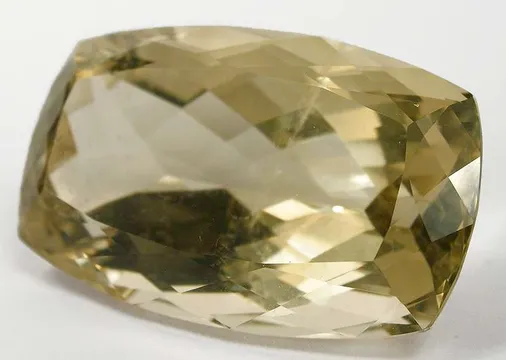
Treatment concerns are minimal for most mineral specimens, but gem rough and cut tourmaline from Cryo-Genie entered the market, and color, clarity, and repairs should be considered as they would for any tourmaline. Some pink material was faceted, including calibrated stones and larger modified brilliant cuts; the desirable color is a pure pink without brown modifier. For mineral specimens, cleaning history matters more than treatment: aggressive acid cleaning can dull feldspar or expose fractures, while retained pocket clay may protect or hide fragile areas. Beryl from the Beryl Pocket is also notable for shortwave ultraviolet greenish-yellow fluorescence and may be of interest to collectors who document luminescence.
Market availability is limited but not nonexistent. The mine produced enough specimens for dealer inventories, auction appearances, museum displays, and private California collections, yet top B.A.T. and Big Monday crystals are tightly held. Small elbaite pencils, quartz-cleavelandite pieces, cassiterite, beryl fragments, and minor matrix specimens appear more often than major undamaged tourmalines. The strongest collector premiums attach to large intact pink-to-blue-green crystals, undamaged matrix pieces, specimens connected to named pockets, and rare-mineral examples such as pääkkönenite in quartz.
In October 2001, Cryo-Genie changed from an obscure Warner Springs pegmatite into a locality collectors suddenly had to reckon with. Ken Gochenour opened a clay-filled pocket roughly 1.2 × 1.0 × 0.4 meters and recovered large, well-formed pink tourmalines. The largest crystal weighed 2.2 kg and stood 16.3 cm tall, doubly terminated, with enough transparent areas to tempt a cutter but enough scale and morphology to make cutting feel almost sacrilegious. Two other crystals approached 17 cm long and 10 cm in diameter, with flared pinacoidal terminations unlike the more familiar forms from the Pala district. The comparison that caught attention was not to another California mine but to east-central Afghanistan: a startling thing to say about a pocket above Warner Springs.
The 2002 season had all the texture of small-scale California gem mining: bureaucracy, improvised camp life, hand mucking, and the gradual reading of a pegmatite face. Ken Gochenour wrote of “thousands of dollars and a hundred hours of training and paperwork” before the crew could resume work. The underground operation was intimate and physical. Spoils were mucked into 5-gallon buckets, hand-raised to a wheelbarrow at the entrance, and the only real mechanical underground help was a Holman jack-leg drill. In August, the crew extended the lower drift 12 feet into solid pegmatite, following coarsening feldspar and steeply pitching line rock. They drilled and blasted through cracked rock so troublesome that some holes had to be only 14 inches deep. Then the little signs began: six small pockets crossing the face, a squat blue-green tourmaline about 2 inches in diameter, and quartz-feldspar-muscovite pockets that were no longer merely barren.
What first looked like six modest pockets merged into two large mud-filled pockets in the wall. For three days, the crew removed quartz and cleavelandite, and from the right-hand pocket came roughly 30 pounds of excellent specimens. Then Jim Clanin drilled eight holes below the pockets and the crew “let her rip.” The next morning they found that the blast had thrown the best part of a new pocket onto the muck pile. From the floor came 120 pounds of crystal specimens and mud, plus more buckets from the pocket still exposed in the wall. The pocket clay was hiding dozens of pink and green doubly terminated tourmaline pencils, mostly 2 to 4 inches long, and most broken into sections as pocket tourmalines so often are.
The pocket kept enlarging until the central cavity was described as 5 feet across, 3 feet thick, with a domed ceiling and a projecting tongue of mud and crystals. Ken left for another mine near Reno feeling that something was about to happen; almost as soon as he reached Tustin, the telephone rang. Jim told him, “There is a big tourmaline in the wall.” During Ken’s ten days away, Anthony Kampf and a crew from the Natural History Museum of Los Angeles County visited and were allowed to dig crystals and specimens. Meanwhile, Dana Gochenour, Jim Clanin, and Dave Kalamas removed more than 1,000 pounds of giant microcline, quartz, and cleavelandite specimens. One tourmaline from that stage was a 9-inch doubly terminated crystal, 3 inches wide at one end and tapering to 1½ inches — the shape that became a Cryo-Genie signature.
On September 26, 2002, the B.A.T. Pocket gave the mine its legend. Dana and Cindy Gochenour, Ken, and Dave Kalamas crowded into the giant pocket. They protected a large tourmaline mass with mud and papier-mâché, worked for hours around loose rock and a hanging quartz matrix, and finally freed a block of tourmaline, mud, and matrix with a pry bar. Dave carried it out of the pocket; a little mud was removed, and the crew saw a crystal mass at least 8 by 4 inches, possibly 6 pounds or more. Another large crystal, at least 6 by 3 inches, was exposed nearby. The story records that they left tired just as a bat flew in, but adds the miners’ own explanation for the pocket name: B.A.T. stood for “Big Ass Tourmaline.”
The next day brought a film crew connected to Jim Clanin’s sister Helen, but the most cinematic moment came after they had left. Steve Knox, Al Rose, and Mary Rose joined the night shift, and beneath a giant matrix the miners saw black tourmaline fragments — a sign they had learned could herald pink tourmaline below. The following morning, with Paul Duval and Kevin Cross arriving with a video camera, the pocket went quiet. Dana called Ken up to the face. Dave Kalamas sat perched at the edge of the pocket with a lap full of mud and crystals: giant tourmalines, the biggest they had seen. Ken later described receiving the bundle from “Dr. Dave, Pocket Midwife,” backing it into the haulage way with the video running, and watching the newspaper wrap open to reveal several giant tourmalines projecting from mud and cleavelandite. The analogy became unavoidable; someone called for a bucket to set the bundle on, and the scene felt like a maternity ward.
At the cleaning yard the following Friday, the pocket became real. The crew — Dana, Jim, Dave, Paul Duval, Kevin Cross and his daughter Cassandra, Helen, Al and Betty Ordway, Jon Page, and Ken — began washing clay from the crystals. The first thing to emerge was the emerald green of the terminations. Large doubly terminated crystals with green ends appeared beside gemmy pink and green pencils. One cleavelandite ball carried a pink tourmaline with a blue-green termination, together with quartz and lepidolite, and the tourmaline measured 3 inches across one way and 2½ inches the other, its termination like a slice of pie. Another large crystal, broken into three pieces that fit together, measured nearly 10 inches long with a 5-inch-wide termination; from it sprang another tapering tourmaline 5 inches long and 1½ inches wide at the top. Dana named that one the “Chief.” Paul Duval named another the “Jolly Pink Roger,” deliberately echoing Maine’s famous “Jolly Green Giant.”
Then came the specimen Ken called “The Crowning Glory” of Cryo-Genie. Jim was washing a piece of matrix when tourmaline began to show beneath the clay. As they cleared it, a large, undamaged crystal emerged from a cleavelandite “house”: a classic beer-can-form tourmaline on snow-white cleavelandite, 5 inches tall and 3 inches wide, rich pink with a blue-green cap about half an inch thick. Ken wrote that only a slight layer of late pocket clay obscured the top. He considered it one of the finest specimens he had seen, and the realization was almost absurd: three major specimens had been mined without the crew even knowing what the clay concealed.
Cryo-Genie was also a locality where old-fashioned pocket reading met geophysics. After the 2001 find, Jeffrey E. Patterson tested ground-penetrating radar at the mine to see whether the method that had helped at other San Diego County gem pegmatites could locate pockets here. On June 16, 2003, an underground scan identified anomalies, one of which became the 4th of July Pocket. That pocket yielded a gemmy doubly terminated polychrome elbaite, pale purple beryl, and a large terminated quartz crystal. Later GPR work outlined the File 104 pocket zone, where bright energy returns were interpreted as quartz and tourmaline crystals floating in ocher-brown sticky clay with lepidolite nodules and broken microcline and quartz. During the week of August 25, 2003, a major aquamarine beryl matrix specimen came from that area — a striking example of technology helping miners approach a fragile pocket with more precision.
The Beryl Pocket of 2003 added another layer to the mine’s personality. Its top was first encountered in the floor of the workings, so the crew drove a new tunnel around and below the mineralized area to attack it more safely. Along the way, the New Drift Pocket produced pink tourmalines up to 15 cm long and 7.5 cm in diameter, though badly fractured; fragments nevertheless cut stones up to 4.5 carats in a clean pink color. The Beryl Pocket itself measured about 2.9 × 2.3 × 1.2 meters and was excavated from August to November. Crystals were eased out of sticky brown clay with hand tools and soft implements, even chopsticks. On August 29, the miners recovered a large specimen with pale greenish blue beryl about 13 cm in diameter, smoky quartz, and white cleavelandite. The pocket also produced beryl specimens with small pink tourmalines included in or growing on the beryl, a rarity of association that is immediately recognizable to anyone who knows southern California pegmatites.
Even the small things at Cryo-Genie could become memorable. On an October 27, 2002 Friends of Mineralogy field trip, most participants dug the dump hoping for bits of tourmaline left by the miners. Bob Housley, however, quietly broke rocks off to the side and found small stibnite-like crystals several millimeters long. SEM work showed antimony and sulfur, but also a strong arsenic peak; X-ray powder diffraction by Tony Kampf identified the mineral as pääkkönenite, Sb2AsS2. A great tourmaline mine had quietly produced a world-class micromineralogical footnote, proof that at Cryo-Genie, the showiest crystals were not the only things worth looking at closely.