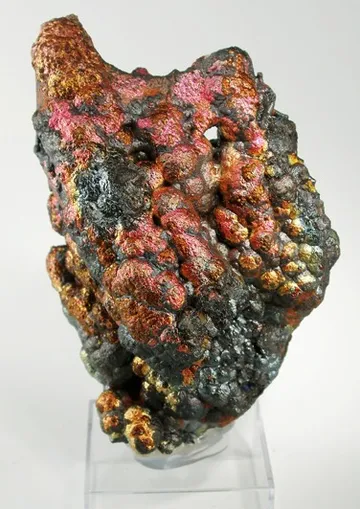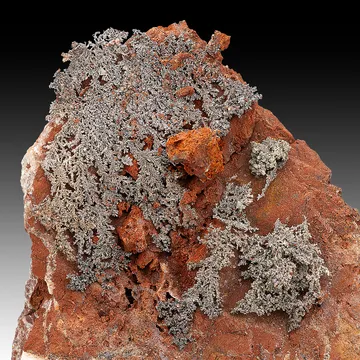
A collector's guide to Cantabria, Spain: its geology, mining history and notable minerals, illustrated with the 133 specimens documented from this locality on EarthWonders.
Key facts
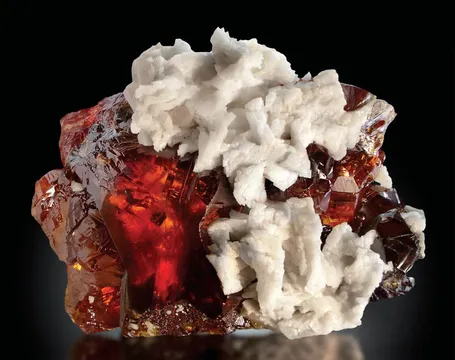
Cantabria is one of Spain’s great collector names because several of its zinc-lead districts produced specimens that look very different from one another yet belong to a coherent northern-Spanish metallogenic story. Along the coast and foothills, the Reocín and La Florida-Udías systems are carbonate-hosted Zn-Pb deposits in the Basque-Cantabrian Basin, developed in dolomitized Cretaceous limestone with sphalerite, galena, marcasite, pyrite, dolomite, calcite, and later zinc carbonates and silicates. High in the Picos de Europa, the Áliva district—best known to collectors as Las Mánforas or Almanzora—yielded the legendary “blenda acaramelada,” transparent to translucent honey, orange-red, yellow, and occasionally green sphalerite on white dolomite and calcite. Those Áliva sphalerites are among the classic European cabinet minerals: resinous, gemmy, complexly twinned, often with curved faces and edges, and instantly recognizable when perched against snowy rhombohedral dolomite.
Regional View
Country View
For the collector, “Cantabria” is not a single pocket or mine but a regional label that spans several historically important sublocalities. Reocín matters for scale, ore textures, and mining history: it was a world-class zinc-lead deposit, with banded and colloform sphalerite-dolomite-galena mineralization and a long industrial life that reshaped the landscape near Torrelavega. Áliva matters for aesthetics: it produced the best gem sphalerite specimens of the region, including museum-grade crystals and great old pieces now dispersed through Spanish, European, and American collections. La Florida, Udías, Nieves, and related workings add the oxidized-zinc side of the story, with hemimorphite, smithsonite, hydrozincite, cerussite, aurichalcite, and rarer secondary species developed in the weathered portions of the ore systems.

Photo: Bergminer, Wikimedia Commons

Photo: Rob Lavinsky, Wikimedia Commons
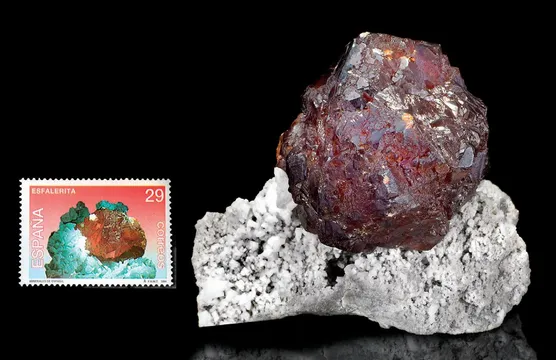
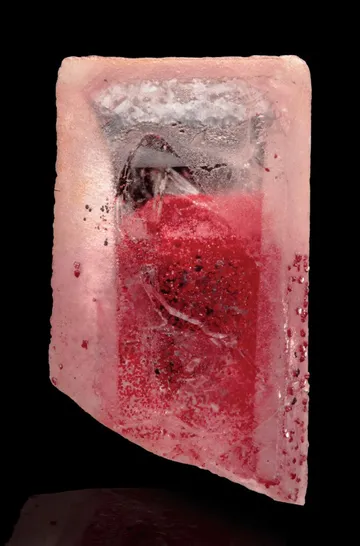
The best Cantabrian specimens are valued for contrast and clarity: caramel sphalerite on white dolomite from Áliva, glassy calcite set against pale carbonate matrix, or delicate secondary zinc minerals from the oxidized zones. Reocín pieces appeal to a different eye—the ore-collector’s eye—where polished or broken sections show rhythmic sphalerite bands, pale dolomite seams, galena, marcasite, and pyrite recording the open-space filling, replacement, and breccia-cement textures of a giant carbonate-hosted deposit.
Search for specimens: View all specimens from Cantabria, Spain
Cantabria’s collectible minerals come chiefly from carbonate-hosted zinc-lead deposits in two geological provinces. Reocín and the La Florida-Udías sector belong to the Basque-Cantabrian Basin, where mineralization is hosted by dolomitized Lower Cretaceous Urgonian limestone and controlled by faults, karst cavities, breccias, and stratigraphic permeability. Reocín lies on the southern flank of the Santillana syncline, about 30 km southwest of Santander and a few kilometres from Torrelavega; its ore was described as one of Europe’s largest known strata-bound carbonate-hosted Zn-Pb deposits, with sphalerite and galena as principal ore minerals, lesser marcasite, trace pyrite, and dolomite gangue. The mineralization occurs as replacement of host dolomite, open-space filling in fractures, and cementation of dissolution-collapse breccias. The western part of the orebody included the more stratiform Capa Sur, while the eastern Barrendera zone was more discordant but still strata-bound, separated structurally by the important La Visera fault.
At Reocín, the most characteristic hand specimens are not isolated gem crystals but banded ore slices and vuggy pieces. Sphalerite appears in beige to caramel, brown, and darker bands, interlayered with white dolomite and locally galena. Colloform sphalerite cuts or overprints earlier banded sphalerite-dolomite textures, and small disseminated galena, marcasite, pyrite, cerussite, hemimorphite, gypsum, and secondary sulfates occur in the broader mineral list. Dolomite is extremely abundant, lining fissures and cavities as colorless to white, commonly opaque crystals with curved faces. Marcasite is a notable Reocín accessory and can form “cockscomb” twins or botryoidal aggregates, though its stability must be watched carefully in collections.
Reocín has a long human history. Evidence cited in Spanish mineralogical sources indicates prehistoric and Roman working, with wooden supports, oil lamps, and tools recovered from old workings. Modern industrial exploitation began after Jules Hauzeur of the Real Compañía Asturiana de Minas recognized the deposit in 1856. Surface zinc carbonates were worked first, but the operation later shifted increasingly into sulfide ore. Processing improvements followed, including flotation introduced in the early 20th century and later dense-media preconcentration. The operation passed to Asturiana de Zinc in 1981, production increased, and mining continued until the early 2000s. After serious instability and declining reserves, the mine closed in 2003, just short of 150 years of modern activity. When pumping ceased in November 2004, the huge excavation slowly filled with water over nearly five years, forming the present Reocín lake.
The Áliva district is geologically and visually different. It lies high in the Central Massif of the Picos de Europa, in the municipality of Camaleño, where mines such as Las Mánforas and Almanzora worked Zn-Pb mineralization at roughly 1,800 m altitude near Peña Vieja. These are epigenetic carbonate-hosted, Mississippi Valley-type style deposits developed mainly along contacts between limestone and dolomitized zones, with mineralization related to fractures associated with the Duje fault system. The ore assemblage includes sphalerite, galena, quartz, chalcopyrite, pyrite, dolomite, calcite, and oxidized zinc minerals such as smithsonite, hydrozincite, and hemimorphite. Average grades recorded for the Áliva mineralization include about 12% Zn and 0.8% Pb, and mining was always constrained by altitude, snow, and difficult access.
For specimen collectors, the critical Áliva locality is Las Mánforas, historically linked to the Almanzora concession. The finest sphalerite came from geodes and open spaces in the upper mine levels, especially the second, third, and fourth levels; Spanish geological-heritage documentation singles out the fourth-level “Geodona” zone and also notes good material from the second and third levels, plus the Zulema workings of Almanzora. The best pieces are complex, lustrous, honey to orange-red sphalerite crystals, commonly transparent or translucent, on white dolomite or with calcite and minor galena. Some crystals show curved faces and edges, parallel growths, twinning, and gem-grade internal fire. Old labels may read Áliva, Las Mánforas, Almanzora, Picos de Europa, Camaleño, Liébana, or simply Santander, the former provincial name often used in older European collections.
Áliva is now a closed and protected high-mountain locality. Las Mánforas has its access closed, the district lies in the Picos de Europa National Park environment, and mineral collecting is not a casual field option. Geological-heritage records classify mineral collection as admissible for research purposes rather than ordinary collecting, and warn that the mine sector contains unprotected shafts, galleries, internal pits, and high-difficulty foot access. In practice, collector supply is old-stock, collection dispersal, and occasional pieces recovered decades ago; documented provenance, old Spanish labels, and older dealer history matter greatly.
La Florida, Udías, Nieves, and nearby Cantabrian Zn-Pb sites add important secondary minerals and some attractive carbonate specimens. La Florida in the Sierra de Arnero is tied historically to the El Soplao cave system, discovered through mining activity and now famous for aragonite-rich cave formations as well as scientific work on manganese stromatolites and the new Zn-Al hydrotalcite polytype zaccagnaite-3R from El Soplao. The Nieves Mine at Viérnoles is a useful name for collectors of secondary lead-zinc-copper minerals, including calcite, dolomite, hemimorphite, smithsonite, caledonite, beudantite, chalcophanite, pyromorphite, rosasite, and related species. Udías and La Florida specimens are often more modest in size than the showy Áliva sphalerites, but they are important for completing the Cantabrian suite.
Cantabria’s signature collector mineral is sphalerite, and the finest examples are the transparent “blenda acaramelada” crystals from Áliva, especially Las Mánforas and Almanzora in the Picos de Europa. Good Áliva crystals range from small thumbnail crystals to fine miniatures and cabinet plates, typically honey, orange-red, yellow, or less commonly greenish, with resinous luster, complex interpenetrant forms, curved faces and edges, parallel growths, and enough transparency to glow under strong light; the most desirable pieces sit on white rhombohedral dolomite or carry contrasting calcite and occasional galena. Reocín sphalerite is much more abundant industrially but usually less aesthetic as a crystal specimen, appearing instead as beige to brown banded, laminated, or colloform ore with dolomite and galena; important Reocín pieces are selected for sharp banding, clean cut or broken faces, and representative paragenesis. The strongest Cantabrian sphalerites separate themselves from ordinary material by locality precision—Áliva versus Reocín matters enormously—plus crystal isolation, lack of bruising on the high-luster faces, rich caramel color, transparency, and a natural white carbonate matrix that has not been trimmed into a visually misleading support.
Dolomite is both gangue and architecture in Cantabria. At Reocín it is a fundamental part of the deposit, replacing the Urgonian limestone host and lining nearly all fissures and cavities as colorless to white, commonly opaque crystals with curved faces; in polished or sawn ore pieces it appears as pale bands and seams alternating with sphalerite and galena. At Áliva, small white rhombohedral dolomite is the classic stage for the caramel sphalerite, and its best collector role is contrast: a snow-white, sparkling, three-dimensional matrix that makes honey sphalerite look lit from within. In La Florida and related workings, dolomite can form pale rhombohedral crusts and sculptural carbonate bases for calcite, sphalerite, or secondary zinc minerals. Fine Cantabrian dolomite specimens are not judged merely by crystal size; they are judged by freshness, clean white color, crisp rhombohedral texture, association with identified sphalerite or calcite, and whether the matrix gives the specimen depth rather than appearing as a broken lump of carbonate.
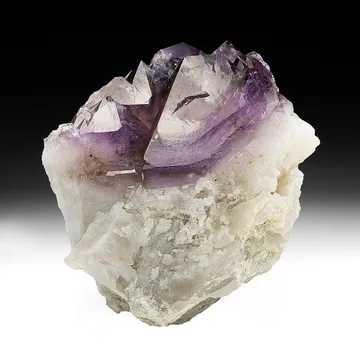
Calcite is widespread across Cantabria’s mineral localities but becomes collectible when it forms transparent, crystallographically complex crystals rather than ordinary white vein fill. At Áliva it is a prized accessory to sphalerite and dolomite, with documented specimens showing scalenohedral to complex crystals, sometimes doubly terminated or with internal phantoms, and Spanish accounts note large scalenohedral crystals from the third level associated with gem-quality sphalerite. Well-formed calcite from Las Mánforas is much scarcer than the sphalerite-dolomite combination and commands attention when it is clear, undamaged, and spatially balanced with caramel sphalerite. Reocín calcite is an accessory in the Zn-Pb system, while La Florida and related Cantabrian workings can produce attractive calcite on dolomite. The best pieces here are airy and sharply crystallized, with intact terminations, transparent faces, and a secure Cantabrian sublocality, because otherwise calcite from the region can be visually difficult to separate from many other Spanish carbonate occurrences.
Hemimorphite belongs to the oxidized-zinc chapter of Cantabria rather than the primary sulfide chapter. It is documented from numerous Cantabrian localities, including Reocín, La Cuerre in the La Florida area, Hermosa at Udías, Nieves at Viérnoles, and the Picos de Europa calamine zones, where miners historically used “calamine” for mixtures that could include smithsonite, hydrozincite, and hemimorphite. Typical Cantabrian hemimorphite is colorless, white, pale blue, or pale greenish in crusts, sprays, drusy coatings, or small bladed crystalline aggregates developed in oxidized cavities and fractures above or near sphalerite-rich ore. Strong collector pieces show a bright, glassy to pearly surface, distinct crystal texture rather than chalky alteration, and association with smithsonite, hydrozincite, cerussite, limonite, or old Zn-Pb matrix. Because attractive hemimorphite specimens are much less common on the market than Áliva sphalerite, precise mine attribution—especially Udías/La Florida versus Reocín or Áliva—is a significant part of their value.
Smithsonite from Cantabria is another product of sphalerite oxidation and is especially tied to the calamine-bearing parts of the old Zn-Pb districts, including Áliva, La Florida, Udías, Nieves, and Reocín. It is documented from many localities in the region and appears as earthy to lustrous crusts, botryoidal coatings, small rhombohedral crystals, and pale masses in white, cream, tan, gray, greenish, or brownish tones, commonly with hydrozincite, hemimorphite, iron oxides, cerussite, and residual sulfide matrix. The best Cantabrian smithsonites are not usually large world-class display pieces in the Tsumeb or Kelly sense; they are locality-suite specimens whose merit lies in sharp botryoidal texture, fresh luster, attractive pastel color, and clear association with a named Cantabrian mine. Ordinary pieces can be chalky and difficult to distinguish from hydrozincite-rich “calamine” without testing, so good labels and, for finer specimens, analytical confirmation are important.
Beyond these five collector staples, Cantabria has a long documented mineral list that includes galena, marcasite, pyrite, chalcopyrite, quartz, fluorite, cerussite, hydrozincite, aurichalcite, azurite, malachite, baryte, aragonite, gypsum, goethite, hematite, pyromorphite, rosasite, caledonite, beudantite, chalcophanite, cinnabar, and several scientifically interesting cave or alteration minerals. El Soplao is especially notable for zaccagnaite-3R, described as a new Zn-Al hydrotalcite polytype from the cave, and for manganese oxide minerals such as birnessite, ranciéite, and hausmannite in stromatolitic cave deposits. Reocín adds less familiar species for the specialist, including wurtzite and gudmundite records, while Nieves and Udías provide much of the region’s secondary lead-zinc-copper interest.
The first rule with Cantabria is to demand sublocality. “Cantabria, Spain” is useful regionally, but market value and mineralogical meaning change dramatically between Áliva, Reocín, La Florida, Udías, Nieves, and other mines. Older labels may say “Santander,” “Picos de Europa,” “Aliva,” “Las Manforas,” “Las Mánforas,” “Almanzora,” or “Reocin/Reocín,” and all should be interpreted carefully. For sphalerite, the critical distinction is Áliva gem crystal material versus Reocín banded ore; both are legitimate Cantabrian classics, but they are not interchangeable.
The main authenticity issue is mislabelling rather than systematic treatment. Áliva sphalerite has such a distinctive look that vaguely labelled orange-red sphalerite from Spain is sometimes assumed to be Las Mánforas when it may be from another Spanish Zn-Pb occurrence. Conversely, some old “Picos de Europa” labels may refer broadly to the district and not to a specific mine level or pocket. Strong provenance—old collection labels, Spanish dealer history, Mineralogical Record or Bocamina plate references, or clear match to known Áliva habit and matrix—adds real confidence.
Condition is crucial. Áliva sphalerite has high luster and complex crystal faces that show bruising readily; edge wear, contacted backs, cleaved rear faces, and small chips on the bright caramel faces are common. A few minor contacts are acceptable on old pieces, but front-facing damage strongly affects desirability. Sphalerite is relatively soft and has perfect cleavage, so it should be handled over a padded surface and never cleaned aggressively. Avoid acids around associated carbonates, and avoid ultrasonic cleaning, which can loosen cleaved sphalerite, calcite, or dolomite.
Reocín specimens require different care. Marcasite and pyrite can deteriorate if stored in humid conditions, and sulfate efflorescences may appear on unstable pieces from oxidizing sulfide-rich ore. Keep Reocín sulfide specimens dry, ventilated, and away from cardboard or wood that may trap moisture. If a piece shows active “pyrite disease” symptoms—sulfurous odor, powdering, cracking, or white/yellowish sulfate growth—isolate it from the rest of the collection.
Calcite and dolomite from the region are carbonate minerals and should be kept away from acids, including vinegar and many household cleaners. Hemimorphite and smithsonite are usually stable under normal cabinet conditions, but chalky calamine-zone material can be friable; do not scrub it. Hydrozinccite-rich coatings may fluoresce, and some calcite from Áliva has been reported with minor fluorescence under long- and short-wave ultraviolet light, but fluorescence is not the primary reason to collect this locality.
Market availability is uneven. Reocín ore specimens and small associated pieces appear regularly in Spanish and European material, though top-quality, well-documented examples are less common. Áliva sphalerite is far more competitive: the mines are closed, the district is protected, and the best pieces largely come from old collections. Fine transparent caramel crystals on white dolomite, especially with old labels or publication history, are now classic European specimens and should be evaluated accordingly. Hemimorphite and smithsonite from named Cantabrian mines are scarcer in the specimen trade and often appeal to suite builders more than to general display collectors.
The most romantic Cantabrian mineral story begins high in the Picos de Europa, where the mines of Áliva worked through a landscape better known for limestone peaks, snowfields, grazing animals, and mountain paths than for industrial ore. The deposits sat so high that mining could be seasonal, squeezed into the few months when snow and weather allowed men, tools, ore, and supplies to move. The old name Canal del Vidrio preserves a pre-industrial clue: galena from the area was collected and sold for use in pottery glaze, long before sphalerite became the valuable zinc mineral of the district.
When industrial mining reached Áliva in the mid-19th century, the ore soon revealed something beyond commercial zinc. The caramel sphalerite was extraordinary—transparent, honey-colored, and bright enough to be cut as gems. Spanish accounts describe Las Mánforas as a six-level mine reaching about 135 m vertically, with the best transparent sphalerite coming especially from the second, third, and fourth levels. The first level produced lower-quality caramel blende; the second yielded fine galena cuboctahedra on white dolomite with green twinned sphalerite; the third produced large scalenohedral calcites with gem-quality sphalerite. By the late 20th century, particularly between 1985 and 1989, industrial extraction and the recovery of specimens for collectors overlapped, giving the mineral world a final pulse of Áliva material before the mine closed.
One specimen became a local monument. The “Gran Blenda Acaramelada,” extracted from Las Mánforas, was celebrated as the largest known caramel sphalerite specimen of its kind and placed in the hall of the mining school at Torrelavega, near the Lorenzo Pfersich mineral collection. Contemporary descriptions dwell on its resinous luster, red reflections, great size, and perfect crystal faces—the sort of specimen that turns a mining school lobby into a shrine for collectors. Other accounts mention an enormous Áliva specimen once displayed by the Real Compañía Asturiana de Minas at Reocín, with an area of about one square meter covered by decimetric crystal faces.
Reocín tells a more industrial and human story. Ancient workings were known, but the modern chapter began in 1856, when Jules Hauzeur recognized the deposit that would become one of Europe’s great zinc producers. The mine grew from surface zinc carbonate workings into a large underground and open-pit operation, and the town lived with the orebody as both employer and threat. In 1965 a severe collapse affected underground levels and forced a return to open-pit extraction; Spanish accounts record damage in the settlement of Reocín, with part of the village disappearing and several hundred residents relocated, fortunately without fatalities in the mine or village. The later El Zanjón open pit changed the landscape again, and the orebody that had supported generations of miners ultimately left a vast void.
After Reocín closed, water wrote the last act. In November 2004 the pumps that had held back groundwater stopped. The mine void took nearly five years to fill, rising to about 60 m and becoming one of Cantabria’s largest artificial water bodies. For collectors who know Reocín as polished banded ore in a cabinet, the lake is a striking counterpart: the same carbonate-hosted Zn-Pb system, first opened by miners and then reclaimed by water, now visible as a changed landscape rather than a working mine.
El Soplao, tied to the La Florida mining area, adds a different kind of afterlife. The cave was discovered through mining activity in the early 20th century and later became famous not for ore specimens but for extraordinary speleothems—helictites, aragonite forms, stalactites, stalagmites, cave pearls, and “dog-tooth” spar. Scientific work there later described manganese stromatolites and the new zinc-aluminum hydrotalcite polytype zaccagnaite-3R. In Cantabria, mining did not simply remove minerals from the mountains; it also opened passages into mineral-forming environments that collectors, geologists, and visitors still study from very different angles.
Velasco, F., Herrero, J. M., Yusta, I., Alonso, J. A., Seebold, I., and Leach, D. (2003), “Geology and geochemistry of the Reocín zinc-lead deposit, Basque-Cantabrian Basin, Northern Spain,” Economic Geology, 98(7), 1371–1396 — Core technical paper on Reocín’s geology, ore textures, metal endowment, and MVT interpretation.
Symons, D. T. A., Lewchuk, M. T., Kawasaki, K., Velasco, F., and Leach, D. L. (2009), “The Reocín zinc–lead deposit, Spain: paleomagnetic dating of a late Tertiary ore body,” Mineralium Deposita, 44, 867–880 — Paleomagnetic study addressing the timing of Reocín mineralization.
Grandia, F., Canals, À., Cardellach, E., Banks, D. A., and Perona, J. (2003), “Origin of Ore-Forming Brines in Sediment-Hosted Zn-Pb Deposits of the Basque-Cantabrian Basin, Northern Spain,” Economic Geology, 98(7), 1397–1411 — Fluid-inclusion and brine-origin work relevant to Reocín and related Basque-Cantabrian Zn-Pb deposits.
Gómez Fernández, F., Both, R. A., Mangas, J., and Arribas, A. (2000), “Metallogenesis of Zn-Pb Carbonate-Hosted Mineralization in the Southeastern Region of the Picos de Europa (Central Northern Spain) Province,” Economic Geology, 95(1), 19–40 — Important paper on Áliva and Andara style mineralization, distinguishing dark brown sphalerite-galena-dolomite and toffee-colored sphalerite-galena-calcite assemblages.
Pašava, J., Tornos, F., and Chrastný, V. (2014), “Zinc and sulfur isotope variation in sphalerite from carbonate-hosted zinc deposits, Cantabria, Spain,” Mineralium Deposita, 49, 797–807 — Isotopic study of sphalerite from Cantabrian carbonate-hosted deposits including Áliva and La Florida.
Rossi, C., Lozano, R. P., Isanta, N., and Hellstrom, J. (2010), “Manganese stromatolites in caves: El Soplao (Cantabria, Spain),” Geology, 38(12), 1119–1122 — Scientific paper documenting unusual cave manganese stromatolites at El Soplao.
Lozano, R. P., Rossi, C., La Iglesia, A., and Matesanz, E. (2012), “Zaccagnaite-3R, a new Zn-Al hydrotalcite polytype from El Soplao cave (Cantabria, Spain),” American Mineralogist, 97(4), 513–523 — Type description of zaccagnaite-3R from El Soplao.
Sanabria Orellana, R., and García Álvarez, J. R. (2021), “The Áliva Mining District, Picos de Europa Mountains, Camaleño, Cantabria, Spain,” The Mineralogical Record, 52(4), 361–415 — Major modern English-language locality treatment of the Áliva district, cited by IGME and collector references.
Sainz de Baranda, B., and García García, G. (1996), “Famous Mineral Localities: The Picos de Europa Lead-Zinc Deposits, Spain,” The Mineralogical Record, 27(3), 177–188 — Classic English-language collector article on Picos de Europa lead-zinc deposits and gem sphalerite.
Gómez Fernández, F., Gutiérrez Claverol, M., Luque Cabal, C., and Calvo Rebollar, M. (2006), “Áliva, La blenda acaramelada,” Bocamina, 17, 12–112 — Major Spanish-language Áliva reference cited in IGME documentation.
Castro, A. M., Calvo, M., García, G., and Alonso, A. (2001), “La mina de Reocín (Cantabria),” Bocamina, 8, 12–66 — Principal Spanish collector-mineralogical article on Reocín, cited in the Museo virtual de mineralogía bibliography.
Sainz de Baranda, B., Ruiz, P., Carral, J., and Menor, C. (2009), “Mina ‘Nieves’, Viernoles (Cantabria),” Bocamina, 23, 14–45 — Specific reference for the Nieves Mine and its secondary mineral suite.
Calvo Rebollar, M. (various volumes), Minerales y Minas de España — Standard Spanish reference series repeatedly cited for Cantabrian species and mine records.
Piña de Rubíes, S., and López Azcona, J. M. (1937), “Relación entre el color y la composición espectroquímica de la blenda de Áliva (Picos de Europa),” Anales de la Sociedad Española de Física y Química, 35, 180–186 — Early study specifically addressing color and composition in Áliva sphalerite.
“Sphalerite with Dolomite from Las Mánforas Mine, Áliva mining area, Spain” — Fabre Minerals — Rotating video of a honey-colored sphalerite with dolomite from the classic Las Mánforas locality.
“Marcasite, Reocín, Spain” — Fabre Minerals — Short specimen video showing Reocín marcasite, a notable accessory mineral from the mine.
MTI Minas Cantabria: “Mina de Áliva (Mina Las Mánforas)” — Photo archive documenting visits to the Las Mánforas area across multiple years.
MTI Blog: “Mina Las Mánforas, Áliva, Camaleño, Cantabria” — Later MTI photo post with a documented 24 September 2005 visit by mineralogists.
Cueva El Soplao official site — Official visitor-media portal for the cave and mining landscape tied to the La Florida district.
Mindat: Cantabria, Spain — Best broad locality database page for Cantabria’s mineral list, sublocalities, photographs, and references.
Mindat: Áliva Mine, Camaleño, Cantabria, Spain — Essential locality page for Las Mánforas/Áliva sphalerite and associated species.
Mindat gallery: Áliva Mine — Useful visual comparison set for Áliva sphalerite habits, colors, dolomite matrices, and calcite associations.
Mindat: Reocín Mine, Reocín, Cantabria, Spain — Database entry for the giant Reocín Zn-Pb deposit and its mineral suite.
USGS Publications Warehouse: Reocín geology and geochemistry — Authoritative technical summary of Reocín’s deposit geology, ore controls, and metal endowment.
IGME IELIG: CV001 Yacimiento de Zn-Pb de Reocín — Spanish Geological Survey heritage record for Reocín, with geological description and dimensions.
Museo virtual de mineralogía: Reocín, Cantabria — Clear Spanish overview of Reocín’s geology, mining history, mineralogy, and post-mining lake.
Universidad de Salamanca: Mina de Reocín — Educational deposit page with ore-texture descriptions and Reocín specimen imagery.
IGME IELIG: CA123 Mineralizaciones de blenda y galena de Áliva — Key geological-heritage record for Áliva, Las Mánforas, Almanzora, access, protection, and specimen significance.
Mineralogical Record Vol. 27 No. 3, 1996 — Back-issue page for the classic “Famous Mineral Localities: The Picos de Europa Lead-Zinc Deposits, Spain.”
IGME collections bibliography page — Verifies the 2021 Mineralogical Record Áliva district article and related Spanish mineralogical references.
Wikimedia Commons: Sphalerite from Las Manforas Mine — Freely licensed photo of a classic gem sphalerite from Las Mánforas, with size and provenance notes.
Wikimedia Commons: Sphalerite and dolomite from Reocín — Freely licensed image showing typical Reocín sphalerite-dolomite ore texture.
Ayuntamiento de Udías: Patrimonio minero — Local heritage overview emphasizing Cantabria’s zinc-mining province and Udías mining remains.
Official El Soplao Cave site — Visitor and media resource for the cave system discovered through La Florida mining.