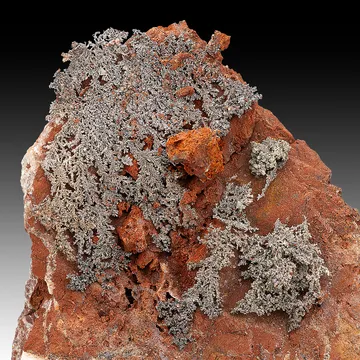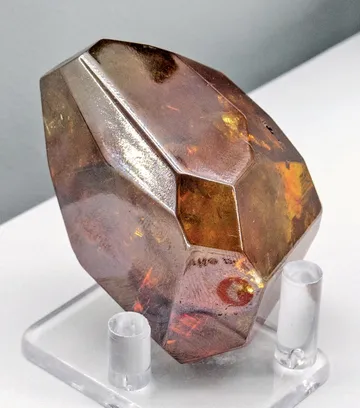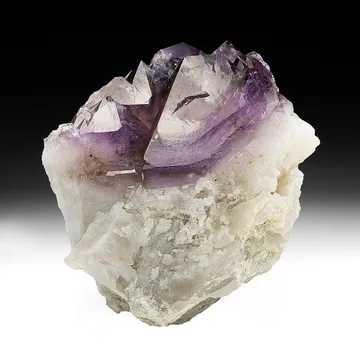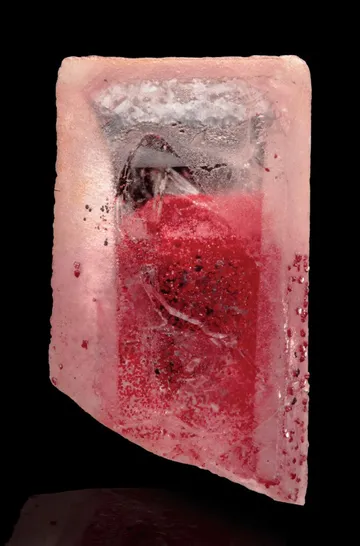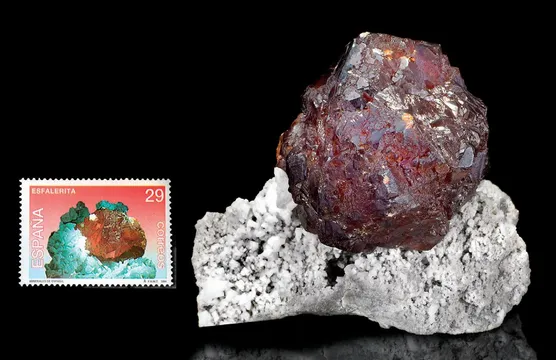
Áliva Mine, Spain - canonical Zn-Pb locality in the Picos de Europa, famed for gemmy caramel to honey-red sphalerite and classic carbonate-hosted crystals.
Key facts
Áliva is one of the canonical sphalerite localities of the mineral-collecting world: a high mountain zinc-lead mine in the Picos de Europa where a modest ore body produced a disproportionately important legacy of gemmy, honey-red “blenda acaramelada.” The mine lies in the Áliva mining area of Camaleño, in Cantabria’s Comarca Liébana, on the flank of Peña Vieja and within the rugged carbonate country of the Central Massif. Collectors know it under several labels—Áliva, Las Mánforas, Almanzora, Picos de Europa, and older “Santander” labels—but the classic specimen source is the Las Mánforas/Áliva operation, tied historically to the Almanzora concession.
Geologically, this is not a vein locality in the usual display-case sense. It is a carbonate-hosted Zn-Pb system developed in dolomitized Carboniferous limestones, with ore localized around contacts between limestone and dolomite, fractures, and cavities related to karstic porosity. The mineralization is famous above all for transparent to translucent sphalerite, but the full Áliva look is a matrix assemblage: warm caramel, orange-red, reddish brown, or more rarely greenish sphalerite on white to cream saddle dolomite, with calcite, galena, pyrite, chalcopyrite, fluorite, quartz, and superficial zinc carbonates and hydroxides completing the suite.
The best pieces have an instantly recognizable Spanish mountain character. Instead of isolated textbook tetrahedra, Áliva sphalerite commonly forms complex intergrown and twinned crystal groups with curved, lustrous faces and deep internal color. Backlit, the finest crystals glow like old amber, orange marmalade, cherry resin, or burnt sugar. Good specimens are judged by translucency, saturated color, intact lustrous faces, strong contrast on pale dolomite, and a sense of sculptural completeness; the great pieces from the 2nd, 3rd, and especially 4th levels belong among the most desirable sphalerites ever recovered.
Regional View
Country View
Áliva’s historical importance is twofold. Industrially, the mine formed part of the broader Picos de Europa zinc-lead mining province and was worked for ore across the nineteenth and twentieth centuries, with the highest production in the modern mining period. Mineralogically, it gave museums and private collections a benchmark for transparent sphalerite. Even faceted stones from Áliva are celebrated among gem collectors: beautiful, fiery, and fragile, admired more as collector gems than as practical jewelry stones.

Photo: Wikimedia Commons

Photo: Wikimedia Commons
Search for specimens: View all specimens from Áliva Mine, Spain
Áliva Mine is situated in the Central Massif of the Picos de Europa, in the municipality of Camaleño, Cantabria, at high elevation in alpine limestone terrain. The Spanish geological inventory places the mining area around 1,800 m altitude, with the broader geological-interest site spanning mountain ground between roughly 1,520 and 2,000 m. This physical setting mattered: snow, access, and weather restricted work to only part of the year, giving Áliva the character of a seasonal mountain mine rather than a continuously accessible industrial operation.
The deposit is a carbonate-hosted Zn-Pb mineralization in the Picos de Europa Unit of the Cantabrian Zone. The exploited body is described as an irregular mineralized zone roughly 200 by 400 m, locally up to about 20 m thick, developed at the contact between dolomitized carbonate and non-dolomitized limestone known in the Spanish literature as Caliza de Muro. Dolomitization increased porosity and prepared the rock for later hydrothermal mineralization; fractures associated with the Duje fault system provided structural pathways. In genetic terms, Áliva is usually discussed with Mississippi Valley-type or MVT-like carbonate-hosted systems, although Spanish sources also emphasize its epigenetic hydrothermal character and its relation to Permian fluid movement along late Hercynian structures.
The ore assemblage records multiple hydrothermal events. The earlier mineralization is represented by granular dark brown sphalerite with galena and dolomite. A later stage produced the collector-famous toffee or caramel sphalerite with galena and calcite. Later minerals include calcite, dolomite, fluorite, pyrite, and alteration products in the upper levels and oxidized zones. Fluid-inclusion and isotope work on the Picos de Europa Zn-Pb deposits indicates moderate-temperature brines, with trapping temperatures commonly reported in the 170–200°C range and salinities around 15 wt% NaCl equivalent. That technical story translates directly into specimen character: sphalerite grew in open spaces, cavities, replacements, and geodes in dolomitized carbonate, often with pale dolomite and calcite as the visual frame.
Historically, the lead story appears first. Galena in the Áliva area was known long before zinc became the industrial prize, and written records mention a 1557 license to work lead ore in the Puerto de Áliva. Local shepherds reportedly collected pieces of galena and sold them for use in pottery glazing; the memory of that use is tied to the name Canal del Vidrio. Modern industrial exploitation began in the mid-nineteenth century with the Compagnie Royale Asturienne des Mines, the Belgian-linked enterprise better known in Spanish mining history as the Real Compañía Asturiana de Minas. Other companies held or worked concessions in the Áliva area, including La Providencia, the Société Anonyme des Mines et Fonderies de Zinc de la Vieille Montagne, and the Compañía Minero-Metalúrgica Montañesa. By the early 1950s, the concessions had passed into the orbit of the Real Compañía Asturiana de Minas, which operated through subsidiaries including Carbones de La Nueva and Sociedad Minera Picos de Europa.
The mine was worked underground on six levels, connected in the modern period by a shaft of about 130 m. Total extracted rock-ore is commonly given as about 600,000 tonnes, with grades around 13% Zn and about 2% Pb. Production data before the Spanish Civil War are less secure, but modern accounts note daily and monthly outputs from mid-century operators and a peak period in the late 1970s, especially 1976–1978, when production exceeded 20,000 tonnes per year. Ore extraction continued until the summer of 1989. In the final years, particularly 1985–1989, industrial mining coexisted with deliberate recovery of specimens for the mineral-collector market, which is one reason some well-documented late-production Áliva pieces entered collections with comparatively good provenance.
The most important specimen zones were in Las Mánforas. The first five levels produced sphalerite-bearing geodes, but the 2nd, 3rd, and 4th levels are repeatedly singled out for the finest “blenda acaramelada.” The legendary 4th-level pocket complex known as La Geodona, associated in collector labels with the Galería Esperanza, produced large numbers of superb crystals and crystal groups, including floaters, red to honey-colored crystals, and specimens with white dolomite and calcite. The Almanzora workings, particularly the Zulema area of the Duje mining group, also produced crystalline sphalerite and remain part of the district’s specimen identity.
Today Áliva is a closed and protected old-production locality. The Las Mánforas access is blocked, parts of the workings are flooded or unstable, and the area lies within the protected Picos de Europa landscape. Remaining shafts, galleries, and cavities are hazardous. Serious collectors should regard Áliva material as historical: legitimate specimens come from old stocks, documented collections, museum holdings, and pieces recovered during the mine’s active life, not from casual contemporary collecting.
Áliva sphalerite is the locality’s glory: “blenda acaramelada” in transparent to translucent honey, toasted amber, orange-red, reddish brown, cherry-red, and rarer greenish tones, typically as complex twinned and interpenetrating crystals rather than simple isolated forms. Individual crystals can reach several centimeters, with classic accounts and documented specimens showing crystals around 10 cm and, in exceptional cases, larger crystals from the Geodona material; most collectible pieces are thumbnails to cabinet specimens, with the best combining deep internal color, resinous to adamantine luster, good transparency under backlight, and sharply presentable faces. The prime sources were Las Mánforas levels 2, 3, and 4, especially the 4th-level Geodona/Galería Esperanza finds, with sphalerite commonly on white saddle dolomite and sometimes with calcite, galena, or minor chalcopyrite. Ordinary Áliva sphalerite may be dark, contacted, broken, massive, or visually congested; top pieces are those with glowing color, undamaged high points, evident twinning, strong contrast on dolomite, and an old or well-documented locality label.
Dolomite is the essential Áliva matrix mineral and a major part of the locality’s visual signature, occurring both as massive carbonate and as white to cream, commonly curved saddle-shaped rhombohedral crystals with nacreous luster. Crystals are generally small to a few centimeters, with published locality summaries giving typical dolomite crystals up to about 2–3 cm; they line cavities, cover or partly coat sphalerite, and provide the pale contrast that makes honey-red sphalerite groups so desirable. Good Áliva dolomite is not judged as a stand-alone rarity so much as by its role in composition: snowy, fresh, lustrous saddles that frame sphalerite without smothering it elevate a specimen, while dull massive dolomite, iron-stained coatings, or overgrowths that obscure the sphalerite tend to make pieces more ordinary.
Calcite from Áliva occurs as a gangue and late-stage cavity mineral, most characteristically as milky, cream-white, yellowish, or honey-tinted translucent scalenohedra, sometimes modified by rhombohedra and in better examples showing complex or doubly terminated forms. Crystals can reach about 5 cm, though attractive, well-formed calcite is much less abundant in the market than sphalerite-dolomite combinations. It is found with dolomite, sphalerite, fluorite, galena, and pyrite; collector-grade pieces stand out when the calcite is sharp, lustrous, clean, and compositionally integrated with colored sphalerite, especially where transparent tips or internal phantoms add depth. Lesser examples are chalky, bruised, heavily coated, or visually indistinct against pale dolomite.
Galena is historically important at Áliva but far less abundant than sphalerite, occurring as cleavable masses and as metallic gray cubic to cuboctahedral crystals, locally with octahedral modifications, on dolomite and with smaller sphalerite. Most specimens show small crystals, but locality descriptions report crystals reaching several centimeters, with the better examples displaying crisp cuboctahedral form, bright metallic luster, and clean contrast against white dolomite. Galena is most attractive when it appears as discrete, well-positioned crystals in combination pieces—especially with honey sphalerite or fresh saddle dolomite—rather than as heavy, dull, massive ore. Because Áliva’s fame rests on sphalerite, fine galena combinations are scarcer and more specialized, and old labels naming Las Mánforas or Áliva add considerable interest.
Other documented minerals from Áliva include quartz, chalcopyrite, pyrite, fluorite, smithsonite, hydrozincite, hemimorphite, and scarce cinnabar; microscopic or rare sulfide-suite references include tetrahedrite and guadalcazarite. Purple to colorless fluorite is an occasional late mineral, generally as small cubes or coatings in fractures and cavities, while pyrite appears as small cubes or cuboctahedra and chalcopyrite as subordinate brassy grains or small crystals. The oxidized zinc minerals—smithsonite, hydrozincite, and hemimorphite—belong mainly to superficial alteration zones and are not the reason Áliva is collected. Áliva is not principally a type-locality destination; its mineralogical standing rests instead on world-class sphalerite aesthetics, the unusual abundance of gem-quality material, and the historical depth of its specimen record.
Áliva is a closed-locality classic, and the first authenticity question is always provenance. Specimens described as newly collected should be treated with caution: the mine closed in 1989, the principal access is blocked, the workings are dangerous, and the area is protected. Legitimate market pieces are old mine material, old dealer stock, recycled private-collection specimens, or material recovered during active mining—especially the final years when specimens were intentionally saved alongside ore production.
Mislabelling is common but often historically understandable. Older labels reading “Picos de Europa,” “Santander,” “Las Manforas,” “Mina Almanzora,” or simply “Áliva” may all refer to the classic locality, but they are not equally precise. “Picos de Europa” is a broad mountain region, and “Santander” is an older regional label rather than the modern locality format. The most collector-useful modern label is Áliva Mine or Las Mánforas Mine, Áliva mining area, Camaleño, Comarca Liébana, Cantabria, Spain. Conversely, not every Spanish gem sphalerite should be assigned to Áliva automatically; Troya and other Spanish sources exist, and good dealer or collection provenance matters.
No widespread, well-documented treatment tradition specific to Áliva mineral specimens is established in the collector literature. The more practical concerns are repairs, reconstructions, trimmed bases, and old contact damage. Sphalerite has perfect cleavage, low hardness, and brittleness, so even fine crystals may show cleaved corners, bruised ridges, rehealed-looking surfaces, or hidden repairs. Backlighting can reveal both beauty and problems: transparency, color zoning, and internal glow are positive, while fractures, glue lines, and cleavages can become more obvious under transmitted light.
Condition standards should be realistic but strict. Áliva crystals commonly grew in crowded, interpenetrating masses, and many were removed from industrial workings, so contacted backs and minor edge wear are normal. What hurts value is damage on the display face, dull luster, washed-out color, or dolomite coatings that obscure the sphalerite. A smaller, sharp, glowing honey-red specimen on clean white dolomite is often more desirable than a larger but dark, massive, or heavily damaged piece. Floaters and crystals from the Geodona with old labels are especially desirable.
Fluorescence is not a major selling point for the locality. Áliva specimens are usually bought for daylight color, luster, transparency, and association rather than UV response. Handling should be conservative: avoid ultrasonic cleaners, acids, vigorous brushing, and repeated handling of sharp high points. Store away from harder minerals that can scratch sphalerite, and mount larger crystals securely so their cleavage directions are not stressed.
Market availability is steady but finite. Áliva sphalerite appears regularly enough that specialists can be selective, yet the best pieces are increasingly locked in collections. Miniatures and thumbnails with honey to reddish color remain obtainable; large cabinet specimens, excellent floaters, richly crystallized Geodona pieces, and highly transparent red-orange crystals with documented old provenance are genuinely scarce. Dolomite and calcite combinations are less famous but can be excellent values when they show strong form and locality character, while galena-rich combinations are more specialized and comparatively uncommon.
Before Áliva became a name whispered by sphalerite collectors, it was a mountain place where lead had a simple use. Galena was known in the area by the sixteenth century, and in 1557 a license was granted to Luis de Salcedo to exploit a mine in the Puerto de Áliva. For a long time the ore did not lead to sustained industrial mining. The mountain was high, the weather was hard, the roads poor, and sphalerite itself had little practical use before zinc metallurgy made it valuable. Yet the galena had a village economy: shepherds picked up pieces and sold them for pottery glazing. That small trade lives on in the landscape name Canal del Vidrio—the channel of glass or glaze—where a mineral specimen and a household craft meet in one phrase.
The industrial chapter began in the mid-nineteenth century, when the Real Compañía Asturiana de Minas opened the modern zinc-lead story of Áliva. One early sign of the locality’s mineralogical importance came quickly: in 1862, the company was awarded at the London mining exhibition, largely because of the sphalerite specimens it presented. That date is striking. Áliva was not only an ore deposit that later became collectible by accident; its crystallized sphalerite was already being noticed internationally while Queen Victoria was on the British throne and the Picos workings were still young.
Áliva’s great paradox is that the difficult, almost awkward mining conditions helped save specimens. The ore occurred irregularly, in pockets, cavities, and replacements rather than in a simple continuous body. Work at roughly 2,000 m elevation could be seasonal and necessarily hands-on. In a more mechanized, lower-altitude mine, many crystal pockets might have vanished into crushers; at Áliva, the irregularity of the ore and the practical style of mining allowed many crystallizations to be recognized and recovered. Later, during the final years from 1985 to 1989, collecting and mining overlapped deliberately, so that some specimens escaped the fate of ore and entered the market with a clearer collecting history.
The great name inside the mine is La Geodona. In the 4th level, associated on labels with the Galería Esperanza, miners broke into an immense crystallized void that produced thousands of excellent pieces. Collector accounts describe floaters, richly crystallized groups, red crystals partly veiled by dolomite, and pieces large enough to make “caramel blende” feel like an understatement. One documented collector specimen from this zone is described with a 12 cm main crystal on a 17.5 × 13 cm piece, a scale that helps explain why Áliva became the world standard for transparent sphalerite rather than merely a charming Spanish occurrence.
The mountain also had its royal architecture. Near the workings stands the Chalet Real, built by the Real Compañía Asturiana de Minas in 1912 for Alfonso XIII’s hunting excursions in the Picos. It was not a crude hut: accounts describe a wooden structure with zinc roofing, three ground-floor sections, capacity for 18 beds, salons, attic, basement, heating, electricity, bathrooms, and running water—comforts that stood in dramatic contrast to the snowbound mine buildings and the seasonal toil of the miners. The chalet was inaugurated on September 3, 1912, when Alfonso XIII stayed there before hunting in the area; in the following days the royal party reportedly killed nearly a hundred chamois.
One of the most memorable industrial episodes came in 1950, when the Compañía Minero-Metalúrgica Montañesa carried out a huge blast at the foot of the Canal del Vidrio using 2,000 kg of explosives. The story belongs to ore mining rather than specimen collecting, but it captures the scale of ambition in a landscape that otherwise appears pastoral and alpine. Áliva’s surface can look almost like a place of grazing meadows and pale scree; beneath and beside it were shafts, haulage works, spoil dumps, treatment areas, company buildings, and a deposit valuable enough to bring explosives, capital, and international mining companies into the high Picos.
Even the old road has stories. Modern hiking accounts preserve the memory of a portal at El Boquejón, where trucks once passed on the way to the mines. One account tells of a truck climbing with its tipper raised; the raised bed struck the arch above the entrance, bringing it down on the vehicle and seriously injuring the driver. It is the sort of detail that makes a mining landscape human again: not only grades, levels, and tonnages, but mistakes, structures, roads, and the daily mechanics of moving ore out of an unforgiving mountain.
Gómez-Fernández, F., Both, R. A., Mangas, J., and Arribas, A. (2000). “Metallogenesis of Zn-Pb Carbonate-Hosted Mineralization in the Southeastern Region of the Picos de Europa (Central Northern Spain) Province: Geologic, Fluid Inclusion, and Stable Isotope Studies.” Economic Geology, 95, 19–40. The principal economic-geology paper on the regional carbonate-hosted Zn-Pb system, including Áliva and Ándara, with fluid-inclusion and isotope data.
Sainz de Baranda, B., and García García, G. (1996). “Famous Mineral Localities: The Picos de Europa Lead-Zinc Deposits, Spain.” The Mineralogical Record, 27(3), 177–188. The classic English-language Mineralogical Record treatment that placed the Picos de Europa sphalerites firmly in the international collector literature.
Sanabria Orellana, R., and García Álvarez, J. R. (2021). “The Áliva Mining District, Picos de Europa Mountains, Camaleño, Cantabria, Spain.” The Mineralogical Record, 52(4), 361–415. The modern major English-language article devoted to the Áliva mining district and its specimens.
Gómez Fernández, F., Claverol, M. G., Luque, C., and Calvo Rebollar, M. (2006). “La mina de Áliva. La blenda acaramelada de los Picos de Europa.” Bocamina, 17, 28–112. A major Spanish-language locality monograph repeatedly cited for the mine’s geology, mineralogy, and specimen history.
Calvo Rebollar, M. (2003). Minerales y Minas de España, Vol. II: Sulfuros y sulfosales. Museo de Ciencias Naturales de Álava, Vitoria, 705 pp. Standard Spanish reference work for sulfides and sulfosalts, cited in locality summaries for Áliva’s sphalerite and galena.
Orellana, R. S., and Álvarez, J. R. R. (2005). “Les sphalérites d’Aliva, Picos de Europa (Espagne).” Le Règne Minéral, 63, 6–27. French-language article focused on the locality’s sphalerites.
Orellana, R. S., and Álvarez, J. R. R. (2005). “Aliva, Picos de Europa (Espagne).” Revista de Minerales, 2(6), 1–38. Spanish collector-oriented locality treatment.
Jordá Bordehore, R., and Jordá-Bordehore, L. (2011). “Propuesta de itinerario geominero en las minas de Áliva (Parque Nacional de Picos de Europa, Cantabria).” De Re Metallica, 16, 31–42. A geominero itinerary proposal documenting the mining landscape and heritage context.
Jordá Bordehore, R. (2015). Inventario y propuesta de puesta en valor del patrimonio geológico-minero de las minas del Macizo Central de los Picos de Europa (Cantabria). Ph.D. thesis, Universidad Complutense de Madrid, 521 pp. Extensive doctoral work on the geological-mining heritage of the Central Massif mines, including Áliva.
Smithsonian National Museum of Natural History, National Gem Collection: Sphalerite, NMNH G10695, Spain, 214.21 ct. A major faceted Spanish sphalerite in a leading public gem collection, illustrating the collector-gem importance of the material.
“Sphalerite with Dolomite from Las Mánforas Mine, Áliva mining area, Spain” — Fabre Minerals. Rotating specimen video of a honey-colored translucent sphalerite crystal with dolomite from Las Mánforas.
“Photo gallery” — Gem-Sphalerite.com / Egor Gavrilenko. A photographic and video visit to the Las Mánforas mine area made in August 2013, including approach views, mine views, and the Picos de Europa setting.
Mindat: Áliva Mine, Camaleño, Cantabria, Spain — Essential locality database page with alternate names, mineral list, references, and specimen photos.
IGME IELIG CA123: Mineralizaciones de blenda y galena de Áliva — Spanish Geological Survey inventory page with geology, access, heritage, protection, production context, and documented references.
Economic Geology abstract: Metallogenesis of Zn-Pb carbonate-hosted mineralization in the southeastern Picos de Europa — Technical source for the regional deposit model, hydrothermal stages, fluid inclusions, and isotope interpretation.
Mineralogical Record Vol. 27, No. 3, 1996 — Back-issue page for the classic “Famous Mineral Localities” article on the Picos de Europa lead-zinc deposits.
Mindat reference: The Áliva mining district, Picos de Europa Mountains, Camaleño, Cantabria, Spain — Reference entry for the 2021 Mineralogical Record article by Raúl Sanabria Orellana and José Ramón García Álvarez.
Wikimedia Commons: Sphalerite-266262.jpg — Rob Lavinsky photograph of a classic orange-red sphalerite from Las Mánforas / Áliva.
Wikimedia Commons: Galena Aliva.jpg — Miguel Calvo photograph of cuboctahedral galena with dolomite and sphalerite from Áliva.
GIA: “Unique Sphalerite from Spain” — Gemological note on unusual Spanish sphalerite and the broader reputation of Cantabrian material for facet-grade stones.
Smithsonian National Museum of Natural History: Sphalerite, NMNH G10695 — Public record for a 214.21 ct Spanish sphalerite in the National Gem Collection.
Gem-Sphalerite.com — Specialist site devoted to Áliva sphalerite, with mineralogy, gem information, and locality media.