Sils, Spain — Catalan locality famed for smoky quartz and amethyst from Massabè pegmatites; architectural quartz with microcline matrix prized by collectors.
Key facts
Sils is one of those Catalan localities whose reputation rests on a very specific look: smoky quartz and amethyst from pegmatitic cavities in the Mas Sever, or Massabè, quarry area. The collector locality sits in the municipality of Sils, in La Selva, Girona, where Hercynian granite is cut by granite pegmatite dikes and accompanied by a Miocene basaltic neck. It is not a classic ore mine in the metallic sense; its importance comes from quartz pockets exposed by aggregate quarrying and nearby railway-related works, which briefly opened cavities rich enough to give Catalan collectors specimens that still circulate as modern classics.
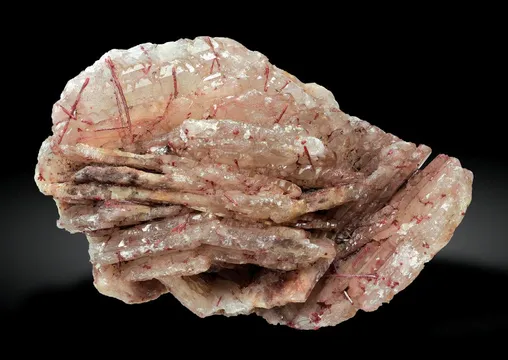
The celebrated pieces are architectural rather than merely colorful. The best Sils quartz shows smoky basal or earlier growth supporting amethyst caps, scepter development, parallel uniaxial growth, doubly terminated crystals, phantoms, and bright luster. Microcline matrix is a major part of the locality’s identity: cream, salmon, or pinkish feldspar plates and blocky crystals give the quartz the contrast and geometry that make a specimen unmistakably “Massabè.” Fine examples can be small-cabinet to cabinet size, with individual crystals commonly in the few-centimeter range, while older dealer and museum records document larger groups that show why the locality is treated as a Catalan classic rather than a mere quartz occurrence.
Regional View
Country View
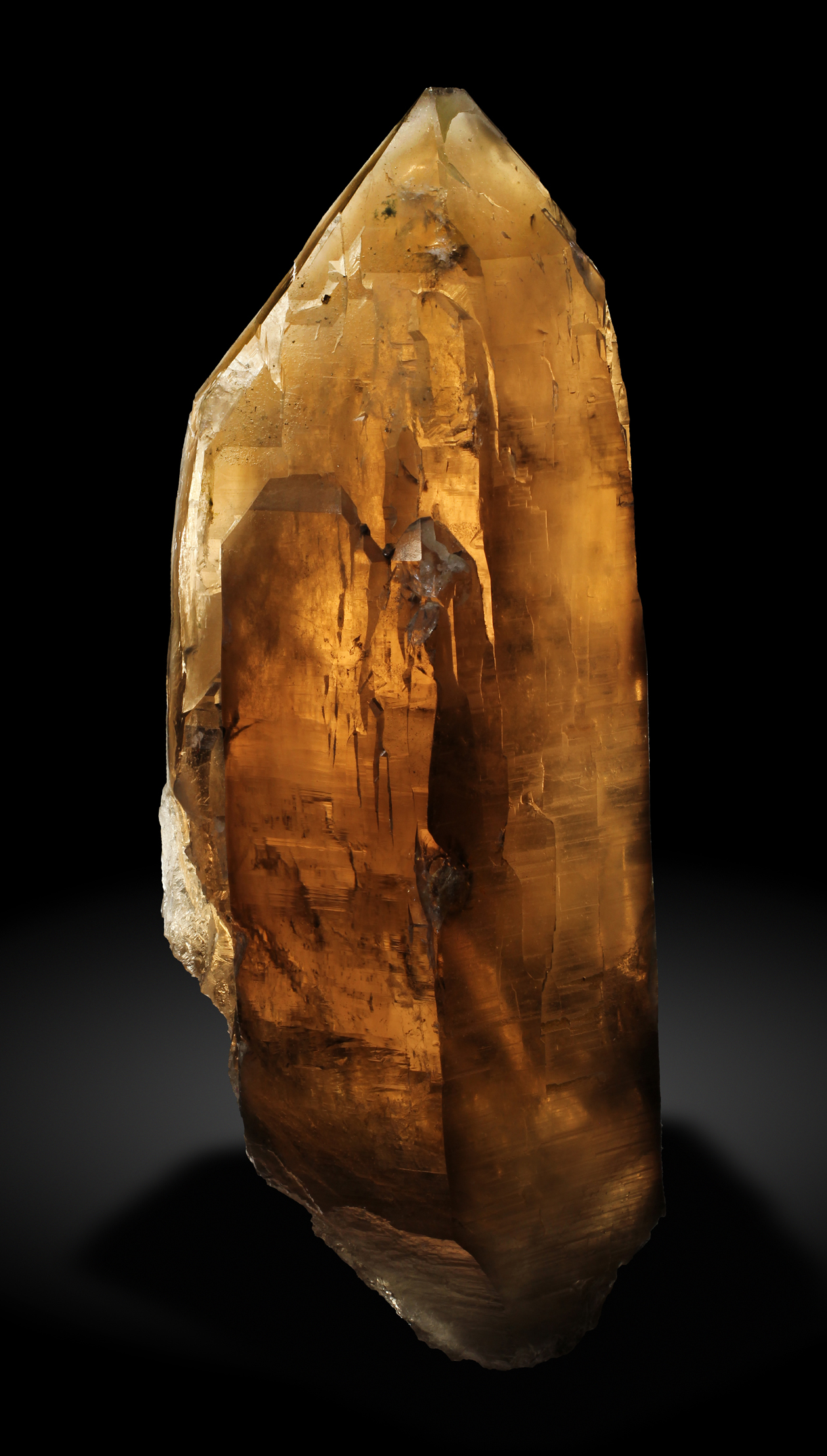
Photo: Wikimedia Commons
The locality’s historical moment came in the early 2000s. Collectors had already known the Massabè quarry area, but new exposures related to quarrying and the Barcelona–French frontier railway works reportedly opened fresh pegmatitic cavities. From roughly 2003 to 2008, and with individual pieces recorded from 2001, 2004, 2005, 2007, 2008, 2010, and later, the site yielded the specimens that fixed its reputation: amethyst scepters on smoky quartz, smoky quartz on microcline, and sharply twinned microcline crystals with quartz, albite, and mica.
Search for specimens: View all specimens from Sils, Spain
The collector name “Sils” generally points to the Mas Sever quarry at Massabè, also encountered on labels as Massabé, Can Massabé, Mas Ceber, Mas Sober, Mas Sabé, or Pedrera Mas Sabé. The quarry lies a short distance west-southwest of the town of Sils, in the comarca of La Selva, Girona. The broader municipality appears on many labels because fine pieces were distributed under simplified locality names, but the most important specimen-producing place is the Mas Sever/Massabè quarry complex and its nearby railway-work exposures.
Geologically, the occurrence is a granite-pegmatite pocket locality. Hercynian granite forms the host rock, and pegmatitic dikes and cavities within that granite provided open space for quartz, feldspar, albite, mica, and minor accessory minerals. A Miocene basaltic neck is also recorded at the quarry, giving the immediate area a mixed igneous character typical of this part of northeastern Catalonia, where older crystalline basement and younger volcanic activity occur close together. The specimens, however, are chiefly pegmatite-cavity products rather than basalt-vesicle minerals.
There are no ore bodies in the sense of a mined metal deposit. The quarry exploited aggregate stone, and specimen mineralization was exposed incidentally in productive faces, blocks, and cavities. Quartz is the signature mineral: smoky quartz, amethyst, milky quartz, and color-zoned combinations all occur. The most desirable quartz grew with microcline, often on feldspar matrix, and some specimens also include albite and mica. The quarry’s documented mineral list is compact: albite, almandine, biotite, epidote, manganese oxides, mica-group minerals, microcline, muscovite, nontronite, opal including hydrophane and precious opal, quartz and its amethyst, milky, and smoky varieties, and spessartine. Some older or casual labels using orthoclase should be treated cautiously; the feldspar for which the locality is known is generally microcline, and locality databases explicitly flag orthoclase as an incorrect entry for Mas Sever.
The mining and collecting history is modern. Local collectors were examining new quarry walls in the Massabè area by the early 2000s, and a second exposure roughly 500 meters to the north, opened during railway construction, reportedly produced particularly good smoky quartz, amethyst, and microcline. The most often cited productive years for high-grade collector material cluster around 2003–2008, with notable individual dealer records from October 2004, October 2005, September 2007, 2008, and later. Public records also identify Mas Sever i Amp. or Mas Sever 04 as an extractive activity tied to Pedrera Mas Sabé SL, including environmental and restoration documentation in the 2010s and early 2020s.
Access today should be approached as private quarry access, not casual public collecting. Historic collecting took place during active quarrying and construction exposures, but quarry conditions, ownership, legal access, and safety change over time. Spanish and Catalan collectors have described the main workings as closed to casual entry at times, while later field comments mention occasional collecting of smoky and white quartz but little amethyst. Serious collectors should assume permission is required, should never enter working faces or fenced areas without authorization, and should understand that the pockets that made the locality famous were episodic rather than continuously productive.
The notable finds were pegmatitic cavities, not broad mineralized zones. The pockets produced doubly terminated smoky crystals, amethyst scepters, smoky-amethyst combinations, and microcline-rich matrix pieces. The finest material is visually consistent: smoky lower growth, violet amethyst concentrated toward rhombohedral terminations, sharp scepter caps, and feldspar matrix that looks like part of the composition rather than a broken afterthought.
Quartz from Sils is prized for the Massabè habit: smoky quartz crystals, amethyst caps, scepters, doubly terminated individuals, phantom zoning, and parallel growths arranged on microcline-rich pegmatite matrix. The color is often not uniformly purple; the best pieces show smoky prism zones or bases with amethyst strongest in the rhombohedral terminations, a pattern noted in museum and dealer descriptions and seen in many classic specimens. Sizes range from thumbnail and miniature scepters to small-cabinet and cabinet groups, with documented examples including single smoky crystals around 8.5 cm tall and quartz-amethyst-microcline groups over 10 cm across. Ordinary pieces are simple smoky or milky quartz, sometimes worn or broken from quarry handling; good Sils pieces have crisp luster, undamaged terminations, visible zoning or scepter construction, and enough microcline or albite matrix to show their pegmatitic origin unmistakably.
Other documented minerals from Sils are fewer but important for understanding the locality. Microcline is the essential associate and, in good examples, a collectible species in its own right, including sharp twinned crystals and Baveno-twin habits recorded by Spanish dealers and collectors. Albite occurs with microcline and smoky quartz, while mica and muscovite appear as accessory pegmatite minerals. Spessartine is recorded from Mas Sever and is a notable pegmatite rarity for the locality, though not the mineral that drives the market. Epidote, almandine, biotite, manganese oxides, nontronite, and opal varieties are also recorded from the Sils municipality or its sublocalities. The locality is not significant as a type-locality suite; its importance is aesthetic and historical, centered on a narrow but distinctive quartz–microcline assemblage.
Sils specimens are most often mislabelled through place-name confusion rather than outright fakery. Labels may read Massabè, Massabé, Mas Ceber, Mas Sabé, Mas Sober, Can Massabé, or simply Sils, Girona. Most refer to the same quarry district, but collectors should preserve old labels because they capture the complicated local naming history. For precise modern cataloguing, “Mas Sever Quarry, Massabè, Sils, Girona, Catalonia, Spain” is the most useful form, with historic aliases retained in notes.
The other persistent labelling issue is feldspar identity. Some older Spanish or dealer descriptions used orthoclase, but mineralogical locality data and collector discussion have corrected the key feldspar from Mas Sever to microcline. A specimen labelled “amethyst with orthoclase, Massabè” is not necessarily wrong as a historic label, but it should be reviewed; in most serious catalogues it belongs under quartz with microcline.
No well-documented locality-specific fakes or treatments are known as a defining problem for Sils material. The natural color style actually helps authentication: smoky lower growth, violet zoning toward terminations, phantoms, and uneven amethyst distribution are expected. Be wary of unnaturally uniform purple, dyed-looking cracks, or polished/decorative material sold without a detailed locality label, but the collector market for Sils has mainly been specimen-driven and provenance-driven, not treatment-driven.
Condition matters sharply. Many crystals came from quarry faces, blast rock, or construction exposures, so bruised terminations, cleaved bases, feldspar edge damage, contacted backs, and small rehealed-looking or recrystallized areas are common. Scepter heads and doubly terminated crystals are the first places to inspect. Luster can vary from bright glassy faces to alternating bright and matte faces, and that variation is natural for the locality; damage should not be confused with ordinary growth texture.
Rarity is tiered. Smoky quartz from Sils remains obtainable, especially as older collection material or modest loose crystals. Amethyst scepters on smoky quartz, sharply composed quartz-on-microcline groups, and cabinet-size classic pieces are much less available and command attention when accurately labelled. The best pieces tend to have early-2000s provenance, old Spanish collection labels, or dealer documentation from the years when the pockets were fresh.
The story collectors repeat begins with a quarry wall and a railway. Around the mid-2000s, Catalan collectors were already familiar with the Massabè quarry near Sils, but new work connected with the Barcelona–French frontier railway changed the scale of the find. According to a contemporary collector account, several local collectors first examined new working walls in the Massabè quarry and found attractive crystals. Then, about 500 meters to the north, they visited a newly opened quarry connected with the railroad works. There the pegmatitic cavities were better, and the specimens suddenly improved: smoky quartz, amethyst, and microcline “ever seen” from the area, in the excited phrasing of the time.
For several months, collectors returned to the fresh exposures and brought out what one forum participant described as the largest quantity they could remember. The appeal was not simply that amethyst had appeared; it was that the amethyst sat in a Catalan pegmatite style, with smoky quartz and feldspar. In one 2007 account, the microcline was considered interesting enough crystallographically that Carles Curto, curator of the Barcelona Natural History Museum, was said to be working on describing it. That small detail is telling: Massabè was not just a pocket of purple quartz for casual collecting, but a locality where serious collectors were looking closely at growth, twinning, and matrix relationships.
The published and dealer-recorded specimens from those years read like snapshots of the productive interval. A 2004 piece showed parallel growths and pronounced scepters, some crystals doubly terminated. An October 2004 miniature carried a translucent, intensely colored amethyst scepter on microcline. A 2005 amethyst was noted for deep color. A 2007 microcline specimen bore doubly terminated, transparent, lustrous smoky quartz with white albite and mica. By 2008, dealer descriptions were still recording amethyst scepters embedded in smoky quartz, and later fair catalogues continued to present the locality as a Catalan classic.
The place-name story is almost as collectorly as the crystals. Labels travelled through Massabè, Massabé, Mas Ceber, Mas Sabé, and Mas Sober, sometimes as if they were different localities, sometimes as if they were merely spelling variants. A Spanish mineral blog traced the naming back through local pronunciation and historical usage, arguing that the modern quarry name, the local vulgar form, and the older farmhouse name had become tangled on specimen labels. For collectors, the practical lesson is simple: do not discard a confusing old Massabè label. It may be exactly the kind of historic evidence that ties a quartz scepter to the original early-2000s find.
Carles Curto et al. (2007), “Amethyst and smoky quartz in the Massabe quarry,” Mineral Up, June 2007 / Vol. I, No. 3. A key locality article cited by Mindat and collector indexes for Mas Sever quartz, milky quartz, and associated minerals. Mindat reference record
Miguel Calvo Rebollar (2016), Minerales y Minas de España. Vol. VIII. Cuarzo y otros minerales de la sílice. Fundación Gómez Pardo, Escuela Técnica Superior de Ingenieros de Minas de Madrid. Cited for the large amethyst and smoky quartz crystals from Mas Sever. Mindat Mas Sever locality record
Miguel Calvo Rebollar (2018), Minerales y Minas de España. Vol. IX. Silicatos. Fundación Gómez Pardo. Cited for spessartine and silicate minerals from the Mas Sever quarry. Mindat Massabè locality record
Miguel Calvo Rebollar (2009), Minerales y Minas de España. Vol. IV. Óxidos e hidróxidos. Fundación Gómez Pardo. Relevant to erroneous and corrected oxide listings in the Mas Sever/Sils mineral list. Mindat Sils locality record
Museu d’Arenys de Mar, Minerals de Catalunya. Includes catalogue specimen no. 9452, a characteristic Massabè amethyst quartz from Sils, 6 x 5.5 x 4 cm and 163 g, described with smoky prism zones, amethyst rhombohedral faces, parallel growth, and probable microcline. Museum catalogue PDF
Wikimedia Commons file record for an 8.5 cm smoky quartz crystal from Mas Sever quarry, collection Miguel Calvo, photo Joaquim Callén. Useful as a freely accessible reference image for the locality’s smoky quartz style. File:Cuarzo ahumado sils.jpg
Mindat — Sils, Girona, Catalonia, Spain — The broad locality page for the municipality, including the recorded mineral list and sublocalities.
Mindat — Mas Sever Quarry, Massabè, Sils — The most important locality record for the quarry, with geology, aliases, coordinates, and the Mas Sever mineral list.
Mindat — Quartz from Sils, Girona, Catalonia, Spain — Quartz occurrence page with photo statistics and associated mineral data.
Mindat — Amethyst from Mas Sever Quarry — Species occurrence page documenting amethyst quality and associations at Mas Sever.
Friends of Minerals Forum — Very nice Amethyst in the Railroad Works in North of Spain — Contemporary collector discussion of the railway-work finds and early collecting history.
Foro de Mineralogía Formativa — Cantera Massabé en Sils — Spanish-language field discussion with access comments and later collecting observations.
El Mineral Digital — Etiquetar Massabé. Errores y cambios de toponimia. Cataluña — Valuable explanation of the Massabè, Mas Sabé, Mas Ceber, and Mas Sober label problem.
Rosell Minerals — Girona listings — Dealer archive with Massabè quartz and microcline examples, including notes on availability and classic status.
Fabre Minerals / Expominerals — Mas Sever quartz examples — Dealer archive showing dated Massabè amethyst, smoky quartz, and microcline specimens.
Wikimedia Commons — Cuarzo ahumado sils.jpg — Open image record for an 8.5 cm smoky quartz crystal from Mas Sever.
Minerals de Catalunya — Museu d’Arenys de Mar catalogue PDF — Includes a documented museum-quality Massabè amethyst quartz specimen and descriptive Catalan text.