






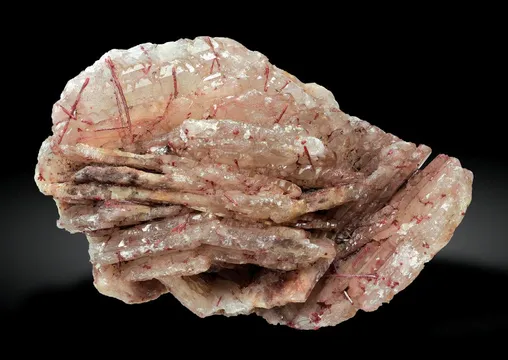
Ciudad Real, Spain - Almadén mercury district yields cinnabar-rich specimens with dense red crystals, native mercury, and rare Hg sulfides, prized by collector…
Key facts
Ciudad Real is one of those locality names that, for mineral collectors, really means a constellation of places rather than a single point on a map. At its mineralogical center stands the Almadén mercury district in the southwest of the province, a world-class cinnabar field developed in the Almadén Syncline of the Central Iberian Zone. Here, Lower Silurian “Cuarcita del Criadero” quartzites and associated volcanic and volcaniclastic rocks host the greatest mercury concentration known on Earth: the Almadén mine itself, El Entredicho, Las Cuevas, Vieja Concepción, Nueva Concepción, Guadalperal, and Nuevo Entredicho form the classic district that made Ciudad Real synonymous with cinnabar, mercury, and vermilion.
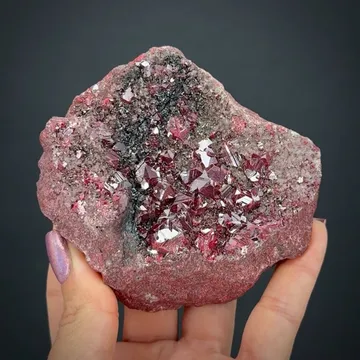
For specimen collectors the great attraction is not merely scale, but character. The best Almadén and El Entredicho pieces combine dense, heavy, blood-red to cherry-red cinnabar with quartz, dolomite, barite, calcite, native mercury, metacinnabar, and, in the richer modern finds from El Entredicho, a remarkable suite of Hg-Cu-Ni-Co sulfides. Good crystals are commonly small, but they have presence: sharp rhombohedra, striated faces, twinned crystals, tabular hexagonal forms, and lustrous red crystals set into white or cream carbonate gangue. The finest old Almadén pieces have the unmistakable look of a classic European mine specimen: compact, weighty, dark matrix blazing with saturated red, sometimes brightened by tiny liquid mercury droplets in vugs.
Regional View
Country View
Almadén’s importance reaches well beyond cabinet mineralogy. Cinnabar from this district was used as a red pigment in antiquity, mined by Romans and Arabs, leased in the early modern period to powerful financial houses, and later tied directly to the transatlantic silver economy because mercury was essential to amalgamation. The mine and its associated industrial landscape are now part of the UNESCO “Heritage of Mercury. Almadén and Idrija” World Heritage property, and the IUGS has recognized the giant Almadén mercury deposit of the syncline among the first 100 Geological Heritage Sites.

Photo: Wikimedia Commons

Photo: Wikimedia Commons
Search for specimens: View all specimens from Ciudad Real, Spain
The collector’s Ciudad Real is dominated by the Almadén mining district, situated in the southwest of the province near the northern foothills of Sierra Morena. Geologically, the district lies in the southern Central Iberian Zone of the Iberian Massif, in a WNW-ESE-trending Almadén Syncline. The stratigraphic pile is Lower Paleozoic, chiefly siliciclastic rocks, with Ordovician to Devonian units folded and sheared during Variscan deformation. The famous ore-bearing unit is the “Cuarcita del Criadero,” a quartzitic formation of Upper Ordovician to Lower Silurian age in the broad regional usage of the district, with the principal mercury ore in well-defined Lower Silurian quartzite levels.
The mercury mineralization is commonly described in two main styles. The first is the great stratabound Almadén-type mineralization: cinnabar disseminated through, and filling joints and small fissures in, the Criadero quartzite. At the Almadén mine this ore was developed in three principal mineralized banks or seams known as San Pedro, San Francisco, and San Nicolás. El Entredicho, the second major deposit of the district, developed analogous lower and upper ore banks on a more modest scale. This ore can be visually austere as rock, but in specimen terms it provides the classic massive cinnabar matrix that hosts the red crystals and native mercury droplets for which Almadén is famous.
The second style is discordant stockwork and replacement mineralization, especially associated with altered volcanic and volcaniclastic rocks. The district’s “Roca Frailesca,” a basaltic breccia-tuff or diatreme-like rock, is one of the key lithologies in the story. Cinnabar occurs in veins, stockworks, and replacements in and around such volcanic rocks, along with carbonate alteration assemblages including calcite, dolomite, ankerite, and siderite. Nuevo Entredicho and Las Cuevas belong particularly to this stockwork-replacement world, while Almadén and El Entredicho define the classic stratabound model.
The main Almadén mine is the giant. It is the largest mercury deposit known, and the district has produced more than 35% of the mercury used in human history. One widely cited figure for Almadén itself is about 7,000,000 flasks, approximately 241,500 metric tons of mercury, at an average grade around 3.5% Hg. Mining activity in the comarca reaches back to antiquity, with cinnabar valued first as a pigment before mercury itself became strategically important. During the Islamic period the mine’s name entered history through Arabic mining terminology; later it passed through the Order of Calatrava, the Spanish Crown, private leases, the Fuggers, the Rothschild mercury monopoly, state administration, and finally the modern public company Minas de Almadén y Arrayanes, S.A. Mercury mining ended in the early twenty-first century, and the great mine has since been transformed into the Parque Minero de Almadén, inaugurated in 2008.
For collectors, the more modern specimen story is especially tied to El Entredicho, an open pit near Almadenejos. The pit operated for roughly twenty years and became a favorite of Spanish collectors and mineralogists because its benches, stockpiles, and dumps yielded not only attractive cinnabar and metacinnabar crystals, but a suite of rare mercury minerals and Hg-Cu-Ni-Co sulfides exceptional for Spain. During exploitation and dismantling of the installations, material from benches and ore-storage areas could be examined, allowing numerous specimens to enter private and institutional collections. The most notable collecting zones were associated with dolomite-carbonate pockets, barite-bearing material, quartz and faden quartz, tuffaceous volcanic rock, and areas close to copper-bearing mineralization where cinnabar overgrew, replaced, or coated chalcopyrite, grimmite, and gortdrumite.
Today, field collecting in the main historic mining areas should be approached as a heritage, safety, and access issue rather than an open-dump opportunity. The Almadén complex is a protected cultural and geological landscape, and the former mines include underground workings, open pits, altered mercury-bearing waste, and museum or industrial-heritage zones. Specimens on the market chiefly come from old collections, material recovered during the active mining and dismantling periods, and long-dispersed Spanish dealer stock.
Ciudad Real is not only Almadén. The province also includes the historic silver-lead mining district of Minas del Horcajo in Almodóvar del Campo, known to collectors for silver, lead, copper, and secondary species from an old Sierra Madrona mining settlement. The Campo de Calatrava volcanic field has produced zeolites and related cavity minerals, including gismondine-Ca, lévyne-Ca, amicite, and hydroxyapophyllite-(K) at localities such as El Arzollar, Cerro Moreno, and the Herrerías volcano. Still, for worldwide collectors, Ciudad Real’s defining mineral identity remains cinnabar from the Almadén district.
Ciudad Real cinnabar is the Almadén district’s signature species and the reason the province occupies such a high place in mineral history. At the old Almadén mine, the classic material is deep red to blood-red cinnabar in massive ore, in vugs, and as sharp rhombohedral crystals, commonly with quartz, dolomite, calcite, barite, pyrite, and native mercury. El Entredicho added a more modern collector chapter: most crystals are in the 1-5 mm range and only exceptionally exceed 1 cm, but they occur in a wide variety of forms, including rhombohedra, contact and penetration twins, richly striated crystals, tabular hexagonal crystals, thin flattened plates, rounded-face crystals on frailesca-related material, spherical aggregates about 3-4 mm across, and rarer aberrant, vermiform, or acicular habits. Particularly desirable pieces show bright, lustrous, translucent red crystals well isolated on pale dolomite or quartz, cinnabar inclusions in barite, quartz, or dolomite, or native mercury droplets in vugs; ordinary pieces are usually compact massive ore with little crystal definition, though even those carry the unmatched historical weight of Almadén.
Other documented Ciudad Real minerals broaden the locality far beyond a one-species entry. Native mercury is an essential companion at Almadén and El Entredicho, occurring as droplets and, in some zones, as significant fracture and fault fillings. Metacinnabar is a major collector species from El Entredicho, with excellent crystals and twins; early literature also discussed Zn-rich “guadalcazarite”-type material in the broader Entredicho-Valdeazogues setting. El Entredicho is now a world reference for rare Hg-associated species including calomel, eglestonite, schuetteite, montroydite, hannebachite, uricite, and mercury-bearing jarosite assemblages, and it has yielded outstanding Spanish examples of gortdrumite, donharrisite, millerite, grimmite, chalcopyrite, dolomite, aragonite, ankerite, barite, and faden quartz. The rare Hg-Cu-Ni-Co assemblage in tuffaceous volcanic rocks is particularly important: grimmite occurs as tiny metallic-gray cubo-octahedral crystals, commonly with chalcopyrite and sometimes coated by cinnabar; gortdrumite forms blackish to gray striated prismatic crystals; and some El Entredicho examples rival the best worldwide material for their species. Elsewhere in Ciudad Real, the Horcajo mines add silver-lead-copper species such as galena, sphalerite, chalcopyrite, bournonite, cerussite, pyromorphite, and related secondary minerals, while the Campo de Calatrava volcanoes contribute a very different suite of zeolites and silica-rich cavity minerals.
Almadén and El Entredicho specimens are highly collectible, but locality precision matters. Old labels may say simply “Almaden,” “Almadén,” “Almadén Mine,” “Almadén district,” or “Ciudad Real,” and those labels are not interchangeable. Almadén Mine material is the historic classic; El Entredicho specimens are often more modern, more diverse in associated species, and more likely to show microcrystal parageneses of metacinnabar, calomel, grimmite, gortdrumite, or other rarities. Confusion with New Almaden in California is also common in casual listings, so accents, country, and old collection labels should be checked carefully.
The principal authenticity issue is over-localized labeling. A massive cinnabar specimen from “Almadén” may be genuine district material but not necessarily from the Almadén mine sensu stricto. A specimen sold as “El Entredicho” should ideally have provenance from Spanish collections or dealers active during the open-pit and dismantling periods, especially if it carries rare species identifications. For grimmite, gortdrumite, donharrisite, mercury-bearing jarosite, hannebachite, montroydite, eglestonite, uricite, and similar micros, visual identification alone is not sufficient; Raman, SEM-EDS, XRD, or a credible analytical history should be expected.
Condition is a serious consideration. Cinnabar is soft and dense, and crystals can chip along edges, lose luster from abrasion, or detach from friable carbonate or quartzite matrix. Almadén crystals are often small enough that a single broken edge can change the quality of the piece. Native mercury droplets are attractive but mobile; they can shift, merge, escape from fractures, or contaminate labels and storage boxes. Specimens with visible mercury should be stored level in a closed container, handled minimally, and never displayed where children, pets, food surfaces, or heat are involved. Do not cut, grind, tumble, soak, or clean cinnabar aggressively, and do not use acids on mixed carbonate specimens unless the mineralogy and safety consequences are fully understood.
Cinnabar from Almadén is toxic because it is mercury sulfide, and specimens with native mercury add the additional hazard of elemental mercury exposure. Intact cinnabar is far safer than loose powder or droplets, but collector discipline is essential: wash hands after handling, avoid inhaling dust, keep specimens out of bedrooms and food areas, and isolate crumbling material. Many collectors keep the finest mercury-bearing examples in membrane boxes, acrylic boxes, or sealed display cases. Fluorescence is not a meaningful collecting feature for most Almadén cinnabar; color, luster, crystal form, association, locality precision, and old provenance carry the value.
Market availability is uneven. Massive cinnabar from the district appears regularly, and small cabinet to thumbnail examples of Almadén or El Entredicho cinnabar can still be found. Fine old Almadén crystals on matrix, especially sharp red crystals around 1 cm, are much scarcer and command strong interest. El Entredicho micros with well-documented metacinnabar, grimmite, gortdrumite, donharrisite, calomel, eglestonite, or mercury-jarosite associations are specialized but important; their value depends heavily on analytical credibility, aesthetics under magnification, and provenance.
Almadén’s story begins long before mineral cabinets. Cinnabar from the district was valued as vermilion, the red of status, ceremony, and power. Archaeological and historical discussions of the district repeatedly return to the same fact: this was not a marginal metal camp discovered by modern prospectors, but a source known in antiquity and woven into the classical geography of Hispania. Roman writers associated the region with rich cinnabar, and Pliny described the shipment of the red mineral to Rome, where it was processed into pigment. For a collector holding a small Almadén crystal today, that context matters; the specimen is not just mercury ore but the crystallized remnant of a color trade older than most European mines.
During the Islamic period the mine acquired the name that still defines it. “Almadén” comes from Arabic mining language meaning “the mine” or “the mineral,” an unusually direct name for a place whose entire identity has been ore. By the twelfth century, the Almadén mine was already a deep, serious operation, and later historical accounts describe it as hundreds of meters deep and worked by a large labor force. The mine passed into Christian hands after the Reconquest and became bound to the Order of Calatrava and then to the Spanish Crown, a pattern that made the deposit both a technical enterprise and an instrument of state finance.
In 1525 the story turned imperial. Carlos I leased the mines to the German banking family Fugger, the Fúcares of Spanish memory, in the financial web surrounding royal debts and imperial coronation expenses. The Fuggers brought technical and organizational changes, including furnace innovations, and Almadén’s output became increasingly tied to the New World. When the patio process and other amalgamation methods made mercury indispensable for extracting silver and gold from American ores, Almadén became one of the hidden engines of empire. Mercury was sent to Seville, then across the Atlantic; even ships were built with this commerce in mind, including the “Tolosa,” of 1,500 tons, and the “Guadalupe,” of 1,000 tons. The red mineral in a collector’s drawer is connected to that enormous chain of mines, mints, fleets, and treasuries.
The mine also has a darker human history. Forced labor was used at Almadén for centuries, and the town’s heritage includes the “Cárcel de Forzados,” the prison for convicts condemned to mine work. The first prison known as “La Crujía” was already operating in 1525, and a larger prison replaced it in 1754. The underground danger was not abstract. In January 1755, a fire began in the mine and burned for more than two years, killing many people and becoming the great tragedy of Almadén’s mining history. That same century, the town’s fabric changed in response to mining’s toll: the San Rafael Mining Hospital was built for miners and their families, and Almadén’s extraordinary hexagonal bullring, built in 1752 with twenty-four houses around its outer ring, helped finance the hospital through rents.
Almadenejos has its own origin story, smaller but vivid. In 1699, mercury ore was discovered at the place called Encomienda de Castilseras, where the present village stands. A mining settlement grew over the new Concepción mine, later called Concepción Vieja, and the name Almadenejos itself means “little Almadén.” The village became a municipality in 1836, but its crest and built landscape still declare its mining birth. Nearby El Entredicho would eventually become the second most productive mine in the district, and in the late twentieth and early twenty-first centuries it gained a second life in mineralogical circles as a collecting ground.
El Entredicho’s modern collector story is the one most specimen people recognize. As an open pit, it exposed benches and stockpiles where observant collectors could see relationships that deep historic mining often concealed: cinnabar on dolomite, metacinnabar twins, mercury droplets in fractures, altered volcanic tuffs, and small pockets of carbonate with unexpectedly rich microcrystal suites. One 1989 field photograph from the pit shows blocks of cinnabar at least a meter across, scaled by people standing nearby—an image that gives a visceral sense of how different this district is from the usual tiny mercury occurrence. Later work documented the mine’s singular Hg-Cu-Ni-Co zone, where cinnabar is found with chalcopyrite, millerite, grimmite, gortdrumite, and donharrisite in crystals that can be minute but scientifically exceptional.
The best El Entredicho stories are microscopic. One passage of recent work describes grimmite first noticed in scarce specimens of chalcopyrite on dolomite recovered by Antonino Bueno. The crystals were cubo-octahedral, metallic gray, only about 1-2 mm, but their chemistry pointed to a natural NiCo2S4 phase, eventually recognized as grimmite. Some crystals are coated by microcrystalline cinnabar. The authors suggested that the El Entredicho crystals may be among the best of the species yet found anywhere. It is the sort of discovery that serious collectors understand immediately: not a huge showpiece, but a tiny, well-formed crystal in the right paragenesis, carrying a district into modern mineralogy after more than two thousand years of mining.
.JPG)
