A collector's guide to California, USA: its geology, mining history and notable minerals, illustrated with the 266 specimens documented from this locality on EarthWonders.
Key facts
California is not a single mineral locality so much as a continental-scale collecting province: a state-sized cross section through subduction belts, granitic batholiths, lithium pegmatites, mercury-bearing Coast Range serpentinites, borate lake beds, tungsten skarns, young volcanic fields, and the most famous gold country in North America. For specimen collectors, that diversity is the point. California can mean crystalline gold on milky quartz from the Mother Lode and Eagle’s Nest, blue-capped elbaite from San Diego County pegmatites, cinnabar and native mercury from New Almaden and New Idria, borates from Death Valley and Boron, evaporite crystals from Searles Lake, rutile on pyrophyllite from the Champion Mine, and world-class California-only rarities from the Benitoite Gem Mine.
The state’s mineralogical importance rests on a geologic accident of breadth. The Sierra Nevada and Klamath belts preserve the auriferous quartz veins and placer systems that drove the Gold Rush; the Coast Ranges and Diablo Range contain silica-carbonate mercury deposits formed in altered serpentinite and Franciscan rocks; the Peninsular Ranges host granitic pegmatites rich in elbaite, lepidolite, beryl, spodumene, quartz, and feldspar; the Mojave and Death Valley region preserves borate-rich lacustrine and evaporite basins; and the eastern Sierra and White Mountains contain skarn, tactite, and high-grade metamorphic associations with scheelite, grossular, epidote, axinite, rutile, and unusual phosphate minerals.
Regional View
Country View
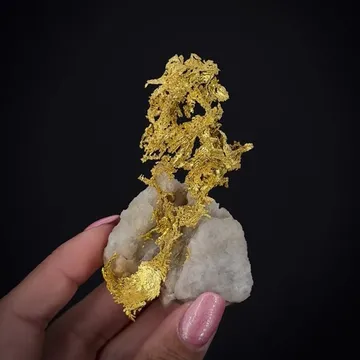
The best California specimens have a visual language all their own. Eagle’s Nest and Colorado Quartz golds are typically sculptural leaves, wires, herringbone masses, and crystallized networks emerging from white quartz. San Diego County pegmatite pieces are prized for contrast: pink, green, blue, and watermelon elbaite against cleavelandite, lepidolite, smoky quartz, or pale feldspar. Cinnabar from the mercury districts can be earthy ore, sharp red crystals, or dark matrix with beads of native mercury. Searles Lake minerals are chemical landscapes in miniature: halite, hanksite, trona, borax, and related salts grown in brine. Even the quieter California species — axinite, rutile, inesite, colemanite, scheelite — are often collected because they represent sharply defined, historically important American occurrences rather than anonymous examples of common minerals.

Photo: Wikimedia Commons

Photo: Wikimedia Commons
Search for specimens: View all specimens from California, USA
California’s specimen minerals come from several fundamentally different deposit types, and a good label should say which world the specimen belongs to. The Mother Lode and Alleghany-style gold districts are mostly mesothermal gold-quartz vein systems in metamorphic belts along the western Sierra Nevada. Gold occurs in quartz veins, pockety ore shoots, and later placer systems where erosion liberated the metal into stream gravels. The finest collector pieces are not ordinary placer nuggets; they are crystallized gold preserved in or on vein quartz, sometimes with calcite, pyrite, arsenopyrite, sulfides, or clay pocket fillings.
The historic gold belt runs through the Sierra Nevada foothills and includes famous mining camps and districts such as Mariposa, Jamestown, Grass Valley, Nevada City, Alleghany, Foresthill, and the broader Mother Lode country. At the collector level, Eagle’s Nest in Placer County, Colorado Quartz in Mariposa County, Oriental and Sixteen-to-One in the Alleghany district, and other pocket mines define the modern market for California crystalline gold. Many great specimens survived only because pocket miners recognized their form; far more gold, even beautiful crystallized material, was historically crushed, amalgamated, melted, or sold by weight.
California’s mercury deposits form a second major collector province. New Almaden, New Idria, Clear Creek, and associated Coast Range districts are tied to altered serpentinite, silica-carbonate rocks, hot-spring or epithermal fluids, and cinnabar-dominant ore. Mining began before the Gold Rush and then became essential to gold and silver recovery because mercury amalgamation was central to nineteenth-century precious-metal processing. New Almaden alone produced more than a million flasks of mercury and became one of the most consequential quicksilver mines in the world. Specimens from these districts may show cinnabar as massive scarlet ore, crystalline coatings, veins in silicified rock, native mercury droplets, metacinnabar, calomel, and a suite of rare mercury minerals.
Southern California’s gem pegmatites are a third pillar. The Pala, Mesa Grande, Rincon, and Ramona-area pegmatites are lithium-rich granitic pegmatite-aplite bodies that produced elbaite, schorl, lepidolite, cleavelandite, quartz, beryl, spodumene, topaz, and rare accessories. The Himalaya Mine, Stewart Lithia Mine, Tourmaline Queen Mine, Pala Chief, Tourmaline King, Oceanview, and related mines built California’s reputation for pink and multicolored tourmaline. Mining was driven partly by gem rough and partly by mineral specimens; the best pockets yielded complete crystals with color zoning, gemmy terminations, and dramatic matrix contrast.
The Mojave and Death Valley borate province adds an entirely different mineralogical character. Colemanite, ulexite, borax, kernite, tincalconite, inyoite, meyerhofferite, and associated borates occur in lacustrine evaporite deposits, especially the Furnace Creek–Death Valley region, the Kramer borate district at Boron, and Tick Canyon. Colemanite was first described from the Death Valley area and later became an economically important boron ore before the great Kramer deposit shifted the center of production to the Boron open pit. Good collector pieces are usually colorless to white, glassy, bladed, or drusy crystals, commonly on matrix and sometimes associated with calcite or other borates.
Searles Lake near Trona is California’s classic modern evaporite collecting locality. Its saline body contains halite, trona, hanksite, borax, burkeite, and many other salts in a dry-lake brine system. The collector experience there has historically been unlike hard-rock mining: crystals were recovered from brine cavities and ledges during organized access events rather than from ordinary outcrops. Trona, hanksite, halite, and related salts require careful dry storage, but the locality is central to any serious California evaporite suite.
California’s skarn and contact-metamorphic districts are less famous to the public but indispensable to collectors. Scheelite occurs in tungsten skarns and tactites in the eastern Sierra, Mojave, Kern, Inyo, Madera, Fresno, and San Bernardino regions. Epidote, grossular, diopside, wollastonite, quartz, calcite, and scheelite are typical companions in many of these systems. Axinite occurs in boron-bearing metamorphic and contact environments, notably at New Melones Dam and older localities such as Moosa Canyon and the Cosumnes Copper Mine. Rutile on pyrophyllite from the Champion Mine in the White Mountains belongs to a high-grade aluminous metamorphic assemblage that also produced andalusite, pyrophyllite, quartz, lazulite, topaz, and the type mineral woodhouseite.
Collecting access in California is highly variable and cannot be assumed from an old label. Many famous mines are patented claims, active operations, private holdings, reclaimed sites, Superfund or environmental remediation areas, county parks, state parks, national parks, wilderness areas, tribal lands, or protected habitat. Death Valley National Park, state park units, and many historical mine sites do not allow casual collecting. Public-land collecting may be possible in some Bureau of Land Management or National Forest areas for common materials in limited amounts, but claim status, land designation, seasonal closures, environmental restrictions, and safety hazards must be checked before any field visit. Old mercury mines, abandoned shafts, borate workings, and desert evaporite sites pose real hazards: unstable ground, toxic dust, mercury contamination, asbestos-bearing serpentinite, heat, brine, open stopes, and remoteness.
California quartz ranges from gold-bearing Mother Lode vein quartz to smoky and amethystine scepters near the California–Nevada line and pegmatite quartz from San Diego County. The collector favorites are sharply terminated crystals with strong form rather than massive vein quartz: smoky scepters and phantoms from the Hallelujah Junction/Petersen Mountain area on and near the border, milky quartz plates carrying crystallized gold from Eagle’s Nest and Colorado Quartz, and quartz associated with elbaite, lepidolite, and cleavelandite at the Himalaya and other San Diego County pegmatites. Ordinary California quartz is abundant, but good specimens are judged by complete terminations, clarity or purposeful color zoning, undamaged scepter caps, and whether the quartz enhances an association — especially gold or tourmaline — rather than merely serving as matrix.
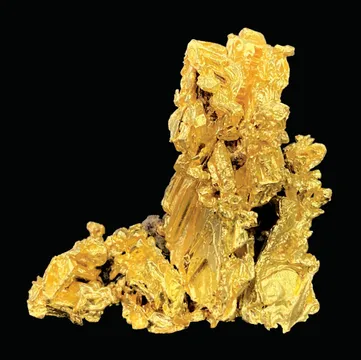
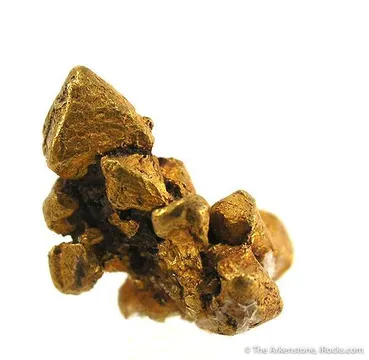
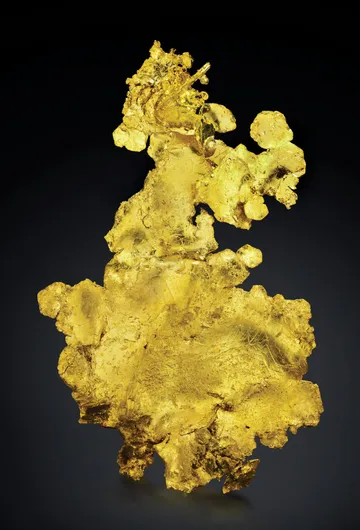
California gold is the state’s signature mineral and its finest collector material is crystallized, not rounded placer gold: leaves, wires, dendritic networks, arborescent masses, flattened crystals, and brilliant metallic growths on or partly enclosed in white quartz. Eagle’s Nest in Placer County is a benchmark locality for sculptural gold on quartz, while Colorado Quartz, Oriental, Sixteen-to-One, and other Mother Lode and Alleghany-area mines are central to the market for old and modern pocket gold. Fine California gold has a saturated yellow color, strong luster, visible crystal structure, and a natural relationship to quartz; premium pieces show balance, openness, and minimal trimming, while ordinary examples are simply gold-bearing quartz with little visible crystallization or form.
California barite is best understood as a set of regional occurrences rather than one dominant world-class mine: vein and bedded barite near Barstow and the Mitchel Range, small crystal aggregates in the Palos Verdes sea-cliff and Monterey Formation setting, gangue barite in fluorite and base-metal systems, and baryte in some desert prospects. Collectors see white to colorless, tan, cream, and locally bluish or translucent blades and tabular crystals, often with calcite, quartz, chalcedony, or sedimentary matrix. The best California barites have crisp bladed form, transparency, and intact edges; because many pieces are beach-worn, weathered, massive, or friable, undamaged crystal groups with clear locality data are far more desirable than anonymous “California barite.”
California cristobalite is most distinctive in volcanic-glass settings, especially the Inyo County obsidian occurrences near Little Lake, Coso Hot Springs, and related localities where rounded white to gray cristobalite spherules and nodules occur in black obsidian with tridymite, fayalite, magnetite, and orthoclase. Specimen interest lies in the contrast: pale spherical silica “eyes” set in glossy obsidian, sometimes with tiny fayalite crystals in cavities or nodules. Good pieces preserve uncrushed, well-centered spherules in attractive black glass and are not simply common snowflake obsidian; labels that distinguish Little Lake, Coso Hot Springs deposit, or other precise Inyo County occurrences matter greatly.
California’s classic inesite is from the Hale Creek Mine near Mad River Rock in Trinity County, a manganese-rich hydrothermal replacement setting that produced pink crystalline masses, drusy cavities, and chisel-like to blocky crystals, commonly exposed after calcite was removed from vugs. Fresh Hale Creek inesite is attractive rose-pink to lavender-pink, but weathering and manganese oxides can darken or dull the surfaces, so the best pieces show protected, bright pink crystals lining open cavities with strong luster and little black oxidation. Sizeable old specimens, especially from the early 1970s collecting period and with labels from well-known California collections, are sought because Hale Creek remains the premier United States locality for the species.
California rutile is most prized from the Champion Mine on White Mountain in Mono County, where lustrous wine-red to brownish-red crystals occur on or in pyrophyllite in a high-grade aluminous metamorphic assemblage with andalusite, quartz, lazulite, topaz, and phosphate species. The crystals are typically small by world standards, but a well-placed twinned crystal of one to two centimeters on pale pyrophyllite is a serious American rutile specimen. Better pieces show metallic luster, red internal flashes, sharp form, and minimal edge wear; the Champion Mine provenance separates them from more common rutile-in-quartz or unlabeled brown rutile fragments.
California cinnabar is historically inseparable from the Coast Range quicksilver districts, especially New Almaden in Santa Clara County, New Idria and Clear Creek in San Benito County, and numerous smaller mercury mines. It occurs as scarlet massive ore, bright vein fillings, earthy coatings, crystalline grains, and, less commonly, fine crystals in silica-carbonate rock, opal, chalcedony, quartz, dolomite, calcite, or barite-rich gangue, sometimes with native mercury and secondary mercury minerals. The best collector specimens combine strong red color, visible crystal form or rich ore texture, and a precise mine label; dull brick-red fragments, contaminated mine waste, and unlabeled “cinnabar from California” are much less desirable and require cautious handling.
California tourmaline is dominated by the San Diego County pegmatite belt, where Himalaya, Stewart Lithia, Tourmaline Queen, Pala Chief, Tourmaline King, Oceanview, and related mines produced elbaite, schorl, and intermediate compositions in lithium-rich pegmatites with lepidolite, cleavelandite, quartz, beryl, spodumene, and feldspar. Collectors prize pink, green, blue, and watermelon crystals, especially complete pencils or terminated crystals on matrix, and the district is famous for specimens ranging from slender gem crystals to cabinet pieces with color-zoned tourmaline and smoky quartz. Fine California tourmaline is separated from ordinary material by saturation, zoning, termination quality, transparency, and matrix aesthetics; broken gem rough and acid-cleaned fragments are common and should not be valued like intact pocket specimens.
Native mercury from California occurs as bright silvery droplets, films, and beads in cinnabar-bearing quicksilver ores, especially from New Almaden, New Idria, Clear Creek, Socrates, and related Coast Range mercury mines. Specimens are often small and dramatic rather than large: liquid metal in cavities, on cinnabar, in silica-carbonate rock, or associated with calomel, metacinnabar, schuetteite, montroydite, and other mercury species. Good examples retain visible droplets without leakage, powdering, or excessive contamination; they require sealed storage, stable orientation, and careful handling because mercury vapor and loose droplets make these specimens far less forgiving than ordinary sulfides.
California epidote occurs widely in skarn, contact-metamorphic, and altered igneous settings, but collector-grade pieces are most appealing where it appears with quartz, grossular, scheelite, or axinite. Notable occurrences include the Cosumnes Copper Mine, New Melones Dam associations, Inyo County skarns, and tungsten districts where green prismatic epidote contrasts with orange to brown grossular or pale quartz. Fine California epidote is usually valued as an association mineral rather than a giant single-crystal species: sharp green crystals, sprays, or jackstraw aggregates on contrasting matrix are much better than granular epidote rock, and pieces with axinite or grossular add locality significance.
California elbaite is one of the great American pegmatite stories, centered on San Diego County’s Himalaya, Stewart Lithia, Tourmaline Queen, Pala Chief, Tourmaline King, and related mines. Crystals range from pink and rubellite through green, blue-green, blue-capped, and watermelon zoning, commonly with cleavelandite, lepidolite, quartz, feldspar, and beryl. The most desirable specimens are complete, lustrous, terminated crystals with clear color separation and original matrix; the 1972 Tourmaline Queen blue-cap style remains an icon, while Himalaya pieces are admired for pink-green zoning, gemminess, and classic San Diego County provenance.
California fayalite is a specialist’s mineral in the Inyo County volcanic-glass occurrences, where tiny olive-green to brownish lamellar or bladed crystals occur with cristobalite, tridymite, magnetite, orthoclase, and obsidian near Little Lake, Coso Hot Springs, and related rhyolitic localities. The specimens are usually small and aesthetic only under close inspection, with fayalite tucked into pale cristobalite nodules or cavities in glossy black obsidian. Good pieces require both minerals to be legible: visible fayalite crystals, not merely massive altered spots, set against clean cristobalite and obsidian, with an old or precise Inyo County label.
California smoky quartz is best known to collectors from the Hallelujah Junction/Petersen Mountain area at the California–Nevada border and from San Diego County pegmatites, where smoky crystals may accompany elbaite and lepidolite. Petersen Mountain material is famous for smoky to smoky-amethyst scepters, phantoms, and strong cap-to-stem contrast, while pegmatite smoky quartz tends to be valued for association with tourmaline, cleavelandite, or lepidolite rather than for size alone. Top examples show undamaged tips, saturated smoky zones, clear scepter development, internal phantoms, and unrepaired form; pale broken crystals and single loose points without locality precision are far more common.
California stibnite occurs in several antimony and mercury districts, with classic crystallized material from the Stayton district near Hollister and Antimony Peak in San Benito County, as well as occurrences in Kern, Mono, Inyo, Napa, Nevada, and other counties. The old San Benito County specimens are especially valued for well-crystallized gray metallic blades and groups, sometimes twisted or curved, from mines such as Ambrose, Blue Wing, Shriver, Quien Sabe, and related claims. Fine pieces show sharp, lustrous, striated crystals with minimal oxidation; much California stibnite is massive, altered, or partly replaced by antimony oxides, so old labels and intact crystal form are crucial.
California colemanite is both a type-locality and mining-history mineral, first described from the Death Valley region and later produced in important specimens from Boron’s Kramer borate deposit, Tick Canyon, Ryan, Lila C, and other Mojave and Death Valley borate localities. Collector pieces range from massive white borate ore to glassy colorless bladed crystals, druses, sprays, and crystals with calcite or other borates. The best Boron and Death Valley-region colemanites have bright luster, transparency, sharp bladed habit, and little dehydration or bruising; chalky, dusty, or mislabeled borate fragments are common and much less appealing.
California scheelite comes chiefly from tungsten-bearing skarns, tactites, and quartz-feldspar veins in districts such as Atolia-Randsburg, Bishop and the Tungsten Hills, Darwin, the Greenhorn and Cady Mountain area, and many smaller Sierra and Mojave occurrences. Specimens may be massive, granular, or sharply pseudo-octahedral, commonly associated with quartz, calcite, garnet, epidote, diopside, wollastonite, or altered igneous matrix. Fine collector pieces are chosen for crystal form and fluorescence: translucent tan to white crystals on matrix, strong shortwave response, and good locality documentation are much preferred to massive scheelite ore or loose fragments cut from skarn.
Native antimony is rare in California collections, and the classic occurrence is the Kern County material from the Erskine Creek and Antimony Peak region, where kidney-like metallic masses and nodules were described with antimony oxides and stibnite appearing with depth. Specimens are typically granular, gray metallic to tarnished, and may show oxidation skins rather than bright crystal faces. Good examples are valued for rarity and provenance more than beauty: a verified native antimony specimen with old Kern County attribution is a significant California native-element piece, whereas many “antimony” labels on the market actually refer to stibnite or antimony ore rather than the native element.
California trona is a defining mineral of Searles Lake near the town of Trona, where it is one of the major evaporite minerals in a brine-rich saline basin with halite, hanksite, borax, burkeite, sulfohalite, and related species. Specimens may occur as white to colorless crusts, crystals, masses, or matrix beneath halite and other salts, and it is often collected as part of a Searles Lake assemblage rather than as a solitary showpiece. The best trona-bearing specimens have fresh surfaces, clear association with labeled Searles minerals, and no signs of damp storage; because trona and associated evaporites are water-sensitive, humidity damage, rounding, caking, and efflorescence are common condition issues.
California beryl is chiefly a San Diego County pegmatite mineral, occurring as goshenite, aquamarine, morganite, and pale green to colorless crystals in the Pala, Mesa Grande, Rincon, and related districts with elbaite, lepidolite, quartz, feldspar, and spodumene. Morganite and pale beryl from the Pala-area pegmatites are historically important, and beryl may appear as isolated crystals, crystal sections, or matrix specimens with tourmaline and cleavelandite. Fine California beryl is judged by intact hexagonal form, pleasing color, transparency, and association; pale broken crystals are common, but matrix pieces linking beryl to the tourmaline-producing pegmatites carry stronger collector interest.
California axinite, especially axinite-(Fe), has two strong collector identities: early twentieth-century brown crystals from Moosa Canyon near Bonsall and later sharp material from New Melones Dam in Calaveras County, with additional occurrences in boron-bearing metamorphic and contact environments. Moosa Canyon crystals were described as brownish, flattened, rough to partly transparent crystals with smoky quartz, epidote, and laumontite, while New Melones material is prized for sharp brown axinite crystals associated with quartz, epidote, actinolite, chlorite, and altered matrix. The best pieces show wedge-shaped crystal form, translucency, good luster, and distinct association; loose dark fragments without locality certainty are far less important than documented New Melones or Moosa Canyon specimens.
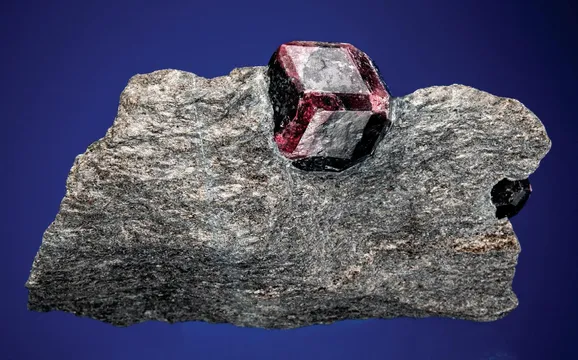
California grossular is a skarn and contact-metamorphic collector mineral, occurring with epidote, quartz, calcite, diopside, wollastonite, and scheelite in tungsten and calc-silicate settings from the Sierra Nevada, Inyo County, Fresno and Madera County tungsten districts, and southern California skarns. Colors range from brown and honey to orange, reddish orange, pale green, and mixed tones, with dodecahedral and trapezohedral forms in better pieces. Fine California grossular specimens are valued when the garnets are sharp, lustrous, and visibly associated with epidote or scheelite; granular garnet rock is common, but clean crystal groups from named skarn prospects are scarce and much more collectible.
California schorl is widespread in granitic and pegmatitic environments, but the most collectible context is the San Diego County pegmatite belt, where black tourmaline occurs with elbaite, quartz, feldspar, lepidolite, and beryl at Pala, Mesa Grande, and related mines. It also appears in quartz-tourmaline veins and altered granitic systems elsewhere in the state. The best schorl pieces are not simply black rods; they show sharp prismatic form, strong striations, intact terminations, and meaningful matrix relationships, particularly where black schorl contrasts with pale cleavelandite or quartz or helps document the zoning of a lithium pegmatite.
California stolzite is a rare secondary lead tungstate from oxidized tungsten-lead systems, most notably represented in collector material from districts such as Darwin in Inyo County and related desert mining camps where lead-silver and tungsten mineralization overlap. Specimens are usually small, with yellow, orange, brown, or resinous tetragonal crystals on oxidized matrix, often requiring magnification to appreciate. Fine California stolzite is judged by sharp crystal form, color, and verified mine attribution; because wulfenite, scheelite, mimetite, and other yellow to orange secondary minerals can be confused in old collections, analytical confirmation or a strong provenance is especially desirable.
Baryte is the same mineral species often marketed in the United States as barite, and California baryte specimens come from desert vein deposits, Palos Verdes sea-cliff occurrences, fluorite and base-metal gangues, and scattered barite prospects such as those around Barstow and San Bernardino County. Habits include white, cream, tan, colorless, and locally translucent bladed or tabular crystals, crusts, and aggregates with quartz, chalcedony, calcite, or sedimentary matrix. The best baryte pieces from California have clean blades, intact edges, and locality precision; Palos Verdes material in particular is often weathered or collected as fragments, so crisp crystal groups are preferable.
California’s rarities are as important as its headline species. Benitoite from the California State Gem Mine in San Benito County is the state gemstone and one of the most famous type-locality minerals in America, occurring with neptunite, joaquinite-group minerals, natrolite, albite, and blue amphibole-bearing rock. Other California type-locality or near-signature minerals include neptunite, joaquinite-(Ce), fresnoite, walstromite, krauskopfite, macdonaldite, verplanckite, woodhouseite from the Champion Mine, coalingite from the New Idria serpentinite, and rare mercury minerals such as clearcreekite, edoylerite, wattersite, and gianellaite from the Clear Creek/New Idria environment. For the advanced collector, California is not merely a source of pretty gold and tourmaline; it is a state where systematic mineralogy, type descriptions, and classic specimen aesthetics overlap unusually well.
California specimens are often mislabelled because many names function both as precise localities and loose trade shorthand. “Hallelujah Junction” may refer to quartz from the Petersen Mountain area on the Nevada side, from the California side, or from an old dealer’s simplified border label. “Pala tourmaline” may mean Pala District, Mesa Grande, Stewart, Himalaya, Tourmaline Queen, Tourmaline King, or merely San Diego County pegmatite material. “California gold” may be placer gold, gold-in-quartz jewelry material, natural crystalline gold, or heavily prepared matrix gold. Serious buyers should ask for mine, district, county, and old-label provenance whenever value depends on locality.
Gold is the most preparation-sensitive California mineral. Much high-end gold-in-quartz has been etched, trimmed, cleaned, or mechanically exposed to reveal gold hidden in quartz. That is not automatically fraudulent — many classic specimens were prepared — but it must be understood. Premium pieces should still show natural gold morphology, coherent quartz relationship, and no obvious glued-on gold leaves, artificial assembly, acid-frosted quartz without disclosure, or suspiciously loose metal sitting in drilled pockets. Melted, cast, or fabricated “crystalline” gold is a real risk in the broader gold market, and California provenance alone is not proof.
Tourmaline and elbaite from San Diego County are also vulnerable to misrepresentation. Broken crystals may be sold as complete if the termination is repaired or capped; matrix pieces can be assembled; and color may be exaggerated by lighting. Blue-cap associations, old Himalaya pocket pieces, and fine Stewart or Tourmaline Queen specimens command enough value that repairs and restorations should be expected and disclosed. Look for matching contact surfaces, old glue, unnatural matrix joins, and inconsistent luster across breaks.
Evaporite minerals from Searles Lake and borate specimens from Boron, Death Valley, and Tick Canyon need stable, dry storage. Halite, trona, hanksite, borax, tincalconite, and related salts can dehydrate, hydrate, effloresce, dissolve, or cake in humid conditions. Do not wash them. Colemanite is more stable than many saline minerals but can still bruise and dull; borate specimens should be kept away from repeated wet-dry cycles.
Cinnabar and native mercury specimens require caution. Cinnabar is mercury sulfide and should be handled with clean, dry hands or gloves, kept away from children, and not cut, ground, or stored where dust can spread. Native mercury specimens should be sealed or boxed so droplets cannot escape; avoid heat and poor ventilation. Old mercury mine material can also carry arsenic, antimony, and other contaminants, and field-collected waste rock should not be treated casually.
Rutile on pyrophyllite, axinite, stibnite, and many skarn specimens have predictable condition issues. Pyrophyllite matrix can be soft and flaky; Champion rutile crystals commonly show edge wear. Axinite has sharp, thin edges and can chip along exposed ridges. Stibnite is soft, brittle, and easily bent or broken; old California stibnites are often partly oxidized. Scheelite specimens should be checked under shortwave UV when possible, but fluorescence is not a substitute for identity, because other minerals may fluoresce and scheelite can vary in response.
Market availability is uneven. California quartz, borates, and Searles Lake salts are relatively accessible, though top examples are selective. San Diego County tourmaline appears regularly but fine old matrix pieces are increasingly expensive. Eagle’s Nest and Colorado Quartz gold are available in the high-end market, but top sculptural pieces are rare and priced far beyond melt value. Inesite from Hale Creek, rutile from Champion, old Stayton stibnite, verified native antimony, and good California stolzite are much scarcer and should be bought when provenance and condition are strong.
Before California was a gold state, it was a cinnabar state. In the hills south of present-day San Jose, Indigenous people knew the red rock long before industrial quicksilver mining began. Cinnabar from the New Almaden area was ground as pigment and traded among Ohlone-language communities, and after missionization the same red mineral colored walls at Mission Santa Clara. The deposit entered the mining world in 1845 under the claim of Captain Andrés Castillero, just a few years before gold at Sutter’s Mill remade California. That timing mattered enormously: mercury from New Almaden became one of the enabling materials of western gold and silver mining, feeding amalgamation mills during the Gold Rush and later the Comstock era. The mine eventually produced more than a million flasks of mercury, an output so large that its metallic value exceeded that of any California gold mine.
The most romantic California gold specimens are survivors. In the nineteenth century, crystalline gold was usually ore, not art. If it was in quartz, it could be crushed; if it was free enough, it could be melted. The Fricot “Nugget,” found in the American River in 1864 and now displayed at the California State Mining and Mineral Museum in Mariposa, survives because someone recognized that a crystalline mass of gold could matter as an object rather than merely as metal. Weighing about 13.8 pounds, or roughly 201 troy ounces, it is among the great relics of Gold Rush specimen history — a reminder that many comparable pieces almost certainly vanished into furnaces.
San Diego County tourmaline tells a different story: not rough miners chasing bullion, but pegmatite pockets supplying color to a global gem appetite. Pink tourmaline from the Himalaya and Pala-region mines became famous in part through the China trade, where pink material was eagerly purchased for carving and ornament. George F. Kunz and Tiffany & Co. helped publicize the gems, and the mines became tied to the broader American gem boom of the early twentieth century. Decades later, in 1972, the Tourmaline Queen Mine produced the Blue Cap Pocket, a find so visually distinctive — pink elbaite with vivid blue caps on matrix — that many collectors still regard those specimens as among the most famous minerals ever found in California.
At Searles Lake, the great collecting image is not a miner following a vein but a crowd of rockhounds working a chemical lake bed. For generations, organized access at Trona’s Gem-O-Rama allowed collectors to recover evaporite crystals from brine-rich cavities and ledges on Searles Lake property. The scene was part science fair, part desert ritual: pink halite hoppers, hanksite barrels, trona-coated pieces, and salt-crusted tools emerging from brine under the high Mojave sun. Unlike hard-rock pocket hunting, success depended on timing, brine conditions, and the brief permission to enter an industrial evaporite basin that is normally off limits.
The Champion Mine in the White Mountains is one of California’s great high-altitude specimen stories. It was not opened for rutile but for andalusite, which was needed industrially and occurred in a difficult mountain setting. The ore’s trip from cliff to factory was almost absurdly physical: material was blasted or barred loose, broken by hammer, hand-sorted, sacked into 95-pound bags, loaded onto mules, carried down the trail, dumped into bins at the road end, trucked three and a half miles to Shealy Siding on the Southern Pacific narrow-gauge line, transferred to rail cars, and finally shipped to the Champion plant in Detroit. The same locality that demanded this chain of labor also produced lustrous rutile on pyrophyllite and the type mineral woodhouseite, giving collectors a specimen legacy far more elegant than the mining logistics that made it known.
Native antimony from Kern County has a quieter but wonderfully concrete story. Early descriptions recorded kidney-like masses of native metal coated by oxidation products, with larger nodules made of smaller metallic cores only a cubic centimeter or so across, and aggregates reaching about ten centimeters. The discoverer, A. Blanc, described a trench about 150 feet long and noted that the antimony was pockety, with stibnite appearing at depth. It is a perfect California rarity story: a modest trench, an odd native element, and a deposit whose scientific interest far exceeded its visual glamour.