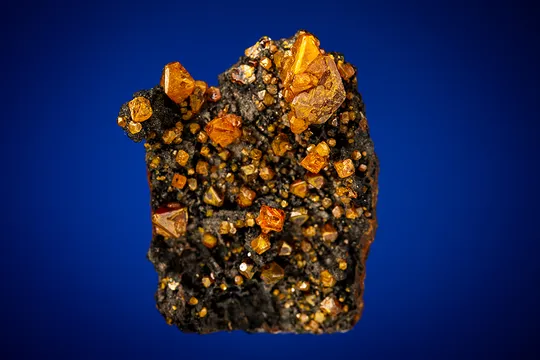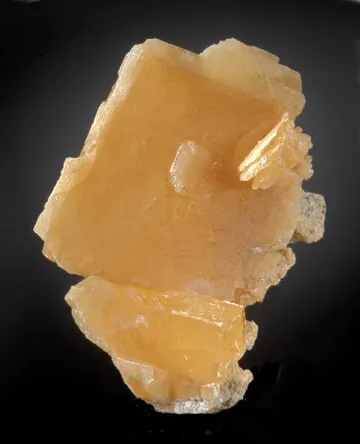
Stolzite (PbWO4) - rare tungsten analogue of wulfenite; lemon-yellow to honey-brown crystals, dense and brittle, prized for color and localities like Tsumeb.
Key facts
Stolzite (PbWO4) is the rare tungsten analogue of wulfenite, treasured by collectors for its vivid warm hues—lemon-yellow, honey, orange to reddish-brown—and its brilliant, adamantine to resinous luster. It occurs mainly in the oxidized zones of lead-rich hydrothermal deposits and in tungsten-bearing vein systems, often associated with cerussite, mimetite, wulfenite, scheelite, quartz, limonite, and vanadinite. Crystals are typically thick tabular to blocky or pseudo-bipyramidal, commonly small but sometimes surprisingly robust from classic districts. The mineral is very dense (~8 g/cm3) and relatively soft and brittle (Mohs ~2.5–3), making undamaged, sharp crystals on attractive contrasting matrix both scarce and highly desirable.
Compared with its molybdate cousin wulfenite, stolzite is significantly rarer and far more locality-dependent. Iconic occurrences—most notably Tsumeb (Namibia), Broken Hill (Australia), and a handful of European tungsten districts—set the benchmark for color and quality. Many specimens are micromount-sized, so superb cabinet pieces are few and command premium prices. The combination of eye-catching warm color, high luster, and rarity sustains strong demand among advanced collectors. Meanwhile, micromounters value stolzite for its diversity of habits, delicate crystallization, and interesting associations in classic oxidized Pb–W systems. Exceptional, well-crystallized pieces from historic finds can sell quickly and remain long-term cornerstones of specialized suites.
While stolzite is known from scattered lead and tungsten camps worldwide, only a few localities have produced specimens of consistent, top-tier quality.
Broken Hill produced classic lemon-yellow to honey-brown stolzites, sometimes in comparatively larger crystals than seen elsewhere, perched on iron-oxide gossan or quartz with cerussite and wulfenite. The best show thick, glassy crystals with bold geometry and fine condition—hard to find due to extraction damage and brittleness. Vintage pieces with strong color and undamaged faces carry a historical premium and remain benchmarks for the species.
The Sainte-Lucie Mine (Aveyron) is a European classic for stolzite, known for sharp, lustrous crystals in warm brown-orange hues on quartz or iron oxides. Although generally modest in size, crystals can be exceptionally well-formed and aesthetic. Genuine, well-documented specimens from this historic locality are scarce and highly collectible, especially on balanced matrix with complementary associations.
Stolzite is beautiful but delicate. Proper handling preserves its luster and edges.
With its warm colors, high luster, and relative scarcity of top pieces, stolzite rewards the patient collector. A fine, undamaged crystal with strong color and good matrix from a benchmark locality can serve as a highlight in any advanced suite of lead or tungsten minerals.