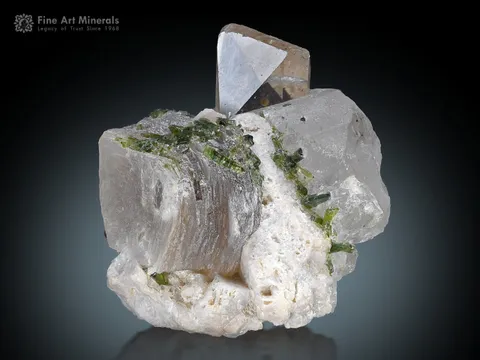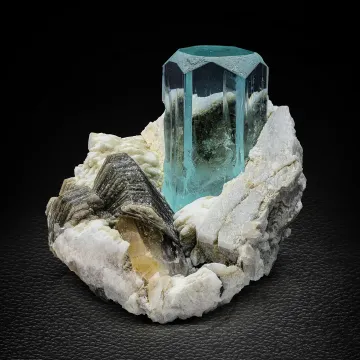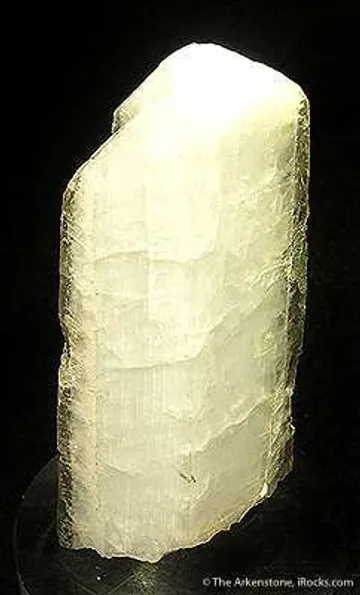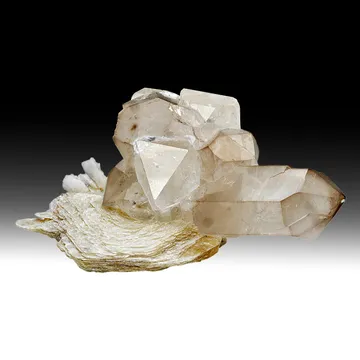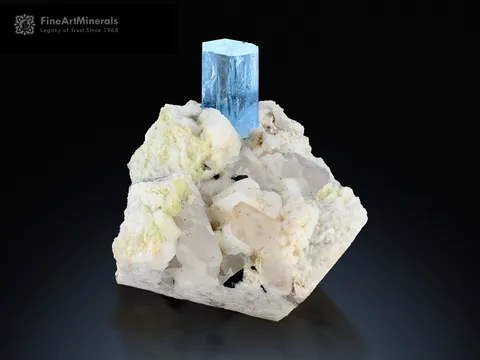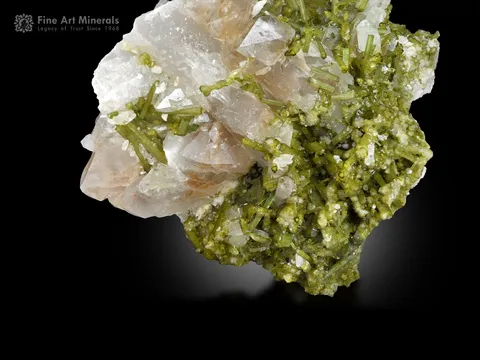
Braldu Valley, Pakistan — premier Karakoram pegmatite locality known for aquamarine on white feldspar with schorl, muscovite, and striking mineral specimens.
Key facts
Braldu Valley is one of the great modern specimen districts of the Karakoram: a glacially carved, cliff-walled tributary valley of the Shigar system where granitic pegmatites cut high-grade metamorphic and meta-igneous rocks, and where collectors have learned to expect architectural aquamarine on white feldspar with black schorl, silvery muscovite, quartz, and, in the best pockets, flashes of red-orange garnet. In the specimen trade the name may appear as Braldu, Braldo, Dassu, Nyet, Nyet Bruk, Biangsapi, Baha, Chhappu, Gone, Teston, or Apo Ali Gun; the better labels try to keep these village and mine names intact, because the valley is not a single mine but a chain of pocket-bearing pegmatites worked from steep slopes above the Braldu River.
Regional View
Country View
For collectors, Braldu Valley matters for two overlapping reasons. First, it is a serious gem-pegmatite district: aquamarine, topaz, morganite, goshenite, feldspars, albite-cleavelandite, muscovite, schorl, spessartine-almandine garnet, fluorapatite, and rare phosphates all occur in the miarolitic parts of zoned pegmatites. Second, it has produced mineral specimens, not merely gem rough. The best pieces have the poise of classic pegmatite matrix specimens: blue, glassy hexagonal beryl prisms rising from snow-white feldspar; smoky or colorless quartz used as a visual counterweight; black tourmaline as a graphic accent; and mica rosettes or garnets providing scale and texture. At the very top of the locality’s output are large, intact pocket compositions that changed the way miners and dealers thought about extraction in northern Pakistan.

Photo: Wikimedia Commons
The valley also has unusually deep historical roots for a Pakistani pegmatite locality. The aquamarine mines at Dassu were the subject of a Geological Survey of India note in 1918, long before most Karakoram pegmatite names became familiar to collectors. Later, during the late twentieth and early twenty-first centuries, Braldu localities became central to the international specimen trade, with successive finds from Dassu, Nyet Bruk, Baha, Gone, Biangsapi, and related workings appearing at Tucson, Munich, Denver, and in major private and museum collections. The 2019 Biangsapi Gon find, which yielded the monumental “King of Kashmir” aquamarine group from the Nyet Bruk region, stands as the valley’s best-known modern event and one of the landmark pegmatite-specimen recoveries of recent decades.
Search for specimens: View all specimens from Braldu Valley, Pakistan
Braldu Valley lies in Shigar District, Gilgit-Baltistan, along the Braldu River, a major meltwater-fed tributary of the Shigar River system. The mineral localities are concentrated especially along the lower Braldu, from the Baha area toward Apo Ali Gun, with important sublocalities and village names including Dassu, Gone, Nyet, Nyet Bruk, Teston, Chhappu, Baha, Foljo, Biangsa/Biangsapi, and Apo Ali Gun. The setting is mountainous in the strictest sense of the word: pocket-bearing pegmatites crop out on steep valley walls and cliff faces, often reached by rough jeep tracks, footpaths, ropes, or fixed cable systems rather than by roads suitable for conventional mining.
The deposit type is granitic pegmatite, more specifically gem-bearing miarolitic pegmatite. In broad regional terms these pegmatites are related to the Karakoram magmatic belt and intrude metamorphic and meta-igneous country rocks, including gneissic and granitic units. At Nyet Bruk, described in detail in the literature around the “King of Kashmir” find, the productive pegmatites are mostly sub-horizontal bodies cutting a granitic meta-igneous host. They may be on the order of meters thick and traceable across outcrop for hundreds of meters, with border zones, coarser cores, and local miarolitic cavities. Those cavities are the collector’s target: open spaces in which feldspar, quartz, beryl, mica, tourmaline, garnet, topaz, fluorapatite, and rare phosphates grew freely enough to produce display crystals.
The characteristic Braldu pegmatite specimen is not an ore specimen in the usual metallic-mining sense; the “ore” is the pocket assemblage itself. Feldspar and albite form the pale framework. Quartz, sometimes colorless and sometimes smoky, lines open spaces or stands as blocky crystals beside the gem minerals. Schorl is the common black tourmaline, generally prismatic and more often an accent than the visual center. Muscovite can occur as pearly books, sprays, or rosettes. Beryl appears as aquamarine, goshenite, morganite, and locally bicolored crystals. Topaz from the Dassu area is among the valley’s most collectible non-beryl species, especially when sharp, gemmy, and sherry-colored on cleavelandite, quartz, and mica. Garnet, commonly in the almandine-spessartine range, provides the red-orange contrast prized in the dramatic aquamarine-garnet combinations.
Historically, Dassu is the key name. Early twentieth-century references describe aquamarine mines at Daso/Dassu on the Braldu River, and older labels may use Baltistan, Skardu District, Shigar Valley, Northern Areas, or Kashmir-era geographic language. Modern administrative labels should read Shigar District, Gilgit-Baltistan, Pakistan, but collectors should expect older specimens to carry earlier political and commercial terms. “Dassu” also requires care because another village of the same name lies along the Gilgit-Skardu road near the Indus; Braldu Valley Dassu is the pegmatite locality relevant here, and is sometimes clarified in collector usage as the Dassu of the Braldu/Shigar specimen district.
Mining has generally been small-scale and seasonal, carried out by local miners, families, and village groups rather than by a single large industrial operator. The work is shaped by altitude, weather, access, and the short season at higher workings. Lower-elevation prospects may be visited for much of the year, but higher cliff workings become practical only when snow and weather permit. Modern high-end specimen recovery has increasingly involved outside buyers, dealers, and extraction specialists teaching local teams to preserve matrix rather than breaking crystals free as gem rough. The change is visible in the specimen record: older material often consists of loose crystals, repaired matrix pieces, or crystals trimmed from damaged pockets, whereas the best newer pieces preserve the pocket architecture more completely.
Collecting access today should be understood as mining access, not casual field collecting. These are active or intermittently active workings on difficult private, village, or locally controlled ground, in terrain where travel can be dangerous and where cultural relationships matter. Specimens reach the market through Pakistani dealers, village networks, and international buyers; responsible collecting means buying from reputable sources with specific sublocality data, not attempting unsupported visits to cliff workings. For scientific and high-end collection purposes, a label with “Braldu Valley” alone is less useful than one recording Dassu, Gone, Nyet Bruk, Baha, Chhappu, Biangsapi Gon, Namlook, or another specific occurrence.
Several finds define the valley in the modern collecting imagination. Dassu is famous for aquamarine and topaz, including combinations on feldspar, albite, quartz, muscovite, schorl, fluorite, and garnet. Gone is documented for aquamarine, topaz, quartz, albite, muscovite, microcline, schorl, and the rare uranium mineral schröckingerite. Nyet Bruk is the locality name attached to many superb aquamarines and to the 2019 “King of Kashmir” pocket in the Biangsapi Gon area, where a huge ceiling-grown aquamarine cluster was extracted using diamond saws, wedges, foam, ropes, and careful preparation rather than the destructive methods once common in the district. Baha is noted for beryl, including bicolored aquamarine-morganite material, while Chhappu has supplied rare phosphate specimens including viitaniemiite. Namlook, near Dassu, is important for triplite and väyrynenite, linking the valley not only to gem beryl and topaz but also to the rare-species collector’s cabinet.
Aquamarine is the signature mineral of Braldu Valley: long to stout hexagonal prisms in pale blue, sky-blue, blue-green, and, rarely, more saturated blue tones, most prized when glassy, sharply terminated, and naturally positioned on white albite or microcline. Nyet Bruk and the Dassu-Biangsapi-Gone part of the valley have produced the most celebrated specimens, including crystals from a few centimeters to major cabinet scale and, in exceptional pockets, very large matrix groups. The classic association is aquamarine with albite or feldspar, schorl, muscovite, quartz, and occasionally red spessartine-almandine garnet; ordinary pieces are pale, etched, loose, contacted, or repaired, while the best Braldu aquamarines combine transparency, luster, undamaged pinacoidal terminations, strong matrix contrast, and a sense that the crystal grew exactly where the collector sees it.
Beryl from Braldu Valley should be read broadly, because the valley produces several collector-significant color varieties: aquamarine, goshenite, morganite, and bicolored crystals in which pale pink beryl grades into blue or colorless zones. Baha is especially noted in the specimen trade for unusual bicolor beryl, and Dassu and Nyet Bruk have produced both gem crystals and matrix specimens in which beryl stands among albite, quartz, muscovite, schorl, feldspar, and garnet. Braldu beryl is generally prismatic and hexagonal rather than tabular, and better pieces are judged by complete terminations, clarity, color zoning, absence of heavy bruising, and honest preservation on matrix; colorless or very pale beryl can be excellent when the crystal form and associations are exceptional, but without accurate locality data it is easily undervalued or misdescribed as generic “Shigar” aquamarine.
Topaz from the Dassu area of Braldu Valley is one of the locality’s great supporting acts, occurring as lustrous, sharply modified, transparent crystals that may be colorless, pale golden, or sherry-colored, commonly with quartz, cleavelandite-albite, muscovite, feldspar, fluorite, schorl, and sometimes aquamarine. The finest examples are valued for gem transparency, complex terminations, balanced matrix setting, and the warm sherry tone that distinguishes them from ordinary colorless pegmatite topaz; however, that attractive color can be light-sensitive, so topaz from here should not be displayed in direct sun or prolonged strong light. Matrix pieces from Dassu with topaz perched on white albite blades and accompanied by mica or quartz are much scarcer and more collectible than loose small crystals, especially when unrepaired and free of edge bruising.
Quartz at Braldu Valley is usually a matrix and pocket-forming mineral rather than the main attraction, but it is essential to the valley’s best compositions. In the pegmatite cavities it occurs as colorless to smoky crystals associated with albite, feldspar, aquamarine, topaz, muscovite, schorl, fluorapatite, and garnet, and in the “King of Kashmir” pocket quartz helped frame and support the aquamarine group. Good Braldu quartz specimens are those in which quartz contributes geometry and contrast without crowding the gem mineral: clear or smoky crystals rising beside blue beryl, a quartz-and-feldspar base for topaz, or a pocket plate where the quartz points preserve the original open-cavity architecture. Ordinary examples tend to be incomplete matrix fragments or quartz used merely as a host for more valuable minerals.
Muscovite from Braldu Valley is most collectible as an aesthetic associate: pearly books, golden to silvery plates, rosettes, and flaky clusters that sit among aquamarine, topaz, albite, quartz, schorl, fluorapatite, fluorite, and garnet. Dassu material is especially familiar to collectors in topaz combinations, where hexagonal mica books on quartz and cleavelandite provide color and texture around gemmy sherry topaz, while aquamarine matrix pieces may show muscovite as delicate leafy rosettes. Good muscovite here is clean, lustrous, and placed so it improves the composition; ordinary mica-heavy pieces can look cluttered, and mica edges are easily bent or frayed during extraction, cleaning, and packing.
Schorl is the valley’s black graphic line: prismatic tourmaline crystals and sprays embedded in or perched on albite, quartz, feldspar, muscovite, aquamarine, and topaz-bearing pegmatite matrix. At Nyet Bruk and Dassu it often appears as a dramatic contrast to pale feldspar and blue beryl, sometimes as scattered small crystals on aquamarine groups and sometimes as a more substantial support or intersection for beryl crystals. Collectible Braldu schorl pieces are lustrous, well-terminated, and compositionally useful; ordinary pieces are broken black prisms from pocket rubble. Because schorl can be inconspicuous against dark matrix or hidden beneath mica, careful photography and accurate labels matter when evaluating Braldu combinations.
Albite, commonly in cleavelandite habit, is the white stage on which many Braldu Valley specimens perform. In the Dassu, Gone, Nyet Bruk, and Baha pegmatites it forms bladed, cleaved, or blocky white feldspar masses associated with aquamarine, topaz, quartz, muscovite, schorl, microcline, fluorapatite, fluorite, and garnet. The finest Braldu albite is not collected for albite alone but for how it presents the gem crystals: crisp white blades lifting a blue aquamarine, a clean cleavelandite pedestal under sherry topaz, or a sparkling pocket floor that makes black schorl and red garnet stand out. Ordinary albite matrix is massive, bruised, iron-stained, or too bulky, and trimming quality can strongly affect a specimen’s final appeal.
“Feldspar” on Braldu Valley labels usually refers to the pale feldspar matrix—albite, microcline, orthoclase, or undifferentiated feldspar—rather than to a specimen whose feldspar species has been analytically determined. This matrix is central to Braldu aesthetics: aquamarine and topaz commonly sit on white to cream feldspar, and the giant Nyet Bruk aquamarine groups owe much of their sculptural presence to albite and microcline support. Feldspar crystals can be blocky, bladed, or massive, and good pieces show clean faces, minimal staining, and a natural arrangement that protects and displays the gem species. Poor feldspar matrix is heavy, broken, or sawed so harshly that it overwhelms the crystals it is meant to support.
Morganite from Braldu Valley is far rarer in the marketplace than aquamarine, but Baha and Dassu-area pegmatites have produced pale pink beryl and unusual bicolored crystals grading from morganite into aquamarine or colorless beryl. The most desirable examples are prismatic hexagonal crystals, because much of the world’s morganite is tabular or etched; Braldu’s bicolored sprays and matrix pieces can therefore be especially distinctive. Associations include albite, quartz, feldspar, schorl, and other pegmatite minerals, with the best pieces showing visible color boundaries, intact terminations, and enough transparency to make the pink-blue contrast convincing. Very pale pieces can be misread as goshenite or weak aquamarine unless the pink zone is seen under neutral light.
Orthoclase is part of the feldspar architecture of Braldu Valley pegmatites, especially in the Dassu and Nyet Bruk area where orthoclase, microcline, albite, quartz, aquamarine, and topaz can occur together in open cavities. It is rarely the headline species, but it matters when crystals are large, well-formed, or compositionally tied to aquamarine and quartz groups. In the “King of Kashmir” pocket sequence, a related pocket yielded smoky quartz, large feldspar described as orthoclase, and an aquamarine embracing smoky quartz, illustrating how K-feldspar can define the open cavity walls. Good orthoclase specimens from Braldu are clean, blocky, well-positioned matrix crystals; ordinary examples disappear into undifferentiated feldspar unless the crystal form or association is strong.
Spessartine, commonly within an almandine-spessartine garnet range in these pegmatites, is the red to orange-red accent that can lift a Braldu aquamarine specimen from attractive to unforgettable. Dassu and Nyet Bruk combinations with aquamarine, quartz, albite, microcline, muscovite, and schorl are the most celebrated, especially the 2018 Aqua-Garnet Pocket material, where garnets decorated large aquamarine-bearing matrix plates. The best garnets are bright, well-scattered, and visually integrated with blue beryl rather than being isolated grains; they should be sharp enough to read as crystals and not merely reddish specks in feldspar. Because labels may use “garnet,” “spessartine,” or “almandine-spessartine,” analytical caution is appropriate for important specimens.
Beyond these principal collector species, Braldu Valley has a rich rare-mineral signature. Mindat and published specimen records document beryllonite, hydroxylherderite, fluorapatite, fluorite, pollucite, polylithionite, phenakite, tantalite-(Mn), columbite-tantalite series minerals, triplite, väyrynenite, viitaniemiite, microlite-group minerals including fluornatromicrolite and oxynatromicrolite, stellerite, rhodochrosite, autunite, and the uranium carbonate sulfate schröckingerite from Gone. The Namlook Mine near Dassu is especially important for triplite and väyrynenite, while Chhappu is a notable name for viitaniemiite-bearing material. These rarities place Braldu Valley in the small group of pegmatite districts that can satisfy both the cabinet-specimen collector and the systematic rare-species collector.
Braldu Valley specimens reward precise labels. “Shigar,” “Skardu,” “Northern Areas,” “Baltistan,” “Kashmir,” and “Pakistan” have all been used broadly in the trade, sometimes accurately for their time and sometimes too loosely. Serious collectors should push for the narrowest credible locality: Braldu Valley is better than Shigar District; Dassu, Nyet Bruk, Baha, Gone, Chhappu, Biangsapi Gon, or Namlook is better still. Be especially cautious with “Dassu,” because of the separate Indus-side locality name, and with older “Shigar Valley” labels that may in fact refer to Braldu Valley workings within the wider Shigar specimen district.
Condition is the central issue. Many Braldu crystals formed in large, open pegmatite pockets in brittle feldspar-quartz-mica matrix, then had to be removed from cliff workings and carried down rough mountain routes. Repairs are therefore common, sometimes acceptable, and sometimes undisclosed. Lock-fit repairs to aquamarine, schorl, quartz, or feldspar are not automatically fatal to value if they are stable, original, and honestly disclosed; hidden assembly, unrelated added crystals, dyed adhesive, or reconstructed “fantasy” matrix is a different matter. For major aquamarine and topaz pieces, inspect junctions under strong oblique light and magnification, check for resin meniscus in cracks, and ask whether loose crystals were reattached to original sockets or merely positioned aesthetically.
The valley also has a known history of manufactured and repaired specimens in the broader Pakistani trade. This does not mean Braldu material is suspect by default—many superb specimens are entirely legitimate—but it does mean provenance matters. Reputable dealers will distinguish unrepaired, repaired, restored, stabilized, and assembled material. The more spectacular the matrix combination, the more important that disclosure becomes. Large aquamarine matrix specimens may have been professionally cleaned, trimmed, stabilized, or restored after extraction; such work can be conservation rather than deception when fully documented.
Topaz needs special handling. Sherry to brownish or golden Braldu/Dassu topaz may fade toward colorless with prolonged light exposure, especially direct sunlight. Store fine colored topaz in a closed box or display it under controlled, low-UV lighting. Aquamarine is generally stable, but avoid thermal shock and harsh ultrasonic cleaning on repaired or included crystals. Muscovite books bend and chip easily, albite blades bruise, and schorl terminations can be more fragile than their black color suggests. Dust removal is best done gently, with air and soft brushes; aggressive soaking should be avoided if adhesives or soluble alteration products are suspected.
Fluorescence is not a major display feature for the famous Braldu species, though gemological study of Pakistani aquamarine has recorded weak bluish-white fluorescence in some samples under long- and short-wave UV. Rare uranium minerals such as autunite and schröckingerite, where genuinely present, should be handled as radioactive mineral specimens: keep them labeled, avoid inhaling dust, wash hands after handling, and store away from prolonged close contact.
Market availability is uneven. Small aquamarine, beryl, schorl, albite, muscovite, quartz, and occasional topaz specimens from Braldu appear regularly enough that collectors can be selective. Fine matrix aquamarine, aquamarine-garnet combinations, strong topaz on matrix, bicolored morganite-aquamarine beryl, and rare phosphates are much scarcer. The best Braldu pieces now compete internationally with top pegmatite specimens from Afghanistan, Brazil, Namibia, California, and the Himalaya-Karakoram region, and the finest examples are valued as major mineral art rather than simply as Pakistani aquamarine.
The Braldu Valley story is not an armchair mineral tale; it is a road, a river, a cliff, and a pocket. Dudley Blauwet’s field account from the mid-2000s captures the specimen trade before the present era of careful extraction. Moving upriver from Haiderabad, he described the road squeezing alongside the Braldu so closely that a passenger could reach out from the jeep and touch pegmatite in the rock face. Near Teston, the valley was already known for large etched garnets and fine aquamarines often sold under the better-known Dassu name. At Dassu he saw pegmatites worked more than 50 years earlier, visible from the jeep window, and in a local shop he encountered a huge lustrous Manebach-twinned feldspar—about half a meter tall, a third of a meter wide, and 18 kg—so exceptional that he decided it was worth moving from deep in the Karakorams all the way back to Colorado and ultimately Michigan.
The same trip continued toward Nyet, where the climb sharpened into the sort of road that becomes memorable for the wrong reasons. The jeep had to negotiate a hairpin turn so tight that it needed to stop, reverse, and move forward twice before continuing. From a dealer’s house in Nyet, windows looked south across Braldu Valley to Nyet Bruk, a sheep-and-goat grazing area whose upper slopes had become one of Pakistan’s most productive aquamarine zones. The day’s lot was modest but telling: ten etched, lustrous aquamarines up to about 8 cm, plus clean broken material for cutting. That is the old Braldu economy in miniature—specimen crystals when possible, gem rough when the pocket had already been damaged or the material was too clean to ignore.
At Apo Ali Gun, the bargaining turned almost comic. In a small dark shop beside a tea house crowded with trekkers bound for the Baltoro Glacier, Blauwet was shown a beautiful lot of small, hyper-lustrous gem aquamarines. The asking price was 450,000 rupees. After an hour and a half of bargaining, the seller had reduced it to 440,000—barely a concession in a place where bargaining was supposed to be ritual. Blauwet calculated that, sold one by one, the full retail value would be about 300,000 rupees, and the buyers drove away muttering darkly about local pricing. The valley had its own logic: if the crystals were good, the miners knew it.
Then the Braldu road reminded everyone who was really in charge. Near evening, after a clear day had melted snow high on the Haramosh Range, a raging stream cut across the route. A tractor with an empty cart was stuck in the middle, blocking the way, and boulders made a bypass impossible. Darkness was close, so the party packed minerals and equipment into two backpacks and walked 5 km back to the hotel. The catch was the feldspar: Blauwet’s 18-kg Manebach twin stayed with the jeep, along with two other microclines totaling about 40 kg that a Skardu friend had bought. In the fading light, the mineral dealer became an endurance runner, cinching his backpack and jogging the river edge while cool downdrafts moved down the Basha-Braldu valley.
The valley’s most famous modern episode began very differently, with years of frustration. Daniel Trinchillo’s account of the “King of Kashmir” aquamarine explains how outside dealers and local partners had spent years urging miners to preserve matrix, use diamond saws, and wait for trained help when major pockets appeared. They repeated the message “literally thousands of times,” but for years it mostly failed. Then came the 2018 Aqua-Garnet Pocket at Dassu. Miners used drilling methods and breaking bars to remove large matrix plates, some with aquamarines intact, decorated with red garnets on quartz, albite, feldspar, and muscovite. A diamond saw appeared in the region’s extraction process, first as a tool to make specimens manageable for transport. Even though some pieces from the pocket suffered under older methods, the surviving aquamarine-garnet combinations proved that Braldu pockets could yield world-class matrix specimens if handled with patience.
In 2019 the prepared mind finally met the prepared pocket. At Biangsapi Gon in the Nyet Bruk region, nearly 30 meters inside the mountain, miners blasted near the rim of a pocket without breaking into it. They cut a small window and saw loose aquamarines resting in clay and mud on the floor. Above them, hanging from the ceiling, was the giant: nearly 30 pristine aquamarine crystals intergrown with quartz on white albite and microcline matrix. The crucial decision was not to attack it. The miners collected the loose crystals, photographed the ceiling cluster, went down to the village, and sought help.
On June 17, 2019, a technician reached base camp after a four-hour jeep ride from Skardu along the Shigar and Braldu valley track. By headlamp, he and the miners climbed an incredibly steep 300 meters up the cliff face, then went deep into the mountain to see the pocket. The opening was so tight that he had to remove his helmet to look inside. What he saw left him “flabbergasted, blown away, even dizzied.” He took a short video, descended, and by June 18 Daniel Trinchillo and Marco Amabili were negotiating urgently over a specimen that was still in the mountain, still attached to the ceiling, and still vulnerable to a hundred possible disasters.
The extraction reads like a mineralogical rescue operation. On June 24 the team began widening the tunnel, but the 2-cm wedges were too small and the drill poor. On June 25 they descended to search for larger tools and, after stopping in Shigar long enough to see polo being played, found a quarry with the sort of wedges they needed. The quarrymen first refused to sell even at a generous price, but with Haji-Ali’s help the team acquired five wedges. On June 26 they returned to the Nyet Bruk wall, reached the mine by 4 p.m., and the new wedges worked.
The work became increasingly dangerous as they approached the crystals. On June 28 a miner using the electric drill was hit in the jaw hard enough to burst his lip and nearly break his teeth. By late afternoon the crew removed the first important portion of the specimen, estimated at 50 to 70 kg. On July 1 the drill bit jammed again and the drill struck a miner in the jaw so violently that he nearly passed out; this time it split his lip and cracked a front tooth. The diamond saw broke when a metal pin snapped, and Ali sent his son to Peshawar for a spare saw. By 2 p.m. the replacement was back at the mine.
The most cinematic moment came on July 4. The team decided the main specimen was too large, too heavy, and too unbalanced to remove in one piece. The critical cut had to be made from inside the pocket, with the saw held sideways while miners lay upside down as water and mud poured into their faces. The blade had to pass between two aquamarine crystals less than 2 cm apart; a single centimeter of error would have been catastrophic. After three hours, the cut was perfect.
On July 5, foam panels nearly a meter thick were stacked below the ceiling cluster. Yawr made the final cut, but the specimen did not drop. The crew checked the calculations, tapped the rock, and inserted three small 2-cm wedges into the upper cut. With delicate alternating taps, the big rock finally popped loose and fell onto the foam bed. Its weight was nearly 200 kg. The crystals were intact. Everyone shouted. The miners dragged the blanket-wrapped piece up the tunnel and onto the ledge, and despite pleas not to photograph it, everyone did anyway.
The descent was another ordeal. The specimen had to be lowered 300 meters down the sheer cliff face. It was wrapped in foam from Skardu, bundled in a padded blanket, then encased in a web of climbing ropes. Another anchor was planted for the cable. Four harnessed men had to maneuver sideways to attach the bundle to the steel line, while two miners from another team helped guide the ropes from above. Had the cable or anchor failed, the specimen would have shattered below. Instead it descended safely, reached the ground, and was taken to Haji-Ali’s house in Skardu.
The final revelation came indoors. Loose crystals gathered from the pocket floor weeks earlier were unwrapped and tested against open sockets on the matrix. Several of the best crystals fit perfectly back into place. In Trinchillo’s account, Ali’s words over a WhatsApp video became unforgettable: “and this one [is] also perfectly fitting.” Later, at the MCP preparation lab in Milan under Federico Pezzotta, the specimen was cleaned, trimmed, stabilized where needed, and reassembled using original lock-fits. About 10 cm of rock was removed from the bottom to improve balance, and the finished specimen remained just under 200 kg. The completed “King of Kashmir” became the Braldu Valley’s emblem: not merely a huge aquamarine, but a turning point in how a mountain pocket could be saved.
C. S. Middlemiss and L. J. Parshad, “Note on the Aquamarine Mines of Daso on the Braldu River, Shigar Valley, Baltistan,” Records of the Geological Survey of India, Vol. 49, pt. 3, 1918, pp. 161–172 — The early published reference establishing Dassu/Daso on the Braldu River as a historically recognized aquamarine locality.
Muhammad Hassan Agheem, Mohammad Tahir Shah, Tahseenullah Khan, Mamoru Murata, Muhammad Arif, and Humaira Dars, “Shigar valley gemstones, their chemical composition and origin, Skardu, Gilgit-Baltistan, Pakistan,” Arabian Journal of Geosciences, 2014, 7, 3801–3814 — Key modern paper on gemstone-bearing zoned pegmatites in the Shigar-Braldu collecting district and their gem chemistry.
Muhammad Hassan Agheem, Mohammad Tahir Shah, Tahseenullah Khan, and Humaira Dars, “Mineral chemistry of Shigar valley pegmatites, Skardu, Pakistan: an evidence for source lithologies and origin,” IMA 2014 abstract — Abstract documenting feldspar, quartz, muscovite, garnet, tourmaline, zircon, chlorite, aquamarine, goshenite, topaz, apatite, schorl, and fluorite in Shigar-area pegmatites.
Yang Hu and Ren Lu, “Aquamarine from Pakistan,” Gems & Gemology, Spring 2018, Vol. 54, No. 1 — Gemological note describing aquamarine from northern Pakistan, including the Braldu Valley, with habits, associations, inclusions, chemistry, and fluorescence observations.
James E. Shigley, Brendan M. Laurs, A. J. A. Janse, et al., “Gem Localities of the 2000s,” Gems & Gemology, Fall 2010 — Lists Braldu Valley localities including Apo Ali Gun, Baha, Byansahpi, Chhappu, Dassu, Foljo, Gone, Hoh Nala, Nyet, Nyet Bruk, Teston, and Tosho in the context of important twenty-first-century gem localities.
Dudley Blauwet, “Famous mineral localities: Alchuri, Shigar Valley, Northern Areas, Pakistan,” The Mineralogical Record, 37(6), 513–540, 2006 — Though focused on Alchuri, the reference is tied in Mindat to Braldu rare phosphates including triplite and väyrynenite from the Namlook Mine near Dassu.
Daniel Trinchillo, “The King of Kashmir,” The Mineralogical Record, Vol. 51, No. 6, November–December 2020 — Detailed account of the 2019 Nyet Bruk/Biangsapi Gon aquamarine pocket, extraction, geology, and preparation of the “King of Kashmir” specimen.
GIA, “Quarterly Crystal: Triplite in Topaz,” Gems & Gemology, Summer 2016 — Describes a triplite inclusion in topaz from Biensa/Biangsa in Braldu Valley and notes the rare phosphate context of triplite and väyrynenite in the region.
Mindat: Braldu Valley, Shigar District, Gilgit-Baltistan, Pakistan — Central locality database entry with coordinates, geology summary, mineral list, rock types, and links to sublocalities.
Mindat: Dassu, Braldu Valley, Shigar District, Gilgit-Baltistan, Pakistan — Important sublocality entry documenting Dassu’s aquamarine, topaz, feldspar, rare phosphates, and associated pegmatite species.
Mindat: Nyet Bruk, Nyet, Braldu Valley, Shigar District, Gilgit-Baltistan, Pakistan — Sublocality entry for one of the valley’s most important aquamarine-producing zones.
Mindat: Gone, Dassu, Braldu Valley, Shigar District, Gilgit-Baltistan, Pakistan — Sublocality entry documenting aquamarine, topaz, albite, muscovite, quartz, schorl, and schröckingerite.
Mindat: Namlook Mine, Dassu, Braldu Valley, Shigar District, Gilgit-Baltistan, Pakistan — Rare-phosphate locality entry for triplite and väyrynenite.
Mindat: Viitaniemiite from Chhappu, Braldu Valley, Shigar District, Gilgit-Baltistan, Pakistan — Occurrence entry documenting viitaniemiite from Chhappu.
“The Discovery of the King of Kashmir,” Fine Minerals International — Daniel Trinchillo recounts the discovery and recovery of the “King of Kashmir” aquamarine at the 2024 New Mexico Mineral Symposium.
“From Skardu to Dassu,” Fine Minerals International — Expedition media following travel through Pakistan’s mineral-rich mountains toward the Dassu/Braldu specimen district.
“Aquamarine – King of Kashmir,” Fine Minerals International — Specimen page with video access and data for the monumental Nyet Bruk aquamarine group.
44th New Mexico Mineral Symposium, Abstracts and Program, 2024 — Program abstract and images for Daniel Trinchillo’s “King of Kashmir” presentation, including Braldu cliff-access and in-situ pocket photographs.
Mindat: Braldu Valley, Shigar District, Gilgit-Baltistan, Pakistan — Best single starting point for verified locality hierarchy, coordinates, geology summary, mineral list, and sublocality links.
Mindat: Dassu, Braldu Valley — Essential sublocality reference for Dassu aquamarine, topaz, feldspar, rare phosphates, and associated minerals.
Mindat: Nyet Bruk, Nyet, Braldu Valley — Locality entry for the aquamarine-producing Nyet Bruk area.
Mindat: Baha, Braldu Valley — Useful reference for Baha’s beryl, including bicolored beryl associations.
Mindat: Gone, Dassu, Braldu Valley — Good focused entry for Gone aquamarine, topaz, schorl, albite, muscovite, quartz, and schröckingerite.
Mindat: Namlook Mine, Dassu, Braldu Valley — Important rare-phosphate sublocality for triplite and väyrynenite collectors.
GIA: Aquamarine from Pakistan — Concise gemological treatment of northern Pakistani aquamarine, including Braldu Valley and common matrix associations.
GIA: Gem Localities of the 2000s — Broad gem-locality review listing the key Braldu Valley names active in the modern specimen era.
Daniel Trinchillo, “The King of Kashmir,” The Mineralogical Record — Definitive narrative and geological account of the 2019 Nyet Bruk/Biangsapi Gon aquamarine recovery.
GIA: Quarterly Crystal, Triplite in Topaz — Useful for the rare phosphate context of triplite and väyrynenite in Braldu pegmatites.
Wikimedia Commons: Beryl-Schorl-164066.jpg — Freely licensed image and description of a large Braldu Valley aquamarine with schorl.
Wikimedia Commons: Braldu River — Landscape context for the glacial river valley that hosts the mineral localities.