Chhappu, Pakistan — Braldu Valley pegmatite locality notable for lithium minerals and rare tourmaline–viitaniemiite associations, yielding elbaite and pollucit…
Key facts
Chhappu is one of the small but mineralogically sharp-edged pegmatite localities of the Braldu Valley, in Shigar District, Gilgit-Baltistan: not a broad “Skardu” label, not merely another northern Pakistan gem pegmatite, but a village-area occurrence now recognized by collectors for lithium- and cesium-bearing granitic pegmatites that have yielded a distinctive suite of tourmaline, quartz, pollucite, viitaniemiite, albite, microcline, lithium micas, rare phosphates, and tantalum minerals. The locality lies at the junction of the Hoh and Braldu rivers, in the same high Karakoram terrain that made the Shigar–Braldu system famous for miarolitic pegmatite pockets. What separates Chhappu from many neighboring Braldu localities is the documented presence of lithium minerals; in the Braldu and Shigar valleys this is an unusually specialized signature, and it explains why specimens from Chhappu can carry associations that are much rarer than the standard aquamarine–topaz–schorl assemblage of the wider district.
Regional View
Country View
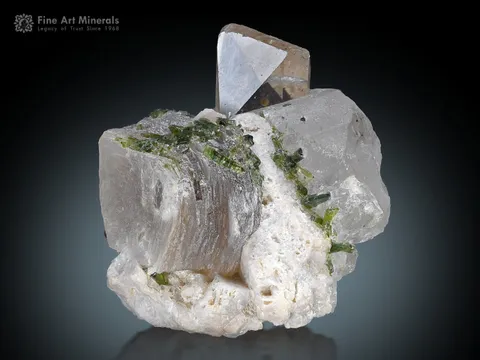
The collector’s picture of Chhappu has sharpened dramatically in the 2020s. Earlier references placed the village among the Braldu Valley gem localities; later trade and museum documentation have made the name familiar through pale to lime-green elbaite clusters, prismatic quartz, blocky to rounded pollucite, and especially large viitaniemiite crystals—an astonishing development for a species that is normally a connoisseur’s rarity in small crystals. The best specimens are not just “rare species” pieces; they are aesthetic pegmatite combinations: milky-white, translucent viitaniemiite rising from lime-green elbaite; pollucite masses perched with tourmaline sprays; and sharp green tourmalines standing cleanly on colorless quartz or feldspar.
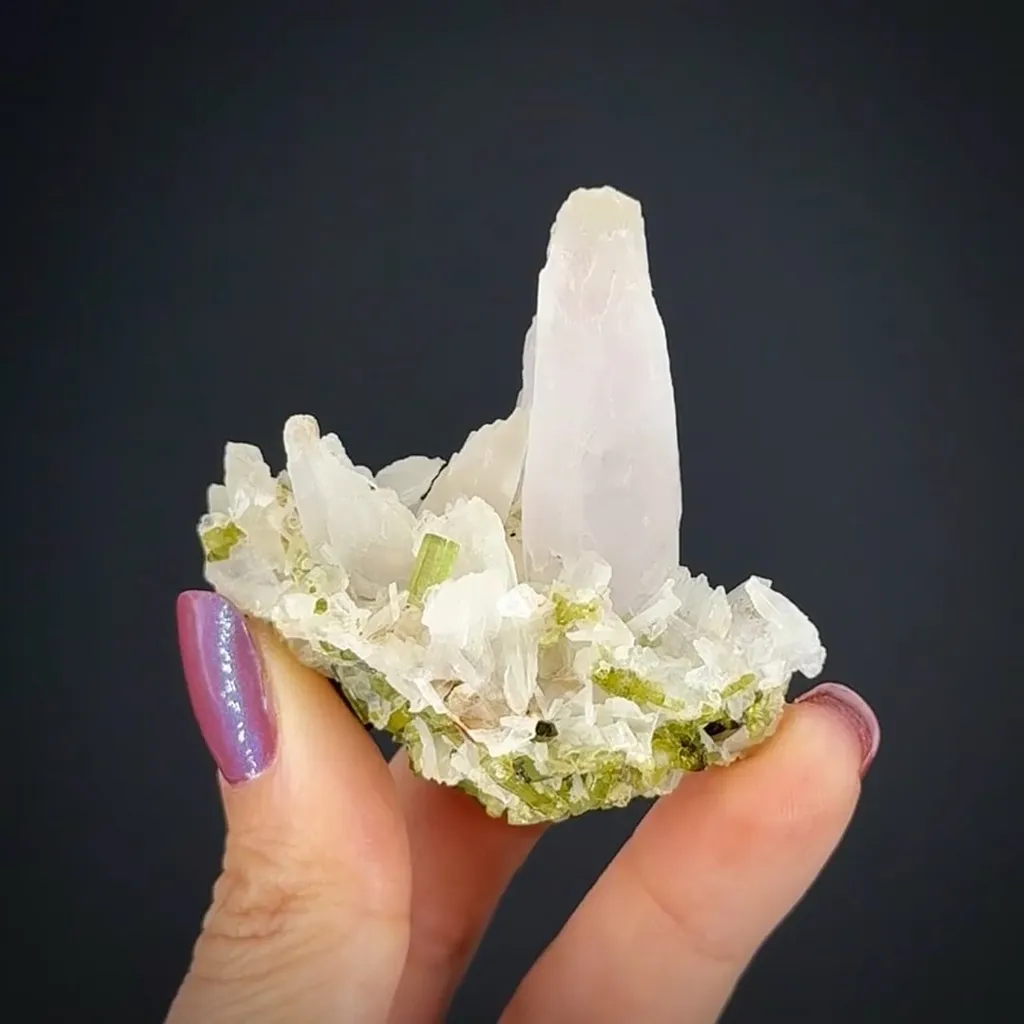
Photo: EarthWonders specimen record
Search for specimens:
Chhappu is recorded at approximately 35.74278 N, 75.61944 E, with older or variant labels including Chokpiong and Chappu. The village is described as being at the junction of the Hoh and Braldu rivers, about 7 km east of Apo Ali Gun, placing it squarely within the classic Braldu Valley pegmatite belt of the Shigar District. In older dealer labels the locality may be shortened to “Chapu Mine,” “Chappu,” “Skardu,” or “Braldu, Shigar Valley,” but serious locality work should preserve the Chhappu–Braldu Valley–Shigar District hierarchy whenever it can be supported.
The deposit type is a complex granitic pegmatite occurrence, best regarded in collector terms as a lithium-cesium-tantalum-influenced pegmatite system within the broader Karakoram pegmatite province. Regional studies of the Shigar Valley describe gem-bearing pegmatite dikes and veins intruded into metasedimentary and meta-igneous rocks of the Karakoram Metamorphic Complex, with gemstones concentrated in pockets and cavities in zoned bodies. Chhappu’s mineral list—elbaite, pollucite, polylithionite, montebrasite, tantalite-(Mn), microlite-group minerals, beryllonite, hydroxylherderite, topaz, aquamarine, fluorite, quartz, feldspars, and viitaniemiite—marks it as more chemically evolved than the ordinary quartz-feldspar-mica pegmatites of the district.
The “ore bodies” here are not ore bodies in the industrial sense so much as pegmatite dikes and pocket zones worked for specimen and gem material. The economically meaningful zones are miarolitic cavities, replacement-rich phosphate zones, feldspar-quartz masses, and late-stage pockets where boron-, fluorine-, lithium-, cesium-, beryllium-, manganese-, and tantalum-bearing phases crystallized or altered. Primary feldspar, quartz, mica, tourmaline, and phosphate minerals formed the coarse pegmatite framework; later fluids altered primary phosphates such as montebrasite-group material and related phases, producing secondary phosphates including viitaniemiite in favorable pockets.
No reliable public record identifies Chhappu as a large industrial mine run by a named corporate operator. Its specimen history reads instead like much of northern Pakistan’s pegmatite country: small workings, local miners, seasonal access, dealer-financed recovery, and production that enters the international market through Peshawar, Skardu, Tucson, Munich, online dealer lists, and auction channels. Chhappu appears in the published gem-locality literature by the early 2000s, but its modern collector reputation rests especially on post-2020 specimens—green elbaite on quartz, pollucite combinations, and the remarkable viitaniemiite finds that brought the locality to the attention of rare-species collectors.
The notable pockets documented in the trade include a 2023 tourmaline pocket that yielded yellow-green to chrome-green prismatic crystals on colorless quartz, and a 2024 viitaniemiite pocket that produced miniature to small-cabinet specimens with elongated, milky-white crystals associated with translucent green elbaite. A few specimens show tourmaline crystals measured in the 2.8–3.5 cm range on quartz, while major pollucite pieces from the locality have reached cabinet scale; one museum-quality combination, nicknamed “The Snail,” is a large white pollucite crystal on orthoclase with green tourmaline crystals and a translucent elongated quartz crystal. These finds have made Chhappu more than a map point: it is now a recognized source for high-grade, highly evolved pegmatite combinations from Pakistan.
Collecting access should be treated as restricted, local, and conditions-dependent. The Braldu Valley is remote, mountainous terrain, and productive pockets are tied to active local workings rather than casual public collecting. Specimens on the market should be judged by provenance, dealer reliability, and the internal consistency of the assemblage. For collectors, the most desirable labels are those that avoid a vague “Skardu” catchall and preserve “Chhappu, Braldu Valley, Shigar District, Gilgit-Baltistan, Pakistan.”
Chhappu tourmaline is chiefly prized as elbaite-rich green to yellow-green material from lithium-bearing pegmatite pockets, commonly occurring as lustrous, vertically striated prisms on quartz, albite, pollucite, or rare phosphate matrix; the best pieces show translucent to gemmy crystals, fresh lime to olive to intense green color, and crisp termination quality rather than the more ordinary broken sprays and partial prisms. Recent specimens have included yellow-green tourmalines to about 3.5 cm on gemmy colorless quartz, doubly terminated crystals around 2.8 cm with deeper green caps and paler yellow-green midsections, and occasional nearly colorless achroite zones; the finest examples are judged by color saturation, transparency, undamaged terminations, sculptural spacing on matrix, and associations with Chhappu’s signature pollucite or viitaniemiite.
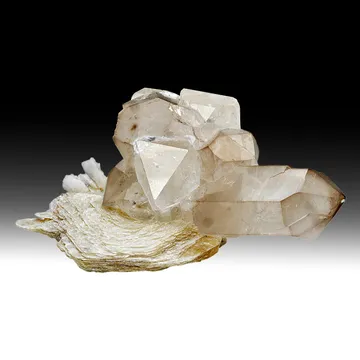
Quartz from Chhappu is important less as a stand-alone species than as the clean architectural matrix for the locality’s tourmaline, pollucite, feldspar, and viitaniemiite combinations: specimens show colorless to translucent prismatic crystals, glassy points, and elongated crystals that may carry or contain green tourmaline. In the best Chhappu pieces quartz provides contrast—clear, pale, or milky-white against lime-green elbaite and white pollucite—while ordinary examples are merely broken pegmatite quartz without composition; collectors should look for sharp terminations, bright luster, transparency, natural attachment, and quartz that visibly participates in the pocket aesthetics rather than serving as anonymous matrix.
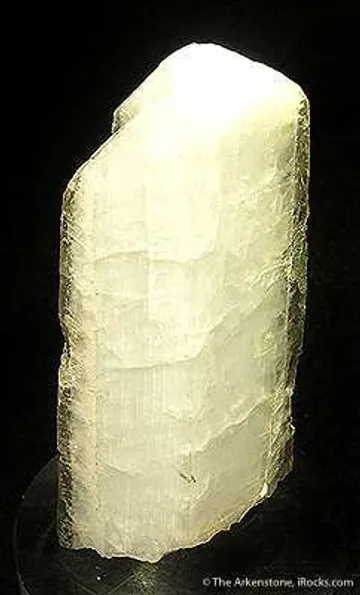
Chhappu has become one of the most exciting modern localities for viitaniemiite because it has produced crystals of a size and display quality rarely encountered for this sodium-calcium-manganese-aluminum phosphate; documented specimens show elongated milky-white to near-colorless, translucent prismatic crystals, commonly with lime-green elbaite and quartz, and some pieces from the 2024 pocket carry crystals from sub-centimeter size to more than 5 cm on small-cabinet specimens. Viitaniemiite here is a secondary phosphate formed by alteration of primary pegmatite phosphates under late fluid conditions, and the great Chhappu examples are those with sharp monoclinic form, translucency, intact faces, minimal bruising along prism edges, and an undisturbed natural relationship to the elbaite-rich pocket matrix.
Pollucite is one of the locality-defining minerals at Chhappu, occurring as white to translucent cesium-rich masses or crystals in association with green tourmaline, quartz, albite, orthoclase, and locally viitaniemiite; cabinet specimens have been documented with pollucite bodies several centimeters across, including a 7 x 6 x 2.5 cm pollucite on a 12 cm specimen and much larger display pieces weighing several kilograms. The finest Chhappu pollucites are not judged only by size: they need recognizable form, translucency, clean contrast against feldspar or quartz, and natural-looking tourmaline relationships, with top combinations showing green elbaite crystals emerging around or through the pollucite rather than a shapeless white mass with a few scattered attachments.
Elbaite from Chhappu is the colored heartbeat of the locality’s best specimens: lime-green, olive-green, yellow-green, and locally near-colorless crystals occur as slender to stout striated prisms, commonly under or around pollucite and viitaniemiite and on colorless quartz or feldspar. The finest elbaite pieces from Chhappu have bright luster, translucency to transparency, well-defined terminations or attractive doubly terminated form, and convincing pocket placement; especially desirable are crystals with deeper green caps, pale achroite sections, or balanced sprays that frame the rarer white species instead of overwhelming them.
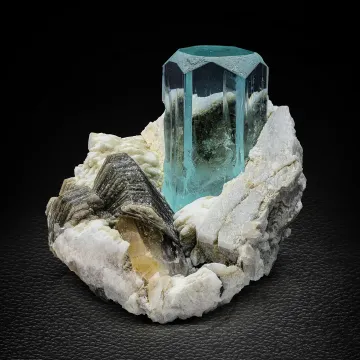
Other documented Chhappu minerals broaden the locality beyond its headline species: albite, microcline, muscovite, polylithionite, fluorophlogopite, beryl including aquamarine, topaz, fluorite, beryllonite, hydroxylherderite, montebrasite, tantalite-(Mn), microlite-group minerals, rhodochrosite, and apatite-group material all belong to the recorded assemblage. No verified type-locality mineral is tied to Chhappu itself, but the occurrence is important for the collector record of viitaniemiite because large, aesthetic crystals from Chhappu are exceptional for a species first described from Finland and long regarded as a rare pegmatite phosphate.
Chhappu specimens require the same disciplined authentication expected of any high-value Pakistani or Afghan pegmatite material, with extra attention paid to glued combinations and over-broad labels. Green elbaite, quartz, pollucite, and viitaniemiite are all visually compatible in the Chhappu assemblage, but compatibility is not proof of natural attachment. Check contact points under magnification for adhesive films, unnatural dust packing, repeated granular filler, mismatched luster, or crystals seated into scratched recesses. This is especially important for tourmaline-on-quartz and tourmaline-on-pollucite pieces, where a convincing composition can be created from real but unrelated components.
Treatment and enhancement concerns are not limited to Chhappu, but they matter here because specimens commonly pass through Pakistan’s major gem-trading centers before reaching international buyers. Irradiation has been reported as a concern for Pakistani and Afghan tourmaline, beryl, and topaz in the broader trade, and glued or reconstructed matrix specimens are a documented issue in Pakistan’s gemstone markets. For Chhappu, the most practical collector rule is simple: assume that fine tourmaline combinations, especially those with improbable balance or suspiciously perfect matrix placement, deserve close inspection and, for high-end pieces, written disclosure from a trusted dealer.
Condition issues are typical of pocket pegmatites but amplified by the locality’s species mix. Elbaite terminations bruise easily, and small side crystals may show contact marks where they were attached to quartz or another tourmaline. Quartz points can be chipped along terminations and edges. Pollucite may appear rounded, etched, massive, or cleaved-looking, so form alone is not enough; look for surface continuity and undisturbed attachments. Viitaniemiite has a moderate hardness and is far rarer than the other display species, so broken terminations, rubbed prism edges, and repaired crystals have a disproportionate effect on value.
Fluorescence is not a principal buying factor for Chhappu material. The locality is bought for color, species rarity, pegmatite associations, and pocket aesthetics. Handling should be conservative: avoid ultrasonic cleaning for mixed-species specimens, avoid acids unless the mineralogy is fully understood, and never soak combinations with suspected repairs. Viitaniemiite, pollucite, lithium micas, feldspars, and secondary phosphates can all present surfaces or attachments that respond poorly to aggressive cleaning.
Rarity varies sharply by species. Quartz and green tourmaline combinations are available intermittently; good Chhappu-labeled examples remain scarcer than more generic “Skardu” or Afghan tourmalines. Pollucite from Chhappu is distinctly more specialized and becomes rare in well-composed cabinet specimens. Viitaniemiite is the connoisseur prize: the 2024 pocket material made the locality visible, but large, clean, aesthetic examples should still be treated as limited-pocket production rather than a continuing commodity.
The name Chhappu entered the collector conversation with a bit of spelling fog around it. At the 2021 Munich Show, a viitaniemiite specimen was first being handled under the dealer spelling “Chappu,” described as a new mine name. Mindat managers and collectors compared that label with the known village of Chhappu in the Shigar–Braldu area, where lithium pegmatites and phosphates were already plausible, and the specimen locality was adjusted toward Chhappu. It is a small episode, but a revealing one: in the Karakoram pegmatite trade, a single added h or a shortened “Skardu” label can blur a scientifically meaningful locality.
Then came the viitaniemiite. A species that most collectors knew, if at all, as a rare phosphate suddenly appeared from Chhappu in crystals big enough to command attention from across the room. The Mineralogical Record illustrated an 8 cm group from the Chappu mine in a 2022 Tucson report, and by 2026 Tom Moore was writing about a 2024 Chhappu pocket represented by five Arkenstone specimens: four miniatures and a 6 cm cabinet piece. The crystals were described as elongated, milky white, and associated with translucent green elbaite; one 4.2 cm example was priced at $2,250. For a mineral that had first caught broad collector notice through an outrageously large Paprok, Afghanistan crystal in 1991, Chhappu’s pocket was a second dramatic act.
Pollucite supplied its own showpiece. In the mim Museum selection of “50 Best of Species” displayed for Mineral City, Chhappu appeared through a specimen nicknamed “The Snail”: a 16.5 x 15.5 x 13.5 cm pollucite, orthoclase, tourmaline, and quartz combination. Its description reads like a checklist of the locality’s best visual traits: a white pollucite crystal with well-defined faces and edges, an orthoclase matrix pierced by numerous translucent, lustrous green tourmalines more than 5 cm long, and a very elongated translucent quartz crystal carrying tourmaline inclusions. Few localities can be summarized by a single specimen; Chhappu can nearly do it with that one.