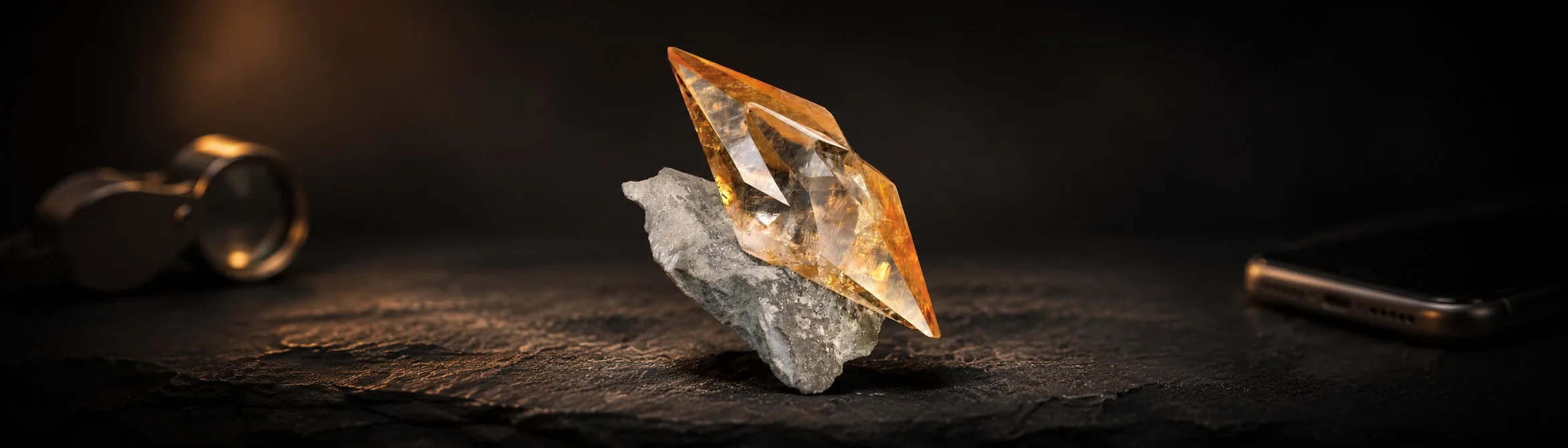
A photo shows color and shape, the two properties most likely to mislead. Here is how to photograph an unknown mineral, what details to add, and where to ask so other collectors can actually identify it.
"What is this?" is one of the most common questions in mineral collecting, and these days it usually arrives as a photo. A crystal from a rock shop with no label, a heavy stone from a creek bed, a box of pieces inherited from a relative. You take a picture, run it through an app or post it online, and hope.
Sometimes that works. Often it doesn't, and the problem is rarely the people answering. A photo captures color and shape, the two properties most likely to mislead. It can't capture hardness, weight, streak or where the piece came from, which are usually what settle an ID. This guide covers why photo IDs go wrong, how to photograph an unknown so other collectors can help, what to write alongside it, and what to do when pictures aren't enough. For the hands-on tests themselves, see How to Identify a Mineral: A Practical Guide, No Lab Required.
Why photo IDs go wrong
Lookalikes. Plenty of unrelated minerals share a color and a crystal shape. Colorless, glassy, pointed crystals are the classic case: quartz and calcite can look almost the same on a screen. In person, a steel knife or a drop of dilute acid separates them in seconds, because calcite is much softer and fizzes. In a photo, nobody can scratch anything.
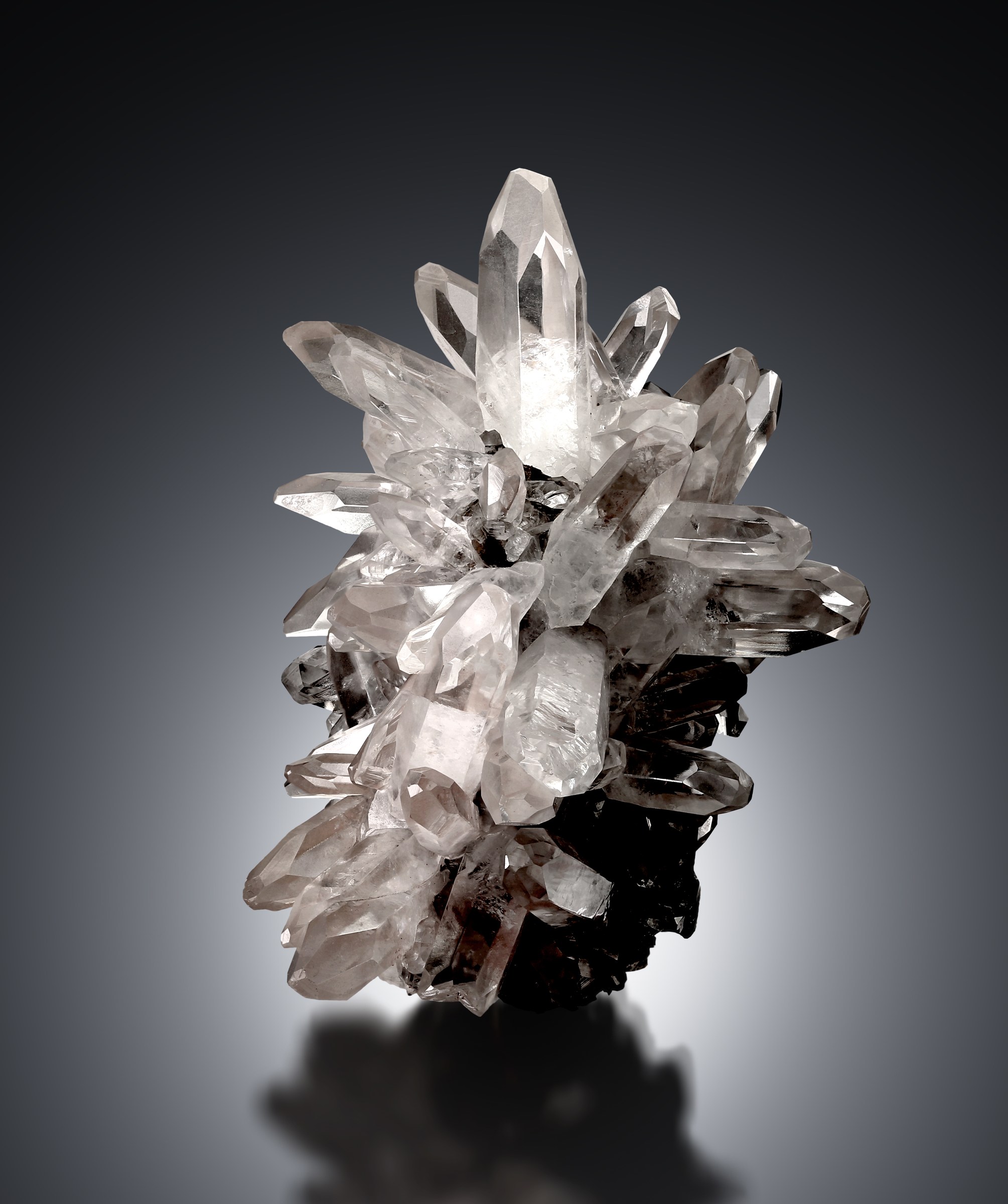
Calcite, Frizington, England, UK. Colorless, glassy and pointed, this cluster would pass for quartz in most photos. Photo courtesy of Fabian Wildfang. View the specimen.
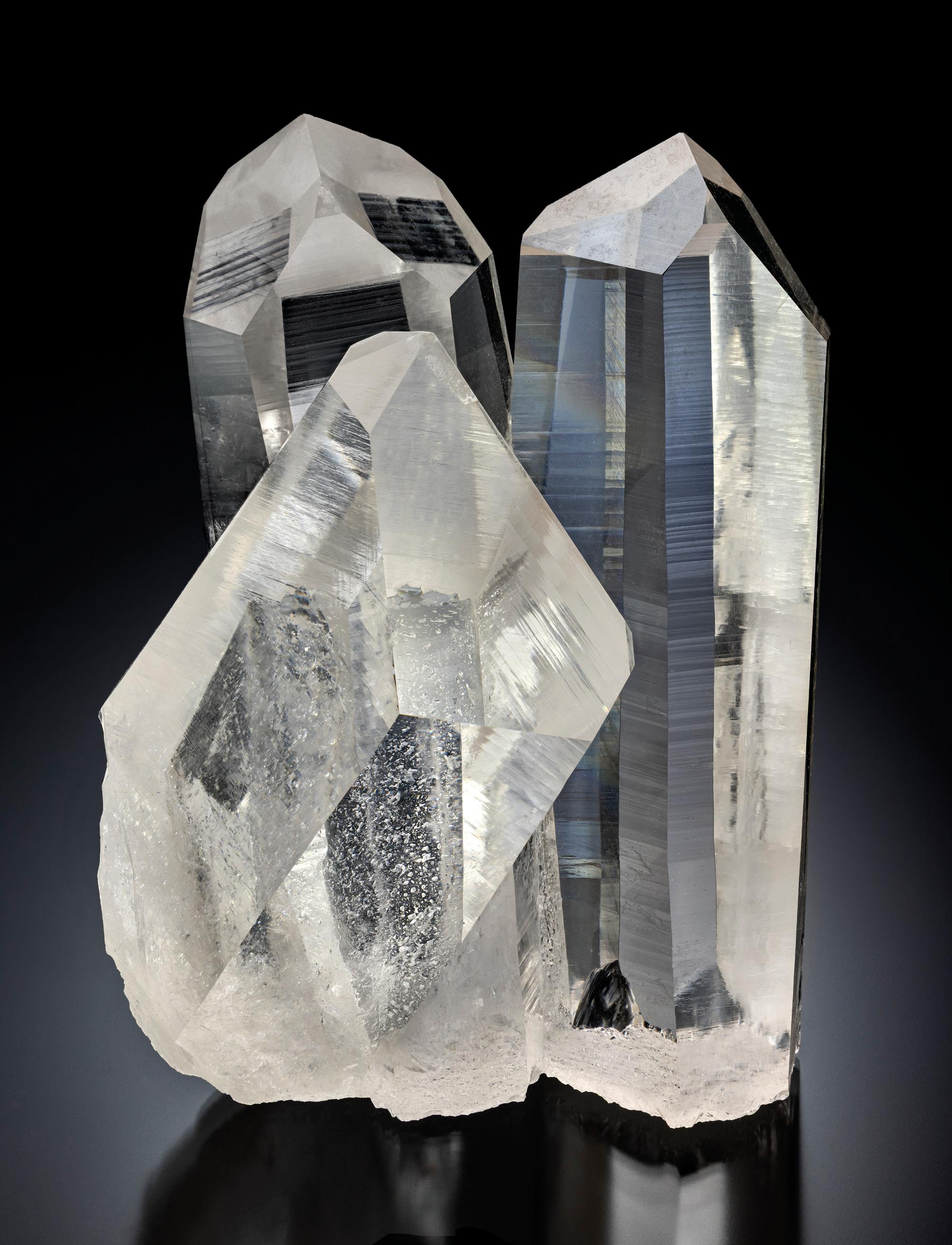
Quartz, Avant Mine, Arkansas, USA, for comparison. Next to the calcite above, the difference is hard to see on a screen, which is why helpers ask for crystal-face close-ups and test results. Photo courtesy of Kevin Brown (photo by László Kupi). View the specimen.
Color. Color is one of the weakest clues a mineral offers. Fluorite alone comes in purple, green, blue, yellow, pink and colorless, and the same shade of green can belong to many different species. Lighting and phone cameras add their own errors: warm indoor bulbs, automatic white balance and filters can push a pale stone toward a color it doesn't have.
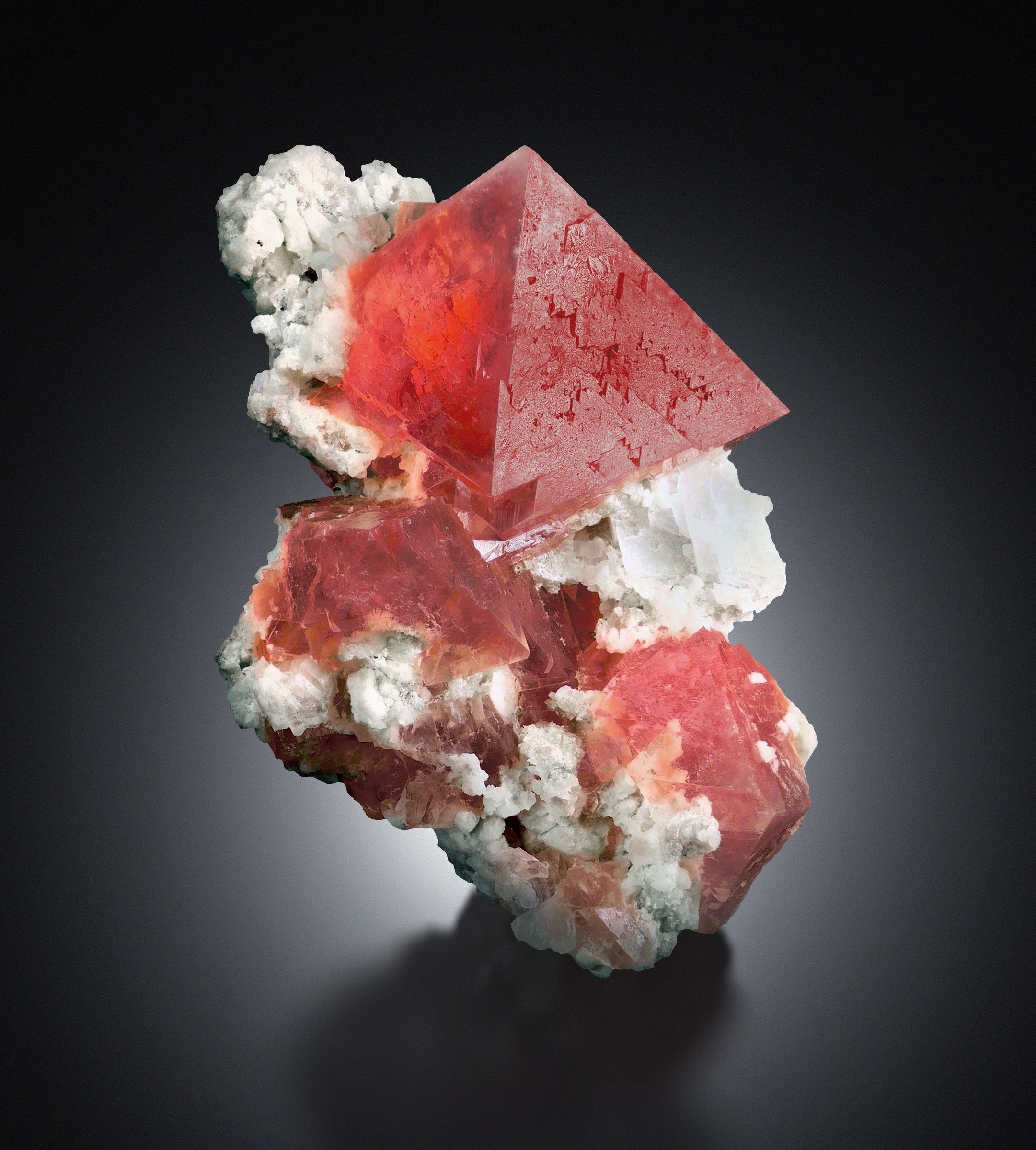
Fluorite, Chamonix, Chamonix-Mont-Blanc, Auvergne-Rhône-Alpes, France. Anyone who knows fluorite as purple or green might not guess this pink octahedron. Its crystal shape and its locality are better clues than its color. Photo courtesy of Fabian Wildfang. View the specimen.
Imitations and treatments. Glass, dyed stone and heat-treated material are made to look right, and a photo is where they look most convincing. "Opalite" is glass. Dyed howlite and magnesite are common turquoise imitations. Much of the citrine on the market started out as amethyst. Our posts on quartz versus glass and heat-treated citrine show how much of the evidence only turns up with the stone in hand. Our guide to fake, dyed and lab-grown crystals covers the most common imitations and treatments.
Treat an app answer as a lead, not a label
A photo-ID app works from the same thing a person viewing your picture has: how the stone looks. It can't scratch it, weigh it or check its streak, and it knows nothing about where the piece came from unless you tell it. Published accuracy figures for these apps mostly come from the companies that make them or from informal reviews, and careful independent testing is hard to find.
That doesn't make an app useless. It makes it a starting point. When you get an answer:
- Look at the alternatives, not just the top pick. If the app offers three candidates, all three are still in play.
- Check the candidate against your piece. Look up the species' hardness, streak, typical habit and localities. An EarthWonders species page gathers a description, gallery specimens, localities and related guides in one place, so you can compare your piece with confirmed examples.
- Ask whether it occurs where yours came from. A species that has never been reported anywhere near your find is a red flag.
- Be most skeptical of exciting answers. If an app says meteorite, emerald or gold, test before you believe it.
How to photograph a piece for identification
An ID photo is not a display photo. A display shot flatters the specimen. An ID shot documents it, flaws and all. Our iPhone photography guide covers the setup for beautiful pictures; for identification, aim for honest and complete.
The most common request in Facebook rock groups, and a frequent one on Reddit, is some version of "Found an interesting rock, does anyone recognize it?" with two blurry photos of a stone or slab held in a hand. A hand gives only a rough sense of size, covers part of the piece, and two shots rarely show more than one face. Set the piece on a plain surface, put a ruler or coin beside it, and work through the list below.
Light. Indirect daylight near a window beats lamps and harsh sun. The California Geological Survey gives the same advice in its Ask Rocky photo guidelines, along with a plain gray or tan background. Turn off the flash, filters and portrait mode, and don't adjust color afterward.
Focus. A blurry photo is the fastest way to get no answer at all. Wipe the lens, steady the phone and tap to focus on the crystals.
The shot list:
- The whole specimen, entirely in frame, with a ruler marked in millimeters beside it
- Each side and the base
- Sharp close-ups of the best crystal faces, using macro mode or a loupe held over the lens
- Any broken or fresh surface
- A backlit shot if the piece is translucent
- The rock it sits on, if any
- A short video of the piece turning in the light, which shows luster and transparency better than any still
Show the inside, not just the rind. Field finds are often coated in iron staining, dirt or lichen, and a weathered rind can differ in color and luster from the fresh mineral underneath. If there is already a broken face, photograph it next to the weathered outside and say which is which. Think twice before breaking a piece for a better look, because a break can't be undone.
Shoot it dry, then wet. On a dry, rough or dusty surface, much of the light bounces straight back as white glare, which washes out color. A thin film of water smooths the surface and cuts that glare, so more color and pattern from inside the stone show through. That is why a pebble looks brighter in a stream than on a shelf, and why helpers want both versions: the wet photo shows color and banding, the dry one shows true luster and texture. Label them. Plenty of collectors lick a rock to wet it, but a damp cloth or spray bottle wets the whole face evenly and keeps an unknown, possibly toxic mineral away from your mouth. Skip water if the piece might dissolve or crumble; how to clean minerals by type lists the species that water damages.
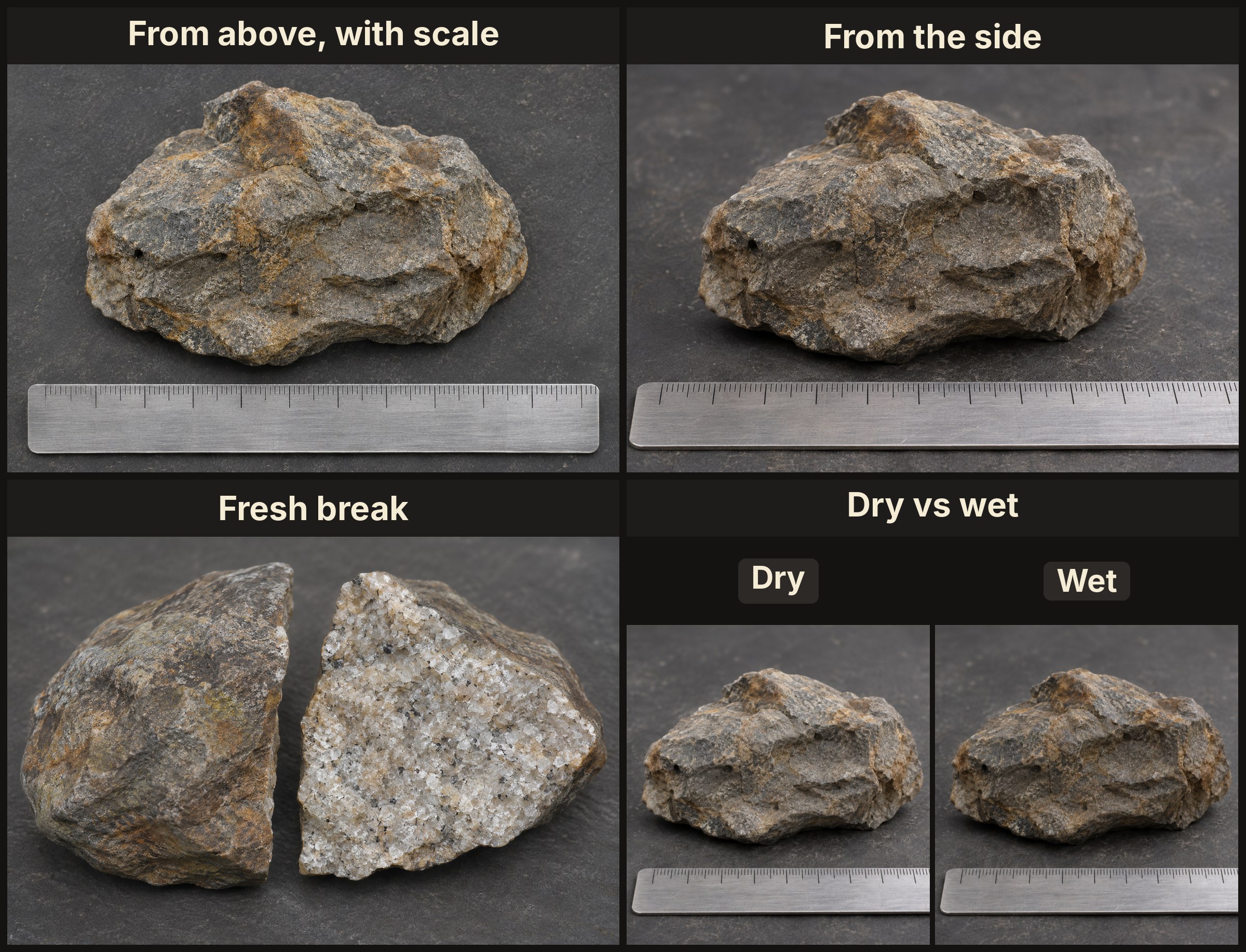
Illustration: An ID photo set for an unknown rock on a plain dark gray surface: the whole rock seen from above at an angle with a millimeter ruler, a side view with the ruler in front, a fresh break showing pale, granular rock under the brown weathered outside, and the side view photographed dry and then wet, when the rock looks slightly darker.
Write down what the camera can't see
The details you add often matter more than the photo. Colorado State University's geosciences department, which answers identification requests by email, asks for the find location, approximate weight and whether the rock is magnetic along with a photo that includes a ruler. A good request covers:
- Where it came from, as precisely as you know it: the mine, quarry, road cut or beach, plus county, state and country. If you bought it, say where, and what the seller called it.
- Size and weight, in centimeters and grams.
- Any tests you did and the results: scratch, streak, magnet, acid, UV, or whether it feels unusually heavy for its size.
- What it was found with or attached to.
- Anything done to it that you know of: polished, tumbled, oiled, coated or glued.
- Your own best guess, and why.
Locality usually helps most, because any one deposit yields a limited, well-documented set of species. "Clear crystal, 4 cm, from a quarry in Ohio, scratched by a knife, fizzes in dilute acid" can often be answered in one reply. "What is this?" with a dim photo usually can't.
Where to ask
On EarthWonders, you can send the question straight to the site's expert panel with Ask an Expert. The panel is made up of experienced collectors and mineral specialists invited by the EarthWonders team, and asking is free once you are logged in. For a piece of your own, start a question from the bar above the home feed or from Help in the menu, then use + to add your photos and the details above. The question goes to a private chat that any expert on the panel can answer, and replies arrive in your Messages.
To ask the wider community, make a post. Choose Create a post in the Create menu and you can add up to ten photos or videos and up to 5,000 characters of text. Signed-in members can comment, and an @mention brings a specific collector into the conversation. The posts and blog help page walks through the steps.
The community guidelines list helping with identification among the things members are encouraged to do, and ask everyone to say "I don't know" rather than guess. When replies come in, value one that explains its reasoning over one that only sounds sure.
Off the screen, local rock and mineral clubs, mineral shows, university geology departments and some state geological surveys will look at unknowns. Some limit help to local finds, and they generally do not appraise value.
When photos aren't enough
Fine-grained rocks, altered material, rare species and convincing imitations often can't be settled from images, however good. In rough order of effort:
- Run the basic tests yourself and post the results. The identification guide covers luster, hardness, streak, cleavage and the special tests.
- Get it seen in person at a club meeting, a show or a university open house.
- Use a lab when the answer matters. X-ray diffraction usually needs a small powdered sample. Raman spectroscopy is generally non-destructive. For cut gems, use a gemological laboratory. Fees and access vary, so ask first.
Until then, record the identification as tentative. Our cataloging guide explains why that flag protects a collection's credibility, and if you add the piece to EarthWonders while you wait, the help center suggests keeping the record as a draft rather than guessing at the species.
Common questions
Are rock identification apps accurate?
They can be a useful first guess for common, distinctive minerals, but careful independent testing is scarce. Treat the answer as a candidate and check it against the species' properties and localities.
Where can I get a mineral identified for free?
On EarthWonders, Ask an Expert is free once you're logged in, and a post puts the question to the wider collector community at no cost. Local clubs and some university geology departments and state geological surveys also look at photos, though some take only local finds, so check each one's terms first.
This is part 1 of our "What Am I Looking At?" series.