Yukon, Canada: a key locality for phosphates like lazulite on siderite and quartz, with rare wardite and gormanite; Klondike native gold and historic silver-le…
Key facts
Yukon is not a single-mine locality in the usual collector sense; it is a northern mineral province whose specimens tell two very different stories. The first is the famous Richardson Mountains phosphate belt of Rapid Creek, Big Fish River, Boundary Creek and nearby camps, where Cretaceous phosphatic ironstones and shales yielded one of the world’s most distinctive low-temperature phosphate assemblages. The best specimens from this belt are instantly recognizable: dark indigo to blue-green lazulite in sharp twinned wedges and blocky crystals on bronze-brown siderite, bright quartz, white wardite, augelite, gormanite, whiteite-group minerals and a long suite of rare phosphates, some of them type-locality species. The second story is the Klondike and the broader Yukon gold fields, where native gold from creeks around Dawson City made the territory a household name and still anchors the public image of Yukon mineral collecting.
Regional View
Country View
For the serious collector, Yukon’s great cabinet pieces are most often the phosphates: lazulite on siderite, quartz and fluorapatite from Rapid Creek and Crosscut Creek; whitlockite and related whitlockite-type material from Big Fish River; wardite and gormanite from the same rare-mineral province; and the occasional old-time specimen with a 1970s Royal Ontario Museum, Geological Survey or early dealer provenance. Yukon gold is different in character. Much of it is placer gold, recovered as nuggets, flakes, hackly masses and waterworn pieces from creek gravels, not as the matrix crystallized gold familiar from some hard-rock districts. Keno Hill adds a third collector thread: silver-lead-zinc vein mineralization with native silver, acanthite and silver sulfosalts in quartz-carbonate-siderite gangue, historically important even where fine collector pieces are much less common than the phosphate classics.

Photo: Wikimedia Commons
Search for specimens:
Yukon’s collector mineralogy is dominated by three geological environments. The first is the Rapid Creek–Big Fish River phosphatic ironstone province in the northern Richardson Mountains. There, the Rapid Creek Formation and equivalent phosphorite-rich ironstone facies consist of cyclic, shallow-marine Cretaceous strata: sideritic mudstones and shales, phosphatic mudstones, pelletal phosphorites, carbonates and quartz-rich beds. The collector minerals were not mined as ore. They formed principally as epigenetic fracture fillings, veins, breccia fillings, replacements and nodules within a sedimentary Fe-P system, rather than in a pegmatite or high-grade metamorphic setting. That unusual setting is part of the fascination: minerals that collectors often associate with pegmatites or metamorphic phosphate environments occur here in sedimentary ironstone and shale, in elegant and sometimes astonishingly sharp crystals.
Rapid Creek itself became famous for veins and clefts carrying lazulite, wardite, siderite, quartz, fluorapatite, augelite, gormanite, whiteite-group species, kulanite, penikisite, rapidcreekite and associated rare phosphates. The best-known collecting areas include Kulan Camp and Crosscut Creek, with named localities and numbered spots recorded in the Mineralogical Record literature. Big Fish River is especially important for phosphatic nodules, some interpreted as recrystallized replacements of ammonites and pelecypods, and for rare Fe-Mg-Na-Ca phosphates including satterlyite, wolfeite, marićite, nahpoite, wicksite and whitlockite-type minerals. In the field, the mineralization is not evenly distributed: productive pockets and seams are localized along bedding, fractures, small veins, fault-related zones and talus derived from very particular beds.
The initial modern recognition of the phosphate belt came from blue lazulite-bearing material collected in the early 1960s from creek gravels in the Blow River–Rapid Creek area. The occurrence drew renewed attention in the early 1970s when Geological Survey of Canada work and mineral exploration highlighted the phosphatic ironstone. In 1974, Al Kulan of Welcome North Mines examined and staked the thickest ironstone developments while prospecting for iron; work with Bethlehem Copper Corporation followed. The ironstone proved unattractive as an iron resource because of grade, clay-phosphate dilution and remoteness, but the claims yielded the collector discovery: crystallized lazulite, wardite and a cluster of new and rare phosphates that soon brought Royal Ontario Museum mineralogists and other specialists into the story. Lazulite was proclaimed Yukon’s official gemstone in 1976, a fitting choice for a territory whose best blue mineral is more important to collectors than to jewelers.
Access to the Richardson Mountains phosphate localities has always been difficult and is now not a casual collecting proposition. The area is remote, weather-limited, bear country, and historically required aircraft or helicopter support. By the late 1970s the northern Yukon was subject to withdrawal from ordinary mineral disposition pending park and land-claim arrangements, and government documents from the 1980s refer to restrictions on staking, prospecting and legal collecting in the lazulite areas. Modern collectors should treat Rapid Creek and Big Fish River material as a provenance-driven old-stock market, not as a destination for independent collecting. Permission, land status, mineral rights, conservation rules and Indigenous land interests must be confirmed before any field activity; without explicit authorization, collectors should not assume that historical collecting localities are open.
The Klondike gold fields form the other great Yukon mineral story. Gold was found on Rabbit Creek, renamed Bonanza Creek, in August 1896 by the party of George Carmack, Kate Carmack, Skookum Jim and Dawson Charlie. The early Klondike placers were stream-gravel deposits in an unglaciated landscape, where gold concentrated near or on bedrock in pay streaks after weathering from bedrock sources that include auriferous quartz veins in schistose rocks. Bonanza, Eldorado, Hunker and Dominion creeks became iconic names, and Dawson City grew at the confluence of the Yukon and Klondike rivers. Early hand mining gave way to corporate dredging, with the Canadian Klondike Mining Company and later Yukon Consolidated Gold Corporation transforming creek valleys with bucket-line dredges. Dredge No. 4, built in 1912, operated first in the Klondike valley and later on Bonanza Creek, and now stands as a massive preserved monument to the industrial phase of Yukon placer gold.
Keno Hill, in central Yukon near Mayo and Keno City, is primarily an ore district rather than a classic specimen district, but it deserves attention in any serious Yukon guide. Its silver-lead-zinc vein-fault deposits produced more than two hundred million ounces of silver historically and yielded mineral assemblages zoned across the district: pyrargyrite, native silver, polybasite, stephanite and acanthite in quartz-siderite veins toward the west; siderite, galena, sphalerite and freibergite in many deposits; deeper pyrrhotite and arsenopyrite zones; and calcite- or quartz-arsenopyrite-rich vein fractions toward the east. Collectors encounter Keno Hill labels less often than Rapid Creek labels, but old pieces of native silver, acanthite, pyrargyrite or silver sulfosalts from the district carry real historical weight.

Photo: Wikimedia Commons
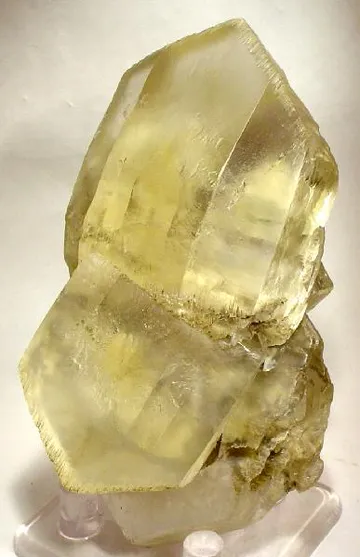
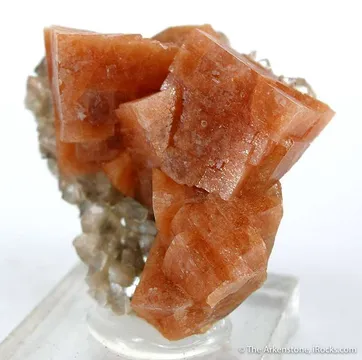
Yukon whitlockite is principally a Big Fish River collector mineral, tied to the same phosphatic ironstone and shale system that made Rapid Creek famous but represented by a different style of occurrence: nodular and fracture-related Fe-Mg-Ca phosphate assemblages rather than the showy lazulite-siderite plates of Crosscut Creek. The best Yukon pieces show translucent to milky white, colorless or pearly tabular crystals and aggregates perched on dark phosphate-rich matrix, commonly in association with gormanite, augelite, kulanite, collinsite, quartz and siderite; some material was historically entangled with the “bobdownsite” story, because fluorine-dominant whitlockite-type material from Big Fish River was described and later re-evaluated. Fine specimens are valued for clean, distinct crystals, verifiable Big Fish River provenance, and association with the rare phosphate suite; ordinary pieces can be pale, massive, confused or dependent on analysis for confident identification.
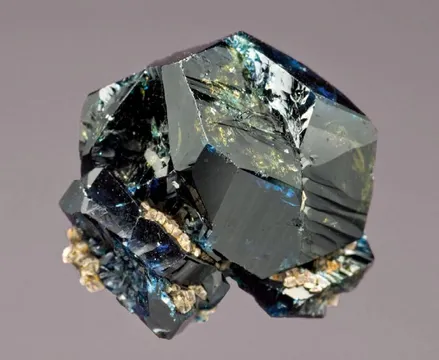
Lazulite is Yukon’s signature display phosphate, especially from Rapid Creek, Crosscut Creek and the Kulan Camp area, where it occurs as deep blue to greenish-blue wedge-shaped crystals, platy groups, rosettes and complex blocky twins on siderite, quartz, fluorapatite, wardite and other phosphate minerals. Crystals from the classic finds are commonly small but visually powerful, with millimeter to centimeter crystals set in sharp contrast against brown siderite rhombs and bright quartz; government and collector sources record Yukon lazulite crystals reaching several centimeters, though most attractive cabinet pieces display crystals in the sub-centimeter to roughly centimeter range. The best specimens combine saturated blue color, high luster, sharp twinning, undamaged terminations, open composition and the classic quartz-siderite association, whereas lesser pieces may be dark, bruised, embedded in ironstone or visually lost in massive blue crusts.
Yukon quartz is rarely the headline species in the phosphate suites, but it is one of the visual engines that makes Rapid Creek and Big Fish River specimens work: small water-clear to white crystals sparkle among lazulite, siderite, fluorapatite, wardite and rare phosphates, and quartz-rich beds and veinlets are integral to the sideritic ironstone setting. On Rapid Creek pieces, quartz can appear as bright isolated points, drusy linings, or small transparent crystals perched among dark blue lazulite and bronze-brown siderite; at Big Fish River it is also part of nodule and vein assemblages with Fe-Mg phosphates. Good Yukon quartz specimens are not judged as quartz in isolation, but by how cleanly the quartz opens the composition, adds brightness, and documents the phosphate paragenesis; matrix pieces with balanced quartz, blue lazulite and rhombohedral siderite are far more desirable than loose, ordinary quartz crystals with only a broad Yukon label.
Yukon gold is overwhelmingly associated in collectors’ minds with the Klondike placer fields around Dawson City, where nuggets, flakes, dust and hackly waterworn masses were recovered from creeks such as Bonanza, Eldorado, Hunker, Dominion and Indian River drainages after erosion from bedrock sources including auriferous quartz veins in metamorphic rocks. Specimen-quality pieces range from small bright flakes and nuggets to larger, rounded or flattened placer forms; crystalline aesthetics are generally less common than in lode-gold districts, so collectors prize mass, natural texture, old Dawson or Klondike provenance, and pieces still attached to quartz or schist matrix when convincingly documented. The finest Yukon gold specimens are those with undisturbed natural surfaces, strong provenance to a named creek or old collection, and attractive form rather than merely high bullion weight.
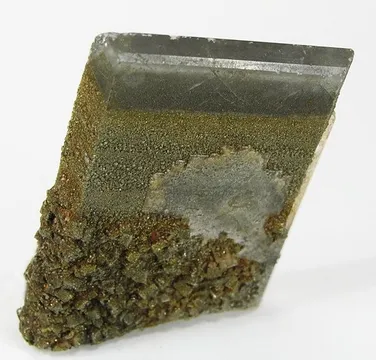
Siderite is the essential brown counterpoint of the Rapid Creek phosphate aesthetic, occurring both as a major component of the phosphatic ironstone host and as translucent brown, bronze, yellow-brown to chocolate rhombohedral crystals in the same clefts that carry lazulite, quartz, wardite, fluorapatite and rare phosphate species. In the best Rapid Creek pieces, siderite is not just matrix: it forms crisp rhombs or drusy carpets that set off blue lazulite and colorless quartz with superb contrast. Collectors look for fresh luster, distinct rhombohedral form, minimal oxidation, and balanced association; dull, earthy siderite-heavy fragments without blue phosphate contrast are common-looking by comparison, even though they may be geologically important.
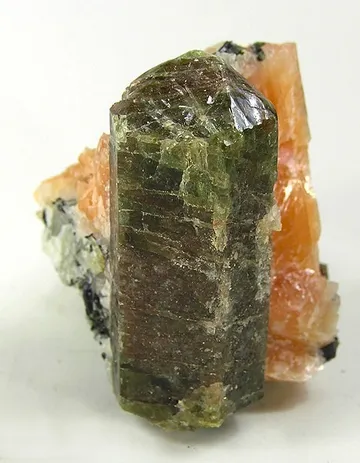
Beyond these five species, Yukon’s phosphate belt is a type-locality and rarity engine. The Rapid Creek–Big Fish River region has produced barićite, gormanite, kulanite, marićite, nahpoite, penikisite, rapidcreekite, satterlyite and wicksite, with additional notable species including wardite, whiteite-(CaFeMg), augelite, gordonite, gorceixite, goyazite, brazilianite, arrojadite-group minerals, ludlamite, vivianite, wolfeite, messelite, childrenite, eosphorite, fluorapatite, kryzhanovskite and others. Many are micro to small-cabinet minerals rather than dramatic display pieces, but their paragenesis is one of the great mineralogical puzzles of Canadian collecting: a sedimentary iron-phosphate environment that repeatedly generated species more familiar from quite different geological settings.
Provenance is everything with Yukon specimens. “Yukon lazulite” should ideally be narrowed to Rapid Creek, Crosscut Creek, Kulan Camp, Big Fish River or another named occurrence; broad labels often hide the difference between classic Rapid Creek material, Big Fish River phosphate nodules, nearby Richardson Mountains finds and later non-classic Yukon material. There are also nearby or trade-named occurrences sometimes grouped casually with Rapid Creek in dealer usage, so serious buyers should favor specimens with old labels, collection histories, field-party notes, Mineralogical Record-era provenance, or analytical documentation for rarities.
No major, well-documented industry of fabricated Yukon lazulite or whitlockite fakes is known, but misidentification is common enough to matter. White to colorless phosphate species in the Big Fish River suite can be difficult to distinguish by eye, and some species require XRD, Raman, SEM-EDS or other analytical confirmation. Whitlockite-type material is especially sensitive because of the former bobdownsite issue: attractive pale tabular phosphate crystals from Big Fish River may have been sold under names that later changed or require rechecking. For rare phosphates such as gormanite, kulanite, penikisite, rapidcreekite, satterlyite and wicksite, a label alone is not proof.
Condition issues are predictable. Lazulite crystals can be brittle, edge-worn and bruised, especially on exposed plates. Siderite can be naturally dull, cleaved, oxidized or crumbly. Quartz tips are easily chipped. Some Rapid Creek plates are thin and fragile, with fracture planes following shale or ironstone bedding; they should be handled from the matrix, not by projecting crystals. Rapidcreekite and some hydrated secondary species are best kept dry and stable, away from repeated humidity swings. Vivianite-bearing material should be protected from strong light where color stability is a concern.
Market availability is uneven. Rapid Creek lazulite appears regularly enough that collectors can be selective, but the great pieces are old-stock, tightly held and priced accordingly. Big Fish River whitlockite and rare phosphate associations are much scarcer in clean, aesthetic form, and good analytical labels command premiums. Yukon placer gold is widely traded, but mineral-specimen value depends on natural form and provenance rather than melt value alone. Keno Hill silver minerals are desirable when old, well-labeled and crystallized, but they appear less commonly in fine-specimen channels than the Richardson Mountains phosphates.
The most important Yukon phosphate story began modestly, with a few blue chips. In the summer of 1959, Bruce Cameron, a geologist working for Triad Oil Company, picked up blue, waterworn mineral fragments during oil exploration in northeastern Yukon. F.A. Campbell identified the mineral as lazulite in 1962, but the discovery did not immediately become a collector phenomenon. The real transformation came in 1974, when Al Kulan, prospecting for iron in the Richardson Mountains on behalf of Welcome North Mines, encountered the crystallized source. What had looked like a possible remote iron resource turned out to be poor ore but superb mineralogy: blue lazulite, wardite, siderite and rare phosphates in veins and fractures. Kulan and Gunar Penikis submitted specimens to the Royal Ontario Museum, where the material quickly proved to be far more than a pretty blue phosphate. Within a short span, the area had produced new species, world-class collector lazulite and a research rush into one of Canada’s strangest phosphate environments.
The localities were never easy ground. The productive outcrops were remote northern exposures, seasonal at best, and the specimens came from a landscape of cold weather, steep slopes, talus, bears and limited access. The literature preserves the names of field camps and creek localities—Crosscut Creek, Kulan Camp, Big Fish River, Boundary Creek—but behind those neat labels were short field seasons and hard logistics. The best lazulite pieces were not blasted out of a mine bench; they were found in localized mineralized fractures, ironstone exposures and talus derived from very specific beds. Collectors who hold old Rapid Creek pieces are holding the result of a brief collecting window as much as a geological occurrence.
The gold story is more public, and its opening scene has been retold for more than a century. In mid-August 1896, George Carmack, Kate Carmack, Skookum Jim and Dawson Charlie were moving through the country south of the Klondike River. They stopped by a small stream miners called Rabbit Creek. One of the party saw metallic glitter in the gravels: gold. Claims were staked the next morning, and Carmack registered the Discovery Claim at Forty Mile, 80 kilometres away, within the required time. Skookum Jim staked upstream, Dawson Charlie downstream, and the creek was soon renamed Bonanza. The details of who first saw the gold have been contested, and modern accounts give strong weight to Keish / Skookum Jim Mason, while also recognizing how racial attitudes of the time shaped whose name appeared on claims and in headlines.
When the news finally reached the outside world in 1897, it arrived by ship and spectacle. The steamer Excelsior reached San Francisco on July 17 carrying roughly half a million dollars in gold. Three days later the Portland reached Seattle, where a crowd waited on the wharf after a reporter intercepted the ship by tugboat and telegraphed ahead. Headlines spoke of “half a ton of gold,” but the cargo was more than that, and the phrase was enough. The Klondike was no longer a remote placer camp; it became a fever dream. More than miners came north—merchants, gamblers, photographers, writers, cooks, packers, bankers and dreamers followed the rumor of yellow metal into a hard country that few understood.
Dredge No. 4 tells the afterword to the stampede. If the 1898 rush belongs to pans, rockers, shafts, frozen gravels and individual claims, the dredge belongs to capital, engineering and scale. Built in 1912 for the Canadian Klondike Mining Company, later operated by Yukon Consolidated Gold Corporation, Dredge No. 4 was eight stories high, two-thirds the size of a football field and more than 3,000 tonnes in displacement. Its buckets held 16 cubic feet. It worked around the clock during seasons of roughly 200 days and could process about 600 tons of gravel in an hour. On one claim it produced as much as 800 ounces of gold in a single day. Every few days, nearly 50 pounds of gold could be cleaned from the sluices. The sound was part of the landscape: rocks in the trommel, steel cables, high-pressure water and a machine crawling slowly through the valley. In 1960, after a dam burst, the dredge sank and became partly buried in frozen debris. Parks Canada later acquired it for one dollar, excavated and moved it in the early 1990s, and preserved it as the great wooden machine that marks the corporate age of Klondike gold.
Robinson, G.W., Van Velthuizen, J., Ansell, H.G. and Sturman, B.D. (1992), “Mineralogy of the Rapid Creek and Big Fish River Area, Yukon Territory,” The Mineralogical Record, 23(4), 1–47 — The classic collector-mineral reference for the Rapid Creek–Big Fish River phosphate province, including locality maps, species lists and paragenetic context.
Mandarino, J.A. and Sturman, B.D. (1976), “Kulanite, a new barium iron aluminum phosphate from the Yukon Territory, Canada,” The Canadian Mineralogist, 14, 127–131 — Type description of kulanite from Crosscut Creek in the Rapid Creek area, based on material submitted by Alan Kulan and Gunar Penikis.
Robertson, B.T. (1982), “Occurrence of epigenetic phosphate minerals in a phosphatic iron-formation, Yukon Territory,” The Canadian Mineralogist, 20, 177–187 — Key geological and paragenetic paper linking Rapid Creek and Big Fish River phosphate assemblages to host lithology, veins and nodules.
Roberts, A.C., Ansell, H.G., Jonasson, I.R., Grice, J.D. and Ramik, R.A. (1986), “Rapidcreekite, a new hydrated calcium sulfate-carbonate from the Rapid Creek area, Yukon Territory,” The Canadian Mineralogist, 24, 51–54 — Original description of rapidcreekite as a secondary species occurring on bedding planes and joint surfaces of quartz-rich iron formation.
Tait, K.T., Barkley, M.C., Thompson, R.M., Origlieri, M.J., Evans, S.H., Prewitt, C.T. and Yang, H. (2011), “Bobdownsite, a new mineral species from Big Fish River, Yukon, Canada, and its structural relationship with whitlockite-type compounds,” The Canadian Mineralogist, 49, 1065–1078 — Important paper for the Big Fish River whitlockite-type assemblage and the later re-evaluation of bobdownsite.
Tomes, H., Tait, K., Nicklin, I., Peterson, R. and Beckett, R. (2013), “Preliminary observations on the geology and mineralogy of the Rapid Creek Formation, Blow River and Davidson Mountains map area, Yukon,” Yukon Exploration and Geology 2012 — Modern field-based summary of the Rapid Creek Formation, Big Fish River nodules and renewed geological observations.
Yukon Geological Survey, “Industrial Minerals, Gemstones and Minor Metals in the Yukon” — Government summary noting Yukon lazulite, the Blow River Formation, Rapid Creek phosphate occurrences and gemstone context.
LeBarge, W.P. and others, “Preliminary observations on the geology and geochemistry of quartz veins in the Klondike District, west-central Yukon,” Yukon Geological Survey — Useful context for the bedrock quartz-vein sources of Klondike placer gold.
Franzen, J.P., “Mineral zoning in the Keno Hill silver-lead-zinc mining district, Yukon,” Yukon Geological Survey — Concise guide to the silver, sulfosalt, galena, sphalerite, siderite, quartz and carbonate zoning of the Keno Hill district.
“The Restoration of Dredge No. 4 National Historic Site,” Parks Canada — Short official video on the stabilization and restoration of the great Klondike bucket-line dredge near Dawson City.
“Video collection,” Klondike National Historic Sites, Parks Canada — Parks Canada media collection with Klondike historical videos, including Dredge No. 4 and Dawson City interpretation.
“Yukon Gold Rush and the Islands of Newfoundland,” Seeing Canada with Brandy Yanchyk, PBS — Travel-history episode with Dawson City, Parks Canada interpretation and Klondike gold-rush context.
Mindat: Yukon, Canada — Broad locality entry for Yukon with links into districts, mines and recorded mineral occurrences.
Mindat: Rapid Creek, Dawson mining district, Yukon — Core locality page for the classic lazulite and rare phosphate occurrences of Rapid Creek.
Mindat: Big Fish River, Dawson mining district, Yukon — Essential reference for Big Fish River phosphate nodules, whitlockite, satterlyite, marićite, nahpoite, wicksite and related species.
Yukon Geological Survey: Mineral occurrence database / MINFILE — Official starting point for checking Yukon mineral occurrences, deposit types and locality records.
Government of Yukon: Recreational gold panning — Current government guidance for recreational panning rules and limitations in Yukon.
Yukon Archives: The Klondike Gold Rush — Discovery — Clear historical account of the Bonanza Creek discovery, the Excelsior and Portland gold shipments, and the start of the rush.
Parks Canada: Discovery Claim National Historic Site — Official page for the Bonanza Creek claim where the Klondike Gold Rush began.
Parks Canada / Canada.ca: Dredge No. 4 backgrounder — Concise official history of Dredge No. 4, corporate dredging and Klondike industrial mining.
Parks Canada: Dredge No. 4 National Historic Site Management Plan — Detailed historical and technical reference for the dredge, its operation and preservation.
Geological Survey of Canada: “Yukon Gold Rush (1898)” — Useful scientific-history overview of Geological Survey work in the Klondike during the rush.
Keno Hill silver district mining: licensing documents, Government of Yukon — Current official portal for the historic Keno Hill silver district.
Keno Hill, Mayo mining district, Mindat — Mineralogical locality page for native silver, silver sulfosalts and base-metal minerals of the Keno Hill district.