Rapid Creek, Canada — a remote sediment-hosted phosphate locality famed for saturated blue lazulite crystals and the type locality for rare phosphate species.
Key facts
Rapid Creek is the locality that changed the collector’s idea of what a sediment-hosted phosphate occurrence could produce. High in the Richardson Mountains of northeastern Yukon, within the Dawson mining district, it is not a conventional mine but a remote suite of mineralized creek exposures, outcrops, fracture systems, and named collecting areas such as Crosscut Creek, Kulan Camp, Stoneman Camp, Young’s Creek, Grizzly Bear Creek, and Mount Seafoam. The classic specimens come from the Rapid Creek Formation, a Cretaceous phosphatic ironstone and shale sequence where folding, faulting, quartz-siderite veining, brecciation, and late alteration opened the rock to an extraordinary phosphate mineral assemblage.
For collectors, Rapid Creek means saturated blue lazulite first of all: lustrous, blocky to wedge-shaped crystals, commonly twinned, perched on brown siderite and bright quartz, sometimes with augelite, wardite, fluorapatite, or whiteite adding a second phosphate note. The best pieces have the color density of indigo glass, sharp faces, a wet luster, and the kind of sculptural isolation that makes even small thumbnails feel monumental. Rapid Creek also matters far beyond lazulite. It and the adjoining Big Fish River district yielded a rush of new and rare phosphate species in the 1970s and 1980s, including type-locality material for kulanite, barićite, gormanite, penikisite, rapidcreekite, and other species from the broader Rapid Creek–Big Fish River system.
Regional View
Country View
The paradox of Rapid Creek is that its finest mineralogy came from rocks more likely to be described in a petroleum or stratigraphic report than in a gem pegmatite monograph. The host sequence is an iron- and phosphorus-rich marine sedimentary package, deposited in the Beaufort-Mackenzie region during Early Cretaceous time and later fractured. The collector minerals are epigenetic: they line veins, joints, vugs, bedding-plane partings, and breccias, their chemistry strongly governed by the wall rock they cut. That is why the locality can yield a pocket dominated by lazulite, quartz, and siderite, and another nearby fracture with wardite, childrenite, eosphorite, or Ba-rich phosphates.

Photo: Wikimedia Commons

Photo: Wikimedia Commons
Search for specimens: View all specimens from Rapid Creek, Canada
Rapid Creek lies in northeastern Yukon, near the Yukon–Northwest Territories border, in the northern Richardson Mountains and the Dawson mining district. The mineralized rocks belong to the Rapid Creek Formation and related Cretaceous sedimentary units of the Blow trough, a north-south structural depression tied to the Beaufort-Mackenzie basin. The deposit is best understood as a phosphatic, sideritic ironstone and shale system: phosphate-siderite pellets and granules, detrital quartz, skeletal fragments, and sideritic mudstone are interlayered with shale, sandstone, conglomerate, and mudstone. The unit is unusual because ironstone and phosphorite components are strongly developed together, because it formed at high paleolatitude, and because many of its collector phosphates resemble minerals otherwise associated with pegmatitic, hydrothermal, or higher-grade metamorphic environments.
The collector mineralization is not an ore shoot in the hard-rock mining sense. It occurs mainly as epigenetic fracture filling, quartz-siderite veins, vugs, bedding-plane partings, nodules, and fault-breccia fillings. Robertson’s work divided the phosphate fracture assemblages by dominant chemistry: Ba-rich fractures in conglomeratic rocks, Ca-rich fractures in mudstones, Fe-Mg-Mn-rich fractures in sandstones, and Na-rich fracture systems. That geochemical control is visible in specimens. Crosscut Creek and Kulan Camp are especially important for lazulite, kulanite, whiteite, barićite, arrojadite-group minerals, rapidcreekite, and classic lazulite-quartz-siderite combinations. Stoneman Camp, including Locality 12, is one of the primary Rapid Creek wardite occurrences, with wardite, quartz, siderite, lazulite, pyrite, and eosphorite recorded there. Young’s Creek and Grizzly Bear Creek are part of the same specimen-producing district, while Mount Seafoam represents a later-recognized nearby Rapid Creek area occurrence with a subtly different style of glassier lazulite and distinctive siderite.
The history begins modestly. In 1959, Bruce Cameron, a geologist working for Triad Oil Company during oil exploration in the Blow River area, picked up blue, water-worn mineral chips. Finley Campbell identified the mineral as lazulite in 1962, but the significance of the find did not immediately register as a specimen locality. In the 1970s, F. G. Young of the Geological Survey of Canada drew attention to the occurrence, and Welcome North Mines became involved. Al Kulan, prospector and director of Welcome North Mines, found the source of large, well-crystallized lazulite and associated phosphates while prospecting and staking in the area. The name Kulan Camp preserves that collecting history, and the type mineral kulanite likewise honors Al Kulan.
There was no sustained commercial ore mining comparable to a metal mine with production benches and mills. Instead, Rapid Creek’s “production” was specimen recovery and scientific collection, with the Royal Ontario Museum and Canadian mineralogists making repeated visits during the 1970s as the richness of the assemblage became clear. Until 1978 collecting was possible more freely; after that, access became restricted and permission was required. Modern collecting should be treated as closed to casual visitors. The area is remote, physically demanding, seasonal, and legally sensitive, with government and land-status permissions required for any legitimate work. Helicopter access has historically been the practical route for serious work, and old labels from the 1980s and 1990s represent much of the material circulating today.
The notable finds are not usually described as single named “pockets” in the way alpine clefts are, but rather as productive outcrops and fracture systems. Crosscut Creek/Kulan Camp produced many of the benchmark lazulite combinations and several type-locality phosphates. The classic plates carry lustrous indigo lazulite crystals with transparent to honey-brown siderite rhombs and clear quartz points; some pieces show augelite as pale green microcrystals or small crystals along quartz-siderite veins. A 2012 field study described a lazulite-bearing vein with adjacent tighter quartz-siderite veins that contained pale blue-green augelite to 5 mm on beds of childrenite and siderite. Stoneman Camp is the collector’s name to remember for wardite, particularly pale green to nearly colorless pyramidal crystals, sometimes with eosphorite or lazulite.
Rapid Creek lazulite is the locality’s signature mineral and one of Canada’s great blue mineral specimens: deep azure to indigo, greenish blue, and occasionally yellow-green crystals occur as blocky, wedge-shaped, platy, rosette-like, and complex twinned forms in fractures and quartz-siderite veins of the phosphatic ironstone. Most attractive collector pieces are thumbnails to small cabinet specimens with crystals in the 5 mm to 15 mm range, while exceptional crystals reach roughly 2.5 cm and Yukon government gemstone literature cites bright-blue crystals up to about 5 cm for the broader occurrence. The classic association is brown to honey-brown siderite and clear quartz, with apatite, fluorapatite, wardite, augelite, and whiteite on some pieces; the best Rapid Creek lazulites are separated from ordinary material by saturated color, high luster, sharp undamaged faces, obvious twinning or sculptural isolation, and lively contrast against quartz and siderite rather than massive blue patches buried in ironstone.
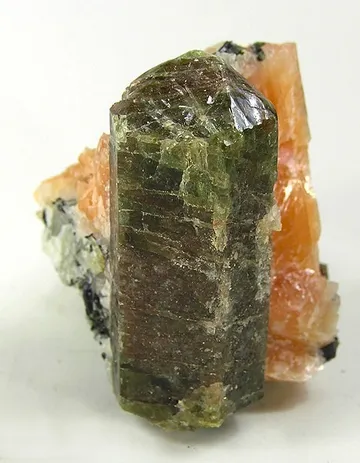
Rapid Creek wardite is a benchmark for the species, especially from the Stoneman Camp area, where it occurs as glassy tetragonal pyramidal, bipyramidal, and pseudo-octahedral crystals in pale mint-green, pale blue-green, yellow-green, nearly colorless, and white tones. Crystals commonly sit in vugs or on quartz-siderite matrix, and fine thumbnails show individual wardite crystals to about 9 mm or more, while exceptional locality pieces reach around 1.5 cm and the broader Rapid Creek–Big Fish River district has produced still larger wardite crystals. The most desirable pieces have translucent to gemmy interiors, clean terminations, good isolation, and enough matrix to show the paragenesis; pieces with lazulite inclusions or small lazulite accents are especially appealing because they pair Rapid Creek’s two most recognizable collector phosphates.
At Rapid Creek, siderite is both a major component of the ironstone host and one of the indispensable aesthetic minerals on specimens. Collector siderite appears as honey-brown, yellow-brown, tan, and darker brown rhombohedral crystals, commonly only a few millimeters across, lining quartz-siderite veins and vugs with lazulite, quartz, wardite, augelite, childrenite, and other phosphates. Classic lazulite plates may carry transparent brown siderite crystals to about 5 mm, and later Mount Seafoam-style plates show scattered 1 mm to 5 mm brown siderite crystals among glassy blue lazulites. Good siderite-bearing pieces are valued less for siderite size than for balance: bright rhombs should frame the lazulite or wardite without masking it, and unoxidized, lustrous, well-separated crystals give the best contrast against blue phosphate and clear quartz.
Rapid Creek augelite is a refined accessory phosphate that rewards close inspection rather than shouting from across the room. It is documented in the Crosscut Creek/Kulan Camp suite and occurs with lazulite, quartz, siderite, and childrenite, often as pale blue-green to green crystals or microcrystalline coatings on quartz-siderite-lazulite combinations. A 2012 field description noted tighter quartz-siderite veins adjacent to a lazulite-bearing vein that yielded augelite crystals up to 5 mm on beds of chocolate-brown childrenite and siderite, giving a useful sense of both size and paragenesis. The best Rapid Creek augelite specimens show recognizable green augelite crystals rather than only a dusty coating, ideally placed on or near deep blue lazulite and bright siderite so that the species can be appreciated without sacrificing the overall display.
Quartz is the bright structural stage on many Rapid Creek specimens, occurring as clear to colorless crystals in veins and vugs with lazulite, siderite, wardite, whiteite, augelite, apatite, and Ba-Fe-Mg phosphates. In classic lazulite combinations, quartz crystals commonly reach several millimeters and have been reported to about 5 mm on older plates, while some collector specimens show larger glassy points to the centimeter scale. Quartz is rarely the reason a Rapid Creek specimen is bought, but it is often the reason the specimen works: clear points lift blue lazulite off a dark sideritic matrix, add sparkle to wardite plates, and create the white-to-colorless contrast that makes the locality’s deep blues appear even richer. Better quartz-bearing pieces have clean, sharp, transparent quartz that is not bruised, etched dull, or crowded over the phosphate crystals.
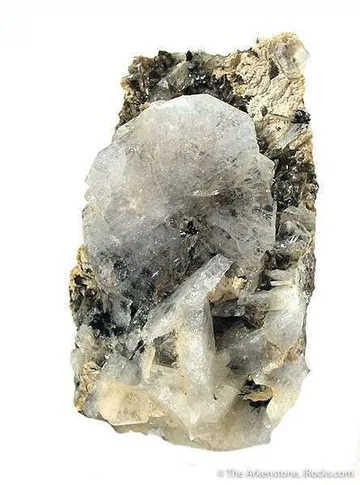
Rapid Creek whiteite, particularly whiteite-(CaFeMg) and related whiteite-subgroup compositions, is one of the locality’s quiet rarities: tabular to thick tabular, elongated, pseudo-hexagonal, and sometimes subtly curved crystals in cream, tan, toffee-brown, brownish white, or pale tones, typically associated with quartz, siderite, and deep blue lazulite. Crosscut Creek/Kulan Camp has produced elegant whiteite pieces, including crystals around 1.5 cm to 2.5 cm on matrix, and collectors prize the contrast between pale to tan whiteite and tiny lazulite crystals or clear quartz. Fine examples are judged by crystal completeness, luster, visible form, freedom from cleaved or contacted edges, and the presence of unmistakable Rapid Creek associations; ordinary pieces can look like dull tan blades unless the termination, curvature, and paragenesis are well displayed.
Kulanite is one of Rapid Creek’s defining rarities and a type-locality mineral from Crosscut Creek in the Kulan Camp area, named for Al Kulan. It occurs as blue to green plates, rosette-like aggregates, and intergrowths in fractures of the sideritic iron formation, often with penikisite, quartz, siderite, fluorapatite, rapidcreekite, brazilianite, arrojadite-group minerals, anatase, and goyazite in the Crosscut Creek suite. The species can be visually subtle because it overlaps in color with penikisite and other blue-green phosphates, so trustworthy provenance and analysis matter more here than with common lazulite. The best collector pieces show distinct, lustrous plates or rosettes rather than massive blue-green smears, and specimens with documented Crosscut Creek labels or old research provenance carry special weight.
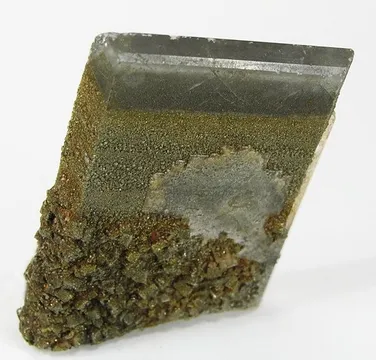
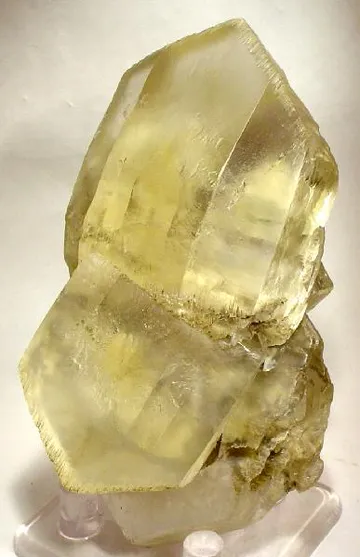
Beyond the headline species, Rapid Creek is one of the great rare-phosphate districts of North America. Documented minerals include alluaudite-group minerals, apatite and fluorapatite, arrojadite-(KFe), arrojadite-(KNa), barićite, brazilianite, childrenite, collinsite, eosphorite, gormanite, goyazite, kryzhanovskite, ludlamite, messelite, metavivianite, penikisite, phosphosiderite, satterlyite, souzalite, vivianite, wicksite, wolfeite, and secondary sulfate-carbonate species such as rapidcreekite, gypsum, aragonite, dypingite, hydromagnesite, and related low-temperature crust minerals. Type-locality significance is central: Crosscut Creek/Kulan Camp is the type locality for kulanite and barićite, Rapid Creek for gormanite and rapidcreekite, and the broader Rapid Creek–Big Fish River area for several additional phosphates including penikisite, marićite, nahpoite, satterlyite, wicksite, bobdownsite, dondoellite, and arrojadite-(KNa). For systematic collectors, the locality is a research field disguised as a specimen locality.
Rapid Creek specimens reward provenance discipline. Old labels may say Rapid Creek, Crosscut Creek, Kulan Camp, Stoneman Camp, Young’s Creek, Grizzly Bear Creek, Blow River, Big Fish River, or simply “Dawson Mining District,” and these names are not interchangeable at a fine level. The historical confusion is understandable because early material was first tied to the Blow River area before the Rapid Creek source was recognized, and later collecting covered a cluster of nearby exposures. For high-value pieces, especially wardite, whiteite, kulanite, penikisite, gormanite, and arrojadite-group specimens, a precise old label, analytical confirmation, or reputable dealer provenance is worth a premium.
No broad, well-documented fake industry is associated with Rapid Creek, but misidentification is a real risk. Dark blue lazulite is usually straightforward, yet blue-green kulanite, penikisite, gormanite-souzalite material, and other phosphate intergrowths can be hard to separate visually. Tan whiteite can be mistaken for other pale phosphates or overlooked as matrix. Brown siderite may be mislabeled as dolomite or ankerite on older material; at least one Rapid Creek reference notes that specimens once called ankerite were later found by Robinson’s team to be dolomite in analyzed examples. Wardite is commonly recognizable by its pale green to colorless pyramidal habit, but isolated crystals without locality context should still be treated carefully.
Condition is the main buying issue. Rapid Creek material came from fractured, weathered, seasonally frozen rock in a remote setting, often extracted with limited tools and transported by helicopter. Contacting on crystal edges, cleaved corners, repaired plates, bruised quartz points, and iron-stained or crumbly shale matrix are common. Lazulite’s dark color can hide small edge chips until the specimen is tilted under strong light; internal blue reflections can also mimic damage, so inspect faces rather than judging from one photo. Wardite and whiteite can show cleavage or edge contacts, while quartz and siderite accents are easily bruised.
Cleaning and treatment are usually about iron staining and matrix stabilization rather than enhancement. Iron-stain removal, including careful use of reducing cleaners, is encountered on Yukon phosphate matrix and is generally accepted when disclosed and properly done. Overcleaning can flatten the subtle contrast of siderite and shale or leave phosphate surfaces looking unnaturally bright. Avoid prolonged soaking or aggressive acids on mixed specimens: siderite is a carbonate, rapidcreekite is soluble in dilute acid, and many hydrated phosphates are best treated as sensitive minerals. Store specimens dry and stable; hydrated species such as wardite, whiteite, vivianite, barićite, rapidcreekite, and secondary magnesium carbonates should not be subjected to heat, freezing-thawing display conditions, or high-intensity lamps for long periods.
Market availability is finite. Classic lazulite-quartz-siderite thumbnails and miniatures still appear regularly from old collections, and modern dealer listings show that good pieces remain obtainable, but top plates with large, isolated, lustrous blue crystals are much scarcer and command strong prices. Wardite from Rapid Creek is less common than lazulite and sharply crystallized pale green examples are avidly pursued. Whiteite, kulanite, gormanite, rapidcreekite, and named type-locality rarities are mostly systematic-market minerals; they are available sporadically, often as small specimens, and reliable labels matter as much as aesthetics.
The Rapid Creek story began with a handful of blue chips that did not look like much of an ore discovery. In the summer of 1959, Bruce Cameron was in northeastern Yukon for Triad Oil Company, working not a mineral-specimen hunt but an oil-exploration program in the Blow River area. In the creek gravels he noticed blue, water-worn fragments and collected them. The mineral was later identified by Finley Campbell as lazulite, a rare magnesium aluminum phosphate. That identification was published in 1962, but for more than a decade the source remained more a geological curiosity than a collector’s destination.
Fifteen years later, Al Kulan came through the story from the other direction. Kulan was not merely a name on a map: he was the prospector behind major Yukon base-metal discoveries and the director of Welcome North Mines. While prospecting for iron and staking claims in the area, he found the source of the lazulite along Rapid Creek. The scale of the discovery changed immediately. Instead of rounded creek fragments, collectors and scientists were suddenly seeing large, well-crystallized lazulite and a bewildering suite of phosphates in fractures through sideritic ironstone. Kulan’s role is preserved twice over: in Kulan Camp, the key Rapid Creek collecting area, and in kulanite, the barium iron aluminum phosphate described from the Yukon in 1976.
The Royal Ontario Museum mineralogists and Canadian researchers who followed in the 1970s were not chasing a single blue mineral for display cases. They were walking into a system that kept producing species that either were new to science or almost unimaginably good for the species. Barićite was described as the magnesium analogue of vivianite; kulanite and penikisite came out of the Ba-rich fracture suite; gormanite, souzalite-related material, satterlyite, wicksite, marićite, nahpoite, and rapidcreekite joined the literature in quick succession from Rapid Creek and the neighboring Big Fish River system. For a mineralogist, the locality must have felt like a sedimentary formation behaving like a pegmatite laboratory.
One particularly vivid modern field observation came from work in 2012. A lazulite-bearing vein was accompanied by tighter quartz-siderite veins running roughly parallel to it. On close excavation, those narrower veins yielded pale blue-green augelite crystals to 5 mm sitting on beds of chocolate-brown childrenite and siderite crystals. That little association captures Rapid Creek in miniature: not just one showy blue mineral, but a chemically zoned fracture environment where a few centimeters of rock can move from lazulite to siderite to childrenite to augelite.
Even access became part of the legend. Older accounts and collector discussions repeatedly emphasize how seasonal and difficult the locality is: snow and ice dominate much of the year, the workable season is short, and serious collecting has typically required helicopter support. By the late 1970s, unrestricted collecting had ended, and permission became necessary. As a result, many of the best specimens circulating today carry the aura of a short-lived collecting window—old 1980s and 1990s labels, remote camp names, and the knowledge that replacing them from the ground is no longer a simple matter of planning a summer field trip.
Mandarino, J. A., and Sturman, B. D. (1976). “Kulanite, a new barium iron aluminum phosphate from the Yukon Territory, Canada.” The Canadian Mineralogist, 14(2), 127–131. The type description of kulanite, a defining Rapid Creek/Crosscut Creek phosphate.
Sturman, B. D., and Mandarino, J. A. (1976). “Barićite, the magnesium analogue of vivianite, from Yukon Territory, Canada.” The Canadian Mineralogist, 14(4), 403–406. Describes barićite from the Yukon phosphate-ironstone environment.
Mandarino, J. A., Sturman, B. D., and Corlett, M. I. (1977). “Penikisite, the magnesium analogue of kulanite, from the Yukon Territory, Canada.” The Canadian Mineralogist, 15(3), 393–395. Type-mineral paper for penikisite, closely tied to the Rapid Creek phosphate suite.
Sturman, B. D., Mandarino, J. A., and Corlett, M. I. (1977). “Marićite, a sodium iron phosphate, from the Big Fish River area, Yukon Territory, Canada.” The Canadian Mineralogist, 15(3), 396–398. Describes one of the important new phosphates from the adjoining Big Fish River part of the district.
Robertson, B. T. (1982). “Occurrence of epigenetic phosphate minerals in a phosphatic iron-formation, Yukon Territory.” The Canadian Mineralogist, 20, 177–187. Key geological and paragenetic treatment of the fracture-filling phosphate assemblages.
Roberts, A. C., Ansell, H. G., Jonasson, I. R., Grice, J. D., and Ramik, R. A. (1986). “Rapidcreekite, a new hydrated calcium sulfate-carbonate from the Rapid Creek area, Yukon Territory.” The Canadian Mineralogist, 24(1), 51–54. Type description and data for rapidcreekite, named for the Rapid Creek area.
Grice, J. D. (1989). “Unexpected Treasures from Rapid Creek, Yukon Territory.” In Famous Mineral Localities of Canada, Fitzhenry & Whiteside and the National Museum of Natural Sciences, pp. 31–39. A classic locality account covering the discovery story and specimen significance.
Robinson, G. W., Van Velthuizen, J., Ansell, H. G., and Sturman, B. D. (1992). “Mineralogy of the Rapid Creek and Big Fish River Area, Yukon Territory.” The Mineralogical Record, 23(4), 1–47. The indispensable special-issue reference for locality mineralogy and sublocalities.
Tomes, C. N., et al. (2012). “Preliminary observations on the geology and mineralogy of the Rapid Creek Formation, Richardson Mountains, Yukon.” Yukon Exploration and Geology 2012, pp. 147–161. Modern field-based discussion of the Rapid Creek Formation, including augelite and secondary mineral observations.
Gadd, M. G., Bingham-Koslowski, N., Petts, D. C., and Polivchuk, M. (2023). “Phosphatic, manganiferous ironstones of the Rapid Creek Formation (Northwest Territories), a preliminary study.” Geological Survey of Canada, Scientific Presentation 160. Regional geological context for the Rapid Creek Formation as a phosphatic, manganiferous ironstone system.
Rapid Creek locality page on Mindat — The central online index for Rapid Creek minerals, sublocalities, coordinates, photos, and references.
Crosscut Creek, Kulan Camp locality page on Mindat — Essential for the type-locality and specimen-producing Crosscut Creek/Kulan Camp part of the district.
Stoneman Camp Locality 12 on Mindat — Useful for wardite-focused collectors, as this is one of the principal Rapid Creek wardite localities.
Canadian Rockhound: Canada’s Top Ten Minerals — Lazulite — Collector-friendly summary of Rapid Creek lazulite crystal size, associations, access history, and Yukon gemstone status.
Government of Yukon page: The geology of the Rapid Creek–Big Fish River phosphatic iron formation — Concise government summary of the geological features that make the formation unusual.
Yukon Exploration and Geology 2012: Rapid Creek Formation observations — Field and laboratory notes on Rapid Creek and Big Fish River geology, mineral assemblages, and secondary minerals.
Geological Survey of Canada Scientific Presentation 160 — Modern regional treatment of Rapid Creek Formation phosphatic, manganiferous ironstones.
Wikimedia Commons: Minerals of Rapid Creek — Open image category with lazulite, wardite, rapidcreekite, and other Rapid Creek specimens.