






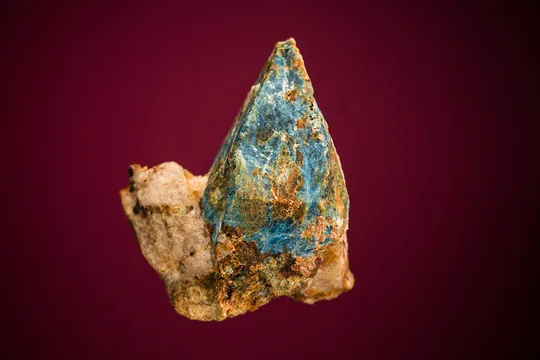
Lazulite - vivid blue phosphate with sharp prisms; azure to indigo color, scarce, with the Yukon and Graves Mountain localities prized by collectors.
Key facts
Lazulite is a striking blue magnesium aluminum phosphate, celebrated for its saturated azure to indigo color and sharp crystal forms. It forms a complete solid-solution series with iron-rich scorzalite, and many specimens show subtle compositional zoning between the two. Crystals are typically short to medium prisms or pseudo-bipyramidal wedges with crisp edges and a glassy luster; the best are transparent to translucent and glow when backlit. Classic associations include quartz, siderite, augelite, wardite, gormanite, and other phosphates.
Among phosphate minerals, lazulite occupies a special place with collectors for its pure, painterly blues and “textbook” crystal geometry. The top pieces—especially from Yukon’s Rapid Creek/Big Fish River area and Georgia’s Graves Mountain—rank among the most desirable blue phosphates ever found. Fine single crystals and attractive quartz-matrix pieces remain attainable, while elite cabinet specimens are genuinely scarce and highly prized.
Lazulite’s appeal crosses experience levels: newcomers are drawn by the vivid color at approachable sizes, while advanced collectors chase iconic localities and exceptional luster or transparency. The 20th-century discoveries in northern Yukon set a high-water mark for razor-sharp, lustrous crystals on quartz and siderite, and Graves Mountain produced some of the largest crystals known—big, bold, and deeply colored, if often less gemmy.
As with many phosphates, supply is episodic: production at the famous Yukon localities has been irregular for decades, and Graves Mountain material emerges mostly via occasional collecting events. Smaller but classic European occurrences (notably in Austria and Sweden) add historical gravitas. This mix of world-class aesthetics, locality lore, and finite supply keeps demand steady and top examples firmly collectible.
While lazulite occurs in numerous phosphate-bearing environments, a handful of localities define the species for collectors.
Graves Mountain (Lincoln County, Georgia) is renowned for some of the largest lazulite crystals known—often stout, deeply colored blue prisms embedded in hard quartzite. Surfaces range from matte to slightly glossy; gemminess is less common than in Yukon material, but the scale and color are exceptional. Typical associations include kyanite, rutile, pyrophyllite, and quartz. Extraction is challenging due to extremely tough matrix, making pristine crystals and aesthetic matrix pieces rarer than one might expect from the locality’s fame.
Collectors value Graves Mountain lazulite for size, locality prestige, and the distinctive look of bold blue crystals set in pale quartzite. Big, complete crystals with minimal bruising are surprisingly hard to find and are centerpieces in many phosphate suites.
With its regal blues, sharp forms, and storied localities, lazulite rewards patient selection. Whether you favor Yukon's gemmy wedges, Georgia’s muscular crystals, or European classics, a fine lazulite is a highlight in any phosphate or color-focused collection.