






Canada — a diverse locality guide of world-class specimens from Mont Saint-Hilaire, Cobalt, Thunder Bay, Bay of Fundy, and more, prized by serious collectors.
Key facts
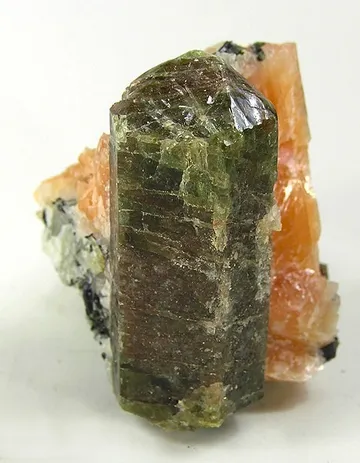
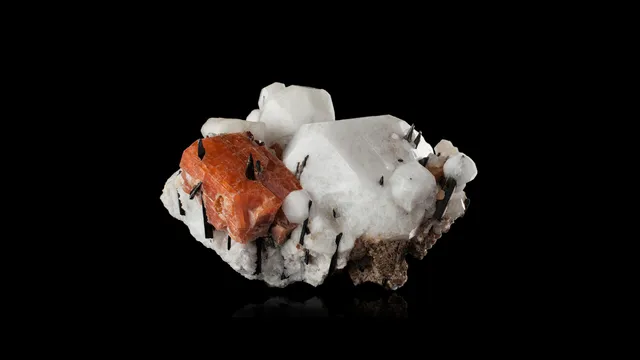
Canada matters to collectors because it is not one mineral locality but a continental-scale cabinet of geological environments. Its specimens come from Archean shield gold camps, silver-cobalt arsenide veins, Grenville marbles and pegmatites, Cretaceous alkaline intrusions, Carboniferous evaporites, Triassic-Jurassic basalts, and northern sediment-hosted phosphate systems. Few countries offer such a combination of scientific importance and collector aesthetics: orange serandite and blue carletonite from Mont Saint-Hilaire, indigo lazulite and pale wardite from Rapid Creek, hessonite and vesuvianite from the Jeffrey mine, native silver from Cobalt, amethyst from the Lake Superior shore near Thunder Bay, zeolites from Nova Scotia’s Bay of Fundy, and transparent golden gypsum rosettes from Manitoba’s Red River Floodway.
Canada’s collecting history is equally deep. The Geological Survey of Canada began in the nineteenth century with a mandate to understand the country’s mineral wealth, and the national museum collections grew directly from that exploration. In specimen culture, the country’s great names are unusually varied: not only classic mines and mining camps, but also quarries, roadcuts, flood-control excavations, glacial clays, coastal basalt cliffs, and remote Arctic drainages. The look of a fine Canadian specimen is therefore hard to reduce to one style. It may be a sculptural native silver plate from Cobalt, a gemmy orange grossular from Val-des-Sources, a radiating spray of champagne gypsum from Winnipeg clay, a matrix plate of blue lazulite on quartz and siderite from the Yukon, or a micromount bearing a mineral species known from only a few vugs in an alkaline quarry east of Montréal.
Regional View
Country View
The strongest Canadian specimens tend to be locality-signature pieces rather than generic representatives of common species. Mont Saint-Hilaire has made its reputation on diversity and rarity: complex alkaline rocks enriched in elements such as Zr, Nb, Be, Li and rare earths, cut by pegmatites, breccias and cavities, have yielded an extraordinary suite of mineral species, many of them first described there. Rapid Creek and Big Fish River in Yukon are important for a very different reason: a remote phosphatic iron formation and associated veins produced phosphate crystals of a quality that changed the collector market for lazulite, wardite, whiteite and related species. Manitoba’s Red River Floodway, by contrast, is a young surficial story—gypsum rosettes grown in Lake Agassiz clay, exposed because a flood-control channel cut deeply enough into an otherwise flat prairie clay plain.

Photo: Wikimedia Commons

Photo: Wikimedia Commons
Search for specimens: View all specimens from Canada
Canada’s specimen-producing deposits are best understood by province and geological setting. The Canadian Shield underlies much of the country’s classic hard-rock mineral heritage. Its Archean greenstone belts and intrusive complexes host major gold, nickel, copper, silver and rare-element systems, while the Grenville Province of southeastern Ontario and western Quebec supplied a different collector tradition: marbles, skarns, pegmatites and calcite-rich veins yielding apatite, titanite, fluorite, zircon, mica, feldspar, corundum, sodalite and radioactive species. Bancroft, Ontario became known as the “Mineral Capital of Canada” because numerous modest mines and quarries exposed collectible minerals in Grenville rocks; the town’s annual Rockhound Gemboree remains one of the country’s most important mineral-collecting gatherings.
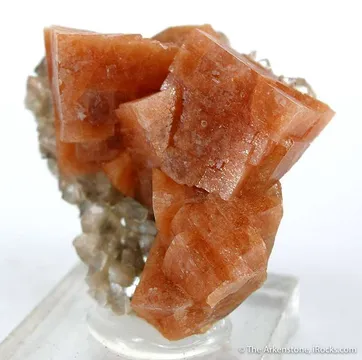
Quebec is central to Canada’s modern mineralogical identity. The Poudrette quarry, later known under De-Mix/Demix and Carrière Mont Saint-Hilaire names, exposes the East Hill suite of the Mont Saint-Hilaire alkaline complex about 40 km east of Montréal. Its mineralization is not an orebody in the usual mining sense but a set of highly evolved igneous and late-stage environments: peralkaline syenites, pegmatites, miarolitic cavities, igneous breccias, sodalite-rich autoliths, xenoliths of hornfels and marble, and hydrothermal alteration zones. These environments generated remarkable concentrations of rare-element minerals. For collectors, the quarry is best known for serandite, analcime, catapleiite, carletonite, aegirine, albite, sodalite/hackmanite, eudialyte-group minerals, donnayite-group carbonates, rare REE species and a long list of type-locality minerals. Access changed markedly after the Poudrette family era and the 2007 ownership change; today, collecting there is not the open club-and-research access many older Canadian collections were built upon.
Also in Quebec, the Jeffrey mine at Val-des-Sources, historically Asbestos, produced chrysotile commercially but became a legendary collector source for orange hessonite grossular, vesuvianite, prehnite, pectolite and associated species from alpine-style veins and cavities in serpentinized ultramafic rocks. Old labels may read “Asbestos, Quebec,” which is historically correct but now refers to Val-des-Sources after the town’s name change. The mine is closed, so specimens available today largely come from older collections, dealer stocks and material recovered before closure.
Ontario’s Cobalt district is the classic Canadian native silver locality. Mineralization occurs in narrow but extremely rich veins associated with the Nipissing diabase and fractures in older volcanic and sedimentary rocks. The district produced native silver with cobalt and nickel arsenides and secondary cobalt blooms such as erythrite. Fine specimens may show thick silver plates, wires, arborescent masses or sculptural metallic forms embedded in carbonate gangue, often with dark tarnish and pink to purple arsenate staining. Because much of the old camp is historic, private, stabilized, or environmentally sensitive, collecting should be approached only through legal public venues, mine tours, permissions, or reputable old-stock material.
Manitoba contributes two very different specimen worlds. The Tanco pegmatite at Bernic Lake is a highly fractionated lithium-cesium-tantalum pegmatite famous in economic geology for pollucite, spodumene, petalite, lepidolite, tantalum-niobium oxides and rare phosphates. It is an operating industrial mine, not a recreational collecting site. Farther south, the Red River Floodway near Winnipeg is one of Canada’s most distinctive gypsum localities. The floodway cut into glacial Lake Agassiz clay, exposing zones where transparent to amber selenite crystals occur as radiating rosettes and “duckbill” or fishtail twins. These are not vein-minerals from bedrock; they are secondary gypsum crystals grown in clay, concentrated in pods rather than spread continuously along the channel. Commercial and organized collecting occurred at intervals, including significant excavations near the Trans-Canada Highway, but modern access is controlled for safety and infrastructure reasons.
Yukon’s Rapid Creek and Big Fish River area is remote, scientifically important, and specimen-rich in a way few localities are. Lazulite was recognized from the region in the early 1960s, and major attention followed in the 1970s when large, well-formed blue phosphate crystals were found during claim-staking and subsequent collecting. The deposit is hosted in phosphatic, manganiferous ironstone and associated sedimentary units of northern Yukon. It produced superb lazulite with quartz, siderite, fluorapatite and other phosphates, along with wardite, whiteite-group minerals, arrojadite-group minerals, gormanite, kulanite, marićite, nahpoite, rapidcreekite, wicksite and other rarities. The locality is not casual roadcut collecting; remoteness, claim status, land-management rules and conservation concerns make legal access a serious matter.
Nova Scotia supplies a coastal collector tradition. Along the Minas Basin and Bay of Fundy, cavities in basalt flows contain zeolites and related minerals, including stilbite, heulandite, chabazite, natrolite, analcime, mordenite, apophyllite, agate, chalcedony and amethyst. In the province’s Carboniferous evaporite rocks, gypsum, anhydrite, salt-related minerals, howlite and probertite occur in settings very different from Manitoba’s floodway clays. Tides, cliffs, protected areas, private land and provincial collecting guidelines are central practical concerns for field collectors.
British Columbia, the Northwest Territories, Saskatchewan, New Brunswick, Newfoundland and Labrador, and the Arctic territories add further layers: gold and base-metal mines, skarns, pegmatites, uranium deposits, evaporites, alpine veins, meteorites and unusual rare-element occurrences. For the specimen collector, the most important practical distinction is between historic material from old mines and dumps, organized access localities, commercial quarry or mine sources, and protected or closed ground. Canada’s best specimens often carry old collection labels, and those labels are not trivia—they preserve mine names, township names, pre-amalgamation place names, and obsolete locality names that may be more precise than a modern map label.
Canadian gypsum specimens of collector importance are led by the Red River Floodway at Winnipeg, Manitoba, where selenite occurs as transparent to pale yellow, honey, champagne and rich amber rosettes grown in glacial Lake Agassiz clay. The classic pieces are floaters or clay-hosted clusters with compact radiating cores and protruding blocky blades, including fishtail or “duckbill” twins; documented pieces range from small thumbnails to rosettes over 10 cm, with commercial and organized digs recovering crystals from several metres below prairie level. The best examples combine glassy luster, transparency, balanced radial form, undamaged blade tips and minimal clay inclusions, and they stand apart from ordinary gypsum because the habit is so locality-specific and because many pieces show pale white fluorescence and phosphorescence under ultraviolet light. Associations are mostly the clay matrix itself rather than a diverse hard-rock assemblage, though the geology of the specimens records groundwater chemistry, oxidation-reduction boundaries and slow crystal growth in the Lake Agassiz clay plain.
Other Canadian minerals documented from major collecting localities include some of the country’s most important type-locality and rarity suites. Mont Saint-Hilaire alone has produced dozens of species first described from the quarry, including well-known collector names such as carletonite, catapleiite-related rarities, hilairite, poudretteite, serandite-associated species, rare REE carbonates and complex zirconium-niobium silicates. Rapid Creek and Big Fish River are type-locality ground for several phosphate minerals, including barićite, gormanite, kulanite, marićite, nahpoite, penikisite, rapidcreekite, satterlyite and wicksite. The Jeffrey mine is the type locality of jeffreyite and spertiniite, while Nova Scotia is historically important for howlite and mordenite, and the Tanco pegmatite has supplied type and research material for rare lithium-cesium-tantalum pegmatite phosphates. Canada’s rarity profile is unusually broad: it includes world-class aesthetic specimens, economically important ore minerals, museum-grade micromount species and minerals whose scientific value far exceeds their visual size.
Canadian locality labels deserve careful reading. “Canada” alone is not a meaningful specimen locality for serious collecting; the country is too large and too mineralogically varied. Good labels should identify at least the province or territory and, for better material, the mine, quarry, river, township, district or formation. Old labels such as “Asbestos, Quebec” for Jeffrey mine material, “Poudrette,” “Demix,” or “Carrière Mont Saint-Hilaire” for Mont Saint-Hilaire material, and “Yukon Territory” for pre-modern Rapid Creek pieces may all be valid, but they should be interpreted in historical context.
For Red River Floodway gypsum, the most common problems are damage, overcleaning and vague naming. Selenite is gypsum, CaSO4 · 2H2O, and “selenite,” “duckbill selenite,” “fishtail gypsum,” and “Red River gypsum” may all refer to the same collecting tradition. The material is soft, easily cleaved and water-sensitive. Repeated soaking, running water, heat, abrupt temperature changes or aggressive brushing can dull luster, open cleavage, dissolve delicate contact areas between blades, or cause clusters to fall apart. Slight clay in protected crevices is normal and can be preferable to a specimen that has been polished-looking from overcleaning. Strong fluorescence and phosphorescence are desirable on some Red River pieces, but the visual appeal in daylight—form, transparency, luster and damage status—still drives collector quality.
No widely documented treatment industry exists for Canadian Red River gypsum, but misrepresentation does occur in the softer sense: incomplete labels, confusion with desert roses from other countries, and vague “Canada selenite” descriptions that omit Winnipeg or the Red River Floodway. A genuine Red River specimen usually has the distinctive rosette-and-blade habit, honey to champagne color range, clay-growth character and, often, ultraviolet response. Pieces should not be assumed to be self-collected legally unless provenance is clear; collecting along the floodway has been controlled because it is functioning infrastructure and because deep clay excavations are hazardous.
Cobalt silver specimens require a different eye. Native silver naturally tarnishes dark gray to black, so bright white metal may have been freshly cleaned; that is not automatically bad, but the collector should know whether patina was removed. Arsenide-rich gangue and cobalt blooms are part of the appeal, but they also mean sensible handling: avoid dust, wash hands after handling, and do not grind or cut unknown arsenide-bearing material indoors. Old mine-dump specimens from the Cobalt camp are often relabeled, split, repaired, or sold with imprecise mine names, so provenance from old collections is especially valuable.
Mont Saint-Hilaire material is frequently small, rare and mineralogically complex. Many species require analytical confirmation, and attractive pink, orange, white, black or tan crystals in MSH assemblages can be misidentified if judged by appearance alone. For common display species—serandite, analcime, aegirine, albite, siderite, catapleiite, carletonite—the eye can go far, but rare species labels should be treated as mineralogical claims, not decoration. Old material with labels from respected Canadian collectors, museum exchanges, or documented Poudrette-era collecting can be significantly more desirable than visually similar but poorly documented pieces.
Rapid Creek phosphates are prized and not abundant in fresh supply. The best lazulite shows saturated blue color, sharp wedge-shaped crystals, strong luster and pleasing contrast with quartz or siderite. Wardite, whiteite and other phosphates can be pale, fragile, and visually subtle; specimen value often rests on species certainty, association and old provenance. Because access has long been restricted or logistically difficult, older specimens from Royal Ontario Museum-related studies, recognized Canadian collections, or well-documented dealer stocks carry particular weight.
Radioactive specimens from Bancroft, Elliot Lake, Beaverlodge and related Canadian uranium localities should be stored, displayed and shipped responsibly. Many are perfectly manageable at collector scale, but dust control, labeling, distance, ventilation and legal shipping rules matter. Asbestos-related material from the Jeffrey mine and other ultramafic localities also calls for common-sense handling: keep fibrous chrysotile sealed or stable, avoid abrasion, and do not clean friable material in ways that produce airborne fibres. Canada’s market availability is broad but uneven: Red River gypsum and Nova Scotia zeolites appear regularly, good Cobalt silver and Jeffrey hessonite are increasingly old-stock driven, Mont Saint-Hilaire rarities are competitive and label-sensitive, and fine Rapid Creek phosphates are selective-market specimens that move quickly when quality and provenance align.
The Red River Floodway gypsum story begins with an engineering project built to save Winnipeg from floods, not with a prospector’s pick. When the floodway was cut through the flat prairie east of the city, it sliced into the clay of glacial Lake Agassiz deeply enough to reveal something most of the landscape concealed: pods of transparent selenite rosettes. Collectors had been finding them since the late 1960s, but one of the best accounts comes from Ron Zeilstra’s May 1990 trip with Greg Hasler. They spent two weeks prospecting and digging, trying to read subtle clues on the surface—vegetation changes, clay color, remembered tips from older floodway collectors—only to discover how small and stubborn the productive pods could be.
At first the work was mostly disappointment. A test pit often had to reach 4 or 5 feet before they could even tell whether crystals were present, and winter frost had ruined many of the shallow ones. One site had rosettes, but the clay was so dry that the specimens could not be extracted intact. Then Greg returned to a known area near the Trans-Canada Highway and the CN rail trestle. He had been dropped off without a vehicle and hit frozen ground after only a couple of feet. If he had driven himself, he might have quit. Instead, he had eight hours before pickup, so he dug on. The frozen layer was about 2 feet thick. By the end of the day he had punched through into unfrozen clay and found a pod of crystals.
The next day the reward became contagious. Zeilstra arrived to find Greg already pulling crystals while he himself fought through the frozen layer. Once the pit opened, they worked the clay with long straight probes; the traditional tool was a straightened coat hanger. The probe was pushed gently into the clay until it met resistance, and resistance usually meant a crystal. Near a rosette, the clay changed character: it peeled away in curved, conchoidal-looking patterns, with moist faces appearing as the specimen was approached. The collectors left about a centimetre of clay as a protective shell around each rosette, then used a garden trowel and more probing to avoid snapping hidden blades. Even with care, many broke. The pit eventually reached 9 feet deep. Years later, Greg was still finding crystals elsewhere in the floodway, including a site where an associate was extracting material from a pit 16 feet deep.
Cobalt, Ontario has the opposite romance: not soft clay and pale gypsum, but heavy metal hidden under the northern forest floor. The camp’s founding stories are almost too vivid to improve. Railway work and chance finds in 1903 led to the recognition of extraordinary silver-cobalt arsenide veins. Fred LaRose, a blacksmith, was said to have thrown a hammer at a fox, missed, and broken rock that exposed silver. When he showed the material around, he reportedly described it as “some kind of damn metal.” Provincial geologist Willet Green Miller arrived before winter closed in and found miners taking heavy lumps from opened veins. His famous description of the ground—native silver pieces like “stove lids or cannon balls”—captures why Cobalt became a legend so quickly.
The physical scale of the Cobalt bonanza entered Canadian mining folklore. Some early shipments were described as slabs stripped from vein walls like boards from a barn. The Lawson Vein, later called the Silver Sidewalk, was discovered in 1904 along a trail; mining was delayed by ownership disputes, but when work began it proved to be a massive native silver vein reported as reaching 0.5 m wide, 100 m long and extending to a depth of 60 m. The town that grew around the finds was famously improvised, built on bare rock wherever a flat enough place could support a structure. Even today, fine Cobalt specimens carry some of that atmosphere: heavy, dark, arsenide-rich, occasionally pink with erythrite, and still capable of looking more like a mining-camp relic than a polished cabinet object.
Mont Saint-Hilaire’s great story is quieter but perhaps more important to modern mineralogy. For decades, the Poudrette quarry exposed fresh alkaline rock, and a few patient collectors understood that its vugs, breccias and pegmatites could contain minerals no one had ever named. Gilles Haineault had unusually sustained access and built a collection over more than 30 years that eventually exceeded 8,000 specimens. The Canadian Museum of Nature later acquired that collection, including display pieces, rarities and type material. One of its centrepieces is a catapleiite specimen described by the museum as arguably the best known, with the whole specimen measuring 26 x 16 cm and catapleiite crystals reaching 15 x 9 cm. In 2020, 1,160 top specimens from the Haineault Mont Saint-Hilaire Collection were recognized as Canadian cultural property—mineral specimens treated not merely as pretty rocks, but as national heritage objects.
Rapid Creek adds the wilderness chapter. In northern Yukon, blue chips collected during geological work eventually led to one of the world’s great phosphate localities. In the 1970s, Al Kulan and others recognized that the remote Rapid Creek–Big Fish River area was yielding large, sharp, richly colored phosphate crystals in a sedimentary setting that defied collector expectations. The material was difficult to obtain, and the locality became known through research, museum collecting and the circulation of remarkably distinctive specimens: lazulite wedges on quartz and siderite, pale wardite crystals, complex phosphate assemblages and minerals that would become type species. Rapid Creek specimens still carry that sense of distance. A good one looks northern even before the label is read: compact, crisp, blue against brown siderite or pale quartz, and unlike anything from the better-known pegmatite or skarn traditions.
Robert I. Gait, “Mineral Species from Canadian Type Localities, an Annotated List,” The Canadian Mineralogist, Vol. 21, pp. 145–157, 1983 — Foundational annotated list of 106 valid mineral species from Canadian type localities, including type specimen repositories and revised locality information.
G. Matile and B. Betcher, “Observations on Selenite Distribution within the Lake Agassiz Clay Plain,” Manitoba Energy and Mines Open File Report OF98-6, 1998 — Key geological report on Winnipeg-area selenite rosettes, their distribution, clay-plain setting, groundwater origin and access considerations.
Nancy Chow, Ian Ferguson and Jeff Young, “Gypsum Rosettes Project,” Canadian Rockhound, 1999 — University of Manitoba project summary on Red River Floodway gypsum rosettes, including morphology, geophysics, petrography and public outreach.
Ron Zeilstra, “Gypsum Rosettes from the Red River Floodway, Winnipeg, Manitoba,” Canadian Rockhound, Summer 1998 — First-hand collecting account with detailed observations on pods, habits, excavation methods, cleaning and fluorescence.
Charles Normand and Peter Tarassoff, “Mineralogy and Geology of the Poudrette Quarry, Mont Saint-Hilaire, Québec,” Geological Association of Canada–Mineralogical Association of Canada Field Trip 4A Guidebook, 2006 — Essential field guide to the geology, mineral environments and type-mineral productivity of the Poudrette quarry.
Aaron J. Lussier, “Mont Saint-Hilaire at CMN: At the Heart of Canada’s Mineral Collection,” Canadian Museum of Nature, 2020 — Museum account of the Gilles Haineault Mont Saint-Hilaire Collection, including specimen counts, type material and cultural-property recognition.
G.W. Robinson, J. Van Velthuizen, H.G. Ansell and B.D. Sturman, “Mineralogy of the Rapid Creek and Big Fish River Area, Yukon Territory,” Mineralogical Record, Vol. 23, 1992 — Classic special-issue treatment of the Yukon phosphate localities that made Rapid Creek famous among collectors.
Yukon Geological Survey, “Preliminary observations on the geology and mineralogy of the Rapid Creek Formation,” Yukon Exploration and Geology 2012 — Modern geological and mineralogical context for Rapid Creek and Big Fish River phosphate mineralization.
Natural Resources Canada, “A History of Mining and Mineral Exploration in Canada,” 2002 — Broad historical source for Canada’s mining districts, including Sudbury, Sullivan, Klondike and Cobalt production milestones.
Atlantic Geoscience Society, “Nova Scotia Minerals and Gems,” 2022 — Practical illustrated guide to Nova Scotia’s gypsum, zeolite, agate, amethyst and metallic mineral occurrences.
“Mont Saint-Hilaire—A Canadian Mineral Hotspot,” Canadian Museum of Nature — Museum mineralogists present Mont Saint-Hilaire’s rare-mineral diversity, quarry history and national collection specimens.
“Rocks, Minerals, Meteorites—The Museum’s Geological Treasures,” Canadian Museum of Nature — Behind-the-scenes look at Canada’s national geological collections, including Canadian mineral specimens and research holdings.
Mindat — Red River Floodway, Winnipeg, Manitoba — Locality page for the classic Manitoba gypsum rosettes, including photos, species data and collecting notes.
Wikimedia Commons — Minerals of Red River Floodway — Useful image category showing the range of Red River Floodway gypsum habits and colors.
Province of Manitoba — Red River Floodway — Official infrastructure background on the floodway, its construction, expansion and public-safety context.
Parks Canada — Red River Floodway National Historic Site of Canada — Heritage summary of the floodway as a nationally significant flood-control project.
Canadian Rockhound — Gypsum Rosettes from the Red River Floodway — Best narrative account of actual floodway gypsum collecting and specimen preparation.
Manitoba Geological Survey — Observations on Selenite Distribution within the Lake Agassiz Clay Plain — Technical source for the origin, distribution and access issues of southern Manitoba selenite.
Canadian Museum of Nature — Geological Collections — Overview of Canada’s national mineral, rock, gem and occurrence collections.
Canadian Museum of Nature — The Haineault Mont Saint-Hilaire Collection — Museum resource on one of the most important Mont Saint-Hilaire specimen collections ever assembled.
Canadian Museum of Nature — Mont Saint-Hilaire at CMN — Detailed article on the acquisition and significance of the Gilles Haineault collection.
Gault Nature Reserve — Mont Saint-Hilaire Mineralogy — Concise geological and mineralogical explanation of why Mont Saint-Hilaire is so productive.
Mont Saint-Hilaire Mineral Descriptions — Specialist resource linking mineral descriptions, abstracts and species information for Mont Saint-Hilaire.
Bancroft Rockhound Gemboree — Current visitor-facing resource for Canada’s largest gem and mineral show and Bancroft-area collecting culture.
Town of Cobalt — History of Cobalt — Rich historical narrative of the Cobalt silver camp, including early discoveries and native silver accounts.
University of Waterloo Earth Sciences Museum — Geological History of Cobalt — Accessible geological explanation of the Cobalt silver veins and their host rocks.
Yukon Geological Survey — Rapid Creek phosphate geology — Scientific overview of Rapid Creek and Big Fish River rare phosphate mineralization.
Mindat — Rapid Creek, Dawson Mining District, Yukon — Locality data and species list for one of Canada’s most important phosphate specimen areas.
Atlantic Geoscience Society — Nova Scotia Minerals and Gems — Practical illustrated guide to Nova Scotia mineral species and collecting regions.

.jpg)