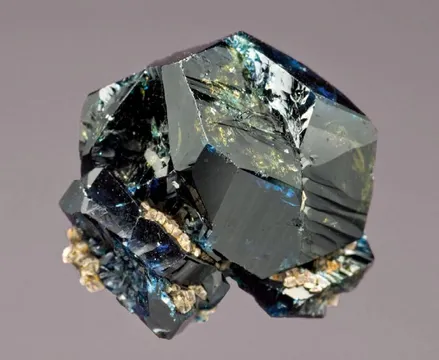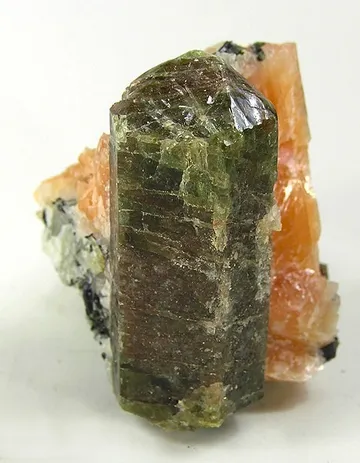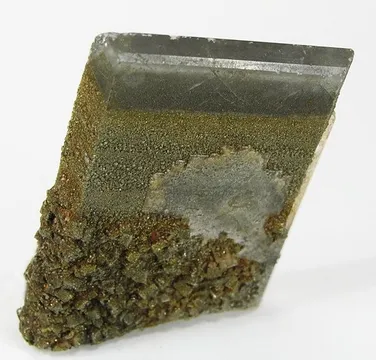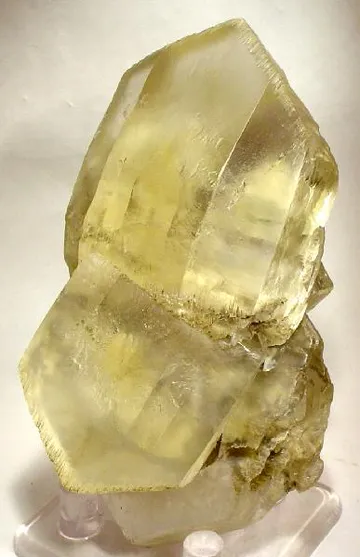
Husky Mine, Yukon — famed for iridescent polybasite and stephanite crystals, rare sulfosalt pockets, and a storied silver camp highlight for collectors.
Key facts
Husky Mine is the collector’s silver-sulfosalt jewel of the Keno Hill–Galena Hill silver camp in central Yukon. It was not the first mine in the district, nor the largest, but in mineral-specimen circles it has a reputation out of proportion to its tonnage: Husky is the source of the remarkable iridescent polybasite and stephanite crystals that turned a late-stage silver orebody into one of Canada’s classic miniature and thumbnail localities.
Geologically, the mine belongs to the Keno Hill Ag-Pb-Zn vein system, a high-grade polymetallic silver camp developed in greenschist-facies metasedimentary rocks of the Selwyn Basin. The productive veins are structurally controlled, hosted especially where brittle Keno Hill Quartzite and associated competent units fractured open enough for silver-rich hydrothermal fluids to deposit ore. In normal mining terms Husky was an argentiferous galena-siderite breccia deposit, with freibergite, pyrargyrite, acanthite, native silver, quartz, calcite, barite and minor sphalerite. In collector terms, its distinction lies in the small number of superb sulfosalt pockets where polybasite and stephanite formed as sharp metallic crystals with electric blue, green, purple and reddish iridescence.
Regional View
Country View
The best Husky pieces have a look unlike most silver sulfosalts: pseudohexagonal polybasite blades stacked into rosettes, dark stephanite prisms and compound crystals rising from them, and a surface film that throws peacock colors under a strong light. Ordinary polybasite can be merely black and metallic; Husky polybasite can flash through teal, violet, bronze, green and wine-red on the same specimen. The great pocket material is overwhelmingly associated with Stope 302 and with the 1977 collecting episode by “Little Joe” Weinholtzner and Rod Shiletto, although smaller occurrences of similar material were reported elsewhere in the mine and in the camp.

Photo: Wikimedia Commons
The mine is now closed, flooded and not a collecting locality in any ordinary field-collecting sense. Its mineral-specimen population is therefore essentially historic: old mine pieces, ex-miner material, older dealer lots, museum specimens and specimens that passed through major private collections. That finite population is part of the locality’s appeal. A fresh-looking Husky polybasite or stephanite is not simply another silver mineral; it is a surviving fragment of one unusually colorful moment in the last phase of the Keno Hill underground era.

Photo: Wikimedia Commons
Search for specimens: View all specimens from Husky Mine, Canada
Husky Mine lies at Elsa on Galena Hill in the Mayo mining district of Yukon, within the famous Keno Hill silver camp. The mine is near the western end of the productive belt, downslope from the Elsa townsite and close to the Silver King–Elsa–Husky group of deposits. The camp itself is a narrow, structurally controlled belt of silver-lead-zinc deposits crossing Galena, Keno and Sourdough hills, with most historic silver actually produced from the Galena Hill side despite the broader “Keno Hill” name.
The deposit is a carbonate-vein-hosted polymetallic Ag-Pb-Zn system, with ore in vein-faults and breccia zones rather than in a massive replacement body. The broader district’s best ores formed where younger transverse veins cut competent quartzite or greenstone and created open space for hydrothermal deposition. Husky is especially important because it shows some of the camp’s higher-silver, lower-base-metal character: the principal mine produced rich silver ore dominated by argentiferous galena in siderite-rich breccia, while the nearby Husky Southwest mineralization was still more unusual, being quartz-rich, low in galena and sphalerite, and locally so non-visual that grade control depended heavily on assays.
At Husky proper the host rocks are Keno Hill Quartzites interbedded with graphitic and micaceous schists and accompanied by greenstone sills. Vein material has been reported as siderite, argentiferous galena, quartz, pyrargyrite, calcite, barite and minor stephanite and polybasite, with little evidence of oxidation. The main mining system used a shaft with four principal levels at about 125, 250, 375 and 400 feet, plus a ramp extending from the 375-foot level to the 450-foot level. The specimen-producing pockets were not ordinary ore-face collectibles scattered through the mine; the celebrated material is tightly associated with Stope 302, where a limited number of iridescent polybasite and stephanite specimens were recovered.
The Husky deposit was found in the mid-1960s during United Keno Hill Mines’ exploration program using surface rotary-percussion drilling through the heavy overburden that blankets the lower Galena Hill slopes. That discovery mattered historically because the great Hector-Calumet mine was closing, reserves were declining, and Keno Hill needed another strong producer. Husky entered production in 1972 and helped keep the camp alive through its final decades. By the end of 1984 it had produced more than 359,000 tonnes grading around 1450 g/t silver, and later summaries place total Husky production at roughly 389,000 tonnes at about 1430 g/t silver, 3.9% lead and 0.4% zinc. When Husky and Husky Southwest are considered together, they rank among the major producers of the district.
The district’s ownership and operating history is layered. Early Keno Hill mining was driven by Yukon Gold Company, Keno Hill Ltd. and Treadwell Yukon interests; after the Second World War, Keno Hill Mining Company—later United Keno Hill Mines—became the dominant operator. Husky belonged to this late United Keno Hill Mines phase. Production in the district ceased in 1989, after which the old United Keno Hill properties moved through receivership, environmental care-and-maintenance arrangements, Alexco ownership, and ultimately Hecla ownership following Hecla’s acquisition of Alexco in 2022. The historic United Keno Hill Mines area is now subject to active care, maintenance and reclamation, including government involvement and consultation with the First Nation of Na-Cho Nyäk Dun.
Collectors should regard Husky as a closed historic mine, not a collecting destination. The workings have been described as flooded to surface, buildings and mine openings have been locked or gated, and access roads have been controlled. The site also sits within a legacy-mining landscape with environmental hazards typical of abandoned sulfide mines: waste rock, acidic drainage, stressed vegetation in places, old structures and restricted mine openings. Any visit would require permission from the responsible land and mineral-rights holders and strict attention to safety; collecting underground or around mine infrastructure is not a realistic or responsible expectation.
The notable specimen finds are concentrated in the late 1970s and early 1980s. Stope 302 is the essential label detail for the classic material. Reported surviving production from that find was modest—on the order of one small-cabinet specimen, a few miniatures and several dozen thumbnails for the best polybasite—yet the visual quality was exceptional. Some crystals were reportedly saved as curiosities by miners before the collector market fully understood them; others remained in private hands for years before entering the trade. Because the mine is closed and the pocket was finite, modern “new” Husky material almost always means old stock, collection dispersal or a specimen resurfacing from a historic lot.
Polybasite is the signature collector mineral of Husky Mine, occurring as pseudohexagonal tabular crystals and overlapping rosettes, commonly thumbnail to miniature in overall specimen size, with the finest reported rosettes reaching several centimeters and exceptional individual crystals reported to about 3.5 cm. The classic material came from Stope 302, where “Little Joe” Weinholtzner and Rod Shiletto recovered a small but extraordinary pocket population in 1977. The color is what separates Husky from almost every other polybasite locality: rather than merely black metallic plates, good crystals show strong iridescence in blue, green, purple, yellow-bronze and red, and some pieces display a striking blood-red reflection from the basal face when turned under intense light. Associations include stephanite, quartz, pyrite, galena and occasional acanthite; the strongest specimens are sharp, undulled rosettes with intact blade edges, three-dimensional stacking, vivid iridescence and clean exposure rather than scuffed, darkened or flattened crystals.
Stephanite from Husky Mine is rarer than the polybasite and is prized as slender, striated, metallic gray-black to silvery crystals and compound groups, typically thumbnail-sized but with notable crystals in the 2 to nearly 3 cm range and rare miniature-class groups. The best examples are also tied to the 1977 Stope 302 find, where stephanite occurred with polybasite rosettes and the same unusual iridescent surface colors. A classic Husky stephanite has upright or subparallel prismatic crystals, a dark metallic body color, fine longitudinal texture, and flashes of purple, blue, green and pink across the faces; lesser examples may be contacted, dull, chipped or visually lost in a dark sulfosalt mass. The most desirable pieces combine a distinct stephanite form with visible polybasite association, strong iridescence, and a label preserving the Stope 302 or Weinholtzner connection.
Other documented Husky minerals include acanthite, baryte, calcite, chalcopyrite, dolomite, freibergite-subgroup minerals, galena, kaolinite, malachite, marcasite, muscovite, native silver, pyrargyrite, pyrite, quartz, siderite, sphalerite and tourmaline, with polybasite-T2ac also recorded as a structural variant in the polybasite family. None of these has the collector identity of the Stope 302 polybasite-stephanite material, but several help explain the pocket environment: pyrargyrite stockwork, acanthite, native silver, barite and kaolinite belong to the more unusual high-silver assemblage noted at Husky, while argentiferous galena and freibergite record the ordinary ore-mineral backbone of the Keno Hill camp. Galena, pyrite and quartz may be important on labels as associations, but the locality’s museum-level specimens are overwhelmingly the iridescent silver sulfosalts.
Husky specimens demand careful locality discipline. The most desirable labels specify Husky Mine, Elsa, Galena Hill, Mayo mining district, Yukon, Canada, and the finest classic pieces often add Stope 302 and, where known, the Weinholtzner or Shiletto provenance. Because the Keno Hill camp includes many nearby mines with overlapping silver sulfosalt assemblages, “Elsa,” “Galena Hill,” “Keno Hill” and “Mayo district” labels should be read carefully. A vague Keno Hill silver sulfosalt is not automatically a Husky specimen, and a vague Husky label is less persuasive than one tied to the Stope 302 find or to an old, credible collection chain.
I am not aware of a well-documented modern fake industry for Husky polybasite or stephanite, but misidentification and over-broad attribution are realistic concerns. Dark silver sulfosalts are notoriously easy to confuse by eye: polybasite, pearceite-family material, stephanite, acanthite, pyrargyrite-coated pieces and freibergite-rich ore can all appear black, metallic and compact. For valuable pieces, especially specimens marketed as stephanite or as exceptional polybasite crystals, analytical confirmation or strong provenance is desirable. The iridescence is a locality hallmark, but color alone is not a species determination.
Condition is the great issue. These are soft, brittle silver sulfosalts with thin plates and sharp edges; many were recovered and stored under miner’s-lot conditions rather than as modern fine-mineral specimens. Edge nicks, basal contacts, bruised rosette margins, repaired stephanite crystals and rubbed high points should be expected and evaluated honestly. The best Husky pieces are not necessarily damage-free under a microscope, but they should present cleanly from the display direction, with crisp geometry and minimal distraction on the main face.
The iridescent surface film is part of the specimen’s value and should be treated as fragile. Avoid cleaning beyond gentle dust removal, avoid solvents or ultrasonic cleaning, and do not attempt to “brighten” the surface. Strong display lighting can reveal the best colors, but long-term intense light exposure and careless handling may diminish the very surface quality that makes these specimens special. Store pieces in a stable, dry environment, handle only by matrix or non-display edges, and keep them isolated from harder minerals that can scratch or chip the blades.
Rarity is uneven by species and quality. Small polybasite thumbnails appear periodically, especially from older collections and dealer stock, but sharp, strongly iridescent, three-dimensional rosettes are genuinely scarce. Stephanite is markedly harder to obtain, and aesthetic miniature-size stephanite groups from Husky are among the locality’s elite specimens. Market availability today is almost entirely secondary-market: collection dispersals, old dealer holdings, auction listings and occasional individual specimens emerging after decades off the market. The finite nature of the Stope 302 material means that provenance, condition and color can move values dramatically.
The defining Husky story is one of those improbable mineral-collecting episodes in which world-class specimens were almost treated as curiosities. In spring 1977, “Little Joe” Weinholtzner and Rod Shiletto collected the celebrated polybasite and stephanite from Stope 302. They were not pulling pale quartz points or obvious display minerals from a collector’s pocket; they were in a working silver mine, handling dark metallic sulfosalts whose value depended on a sheen that only came alive when the crystals were tilted into the light. What survived from that episode was surprisingly small: a handful of miniatures and thumbnails, with only a very few larger pieces known.
The famous “coffee can” tale belongs to the same episode. Some of the iridescent crystals were reportedly gathered quickly and stored in metal cans, a miner’s solution rather than a curator’s. For collectors looking at a chipped edge on a Husky rosette today, that detail matters. The damage is not always from careless later ownership; part of the population appears to have been born into the specimen world by being placed together in cans, jostled with other sharp sulfosalt crystals, and carried out of a remote underground mine before anyone knew exactly how important they would become.
Another piece of Husky folklore is more domestic. Miners are said to have given some of the iridescent crystals to wives and girlfriends as buttons and brooches. It is a wonderfully Yukon detail: rare silver sulfosalts from one of Canada’s greatest silver camps, diverted for personal adornment because their peacock colors were obvious even to people not reading mineral journals. That helps explain why the known specimen population feels fragmentary. Some pieces entered collections, some were sold through dealers, some stayed with miners, and some may have disappeared into family keepsakes.
The later market story is almost as interesting as the find itself. Fine Husky specimens were not abundant immediately after discovery, and a number of better pieces remained out of sight for years. When choice examples began surfacing from old holdings and major collections, the locality’s reputation hardened quickly: collectors recognized that the best Husky polybasite was not merely Canadian, not merely rare, but competitive with the great world localities for the species. Stephanite from Husky went further still; fine pieces became coveted because they combined rarity, sculptural habit and the same impossible-looking iridescence.
Robert B. Cook, “Polybasite: Husky Mine, Elsa, Yukon Territory, Canada,” Rocks & Minerals, vol. 81, no. 1, 2006, pp. 44–48. DOI: 10.3200/RMIN.81.1.44-48. A Connoisseur’s Choice treatment of the classic Husky polybasite specimens.
Wendell E. Wilson and Mark H. F. Mauthner, “The Husky Mine: Elsa, Yukon Territory, Canada,” The Mineralogical Record, vol. 52, no. 1, Jan.–Feb. 2021, pp. 51–67. The key modern collector-focused publication on the mine, its history and its polybasite-stephanite specimens.
R. J. Cathro, “Great Mining Camps of Canada 1. The History and Geology of the Keno Hill Silver Camp, Yukon Territory,” Geoscience Canada, vol. 33, no. 3, 2006, pp. 103–134. Article. Essential district-scale geology and mining history, including Husky’s role in the late life of the camp.
R. O. Sack, J. V. G. Lynch and F. Foit, “Fahlore as a petrogenetic indicator: Keno Hill Ag-Pb-Zn District, Yukon, Canada,” Mineralogical Magazine, vol. 67, no. 5, 2003, pp. 1023–1038. DOI: 10.1180/0026461036750141. Important technical work on Keno Hill silver-bearing fahlore chemistry and hydrothermal zoning.
Clivia Hejny, A. Wierer and A. Venturi, “High pressure behaviour of pearceite-polybasite group minerals,” abstract in Mitteilungen der Österreichischen Mineralogischen Gesellschaft, vol. 167, 2021, p. 103. PDF. Includes a Husky Mine polybasite-T2ac crystal in crystallographic high-pressure work.
Susan Robinson, “The Magnificent Mineral and Gem Collections of the Royal Ontario Museum in Toronto,” Rocks & Minerals, vol. 91, no. 2, 2016, pp. 154–163. DOI: 10.1080/00357529.2016.1113467. Illustrates a Royal Ontario Museum polybasite specimen from Husky Mine.
Royal Ontario Museum collection record, Polybasite, Husky, Elsa, Yukon, Canada. ROM eMuseum record. A museum collection example documenting institutional preservation of Husky material.
Mindat locality page: Husky Mine, Elsa, Galena Hill, Mayo mining district, Yukon, Canada — The most useful quick reference for coordinates, mineral list, photos and locality bibliography.
Mindat polybasite occurrence page for Husky Mine — Species-specific occurrence notes, associated minerals and photo data for Husky polybasite.
Government of Yukon: Silver-lead-zinc deposits of the Keno Hill-Galena Hill area — Concise geological and production summary for Husky and Husky Southwest.
R. J. Cathro, “Great Mining Camps of Canada 1: The History and Geology of the Keno Hill Silver Camp” — Best open-access narrative of the district’s geology, exploration history, ore controls and production.
Crown-Indigenous Relations and Northern Affairs Canada: United Keno Hill Mines Reclamation Project — Current reclamation context for the historic United Keno Hill Mines landscape.
Hecla Mining: Hecla Yukon / Keno Hill — Current operator overview for the modern Keno Hill operation and Alexco acquisition history.
Wikimedia Commons: Minerals of the Husky Mine — Open image category containing Husky polybasite and stephanite photographs.
Wikimedia Commons: Polybasite-tmu16b.jpg — High-resolution photo page for a classic iridescent Husky polybasite miniature.
Wikimedia Commons: Stephanite-t06-190a.jpg — Photo page for an iridescent Husky stephanite specimen.
Minfind: Polybasite from Husky Mine — Recent marketplace reference showing the continuing secondary-market presence of small Husky polybasite specimens.