White Pine Mine - Michigan sediment-hosted copper-silver deposit notable for delicate native copper leaves, rare native silver, and copper-in-calcite crystals.
Key facts
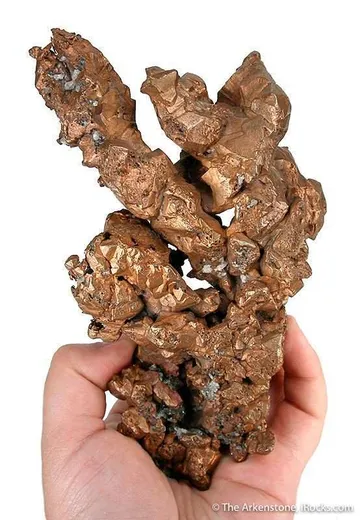
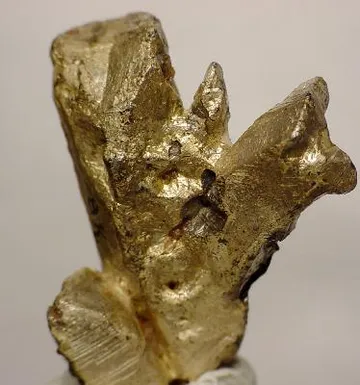
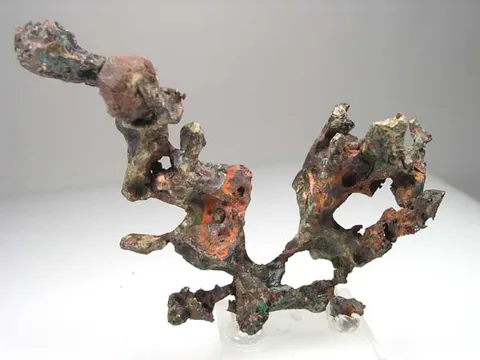
White Pine is the collector’s exception to the familiar Keweenaw story. Most Michigan copper classics came from native-copper lodes in basalt, conglomerate, and fissures farther northeast; White Pine instead made its reputation as a vast sediment-hosted copper-silver deposit in the basal Nonesuch Formation and the uppermost Copper Harbor Conglomerate near the south shore of Lake Superior in Ontonagon County. Its ore was dominated by chalcocite, with native copper and native silver playing the collector’s role: sheets, leaves, arborescent growths, sharp spinel-twinned crystals, bright ropes, copper-in-calcite combinations, and scarce native silver “halfbreed” pieces that look unmistakably different from the heavier, more massive Keweenaw basalt-lode material.
Regional View
Country View
For collectors, the mine’s best specimens have a delicacy out of proportion to the scale of the operation. White Pine was an industrial room-and-pillar copper mine, yet its coveted native copper commonly records the bedding and fractures of fine-grained sedimentary rock: thin metallic leaves, branching skeletal forms, and copper replacement textures that can preserve cross-bedding. The most admired pieces show clean, bright copper with natural patina, open sculptural form, and minimal broken edges; the finest calcite-associated pieces add translucent honey to orange scalenohedra or white crystalline calcite to the copper. Native silver is much rarer, and specimens combining silver and copper from White Pine carry the special cachet of a mine whose by-product silver production was immense, but whose display-quality silver specimens are comparatively scarce.

Photo: Rob Lavinsky, iRocks.com via Wikimedia Commons
The White Pine deposit also matters because it forced Michigan copper mining to change its habits. The chalcocite-rich Nonesuch ore had been known long before modern production, but early operators were built around native copper and struggled with the fine-grained sulfide ore. By the 1950s, improved grinding and flotation made White Pine viable. It became the dominant late chapter of the Copper Country, operating after the older Keweenaw producers had declined and ultimately closing as the last great industrial copper mine of the district. Today, its specimens are almost entirely old-stock pieces, recovered during mining or from historic collections rather than from casual modern collecting.

Search for specimens: View all specimens from White Pine Mine, USA
White Pine is a sediment-hosted stratiform copper-silver deposit in Carp Lake Township, Ontonagon County, Michigan, about six miles south of Lake Superior. Regionally it lies on the south flank of the Midcontinent Rift System, within the late Precambrian Keweenawan sequence. The collector should picture the deposit not as a single dramatic vein, but as a laterally extensive copper-bearing interval near the contact between red, oxidized Copper Harbor Conglomerate below and reduced gray to black Nonesuch Formation siltstone and shale above. The basal ore zone was classically divided at the mine into the Lower Sandstone, Parting Shale, Upper Sandstone, and Upper Shale.
The mineable copper was concentrated chiefly in the lowermost Nonesuch Formation and the uppermost Copper Harbor Conglomerate. Published descriptions place the principal ore interval in roughly the lower 18–25 feet of the Nonesuch, with additional mineralization in the top several feet of the underlying Copper Harbor Conglomerate. The Nonesuch near White Pine is a laminated gray to brownish-gray siltstone with shale and sandstone, a reduced sedimentary package capable of precipitating copper from moving brines. The Copper Harbor Conglomerate beneath it is the oxidized clastic aquifer in many genetic models: a red-bed system that could supply copper-bearing fluids which migrated into reduced, sulfur- and organic-rich basal Nonesuch beds.
Economically, chalcocite was the essential mineral. It accounted for the overwhelming majority of the copper processed at White Pine, usually as very fine disseminations in dark gray laminated shale and siltstone, and locally as small oblate grains. Native copper, although much less important by tonnage, is the heart of the collector market. It was especially abundant in the Lower Sandstone and Parting Shale, occurring as grains, lamina-controlled sheets, and in some places as remarkably thin metal sheets reaching several feet in length. Native silver occurred sporadically, commonly with native copper, as individual grains or as rims on copper sheets and grains. Minor sulfides documented from the ore include bornite, chalcopyrite, pyrite, covellite, sphalerite, galena, digenite, and related copper sulfides.
The mining history reaches back to the nineteenth-century search for copper along the Mineral River. Capt. Thomas Hooper is credited with recognizing copper mineralization in Copper Harbor Conglomerate in 1880 on St. Mary’s Mineral Land Company ground, and the White Pine name was tied to the pine-covered hillsides around the locality. Early shafts and trial workings followed, but the ore that made White Pine enormous was not the kind of ore the early native-copper district knew how to treat profitably. Calumet & Hecla later explored and mined in the area during the 1910s, including the period when the White Pine townsite was established, but the operation closed in 1920 as copper prices weakened.
Copper Range Company acquired the property in 1929. The decisive advance came from test work showing that the fine chalcocite ore, once considered economically awkward, could be ground and floated successfully. Construction of the modern White Pine project began in March 1952, first ore was mined the following year, and the first copper product was produced in January 1955. The mine was built as a large underground room-and-pillar operation with crushing, grinding, flotation, smelting, and electrolytic refining integrated at the site.
At full scale, White Pine was immense. The underground mine extended over a many-square-mile area, with active workings at depths reaching roughly 1,500 to 2,700 feet below the portal in late operating descriptions. Rooms were commonly on the order of tens of feet wide and under 20 feet high, mined on one main level in regular room-and-pillar patterns. During modern operation, broken ore was crushed underground, carried by conveyors to the surface, milled, floated, smelted, and refined. Employment reached its high point in the 1970s, and the mine became the major Michigan copper producer after the decline of the older Keweenaw native-copper mines.
Ownership changed several times in the late twentieth century. Copper Range was acquired by Louisiana Land and Exploration in 1977, and a major refinery was completed in 1981. Weak copper markets forced a shutdown of the mine, mill, and most smelter operations in 1982, though smelter work using scrap continued for a time. The property was purchased by Echo Bay Mines in 1985, then reorganized under a new Copper Range Company group, and operations resumed in November 1985. Metall Mining Corporation later became involved, and conventional production ultimately ended in the mid-1990s. State summaries give the main operating period as 1954 to 1995 and production of about 198 million tons of copper ore; other locality summaries report total metal production on the order of four to 4.5 billion pounds of copper and tens of millions of ounces of silver.
Modern collecting access should be treated as closed. The historic mine is private, industrial, reclaimed, and in part associated with ongoing development interests around White Pine North, the brownfield extension of the old mine. Underground workings have flooded since closure, and the surface areas are not public collecting grounds. Serious collectors obtain White Pine specimens through old collections, museum deaccessions, and established dealers. The best provenance notes usually mention the mine, Ontonagon County, and sometimes a former collection; pieces merely labeled “Michigan copper” should not be upgraded to White Pine without convincing evidence.
The notable specimen-producing material came from several settings rather than one famous named pocket. Native copper sheets and leaves were recovered where copper occupied laminae and fractures in sandstone and shale near the basal ore zone, especially the Lower Sandstone and Parting Shale. Copper with calcite came from late openings and carbonate-lined spaces where calcite protected or partially encased the metal. Silver-bearing pieces are rarer and commonly involve silver in direct association with copper, including rims, grains, and compact branching masses. Barite, calcite, and copper combinations from the mine are highly prized precisely because they are unusual for White Pine compared with the more common native copper pieces.
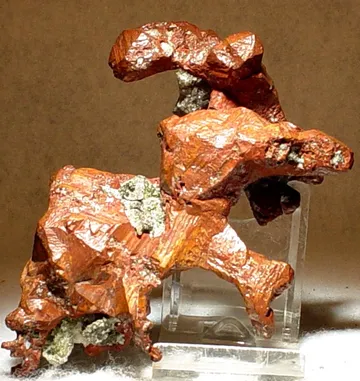
Native copper from White Pine ranges from thin lamina-controlled sheets and ragged leaves to sculptural arborescences, elongated spinel-twinned crystals, branching wires, and copper replacing or cementing sedimentary textures in the Nonesuch Formation and Copper Harbor Conglomerate contact zone. The color runs from bright salmon copper on cleaned pieces to warm brown and reddish natural patina, commonly with calcite, chalcocite, dark shale, sandstone, or minor native silver. Most collector pieces are thumbnails to cabinet specimens, but the mine also produced much larger sheet copper in the ore; display quality is judged by openness, crystallization, completeness of leaf edges, strength of patina, and unmistakable White Pine sedimentary character rather than sheer weight.
Calcite from White Pine is best known in collector circles as a matrix and companion mineral for native copper, but fine individual crystals are also documented, including translucent to honey, pale yellow, and hematite-tinted orange scalenohedra collected during the mine’s active decades. Crystals are typically miniature to small cabinet scale, with the most attractive examples showing sharp form, glassy luster, warm iron-oxide coloration, and either a clean sculptural single crystal or a direct association with copper. Because calcite is soft and easily bruised, undamaged terminations and natural, unetched surfaces matter greatly; many ordinary pieces are simply copper freed from calcite, while the more desirable White Pine specimens preserve both species in balance.
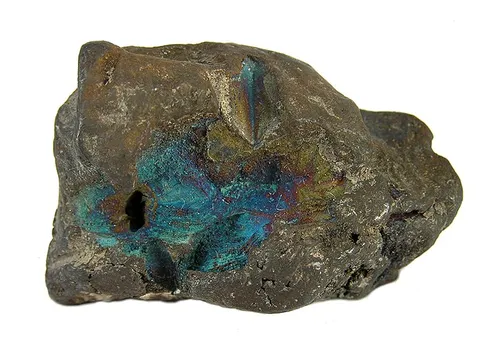
Native silver is a scarce but important White Pine species, occurring sporadically in the same sediment-hosted copper system that produced immense by-product silver tonnage but relatively few fine display specimens. It may occur as grains with chalcocite, as rims on native copper sheets or grains, and as compact branching crystallized masses, sometimes with copper and calcite. Good White Pine silver pieces are usually small but visually dense: bright to softly tarnished metallic silver with clear three-dimensional form, confirmed association with native copper, and reliable old provenance. The most desirable specimens are true copper-silver associations rather than generic “halfbreed” material whose exact mine attribution has drifted.
Chalcocite, Cu2S, is the ore mineral that made White Pine economically possible, although it is less often seen as a showy mineral specimen than native copper. In the mine it was concentrated in dark gray laminated shale and siltstone of the basal Nonesuch, commonly as extremely fine disseminated grains and locally as larger millimetric masses or oblate grains; collector pieces typically show dark metallic to sooty gray chalcocite with quartz, calcite, shale, sandstone, native copper, or other sulfides. Fine White Pine chalcocite specimens are valued for clear metallic richness, unambiguous ore-zone matrix, and contrast with pale calcite or quartz rather than for large freestanding crystals.
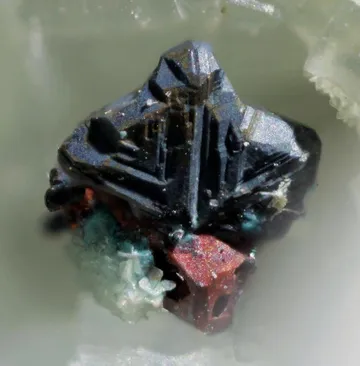
Barite from White Pine is a collector’s rarity, far less common on the market than copper, calcite, or chalcocite, and especially desirable when it occurs with native copper. Documented specimens include sharp, lustrous, transparent to brown or red-brown included crystals, with iron-oxide coloration and, in exceptional thumbnails, copper crystals on or near the barite. These pieces are generally small, but a good White Pine barite succeeds by being crisp, lustrous, and unmistakably from the closed copper mine rather than merely being a generic brown barite crystal; any intact barite-copper association from White Pine deserves careful preservation and strong provenance.
Beyond the five headline species above, White Pine has a notably broad documented suite for a sediment-hosted copper mine. Acanthite, algodonite, bornite, chalcopyrite, covellite, digenite, djurleite, cuprite, malachite, atacamite, paratacamite, connellite, chalconatronite, calumetite, dolomite, quartz, laumontite, epidote, chamosite, feldspar, hematite, magnetite, sphalerite, wurtzite, galena, anatase, titanite, zircon, bastnäsite-group and synchysite-(Ce) entries, and petroleum or bitumen have all been reported from the locality or its immediate sub-localities. White Pine is not the type locality for calumetite or chalconatronite, but its verified occurrences of these unusual secondary copper minerals, together with later work on atacamite-paratacamite films in underground brine and petroleum pools, make it a locality of mineralogical interest well beyond attractive copper specimens.
The principal authenticity issue with White Pine specimens is attribution, not a well-known named forgery episode. Native copper from Michigan is abundant in old collections, and labels are often shortened to “Keweenaw,” “Lake Superior,” or simply “Michigan copper.” A true White Pine attribution should be supported by an old label, dealer history, collection provenance, or specimen style consistent with the mine: sedimentary matrix, sheet or leaf copper, copper with calcite from the Nonesuch/Copper Harbor contact environment, or copper-silver associations known from the locality. Conversely, heavy basalt-matrix copper with epidote, prehnite, datolite, or typical amygdaloidal Keweenaw habit may belong to another Copper Country mine even if it has migrated onto a White Pine label.
Cleaning history matters. Many White Pine copper specimens were acid-cleaned to remove calcite or iron staining, and some pieces are prized precisely because calcite was left intact. Over-cleaned copper can look unnaturally bright, porous, or etched, and may have lost the carbonate context that made it desirable. Avoid aggressive acid treatment on copper-calcite combinations; calcite will effervesce and dissolve in acid, and even vinegar can alter the balance of a specimen. Silver should be handled with similar restraint: polishing removes patina and can blur delicate crystalline texture. Soft secondary copper minerals such as atacamite, paratacamite, chalconatronite, and calumetite are not robust handling minerals and should be kept dry, stable, and away from repeated washing.
Condition is often the dividing line between ordinary and important White Pine copper. Thin leaves and arborescences bend, crack, and snap easily. Look for fresh breaks along the margins of sheet copper, soldered-looking repairs, glued contacts, or flattened display faces on branching pieces. Calcite scalenohedra chip at the tip and along edges, so a complete termination is a premium feature. Barite is brittle and uncommon from the mine; damage to edges and corners is especially consequential. Chalcocite-rich matrix specimens can shed fine-grained shale and should be boxed securely.
Market availability is steady but finite. Copper specimens from White Pine appear regularly because the mine was large and active into the modern collecting era, but top sculptural copper, copper with well-preserved calcite, strong copper-silver “halfbreed” pieces, good crystallized silver, and barite-copper combinations are all much scarcer. The closed nature of the mine and the flooding of the underground workings mean the supply is essentially historic. Buy the label as carefully as the specimen: a modest piece with a credible old White Pine provenance may be preferable to a flashier “Michigan copper” with no mine-level history.
The White Pine story begins with a familiar Copper Country rhythm: a sharp-eyed prospector, a promising outcrop, and a name taken from the landscape itself. Capt. Thomas Hooper’s 1880 discovery along the Mineral River was not in the romantic cliff-and-fissure copper country of the early Keweenaw mines, but in a different rock package—sedimentary beds where copper lay in and near the Copper Harbor Conglomerate and the basal Nonesuch. The locality name came from the pine-covered hillsides nearby. Shafts and trials followed, but the early operators were chasing copper with nineteenth-century expectations. White Pine’s richest future was locked in the fine sulfide mineral chalcocite, a form of ore that could not yet be made to pay.
That “worthless” chalcocite is one of the most memorable reversals in Michigan mining. Earlier operators favored visible native copper; the fine dark sulfide ore demanded grinding, chemistry, and patience. Copper Range eventually understood that the ignored material was the deposit. After years of testing, improved milling showed that White Pine ore could be recovered profitably by fine grinding and flotation. Construction of the new project began in March 1952, first ore followed about a year later, and by January 1955 copper product was being made. What had been a frustrating ore became the engine of the last great Copper Country mine.
At full stride, White Pine was less a mine than an underground city. Late operating descriptions speak of a room-and-pillar mine covering about 25 square miles, with active areas 1,500 to 2,700 feet deep. Rooms were cut in a regular pattern, separated by pillars of ore left standing to support the roof. A single blast could break roughly 350 tons of ore, and daily removal reached about 17,000 tons in the period described by federal site visitors. The ore moved through underground crushers, conveyors, surface crushing, rod and ball mills, flotation, filtering, drying, smelting, and refining—a complete industrial chain built around copper that commonly began as grains only microns across.
The specimen collector sees a different scale in the same mine. In the ore descriptions, native copper could be a film only 0.2 millimeter thick, yet extend as a sheet two or three feet long. That single image explains why White Pine copper can look like metal peeled from bedding planes: not bulky boulders of copper, but thin, articulate copper leaves formed in sedimentary rock. The same environment could produce silver as rims on copper sheets and grains. A miner or collector pulling one of those pieces from the ore was seeing the deposit’s chemistry in miniature: chalcocite as the economic mass, native copper as sculptural metal, and native silver as a rare bright accent.
One of the strangest White Pine episodes did not become widely known until long after mining stopped. Before the mine closed and flooded, researchers collected green films from standing brine pools in an abandoned tunnel in the southwest part of the mine, at a depth of 686 meters. Some pools carried a thin petroleum film as well. Under the microscope, the green copper chloride minerals—atacamite and paratacamite—were not just inert crusts. They were flexible films containing bacterial colonies, including short rod-shaped and filamentous forms. The brine was extremely saline, roughly eight times seawater in the published study, and the bacteria were interpreted as using petroleum as a carbon source while possibly helping precipitate the copper minerals or serving as templates for them. It is an almost science-fiction image from a very real copper mine: green mineral films floating on salty subterranean pools, fed by copper, chloride, microbes, and ancient petroleum.
The end of White Pine was not a single quiet closing of a gate. The mine had already survived a major shutdown in the early 1980s, a restart in 1985, and new ownership arrangements. In the 1990s, proposals for in-situ solution mining became controversial, and conventional mining ceased as economics deteriorated. By the late 1990s, equipment was being sold and the underground world was allowed to flood. For collectors, that matters: the specimens now circulating are not casual finds from an accessible dump but survivors from a vanished industrial moment, labels and all.