Wheal Jane, UK — premier modern Cornish locality yielding ludlamite, cronstedtite, sphalerite and quartz pockets; type locality for ludlamite, prized by collec…
Key facts
Wheal Jane is one of the essential modern Cornish localities: a polymetallic tin-copper-zinc lode mine at Baldhu, near Chacewater and Truro, in the historic Camborne–Redruth–St Day mining district. For collectors it occupies two worlds at once. It is a serious ore deposit in the Cornubian metallogenic province, where mineralized quartz and quartz-tourmaline veins cut Devonian slates and related “killas” country rock above the buried granite system; and it is a specimen locality whose late 20th-century mining exposed fresh pockets that old collectors could only have dreamed of seeing intact. Its best pieces are not merely “Cornish” in a broad sense: they have a recognizable Wheal Jane character—lustrous black sphalerite on pale quartz, bright pyrite tucked among quartz points, apple-green ludlamite in vugs, black cronstedtite in tight sparkling groups, and occasional siderite, fluorite, marcasite, cassiterite, wolframite-group minerals, and phosphate rarities in the same complex assemblage.
The locality’s importance rests especially on ludlamite. Wheal Jane is the type locality for this hydrated iron phosphate, first described in the 19th century and named for the collector Henry Ludlam. Fine Wheal Jane ludlamite is a far more engaging mineral in hand than the word “phosphate” suggests: transparent to translucent green blades and wedge-shaped crystals, usually perched in quartz cavities or on sulfide-rich matrix, sometimes with pyrite, sphalerite, siderite, vivianite, or fluorite. Good cronstedtite is similarly distinctive—small, sharp, black iron-silicate crystals, often on quartz or pyrite, sometimes with limonite and minute golden-brown cacoxenite. Sphalerite from the mine can be cabinet-worthy: black to brown-black, lustrous, iron-rich-looking crystals to several centimeters, commonly with milky or clear quartz and brassy pyrite.
Regional View
Country View
Historically, Wheal Jane also matters because it was among the last large-scale Cornish tin operations. The older Wheal Jane workings and neighboring setts were amalgamated into Falmouth Consolidated Mines in the early 20th century, then the district was redeveloped in the 1960s and 1970s with deep shafts, a modern mill, and intensive flotation treatment for a difficult mixed ore. Later, under Carnon Consolidated and Rio Tinto Zinc involvement, Wheal Jane and Mount Wellington were operated as part of the same modern Cornish tin complex. After the tin-price collapse of the 1980s, Wheal Jane’s final closure in 1991 marked the end of a major chapter in Cornwall’s metal-mining history.

Photo: Wikimedia Commons
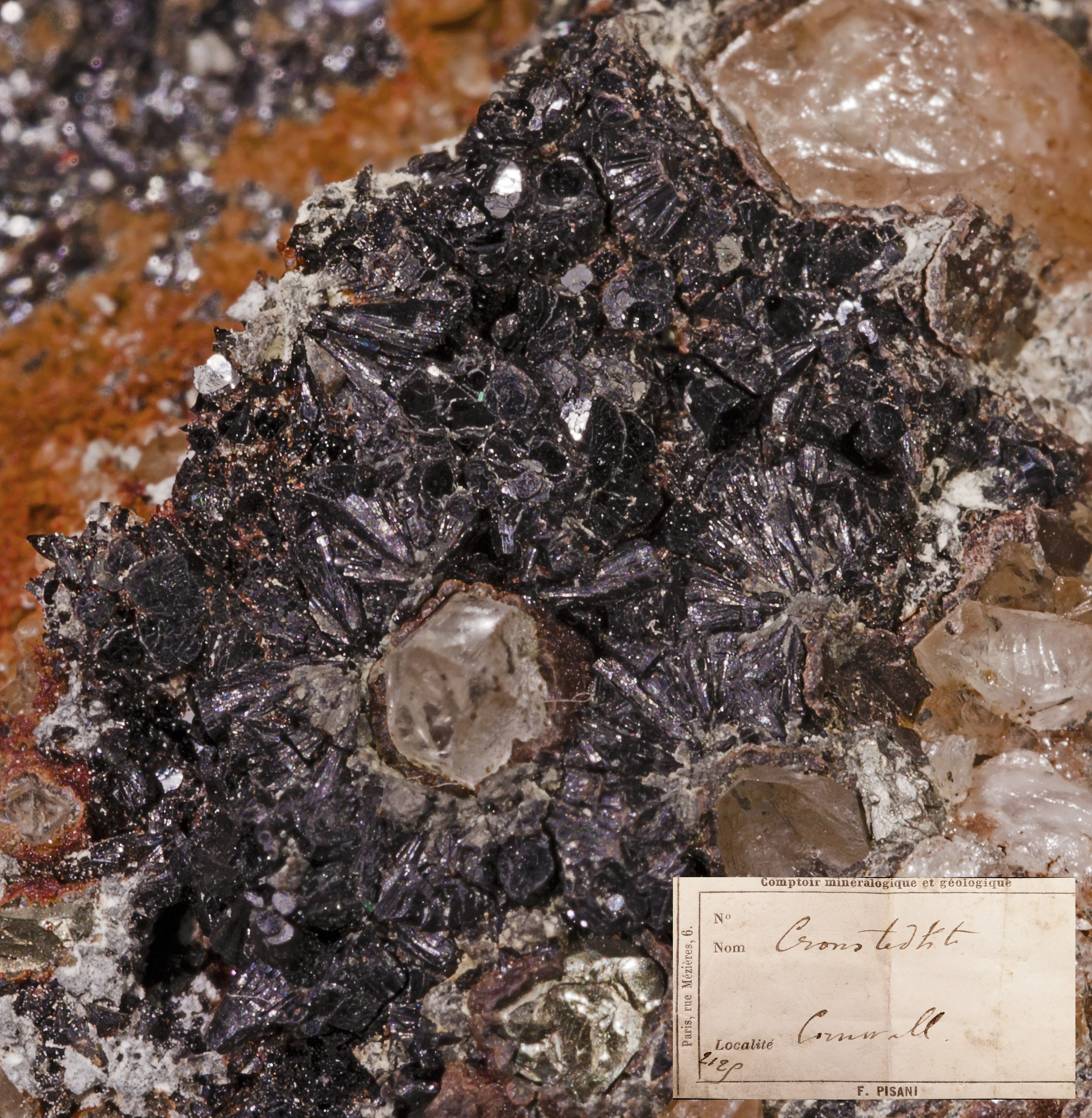
Photo: Wikimedia Commons
Search for specimens: View all specimens from Wheal Jane, UK
Wheal Jane lies in the Baldhu area of west Cornwall, within the broader Camborne–Redruth–St Day mining district. The mined system is a classic Cornish polymetallic lode deposit: quartz and quartz-tourmaline veins with cassiterite, sulfides, and accessory gangue cutting Devonian metasedimentary rocks of the local killas sequence. Modern descriptions of the district place Wheal Jane among ENE-trending mineralized structures that dip shallowly or steeply north, with mineralization related to quartz veins and quartz-tourmaline veins hosted in metasedimentary rocks above granitic intrusions. The old mines of the area worked lodes associated with an elvan dyke trending northeast from the Mount Wellington side across the Carnon Valley; in the broader mine field, the relationship between mineralization, killas host rock, elvan, and the concealed granite is fundamental to both the ore and the specimen assemblage.
The ore was not simple cassiterite in quartz. Wheal Jane produced tin, copper, zinc, silver, lead, pyrite, arsenopyrite, arsenic, iron ore from gossan, and ochre at different periods. The 19th-century production figures show why collectors should expect a mixed assemblage: Wheal Jane yielded black tin, copper ore, zinc ore, lead ore, large tonnages of pyrite, arsenopyrite, arsenic, silver, ochre, and gossan iron ore. West Wheal Jane added further black tin, copper, lead, zinc, pyrite, arsenic, and iron ore. That chemistry appears directly in specimens: sphalerite and pyrite are common associates of quartz; cassiterite and wolframite-group minerals occur in quartz-tourmaline material; cronstedtite, siderite, ludlamite, cacoxenite, and other phosphates or alteration minerals occupy cavities and later-stage seams.
The early mine was probably active by the mid-18th century and was worked intermittently through the 19th century. Wheal Jane itself is recorded as producing from 1847 to 1895, while West Wheal Jane produced from 1854 to 1889. In 1906, Wheal Jane, West Wheal Jane, Wheal Widden, and Nangiles were brought together as Falmouth Consolidated Mines; the group also included the Falmouth and Sperries ground, though work concentrated especially around Wheal Jane and West Wheal Jane. The Falmouth Consolidated venture dissolved during the First World War years, with tributing continuing locally for a time afterward.
Modern Wheal Jane began with post-war reassessment and major redevelopment. Consolidated Gold Fields took control in the 1960s; exploration drilling began in 1966, shaft rehabilitation and underground exploration followed in 1968, and a decision was made in 1969 to bring the mine into production. The modern mine required new deep access and surface plant: No. 2 Shaft was sunk to roughly 366 metres, Clemow’s Shaft was deepened and widened, an underground crusher station was built, and a large concentrator was installed. Underground development was laid out on levels at 30-metre vertical intervals, and ore was extracted from panels using drilling, blasting, train haulage, and crushing before milling.
The mill is part of the story because Wheal Jane ore was mineralogically awkward. Fine-grained tin minerals, heavy sulfides, and a complex mix of valuable and troublesome minerals made simple gravity concentration inadequate. Froth flotation was adopted on a commercial scale, with high-grade and low-grade tin concentrates going to Capper Pass in East Yorkshire and copper-zinc concentrates shipped onward through Truro Harbour. Annual tin production in the first modern phase peaked at about 1,600 tonnes in 1973, then fell before closure in 1978, a closure tied both to economics and to the pumping burden after the neighboring Mount Wellington mine ceased operating.
Carnon Consolidated Tin Mines, associated with Rio Tinto Zinc, acquired Wheal Jane in 1979 and also took over the Mount Wellington shaft and underground workings. The mines were refurbished and operated as an integrated unit using the Wheal Jane mill. Production restarted in 1980, and the high zinc price of the 1980s gave value to a component of the ore that had previously been far less attractive. Wheal Jane reached strong modern production again in the early to mid-1980s, with tin output reported at 1,499 tonnes in 1981 and 1,863 tonnes in 1984, while zinc production was especially high in 1981 and 1982. South Crofty ore was later treated at the Wheal Jane mill after South Crofty’s own mill closed, so the site remained industrially important even as Cornish tin mining contracted.
For mineral collectors, the most desirable specimens were products of real mining exposure rather than casual dump collecting. Late working and re-entry exposed fresh cavities in quartz-sulfide and quartz-tourmaline lodes, and several labels on significant pieces preserve useful underground details. A notable ludlamite specimen has been recorded from the “11-15 Decline, C Section” of Wheal Jane, acquired in 1991 from Paul Lowe of Truro, with green gemmy crystals on white crystallized quartz. Sphalerite specimens are known from the 600-foot level, including a large, published 23 cm example of Fe-rich sphalerite with pyrite and quartz. Old Richard Barstow lists from the 1970s and 1980s repeatedly offered Wheal Jane quartz, sphalerite, pyrite, siderite, marcasite, and cronstedtite, showing that specimens were circulating while the mine was still a living industrial locality.
Collecting access today should be treated as closed unless explicit permission is obtained. The former mine is now an active managed site and business cluster, with ongoing mine-water treatment, recycling, remediation, and commercial operations. The shafts, adits, tailings dam, treatment plant, and old industrial ground are not casual collecting localities. Subsurface access is dangerous and private; uncontrolled visits risk both personal injury and further restriction of sensitive heritage and remediation areas. Serious collectors today should expect Wheal Jane specimens to come through old collections, mine-era material, reputable dealers, and documented historic labels rather than fresh field collecting.
Quartz is the structural mineral of Wheal Jane specimens, occurring as milky to translucent prismatic crystals, drusy crusts, cellular vein quartz, and quartz-tourmaline veinstone carrying the ore minerals. Good examples show sharp, elongated hexagonal crystals to several inches in older dealer descriptions, sometimes free-standing on quartz-sphalerite matrix, with bases included by fine pyrite or gray-green sulfide/chloritic material; other pieces are pyramidal milky crystals partly coated by marcasite, pyrite, or cronstedtite. The best quartz specimens from the locality are not valued simply for water clarity, but for their associations: black sphalerite set against pale quartz, bright pyrite cubes or cube-octahedra on crystal faces, green ludlamite in quartz vugs, and uncommon black cronstedtite crusts on terminated crystals. Ordinary Wheal Jane quartz is abundant gangue; collector-grade pieces are those in which quartz provides an undamaged, architectural stage for sulfides or rare late-stage minerals.
Sphalerite is one of the most recognizable Wheal Jane display minerals, typically black to brown-black, lustrous, and iron-rich in appearance, occurring as well-formed crystals on quartz with pyrite. Documented pieces include lustrous crystals to about 7/8 inch on cellular quartz veinstone with milky terminated quartz to 2 inches, EarthWonders-listed material with sphalerite crystals to 2.3 cm on massive sphalerite with quartz and pyrite, and a large 23 cm specimen from the 600-foot level with twinned Fe-rich sphalerite crystals to 3 cm. The most desirable examples have sharp, bright, undamaged sphalerite standing proud of a pale quartz matrix, with pyrite providing scale and contrast; lesser pieces are massive or bruised sulfide with only partial crystal faces. Because sphalerite is central to the zinc-rich phase of the mine’s ore, it appears in the same specimen vocabulary as quartz, pyrite, arsenopyrite, wolframite-group minerals, chalcopyrite, ludlamite, and siderite.
Pyrite at Wheal Jane ranges from massive ore and pyrite-rich matrix to sharp brassy crystals in quartz-sphalerite assemblages, and it is one of the locality’s key visual accents. Old specimen descriptions record lustrous cube-octahedral crystals intergrown with quartz on massive pyrite-quartz-sphalerite matrix, and pyrite is a frequent associate in sphalerite, ludlamite, cronstedtite, marcasite, baryte, hematite, cassiterite, and wolframite-group records from the locality. The mine’s 19th-century output included very large tonnages of pyrite, so massive material is not scarce; the collectible pieces are those where pyrite forms discrete bright cubes, cube-octahedra, or sparkling microcrystals rather than dull granular sulfide. In quartz specimens, small pyrite crystals can be enclosed or perched at the base of quartz points, producing the gray-green to brassy inclusions and flashes that separate good Wheal Jane quartz from plain vein material.
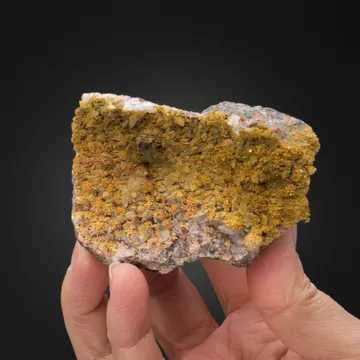
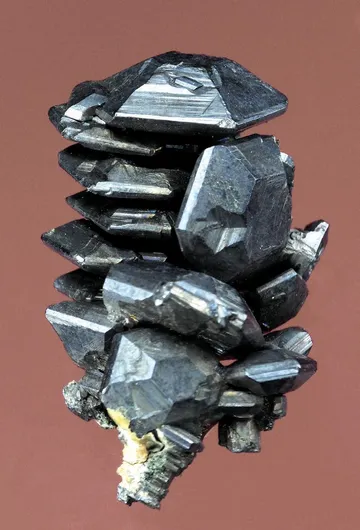
Cronstedtite is a classic Wheal Jane rarity and one of the minerals that gives the locality its specialist appeal beyond sphalerite and quartz. It occurs as small, sharp, black to blackish lustrous crystals, commonly in clusters or crusts on quartz, pyrite-rich matrix, limonite, or siderite-bearing material; associated minerals recorded for the locality include pyrite, quartz, siderite, fluorite, and cassiterite. The best pieces are thumbnails and small cabinet specimens with dense, sparkling, well-separated black crystals on contrasting pale quartz or golden-brown limonite, sometimes with minute apricot-tan to golden-brown cacoxenite dusting the cronstedtite. Size expectations should be realistic: many good cronstedtite crystals are only 1 to 3 mm, and micromount-quality pieces can be more satisfying than larger but dull aggregates. Provenance is a real value factor, with labels from late 1970s and early 1980s Cornish dealers such as Richard Barstow or from established old collections adding confidence and historical context.
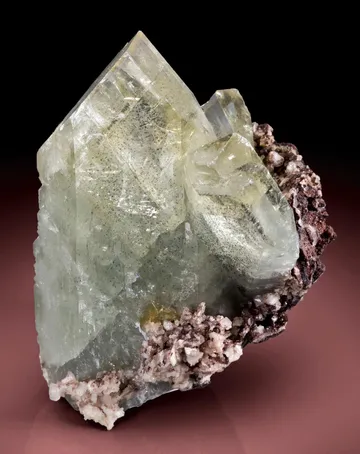
Ludlamite is the signature species of Wheal Jane because the mine is its type locality, and good specimens remain among the most desirable Cornish phosphate pieces. It occurs as apple-green to bright green, glassy to gemmy crystals and crystalline patches in quartz cavities, commonly with quartz and sometimes pyrite, sphalerite, siderite, vivianite, or fluorite; documented examples include a 7.2 x 4.7 x 4.7 cm quartz-matrix specimen with gemmy green crystals filling a vug and a 70 x 35 mm West Wheal Jane specimen with a largest crystal size of 15 mm from the 11-15 Decline, C Section. The best Wheal Jane ludlamite has translucent green color, undamaged crystal edges, and enough open quartz vug space for the crystals to be seen individually; ordinary examples are small green smears, cleaved fragments, or stained patches on weathered sulfide matrix. Because ludlamite is relatively soft and cleavable, sharp undamaged crystals from this locality deserve careful handling and strong provenance.
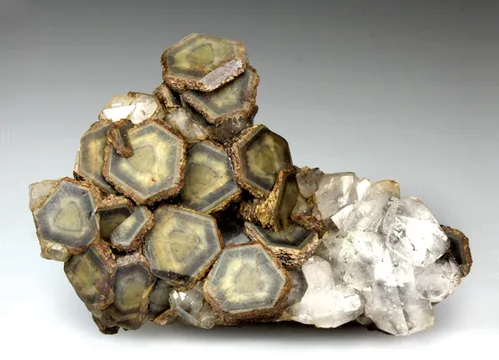
Siderite from Wheal Jane is a collector’s mineral rather than an ore headline, but it can be highly attractive in the right associations. Old dealer descriptions record lustrous light-brown lenticular crystals to nearly 1 cm thickly intergrown on drusy quartz over banded quartz and green fluorite veinstone, while a notable photographed specimen shows unusual crystallized siderite varying from golden to nearly red, apparently grown outward from a disk-like earlier siderite core, with quartz, fluorite, pyrite, and small wolframite-group specks. Mindat-based associations also connect Wheal Jane siderite with quartz, ludlamite, cronstedtite, carbonate-rich fluorapatite, cassiterite, and pyrite. The best pieces show discrete lustrous crystals or rosetted/lenticular forms with warm color and clear association; plain brown carbonate crusts on quartz are far less important unless tied to ludlamite or cronstedtite.
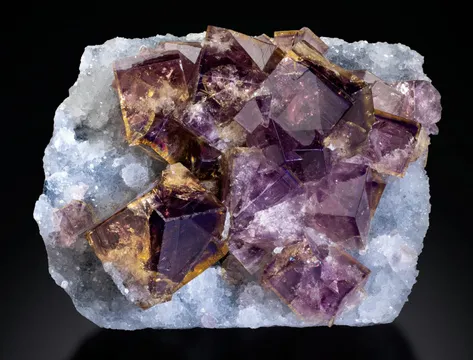
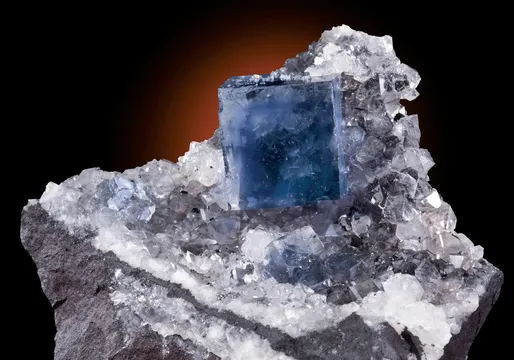
Fluorite is not the most abundant display mineral at Wheal Jane, but it is a significant accessory in the specimen assemblage and can be a decisive association on better pieces. The locality has produced green fluorite in banded quartz-fluorite veinstone with siderite, as well as pale greenish to nearly colorless transparent single crystals without matrix; fluorite is also reported as an associate on ludlamite-bearing material and with cronstedtite-pyrite specimens. Good Wheal Jane fluorite is judged less by size than by context: sharp crystals or fresh green bands tied to quartz, siderite, ludlamite, pyrite, or cronstedtite make a specimen locality-specific, whereas loose or isolated pale crystals can be visually ambiguous without a reliable label. Large fluorite from Wheal Jane has been noted in collector literature, but it remains much less commonly encountered than quartz-sphalerite-pyrite combinations.
Marcasite from Wheal Jane is uncommon enough to interest locality collectors and textural enough to reward magnification. It is recorded with quartz and pyrite, and old Cornish dealer material described unusual bluish-iridescent, sparkling small crystals with stalactitic form covering milky pyramidal quartz crystals on massive white quartz veinstone. Some quartz specimens from the mine show pale brassy, slightly steatitic marcasite partly filling fractures, with brighter pyrite crystals scattered nearby, so careful distinction between pyrite and marcasite matters on labels. The most collectible marcasite specimens are stable-looking, dry, bright examples with distinctive habit and quartz association; dull massive iron sulfide or altered material is far less desirable, and any suspected marcasite should be stored in low humidity because deterioration can damage both the specimen and its neighbors.
Other documented Wheal Jane minerals broaden the locality far beyond the eight species above. Ludlamite is the key type-locality mineral, while important or attractive rarities include cronstedtite, cacoxenite, vivianite, fluorapatite including carbonate-rich fluorapatite, childrenite, crandallite, beraunite, devilline, chalcanthite, cerussite, cassiterite, wolframite-group minerals, arsenopyrite, chalcopyrite, galena, baryte, bismuthinite, chlorite-group minerals, hematite, tourmaline or tourmalinite, and gossan-related iron oxides. In collector terms, Wheal Jane rewards labels with full associations: a small ludlamite-quartz-pyrite-vivianite-fluorite micro may be more scientifically meaningful than a much larger block of ordinary quartz or sphalerite.
The first authenticity issue with Wheal Jane is locality precision. “Wheal Jane,” “West Wheal Jane,” “Old Wheal Jane,” “Falmouth Consolidated Mines,” “Nangiles,” and nearby Mount Wellington can appear on labels that refer to historically connected or adjacent workings. Because the modern Wheal Jane operation incorporated or interacted with neighboring workings, and because earlier setts were amalgamated under Falmouth Consolidated Mines, older labels can be imprecise without being fraudulent. For high-value pieces—especially ludlamite, cronstedtite, or major sphalerite—labels naming a level, decline, section, collector, dealer, or acquisition date are especially useful.
The second issue is condition. Wheal Jane sulfide specimens may carry a mix of pyrite, marcasite, sphalerite, arsenopyrite, and iron oxides; old marcasite-bearing material deserves dry storage, good air circulation, and periodic inspection for powdering, acidic odor, white efflorescence, or staining. Pyrite is usually more robust, but massive sulfide matrix from humid mine environments can still oxidize. Ludlamite is comparatively soft and cleavable, so exposed green crystals chip easily; avoid ultrasonic cleaning, aggressive brushing, and prolonged soaking. Cronstedtite crystals are commonly millimetric, sharp, and exposed on quartz or limonite, so a specimen that looks “small” may still be excellent under a loupe.
Mislabelling is more common than outright fakery. Black sphalerite with quartz and pyrite can be confused with material from other Cornish or European lode localities if detached from its label. Cronstedtite is a specialist mineral and may be mistaken for black tourmaline, chlorite, or unidentified iron oxide on quartz unless the crystal habit is examined closely. Ludlamite from modern classic localities outside Cornwall—especially brighter, larger, more abundant material from phosphate pegmatites and certain sulfide deposits—can visually outshine Wheal Jane pieces, so the value of a Wheal Jane ludlamite rests heavily on type-locality provenance and correct matrix association rather than size alone.
In the market, Wheal Jane quartz-sphalerite-pyrite specimens remain available from time to time and can still be moderately priced when damage is present or aesthetics are ordinary. Fine 600-foot-level sphalerite combinations, gemmy ludlamite, and sharp cronstedtite with strong old labels are much less common and trade as serious Cornish locality pieces. The strongest specimens combine three virtues: unmistakable Wheal Jane assemblage, fine condition, and mine-era or old-collection documentation.
The great modern Wheal Jane story begins not with a mineral cabinet but with engineering ambition. In the late 1960s, Consolidated Gold Fields treated the old Baldhu ground not as a relic but as a new mine. No. 2 Shaft was sunk deep, Clemow’s Shaft was modified, an underground crusher station was installed, and the mill rose on the skyline as an immense concentrator building roughly 80 metres by 20 metres, enclosing about 67,000 square feet over several floors. The ore was so mixed—fine tin minerals, heavy sulfides, and multiple saleable metals—that ordinary gravity methods were not enough. Froth flotation became the key. To a collector, that industrial complexity explains the specimens: Wheal Jane was never a single-mineral mine. Its cabinets are full of the same complexity that challenged the mill.
John Peck’s connection to the mine has the pleasing accidental quality of many Cornish collecting stories. A 1970s photograph of the car-park terraces, set with a huge marquee for the mine’s opening, was taken while Peck was out walking. He later became Wheal Jane’s official photographer, recording the mine above and below ground for many years. His photographs, later gathered into Wheal Jane: The Final Mining Years, preserved the look of a working Cornish tin mine at the very end of the industry’s modern life: the dry, lamp rooms, battery rooms, shift bosses’ offices, mezzanine tunnel, and the man-riding shaft that took miners below.
The mill outlived Wheal Jane’s own extraction. After the mine closed in 1991, ore from South Crofty continued to be treated at Wheal Jane for seven more years, until South Crofty itself closed in 1998. Then the great concentrator building entered its final phase. Demolition was agreed as part of a remediation and redevelopment plan put in place in 2000, and the mill came down in 2006–2007. In 2011, the ground it had dominated was redeveloped as a solar farm with 5,680 panels, producing about 1.4 MW of electricity per year. Even in that clean geometric field of panels, one old mining scar remained visible: an oval hole where an ore body had been stoped right to surface, now protected as wildlife habitat.
Wheal Jane’s darkest episode came after closure, when the pumps that had held back the underground water were no longer keeping the old workings dry. By November 1991, water began discharging from Jane Adit. The adit was plugged, limited pumping continued for a short period, and contaminated water was stored in the Clemows Valley tailings dam. Pumping stopped on January 4, 1992 because water draining from the dam was itself too contaminated. In mid-January 1992, a blockage or plug in the Nangiles Adit failed. Government accounts describe about 50 million litres of metal-laden acidic water released over 24 hours; other technical and historical accounts describe the wider outburst in still larger terms, up to 320 million litres. The result was unforgettable: an ochreous plume of iron-rich acidic water carrying cadmium, arsenic, copper, and zinc down the Carnon River, Restronguet Creek, and into Falmouth Bay.
The aftermath changed the site’s identity. Emergency pumping and treatment were put in place, and Wheal Jane became one of Britain’s defining mine-water remediation cases. A pilot passive-treatment plant followed in 1994, testing shallow lined lagoons and biological, geochemical, and physical metal-removal systems. Those experiments proved useful but demanded too much land for the flow rates involved. In 2000, an active high-density sludge treatment scheme was commissioned, pumping mine water from the old workings, dosing it with lime slurry, settling out metal-rich sludge, and returning out-of-spec water to containment. A mine that once produced tin, zinc, copper, and silver now produces a different kind of legacy: treated water, metal sludge, and an ongoing lesson in the geochemical cost of abandoned sulfide workings.