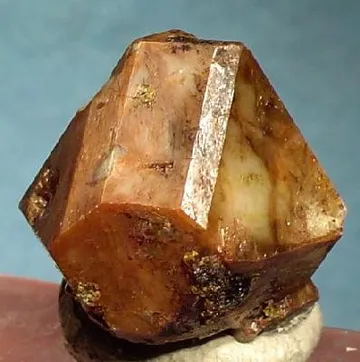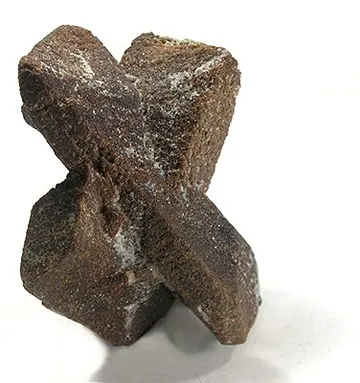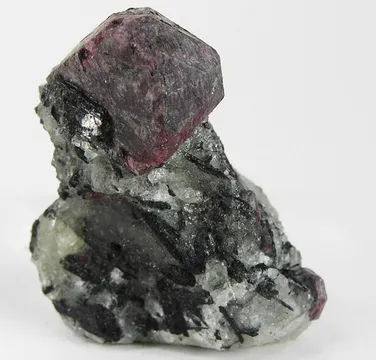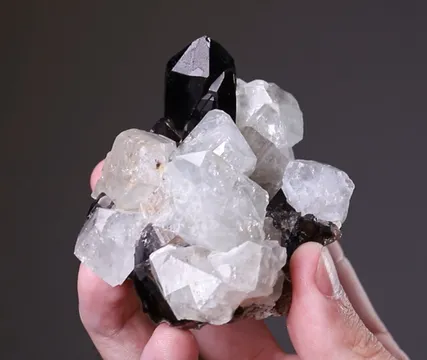
Ural Mountains, Russia — a mineral province offering malachite, emerald, alexandrite, topaz, and more; three collecting traditions and historic copper mines.
Key facts
For mineral collectors, the Ural Mountains are not a single locality so much as a whole mineral province: a Paleozoic orogenic belt, a frontier of imperial mining, and one of the few regions whose name alone can carry specimen provenance. Running north–south between European Russia and Siberia, the Urals expose accreted island arcs, ophiolitic and ultramafic massifs, skarns, volcanogenic massive-sulfide systems, copper deposits, emerald-bearing schists, and gem pegmatites. That geologic variety is why a drawer labelled “Ural Mountains” can plausibly hold velvety malachite from the old copper mines, pale blue topaz from Murzinka, emerald and alexandrite from the Tokovaya–Malysheva belt, smoky quartz from pegmatite pockets, demantoid from serpentinite-related deposits, platinum-group minerals, gold, chromite, magnetite, and a suite of beryllium minerals that includes phenakite, one of the classic species first described from the region.
Regional View
Country View
The collector’s Urals are strongest in three overlapping traditions. The first is the copper-malachite tradition of Gumeshevsky near Polevskoy and Mednorudyanskoye near Nizhny Tagil, where malachite was not just a cabinet mineral but an imperial architectural stone. The second is the gemstone tradition of the Middle Urals around Murzinka, Alabashka, Mokrusha, Kazennitsa, Shaitanka, Lipovka, and related pegmatite and vein fields, where quartz, topaz, beryl, aquamarine, heliodor, tourmaline, feldspar, mica, and rare accessory species formed in pockets. The third is the emerald-alexandrite-phenakite tradition of the Izumrudnye Kopi, the Ural Emerald Mines near the Tokovaya River and Malysheva, where chromium-bearing beryl and chrysoberyl grew in mica schists along contacts influenced by Be-bearing granitic fluids and Cr-bearing ultramafic country rocks.
The best Ural specimens have an old-world look. Malachite is often compact, botryoidal, banded, velvety, or polished to reveal concentric green “eyes”; topaz tends toward glassy, water-clear to pale blue orthorhombic crystals rather than the large sherry-orange crystals of some Brazilian districts; emerald commonly sits in phlogopite-rich mica schist with a muted, slightly yellowish to vivid green color; alexandrite is typically valued less for size than for provenance, twinning, and color change; and the pegmatite quartz family ranges from smoky brown crystals on feldspar to citrine-like yellow-gray crystals and museumy quartz–feldspar clusters from the Murzinka–Mokrusha area.

Photo: Wikimedia Commons

Photo: Wikimedia Commons

Photo: Wikimedia Commons
Historically, few mineral provinces have done more to shape the public imagination of minerals. The Urals supplied the Russian court, the stone-cutting workshops of Yekaterinburg, and major European collections. Ural malachite became the material of monumental vases and palace rooms. Ural emerald became a prestige gem in the nineteenth century, then a Soviet strategic beryllium ore, and now again a collector and gem-market source. Ural alexandrite became inseparable from the romance of color change and imperial Russia. Ural topaz, beryl, amethyst, and smoky quartz anchored the region’s “gem belt” reputation long before most modern collectors had heard of many later pegmatite fields.
Search for specimens: View all specimens from Ural Mountains, Russia
The Ural Mountains locality entry covers a very large mineral province, so collector labels should ideally be read as regional unless they name a more precise mine or district. The mountains record the Uralide orogen, a Paleozoic collision zone involving the East European margin, oceanic and island-arc terranes, the Tagil and Magnitogorsk arcs, and later continental-margin and trans-Uralian elements. That tectonic stack explains the unusual mixture of deposit types: copper skarns and porphyry-related systems, volcanogenic massive sulfide deposits, ultramafic-hosted chromite and platinum-group mineralization, magnetite-iron deposits, gold systems, rare-metal and gem pegmatites, and emerald-bearing metasomatic schists.
For specimen collectors, the Middle Urals of Sverdlovsk Oblast are especially important. Around Murzinka, Alabashka, Mokrusha, Kazennitsa, and nearby gem fields, granitic pegmatites and veins produced cavities with quartz, smoky quartz, topaz, beryl, aquamarine, heliodor, schorl, elbaite, feldspar, mica, phenakite, garnet, columbite-group minerals, and other accessories. These pegmatite specimens are usually judged by crystal integrity, luster, contrast against feldspar or mica, and the presence of classic associations such as topaz with smoky quartz, aquamarine piercing smoky quartz, or pale beryl with feldspar and mica.
The emerald-alexandrite deposits near Malysheva, historically the Izumrudnye Kopi or Ural Emerald Mines along the Tokovaya River area, occupy a different geologic setting. Their emeralds formed in mica-rich schists, especially phlogopite-bearing rocks, related to the interaction of beryllium-bearing granitic material with chromium-bearing ultramafic or metasomatized country rocks. The same system produced chrysoberyl, alexandrite, phenakite, ordinary and gem beryl, phlogopite, and rare alkali-metal resources. The Mariinsky Priisk enterprise, built on the Malyshevskoye emerald-beryllium deposit, has been the modern industrial operator associated with this field; Rostec sources describe the deposit as Russia’s only emerald-beryllium deposit in active industrial exploitation and a strategic source of beryllium-bearing raw material.
The copper-malachite side of the Urals is centered on famous historical mines such as Gumeshevsky and Mednorudyanskoye. Gumeshevsky, near Polevskoy southwest of Yekaterinburg, was rediscovered for modern mining in the early eighteenth century on the traces of ancient workings and became one of the most important copper deposits of the Middle Urals. It supplied copper ore and superb decorative malachite. Mednorudyanskoye, at Nizhny Tagil, became even more legendary in the nineteenth century after the discovery of an immense malachite body in the Nadezhnaya mine. These were not merely specimen localities: they were industrial copper mines whose oxidized zones yielded malachite masses large enough for architectural and decorative use.
Mining history in the Urals reaches from prehistoric and early copper exploitation through the great eighteenth-century expansion of Russian metallurgy under Peter the Great and the Demidov industrial empire, through nineteenth-century gem and malachite collecting, into Soviet strategic mining and modern industrial redevelopment. The region supplied iron and copper for Russia’s industrialization, gems and decorative stones for court workshops, emeralds for both crown and private markets, and beryllium-bearing ores in the Soviet period. A Ural label on a nineteenth-century cabinet specimen may therefore mean anything from a court-era emerald crystal in mica schist to an old polished malachite slab cut from material that once moved through the Demidov workshops.
Collecting access today is sharply variable. Active industrial mines, including the Malysheva/Mariinsky emerald workings, are controlled operations where casual collecting is not appropriate without formal permission or organized access. Historic copper mines such as Gumeshevsky and Mednorudyanskoye are long worked out, flooded, reclaimed, urbanized, or otherwise restricted in many areas, and the best material is overwhelmingly old stock. Some pegmatite fields around the traditional gem belt have been explored and reworked by collectors for generations, but serious collecting still depends on land status, local permission, safety, and the condition of old pits and dumps. For the marketplace, the most credible Ural specimens are those with precise old labels, named mines, museum or dealer provenance, and mineral associations consistent with the stated sublocality.
Notable finds include the large Gumeshevsky malachite masses of the eighteenth century; the Mednorudyanskoye malachite body of 1835; historic emerald, alexandrite, and phenakite from the Tokovaya/Malysheva belt; the great Ural emeralds known by names such as “Glorious Ural Stone,” “President,” and later large crystals recovered in the modern Mariinsky period; and the classic Murzinka–Alabashka topaz and beryl pockets that placed the Middle Urals among the early great pegmatite districts of Europe and Asia.
Quartz from the Ural Mountains is best understood through the Middle Ural gem belt, especially the Murzinka–Mokrusha–Alabashka pegmatite district, where quartz occurs as rock crystal, smoky quartz, and quartz–feldspar pocket assemblages rather than as anonymous vein material. Good pieces are sharp, lustrous, and architectural: quartz crystals rising from pale feldspar, smoky quartz supporting topaz or aquamarine, or old museum-style clusters with intact terminations and minimal bruising. The ordinary end of Ural quartz is massive or fractured pegmatite material; the collector end is defined by crisp pocket growth, named sublocality, historic labels, and associations with topaz, beryl, schorl, albite, microcline, muscovite, and other pegmatite species.
Citrine from the Urals is typically represented by yellowish, gray-yellow, or smoky-yellow quartz from pegmatite and quartz-pocket settings rather than by the deeply saturated commercial citrine familiar from heated amethyst on the modern gem market. Murzinka material is especially relevant to collectors because Ural “citrine” often shades toward smoky quartz, with subdued tea, honey-gray, or yellow-brown color, glassy faces, and associations with feldspar and mica. The most desirable pieces are clearly natural-looking crystals with honest old provenance, unpolished faces, and color that reads as integral to a pegmatite quartz crystal; ordinary or suspect pieces are loose, overly orange, uniformly dark, or sold only as “Russian citrine” without a specific Ural context.
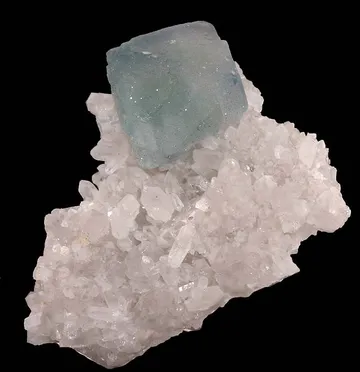
Ural topaz is a classic Murzinka–Alabashka mineral: usually colorless, pale blue, faintly greenish, or very light wine-tinted, formed in cavities of granitic pegmatites and commonly associated with quartz, smoky quartz, albite, cleavelandite, microcline, muscovite, schorl, beryl, and lithium micas. The finest specimens are not necessarily large by modern pegmatite standards, but they have superb glassy luster, sharp orthorhombic form, clean transparency, and preferably matrix or a natural association that fixes the piece to the old Russian pegmatite tradition. Cleavage damage is a constant issue, so a complete termination, undamaged prism edges, and a believable old Murzinka, Mokrusha, Kazennitsa, or Alabashka label matter greatly.
Malachite is the imperial collector stone of the Urals, with the most important historical material from Gumeshevsky near Polevskoy and Mednorudyanskoye near Nizhny Tagil. It occurs as earthy copper ore, botryoidal crusts, stalactitic and mammillary masses, dense banded decorative stone, and velvety dark-green surfaces; the very best pieces have tight concentric banding, saturated green color, silky or velvety texture, and old provenance rather than modern recutting. Gumeshevsky material is famous for deep green, velvety malachite, while Mednorudyanskoye supplied enormous masses with lighter to bluish-green tones and bold banding, much of it cut for palace-scale objects. For collectors, intact natural botryoidal specimens are rarer and more desirable than polished fragments, though historic polished slabs with nineteenth-century provenance have a market of their own.
Beryl from the Ural Mountains occurs in two major collector contexts: pegmatitic beryl from the Murzinka–Alabashka gem belt and schist-hosted beryl, including emerald and other beryllium minerals, from the Malysheva/Izumrudnye Kopi emerald field. In the pegmatites, beryl may be pale green, yellowish, bluish, or aquamarine-like, with good crystals sometimes reaching impressive sizes and appearing with quartz, feldspar, mica, topaz, and tourmaline; in the emerald belt, ordinary beryl and gem beryl accompany emerald, chrysoberyl, alexandrite, phenakite, and phlogopite. Fine Ural beryl pieces are judged by crystal shape, translucency, absence of major repairs or breakage, matrix contrast, and a precise label, because a vague “Ural beryl” label covers several distinct geological environments.
Native copper is documented from several Ural contexts, especially old copper districts and the Nizhny Tagil–Mednorudyanskoye sphere, but it is not the dominant specimen identity of the Urals in the way malachite is. Collector pieces are typically small masses, plates, strings, irregular metallic aggregates, or copper associated with cuprite, limonite, quartz, or oxidized copper minerals. Attractive specimens show natural form and old patina, not bright modern polishing; the best labels specify Nizhny Tagil, Mednorudyanskoye, Turinsk, or another named Ural copper locality rather than simply “Russia.” Because Ural copper specimens are much less common on the market than Lake Superior material, careful provenance is more important than size.
Aquamarine from the Urals belongs chiefly to the Middle Ural pegmatites around Murzinka, Alabashka, Mokrusha, Kazennitsa, and related workings, where blue to blue-green beryl formed with smoky quartz, topaz, feldspar, mica, and black tourmaline. The classic collector look is an aquamarine crystal in or on smoky quartz or feldspar, sometimes with the quartz partly wrapping the beryl, rather than a loose faceting pebble. Color is usually pale to moderate, so the best specimens rely on form, transparency, matrix placement, and old provenance; a small, undamaged, naturally associated crystal from a named Murzinka-area pocket is far more desirable than a larger but abraded or contextless blue beryl.
Ural emerald is centered on the Izumrudnye Kopi, especially the Malysheva/Mariinsky deposits near the Tokovaya River northeast of Yekaterinburg, where emerald occurs in mica schist, commonly with phlogopite and other beryllium-bearing minerals. Crystals range from pale green stones that verge on green beryl to richly colored emeralds that can rival better-known origins, and good specimens often show hexagonal prisms embedded in silvery to brown mica-rich matrix. The collector premium is highest for undamaged crystals in original schist matrix, strong natural green color, historic labels from the Ural Emerald Mines, and pieces associated with phenakite, chrysoberyl, alexandrite, or phlogopite. Many Ural emeralds are included or fractured, but that is normal for the locality; the decisive factors are color, crystal identity, matrix, and provenance.
Alexandrite from the Urals is the benchmark historical alexandrite, produced as a chromium-bearing variety of chrysoberyl in the same broader emerald belt that includes Malysheva, Mariinskoye, Sretenskoye, Krasnobolotnoye, and related Tokovaya-area occurrences. Specimens are typically small, often twinned, and associated with mica schist, emerald, phenakite, and beryllium mineralization rather than the cleaner loose gem crystals seen from some later localities. Good Ural alexandrite is judged by demonstrable color change, sharp chrysoberyl morphology or twinning, natural matrix or old collection history, and a label specific enough to distinguish genuine Ural emerald-belt material from later alexandrite from Brazil, Sri Lanka, India, Tanzania, Madagascar, or synthetic sources. Even modest crystals can be important if the provenance is strong.
Smoky quartz is one of the signature companion minerals of the Murzinka–Alabashka pegmatites, occurring as brown to nearly black crystals with feldspar, albite, microcline, muscovite, schorl, topaz, beryl, and aquamarine. The best pieces have sharp, lustrous terminations, balanced matrix, and association value: smoky quartz with a pale blue topaz perched at the base, aquamarine emerging through a smoky crystal, or a feldspar-lined pocket plate with contrasting dark quartz. Ordinary specimens are simply broken brown quartz; good Ural pieces are unmistakably pegmatitic, with intact faces, minimal edge wear, and a named locality such as Murzinka, Mokrusha, Kazennitsa, or Alabashka rather than a broad regional label.
Beyond these market-facing species, the Ural Mountains are a type-locality and classic-locality province of exceptional depth. Phenakite was first described from the Izumrudnye Kopi area and remains a key companion of Ural emerald and alexandrite. Perovskite is historically tied to Akhmatovskaya in the southern Urals. Calciborite was first described from the Novofrolovskoye copper-boron deposit in the northern Urals. Yttriaite-(Y) is listed from the Subpolar Urals, and the region also yields or has yielded demantoid, uvarovite, crocoite-related chromate assemblages, platinum-group minerals, native platinum, gold, magnetite, chromite, jasper, rhodonite, amethyst, heliodor, tourmaline, gahnite, columbite-group minerals, and many rare species whose importance is often obscured by the fame of malachite and emerald.
A “Ural Mountains” label is valuable but imprecise. Serious collectors should press for a named mine, district, or at least a subregion: Gumeshevsky, Mednorudyanskoye, Murzinka, Alabashka, Mokrusha, Kazennitsa, Malysheva, Izumrudnye Kopi, Sretenskoye, Krasnobolotnoye, Nizhny Tagil, Polevskoy, or another documented locality. Without that precision, the specimen may still be genuine, but much of its scientific and historical value is lost. Old European labels reading “Mursinka,” “Mursinsk,” “Nijni Tagilsk,” “Ekaterinburg,” “Sverdlovsk,” “Takovaya,” or “Tokovaya” should not be dismissed; transliteration varies widely, and historical labels often use names that differ from modern administrative spelling.
Malachite needs particular caution. The Urals supplied enormous amounts of historic decorative material, but modern Russian malachite is rarely newly mined in specimen quantity from the old classic deposits. Many pieces on the market are polished fragments, recut scraps, composite decorative objects, or non-Ural malachite sold under a romantic Russian label. Congo malachite is abundant and can be excellent, but it should not be sold as Ural. Ural malachite usually commands a premium when it has old labels, estate provenance, or a named source such as Gumeshevsky or Mednorudyanskoye. Repairs, waxing, oiling, buffing, and stabilization may be encountered, especially on polished or decorative pieces. Natural botryoidal specimens with unaltered surfaces are much rarer than polished slices.
Emerald and alexandrite have their own risks. Ural emerald may be pale, included, and schist-hosted; intensely clean, bright green, loose stones require gemological caution. Oil or resin filling is common in the emerald trade globally, and Ural origin should be verified by laboratory documentation for valuable faceted stones. Specimen emeralds in mica schist are often more reassuring than loose crystals, but repairs and glued crystals can occur in any historic gem species. Alexandrite is heavily synthesized and simulated in the jewelry market, and color-change corundum, synthetic chrysoberyl, or glass may be misrepresented. For collector-grade Ural alexandrite, old provenance, morphology, association, and credible laboratory confirmation are important.
Citrine from the Urals is another area for restraint. Much commercial “citrine” is heated amethyst or smoky quartz, and deeply orange, uniform pieces are not what most experienced collectors expect from classic Ural pegmatite quartz. Natural Ural citrine-like quartz is more likely to be yellow-gray, smoky-yellow, or tea-colored, commonly with pegmatitic associations. Specimens sold as “Ural citrine” should be evaluated against the matrix, habit, locality label, and overall naturalness of color.
Topaz and beryl specimens are condition-sensitive. Topaz has perfect basal cleavage, so many old crystals show cleaved bases, bruised edges, or repaired terminations. A sharp, undamaged Murzinka topaz with old provenance is a much better specimen than a larger but cleaved crystal. Beryl and aquamarine from the Urals can be pale and internally fractured; matrix pieces with natural relationships to quartz, feldspar, and mica are especially desirable. Smoky quartz and quartz plates from old pegmatites are commonly edge-worn from dump collecting, so crystal tips and contact points should be checked carefully.
Fluorescence is not the principal diagnostic feature of most classic Ural specimens, but handling still matters. Malachite is relatively soft and sensitive to acids, heat, and aggressive cleaning; avoid ultrasonic cleaning and chemical dips. Emerald and beryl can be fractured and should not be oiled, heated, or cleaned harshly. Topaz should be protected from knocks because of cleavage. Historic labels and provenance cards should be preserved with the specimen; for the Urals, the paper can be nearly as important as the mineral.
Market availability is uneven. Ural malachite appears regularly as polished material but only occasionally as high-quality old natural specimens. Murzinka topaz, aquamarine, and smoky quartz are available mostly as old collection pieces or small modern finds, with fine matrix specimens scarce. Ural emerald is present in the gem market but fine matrix specimens from old collections remain highly desirable. Ural alexandrite specimens are rare, and any strong piece with credible provenance draws specialist interest. Broad “Ural Mountains” specimens remain affordable when common, but named classic sublocalities with nineteenth- or early twentieth-century provenance occupy a very different tier.
The Ural emerald story begins with the kind of accident every collector secretly hopes for. Near the Tokovaya River in the autumn of 1830, the discovery is traditionally credited to Maxim Kozhevnikov, a local peasant and charcoal worker, who noticed green crystals caught in the roots of a fallen tree. Organized mining began in January 1831. That small moment in the forest opened one of the world’s great emerald provinces, and within a few years the same belt had yielded not only emerald but alexandrite and phenakite, two names that would become inseparable from Russian mineral history.
The naming story of alexandrite has accumulated imperial varnish over time. The romantic version says the stone was discovered on the birthday of the future Tsar Alexander II and was named in his honor because it changed from green to red, the colors associated with imperial Russia. The chronology is messier than the legend: the emerald mines themselves were not discovered until 1830–1831, and different accounts place the recognition and naming of alexandrite in the early 1830s. Yet the legend persists because the mineral seems made for it. A Ural alexandrite crystal is not just chrysoberyl with chromium; it is a small, hard, color-changing argument for why mineral specimens gather stories around themselves.
Phenakite’s story is quieter but more mineralogically satisfying. At the Ural Emerald Mines, clear to whitish Be2SiO4 crystals were long confused with other pale gems, including topaz. The name phenakite comes from the Greek idea of deception, a reminder that the mineral “deceived” early observers. In the collector’s cabinet, a Ural phenakite from the Izumrudnye Kopi therefore carries two kinds of significance: it is a beryllium companion to emerald and alexandrite, and it is a type-locality species born from the problem of identification itself.
The malachite stories are larger, darker, and more theatrical. At Gumeshevsky, the old “Copper Mountain” near Polevskoy, the eighteenth-century miners found malachite that was not merely green copper ore but a stone of rank. In 1775, a large malachite accumulation was recovered; after trimming away country rock, a block of about 94 poods, roughly 1,500 kg, remained. It was presented to Catherine II in 1789 and entered the mineralogical collections in St. Petersburg. From that moment, Ural malachite was no longer simply a prospecting sign for copper. It had become a representative stone of the empire.
The Mednorudyanskoye discovery at Nizhny Tagil was even more astonishing. In 1835, in the Nadezhnaya mine, miners encountered a vast malachite body beneath the Rudianka River. Russian museum accounts describe an exposed malachite “plane” roughly 5.3 by 2.1 m at a depth of about 77 m. The deposit was so large that it took years just to free it from surrounding rock. The whole malachite storehouse has been described at roughly 480 tonnes, including a crack-free monolith of about 40 tonnes. Work on the body extended through the 1840s and 1850s, and later writers called it the “Mednorudyansky phenomenon.” Few mineral finds in the world better illustrate the divide between a mineral specimen and an ornamental stone deposit: what a collector would call a cabinet treasure, the nineteenth century saw as columns, vases, fireplaces, tabletops, and imperial rooms waiting to be cut.
Those masses fed the Russian mosaic tradition. Because solid malachite columns of palace size do not exist as single natural crystals or blocks of usable stone, craftsmen sliced malachite into thin plates, matched the banding, and veneered the pieces over architectural forms so the eye read one flowing green surface. The result can still be seen in the great malachite interiors and objects associated with Russian imperial taste: deep green stone against gilded bronze, white architectural surfaces, and dark red or purple fabrics. The material began underground in copper mines; it ended as theatre.
The modern emerald mine has produced its own vivid moments. In 1978, the “Glorious Ural Stone” was recovered and placed among Russia’s state-held treasures. In 1990, a large emerald specimen known as “Shakhtyorskaya Slava,” or “Miner’s Glory,” was found. In 1993, the “President” emerald, about 1.2 kg, became a modern benchmark from Malysheva. In 2012, another large emerald, “Yubileiny,” appeared. In December 2016, miners encountered a 5.5 kg emerald crystal aggregate along with two large beryl crystals totaling about 15 kg. In 2018, Russian reports described a 1.6 kg emerald crystal, about 14 cm long and 7 cm wide, spotted in the stope and brought to the surface by mine staff. The old Ural story, in other words, is not only old: the same mineral belt still occasionally produces the kind of green object that becomes a named event.