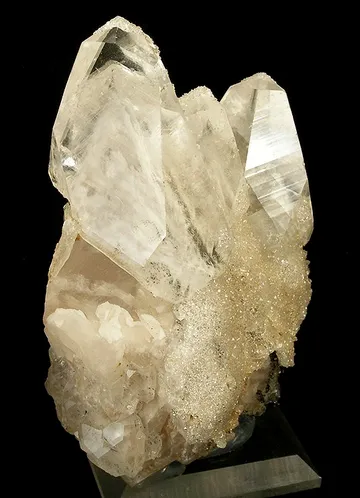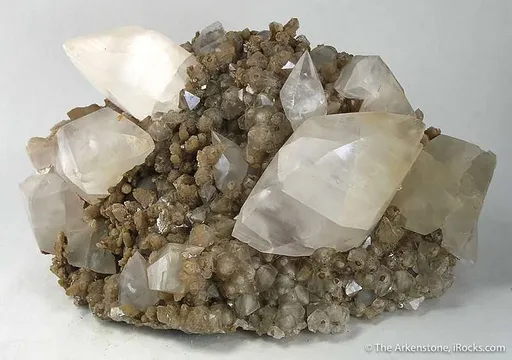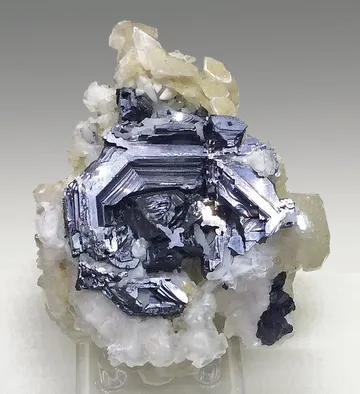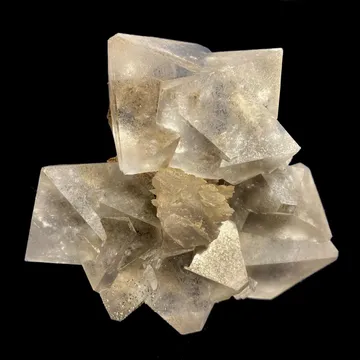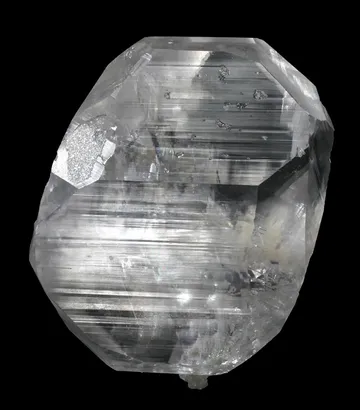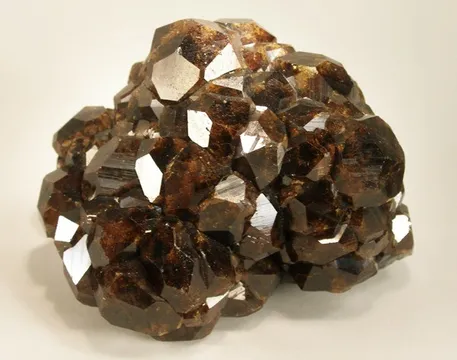
Kavalerovo mining district, Russia: a premier tin-ore region notable for fluorite, quartz, calcite and a rich collecting scene; striking color contrast.
Key facts
Kavalerovo is one of those Russian Far East locality names that carries two different collector meanings at once. In the geological literature it is the leading tin ore district of Primorye, a complex Sikhote-Alin metallogenic system of cassiterite-silicate, cassiterite-sulfide, tin-polymetallic, greisen, skarn, and late quartz-fluorite-carbonate mineralization. In specimen culture it also appears on older and dealer labels for an exceptionally productive broader Dalnegorsk-Kavalerovo collecting region, famous for fluorite, quartz, calcite, ilvaite, datolite, hedenbergite, galena, pyrrhotite, chalcopyrite, and a formidable suite of sulfides and sulfosalts. That double usage is not a nuisance so much as a clue: the best specimens are products of a large, long-lived ore province rather than of a single tidy mine dump.
The district’s scientific importance rests on tin. The Arsen’evskoe deposit is treated in Russian literature as a reference object for the Kavalerovo ore district, with large reserves and a notably mixed tin-polymetallic character. Vysokogorskoe is a porphyry-style tin system with hydrothermal explosion breccias. Iskra, discovered in 1989 and worked from 1992 to 2001, was the last newly discovered and exploited tin deposit in Primorye. These are not minor prospects: the deposits record Late Cretaceous to Paleocene-Eocene magmatism, boron metasomatism, quartz-tourmaline and quartz-chlorite cassiterite assemblages, sulfide-rich polymetallic ore, and late fluorite-bearing veins.
For collectors, Kavalerovo’s calling card is visual contrast. The classic fluorites are sea-green to apple-green octahedra, sometimes rounded, translucent, or color-zoned, perched on white, gray, or rose-tinted quartz. Other pieces show water-clear to colorless fluorite cubes from Dalnegorsk-area workings, so transparent that quartz and carbonate matrix appear through the crystals like inclusions in glass. Quartz is not merely gangue here: it forms white drusy plates for fluorite, smoky quartz in tin greisen settings, and green hedenbergite-included prase on andradite from Sinerechenskoe. The district’s best cabinet pieces have a clean architectural quality—sharp fluorite forms set against crystalline quartz, or dark green quartz prisms rising from cinnamon-brown garnet skarn.
Regional View
Country View
The name is especially important on labels. “Kavalerovo Mining District,” “Dal’negorsk,” “Dalnegorsk,” “Tetyukhe,” “Tjetjuche,” “Tetjuche,” “Primorskiy Kray,” and “Far-Eastern Region” all appear in the specimen trade, and not always with modern administrative precision. A fine label should try to separate the broad mining-district designation from the actual mine or occurrence—Nikolaevskiy Mine, Bor Pit, Sinerechenskoe skarn occurrence, Arsen’evskoe, Verkhnee, Vysokogorskoe, Khrustal’noe, or Iskra—because the mineral assemblages are quite different.

Photo: Wikimedia Commons
Search for specimens: View all specimens from Kavalerovo mining district, Russia
Kavalerovo lies in Primorsky Krai in the Russian Far East, within the Sikhote-Alin mountain belt. The mineral locality concept used by collectors is broader than the modern administrative district: the Mindat mining-district page includes both the Kavalerovsky tin deposits and numerous Dalnegorsk-area specimen localities. This is why classic Dalnegorsk labels often sit under the Kavalerovo mining district in older catalogues and dealer records. The principal settlements associated with the wider district include Dalnegorsk, Kavalerovo, Krasnorechenskiy, Gornorechenskiy, Rudnyy, and Rudnaya Pristan’.
Geologically, the district sits in the southern Sikhote-Alin accretionary and volcano-plutonic province. Russian geological maps and papers describe terrigenous accretionary assemblages of the Samarka, Zhuravlevka, and Taukha terranes, cut by faults and by multiple magmatic suites: granite-porphyry, rhyolite-dacite and andesite-dacite volcanic rocks and tuffs, granites and leucogranites, Uglovka-complex intrusions and volcanics, and trachyandesite-monzonitic rocks of the Berezovsky-Ararat assemblage. The resulting mineralization is not a single event but a set of overprinted systems, which is exactly why the district can produce both ore-petrology rarities and showy collector minerals.
The tin deposits include several styles. Arsen’evskoe, Novogorskoe, Iskra, Ivanovskoe, Dubrovskoye, Jubileynoye, Temnogorskoye, Silinskoye, Khrustal’noye-Levitskoye, and Vysokogorskoe are among the named deposits shown in geological-metallogenic summaries of the district. Arsen’evskoe is the best-known reference deposit: it was discovered in 1958, had its first exploration-and-reserve stage completed in 1965, and was transferred to exploitation by the Khrustalnensky mining and processing combine in 1972. Published Russian data state that the deposit was transferred with 50,000–60,000 tonnes of tin in balance ores, and that by the early 1990s tin reserves had grown to more than 100,000 tonnes. Most of the tin mineralization is in vein bodies, many not exposed at surface, and the main ore bodies were opened by underground workings to about 400 m depth and by drilling to 800 m, with individual holes reaching 1,000 m.
Arsen’evskoe ore is divided into relatively low-sulfide tin ore and more sulfide-rich tin-polymetallic ore. The classic ore textures are quartz-cassiterite crustification and quartz-cassiterite-sulfide material with chloritic metasomatite, quartz, cassiterite, thin sulfide veinlets, sphalerite, chalcopyrite, and other sulfides. The district’s economic complexity is central to its mineralogical character: tin is joined by Zn, Cu, Ag, Pb, In, W, Bi, and Au in varying proportions. For the collector, that means many specimens are not just “quartz and fluorite” but pieces from a chemically busy hydrothermal system capable of producing cassiterite, stannite, sphalerite, galena, arsenopyrite, chalcopyrite, bismuth sulfosalts, indium minerals, and rare REE arsenates.
Vysokogorskoe represents another important mineralizing environment. It is described as a tin-porphyry deposit with hydrothermal explosion breccias in a terrigenous sequence. Studies distinguish earlier breccias of roughly 79–69 Ma, modified by boron metasomatism and subsequent tin mineralization, and later breccias of roughly 55–51 Ma related to dacite-rhyolite porphyry dikes. The late quartz-fluorite-carbonate stage followed much of the cassiterite deposition, which helps explain fluorite’s position in the district’s paragenesis: it is not the ore metal, but it is one of the memorable late-stage specimen minerals.
Iskra is historically compact but important. It was discovered in 1989 in the southwestern part of the ore district, about 30 km south of Arsen’evskoe, and was exploited from 1992 to 2001. Its ore bodies are localized in sandstone and siltstone, cut by granitoids and organized along mineralized tectonic zones including Victoria, Polyarnaya, Sputnik, Operyayushchaya, Khloritovaya, and others. The Victoria zone was traced for more than 2 km at surface and studied more closely over a 500 m interval in the uplifted southern block; underground development on the 450 m level along Victoria and Polyarnaya exceeded 3,000 m. The zone swelled locally to 20–30 m and pinched to 1–3 m, and ore was traced down dip to 240 m with an average ore-body thickness of 3.3 m and average tin grade of 1.85%. Published summaries record that the cooperative “Polimetall” mined 12,078 tonnes of tin from Iskra between 1992 and 2001, with annual output up to 1,716 tonnes, before mining ceased in October 2001.
The mining history of the district is inseparable from the Khrustalnensky mining and processing combine. Tin prospecting intensified around Kavalerovo in 1940 under geologist Aleksandr Zinov’evich Lazarev, and rich placer tin deposits were found in 1941 along the Aleksey, Olovyanny, and Krutoy streams. The early work was primitive and wartime: pick, shovel, wheelbarrow, sluice, pan, hand-crushed rich cassiterite ore, and concentrate brought up to roughly 40–50% metal. Enterprise No. 501 was formally created on 8 May 1944 on the basis of the Central and Khrustal’ny mines, and in 1954 it was renamed the Khrustalnensky mining and processing combine. In the Soviet era the combine grew into one of the country’s important tin producers; by one historical summary, it supplied about 30% of Soviet tin output.
Production infrastructure expanded rapidly after the war. A power station at Gornorechenskiy, high-voltage line, processing plant at Fabrichny, roads, mechanical workshops, and cable-ore transport systems turned scattered placer and vein workings into an integrated mining district. By 1970, after reorganization of nonferrous-metal enterprises in Primorye, the Khrustalnensky combine incorporated operating and under-construction shops of the former Dalolovo combine, geological parties, and transport facilities. It then grouped six operating and two under-construction mines, five concentrating mills, eight geological exploration parties, and seven auxiliary shops across several administrative districts.
Current collecting should be approached as permission-only, industrial or post-industrial access. The mines, pits, adits, dumps, tailings, and skarn exposures are not public collecting grounds simply because they appear in locality databases. Many workings are abandoned, collapsed, flooded, contaminated, or still tied to mineral rights, remediation, forestry, or local industrial use. Fine specimens reaching the market today are overwhelmingly older production pieces, post-Soviet export material, deaccessioned private-collection specimens, or occasional dealer finds from old stock.
The notable specimen finds are concentrated in several recognizable visual groups. The older green fluorite-on-quartz pieces—especially rounded to sharp octahedra on white crystallized quartz, sometimes with rose quartz—are among the most desired Kavalerovo-labeled specimens. Nikolaevskiy Mine material is better known for water-clear to colorless fluorite cubes and modified cubes on quartz, calcite, siderite, or sulfide matrix. Sinerechenskoe yielded striking hedenbergite-included green quartz, or prase, commonly on andradite and associated with hedenbergite and grossular. The Bor Pit and related Dalnegorsk B boron skarn localities are central for datolite, danburite, hedenbergite, and the type-mineral dalnegorskite. The tin deposits proper—Arsen’evskoe, Verkhnee, Vysokogorskoe, Khrustal’noe, and Iskra—anchor the district’s ore-mineral side with cassiterite, wood tin, arsenopyrite, pyrite, pyrrhotite, sphalerite, galena, chalcopyrite, tourmaline, chlorite, fluorite, quartz, and a long list of uncommon sulfosalts and indium-bearing phases.
Fluorite from the Kavalerovo mining district is best known in two collector idioms: green octahedra on quartz and colorless, water-clear cubes from Dalnegorsk-area mines. The green specimens range from small-cabinet clusters to large cabinet plates, with documented octahedra commonly in the 2–5 cm range; the finest are translucent sea-green, apple-green, or forest-green crystals on white crystallized quartz, occasionally with rose quartz, and a few rare purple or bicolored octahedral pieces are recorded. Nikolaevskiy Mine fluorite tends toward transparent colorless cubes, often bevelled or modified, with quartz, calcite, siderite, chlorite, pyrite, or other sulfide matrix visible through the crystals. The best pieces are judged by clarity, undamaged octahedral or cubic edges, attractive isolation on quartz, strong contrast, and old-label specificity; ordinary examples are either heavily contacted, dull-faced, too massive, or too vaguely labeled as simply “Dalnegorsk/Kavalerovo.”
Quartz is the district’s essential stage mineral and, in some sublocalities, a leading species in its own right. On fluorite specimens it forms white, gray, or rose-tinted crystalline matrix, usually as drusy crusts, short prisms, or columnar aggregates that make the green octahedra read cleanly from across a room. In the tin systems it appears in quartz-cassiterite, quartz-tourmaline, quartz-chlorite, quartz-sulfide, and late quartz-fluorite-carbonate assemblages; at Verkhnee, smoky quartz is documented with cassiterite, sulfides, topaz, axinite-(Fe), and REE-bearing phases. The collector quartz most likely to stand alone is the Sinerechenskoe prase: lustrous, opaque green crystals colored by hedenbergite inclusions, often widening toward the terminations and perched on cinnamon-brown andradite garnet. Fine pieces require complete terminations, strong green color, sculptural spacing, and clean garnet or skarn matrix; the commoner material is stubby, dull, too dark, or heavily contacted.
Beyond fluorite and quartz, the district is a deep locality for specialists. Dalnegorskite, Ca5Mn(Si3O9)2, is the best-known type-locality mineral from the broader Kavalerovo/Dalnegorsk listing, described from the Dalnegorsk boron skarn and structurally related to bustamite. The collector suite includes datolite, danburite, calcite, ilvaite, hedenbergite, and andradite from skarn environments; galena, sphalerite, pyrrhotite, chalcopyrite, pyrite, arsenopyrite, bournonite, jamesonite, lillianite, gustavite, cannizzarite, benjaminite, and galenobismutite from polymetallic systems; and cassiterite, wood tin, topaz, tourmaline, chlorite, ferberite, hübnerite, wolframite-group minerals, indite, dzhalindite, burtite, natanite, varlamoffite, gasparite-(Ce), chernovite-(Y), monazite-(Ce), xenotime-(Y), and fluocerite-group material from the tin-greisen and tin-polymetallic deposits.
The first authenticity issue is locality precision, not synthetic fakery. “Kavalerovo Mining District” on an old label may be a broad historical trade label for Dalnegorsk-area material, a specific reference to the Kavalerovsky tin district, or a dealer shorthand for one of several mines. Good labels should preserve the historical wording but add a modern interpretation when possible: Nikolaevskiy Mine for water-clear fluorite cubes, Sinerechenskoe for green hedenbergite-included quartz on andradite, Bor Pit for datolite and boron-skarn material, and Arsen’evskoe, Verkhnee, Vysokogorskoe, Khrustal’noe, or Iskra for the tin-ore suite.
No recurring, locality-specific treatment tradition is attached to Kavalerovo fluorite or quartz in the serious collector literature, but physical condition is a major issue. Fluorite octahedra and cubes chip easily along edges and corners, and the colorless Nikolaevskiy material shows even tiny abrasions mercilessly because of its transparency. Rounded green octahedra may be naturally slightly frosted, so do not confuse every matte surface with damage; instead examine the ridges, tips, and contact points under good light. Quartz matrices can be friable, with small drusy points broken off around the fluorite’s base.
Fluorescence is a minor bonus rather than the main reason to buy. Some green Kavalerovo fluorites are reported with light purple fluorescence, but specimen quality here is primarily cabinet aesthetics: color, form, placement, contrast, and undamaged terminations. For colorless fluorite, transparency and “window” effect matter most. For prase quartz, look for green color caused by mineral inclusions rather than coating, complete terminations, and a natural attachment to andradite or hedenbergite skarn.
Tin-ore and sulfide specimens require more caution. Arsenopyrite, galena, sphalerite, pyrrhotite, chalcopyrite, and bismuth sulfosalts should be kept dry and handled sensibly; avoid cutting, grinding, or ultrasonic cleaning, and wash hands after handling arsenic- or lead-bearing material. Pyrrhotite-rich pieces can oxidize if stored in damp conditions. Cassiterite and wood tin from the district are more mineralogically than aesthetically collected, and specimens with precise mine provenance are far preferable to anonymous “Primorye tin ore.”
Market availability is uneven. Green fluorite-on-quartz pieces from the old Kavalerovo-labeled finds are much less abundant than general Dalnegorsk material and bring premiums when large, lustrous, and undamaged. Colorless Nikolaevskiy fluorites appear more regularly but fine, glassy, undamaged examples remain expensive. Sinerechenskoe prase quartz is a specialized but recognizable submarket. The rare-mineral suite—dalnegorskite, indium minerals, REE arsenates, sulfosalts, and unusual tin alteration minerals—is seldom available as display-quality material and should be bought with analytical confidence or impeccable provenance.
In the winter of 1940–1941, before Kavalerovo had become a byword for tin, the work was still reconnaissance in wet ground and forest. Geologist Aleksandr Zinov’evich Lazarev led the 1940 expedition that settled in the Kavalerovo area after earlier reports pointed to multiple tin-bearing halos. The camp grew by improvisation. One hut acquired the joking name “devich’ya kel’ya”—“the maiden’s cell”—because collector Lena Kuzina and cook Maria Chumak lived there. By 1941 the party had found rich placer tin along the Aleksey, Olovyanny, and Krutoy streams. Then, in June, heavy rains stopped the work for several days. Groundwater rose almost to the soil cover, and the prospectors could no longer dig the pits that had been their basic exploration method.
The early mining reads like a different century because, in practice, it was. Loosened tin-bearing sands were hauled in wheelbarrows to sluices; rich cassiterite fragments were picked off screens, crushed by hand in mortars with pestles, and washed in pans until the concentrate reached roughly 40–50% metal. One prospector, I. A. Turenko, found a cassiterite-rich vein near bedrock on the Krutoy stream. His crew never got to develop it: in 1942 the whole brigade was called into the Soviet Army and sent to the front. Turenko was killed in the war, but the vein continued to bear his name.
The district industrialized with wartime urgency. On 8 May 1944, People’s Commissar of Nonferrous Metallurgy P. F. Lomako signed the order creating “Enterprise 501” from the Central and Khrustal’ny mines. More than one hundred workers and engineering-technical specialists arrived from Kazakhstan tin mines. Roads, a power station, workshops, and a major concentrating plant followed. The story told locally is not just of ore but of a region being built around ore—settlements, power lines, transport, and a processing culture created while the country was still at war.
The postwar transformation is captured by one striking line from director E. F. Aleksandrov. He backed the merger of the Olovyanny and Central mines with the command: “Etu goru nado protknut’”—“This mountain must be pierced.” The miners drove a 2,100 m adit through the Sikhote-Alin watershed. For years afterward it carried a water pipeline from the Perevalnoye reservoir to the Central and Verkhniy mines and to the settlement of Rudnyy. A deeper adit, pushed despite disapproval from the Primorye economic council, opened 16 ore bodies, including the large veinlet-disseminated ore zone No. 2, then a new kind of tin mineralization for the Soviet tin industry.
The record-setting culture of the combine had the flavor of Soviet industrial theater, but it was not imaginary. At the Central mine, a full four-section development crew posed with management at the honor board after a USSR-wide record for rapid driving of a large-section underground working: 214 linear meters of the Kapitalnaya adit on the ninth level. In the same circle were men who would become district names—brigadier G. I. Parakhin, later a recipient of the Order of Lenin; V. K. Vladimirov, who had set a rapid-development record two years earlier in exploration adit No. 37; the Solomin and Vorob’ev brothers; and engineers, geologists, surveyors, and party officials whose careers remained tied to the mines.
The human peak came just before the collapse. In 1991, the Khrustalnensky combine celebrated its fiftieth anniversary with a workforce of about 6,000 people, five mines, four prospecting artels, three concentrating plants, a geological exploration expedition, and more than ten supporting shops. The decline was abrupt. Privatization, broken Soviet economic links, energy and transport tariffs, taxes on idle mine property, and falling tin economics closed one mine and artel after another. By October 2001, Iskra’s workings had stopped; by then the district had become, for collectors, a source of old stock, former production specimens, and the heavy nostalgia that often clings to post-Soviet mineral labels.