Teller County, USA: renowned for Crystal Peak amazonite-smoky quartz pockets and Cripple Creek gold-telluride ore; prized for color, locality, and rarity.
Key facts
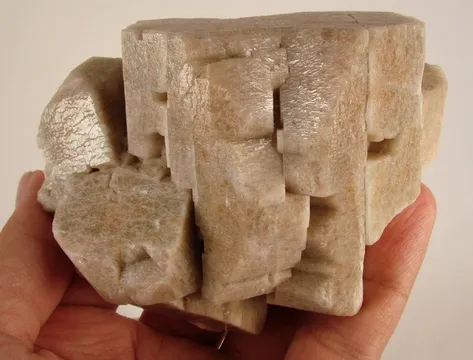
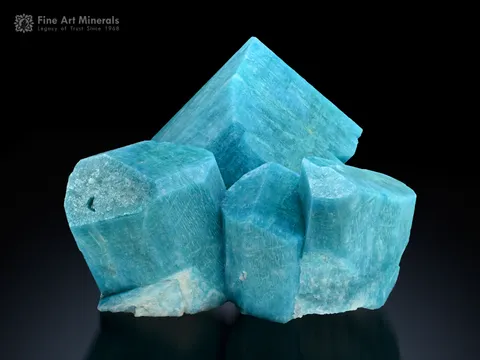
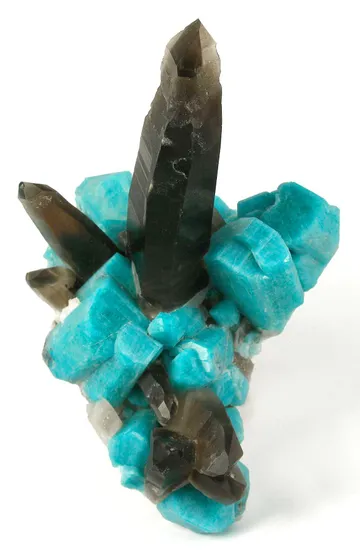
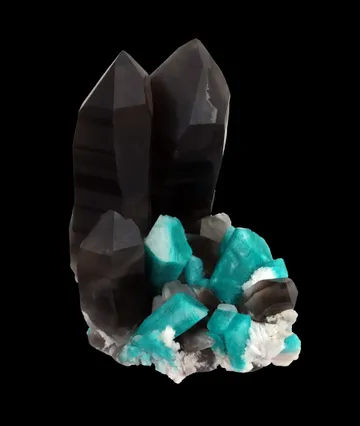
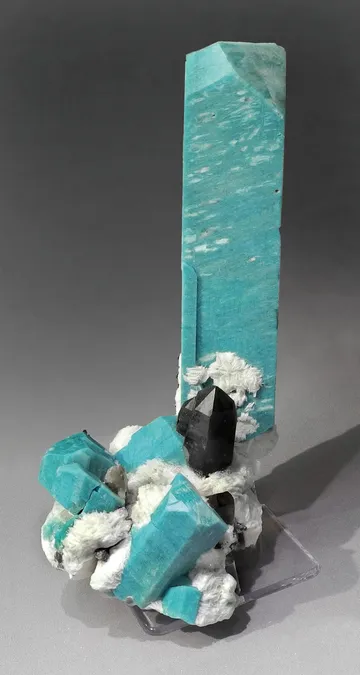
Teller County is one of the rare American localities where two very different mineral stories overlap: the world-class amazonite–smoky quartz pockets of the Crystal Peak–Lake George pegmatite district in the northwestern part of the county, and the Cripple Creek–Victor gold-telluride camp in the south. For collectors of crystallized specimens, Teller County usually means Crystal Peak: blue-green amazonite microcline, black to root-beer smoky quartz, snow-white albite cleavelandite, fluorite, goethite, hematite, topaz, phenakite, cassiterite, columbite-series minerals, zircon, and a suite of small rare-element minerals from miarolitic cavities in the Pikes Peak batholith. The finest pieces have an unmistakable Colorado look—blocky turquoise feldspar crystals with sharp gridlike cleavage faces, standing in sculptural contrast with lustrous, glassy, dark smoky quartz prisms, often on pale albite or feldspar matrix.
Regional View
Country View
The geological engine behind the Crystal Peak specimens is the late-stage evolution of the Pikes Peak granite and the Lake George intrusive center. Pocket-bearing pegmatites occur as dikes, lenses, and swarms within the granite; where volatile-rich residual melt formed open cavities, crystals grew into free space rather than as interlocking rock-forming grains. Those cavities are commonly collapsed or clay-filled by the time a miner reaches them, which is why great Teller County combination specimens are not merely found—they are extracted, cleaned, stabilized, documented, and often painstakingly reassembled.

Photo: Wikimedia Commons
Cripple Creek gives Teller County a second identity in mineral history. Its ores are not pegmatite pockets but an alkalic epithermal gold-telluride system associated with intrusive and volcanic rocks. Specimen collectors know the district for calaverite, sylvanite, krennerite, petzite, hessite, coloradoite, native gold, native tellurium, fluorite, barite, pyrite, sphalerite, galena, and altered vuggy ores rather than large gem crystals. Economically, it is one of Colorado’s great gold camps; mineralogically, it remains one of the classic North American names for Au-Ag-Te assemblages.
Search for specimens: View all specimens from Teller County, USA
Teller County’s collectible pegmatite specimens come chiefly from the Crystal Peak area north of Florissant and near Lake George, on the western side of the Pikes Peak batholith. The productive ground lies in and around the Lake George intrusive center, a composite intrusive body within the Mesoproterozoic Pikes Peak granite. The pegmatites are NYF-family rare-element pegmatites in the broad sense: niobium, yttrium, fluorine, beryllium, rare-earth elements, titanium, zirconium, and uranium-bearing accessory phases occur in small amounts, while the show specimens are dominated by microcline, quartz, albite, fluorite, and iron oxides.
The ore bodies of the Crystal Peak collecting district are not ore bodies in the mine-production sense; they are pocket-bearing pegmatite lenses. Productive structures may begin as narrow graphic-granite seams, swell into thicker biconvex lenses, and open into miarolitic cavities only at certain structural intersections or flexures. At the Two Point Mine, miners documented pegmatite lenses that thickened where they intersected north-south fault systems, with the best pockets commonly lying nearly horizontal. At Smoky Hawk, Joseph Dorris described a narrow, highly productive pegmatite trend where abundant cavities yielded amazonite, smoky quartz, and cleavelandite, together with fluorite, goethite, hematite, zinnwaldite/biotite, cassiterite, columbite-series minerals, topaz, genthelvite, milarite, phenakite, monazite, xenotime, rutile, zircon, and other small rare phases.
The best pockets are small in mining terms but enormous in specimen importance. A cavity only tens of centimeters high can yield a generation of cabinet specimens if it contains undamaged plates; a collapsed cavity two meters long can require weeks of extraction and months of laboratory reconstruction. Pocket clay, limonite staining, roof collapse, invading tree roots, and frost or groundwater alteration all affect quality. The very best Teller County specimens preserve three things at once: saturated blue-green amazonite color, sharp unbruised feldspar faces, and smoky quartz that is both complete and aesthetically placed.
Mining and collecting began in the Lake George–Crystal Peak area in the nineteenth century. Early visitors and prospectors prized quartz and topaz; amazonite was not always treated as the treasure it later became. By the late 1800s and early 1900s, Albert Whitmore’s work at the old Gem Mines helped establish Colorado amazonite as a world mineral specimen commodity. In the later twentieth century, the area was worked by a mixture of weekend diggers, fee-dig operators, claim holders, and mechanically equipped specimen miners. Important names in the modern history of the district include John O. Buckner at the Two Point claim; Jerry and Thelma Hurianek, whose fee-dig operation near Crystal Peak became legendary among collectors; Rock Currier and Bob Bartsch on nearby claims; and the Dorris family, whose Glacier Peak Mining operation made the Smoky Hawk trend one of the most important modern sources of top-tier amazonite and smoky quartz.
The Two Point Mine is a benchmark locality within Teller County. Discovered, claimed, and named in 1956 by John O. Buckner, it was mined under lease by Collector’s Edge Minerals in the 1990s. The 1997 Tree Root Pocket became one of the most famous documented finds in the district: a shallow, collapsed cavity only about two meters below the surface, opened beside a tree whose roots had followed the pegmatite seam into the pocket. It produced over 100 cataloged amazonite and smoky quartz groups, hundreds of single amazonite crystals and smaller groups, smoky quartz crystals to 17 cm, albite balls to 4 cm, and rare cassiterite crystals to about 1.5 cm. The pocket’s combination of color, abundance, documentation, and repair work made it a defining modern Colorado find.
The Smoky Hawk claim and related Smoky Hawk trend brought another era of production. Filed by Joe Dorris in December 1998 after years of prospecting, the claim and surrounding trend were developed with mechanized mining and careful hand collection. By the mid-2010s, the Dorris operation had excavated hundreds of pockets along a narrow trend, with named pockets including Legacy, Majestic, Smithsonian, Lucky Monday, Chuck’s, Icon, Dragon’s Mouth, Hawk Feathers, and others. The 2012 Icon pocket produced the Smoky Hawk King, a nearly three-foot by two-foot amazonite and smoky quartz plate assembled from material from a large kite-shaped cavity; it became one of the signature large combination specimens from Colorado.
Collecting access today is complicated and must be approached conservatively. Much of the productive Crystal Peak ground is on private land, patented or unpatented mining claims, or National Forest land overlain by active claims. A public-land surface may still be a valid mineral claim, and claim boundaries can be hard to recognize in timbered terrain. Serious collecting should be arranged through landowners, claim holders, fee operations, or organized field trips with explicit permission. Mechanized work requires claim control, permits, reclamation bonding, and compliance with state and federal rules. The Cripple Creek–Victor district, meanwhile, includes active industrial gold mining and historic mine sites; collecting there is generally a matter of curated dumps, old specimens, tours, or private permission, not casual mine access.
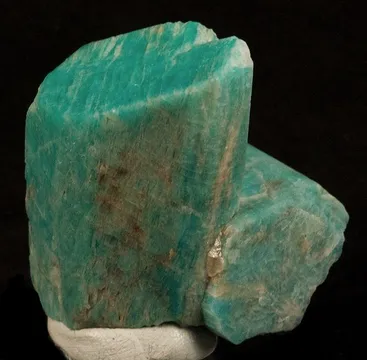
Teller County amazonite is microcline from the Crystal Peak–Lake George pegmatites, and its best crystals are blocky to tabular, sharply cleaved, and saturated blue-green to turquoise, with some Smoky Hawk material showing white microcline caps or striping and bicolored teal zones. Crystals range from small thumbnail-size singles to major cabinet plates; documented pockets include the Tree Root Pocket at Two Point, the Key Hole Pocket at the 10 Percenter claim, and the Legacy, Lucky Monday, Icon, Hawk Feathers, and related pockets of the Smoky Hawk trend. The premier pieces are not simply “blue feldspar”: they show complete terminations, crisp edges, strong luster, deep color through the crystal rather than a thin skin, and a balanced association with smoky quartz or white albite cleavelandite. Ordinary Teller County amazonite may be pale, etched, fractured, iron-stained, or separated from its original quartz association; great pieces retain the vivid contrast and three-dimensional architecture that made Crystal Peak famous.
Quartz from Teller County occurs in two main collector contexts: miarolitic pegmatite crystals from the Crystal Peak area and vein/vug quartz from the Cripple Creek gold district. In the pegmatites, quartz forms free-standing prisms, clusters, plates, and pocket-wall growths with microcline, amazonite, albite, fluorite, goethite, and minor rare minerals; crystals may be colorless, pale smoky, dark smoky, milky, or overgrown by later quartz. At Crystal Peak, the best quartz specimens are complete, lustrous, well-terminated crystals still attached to feldspar or albite matrix, rather than loose fragments from collapsed pockets. In Cripple Creek, quartz is less a display species than a host and gangue mineral for gold tellurides, sulfides, fluorite, barite, and altered breccia, so labels reading simply “quartz, Teller County” need locality context to distinguish pegmatite pocket quartz from gold-district material.
Smoky quartz is the dark counterpoint to Teller County amazonite, and the Crystal Peak specimens are valued because the quartz is often jet-black to root-beer brown, lustrous, glassy, and sharply prismatic. The Two Point Tree Root Pocket produced quartz crystals reaching 17 cm, averaging around 6 cm, with color grading from medium to deep root-beer brown; Smoky Hawk material is noted for very dark to black color, satin to glassy luster, and in some cases tapered or tessin-like terminations. The best smoky quartz from Teller County is not just dark—it is undamaged, translucent at edges or in backlight, well placed against blue-green amazonite, and large enough to dominate the composition without overwhelming it. Loose repaired points, bruised terminations, iron-coated fragments, and smoky crystals lacking their feldspar association are far more common than top combination plates.
Microcline is the structural backbone of the Crystal Peak pegmatites, appearing as common pink, white, tan, greenish, and blue-green crystals as well as the prized amazonite variety. At Two Point, documented pockets ranged from amazonite-only cavities to quartz-rich pockets and feldspar plates; microcline colors varied from pink and light green through commercial blue-green to deep blue-green, with only a minority of pockets yielding the saturated amazonite sought by collectors. Non-amazonite microcline from Teller County can still be collectible when crystals are sharp, twinned, large, or associated with smoky quartz, albite, fluorite, or rare accessory minerals. Good microcline specimens from this district are judged by form and association: crisp blocky feldspar crystals on matrix, clean cleavage faces, strong luster, and original pocket context beat large but chalky, etched, or massive feldspar pieces.
Albite, especially the cleavelandite habit, is one of the key supporting minerals in Teller County pegmatite specimens. It occurs as white platy sprays, cleavelandite sheaves, crusts, and rounded “snowball” aggregates on or among amazonite and smoky quartz, bringing a bright visual separation between dark quartz and blue-green microcline. The Tree Root Pocket produced amazonite plates with snow-white albite balls to 4 cm, while Smoky Hawk pockets commonly list albite/cleavelandite as a major associate of amazonite and smoky quartz. Fine Teller County albite specimens are those in which the albite is fresh, white, and aesthetic rather than merely a powdery coating; in combination pieces, albite can elevate the specimen by adding contrast, but excessive late albite may obscure amazonite faces or smoky quartz terminations.
Beyond these main species, Teller County has a deep mineral list because it combines the Crystal Peak rare-element pegmatites with the Cripple Creek gold-telluride district. Crystal Peak has documented fluorite, topaz, phenakite, beryl var. goshenite, cassiterite, columbite-(Fe), columbite-(Fe)-columbite-(Mn) series minerals, milarite, genthelvite, monazite-group minerals, xenotime-(Y), zircon, rutile, thorite, hematite, goethite, and carbonate minerals including siderite and calcite. Cripple Creek contributes calaverite, sylvanite, krennerite, petzite, hessite, altaite, coloradoite, native tellurium, native gold, pyrite, fluorite, barite, roscoelite, creedite from the Cresson open pit, and a large alteration-mineral suite. The county’s confirmed type-locality mineral is pentahydrite, MgSO4·5H2O, from the Cripple Creek district.
The main authenticity issue with Teller County amazonite and smoky quartz is not artificial color so much as repair, restoration, and vague locality labeling. Many major combination specimens come from collapsed pockets; quartz points, feldspar groups, and matrix plates may have separated naturally before discovery and then been reassembled in the laboratory. Well-documented repairs are accepted in the Colorado amazonite market when they are disclosed, stable, and consistent with the original pocket. Undisclosed assembly, added quartz points, repainted contact areas, or generic “Colorado” labels attached to repaired combinations should be treated cautiously.
Locality precision matters. “Lake George,” “Florissant,” “Crystal Peak,” “Teller County,” “Pikes Peak,” “Smoky Hawk,” and “Two Point” are not interchangeable labels, even though old collections often use them loosely. A specimen labeled Lake George may be from the Teller County side near Crystal Peak, from adjacent Park County ground, or from the broader Pikes Peak batholith collecting region. Higher-end specimens deserve pocket- or claim-level provenance when available: Tree Root Pocket, Two Point claim; Night Hawk Pocket or Icon Pocket, Smoky Hawk claim; Lucky Monday; Hawk Feathers; Godsend; Dreamtime; or other named claims and pockets.
Condition is a major determinant of value. Amazonite cleaves readily and bruises along edges; smoky quartz terminations from collapsed pockets are often dinged; albite can be fragile and easily detached; iron staining is common; and old repairs may yellow or fail if stored poorly. Expect minor repairs on large classic plates, but look for honest disclosure and natural-looking contacts. On cabinet specimens, a single clean repair may be acceptable; a composition that depends on multiple poorly matched reattachments should be priced very differently.
Smoky quartz should be judged in strong light. Some Teller County smoky quartz is nearly black in normal display but reveals rich brown translucency on thin edges or when backlit; dead opaque-looking crystals with dull surfaces are less desirable. Amazonite color should be viewed under neutral light because show lighting and photography can exaggerate blue saturation. The finest Teller County amazonite has color that remains strong under daylight-balanced light and penetrates the crystal rather than appearing as patchy surface tint.
Fluorescence is not the collecting driver for Teller County’s signature pieces. The practical handling concerns are mechanical: feldspar cleavage, quartz points, fragile albite, and concealed repaired contacts. Avoid ultrasonic cleaning on combination specimens, repaired plates, or albite-rich pieces. Clay and iron oxides from pocket material are best handled by experienced preparators, especially on expensive specimens where aggressive acid work can alter luster, undercut repairs, or damage labels and pocket documentation.
Market availability is steady but stratified. Small amazonite or smoky quartz pieces from Teller County remain available, as do older loose feldspars, repaired miniatures, and modest combinations. Top-tier Smoky Hawk and Two Point combinations with deep color, complete smoky quartz, and pocket provenance are far scarcer and command strong prices. Cripple Creek telluride specimens are a separate market: visible calaverite, sylvanite, krennerite, or native tellurium on old mine ore is rare, often small, and much more dependent on analytical confidence and historic labels than on cabinet-scale aesthetics.
The Tree Root Pocket at the Two Point Mine is one of the great modern field stories in Colorado collecting. In 1997, after a discouraging 1996 season of test pits, false ground-penetrating-radar targets, and only small pockets, the crew opened Pit D. A few fragments of deep blue-green amazonite—local diggers simply called such fragments “color”—were sitting on the dump of an old shallow hole. The pegmatite seam dipped into the hill at about 25 degrees, reached roughly two meters below the surface, and then flattened. As the lens widened, it began to spill thousands of quartz and amazonite fragments. Within half an hour, the pocket opening was visible.
The pocket lay beside a large tree, and the tree had done what old prospectors knew trees sometimes do: it had sent roots down the pegmatite seam. The broken root led straight into the cavity. At first, the find looked disappointing. The first amazonite crystals were mostly damaged, and everything was coated in limonite-rich clay. Then a few groups came out, and by the end of the first day the crew had four “killer” specimens. By the second day, the pocket was already more than a meter deep.
The cavity itself was a cruel gift. It was over two meters long by the time it was emptied, kidney-bean shaped, and mostly horizontal, but its opening never reached much more than about 20 cm high. The roof had collapsed onto the floor plates, making an amazonite sandwich with clay packed into every available space. Tree roots wound through the cavity to its end, prying and wedging the plates apart. The pocket had preserved color and abundance, but it had also spent geologic time breaking its own treasures. Each day for about eight days, miners removed four or five superb specimens—and for each fine group, around 50 broken pieces came out with it.
Back at the Collector’s Edge cleaning facility in Golden, the pocket became a puzzle. Hundreds of pieces, from excellent specimens to rubble, were washed, sorted, compared, photographed, and cataloged. Six weeks of repair work were needed before the pieces worth saving were complete, and it reportedly took two months to find all the fits. About half of the final specimens were repaired, many with only one repair, and catalog numbers and repair notations were affixed and recorded. Only after cleaning did the full surprise appear: deep blue-green amazonite color, with the blue-green penetrating to the cores of crystals rather than sitting at the surface.
The Tree Root Pocket’s contents were a lesson in both abundance and loss. It produced more than 100 cataloged amazonite and smoky quartz groups, hundreds of single amazonite crystals and small groups, smoky quartz to 17 cm, albite balls to 4 cm, and a couple of specimens with cassiterite crystals to about 1.5 cm. There were no white caps, and no intact baveno or manebach twins apart from one broken manebach measuring 9 cm across. The pocket debuted at the Denver Gem and Mineral Show in September 1997, where the table of newly cleaned specimens helped fix the Tree Root name in the vocabulary of Colorado collectors.
The Smoky Hawk story is different: less a single lucky dig than the mapping and disciplined mining of a trend. Joe Dorris filed the Smoky Hawk claim in December 1998 after years of prospecting, and the Dorris family eventually traced a narrow line of productive pegmatites across the ground. Production began in earnest after permitting, and the operation moved beyond the older pick-and-shovel model. Excavators opened deeper ground; blasting was used in limited fashion; but the pockets themselves were still collected by hand with water and screwdrivers. The contrast is important: mechanized mining found the pockets, but the final centimeters still belonged to patience.
In 2012, the Dorris family opened the cavity that produced the Smoky Hawk King. The pocket was unusually large—described as kite-shaped, about six feet wide and eight and a half feet long—and it yielded approximately a ton of amazonite and smoky quartz crystals. From that material, the largest plate was assembled at nearly three feet by two feet. The specimen became known as the Smoky Hawk King and went to the Denver Museum of Nature and Science for preparation and eventual exhibit. For a district famous since the 1870s, the find proved that modern methods could still produce historic-scale pieces.
The Godsend claim adds a quieter but appealing field episode. Richard Fretterd staked the claim in 2001 in the Crystal Creek area west of Crystal Peak. On February 2, 2002, while following a quartz-feldspar contact beside a 0.5 m-thick quartz vein, he dug down about one meter and opened a pocket. While carefully removing crystals, he encountered a large milky-quartz core. Breaking through that barrier revealed another large pocket behind it—a classic pegmatite moment, where what looks like the end of a cavity becomes the wall of the next one.