A collector's guide to Florissant, USA: its geology, mining history and notable minerals, illustrated with the 54 specimens documented from this locality on EarthWonders.
Key facts
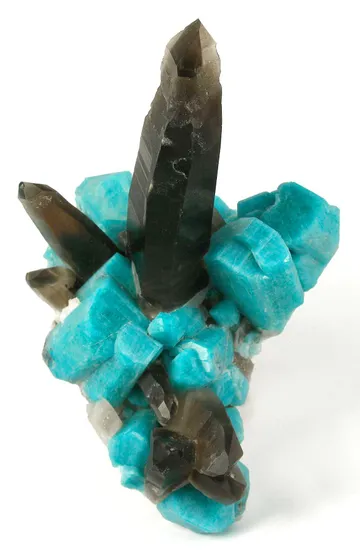
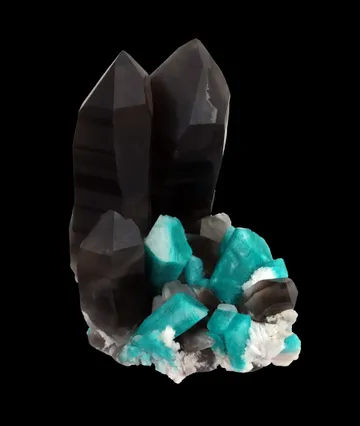
Florissant, in Teller County, Colorado, is collector shorthand for one of the classic mineral-specimen belts of the Pikes Peak batholith: the Crystal Peak–Florissant field of amazonite, smoky quartz, microcline, albite, fluorite, topaz, goethite and rare-element accessories. The locality sits in coarse Proterozoic Pikes Peak Granite, where late-stage granitic pegmatites opened miarolitic cavities — true crystal pockets — rather than forming massive, industrial feldspar bodies alone. Those open spaces are the reason the best specimens here show crystals grown freely into voids: blocky blue-green amazonite microcline with sharp feldspar terminations, dark smoky quartz projecting from the feldspar groups, white cleavelandite accents, and iron-oxide pseudomorphs that can add a metallic black or earthy reddish-brown counterpoint.
Historically, Florissant matters because it is one of the old names under which “Pikes Peak” amazonstone entered collections. Crystal Peak, Topaz Butte, Florissant, Lake George, and later claim names such as Smoky Hawk, Sky Hawk, Two Point and Jack Rabbit are all part of the labeling tangle collectors still encounter. Nineteenth-century writers already recognized the quality of the green microcline from near Florissant, and twentieth- and twenty-first-century mining by serious claim operators has kept the district alive long after casual collectors assumed it was worked out. The finest modern pieces are not merely attractive Colorado souvenirs; they are among the benchmark amazonite-smoky quartz combinations anywhere in the world.
Regional View
Country View
A typical Florissant pocket is not a clean geode-like chamber lined with loose display pieces. It is often decomposed granite, clay, iron oxide, ruptured feldspar and quartz, and broken plates that must be excavated, washed, mapped, wrapped, cleaned and, in many cases, reassembled by fit. That reality explains both the romance and the market: a cabinet plate with natural crystal relationships intact, saturated color, limited damage, and well-disclosed repairs can be far more important than a brighter but isolated crystal.

Photo: Wikimedia Commons

Photo: Wikimedia Commons
The Florissant name also overlaps geographically with the Florissant Fossil Beds, an entirely different collecting story involving Eocene lake shales, petrified redwoods, insects and leaves. For mineral collectors, however, the specimens of greatest interest come from the granite and pegmatite system around Crystal Peak north of town, not from the protected fossil beds. The distinction matters: fossil-park material is protected, while mineral collecting in the surrounding national forest and claim country depends on land status, claim ownership and permission.
Search for specimens: View all specimens from Florissant, USA
Florissant’s collector minerals belong to the Pikes Peak batholith, a vast Proterozoic granite complex exposed across central Colorado. In the Crystal Peak–Florissant area, the productive bodies are granitic pegmatites, commonly classed with the rare-earth-element, niobium-yttrium-fluorine family of pegmatites. The specimen pockets are miarolitic cavities: late-crystallizing open spaces in the pegmatites where microcline, quartz, albite, fluorite, topaz, iron oxides and rarer accessories could grow as well-formed crystals. The essential mineral pair is microcline and quartz — specifically amazonite and smoky quartz when color and irradiation history cooperate.
The term “ore body” is a poor fit if understood in the metal-mining sense. Florissant’s real ore was, and remains, specimen quality. Productive pegmatites may be narrow and irregular, pinching, rolling and stepping along fracture systems in the granite. On the Smoky Hawk trend, the most successful modern mining has followed structural controls where pegmatites changed direction, widened, or passed through zones of decomposed granite. Cavities may occur as small one-hand vugs or as large ruptured chambers measured in feet. The pocket fill can include clay, red iron oxides, quartz fragments, feldspar plates, cleavelandite rosettes, goethite or hematite pseudomorphs, and scattered rare species that are easily missed unless the pocket debris is examined under magnification.
The best-known historical collecting ground lies around Crystal Peak, several miles north of Florissant, a field known under older names including Topaz Butte and “Florissant.” Literature on Colorado minerals records the area as having been worked intermittently since the mid-nineteenth century and as a source of much of the amazonstone, topaz and smoky quartz that entered early “Pikes Peak” collections. Early hand digging was shallow by modern standards: collectors followed decomposed granite, feldspar float, smoky quartz fragments and iron-stained pegmatite into pits and trenches. Much of that older work left behind broken feldspar, single smokies, damaged crystals and, occasionally, clues to deeper pegmatites that later miners could revisit with machinery.
Modern production is closely associated with named claims and operators, especially the Dorris family’s Glacier Peak Mining and Pinnacle 5 Minerals work on the Smoky Hawk and related claims in the Crystal Peak district north of Florissant. The Smoky Hawk claim was filed in December 1998 after years of prospecting, with mechanized exploration beginning around 2000 and mining ramping up in the early 2000s. The operation showed that high-quality pockets remained below the old shallow workings. Excavators and limited blasting made it possible to reach deeper pegmatites, but the actual pocket recovery remained hand work: water, screwdrivers, wrapping paper, mapping, patience and an eye for fits.
The Smoky Hawk trend has produced a remarkable run of named pockets, including Legacy, Majestic, Smithsonian, Lucky Monday, Chuck’s, Dragon’s Mouth, Icon and other modern finds. These pockets are important not only because they yielded large combination plates, but because they established a distinctive look: deep blue-green amazonite, very dark smoky quartz, white microcline caps or stripes on some feldspars, cleavelandite rosettes, and iron-oxide pseudomorphs. The Icon Pocket of 2012 produced the Smoky Hawk King, a large amazonite-smoky quartz-cleavelandite plate now associated with the Denver Museum of Nature & Science. The Legacy pockets of 2005 produced the Legend, a white-cap and white-stripe amazonite-smoky quartz plate later donated to the Colorado School of Mines Geology Museum.
Access today requires caution and respect. The productive Crystal Peak–Florissant ground is a patchwork of national forest, private land, patented and unpatented mining claims, and protected areas nearby. The Florissant Fossil Beds National Monument is not a collecting locality for minerals, rocks, fossils or petrified wood; collecting there is prohibited except under formal research permit. On Pike–San Isabel National Forest lands, small-scale noncommercial rockhounding may be allowed where the land is open and unclaimed, but significant disturbance, mechanized equipment, off-road vehicle use, commercial collecting, or work on an active mining claim requires the appropriate permission and permits. In practical collector terms, the best access is through legitimate claim owners, organized mineral-club trips, fee arrangements where offered, and careful confirmation of land and claim status before any digging begins.
Quartz from Florissant occurs as clear to milky quartz, smoky quartz, and less commonly amethyst noted in older locality records; as a collector species it is chiefly important as the sharp pocket quartz that grew with microcline in the miarolitic pegmatites. Non-smoky quartz may appear as loose crystals, pocket-wall material, secondary coatings, or quartz associated with feldspar, cleavelandite, goethite and fluorite, and the better pieces show clean faces, intact terminations, and a real pocket relationship rather than broken fragments from old dumps. Good Florissant quartz is usually judged less by sheer transparency than by crystal form and association: a sharp prism rising from amazonite, a quartz group tied naturally into feldspar and albite, or unusual inclusions such as goethite-bearing “onegite” material will carry more locality character than a water-clear but anonymous single.
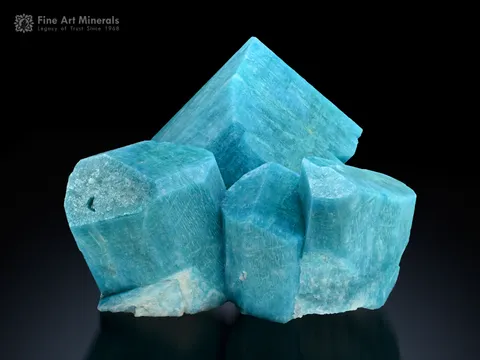
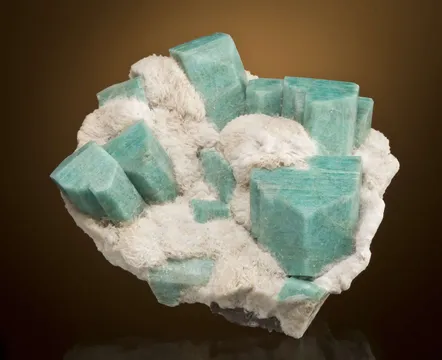
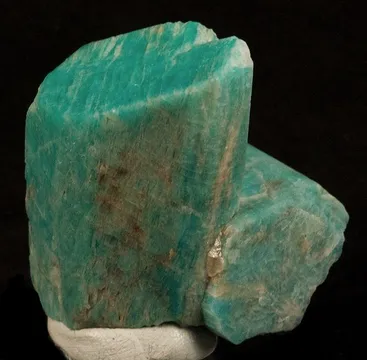
Florissant amazonite is blue-green to deep teal microcline, typically blocky and commonly twinned, with the most desirable crystals showing saturated color, sharp form, luster, and contrast with dark smoky quartz or white cleavelandite. The Smoky Hawk trend is especially prized for deeply colored amazonite, including crystals with white caps and white stripes of microcline; those capped and striped specimens are a signature of the finest modern pockets rather than the average district material. Sizes range from small thumbnail crystals and broken float to cabinet plates with crystals several inches across, and top pieces are separated from ordinary feldspar by intensity of color, completeness of terminations, minimal bruising on edges, attractive association with smoky quartz, and honest preservation of the pocket architecture after cleaning and any necessary restoration.
Florissant smoky quartz is the black-to-brown quartz variety that gives the locality its dramatic color contrast, growing as sharp prisms in miarolitic pegmatites with amazonite, common microcline, cleavelandite, fluorite and iron oxides. The best crystals are lustrous, sharply terminated, dark but still lively on edges or through the center, and naturally positioned on amazonite rather than simply glued beside it; many modern Smoky Hawk pieces show satiny, very dark quartz rising from blue-green feldspar plates. Singles can range from small crystals to hand-size examples, while exceptional district pockets have produced smoky crystals many inches long, but fine Florissant value depends as much on termination quality, contact points, absence of rehealed or broken tips, and association with colored microcline as on length alone.
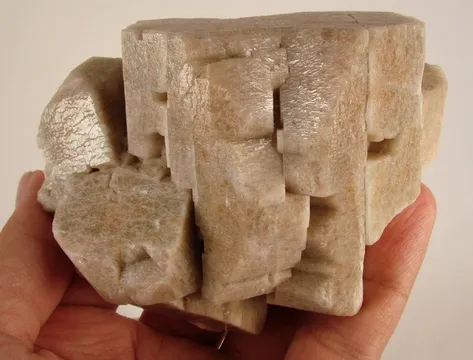
Microcline at Florissant includes both the celebrated amazonite variety and common pink, gray, white or pale feldspar from the same granitic pegmatite environment. Collectors sometimes overlook non-amazonite microcline, but it is essential to the locality: white caps on amazonite are microcline, many pocket plates include ordinary microcline with smoky quartz, and some specimens show the full transition from common feldspar into colored amazonite. Well-formed blocky crystals, Carlsbad, Baveno or Manebach-style twinning, clean feldspar faces, and good relationships with quartz and cleavelandite distinguish meaningful microcline specimens from common granite feldspar; the best Florissant examples preserve the geometry of the pocket rather than appearing as isolated cleavage blocks.
Beyond the four headline species, Florissant and the adjacent Crystal Peak field have produced a deep pegmatite suite. Albite, especially cleavelandite, is a major aesthetic associate; fluorite, goethite, hematite, topaz, phenakite, cassiterite, ferrocolumbite, zircon, monazite, xenotime, bastnäesite, rutile, anatase, synchysite, bertrandite, milarite, genthelvite and manganese oxides are all documented from the broader field or named claims. The locality is not famous for a valid mineral species type locality in the way some mining districts are; its mineralogical importance lies instead in the long-documented rare-element assemblage and in early records of Colorado columbite, topaz on amazonite, and phenakite on amazonite-cleavelandite associations. Recent work on pocket debris has shown that some of Florissant’s most interesting mineralogy is not in the large blue-and-black plates, but in millimeter-scale vugs with rare oxides, REE minerals and aluminofluoride species.
Florissant specimens demand unusually careful reading because repair and restoration are part of the locality’s real collecting history. Many major amazonite-smoky quartz pockets collapsed or ruptured before discovery, and crystals often came out as stained, broken, mud-coated fragments that could only become a display specimen after painstaking cleaning and fit-finding. A disclosed repair on a Florissant plate is not automatically a defect in the ethical sense; undisclosed reconstruction, over-restoration, or an invented association is the problem. Serious buyers should ask whether smoky quartz and amazonite crystals are in natural contact, whether the piece was assembled from one documented pocket, how many repairs are present, and whether any fills, paint, resin or artificial matrix have been used.
Condition issues are predictable. Amazonite is feldspar and has cleavage; edges chip, terminations bruise, and large crystals may show internal fractures. Smoky quartz is harder but still commonly damaged at terminations or along edges where plates collapsed. Cleavelandite can be fragile and platy. Goethite and hematite pseudomorphs may shed if aggressively brushed. Thick red iron oxide coatings are common on fresh material, and professional cleaning can greatly improve color and luster, but acid work, ultrasonic cleaning, heat, and long soaking are risky on repaired combination pieces. Treat major Florissant plates as composite pocket specimens: support the base, avoid vibration, and never lift by a projecting smoky quartz crystal.
Mislabelling is common but often historical rather than deceptive. A specimen may be labeled “Pikes Peak,” “Crystal Peak,” “Florissant,” “Lake George,” “Topaz Butte,” “Teller County,” or by a specific claim such as Smoky Hawk or Sky Hawk. These names are not interchangeable in a strict locality sense, but old labels often used the nearest town, the broader district, or the most marketable name. A claim-specific label with pocket name, date, miner and repair disclosure is more valuable than a vague “Pikes Peak” label, especially for modern production. Conversely, a vague old Florissant label can still be desirable if the specimen has the right habit and provenance.
Documented locality-specific fakes are not a major theme in the literature, but the market does reward a look that is easy to imitate poorly: loose smoky quartz placed on blue-green feldspar, glued repairs hidden under iron stain, or non-Colorado amazonite sold under a Colorado name. The best defense is connoisseurship. Florissant combinations should show believable crystal intergrowth, compatible pocket staining, coherent feldspar-quartz geometry, and preparation consistent with known Pikes Peak batholith material. Be skeptical of flawless large combinations with no repair history, no miner provenance and no explanation of preparation.
Availability is better than for many classic American localities because the Crystal Peak–Florissant district has had active modern producers, yet truly fine pieces remain scarce. Small singles, repaired miniatures, and modest amazonite-smoky quartz groups appear regularly. Strong cabinet specimens with saturated blue-green amazonite, sharp black smoky quartz, cleavelandite contrast and limited visible damage are much less common. Major named-pocket plates, especially from Smoky Hawk, Sky Hawk, Two Point and related claims, now sit in museums and advanced private collections and are priced accordingly when they surface.
The best modern Florissant stories begin not with a crystal in a case, but with a machine biting into decomposed granite. In June 2005, Joe Dorris and his son Tim had been running a track hoe on the Smoky Hawk for weeks with good but not spectacular results. It was the eighteenth operating day of a thirty-day budget, the fourth season of their serious work on the claim, and the difference between shallow old-style collecting and modern mining was literal weight: a John Deere 120 had not had enough power, so the 2005 season used a John Deere 200, about a 45,000-pound excavator with a bucket close to a cubic yard. The machine was not there to scoop specimens out of pockets; it was there to expose pegmatite deep enough that hand tools could begin.
On June 27, as operator Robert Quist worked a 35-foot-wide face, a thick pegmatite appeared on the far right, dipping downward and widening to about a foot. About eight feet along it and six feet below the surface, rusty red areas showed up among chunks of smoky quartz — the signal every Crystal Peak miner hopes for. Tim Dorris and Leonard Himes began working that spot, while Joe Dorris and Isaias Casanova moved to the other side of the cut, where an old dig had stopped after about six feet. Four feet beyond where earlier diggers had quit, rusty quartz again announced a pocket. By the end of the day they had two promising cavities about twenty feet apart, later numbered 05-056 and 05-057. The crystals were coated in iron oxides, but the amazonites looked deep blue-green, and one pocket seemed to have white caps. The miners packed the cavities with newspapers, buried them, and went down to Lake George for dinner.
Pocket 05-057 soon proved serious. Tim collected roughly twenty flats from it over the next several days, with smoky quartz to eight inches and amazonite to four inches, many on large-bladed cleavelandite. Then Scott Dorris came home on leave over the July 4 weekend after his Air Force commissioning. On July 2, the family returned to the dig. Two other deep pockets, nearly thirty feet down, were enticing but nearly inaccessible under a six-foot granite cap that the excavator could not break. Joe logged their GPS positions in his mining journal and turned back to 05-056 and 05-057.
The crucial moment came when Scott’s head appeared over the edge of another prospect where Joe was working. “Hey, Dad. We need your help pulling out a plate.” Joe thought he was joking. When he reached the pocket, it looked like a small cave, about four feet wide and four feet high, with Tim half inside it, clearing behind an eighteen-inch ceiling plate that had fallen face-down. Scott and Tim pried it out, turned it over, and a large smoky quartz came into view among huge amazonites. The family stopped the excavator for the day; the economics of machine time had lost to the pocket.
The plate became the Legend. The pockets yielded 24 flats and packing crates from 05-057 and 22 flats and crates from 05-056. One cavity measured 7.5 feet long by 3 feet deep by 1 foot high; the other measured 5.5 feet wide by 3.5 feet deep by 2 feet high. The largest smoky quartz crystals reached 12 inches long and 4.5 inches in diameter, and some amazonites reached 4.5 inches tall by 3.5 inches wide. The 05-056 amazonites had pronounced white caps and stripes, with cleavelandite rosettes and sharp rhombic goethite-after-carbonate pseudomorphs sprinkled on some crystals. Hundreds of hours of cleaning followed, then months of painstaking reconstruction. The Legend eventually entered the Colorado School of Mines Geology Museum through donation by the Martin Zinn family.
There is a darker footnote to that same pocket. After the family packed and buried the cavity at dusk, someone who had apparently watched the excitement dug it out during the night, removed the newspapers and stole remaining specimens. Joe Dorris later wrote that he did not believe the thieves took pieces needed for the Legend, but they did take fine combination specimens. It is one of the locality’s sharp reminders that secrecy, claim etiquette and documentation are not collector affectations in the Crystal Peak district; they are the practical defenses around pockets that may take years to find and minutes to rob.
The 2012 Icon Pocket pushed the story into the public eye. At the end of June, the Dorris family uncovered a pegmatite on the Smoky Hawk claim that produced several large miarolitic cavities, the largest a kite-shaped chamber about six feet wide and eight and a half feet long. It yielded roughly one ton of amazonite and smoky quartz crystals. From that broken abundance, the largest plate — nearly three feet by two feet in Dorris’s symposium account, and described in press coverage as roughly three feet by two and a half feet — was assembled into the Smoky Hawk King.
Unusually, this discovery unfolded under cameras. High Noon Productions was filming for the television series Prospectors, so the recovery of what became one of Colorado’s great modern mineral specimens was not merely remembered by miners afterward; it was part of a filmed mining season. Over the next two years, Tim Dorris cleaned and restored the massive ceiling plate. Mineral-club notices described it as weighing more than 85 pounds, nearly three feet long and almost two feet wide, dominated by exceptionally large amazonite, smoky quartz and cleavelandite crystals. At the 2014 Denver show it won Best in Show, and it later became associated with the Denver Museum of Nature & Science. Joe Dorris defended the name with a line collectors still repeat: “I don’t think it’s ever going to be matched.”