A collector's guide to Strontian, UK: its geology, mining history and notable minerals, illustrated with the 53 specimens documented from this locality on EarthWonders.
Key facts
Strontian is one of those rare localities whose significance reaches well beyond specimen cabinets. In the hills north of the village, above Loch Sunart on the Ardnamurchan side of the West Highlands, a long east-west mineralised shear zone was worked first for lead and later for baryte. The veins cut a complex Highland basement of Moine metamorphic rocks, granitic gneiss, the Strontian Granite contact zone and altered mafic dykes; the resulting assemblage is a collector’s blend of old British lead-mine minerals and unusual Sr-Ba zeolites. Galena, sphalerite, calcite, baryte, quartz and pyrite provide the structural backbone of the vein fill, but the fame of the district rests on strontianite, brewsterite-Sr, harmotome and the later finds of heulandite-Sr, heulandite-Ba, kainosite-(Y), ancylite-(Ce), millerite and other small but telling rarities.
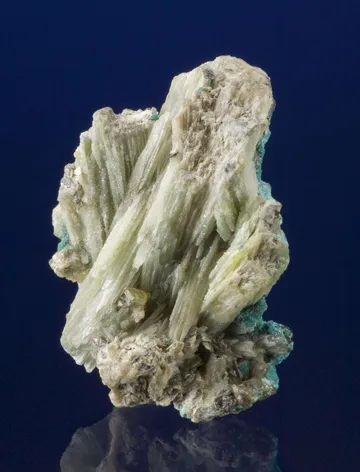
The name “Strontian” is mineralogical history in miniature. Strontianite, SrCO3, was named from material found here, and the village ultimately gave its name to strontium. Late eighteenth-century chemists recognised in the Strontian material a “new earth” distinct from baryta, and Humphry Davy isolated the metal strontium in 1808. For collectors, that historical charge matters: a modest grey-green or white radiating strontianite from Strontian is not just another carbonate, but a type-locality specimen tied directly to the naming of an element.
Regional View
Country View
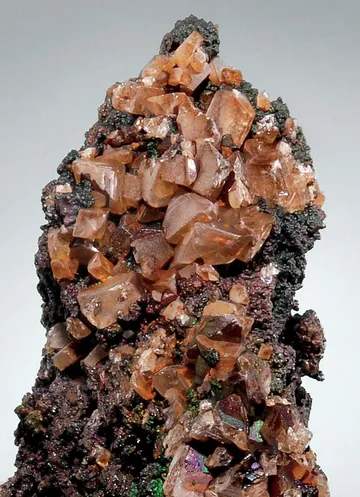
The best Strontian specimens have a distinctive West Highland look: creamy to translucent calcite, pale or pinkish baryte, dark sphalerite, metallic galena, and overgrowths of sparkling white harmotome or tiny colourless brewsterite in pockets and fissures. Older harmotome pieces can show lustrous, blunt, wedge-like twinned crystals to several centimetres, while typical modern material is smaller but often very bright. Calcite specimens are surprisingly varied, and some show multiple growth stages and attractive fluorescence. Crystallised baryte is much scarcer than the mining history might suggest, despite baryte being the mineral that finally brought the deposit back into production in the 1980s.

Photo: Rob Lavinsky, iRocks.com, via Wikimedia Commons
Search for specimens: View all specimens from Strontian, UK
The Strontian mining district lies roughly four kilometres north of the village of Strontian, on the slopes of Beinn Ruighe Raonuill above Loch Sunart. The principal historic workings are Corrantee to the west, then Whitesmith, Middleshop, Clashgorm and Bellsgrove along the central Main Vein, with Fee Donald farther to the northeast. The central section around Whitesmith, Middleshop and Bellsgrove is the mineralogical heart of the district and includes the classic sources for strontianite, brewsterite-Sr and many of the best harmotome specimens.
The deposit is a baryte-lead-zinc-silver vein system developed along a narrow but deep east-west mineralised shear zone. At Whitesmith the Main Vein is described as lying in an east-west crush zone in Ardgour Granite Gneiss, with metasomatised older mafic dykes and later early Tertiary mafic dykes cutting or crossing the mineralised structure. In the wider Strontian and Loch Sunart district, the country rocks include mica-schists, banded quartzites, augen gneisses and the Strontian Granite. The vein system is strongly controlled by fracture sets, with the main lead-bearing veins generally trending a few degrees north of west and commonly accompanied by altered basalt or dolerite dykes.
The ore and gangue assemblage is dominated by baryte, calcite and quartz, with galena, sphalerite, pyrite and locally jamesonite as principal primary ore minerals. The old descriptions emphasise that the veins vary considerably along strike. At Corrantee, the vein is exposed in the burn and includes calcite, baryte, galena and abundant sphalerite, with pink baryte and small galena cubes in places. At Whitesmith, the surface opencut was the richest part of the Main Vein and was worked on a scale impressive for such a remote hill locality: old measurements describe an opencast 135 fathoms long, about 60 feet deep and four to twelve feet wide. At Bellsgrove, the Main Vein widened dramatically, reaching reported widths of eight to thirty feet and containing calcite, baryte, galena, harmotome and brewsterite.
Mining began in the early eighteenth century. Sir Alexander Murray of Stanhope is credited with discovering lead on the estate in 1722 and forming an early partnership to work it. The mines soon passed into the orbit of the York Buildings Company, which developed shafts, levels, smelting capacity and workers’ housing. The Grand Level at Bellsgrove, begun by the York Buildings Company, became the great drainage adit of the central workings. The York Buildings period was followed by long cycles of dormancy, small-scale revival and fresh optimism: intermittent working after 1815, a new lease in 1836, renewed production in the mid-nineteenth century, abandonment after the early 1870s lead-price slump, and an unsuccessful attempt to reopen Bellsgrove around 1901–1904.
The nineteenth-century production figures are irregular but revealing. Early nineteenth-century rents imply annual ore values of several thousand pounds and perhaps about 400 tons of ore per year at times, while surviving Mineral Statistics figures show Bellsgrove producing lead ore in the late 1840s, 1850s and mid-1860s, with smaller later output from Fee Donald and Corrantee. The old miners worked mainly for galena; sphalerite, although locally rich and sometimes of high grade, was not always marketable in the early phases. Assays from Corrantee recorded very high-grade picked sphalerite and galena, with the galena argentiferous enough to be noted for its silver content.
The last major industrial phase was not for lead but for baryte. Modern exploration in the 1960s identified a large baryte resource, and in the 1980s Strontian Minerals Ltd, associated with Minworth Ltd, opened the Main Vein as a baryte operation serving the North Sea oil-drilling industry. This work cut through and in places obliterated older workings, especially around Middleshop and Bellsgrove, but it also brought fresh material to light and re-established Strontian as an active collecting locality in the minds of late twentieth-century British mineral collectors. The baryte venture failed by the early 1990s, and parts of the site later came under aggregate working.
Collecting today has to be approached with care and restraint. Strontian Mines is a Site of Special Scientific Interest, and damage to the protected geological interest or unauthorised collection can be an offence. The old workings include opencuts, shafts, adits, flooded ground, unstable collapses and potential mine gases; the modern quarry area is an industrial site requiring permission. The best route for serious collectors is provenance rather than trespass: documented older specimens, pieces collected during permitted quarry activity, and material from known 1980s and later spoil movements. When legitimate collecting opportunities arise through spoil movement or authorised visits, small pocket material in calcite-rich and brecciated metabasite blocks remains the most realistic source for harmotome, brewsterite, fluorescent calcite, sphalerite and the rarer late-stage species.
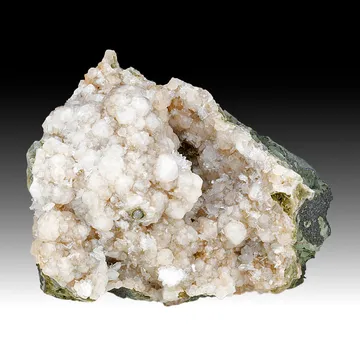
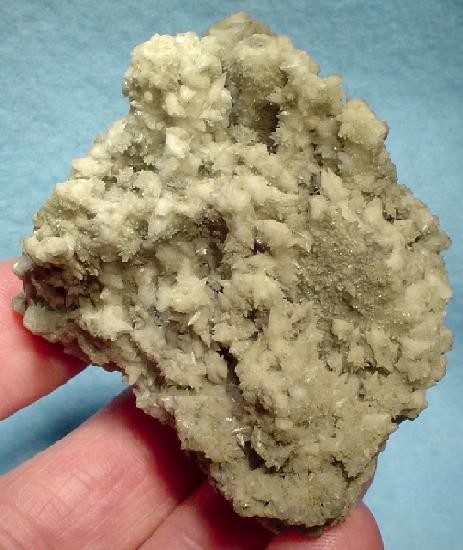
Strontian harmotome is the locality’s signature display zeolite: white to off-white, milky, porcelain-like, sometimes faintly grey or colourless, and typically occurring as blocky twinned crystals, blunt wedges and sparkling druses in cavities and fractures in calcite-baryte vein material. Whitesmith, Bellsgrove, Clashgorm and the modern Strontian baryte workings are all represented in labelled material, with old museum-quality crystals reaching roughly 25–30 mm and more typical recent crystals in the 5–15 mm range; some pocket pieces show much smaller harmotome and brewsterite crystals glittering over yellow-brown calcite. The finest specimens are sharp, lustrous, complete twins standing clear on contrasting calcite or baryte, while ordinary pieces are merely pale granular crusts or heavily intergrown vein fragments.
Calcite at Strontian is not just gangue; it is the stage on which many of the locality’s better minerals are presented. It occurs as coarse grey-white vein fill, amber to brown crystals, scalenohedra lining cavities in metabasite, later overgrowths of differing habit, and matrix for harmotome, brewsterite, sphalerite, galena and baryte. Some Strontian calcites show multiple growth generations, and collector accounts note red fluorescence in earlier generations and yellow, orange or pink fluorescence in later ones, sometimes with blue fluorescence added by traces of hydrozincite. Strong pieces have undamaged crystal faces, visible growth zoning or fluorescence contrast, and attractive zeolite coverage without being smothered; weaker examples are massive cleaved carbonate with little pocket definition.
Galena was the reason Strontian was mined, and the best specimens still carry the feel of a classic British lead district: bright metallic cubes and granular masses set in baryte, calcite and quartz, with sphalerite and pyrite locally present. Old descriptions mention small cubes in pink baryte at Corrantee, sparse lumps and specks through baryte-calcite vein fill at Whitesmith, and broader ore-bearing ground at Bellsgrove, where the Main Vein was historically the chief producer. Collectors should favour sharp, lustrous cubes or clean metallic masses in recognisable Strontian matrix, especially with baryte or calcite; dull oxidised lumps, loose ore fragments and pieces with vague “Strontian” labels but no mine attribution are much less desirable.
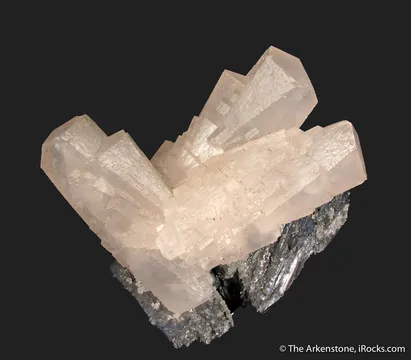
Baryte, traditionally written barytes in British mining literature, is one of the dominant minerals of the Strontian Main Vein and the mineral that drew the 1980s baryte operation across the old Whitesmith-Middleshop-Bellsgrove ground. In the vein it occurs as white to pinkish massive ribs, coarse gangue with calcite, and less commonly as crystallised plates or bladed groups; paradoxically, attractive crystallised Strontian baryte is much scarcer than the scale of baryte mining might imply. Good collector specimens show distinct blades, tabular faces or pale pink-white baryte in aesthetic association with galena, calcite or harmotome, whereas most mine-run baryte is massive, intergrown, heavy and visually plain.
Strontian sphalerite is generally dark brown to black “blende,” and at Corrantee it was described as especially good along the footwall, with picked material assaying as high-grade zinc ore. In the later-studied brecciated metabasite assemblage, well-crystallised dark sphalerite commonly forms early in narrow calcite veins and is then enveloped by coarse grey-white calcite; sphalerite is also documented from Whitesmith, Bellsgrove Quarry, Corrantee and associated workings. The best specimens are lustrous, discrete dark crystals or crystal-rich bands contrasted against calcite, baryte or pale zeolites; massive black zinc ore without crystal faces is historically interesting but seldom a display-grade specimen.
Pyrite is a widespread but usually supporting mineral at Strontian, occurring as primary iron pyrites in the lead-zinc-baryte-calcite veins and as part of the sulphide assemblage in brecciated metabasite blocks from the modern workings. It appears with calcite, quartz, sphalerite, galena, harmotome and locally marcasite, and its post-mining oxidation is implicated in the formation of the unusual pale pink köttigite found in fractures. Worth keeping are bright, brassy, crisp crystals or crystal aggregates with identifiable Strontian matrix and late zeolite or calcite association; dull disseminated grains, oxidised crusts and unstable pyritic material are much more common.
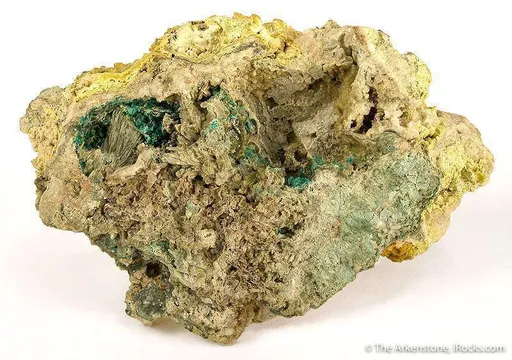
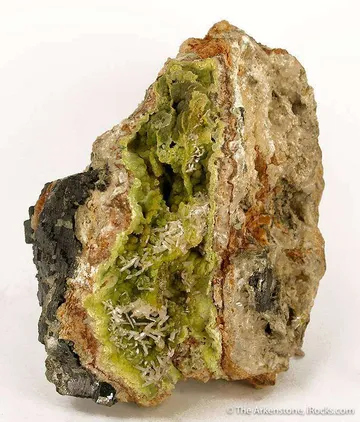
Strontian’s supporting cast is unusually important. Strontianite is the great historical mineral, occurring as white, grey, greenish or brownish radiating, acicular, stalactitic or massive crystalline material from the type locality. Brewsterite-Sr, also type-locality material, occurs as small colourless to slightly brownish prismatic zeolite crystals, often lining fissures or coating calcite, baryte, gneiss breccia, harmotome or strontianite. Heulandite-Sr and heulandite-Ba were reported from Whitesmith as zeolite-group minerals new to Britain, while kainosite-(Y), ancylite-(Ce), millerite, chamosite, hydrozincite, celestine, cerussite, acanthite, quartz, marcasite and the first confirmed Scottish köttigite round out a locality where some of the most interesting specimens require a hand lens, careful labelling and, sometimes, analytical confirmation.
Strontian is not a locality with a widely documented problem of fabricated specimens, but it is a locality with real labelling hazards. “Strontian,” “Whitesmith,” “Bellsgrove,” “Bellsgrove Quarry,” “Bellsgrove Opencut,” “Middleshop,” “Clashgorm” and “New Mine” have all been used on labels or in collector discussion, sometimes loosely. This matters because the old Bellsgrove Mine and the later Bellsgrove Quarry/Strontian Barytes Mine are not the same thing, and the 1980s workings disturbed or destroyed parts of the older mine landscape. A good label should preserve not only “Strontian” but, where known, the specific mine or working and the collecting period.
The other common authenticity issue is species-level overconfidence. Brewsterite and harmotome can occur together as tiny pale zeolite crystals on calcite, and mixed druses may be difficult to separate visually. Heulandite-Sr, heulandite-Ba, ancylite-(Ce), kainosite-(Y), millerite and köttigite are collector-grade rarities that deserve analytical support or a highly reliable provenance. Pale pink supergene arsenates from the mine should not be casually labelled erythrite: published work on Strontian köttigite specifically warns that it can be confused with cobalt-dominant vivianite-group material and that earlier erythrite claims need caution.
Condition is important. Harmotome crystals are brittle and commonly chipped on exposed edges; because the best crystals stand proud on calcite, old specimens often show bruising from cabinet life as much as from mining. Calcite cleaves readily and should be checked under oblique light for broken terminations. Strontianite aggregates can look chalky or etched, and radiating masses may shed small fibres if mishandled. Galena can be fresh and bright, but old ore pieces may be dull, oxidised or contaminated by secondary lead minerals. Pyrite and marcasite-bearing pieces should be stored dry and watched for sulphide decay, particularly if collected from damp spoil.
Fluorescence is a useful bonus at Strontian, especially in calcite-rich material. Some specimens show red, yellow, orange or pink responses from different calcite generations, and hydrozincite can add blue fluorescence. Fluorescence should not be used alone for identification, but it can greatly improve the display value of otherwise subtle calcite-zeolite pieces.
Rarity in the present market is uneven. Harmotome and calcite from Strontian appear with some regularity because the 1980s baryte operation released material and because older British collections have circulated for decades. Fine large harmotome crystals, old strontianite from the type locality, well-crystallised baryte, precisely attributed galena, and analytically reliable rare-species pieces are much less common. The best Strontian specimens combine three virtues: an old or trustworthy provenance, a specific mine attribution, and enough aesthetics to rise above “historic locality” status.
Strontian’s mining story begins in a landscape that was awkward even before the rock fought back. The mines sit high above Loch Sunart, nearly three miles north of the village, in a district that early operators could supply most easily by sea. When Alexander Murray of Stanhope brought miners into the hills in the 1720s, he was not simply opening a vein; he was trying to create an industrial settlement in one of the more remote corners of the western Highlands.
By 1729 the venture had acquired theatrical colour. A member of the early partnership, Sir Robert Clifton, was sent north to inspect the mines and is recorded as arriving in Edinburgh on August 11, 1729, wearing the badge of the Order of the Bath. Soon after, Francis Place, a mine engineer working for the York Buildings Company, inspected the operation. In April 1730 he reported that the mines were poorly managed but could be made profitable with skill. The economics then took a remarkable turn: Place thought a rent of £2,000 per year would be extravagant, but on July 31, 1730, the company accepted a lease at £3,600 a year, plus every sixth dish as royalty and repayment of £6,000 already spent. The numbers read less like cautious mining finance than a fever chart.
For a brief moment, the fever seemed justified. On August 18, 1730, Place wrote that “every day the works grow richer.” In November he visited a new vein and, in less than an hour, reportedly broke more than a hundredweight of good ore. London began shipping bricks, castings, coal and even framed houses to Loch Sunart. A village known as New York was built for the miners, and there was a dispensary. The company added furnaces and smelting capacity, drove levels and sank shafts; on paper, a remote Highland lead field was being transformed into a modern industrial concern.
The human details are stranger and more memorable than the production statistics. One account preserved the story of John Taylor, a Leadhills miner said to have lived to 133 and died in 1770. He reportedly lived on salt meat and whisky until scurvy forced him to stop work. Another note records women and children employed in the “hat factory,” making miners’ hats by plaiting two straw hats, one slightly larger than the other, putting clay between them, and baking the result in the sun until hard. The hats were said to work well, but to be heavy: a small, practical object from a harsh mining camp, made by families as much as by a company.
The mines were drawn into wider Highland politics. The Moreton and Green history notes complications from the Murray family’s Jacobite sympathies, including government interest in the mines’ gunpowder, and describes the York Buildings Company dealings as one of the most outrageous scams of the period. The aftermath of the 1745 rebellion reached even this mining field. In 1748, lessee Luke Walker was described as “relieved to have a party of troops boarding with him,” a sentence that carries the tension of the West Highlands after Culloden: troops were not always welcome guests, but in that moment their presence evidently felt safer than the alternative.
Water, depth and uncertainty dogged later operators. Old workings at Whitesmith were said to reach 120 to 130 fathoms, and one description of the ore shoot near Whitesmith speaks of men dewatering for 60 fathoms into a cistern, with the remaining 70 fathoms pumped by two horses working six hours per day. By the time nineteenth-century companies re-entered the ground, they inherited old opencuts, stopes, shafts, uncertain plans and the constant problem of flooded workings. The Grand Level at Bellsgrove was the district’s great answer to water, but even it could not turn Strontian into an easy mine.
Optimism returned again and again. In 1901 a Glasgow backer, Mr Robertson, put up £14,000 to reopen the mines. Middleshop Adit and the Grand Level were cleared, and Bellsgrove Engine Shaft was cleared to a depth of 60 fathoms, with Robertson’s son in charge. By 1904 the money had run out and no ore had been brought to surface. Six decades later, Consolidated Gold Fields drilled the ground in 1965, and press reporting the following January suggested about two million tons of baryte with lead, zinc and silver values. In the early 1980s the North Sea oil industry finally gave baryte a market strong enough to bring heavy machines back to the Main Vein. The modern operation nearly succeeded, then failed like so many Strontian ventures before it.
The final irony is that the failed baryte mine helped rescue Strontian for collectors. Its opencuts and spoil disturbed the historic workings, but fresh blocks brought to light calcite, harmotome, brewsterite, sphalerite, fluorescent calcite and microscopic rarities that might otherwise have remained sealed in the hill. Strontian has always been a place where commercial disappointment and mineralogical importance run in opposite directions: fortunes were lost in the veins, but a village gained a mineral, an element and a permanent place in the history of collecting.