Leadhills, UK — historic lead-zinc locality in Scotland famed as a type locality for minerals like leadhillite, lanarkite, caledonite; prized by collectors.
Key facts
Leadhills is one of the indispensable British localities: a cold, high moorland lead-zinc field in the Lowther Hills of South Lanarkshire whose small cavities and oxidized shoots produced a mineralogical vocabulary of its own. The mines lie in the Leadhills–Wanlockhead orefield, the largest and historically most productive lead-zinc district in Scotland, where fault-controlled hydrothermal veins cut Lower Palaeozoic greywacke, chert, shale and mudstone. Primary ore was chiefly galena with sphalerite, chalcopyrite and pyrite in quartz-carbonate-baryte gangue; the collector interest, however, is overwhelmingly in the secondary lead, copper and zinc minerals formed in the weathered upper parts of the veins.
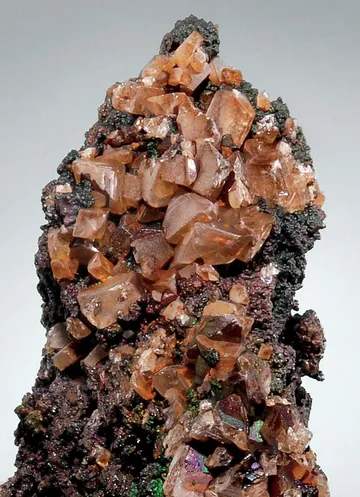
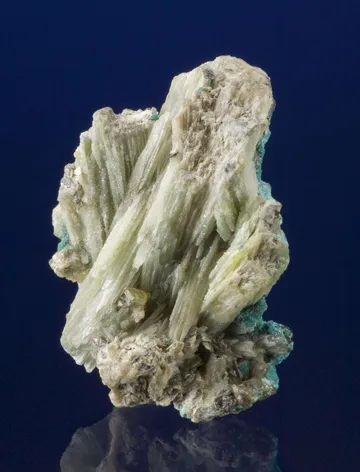
For collectors, Leadhills is a type-locality terrain of unusual depth: leadhillite, lanarkite, caledonite, susannite, macphersonite, chenite, scotlandite and mattheddleite all anchor the name of the village in systematic mineralogy. The best specimens are not large by international cabinet standards, but they are intensely characterful: pearly pseudohexagonal leadhillite plates tucked inside galena cavities; gray-white lanarkite blades on dark sulphides; turquoise to green-blue caledonite in vugs and crusts; yellow to green pyromorphite druses on quartz-rich gossan; and cerussite replacing, coating or filling after galena. Leadhills pieces often reward close study under magnification, because a single old cavity may carry several generations of lead sulphate-carbonate alteration, copper-bearing sulphates, carbonates and phosphates in contact.
Regional View
Country View
The village and its mines are inseparable. Medieval lead working is documented by the thirteenth century, sixteenth-century gold working brought the Crawford Muir gravels into royal history, and the great eighteenth- and nineteenth-century lead operations left a landscape of shafts, adits, hushings, lades, reservoirs, dressing floors, smelt-mill remains and spoil heaps. That long history is why labels on older specimens may read simply “Leadhills,” “Susanna Vein,” “Susannah Mine,” “Glengonnar,” “Mine Hill,” or “Lanarkshire,” and why careful locality interpretation still matters when evaluating old British material.

Photo: Wikimedia Commons

Photo: Wikimedia Commons
Search for specimens: View all specimens from Leadhills, UK
Leadhills sits on the South Lanarkshire side of the Leadhills–Wanlockhead mining district, a compact but vein-rich orefield extending across high ground around the villages of Leadhills and Wanlockhead. The rocks are chiefly Ordovician greywackes, cherts and shales, intensely fractured and crushed along late-Caledonian structures. The mineralizing system is classic epigenetic vein mineralization: steep fissure veins and breccia zones filled by quartz, dolomite, calcite and locally baryte, then cut and enriched by sulphide stringers. The principal ore mineral was galena; sphalerite was widespread but not always payable, while chalcopyrite and pyrite supplied copper and iron to later oxidation products.
The geometry of the orefield helps explain the specimens. The district contains roughly seventy lead-zinc veins distributed over several kilometres of strike. Most run broadly north-south and dip steeply, while a smaller set trends northwest-southeast. The workable ore occurred in shoots rather than continuous solid lodes: in the hard greywackes the fractures opened enough to accept richer breccia and sulphide filling, whereas shales and cherts more often crushed into tight, less permeable ground. Large open cavities in the primary lodes furnished galena, calcite and quartz specimens; small vugs and oxidized pockets near the upper and weathered portions of the veins furnished the leadhillite, lanarkite, caledonite, cerussite and pyromorphite suites that made Leadhills famous.
The oxidation zone was unusually important. Percolating waters attacked galena, pyrite and chalcopyrite, producing anglesite, cerussite, lanarkite, caledonite, linarite, malachite, azurite, chrysocolla, iron oxides and the celebrated lead sulphate-carbonate polymorphs. Historic descriptions note that the best primary minerals came from large open cavities, while the best secondary minerals came from smaller cavities in oxidized lodes. At Leadhills, that is exactly the scale collectors should expect: not broad showpieces of one species alone, but dense miniature and thumbnail assemblages in which a sharp plate, blade or spray is the prize.
The Susanna Vein or Susanna Mine is the central name on collector labels. It was the richest eighteenth-century vein and the type locality or critical source for several of the district’s defining species, including leadhillite, lanarkite and susannite. Old accounts describe cerussite occurring there as the massive “grey lead ore” that was worked commercially, while later mineralogical work established the Susanna material as one of the classic natural laboratories for distinguishing leadhillite, susannite and macphersonite. Specimens from Susanna may show leadhillite or susannite with cerussite, anglesite, lanarkite, caledonite, linarite, hydrocerussite, macphersonite, scotlandite, chenite or mattheddleite, depending on the pocket and generation.
Other named workings matter too. Glengonnar and Wilson’s shafts, Brow and Brown’s veins, Horners Vein, Raiks Vein, Hopeful Vein on Wanlock Dod, Wool Gill, Haddington’s or Road Vein, Risping Cleuch and numerous Mine Hill and Broad Law workings all appear in specimen records or historic descriptions. Haddington’s/Road Vein and Risping Cleuch are specifically noted in early British Geological Survey accounts for galena and pyromorphite on old dumps. Horners Vein and the Wanlock Dod workings became important to later micromount collectors and researchers because they yielded rare secondary species in small but scientifically rich assemblages.
Mining history at Leadhills is exceptionally long. Lead working is documented by the monks of Newbattle Abbey in 1239, with probable earlier exploitation. Gold from the district’s streams was worked from the sixteenth century and became associated with Scottish royal coinage and regalia. In the seventeenth century the mines passed into the hands of the Hope family; in the eighteenth century the Scots Mining Company became the dominant operator and reorganized the workings on a large scale. Later came the Leadhills Mining Company, the Leadhills Silver Lead Mining Co. Ltd. and the Leadhills Company Ltd. Modernization brought deeper shafts, hydraulic systems, reservoirs, underground railways, steam power and improved dressing and smelting, but economic decline and low lead prices brought closure in 1929.
The modern collector must treat Leadhills as a protected historic mining landscape, not as an open collecting ground. Extensive mine remains around the village are scheduled monuments, and geological excursions have long been advised to obtain permission from Hopetoun Estates for Leadhills ground. Old adits and shafts are dangerous and should not be entered. Loose old-dump material has historically supplied small collector specimens, but any visit today should be permission-based, low-impact, and sensitive to heritage protection, land use, grouse-shooting seasons, livestock, unstable spoil and lead contamination. The safest and most responsible way to build a serious Leadhills suite is through old collections, documented modern surface finds with clear permission history, and specimens retaining older labels from known British dealers, museums or collectors.
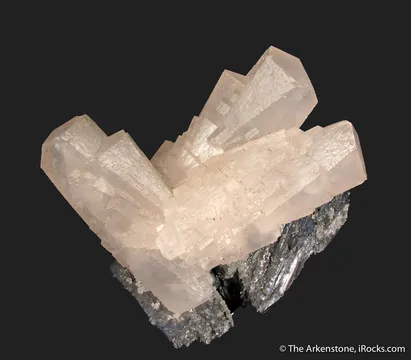
Leadhillite from Leadhills is the locality standard: pale yellow, colourless-white or pale brown tabular to pseudohexagonal plates, commonly pearly to greasy and often protected inside galena or cerussite-lined cavities. The finest old miniatures show sharp, transparent to translucent plates rather than chalky crusts, and some crystals reach the centimetre scale; good examples may be stacked in parallel groups or perched in a vug of massive galena altered to cerussite. Susanna Mine is the historic source and type locality, but leadhillite has been recorded from numerous Leadhills-area veins, including Horners Vein and later micromount localities. The best pieces here are judged on intactness of the thin plates, lustre, translucency, association with cerussite, caledonite, lanarkite or galena, and the reliability of the label, because visually similar susannite and macphersonite can occur in the same district and even in the same specimen.
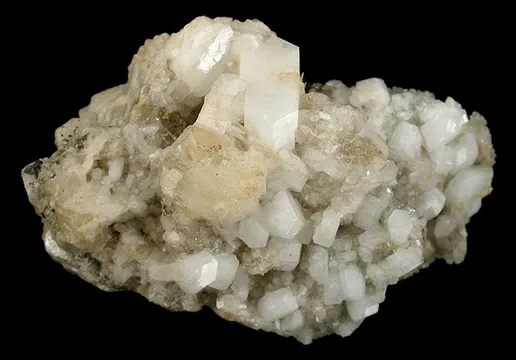
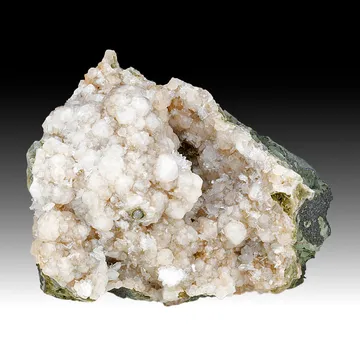
Cerussite is one of the most characteristic oxidation minerals at Leadhills and ranges from massive grey lead ore, historically worked in the Susanna Vein, to attractive radiating aggregates and individual colourless to white crystals. It commonly appears as replacement or alteration around galena and as a companion to leadhillite, anglesite, pyromorphite and caledonite in vugs and seams. Collector-grade Leadhills cerussite is less about spectacular size than about context: sharp, glassy crystals on old sulphide matrix, bright radiating groups in a labelled Susanna or Mine Hill specimen, or cerussite forming the pale sparkling framework around rarer lead sulphate-carbonates. Ordinary pieces are granular or bruised white alteration; better pieces retain form, brilliance and a clear paragenetic relationship to the galena they replaced.
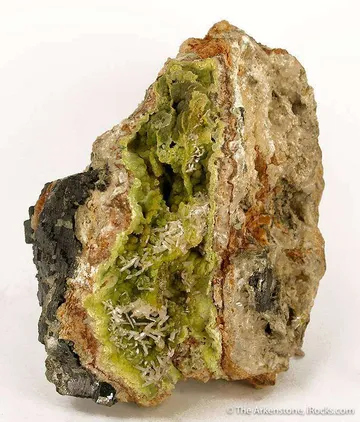
Leadhills pyromorphite is a secondary lead phosphate of the oxidized veins, usually seen as small crystals, druses, botryoidal microcrystalline coatings and yellow to green crusts on quartz-rich or iron-stained matrix. Historic accounts describe pyromorphite and mimetite mixtures across the district with a broad colour range from olive green through yellow and orange-red, while specific old dumps such as Haddington’s/Road Vein and Risping Cleuch yielded galena with pyromorphite. The most desirable Leadhills pieces show vivid green or yellow, cleanly exposed crystalline surfaces, and association with cerussite, caledonite or lanarkite rather than dull phosphate films. Size is typically modest; richness, colour saturation, lack of abrasion and a named vein or old collection label matter more than bulk.
Caledonite from Leadhills is one of the great locality-defining blue-green minerals of British collecting, forming turquoise, powder-blue, green-blue or deeper blue acicular to prismatic crystals, sprays, crusts and vug linings where copper from chalcopyrite oxidation met lead sulphate-carbonate chemistry. It occurs with linarite, malachite, chrysocolla, cerussite, leadhillite, lanarkite and pyromorphite, and the best old specimens commonly show caledonite as bright colour accents in quartz-rich or galena-bearing cavities rather than as large freestanding crystals. A superior Leadhills caledonite has discernible bladed or prismatic crystals, lively colour, and association with another classic species from the locality; mediocre examples are powdery blue stains or indistinct crusts on gossan. Because caledonite, linarite and other blue copper-lead sulphates may occur together, magnification and, for rarities, analytical confirmation are valuable.
Galena was the economic heart of Leadhills and occurs chiefly as massive to coarse crystalline PbS in the veins, with occasional fine-grained “steel ore” and, more rarely, attractive cube-octahedral crystals in cavities. Historic accounts note galena crystals up to about 2 inches in the New Glencrieff workings of the wider district, sometimes with spongy interiors and chalcopyrite cores, while Leadhills specimens more often appear as heavy dark matrix carrying cerussite, leadhillite, lanarkite, anglesite or pyromorphite. For collectors, Leadhills galena is most valuable as a contextual host: fresh metallic faces, clear cubic or octahedral form, and natural alteration to named secondary species lift a piece above common ore. Old galena with intact secondary vugs should be handled carefully, because the best mineralization is often a fragile lining within an otherwise unassuming heavy nodule.
Lanarkite is a Leadhills classic and type-locality species, historically regarded as one of the rarest minerals of the district and especially tied to the Susanna Vein. It forms colourless to pale yellow or grayish-white bladed, lath-like and prismatic crystals, commonly in sulphide vugs with leadhillite, caledonite, cerussite, anglesite, pyromorphite, mattheddleite or galena. Fine specimens are scarce: the sought-after pieces show lustrous, discrete blades several millimetres long, ideally richly lining a protected cavity, rather than ambiguous pale crusts. Because lanarkite can be visually quiet beside brighter caledonite or pyromorphite, documented old labels and association in a typical Susanna assemblage greatly enhance both scientific and collector value.
Beyond those six collector staples, Leadhills is famous for a remarkable suite of type-locality and rare secondary species. Susannite, macphersonite and leadhillite form the Pb4(CO3)2(SO4)(OH)2 polymorph trio and are a persistent identification challenge in old collections. Chenite, Pb4Cu(SO4)2(OH)6, occurs as tiny light-blue to green crystals in Susanna and related Leadhills assemblages. Scotlandite, PbSO3, is especially significant as the first naturally occurring sulphite mineral. Mattheddleite, an apatite-group lead sulphate-silicate-chloride mineral, is another Leadhills name encountered mostly as micromount material. Anglesite, linarite, hydrocerussite, plumbonacrite, hemimorphite, smithsonite, malachite, azurite, chrysocolla, baryte, witherite, calcite, dolomite, quartz, hematite, goethite and rare species such as vanadinite, fassinaite, queitite, veszelyite and recently reported British iranite occurrences deepen the locality far beyond its best-known display minerals.
The chief authenticity issue with Leadhills is not widespread fabrication but identification and labelling. Many old specimens were labelled before modern analytical methods, and the leadhillite–susannite–macphersonite trio is notoriously treacherous: the minerals can be externally similar, share formula chemistry, occur together, and in some cases require optical work, X-ray diffraction or infrared spectroscopy for secure separation. An old label reading “leadhillite” from Susanna Mine may still be perfectly desirable, but high-value purchases should be judged with the possibility of susannite or macphersonite in mind unless the piece has been analysed or comes from a highly reliable source.
Locality mislabelling is also common in a soft sense. Nineteenth- and early twentieth-century labels may say only “Leadhills,” “Lanarkshire,” “Susanna Mine,” “Susanna Vein,” or “Leadhills-Wanlockhead,” and some specimens from adjacent Wanlockhead workings have entered the market under broader Leadhills district wording. That is not always deceptive; historically the district was treated as a linked orefield. For systematic collectors, however, there is a difference between village-level Leadhills, Susanna Mine, Horners Vein, Wanlock Dod, New Glencrieff and Wanlockhead material. Preserve all labels, even partial dealer labels, because they may be the only evidence separating a true Susanna type-locality specimen from a regional orefield specimen.
Condition is a serious value factor. Leadhillite plates can be razor-thin and cleavable; cerussite can bruise along edges; caledonite and linarite sprays are easily abraded; lanarkite blades are often protected in recesses and can be damaged by over-cleaning. Avoid aggressive washing, acids or chemical “brightening” on mixed lead-carbonate-sulphate assemblages. Many Leadhills specimens are best left exactly as they came from old collections, with iron staining, dust and matrix intact. Any specimen with powdery secondary minerals should be kept dry, supported, and away from repeated handling.
Fluorescence can help appreciation but not identification. Some Leadhills leadhillite specimens fluoresce yellow under longwave ultraviolet light, and macphersonite has been reported with strong yellow fluorescence, but fluorescence alone should not be used to distinguish the polymorphs. As with all lead minerals, wash hands after handling, avoid inhaling dust from friable matrix, keep specimens away from children and food-preparation areas, and never saw or grind old lead-ore matrix without proper controls.
Market availability is cyclical. Commoner Leadhills material—galena with cerussite, pyromorphite on gossan, minor caledonite, small leadhillite plates—appears from time to time from old British collections. Top leadhillite, lanarkite, caledonite combinations and specimens with old museum or nineteenth-century provenance are much scarcer and command strong competition. True analysed micromounts of chenite, scotlandite, macphersonite, mattheddleite and related rarities are specialized material and should be bought for documentation as much as appearance.
The Leadhills story begins long before the familiar labels in Victorian mineral cabinets. The firm documentary anchor is 1239, when the monks of Newbattle Abbey were working lead in the district. Yet the older shadow is stranger: archaeological work on Iron Age lead beads from Carghidown, near Wigtown, found that their metallurgical signature most likely pointed back to Leadhills. That places the orebody not merely in the history of British mining, but in the pre-Roman movement of metal across southern Scotland.
In the sixteenth century the focus of the hills turned golden. The Crawford Muir gravels around Leadhills and Wanlockhead supplied gold important enough for the Scottish Crown. Records cited for the scheduled gold workings note that in 1542, 35 ounces of local gold were used for the Queen’s crown and 41 ounces for the King’s. Another celebrated episode tells of Cornelius de Vos or Grey, whose success was so conspicuous that a “very faire deepe bason” holding about an English gallon was filled with gold coins and presented to the King of France by the Earl of Morton, Regent of Scotland. Even in a guide about lead minerals, that image—a deep basin of coins drawn from cold burns and hill gravels—explains why the district drew attention before systematic mineralogy had a language for leadhillite or lanarkite.
The Hope family turned the orefield into a long-lived industrial engine. Thomas Foulis, an Edinburgh goldsmith, purchased land at Leadhills in 1592; his granddaughter Anna became heiress to the mines and, through her marriage into the Hope family in 1638, the deposits passed to the Hopes. Sir James Hope of Hopetoun was no absentee gentleman with a picturesque mine on his land: he was skilled in mining and mineralogy, became Master of the Mint in 1641, and secured parliamentary confirmation of the family’s grant in 1661. The mines became so important that the place itself was once known as Hopetoun before that name travelled to the great country house at South Queensferry.
The eighteenth-century village was a mining settlement with an unusually literate core. In 1741, miners, the schoolmaster and the minister founded the Leadhills Miners’ Library, often described as the first circulating and working-class library in Britain. The story is more than a heritage footnote: this was a lead-mining village in high, treeless country, where men worked ore shoots in dark veins and then subscribed to buy books for mutual improvement. Later accounts record an antiquarian collection, mining records, minerals and a membership that reached beyond miners to figures such as William Symington and James Braid. The library survives as one of the most eloquent cultural artifacts of the orefield.
The landscape still carries the engineering of water. Leadhills had ore, but the high ground did not always offer convenient power. Reservoirs, lades, hushings and drainage levels were cut across the hillsides to reveal, drain and work the veins. The 1860s Leadhills Reservoir, over 500 m long, was built to provide a more dependable supply, and older hushings survive as large V-shaped gouges where controlled flows were used to strip overburden and expose lead veins. For a field collector walking the area responsibly today, these earthworks are as much a warning as a wonder: the spoil heaps and cuts are the visible skin of a protected industrial landscape.
The water that powered machinery also fed one of the district’s sharpest business conflicts. A long dispute over water rights between the Scots Mining Company and the Leadhills Mining Company dragged through the courts in the nineteenth century. In one vivid account, William Borron of the Scots Mining Company tried to thwart rival James Hunter by blocking the Poutshiel level with a barricade in 1849, eliminating an escape route—an act described in the source as “contrary to every practice of mining.” The dispute helped end the Scots Mining Company’s long dominance, and by 1861 the Leadhills Mining Company was running the whole site.
Some of the most memorable Leadhills details concern the dangerous ingenuity of pumping. Lack of water power on Mine Hill pushed operators toward engines: one company tried a windmill in 1759, another acquired a second-hand engine from James Watt, and in 1786 John Horner had a steam engine installed underground close to the pumps. In 1817, seven men were suffocated by its fumes. The phrase preserved in the mining history—after this, “work never went on with spirit”—has the bleak economy of a miner’s verdict.
The late revival was energetic but brief. The Glengonnar shaft was sunk 230 fathoms to work the Brow Vein, and by the turn of the twentieth century steam engines wound cages and generated 500 volts AC for pumps and machinery. Once the railway reached Leadhills in 1901, dressed ore could leave by rail. Output rose to about 3,000 tons, roughly 15 tons per man, and the company paid a dividend of 70%. Yet the end was already latent in the ground and in the market. The Wembley Shaft, sunk in 1925–28 on the Mill Vein, included a crosscut 450 feet below ground, but a 1929 consultant reported that payable ore had not been found. The Leadhills mines closed that year, and by 1940 the machinery had been sold off.