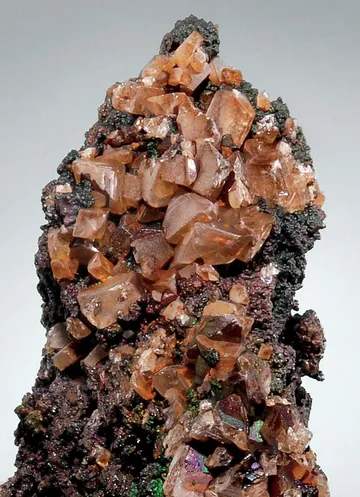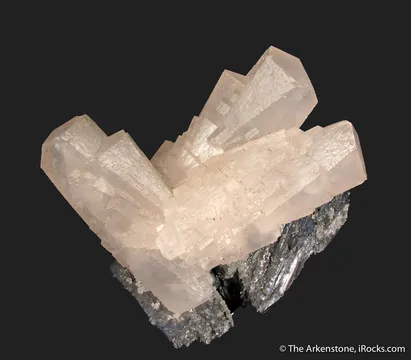
A collector's guide to Wanlockhead, UK: its geology, mining history and notable minerals, illustrated with the 24 specimens documented from this locality on EarthWonders.
Key facts
Wanlockhead sits high in the Lowther Hills of Dumfries and Galloway, immediately south of Leadhills, in the classic Leadhills–Wanlockhead lead-zinc-silver field: Scotland’s pre-eminent vein-mining district and one of the great British localities for complex supergene lead mineralogy. To collectors, the name means much more than a mining village. It means pyromorphite in yellow-green, olive and orange tones; pale to glassy cerussite; blue and blue-green copper-lead sulphates and sulphate-carbonates; baryte, quartz and carbonate gangue; and a long list of rare species produced by unusually deep oxidation of galena-, sphalerite-, chalcopyrite- and pyrite-bearing veins.
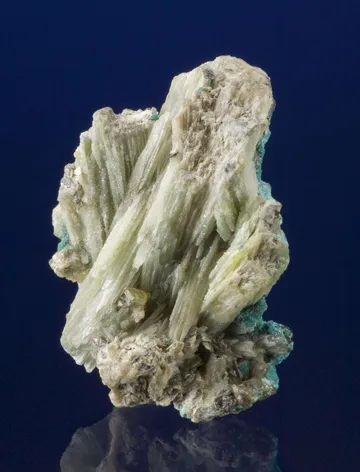
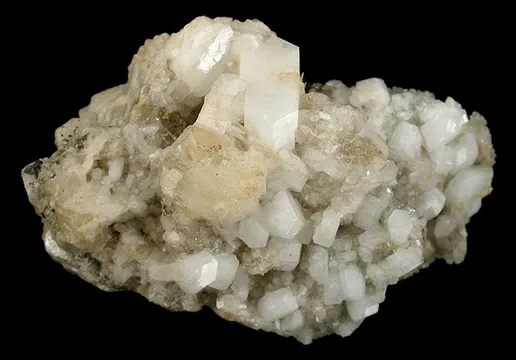
The setting is a fractured Lower Palaeozoic greywacke, shale and chert terrain in which Carboniferous hydrothermal fluids filled faults and breccia zones with quartz, dolomite, calcite, baryte and sulphides. Later oxidation penetrated far down the veins, converting primary ore into the secondary suite that made the district famous. Wanlockhead’s most important specimen ground is centered on the New Glencrieff workings and their associated veins, with Whytes Cleuch, Old Glencrieff, Belton Grain and the Cove–Straitstep ground adding further variety. Good specimens are typically small, but visually refined: lustrous hexagonal pyromorphite in cavities, white to pale green phosphohedyphane and related lead-apatite material, pearly or tabular leadhillite-group minerals, turquoise to deep-blue caledonite and linarite, and sparkling microcrystalline associations on quartz or altered veinstone.
Regional View
Country View
Wanlockhead is inseparable from the history of Scottish mining. The wider field has documentary roots in medieval mining, became an important source of alluvial gold in the sixteenth century, and developed into a major lead-zinc producer from the seventeenth century onward. The mines at Wanlockhead were historically worked separately from those at Leadhills because the mineral rights belonged to different estates: Buccleuch on the Wanlockhead side, Hopetoun on the Leadhills side. This administrative boundary is one reason older labels can be surprisingly ambiguous, with “Leadhills,” “Wanlockhead,” “Glencrieff,” and “Whyte’s Cleuch” sometimes used in ways that demand careful interpretation.

Photo: Wikimedia Commons / Harry Bond
The best Wanlockhead material rewards magnification. Many of the most desirable specimens are not cabinet-size showpieces but thumbnail and miniature plates whose interest lies in layered paragenesis: pyromorphite partly replacing galena, cerussite after earlier lead phases, hemimorphite lining old cavities, or mixed lead-apatite crusts whose true identity can only be resolved analytically. For the specialist, that is precisely the attraction. Wanlockhead is a locality where field history, label history and mineral chemistry all matter.
Search for specimens: View all specimens from Wanlockhead, UK
Wanlockhead is the Dumfries and Galloway half of the Leadhills–Wanlockhead mining district, a fault-controlled lead-zinc-silver vein field developed in the Southern Uplands. The host rocks are mainly Ordovician greywackes, shales and cherts, strongly faulted and shattered. The mineralized veins occupy fissures, breccia zones and fault structures, commonly with greywacke fragments cemented by dolomite, calcite, quartz and locally baryte. The principal sulphides were galena and sphalerite, accompanied by pyrite, chalcopyrite and, in smaller amounts, minerals such as jamesonite and nickeline.
The district contains more than seventy known veins, but Wanlockhead’s most significant mine for both production and specimens was New Glencrieff. The New Glencrieff Vein and its west branch, also called West Grove, were worked to exceptional depths for the district. Early twentieth-century descriptions record workings down to the 240-fathom level on the slope of the vein, with the shaft reaching about 1,320 feet below the shaft head. The ore distribution was strongly zoned in places: galena-rich upper levels at the south end, abundant hemimorphite around the 80-fathom level, sphalerite becoming more important downward, and sections where the vein became almost entirely blende at deeper levels. This vertical and lateral zoning helps explain why Wanlockhead specimens range from primary ore and gangue minerals to richly varied oxidized assemblages.
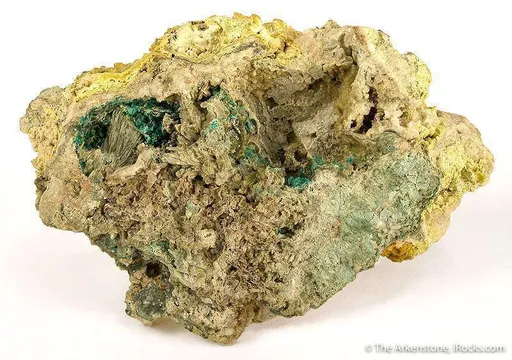
The principal Wanlockhead veins and workings include New Glencrieff, Old Glencrieff, West Grove, Straitstep or Whytes Cleuch, Bay, Cove, New Cove, Lochnell, Belton Grain, New Vein, Crawfurd’s, Goldscaur and related branches. Some were substantial producers; others were trials, shallow workings, or veins known more from old dumps than from accessible underground exposure. Whytes Cleuch is especially important to collectors because its dumps yielded many of the pale green to grey-green lead-apatite-supergroup materials now understood to include phosphohedyphane, together with pyromorphite, mottramite, vanadinite and rarer secondary species.
Mining at Wanlockhead has a long and uneven history. Documentary sources place major industrial activity in the late seventeenth century, with Sir James Stansfield and associates leasing ground in 1675. The mines passed through periods of speculative development, abandonment, revival and estate management. By the nineteenth century the Duke of Buccleuch had taken a direct role in the Wanlockhead mines, and the Meadowfoot smelter was established down the valley to move noxious smelting operations away from the village. The Wanlockhead Lead Mining Company later modernised the New Glencrieff operation, but low lead prices and postwar economic pressures brought regular production to an end in the early twentieth century. Brief revival and dump treatment followed, but the mining landscape today is historical rather than industrial.
The broader Leadhills–Wanlockhead district produced roughly 400,000 tonnes of metallic lead, about 10,000 tonnes of zinc and about 25 tonnes of silver between 1700 and 1958. It also yielded alluvial gold, historically important in the sixteenth century and still a prominent part of the district’s public identity. For specimen collectors, however, the more important “production” was mineralogical: the oxidized zones of the lodes and the mine dumps provided centuries of material for scientists, museums and private collections.
Collecting access today must be approached conservatively. Wanlockhead and its surrounding mining remains are protected as part of an industrial heritage landscape, and the area includes Sites of Special Scientific Interest and scheduled ancient-monument ground. Permission is required from the landowner and relevant heritage authorities to enter workings or dig for mineral specimens. Old adits and shafts should not be entered: many are unstable, flooded, oxygen-poor or otherwise hazardous. The Museum of Lead Mining at Wanlockhead is the proper starting point for visitors, offering the public Lochnell Mine tour, museum displays, gold-panning arrangements and context for the mining remains. Surface study of the landscape is rewarding, but collecting is not a casual turn-up-and-dig activity.
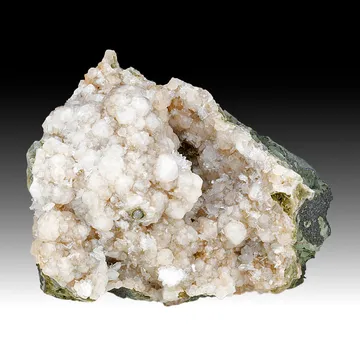
Notable specimen finds at Wanlockhead include hemimorphite from New Glencrieff, reported as fine crystals lining cavities and particularly abundant at the south end of the 100-fathom level, where it occurred with cerussite, pyromorphite, sphalerite and galena. Early accounts also describe radiating witherite from a cavity in the west branch of New Glencrieff at the 200-fathom level, secondary baryte replacement textures, and many pseudomorphs involving galena, anglesite, cerussite, calcite, quartz, pyromorphite, leadhillite and baryte. These details matter to collectors because Wanlockhead specimens often record a complex sequence rather than a single crystallization event.
Wanlockhead is best known for supergene lead mineralogy, particularly the pyromorphite–phosphohedyphane–vanadinite–mottramite problem that has occupied collectors and researchers for generations. Traditional labels often relied on appearance: bright, blocky, green to yellow crystals were called pyromorphite; pale green, massive or crustose material was called calcian pyromorphite or sometimes apatite; brown botryoidal material was called vanadinite or mottramite depending on habit and chemistry. Modern work has shown that this visual system is useful but not dependable. Many Wanlockhead lead-apatite specimens are chemically zoned or are intimate intergrowths of pyromorphite, phosphohedyphane, vanadinite and mottramite. A specimen that looks homogeneous under a hand lens may be several species under the probe.
Pyromorphite remains the collector’s signature species from Wanlockhead. It occurs in small cavities, replacements and crusts, commonly associated with galena, cerussite, quartz and other oxidized lead minerals. Good crystals may be green, yellow, orange or olive, usually small but sharp. The locality is also historically important for calcium- and vanadium-bearing pyromorphite-like material, including the discredited “collieite,” once proposed for black botryoidal material from Wanlockhead. Re-examination of original and related material showed that “collieite” was not a valid homogeneous species but an intergrowth dominated by lead-rich phosphohedyphane with mottramite and vanadinite components. This makes Wanlockhead a textbook locality for the difference between a specimen name, a visual label and a valid mineral species.
Phosphohedyphane is now a key Wanlockhead mineral. It is particularly associated with Whytes Cleuch, where pale grey-green to lime-green massive, crustose and botryoidal material has been shown by powder X-ray diffraction and energy-dispersive X-ray analysis to be phosphohedyphane rather than apatite, smithsonite, or simple calcian pyromorphite. Because phosphohedyphane was only approved as a species in the twenty-first century, older Wanlockhead specimens in museum and private collections may still carry obsolete or misleading names. Confirmed phosphohedyphane from Wanlockhead is therefore both a locality specimen and a cautionary object lesson in the re-evaluation of historic collections.
Cerussite and anglesite are widespread products of galena oxidation. Cerussite from Wanlockhead is commonly white, colourless or pale, occurring as blades, crystals and replacements in cavities. Anglesite is part of the same oxidized lead suite and can occur with leadhillite-group minerals, caledonite, linarite, quartz and galena. These are not merely accessory species: they are part of the chemical pathway that generated the more exotic sulphate-carbonate and sulphate minerals.
The blue to blue-green minerals are among Wanlockhead’s most attractive cabinet and micro specimens. Caledonite, Pb5Cu2(SO4)3(CO3)(OH)6, is one of the district’s classic type-locality minerals and occurs as small blue-green crystals, commonly in association with other oxidized lead-copper species. Linarite, PbCu(SO4)(OH)2, supplies deeper blue tones, while brochantite, langite, wroewolfeite, serpierite and related copper sulphates are part of the broader secondary assemblage. Malachite and chrysocolla provide green coatings and replacements where copper was available from chalcopyrite alteration.
Leadhillite, Pb4(CO3)2(SO4)(OH)2, and susannite, Pb4(CO3)2(SO4)(OH)2, are the famous trimorph-related lead sulphate-carbonates of the district, with macphersonite completing the trio as Pb4(SO4)(CO3)2(OH)2 in a different crystal system. Although the type occurrences of leadhillite and susannite lie on the Leadhills side of the field, the Wanlockhead district is part of the same mineralogical province and specimens labelled from Wanlockhead may include leadhillite-group material from its veins and dumps. These species are important not only for their rarity but for their place in early nineteenth-century mineralogy, when Scottish lead minerals were helping define new chemical and crystallographic categories.
Lanarkite, Pb2(SO4)O, another classic Scottish lead mineral, occurs in the broader district and is part of the suite that makes old Leadhills–Wanlockhead labels so desirable. Scotlandite, PbSO3, the first naturally occurring sulphite mineral, was described from the Leadhills district, and the district has also yielded modern type minerals including chenite, macphersonite and mattheddleite. The wider Leadhills–Wanlockhead mining district is credited as type locality for ten valid minerals: caledonite, chenite, lanarkite, leadhillite, macphersonite, mattheddleite, plattnerite, plumbonacrite, scotlandite and susannite. Not every one of these is strictly from the village of Wanlockhead itself, but they define the mineralogical stature of the field in which Wanlockhead is one of the principal collecting areas.
Hemimorphite is one of Wanlockhead’s better-documented zinc secondary minerals. At New Glencrieff it was historically abundant in parts of the oxidized zone, occurring as fine crystals lining cavities and associated with cerussite, pyromorphite, sphalerite and galena. Smithsonite, hydrozincite and related zinc carbonates may appear on older labels, though some historical “calamine” terminology must be interpreted carefully because nineteenth-century usage was not always species-specific.
Baryte and witherite deserve special attention. Baryte is a common gangue mineral, sometimes forming attractive cockscomb habits, and early geological descriptions discuss alteration and replacement of baryte by calcite, pyrite, quartz, chrysocolla and pyromorphite. Witherite from New Glencrieff was historically noteworthy as an authentic Scottish occurrence, described as radiating semiglobular masses secondary after baryte. For collectors, these barium minerals are less flashy than pyromorphite or caledonite, but they help decode the paragenesis of the veins.
The Wanlockhead list also includes rarer primary and secondary species such as nickeline, erythrite, descloizite, vanadinite, mottramite, wulfenite, stolzite, rammelsbergite, pentlandite and ferrisurite. Some of these are sparse, highly localized, or mainly of micromount interest. Meadowfoot smelter slag is a separate but important artificial-supergene environment in the district, producing small crystals formed by weathering of smelting residues. Specimens from slag localities should be labelled clearly as such, because their origin, significance and market value differ from minerals formed in the natural vein system.
Wanlockhead specimens demand label scrutiny. The single most important authenticity issue is not widespread fakery but historical and analytical misidentification. Older “calcian pyromorphite,” “apatite,” “smithsonite,” “vanadinite,” “mimetite” and “collieite” labels may conceal phosphohedyphane, mottramite-rich material, zoned pyromorphite-phosphohedyphane, or mixed lead-apatite aggregates. A visually attractive green or grey-green crust from Whytes Cleuch or New Glencrieff should not automatically be accepted as pyromorphite without context. For important specimens, analytical confirmation by PXRD, Raman, SEM-EDS or electron-microprobe work is desirable.
“Collieite” is not a valid species and should be treated as a historical name only. If the word appears on an old label, preserve the label, but do not sell or catalogue the specimen as a valid mineral species. The same caution applies to “calamine,” which may refer to hemimorphite, smithsonite or mixed zinc alteration material depending on period and author. “Blende” on older Wanlockhead labels is sphalerite.
Locality precision is another major concern. “Leadhills” and “Wanlockhead” were historically adjacent but separately owned mining grounds, and older collections sometimes use district names loosely. A specimen labelled simply “Leadhills” may not be Wanlockhead; a “Wanlockhead” specimen might need to be narrowed to New Glencrieff, Whytes Cleuch, Bay, Straitstep, Cove, Belton Grain, Meadowfoot or another sublocality if the original data allow it. Conversely, some specimens from the wider field should not be over-assigned to a specific mine unless the label, collection history or mineral association supports it.
Condition is often the limiting factor. Many Wanlockhead specimens are small, vuggy and friable; thin cerussite blades, caledonite sprays, linarite crystals, leadhillite-group plates and crustose phosphohedyphane can be damaged by careless handling or aggressive cleaning. Avoid acids on mixed secondary lead assemblages, and be cautious with water: old clay-rich veinstone and soft alteration crusts can undercut or shed crystals. Mechanical trimming should be minimal, especially on historic specimens with old labels.
Lead-bearing specimens should be handled with ordinary toxic-mineral precautions. Do not grind, saw or abrade them without proper protection; wash hands after handling; keep them away from children and food preparation areas; and store crumbly material in a box or membrane case so dust and detached fragments do not migrate. This is especially relevant for old dump specimens containing mixtures of galena, cerussite, anglesite, pyromorphite, phosphohedyphane, leadhillite-group minerals and alteration products.
Market availability is steady but selective. Wanlockhead pyromorphite, cerussite and mixed secondary lead specimens appear periodically in British collections and dealer stock, especially as thumbnails, micromounts and small miniatures. Fine, old, well-labelled material from New Glencrieff or Whytes Cleuch is much scarcer than casual listings suggest. Analytical labels, ex-museum or old British collection provenance, and precise sublocality data add real value. The most desirable pieces combine good aesthetics with mineralogical specificity: for example confirmed phosphohedyphane from Whytes Cleuch, sharp pyromorphite on quartz from New Glencrieff, blue caledonite or linarite associations, or old specimens documenting classic paragenetic replacements.
Wanlockhead’s story begins with a landscape that seems almost designed to hide wealth. The village lies high on the bleak Lowther moors, a place of winter roads, wet ground and treeless slopes. Yet the ground beneath it became known as “God’s Treasure House in Scotland,” a phrase that fits the district’s double identity: gold in the burns and lead in the veins. The stream gravels drew early attention, and the chase for gold dominated sixteenth-century activity. The alluvial gold was not merely a curiosity. Gold from the Leadhills–Wanlockhead district was important enough to be associated with Scottish coinage and regalia, including the Crown of Scotland.
The beginning of industrial Wanlockhead has the feel of a hard commercial gamble. In 1675 William Blackett examined the old workings and judged that they could be reopened. Sir James Stansfield, an Edinburgh merchant, formed a company with Blackett and other partners and leased the upper Wanlock valley from the Duke of Queensberry for 1,000 Scots merks, roughly £55 sterling. A smelt mill was built in 1682, but production disappointed. From June 1682 to October 1683 the partners exported 5,829 stones Amsterdam of dressed ore, about 50 tonnes, rather than smelting much lead locally. By 1684 they had stopped. The venture had cost about £4,000, a striking sum for an enterprise that yielded “but little return.”
New Glencrieff later became the great Wanlockhead mine. Its history reads like a sequence of rediscoveries: an early discovery between 1710 and 1721, rich ground opened during the driving of the Glenglass adit around 1740, abandonment when profit failed, and nineteenth-century revival when J. Stewart reopened the mine between 1842 and 1850. The south-end ore shoot of New Glencrieff was eventually described as one of the richest in Scotland. The geometry is memorable: a main shoot extending practically from surface to the 200-fathom level, with a pitch length of about 1,600 feet and a breadth of about 1,200 feet. By the time geologists described it in the early twentieth century, enough ore had been removed that the walls of the vein were creeping together.
The old geological descriptions of New Glencrieff are wonderfully physical. The vein was “strong, cavernous, and well-defined,” but troublesome, shifting laterally on small faults and becoming difficult to follow. At one point the north end of the 160-fathom level drifted off course; the miners crosscut 21 fathoms east, found the vein again, and eventually cut a 50-fathom shoot valued at 12 tons to the fathom. Elsewhere, the 120-fathom level ran half a mile through a strong open vein without touching ore. These were not neat textbook lodes. They were living, wet, broken structures, with ore appearing and vanishing according to faulting, water movement and chemistry.
The mineralogical stories are just as vivid as the mining ones. At the south end of the New Glencrieff 100-fathom level, hemimorphite was so plentiful that it occurred in cavity linings and masses up to three feet thick, associated with cerussite, pyromorphite, blende and galena. In the west branch at the 200-fathom level, a cavity yielded radiating semiglobular witherite after baryte, notable as authentic Scottish witherite. In the oxidized zone, galena was being dissolved into cavernous masses like weathered limestone; in other pockets, bright secondary galena crystals lined cavities or grew on broken sphalerite. The same mine water could dissolve galena in one place, deposit calcite in another, and precipitate galena elsewhere. Wanlockhead’s best specimens are the mineral record of that restless chemistry.
Robert Burns left one of the district’s best human episodes. During the icy winter of 1789, travelling in his role as an exciseman, Burns came through Wanlockhead with his horse slipping badly on the road. He asked the village blacksmith to “frost” the horse’s shoes by fitting sharper, spiked shoes for better grip. The blacksmith was busy, so Burns waited nearby and wrote “Pegasus at Wanlockhead,” Pegasus being the name of his horse. The poem was his payment. A few years later, in January 1792, Burns visited the lead mines with Maria Riddell. They went underground, but the dark, wet, cramped mine air proved too much for him and the party turned back. It is a rare account because Burns himself did not record the visit; Maria preserved the detail in a letter.
The village also built an intellectual life around the mines. Wanlockhead Miners’ Library, founded in 1756, became one of the earliest miners’ libraries in Britain. Its rules were serious, its membership a privilege, and new members could be questioned before admission. The library’s surviving stories are strikingly progressive for a remote mining village: in 1784 it recorded 32 male members and one female member, Isabella Rutherford, while the Leadhills library did not admit women until 1881. A membership certificate issued to William Meikle on 7 January 1829 survives as a reminder that these miners were not simply labourers in a bleak upland; they were readers, subscribers and self-educators.
The modern museum has its own origin story. In 1974 Geoff Downs-Rose and Bill Harvey formed the Wanlockhead Museum Trust with the aim of bringing the culture and history of the mining community back to life. Glasgow University students helped mount temporary exhibitions in the Miners’ Library during the 1970s, villagers donated objects and volunteered, and the project grew from Goldscaur Cottage into the present visitor centre, built in the early 1990s around the old smithy. The museum’s collection was later recognised as nationally important, an appropriate fate for a village whose small mineral specimens and hard-won mining records continue to matter far beyond the Lowther Hills.
Mindat: Wanlockhead, Dumfries and Galloway, Scotland, UK — The main modern online locality index for Wanlockhead, with sublocalities, photographs, commodities and mineral list.
Mindat: Leadhills–Wanlockhead Mining District, Scotland, UK — District-level page recording the broader mineral assemblage and type-locality status of the field.
British Geological Survey / Earthwise: “Metalliferous and associated minerals resources, Southern Uplands” — Concise geological summary of the Leadhills–Wanlockhead veins, production figures, host rocks, vein orientations and mineralization.
British Geological Survey / Earthwise: “Lead and zinc ores of Scotland Area I. The Leadhills–Wanlockhead district” — Digitised early Geological Survey account with detailed mine descriptions, vein data, ore treatment and paragenetic observations for New Glencrieff and other Wanlockhead veins.
Floyd, J. D. 2003. “Leadhills district: Sheet 15E.” British Geological Survey Sheet Explanation — BGS sheet explanation summarising district geology, mineral veins, production totals and groundwater issues.
Borthwick, C. W. “Leadhills and Wanlockhead,” in Scottish Borders Geology: An Excursion Guide — Field-excursion treatment of the geology, mineralized structures, mine dumps, Meadowfoot smelter slag and access cautions.
Green, D. I. and Tindle, A. G. 2022. “Lead-bearing apatite-supergroup minerals from Leadhills–Wanlockhead, southern Scotland.” Journal of the Russell Society, 25, 80–88 — Modern analytical study of pyromorphite, phosphohedyphane and vanadinite chemistry in the district.
Cotterell, T. F., Green, D. I. and Rumsey, M. S. 2022. “A re-examination of ‘collieite’ from Wanlockhead, Dumfries and Galloway.” Journal of the Russell Society, 25, 101–106 — Essential paper showing that “collieite” is not a valid homogeneous mineral but a mixture involving phosphohedyphane, mottramite and vanadinite.
Cotterell, T. F. and Skotnicki, P. 2022. “Phosphohedyphane from Wanlockhead: a common but widely misidentified species.” Journal of the Russell Society, 25, 107–113 — Key paper for re-identifying pale green Wanlockhead material formerly labelled apatite, pyromorphite or smithsonite.
Stone, P. 2021. “Archives in lockdown: The curious case of the BGS ‘Wilson Collection’.” Scottish Journal of Geology offprint — Account of the Wilson Collection, including Wanlockhead run-of-mine and exploration samples from Glencrieff, Straitstep, Bay, Cove, Belton Grain and other veins.
National Museums Scotland: “A short history of the mineral leadhillite” — Accessible but well-grounded discussion of leadhillite, early mineralogy and the historical importance of the Leadhills–Wanlockhead district.
Mindat: Scotlandite — Mineral species page documenting scotlandite, PbSO3, from the Leadhills district and its status as the first naturally occurring sulphite.
Mindat: Mattheddleite — Species page for mattheddleite, one of the modern rare minerals associated with the Leadhills–Wanlockhead field.
Mindat: Susannite — Species page for susannite, its type locality, conservation of type material and common associations.
“Gold panning in Scotland Wanlockhead” — Mike Anderson — Field-style gold-panning video from the Wanlockhead area, useful for seeing modern recreational alluvial-gold interest in context.
“Gold Panning at the Museum of Lead Mining at Wanlockhead” — A Scottish Odyssey — Visitor-focused video showing the museum, the village setting and gold-panning activity.
Museum of Lead Mining: Video Archive — Museum-hosted archive of talks and readings on Wanlockhead mining heritage, the Miners’ Library and local history.
Museum of Lead Mining, Wanlockhead — The essential visitor resource for the village, Lochnell Mine tour, gold panning, miners’ cottages, library and heritage context.
Museum of Lead Mining: Visit information — Important access and conservation guidance, including the need for permission to enter mine workings or dig for specimens.
Museum of Lead Mining: Visitor Centre — Overview of the museum displays, local minerals, mining equipment and the Robert Burns “Pegasus” story.
Museum of Lead Mining: Miners’ Library — Background on Wanlockhead Miners’ Library, membership history and the social life of the mining village.
Historic Environment Scotland: Wanlockhead Beam Engine — Heritage account of the water-powered beam engine, Straitsteps Mine and Wanlockhead’s mining landscape.
Canmore: Wanlockhead — Archaeological and historical inventory for Wanlockhead’s lead mines, beam engine and mining remains.
Northern Mine Research Society: Leadhills & Wanlockhead Mines — Clear historical overview of mining, ownership, production and operators on both sides of the district.
Scottish Geology Trust Geosites: Leadhills–Wanlockhead — Brief geosite summary emphasizing the district’s geological and mineralogical importance, including rare minerals and access points.
Scottish Geology Trust GeoGuide: Leadhills and Wanlockhead — Detailed excursion guide for the geology, veins, mine dumps and Meadowfoot smelter area.
British Geological Survey / Earthwise: Southern Uplands metalliferous resources — Authoritative regional context for the Southern Uplands lead-zinc-copper mineralization.
British Geological Survey / Earthwise: Leadhills–Wanlockhead lead and zinc ores — Best freely available historical-geological account of the veins, workings and mineral paragenesis.
Mindat: New Glencrieff Mine, Wanlockhead — Focused locality page for the principal Wanlockhead mine, with specimen photographs and species entries.
Mindat: Whytes Cleuch, Wanlockhead — Start from the Wanlockhead page to navigate to Whytes Cleuch and related sublocalities important for phosphohedyphane, pyromorphite and other secondary species.
The Digital Ark: Wanlockhead mine — Useful historical note on seventeenth-century Wanlockhead mining, early leases and production.
National Lottery Heritage Fund: “Lead turns Gold! The Museum of Lead Mining is 50” — Recent heritage overview of the museum’s anniversary project and the continuing preservation of Wanlockhead’s mining story.