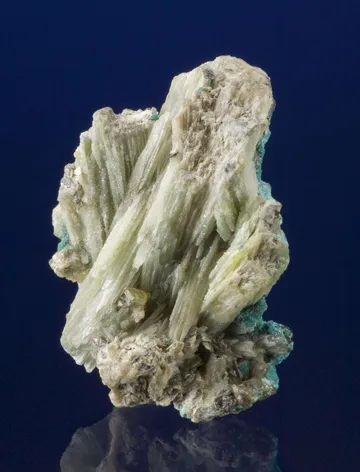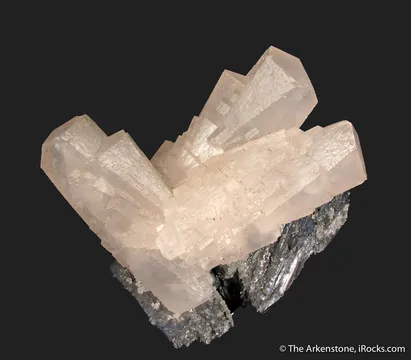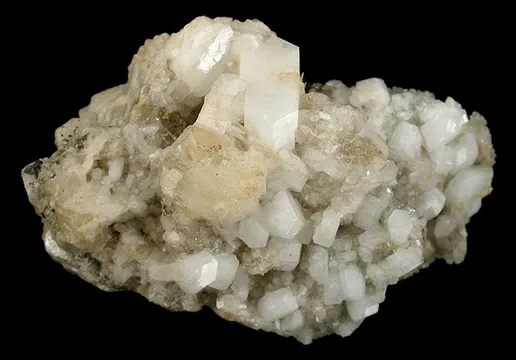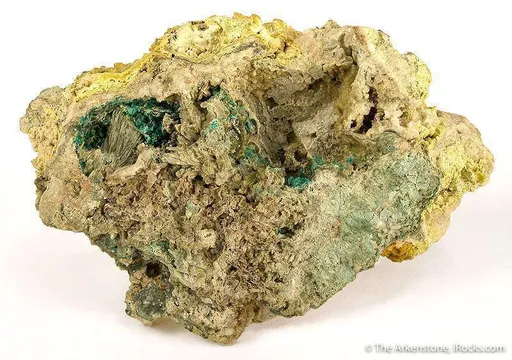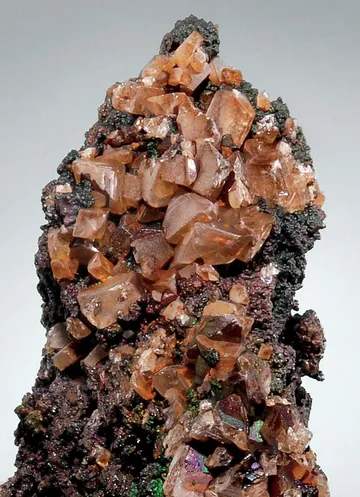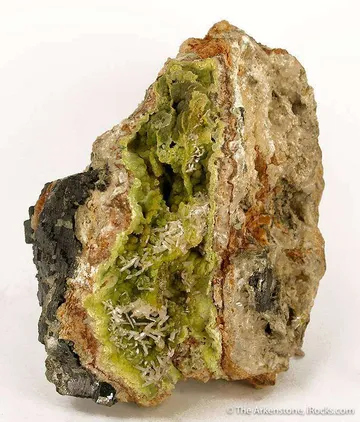
Scotland, UK — classic zeolite localities yielding analcime, stilbite, prehnite and more; prized for historic labels, type localities, and collecting pedigree.
Key facts
Scotland is not a single mineral district so much as a compact mineralogical atlas: volcanic zeolite fields, ancient hydrothermal lead-zinc veins, granite-hosted gem quartz, Highland baryte and lead mines, coastal agate grounds, and a modern gold-silver quartz-vein mine all sit within one national boundary. For collectors, its strongest identity is still the classic Scottish zeolite suite—analcime, stilbite, prehnite, calcite, quartz, thomsonite, chabazite, heulandite, natrolite, laumontite, harmotome and related species—from amygdaloidal basalt and basaltic-andesite lavas of the Midland Valley around Glasgow, the Kilpatrick Hills, the Campsie Fells and Renfrewshire, and from the Paleogene lavas of Skye and the Hebrides. These are not usually great glittering cabinet monsters in the Indian Deccan style; the best Scottish pieces are old, sharply localized, geologically literate specimens—white to pink analcime trapezohedra, brick-red stilbite, pale green prehnite, little pockets of calcite and quartz, or historically resonant barium and strontium zeolites with labels that carry Victorian collecting history.
Regional View
Country View
Scotland’s deeper historical weight comes from type localities. Strontian gave its name to strontianite and ultimately to the element strontium; Bishopton tunnel is the type locality of greenockite; the Kilpatrick Hills are fundamental ground for edingtonite and Scottish zeolite collecting; and Leadhills–Wanlockhead produced a remarkable family of lead-bearing secondary minerals, including several species first described from the district. The country’s best specimens therefore have two kinds of value: visual quality and documentary pedigree. A modest miniature of old-time Scottish strontianite, a small but well-labelled Leadhills leadhillite association, or a clean Kilpatrick zeolite can be far more interesting than a larger but anonymous specimen from a more prolific modern source.
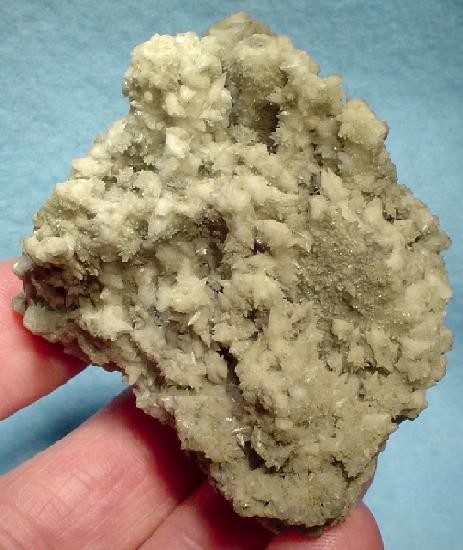
Photo: Wikimedia Commons
The look of classic Scottish material is often restrained and unmistakably old-world. Zeolites sit in weathered basalt vesicles, commonly with subdued white, cream, salmon, pink, pale green or brick-red tones. Strontian specimens tend toward pale grey, white, yellowish or greenish fibrous and radiating carbonate. Leadhills material is usually small, delicate and chemically complex: pearly leadhillite plates, blue caledonite and linarite, white cerussite, greenish pyromorphite, and rare microcrystalline species that reward magnification. The great Scottish collector Matthew Forster Heddle recognized this breadth better than anyone, treating Scotland not as a handful of isolated mines but as “one magnificent mineralogical specimen”—a phrase that still feels accurate when a drawer of Scottish labels runs from Skye zeolites to Cairngorm quartz to Leadhills supergene rarities.
Search for specimens: View all specimens from Scotland, UK
For specimen collectors, the most important Scottish “deposit type” is the amygdaloidal volcanic cavity environment. In the Carboniferous lavas of the Midland Valley, especially the hills around Glasgow, hydrothermal and late-stage low-temperature fluids moved through basaltic rocks after eruption and cooling, depositing zeolites and associated silicates in vesicles, joints and small cavities. The Kilpatrick Hills, Old Kilpatrick, Bowling, Dumbarton Muir, Campsie Fells, Gleniffer, Fereneze, Kilmalcolm and related Renfrewshire and Stirlingshire localities supplied much of the classic Scottish analcime-stilbite-prehnite material. These cavities are usually small and irregular; the best specimens depend less on sheer size than on sharp crystal habit, contrast against basalt, and intact association.
The Isle of Skye and the Hebridean volcanic province add a younger and broader zeolite setting. Paleogene basalt lava piles, breccias and related volcanic rocks host chabazite, analcime, stilbite, heulandite, thomsonite, mesolite, scolecite, gyrolite, apophyllite, prehnite, calcite and quartz at coastal and cliff localities. The Storr area is especially significant geologically because zeolite mineralisation is developed through a thick exposed basalt sequence, and later contact effects from intrusive rocks locally converted earlier cavity assemblages into prehnite-, epidote-, garnet- and scolecite-bearing associations. In the field these are cliff, shore and quarry environments, and specimens tend to be limited by access, weathering, safety and conservation constraints.
Scotland’s hydrothermal vein deposits form a second great collector tradition. The Leadhills–Wanlockhead district in the Lowther Hills is the country’s largest and historically most productive lead-zinc field. The veins cut Ordovician greywackes, mudstones, shales and cherts, with mineralisation controlled by faulting, fracture zones and impermeable structural traps. Primary ores include galena, sphalerite, chalcopyrite and pyrite, with gangue minerals such as baryte, calcite, quartz and ankerite. The real collector fame, however, lies in the oxidized zones and mine dumps: leadhillite, lanarkite, susannite, caledonite, linarite, pyromorphite, cerussite, anglesite, smithsonite, hemimorphite, malachite, azurite and numerous rare lead, copper and zinc species occur as small crystals, crusts and micro-associations.
Mining at Leadhills and Wanlockhead can be documented back to the medieval period, with a 1293 charter to the monks of Newbattle Abbey, later large-scale expansion, and more than four centuries of lead-zinc mining before final decline in the twentieth century. Historical accounts describe about 70 veins worked in a small area, while later summaries record hundreds of thousands of tonnes of lead concentrate and important silver and zinc by-products. The villages themselves sit high in exposed moorland; Wanlockhead is Scotland’s highest village, and collectors should treat the district as mountain terrain as much as mine country.
Strontian, in Argyll, is Scotland’s most famous mineral name in the chemical sense. Lead veins discovered in 1722 north of Loch Sunart led to a mining settlement and, eventually, to recognition of strontianite. The mines are set in the geological contact environment of Moine country rocks and the Strontian Granite, with lead, baryte and carbonate-zeolite mineralisation. For collectors, Strontian is notable not only for strontianite but for superb Scottish harmotome and brewsterite-Sr, commonly associated with baryte and calcite. Later industrial baryte working in the twentieth century renewed attention to the old mine ground, but classic specimens generally come from old workings and historic collections rather than casual modern collecting.
Cononish, near Tyndrum, represents modern Scottish metalliferous mining. It is a gold-silver deposit in a sulphide-bearing quartz vein, with pyrite, chalcopyrite, sphalerite and galena in the mineralised system. Underground exploration began in the late twentieth century, Scotgold developed the mine in the early twenty-first century, and after a period of care and maintenance and corporate difficulty, Acrux Gold became the current name associated with renewed production. Cononish is important as geology and mining history, not as an ordinary collecting locality: it is an operating or controlled mine environment, not a place for specimen collecting.
Cairngorm quartz and Scottish agates round out the collector picture. In the Cairngorm Mountains, late-stage pegmatitic and hydrothermal fluids in granite produced smoky quartz, “cairngorm” quartz, beryl, feldspar and muscovite in veins and miarolitic cavities. Rolled blue topaz crystals have also been found around the Loch Avon drainage. In Ayrshire and parts of eastern Scotland, agates weather from Devonian and Carboniferous volcanic rocks and are recovered from beaches, burns and fields. Burn Anne, Dunure, the Heads of Ayr, Croy Bay and the Stonehaven–Montrose belt are all part of the Scottish lapidary tradition, historically feeding nineteenth-century “Scottish pebble” jewellery as well as modern agate collecting.
Collecting access in Scotland is not a free-for-all. The Scottish right of responsible access does not give permission to remove geological samples, enter quarries, enter building sites, enter working mines, trespass into closed workings, or damage protected sites. Leadhills–Wanlockhead includes protected SSSI ground, unstable spoil heaps, unmarked or closed shafts, and dangerous adits. Quarries and mine dumps require permission from landowners or operators, and old adits should not be entered. The best Scottish specimens on the market are therefore often old-collection pieces with labels from Heddle-era, museum, university, or long-established private collections.
Scottish analcime is the defining white-to-pink zeolite of the old Midland Valley basalt localities, especially the Kilpatrick Hills, Old Kilpatrick, Bowling and the Campsie Fells, with additional attractive occurrences in the Paleogene basalts of Skye. It typically forms trapezohedral crystals in basalt cavities, from small millimetric druses to much larger historic crystals reported from the Campsie district, and it may sit with thomsonite, natrolite, stilbite, calcite, prehnite, chabazite, laumontite or clay. Good Scottish pieces show sharp, complete trapezohedra standing proud in a cavity, preferably with clean contrast against dark basalt or a pleasing association with pink thomsonite or pale prehnite; ordinary pieces are massive, chalky, bruised, or lack a convincing old Scottish sublocality.
Stilbite from Scotland is most collectable when it shows the old “brick-red” or warm cream-to-salmon habits associated with Old Kilpatrick and the Kilpatrick Hills, where it occurs in basalt cavities with analcime, quartz, thomsonite, calcite, heulandite and other zeolites. On Skye and other Hebridean basalt localities, stilbite belongs to the broader lava-cavity suite and may occur as sheaf-like, bladed or bow-tie aggregates rather than large isolated crystals. The best Scottish stilbite specimens have crisp sheaves or bladed sprays with lustre and colour, preferably accompanied by drusy quartz or other zeolites; lesser pieces are dull, powdered, iron-stained, or simply labelled “Scotland” without the precision that serious collectors expect.
Scottish prehnite is a low-temperature hydrothermal and very low-grade metamorphic mineral of the basalt fields, appearing as pale green to whitish crusts, rounded botryoidal coatings, crystalline linings and occasional pseudomorphic or replacement textures in cavities from Old Kilpatrick, Bowling, the Campsie area, Renfrewshire quarries and Skye. It is closely tied to the Scottish zeolite assemblage and may be associated with analcime, stilbite, calcite, thomsonite, natrolite, laumontite and, at Bishopton and nearby Renfrewshire localities, the famous cadmium sulphide greenockite. Fine examples have fresh apple-green colour, undamaged bubbly or crystalline surfaces and a strong basalt-cavity setting; ordinary examples are massive pale crusts with little form, or prehnite detached from the associations that make Scottish material distinctive.
Calcite in Scotland is both a cavity mineral and a vein gangue, so its collector context matters. In basalt cavities of the zeolite districts it occurs with analcime, stilbite, prehnite, heulandite, chabazite and quartz, while at Leadhills–Wanlockhead it is a common gangue mineral with galena, sphalerite, baryte, quartz and later supergene lead minerals, and at Strontian it is a frequent associate of harmotome, baryte and strontianite. Scottish calcite specimens worth saving are those that carry locality character: lustrous small rhombs or scalenohedra in zeolite cavities, calcite supporting harmotome from Strontian, or vein pieces from Leadhills with sulphides or secondary lead species. Plain massive white calcite, even if Scottish, is common and should be held to a high standard of locality precision.
Quartz from Scotland ranges from tiny drusy cavity linings with zeolites to major gem and gangue traditions. Around the Cairngorm granites it produced the smoky brown to nearly black “cairngorm” quartz prized in Scottish jewellery, with crystals derived from late-stage veins and miarolitic cavities; in the Leadhills–Wanlockhead district quartz is a common gangue in lead-zinc veins; in the Kilpatrick basalt localities it appears as drusy quartz associated with stilbite and other zeolites; and in Ayrshire and eastern coastal volcanic belts it grades into chalcedony and agate of lapidary importance. The best quartz specimens from Scotland are sharply provenanced smoky crystals, attractive zeolite-associated druses, or agate/chalcedony pieces with strong colour and pattern; ordinary milky vein quartz is abundant and collectable mainly when it carries ore minerals, rare secondaries, or a meaningful old label.
Other Scottish minerals define the country’s international standing. Strontianite from Strontian is one of the great locality-name minerals and the source of the element name strontium; brewsterite-Sr and harmotome from the same mining district are classic zeolite specimens. Greenockite from Bishopton tunnel is a celebrated cadmium sulphide type-locality mineral, usually encountered as tiny yellow to orange-red pyramidal crystals or coatings, commonly on or in prehnite. Edingtonite from the Kilpatrick Hills is a historically important barium zeolite, while thomsonite-Ca is deeply associated with the same Scottish trap-rock tradition. Leadhills and Wanlockhead add the country’s richest supergene rarity suite, including leadhillite, lanarkite, susannite, caledonite, plattnerite, scotlandite, macphersonite, chenite and mattheddleite, with later additions and re-examinations continuing to keep the district scientifically alive. Beyond these famous districts, Scotland has produced notable smoky quartz, blue topaz, beryl, agate, baryte, galena, sphalerite, pyromorphite, linarite, malachite, azurite, native gold and specialist rarities such as macaulayite and johnsomervilleite.
The first authenticity issue with Scottish specimens is not fakery in the theatrical sense; it is locality looseness. Old labels may say only “Dumbarton,” “Kilpatrick,” “Campsie,” “Dumbarton Muir,” “Bowling,” or “Scotland,” and nineteenth-century writers themselves warned that some Dumbartonshire and Stirlingshire labels were used vaguely, sometimes by dealers who either did not know or did not wish to disclose the exact quarry. A Scottish zeolite with a precise sublocality—Old Kilpatrick, Bowling, Cochno Burn, Campsie Fells, Boyleston Quarry, Moonen Bay, The Storr, or another documented site—is far preferable to one with only a broad regional label.
The second issue is confusion with visually similar foreign material. Modern Indian Deccan zeolites are abundant, attractive and inexpensive; pale stilbite, heulandite, apophyllite, prehnite and calcite pieces from India can be casually relabelled or mistaken as Scottish by non-specialists. Scottish basalt-cavity specimens tend to be smaller, older-looking, more muted in colour and more tightly associated with historic labels, but visual style alone is not proof. For higher-value pieces, provenance, old collection labels, museum-style numbering, dealer history, and comparison with documented Scottish sublocality suites matter.
Greenockite requires special caution. Yellow cadmium sulphide coatings and small crystals can be greenockite, hawleyite, X-ray amorphous cadmium sulphide material, or visually ambiguous mixtures. Historic Bishopton greenockite crystals are small and valuable; confident identification of fine material may require analytical support. Cadmium minerals should also be handled sensibly: do not abrade, lick, soak, grind or ultrasonically clean them, and wash hands after handling.
Leadhills–Wanlockhead specimens are commonly small, friable and chemically delicate. Leadhillite, susannite, lanarkite, caledonite, linarite, cerussite and related lead minerals can be brittle, soft, cleavage-prone or sensitive to rough cleaning. Leadhillite has a known heat-related relationship with susannite, so avoid heat, strong sunlight in enclosed cases, aggressive lighting, acids and ultrasonic cleaning. Because many Leadhills specimens are micro or miniature associations on old dump material, overzealous washing can remove the very species that give the piece value.
Zeolite specimens from Scotland may contain laumontite or other hydrated species that can dehydrate, powder or become chalky if stored too dry or exposed to heat. Prehnite is tougher than many zeolites but can be bruised along rounded surfaces; stilbite sheaves chip easily; analcime generally survives well but loses appeal if the crystal faces are scuffed. Keep Scottish zeolite specimens in stable indoor humidity, away from hot display lights, and avoid repeated wetting and drying.
Market availability is uneven. Common Scottish calcite, quartz, agate and modest zeolite pieces appear regularly, but precise, attractive old zeolites from the classic Glasgow-area trap rocks are not abundant in top condition. Fine Strontian harmotome, good strontianite, authentic Bishopton greenockite, and Leadhills type-mineral associations with old labels are scarcer and increasingly provenance-driven. Serious collectors should be willing to pay for documentation as well as aesthetics; in Scottish mineralogy, the label can be half the specimen.
In the hills above Loch Sunart, the story begins as a lead mine and becomes a chemical element. Galena veins were found in 1722 above what is now Strontian, and the remoteness of the workings helped create the village itself: a place for miners, families, ore dressing and shipment. The prize was lead, not a new element, yet among the mine material was a pale green to brown carbonate that behaved oddly in the laboratory. At the end of the 1780s, Adair Crawford and William Cruikshank tested material from Strontian and concluded that it contained a “new earth.” Friedrich Gabriel Sulzer named the mineral strontianit in 1791, Thomas Charles Hope explored the chemistry at Glasgow, and Humphry Davy finally isolated the element in 1808. A small Highland village had entered the periodic table.
Bishopton’s greenockite story belongs to the railway age. The Glasgow, Paisley and Greenock Railway could not open its Greenock section on schedule because the Bishopton tunnel and nearby rock cuttings were difficult ground. In that hard rock, during the cutting of the tunnel, a tiny yellow cadmium sulphide mineral was brought to light. It was named greenockite after Lord Greenock, later Earl Cathcart. The crystals were never big in the cabinet-mineral sense; one nineteenth-century Glasgow account described good examples as only about one-tenth of an inch across, pyramidal, yellow and highly prized. The same account records that £20 had been paid for good crystals—a startling sum for minute yellow points in prehnite, and a reminder that rarity was already shaping the specimen market in Victorian Scotland.
Leadhills and Wanlockhead tell a different story: not one sudden discovery, but centuries of work in harsh upland ground. A 1293 charter to the monks of Newbattle Abbey anchors the district in medieval mining history. Later, miners chased lead, silver, zinc and alluvial gold through a dense swarm of veins in a small area of the Lowther Hills. By the nineteenth century, collectors and mineralogists were paying close attention to the secondary lead minerals in the dumps and oxidized zones. The district became so famous for specimens that the mining company reportedly had to regulate miners disposing of specimens to collectors. That small detail captures the moment when ore, science and commerce collided: the mine owner saw lead; the miner saw an extra income; the collector saw a blue caledonite blade or pearly leadhillite plate too good to go to the crusher.
Matthew Forster Heddle’s Scottish mineral story is the long walk rather than the single pocket. For roughly half a century he collected, analysed, drew and documented Scottish minerals from nearly every known locality he could reach. His great book, The Mineralogy of Scotland, was not completed during his lifetime; failing health forced him to hand over the manuscript and crystal drawings with the wish that they be published. They finally appeared in 1901 under the editorship of J. G. Goodchild. The result remains one of the indispensable locality works in British mineralogy: part chemical record, part field notebook, part national portrait.