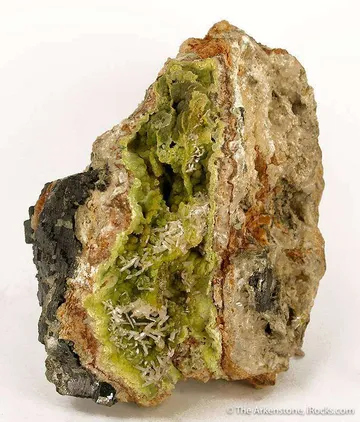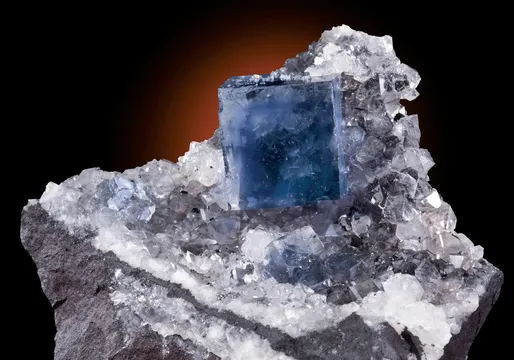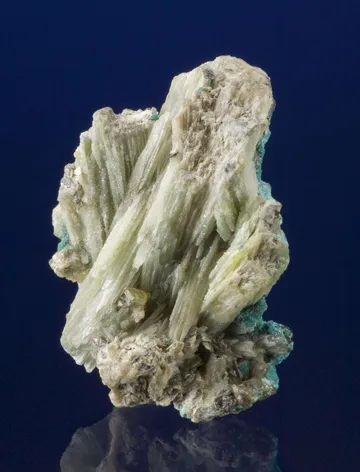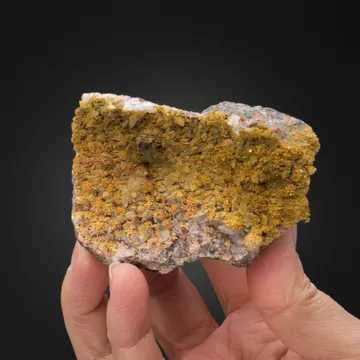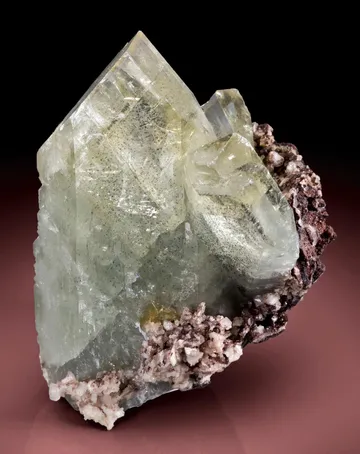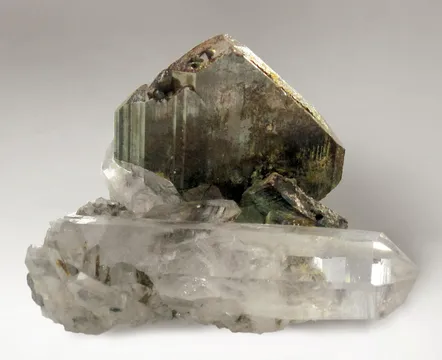
Mona Mine, UK - a classic Anglesey locality in Parys Mountain, the type locality for anglesite, renowned gossan specimens with glassy crystals and provenance.
Key facts
Mona mine occupies the eastern part of the Parys Mountain copper-mining field above Amlwch, on Anglesey, where a low, wind-scoured ridge exposes one of Britain’s classic volcanic-hosted massive sulphide deposits. For collectors, its importance is out of all proportion to its modest topographic height. This is the ground that made Anglesey a mineral name: the Parys Mountain mines are the type locality for anglesite, PbSO4, and the best surviving Mona/Parys examples are old, richly patinated specimens from the eighteenth-century gossan, with glassy white, colourless, honey-yellow, or brownish-yellow crystals sparkling on iron-stained cellular matrix.
The setting is part industrial monument, part supergene laboratory. Primary Cu-Pb-Zn sulphides formed in a Lower Palaeozoic submarine volcanic environment, with pyrite, chalcopyrite, sphalerite and galena later exposed to intense oxidation. The result was a spectacular gossan cap, once mined away for copper ore, ochres and associated products, and a suite of secondary sulphates and oxides that remain unusually instructive even where they are not cabinet-specimen material. Mona’s specimens are therefore judged less by size alone than by historical integrity: true old gossan pieces, with convincing provenance and undamaged, sharp anglesite crystals, have a status that modern surface finds rarely approach.
Regional View
Country View
Historically the mountain was worked as two neighbouring concerns: Mona mine to the east and Parys mine to the west, with Morfa Du at the western end of the field. The names are often bundled in old labels, dealer catalogues and museum records as “Parys Mountain,” “Parys and Mona,” or “Parys Mountain Mines,” so serious collectors should read a Mona label in its full district context rather than expecting a sharply isolated modern collecting site. The best-known Mona material is not the massive copper ore that paid the wages, but the oxidation-zone lead sulphate saved when the gossan was still being removed.

Photo: Rob Lavinsky, iRocks.com / Wikimedia Commons
Search for specimens: View all specimens from Mona mine, UK
Mona mine is part of the Parys Mountain mining district, about two miles south of Amlwch in north-east Anglesey. Geologically it belongs to a Cu-Pb-Zn volcanic-hosted massive sulphide system: massive zinc-lead-copper sulphides occur at and near the contact between Ordovician shales and overlying Lower Silurian rhyolites, with copper-bearing stockwork and lode material in associated shales and volcanic rocks. In older literature the deposit was often discussed as a set of veins or lodes; modern interpretation favours a submarine exhalative, “Kuroko-type” volcanic-related origin, later folded, faulted, altered and partly remobilised.
The primary ore assemblage is dominated by pyrite, chalcopyrite, sphalerite and galena. Miners also encountered the intimate sphalerite-galena-pyrite-chalcopyrite material historically called “bluestone,” but in the eighteenth-century copper economy the lead-zinc component was much less easily treated than copper ore. The old workings followed a series of named ore bodies, the most celebrated being the Great Lode, discovered in 1768, with later important bodies including the North Discovery Lode, Golden Venture Lode, Carreg-y-doll Lode, Charlotte’s Lode and Morfa Du Lode. The gossan above the sulphide mass was the collector’s treasure zone, because acidic oxidation of abundant pyrite attacked lead-bearing ore and allowed anglesite to form in an unusually open, stable environment.
Mona mine was the eastern operation on the mountain. The western side was Parys mine, and disputes over boundaries became part of the history of the field as the mineralized ground proved larger and richer than early land divisions had anticipated. The mining boom transformed Amlwch and the surrounding district: during the late eighteenth century Parys Mountain became Europe’s premier copper producer and, for a period, one of the great copper sources of the world. Ore was carted to Amlwch port and shipped for smelting, particularly to Swansea and Lancashire; copper from the district also became famous in connection with naval sheathing and the “Copper Kingdom” story of Anglesey.
The mining methods changed with time. Early work included shallow shafts and open-cast extraction, while the great opencasts visible today reflect both deliberate quarrying and the collapse or coalescence of underground workings. As easy gossan and near-surface ore were exhausted, deeper underground mining became more important. Cornish mining expertise entered the district in the early nineteenth century, and James Treweek became manager of the Mona mine in 1811. In 1899 the Mona and Parys operations were merged as Mona and Parys Mines Ltd.; by then extractive mining was much diminished, and work centred increasingly on precipitation, ochre and residual products. Underground mining had effectively ceased by the early twentieth century, though copper was still recovered from mine waters by precipitation methods.
The Mona side is especially associated with precipitation pits. Mine water carrying copper in solution was run into brick-lined or purpose-built ponds, scrap iron was added, and copper precipitated as a fine material that could be raked up, dried and sent onward for processing. These features matter to collectors because they speak to the same severe acid-sulphate environment that continues to generate delicate post-mining minerals underground and on spoil. The old Mona yard, once a walled administrative and working compound with assay office, counting office, blacksmith’s shop, stores and mining equipment, survives as part of the industrial archaeological landscape rather than as a collecting ground.
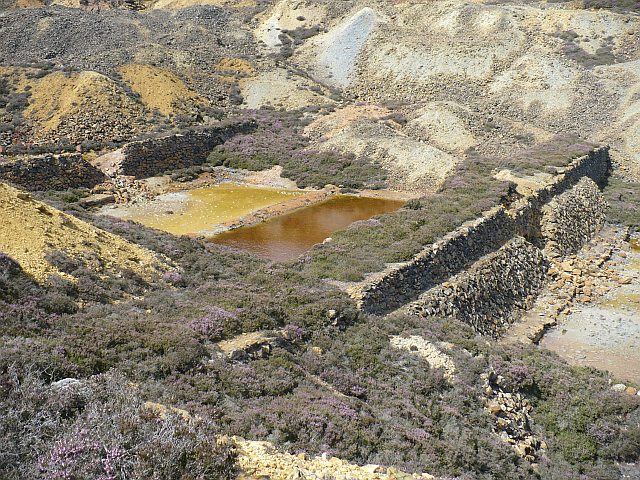
Collectors should regard Mona mine today primarily as a historic locality and provenance, not as an open collecting opportunity. Parys Mountain is a protected industrial and geological landscape with public walking routes, capped shafts, hazardous old workings, unstable ground, acid waters and areas under private ownership or lease. The safe public experience is the mine walk and viewpoints; underground access is not a casual collecting matter and has been carried out only by organised groups with permission. Loose colourful fragments on the surface are tempting, but significant mineral specimens from the classic gossan were mostly recovered during eighteenth- and early nineteenth-century mining, and high-grade anglesite specimens now tend to come from old collections, museum duplicates, or later finds with unusually strong documentation.
Anglesite from Mona mine and the wider Parys Mountain mines is the defining collector mineral of the locality: euhedral crystals of PbSO4, typically 4–5 mm and exceptionally around 10 mm, occur as sharp, glassy individuals and small groups on brown to grey iron-rich gossan. The classic colour range is colourless, white, pale yellow and rich honey-yellow, with the best pieces showing bright lustre, transparency, clean crystal form and enough gossan matrix to make the occurrence unmistakable. Most fine examples date from the period when the gossan over the Great Lode was being removed in the late eighteenth century; association is usually with oxidized lead-bearing sulphide material, iron oxides, and locally other supergene species such as native sulphur, pyromorphite-like material, covellite or linarite in the broader Welsh comparison. Good Mona/Parys anglesite is separated from ordinary material by true old provenance, isolated undamaged crystals rather than drusy crust, strong yellow or colourless transparency, and an undisturbed matrix surface that has not been trimmed down into an anonymous chip.
Beyond anglesite, the Parys Mountain/Mona assemblage is a compact lesson in sulphide oxidation and acid-mine mineralogy. Documented species include primary and hypogene sulphides and sulfosalts such as pyrite, chalcopyrite, sphalerite, galena, bornite, chalcocite, covellite, bournonite, jordanite, kobellite, galenobismutite, bismuthinite and spionkopite; secondary copper and lead minerals such as malachite, cuprite, tenorite, pyromorphite, minium and native copper; and a suite of sulphates including chalcanthite, melanterite, rozenite, copiapite, gypsum, jarosite, halotrichite, pickeringite, anhydrite and baryte. The rare manganese oxide ranciéite is notable from Parys Mountain as dark brown to black, soft, porous stalactitic aggregates in the Joint 45-fathom level, and the National Museum Wales database records it as a confirmed Welsh occurrence identified by XRD and EDS. The locality also carries historical reports of native sulphur in the removed gossan, and modern records of native gold, native silver and native bismuth, though these should not be confused with the old cabinet-specimen fame of anglesite.
The principal authenticity issue for Mona mine specimens is locality precision. Old labels may say “Parys Mountain,” “Parys Mine,” “Mona Mine,” “Parys and Mona,” “Anglesey,” or “Amlwch,” and all can be historically plausible depending on age and collection tradition. A specimen specifically labelled Mona mine is strongest when supported by an old handwritten label, a known collection chain, or a museum/dealer record that ties it to the Parys Mountain gossan material. Modern labels that confidently narrow a loose surface find to “Mona mine” should be treated cautiously unless the chain of custody is clear.
The second issue is visual misidentification. Quartz, baryte, gypsum, cerussite-like material, pale sulphates and weathered glassy fragments can all be mistaken by non-specialists for anglesite, especially when found loose on the colourful mine waste. True classic anglesite from Mona/Parys should have the high lustre, density, crystal habit and lead-sulphate character expected of PbSO4; important specimens deserve analytical confirmation or a provenance trail that is stronger than a tourist-field label. Because anglesite is lead-bearing, avoid grinding, sawing or dry-brushing friable material; normal cabinet handling is straightforward, but dust and damaged matrix should be treated with respect.
Condition is a major value factor. Many surviving pieces are small, old and fragile, with anglesite crystals sitting on crumbly gossan; edge rubbing, bruised terminations and cleaned-out cavities are common. The best examples retain bright crystal faces and an honest iron-stained matrix. Over-cleaning is especially damaging here, because the brown gossan surface is part of the identity of the specimen. Acid treatment or aggressive washing can remove context, loosen crystals and leave a specimen that looks chemically fresh but historically diminished.
Do not treat the colourful soluble sulphates from the mine environment as stable cabinet minerals unless they have been properly identified and housed. Melanterite, chalcanthite, rozenite, copiapite and related post-mining sulphates can dehydrate, hydrate, bloom, crumble or stain neighbouring specimens. They belong in sealed microboxes or study collections, not loose in a drawer beside carbonates or classic lead minerals. Fine anglesite itself is comparatively stable, but its gossan matrix may shed dust and should be protected from vibration and repeated handling.
Market availability is limited. Ordinary “Parys Mountain” pieces and colourful mine-rock souvenirs are common enough, but convincing Mona/Parys anglesite with sharp crystals is scarce, and top examples are usually old-collection specimens. A 4–5 mm crystal on matrix with good lustre is already meaningful for the locality; a matrix specimen with multiple sharp crystals approaching 10 mm, especially with old labels, is a serious British classic.
The great collector story begins not in a cabinet but in the gossan itself. Before Mona and Parys became names on mineral labels, the mountain was a copper prospect that nearly disappointed its backers. Then, on 2 March 1768, the Great Lode was found. The discovery turned a low Anglesey hill into an industrial force capable of affecting the copper market, and it is the same removal of oxidized cap-rock that later supplied the classic anglesite specimens. In mineralogical terms, the miners were tearing through the specimen horizon while chasing copper.
Visitors came because the place looked and sounded unlike ordinary Britain. Thomas Pennant and later travellers treated Parys Mountain almost as a sublime landscape: coloured waste, smoking industrial processes, acid waters and open cuts made the hill a spectacle as much as a mine. One archaeological assessment preserves the period flavour by noting Pennant’s phrase “waters as distasteful as Avernus,” while the Reverend Bingley compared the scene to the “vestibule to Tartarus.” Such language was not merely romantic excess. The exposed pyrite-rich ground, acid waters, ochres and barren slopes gave the mine the appearance of a chemical theatre long before “acid mine drainage” became a modern term.
Michael Faraday visited in 1819, before his fame as the great experimental physicist had fully flowered. He saw ore breaking, mine processing and the underground workings at close range. Later notes on the visit record the party dressing in miners’ clothes, taking candles and going deep into the mine; one memorable detail has Faraday’s party squeezing on their backs through an opening only 12 or 14 inches wide. He also noticed the precarious economics of the work: miners paid by bargain or piecework could fall into debt if the ground failed to yield enough good ore. For a mineral collector, Faraday’s visit is a reminder that the crystals now admired under glass came from a working world of contracts, candlelight and real bodily risk.
Mona’s own working life was centred in its yard as much as underground. Owen Griffiths’s 1897 description of the Mona yard reads like an inventory of a vanished mining organism: smithy, lime-house, bier house, bell tower, wagon shed, oil store, ropes, grease, pitch, tar, paint, sea-sedge mats, sieves, copper, iron and lead pipes, bellows, leather, India rubber, solder, sheet lead, nails, metal polish, blankets for miners, hard hats for stewards, old books, gunpowder, fuse caps, candles, brown paper, stables and timber. Most vivid of all is the “large pulpit” near the office window, where the manager and chief clerk set the bargains. Two massive volumes lay before them, and a small wooden box held pebbles. When a bargain was struck, the pebbles were flipped over the workers’ heads to signify agreement between tributers and tutworkmen. The scene is a hard-edged counterpart to the elegant old labels now attached to Mona specimens.
The precipitation pits tell a quieter chemical story. Mona mine water, carrying copper in solution, was pumped into pits and treated with scrap iron. Copper precipitated as a fine dust, which was raked up, dried and sent to Amlwch port for processing. That process is the industrial analogue of the collector’s supergene story: metal moved by acidic water, fixed again under changed chemical conditions. The same mountain that yielded durable anglesite also produced delicate, transient sulphates and ochre sediments that continue to fascinate geochemists.